The observation student (pedagogy arm 4)
One observed truth at a time
David's pick.
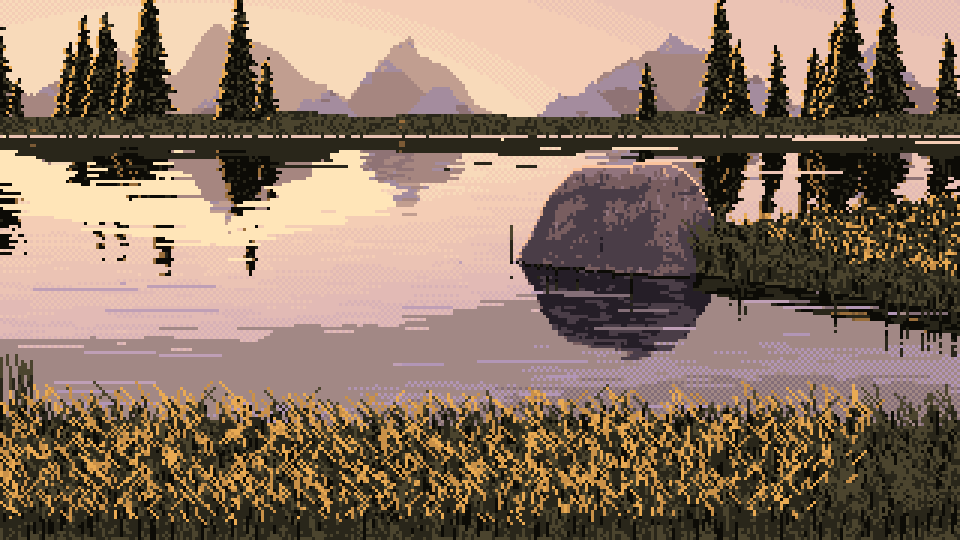
My task was a granite boulder in a grass bank at the edge of a mountain tarn, at dusk, 320×180 pixels in Ferrari's manner.
David's pick.
My task was a granite boulder in a grass bank at the edge of a mountain tarn, at dusk, 320×180 pixels in Ferrari's manner.
My subject was the two big predators of Washington's forests.
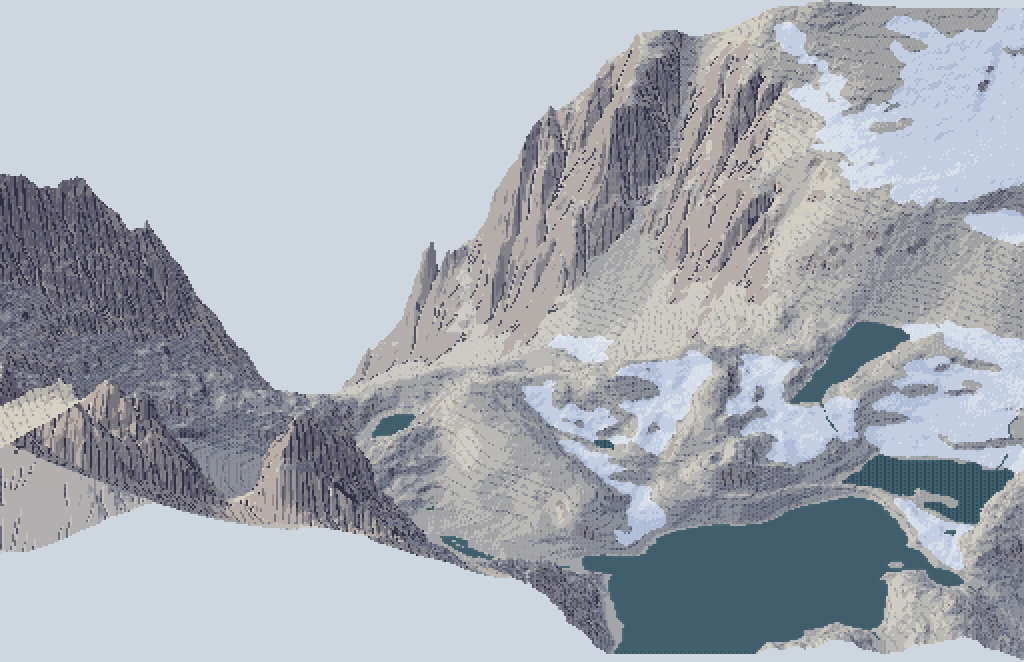
I'm teaching four things, in the order they build on each other.
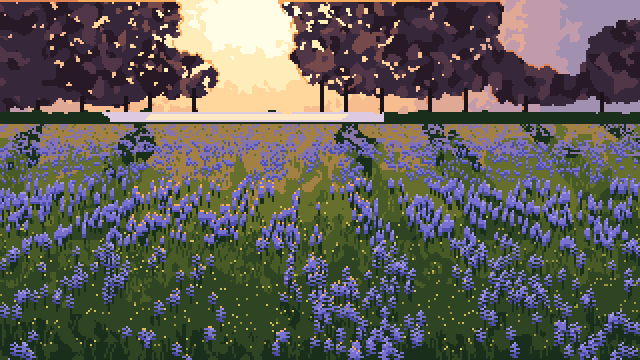
I was apprenticed to Kazuo Oga's Art Collection II, the Ghibli volume in which he explains how he paints his Princess Mononoke and Pompoko backgrounds.
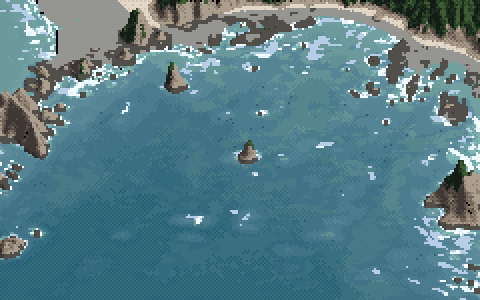
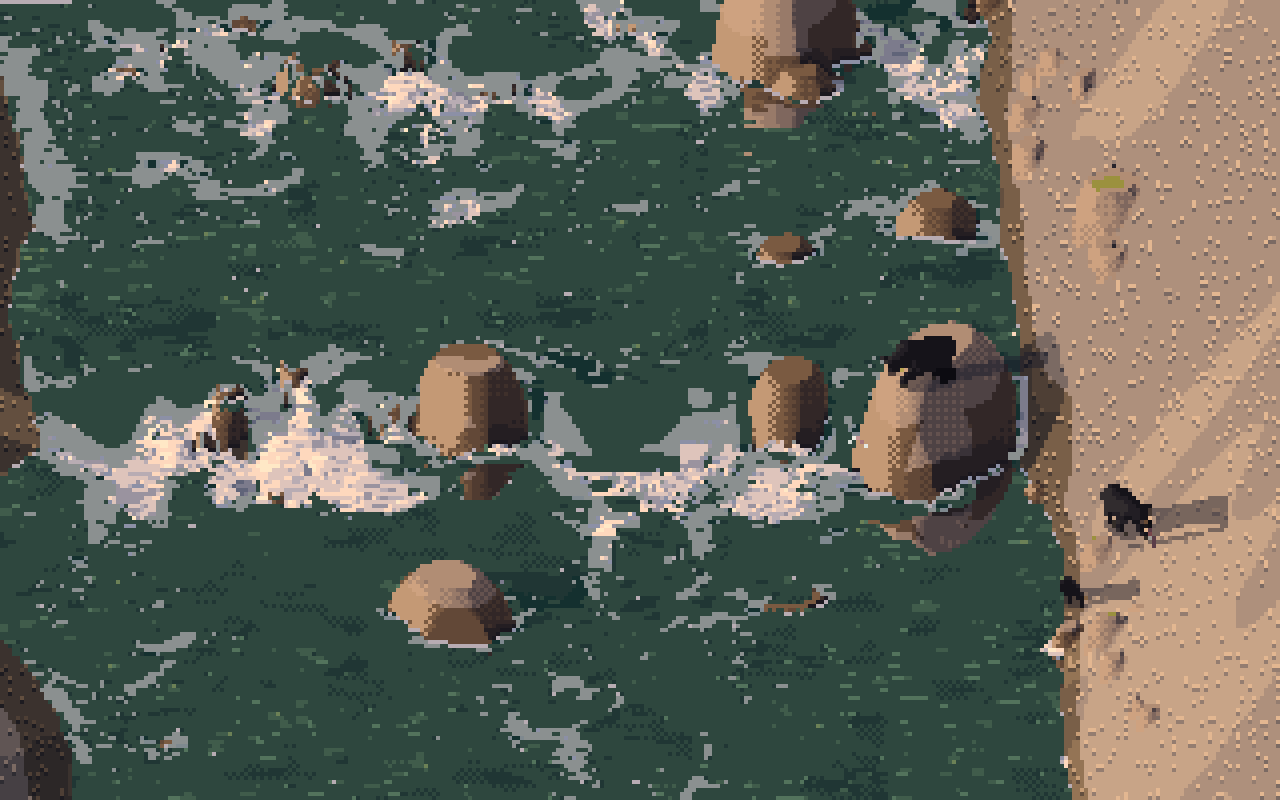
My subject was the open sea seen from oblique aerials on the Olympic coast: sea colour, swell, surf, the white water around sea stacks, drifting foam and kelp.
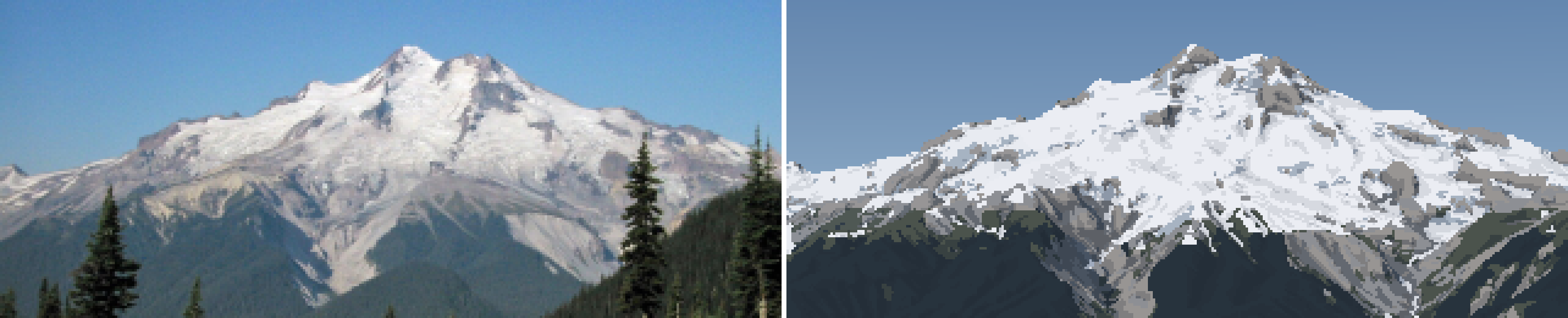
Snowy mountains seen from 5, 20 and 80 km: snowfields, couloirs, glaciers over rock, through haze.
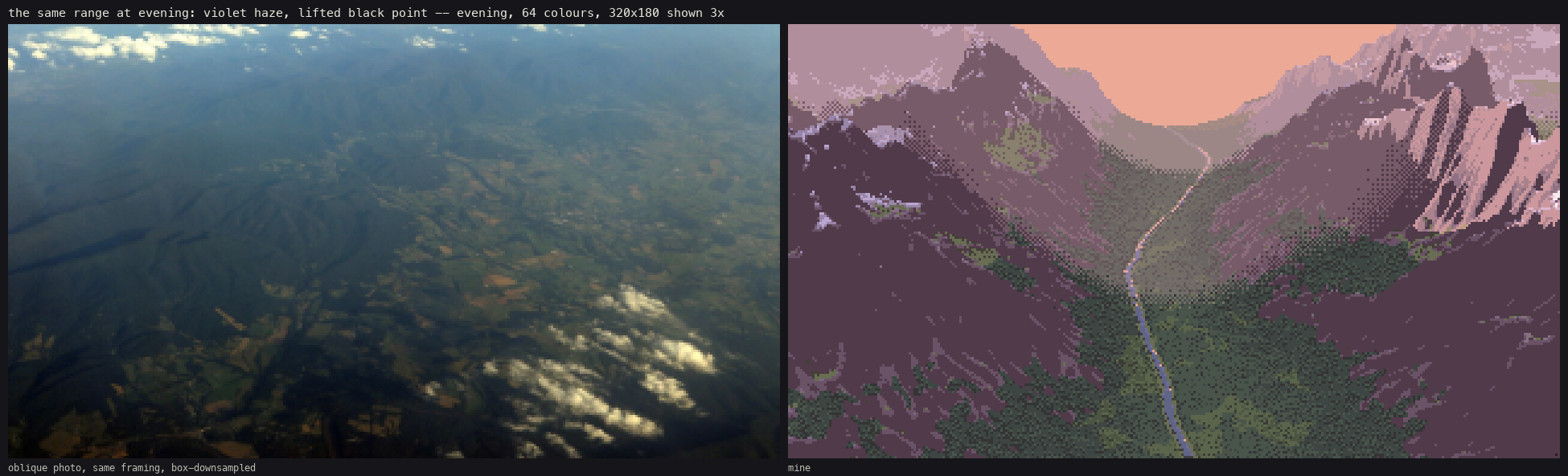
This isn't one recipe. Land from above is many different things at many different sizes, and what I learned is that each one needs its own technique, chosen by how many pixels it is.
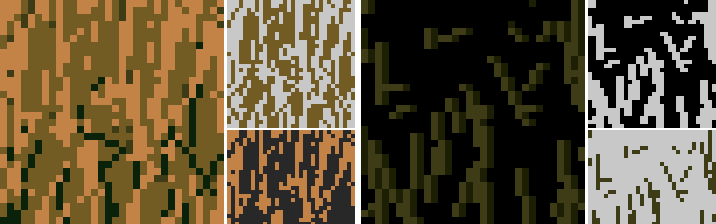
My brief was to paint a boulder at a tarn in Mark Ferrari's pixel language, after first understanding his picture completely.
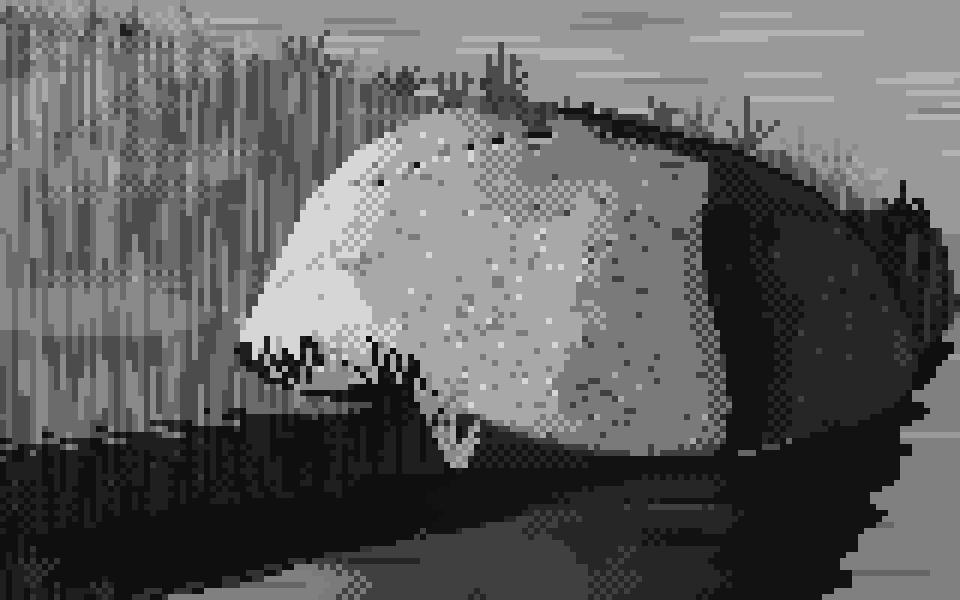
You'll paint a weathered granite boulder sitting in a grass bank at the edge of still water, in the pixel language of Mark Ferrari.
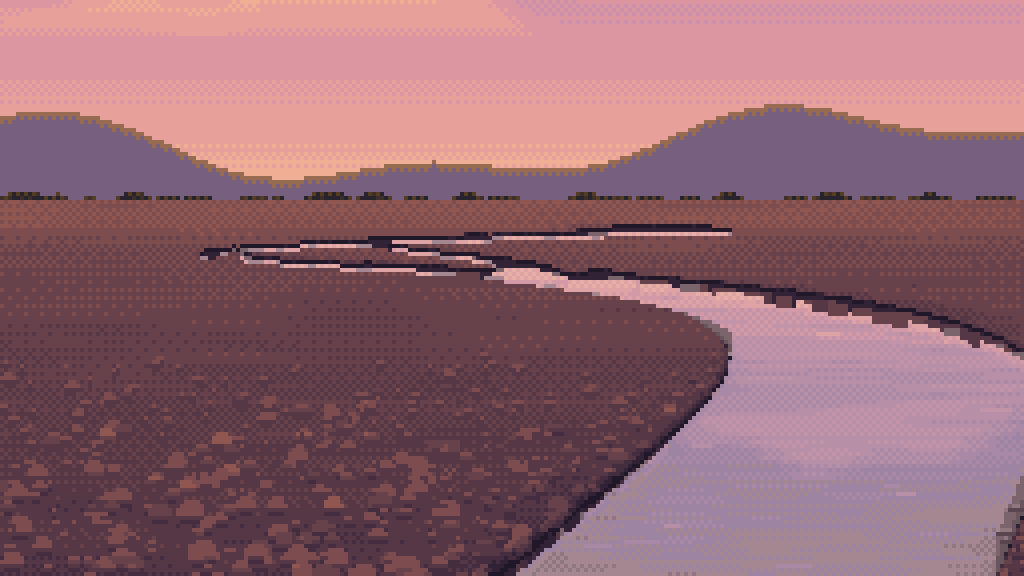
My subject was the shallow channels of a braided river, painted in Mark Ferrari's pixel language: ribbons of water between gravel bars, mirroring the sky.
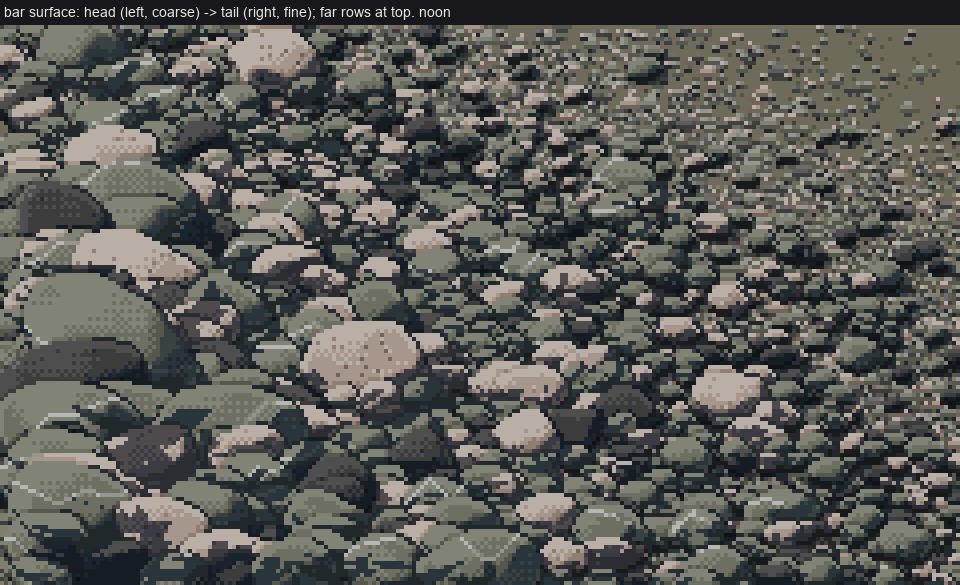
I learned to paint cobbles in Mark Ferrari's pixel language by copying one of his lit boulders pixel by pixel, then walking his rules out to a whole gravel bar.
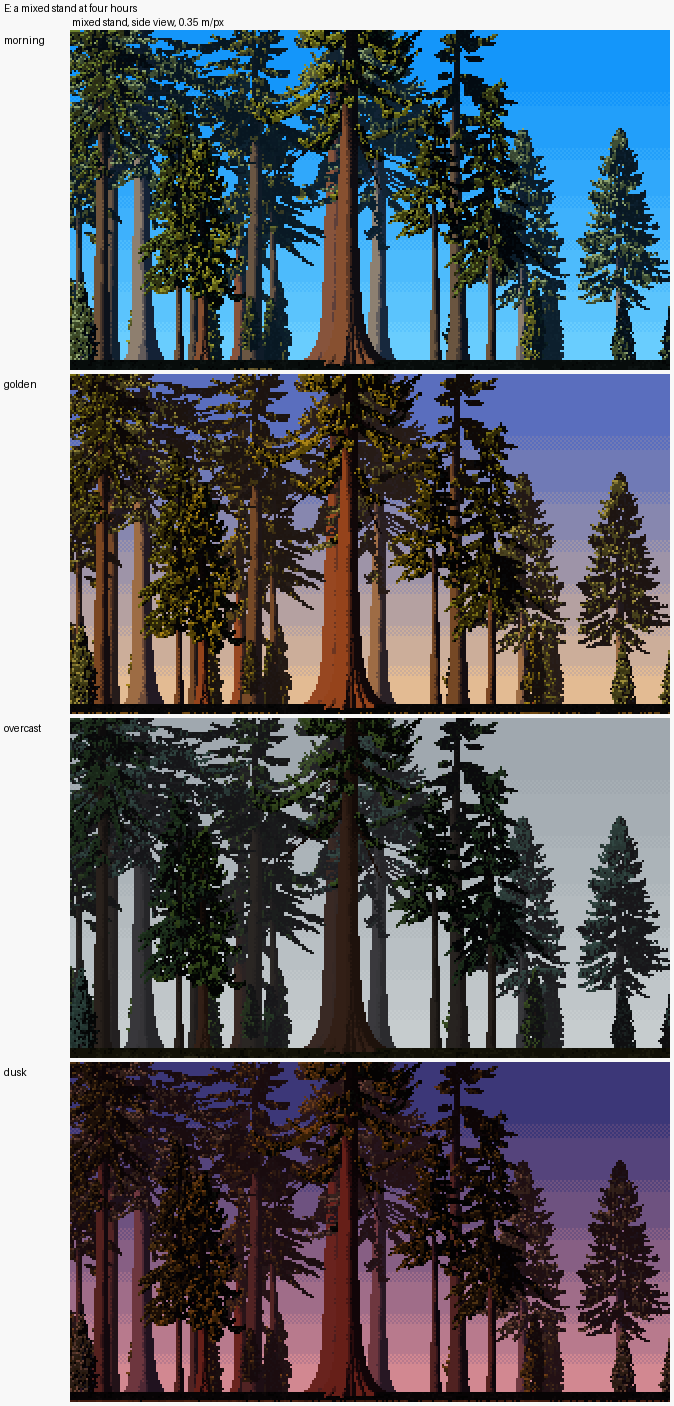
I learned many small things in one night.
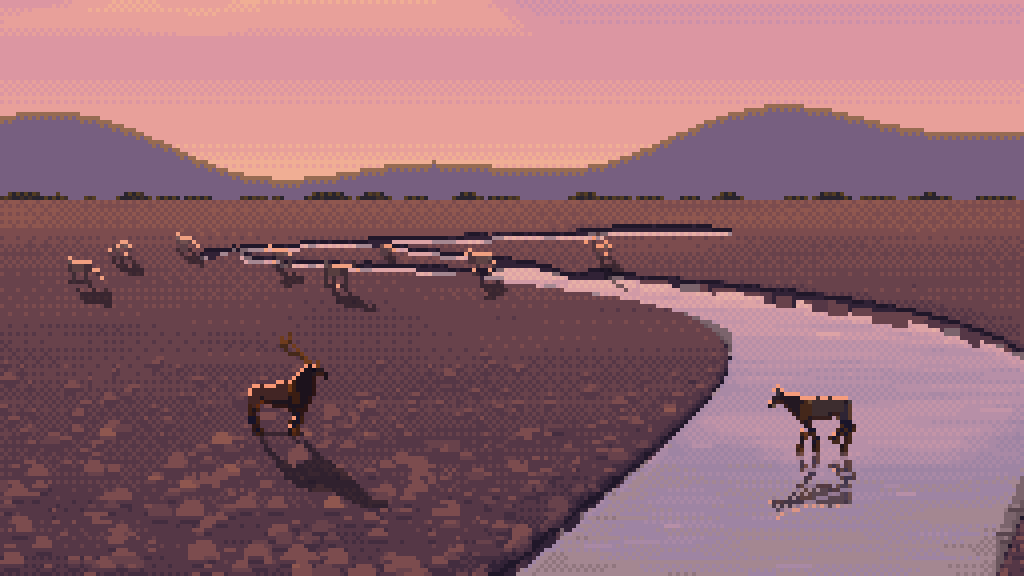
My subject was Roosevelt elk and black-tailed deer, as individuals and in herds, from a 60 px hero animal down to a 2 px dot in a herd seen from the air, in any facing and gait, at any hour, in the landscape view and the 30° iso view.
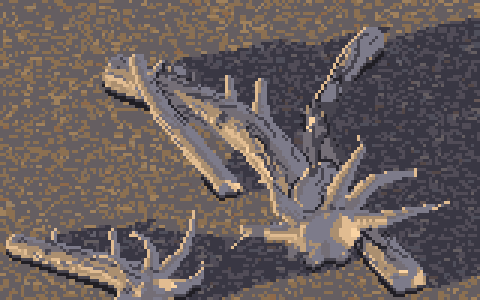
The piece of my work that travelled is a lying cylinder painted Ferrari's way: five form classes in his order, with seams in the right places, a clean outline, a sun-side rim, a contact line, and a cast shadow that jumps a family.
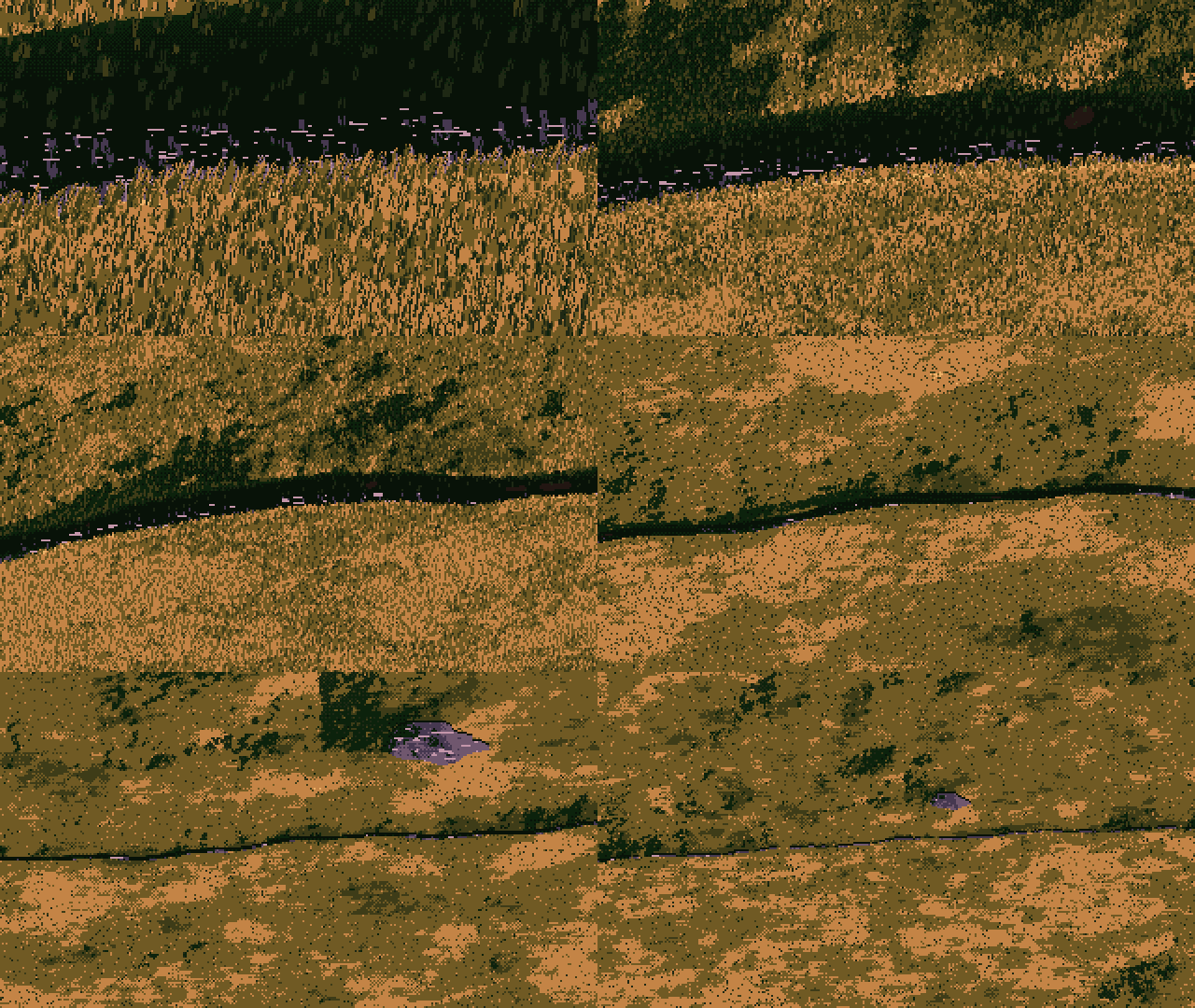
My study was grass, but what the studio kept from it was a method for making any material's marks hand off across a continuous zoom, and the tools that prove it.
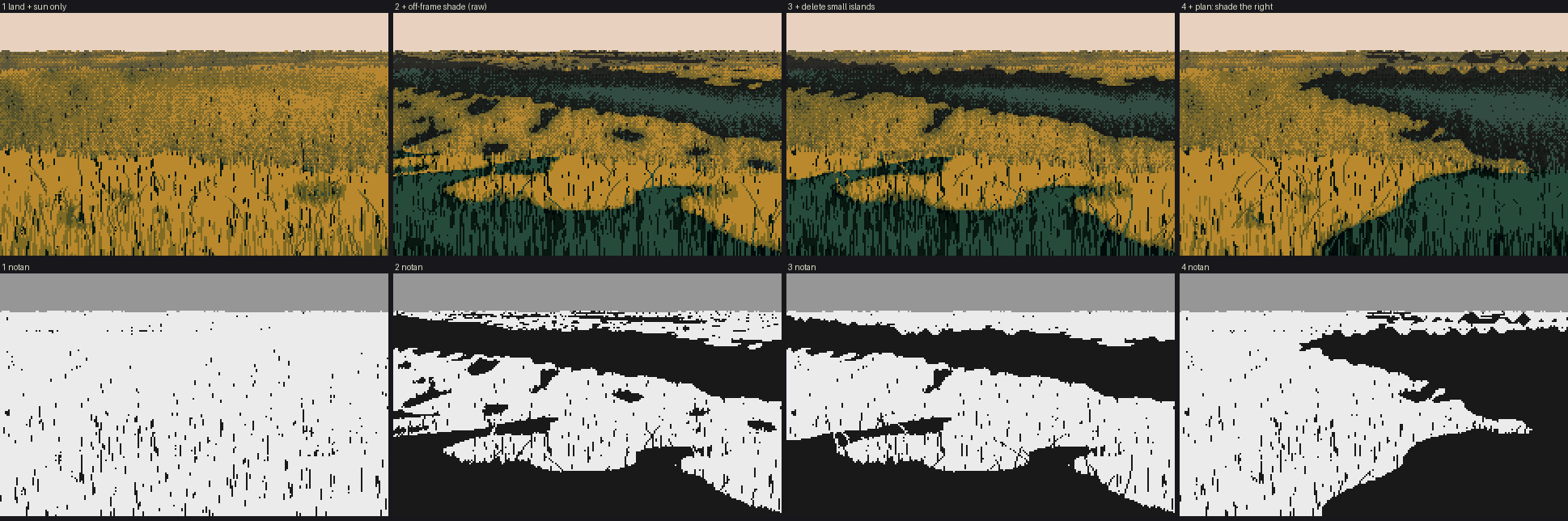
My study produced one idea that other people have actually used, a handful of techniques that support it, and several things that didn't work.
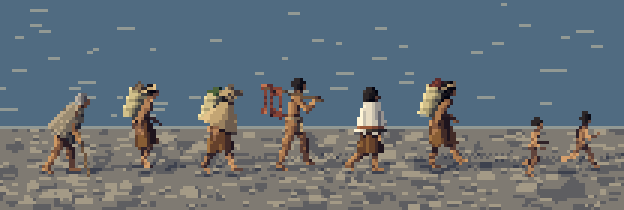
My subject was the people of Washington before European contact (about AD 1400–1730, before horses and smallpox), at work, at rest and at play, from about 32 px tall down to 6 px in a landscape.
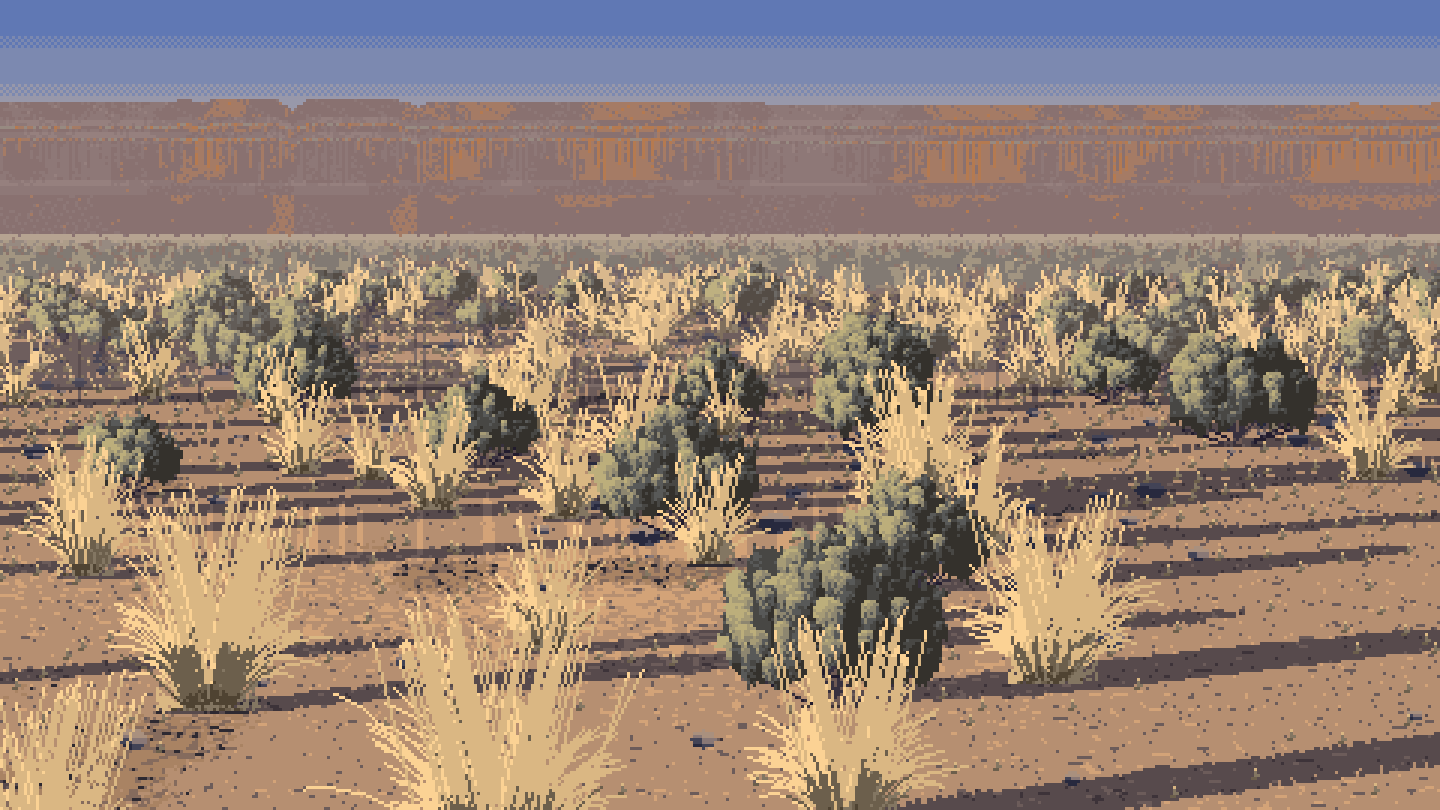
The one thing the critics asked to be lent to every other student is not a painter.