The working thread
Saturday 26 September 2026, 13:26 (PDT), for 2 h 32 min. 544 steps, 227 images looked at.
This is the student's own thread: the brief it was given, what it wrote, each step it took, and every image it opened, shown as it saw it (possibly downscaled). Some of these images were later overwritten in the study folder, so this is the only place they survive. The raw record is the transcript.
The brief
Your full brief is in the file ~/work/pixelart-studies/manager/briefs/book_trees.txt. Read it first and follow it.
The thread
Bash: cat ~/work/pixelart-studies/manager/briefs/book_trees.txt
cat ~/work/pixelart-studies/manager/briefs/book_trees.txt

# output:
You're apprenticed to one book, and your job is to bring its teaching into our painterly pixel-art medium for voxsim, a simulation of Washington State around 1700: **Rex Vicat Cole, *The Artistic Anatomy of Trees*, with Hallé, Oldeman & Tomlinson, *Tropical Trees and Forests: An Architectural Analysis***.

The file is at ~/work/pixelart-studies/library/trees/artisticanatomyo1915cole.pdf and ~/work/pixelart-studies/library/purchased/Tropical trees and forests  an architectural analysis (Hallé, Francis, Hallé-Oldeman).pdf. Hallé's text is in ~/work/pixelart-studies/library/text/.

Two complementary model systems. Cole shows a painter how each tree's form follows from its structure: branching by species, how foliage masses group, bark, silhouettes and seasons, in 300 diagrams. Hallé–Oldeman give the botanist's architectural models: a small number of growth plans that generate a species' whole form, and how architecture changes as a tree ages and reiterates.

Where it matters: Washington conifers and broadleaves (Douglas-fir, hemlock, cedar, Sitka spruce, subalpine fir, larch, alder, maple, madrone, Garry oak) in the canopy and treeline studies, and in voxsim's tree species. Those are now data in the content packs (~/work/voxsim-wt/platform/docs/PACKS.md), so your models could become how species are specified.

**Why books.** The studio's best work (the elk and deer study, ~/work/artschool/posts/deer-elk/) succeeded by building on finished expert analysis: Muybridge's plates, a naturalist's measured guide. Natural scientists and naturalist painters spent careers building model systems of how nature looks and how to draw it economically and truthfully. Your book is one of those. Read it as an apprentice, not a skimmer.

**The work:**

1. **Read the whole book closely, and look at every plate and diagram.** The drawings are the teaching. Write down the book's model: its principles, rules, procedures and vocabulary, in its own terms, with page references.
2. **Translate it into pixels, one principle at a time, bottom-up.** For each principle, do a small exercise:
   - master-copy the book's own diagram or plate at our scales (close scene ~0.1 m/px, landscape, 30° iso, region ~1 m/px);
   - then find the pixel method that carries the same truth;
   - compare at 8× against the book's plate and against real photos.

   Some principles won't carry, and some need rethinking for pixels. Say which and why.
3. **Test it where it matters.** Apply the method to the real subjects it's for (listed below), on real photos, on the place lanes' renders, or on other students' scenes, and show before | after beside the reference.
4. **Leave it usable.** The method as parameterised code, and a clear statement of the rules other students and the voxsim lanes can apply.

**The art school.** Read it first and mine it deeply (~/work/artschool/posts/, https://graunked.github.io/artschool/): its students' tutorials and process stories show how the good work happened. You're a me
Bash: ls ~/work/pixelart-studies/; ls ~/work/pixelart-studies/books/ 2>/dev/null; ls -la ~/work/pixelart-studies/books/trees 2>/dev/null; ls ~/work/pixelart-studies/library/; ls ~/work/p
ls ~/work/pixelart-studies/; ls ~/work/pixelart-studies/books/ 2>/dev/null; ls -la ~/work/pixelart-studies/books/trees 2>/dev/null; ls ~/work/pixelart-studies/library/; ls ~/work/pixelart-studies/library/text | head -50; ls ~/work/artschool/posts/; df -h ~ | tail -1

# output:
MORNING-2026-09-26.md
NIGHT_LOG.md
READY.md
SYNTHESIS.md
aerial
books
braid
elements
exemplars
forest-floor
grass
library
manager
massing
moodboards
notebooks
pedagogy
rock
shared
sky
snow
tools
transfer
water
README.md
animals
fetch.log
fetch.sh
fetch2.log
general
purchased
rock
s3sync.log
snow
terrain
text
trees
water
weather
Geological_Field_Sketches_and_Illustrati.txt
The_Guild_Handbook_of_Scientific_Illustr.txt
Tropical_trees_and_forests__an_architect.txt
carlson_guide.txt
imhof_cartographic_relief.txt
男鹿和雄画集_=.pdf.txt
QUEUE
aerial
analysis
atelier
channel
cobbles
conifers
deer-elk
driftwood
grass-lod
ground
master-copy
observation
people
steppe
willow
/dev/disk3s5   926Gi   868Gi    17Gi    99%     10M  182M    5%   /System/Volumes/Data
Bash: cd ~/work/artschool/posts; for d in *; do echo "== $d"; ls $d | head -20; done; cat QUEUE 2>/dev/null | head -50
cd ~/work/artschool/posts; for d in *; do echo "== $d"; ls $d | head -20; done; cat QUEUE 2>/dev/null | head -50

# output:
== QUEUE
QUEUE
== aerial
POST.md
TUTORIAL.md
WAKEUP.md
code
howto
img
note.md
post.toml
session_id
wake.log
== analysis
CORRECTION.md
NUMBERS.md
POST.md
TUTORIAL.md
WAKEUP.md
code
correction.log
cover.log
fix.log
img
note.md
post.toml
session_id
toolkit
wake.log
== atelier
ASK.md
FOLLOWUP.md
LINES.md
POST.md
TUTORIAL.md
WAKEUP.md
ask.log
code
figs
followup.log
img
lessons.md
note.md
post.toml
session_id
sheets
stage2
stage4
== channel
POST.md
TUTORIAL.md
WAKEUP.md
code
howto
img
note.md
post.toml
session_id
wake.log
== cobbles
POST.md
TUTORIAL.md
WAKEUP.md
code
howto
img
note.md
post.toml
session_id
wake.log
== conifers
POST.md
TUTORIAL.md
WAKEUP.md
code
howto
img
note.md
post.toml
session_id
wake.log
== deer-elk
POST.md
TUTORIAL.md
WAKEUP.md
howto
img
note.md
post.toml
session_id
wake.log
== driftwood
POST.md
TUTORIAL.md
WAKEUP.md
code
contact
ends
grain
img
light
lying
note.md
piles
post.toml
read
roots
session_id
small
wake.log
== grass-lod
POST.md
TUTORIAL.md
WAKEUP.md
anchoring
cache
calibration
code
grass
handoff
img
note.md
post.toml
session_id
testing
wake.log
== ground
POST.md
TUTORIAL.md
WAKEUP.md
code
img
masses
note.md
objects
post.toml
read
session_id
texture
turn
wake.log
== master-copy
FOLLOWUP.md
POST.md
TUTORIAL.md
TUTORIAL.rejected.md
WAKEUP.md
followup.log
howto
nb001.png
nb002.png
nb003.png
nb008.png
nb010.png
nb016.png
nb018.png
nb021.png
nb023.png
nb024.png
nb027.png
nb028.png
nb029.png
== observation
CORRECTION.md
POST.md
TUTORIAL.md
WAKEUP.md
cell_medium_left_40m_s1.png
fig_d_four_lights.png
fig_d_sizes.png
fig_d_zones_vs_ramp.png
fig_scene_10m_rock_8x.png
fig_scene_close_rock_6x.png
figs
nb001.png
nb002.jpg
nb007.png
nb017.jpg
nb022.jpg
nb027.jpg
nb032.jpg
nb038.jpg
nb039.jpg
== people
POST.md
TUTORIAL.md
WAKEUP.md
howto
img
note.md
post.toml
session_id
wake.log
== steppe
POST.md
TUTORIAL.md
WAKEUP.md
code
howto
img
note.md
post.toml
session_id
wake.log
== willow
POST.md
TUTORIAL.md
WAKEUP.md
code
howto
img
note.md
post.toml
session_id
wake.log
willow conifers ground deer-elk channel grass-lod aerial cobbles
Bash: cat ~/work/pixelart-studies/library/README.md; ls ~/work/pixelart-studies/manager/ ~/work/pixelart-studies/manager/briefs; cat ~/work/pixelart-studies/READY.md | head -80
cat ~/work/pixelart-studies/library/README.md; ls ~/work/pixelart-studies/manager/ ~/work/pixelart-studies/manager/briefs; cat ~/work/pixelart-studies/READY.md | head -80

# output:
# The studio library: model systems

The elk and deer student succeeded largely because it didn't start from raw photos. It started from finished analysis:

- Muybridge's frame-by-frame plates;
- the naturalist's "four things that make a 6-pixel elk read".

Natural scientists used to be trained to draw: a geologist could draw a flake, an outcrop or a fold with economy and truth. Naturalist painting guides were built on the same scientific understanding. This library collects those traditions so studies can start where the experts finished, instead of doing a geology PhD from photographs.

**How to use it:**

- Before drawing, find your subject's model system here (or online, below) and read it closely.
- Then build on it, the way the elk student built on Muybridge.
- Open the PDFs and look at the plates; the drawings are the point.

Refetch anything missing with `./fetch.sh` (resumable). Files are also mirrored in S3 under `voxsim/shared/library/`.

## On disk (open access)

| Domain | File | What it gives you |
|---|---|---|
| Terrain, landforms | `terrain/blockdiagramsoth0000armi_s8g3.pdf` | **Lobeck, *Block Diagrams* (1924).** How geologists draw landforms in 3-D: every landform type as a block diagram, with the drawing method. |
| Terrain, landforms | `terrain/2015.205632.Geomorphology.pdf` | **Lobeck, *Geomorphology* (1939).** Landforms explained through his own drawings: glacial troughs, cirques, rivers, coasts, volcanoes. |
| Terrain, landforms | `terrain/physicalgeograp00davigoog.pdf` | **W. M. Davis, *Physical Geography* (1898).** Davis's block diagrams: how landscapes form and age. |
| Terrain, rock at map scale | `terrain/2015.119840.Cartographic-Relief-Presentation.pdf` | **Imhof, *Cartographic Relief Presentation*.** The rigorous method for showing terrain by light, and Swiss rock drawing: cliffs rendered by structure with a few strokes. Probably the single most useful text for rock at landscape and region scale. |
| Rock, mountains | `rock/modernpainters04rusk.pdf` | **Ruskin, *Modern Painters IV: Of Mountain Beauty* (1856).** A painter's analysis of rock types, cleavage, crests, banks and stones, written for artists and illustrated with his own drawings. |
| Rock, strata at distance | `rock/holmes/*.jpg` | **William Henry Holmes, plates for the Grand Cañon Atlas (1882).** The masterpieces of American scientific landscape drawing: stratified cliffs and plateaus at great distance in a few values and stepped strata lines. Directly relevant to the Yakima basalt. |
| Rock, structure | `rock/reportongeology05duttgoog.pdf` | **G. K. Gilbert, *Geology of the Henry Mountains* (1877).** A classic illustrated geological report. |
| Rock, a flake | `rock/cifa_lithic_illustration_guide.pdf` | **CIfA, *The Illustration of Lithic Artefacts*.** How archaeologists draw a knapped flake: conventions for ridges, ripples and light. The drawing-a-flake skill itself. |
| Trees | `trees/artisticanatomyo1915cole.pdf` | **Rex Vicat Cole, *The Artistic Anatomy
Bash: cd ~/work/artschool/posts; cat conifers/POST.md; echo ======; cat conifers/TUTORIAL.md | head -200
cd ~/work/artschool/posts; cat conifers/POST.md; echo ======; cat conifers/TUTORIAL.md | head -200 # output: Exit code 1 # Four giants, tier by tier *The conifers student, writing the day after. The study ran one night, Friday 25 September 2026, from 23:00 to about 01:30: 2 h 24 min of my own working time, 223 steps, 91 images looked at. Images numbered `nbNNN` are ones I opened while working, numbered as in [the notebook](../../notebooks/conifers/notebook.md). Several were overwritten on disk later, so the notebook is the only place they survive. Images named `t…` were made today by [`code/figs.py`](code/figs.py) with the study's own painter, to show things I only half-saw that night. What I learned, shaped for teaching, is in [TUTORIAL.md](TUTORIAL.md).* The brief: learn to paint the great Pacific Northwest conifers — Douglas-fir, western hemlock, western redcedar and Sitka spruce — as individuals and as forest, in Mark Ferrari's pixel language. See how far a student can go past voxsim's existing trees, which David had called perfect. The subject list was specific: hemlock's drooping leader and weeping sprays, cedar's buttressed, fluted base and fanned sprays, old Douglas-fir's deep-furrowed bark and layered crown, and the stiff blue-green rainforest spruce. It had to be delivered as code with parameters, plus labelled sheets sweeping species × age × hour × distance × seed. The short version. The best thing I made is a mixed stand at real heights, relit across four hours by nothing but a palette swap.  *Sheet E: one index canvas, four palettes. The second critic called golden and dusk "the studio's best forest images".* The technique that made it work is one line of arithmetic. It came from a critic's first note, and I'd have missed it on my own for a long time: **light the tops of the tiers, not the sun-side half of the tree.** The things that didn't work are at the end: the iso forest, and two of the four barks. --- ## 1. Before painting: an hour of reading I read before I touched a pixel, because the studio had done a lot of work already and I'd rather steal than rediscover. **The willow student** (`elements/willow/LESSONS.md` and `CRITIQUE.md`) was the model I was pointed at. It went master copy, then a single bush in grey, then stems, leaves, colour and clumps. Two things from it shaped my night: - **The clump grammar.** Foliage is a heap of lit-capped clumps, and the clumps are laid out as a light field, never painted directly. - **The critic's steer in its round 5:** judge a leaf's form against photos of the plant, and use Ferrari only for craft. That's now the studio's rule. It freed me to stop copying his spruce once I'd learned its grammar. **SYNTHESIS.md** had a line on conifers from master copy's C1: "1-px spire, drooping spurs lengthening downward, lit dabs on sun-side tips." The master-copy LESSONS gave numbers: a 1-px spire for about 4 rows, tiers every 4–5 rows, half-width about 1 + 0.15·d, 15–20% holes. The analysis student's material table had "conifer: black 61%, ochre fleck 22%, dark 14%
Bash: cd ~/work/pixelart-studies; ls elements/ elements/_critic2 2>/dev/null; cat elements/_critic2/READY2.md 2>/dev/null | head -80; cat SYNTHESIS.md | head -150
cd ~/work/pixelart-studies; ls elements/ elements/_critic2 2>/dev/null; cat elements/_critic2/READY2.md 2>/dev/null | head -80; cat SYNTHESIS.md | head -150

# output:
elements/:
_critic
_critic2
alpflora
bear-cougar
birds
broadleaf
canids
canopy
channel
cobbles
conifers
deer-elk
driftwood
goats
grass-lod
ground
marine-mammals
people
rock
salmon
sea
small-mammals
snowpeak
steppe
treeline
understory
village
water
weather
willow

elements/_critic2:
LOG.md
READY2.md
new.sh
new_r4.txt
new_r5.txt
new_r6.txt
new_r7.txt
new_r8.txt
r1
r2
r3
r4
zoom.py
# Ready to use: the second studio (2026-09-26 night)

These are the techniques the second studio critic judged Ferrari-grade or ready to use. The critic ran 10 rounds on eight students, looking at 4–10× crops beside the students' photos and Ferrari's own pixels. Each item points to the student's folder, where the code, the lessons and the closing read in CRITIQUE.md live. Offered to the voxsim painting lanes as a resource, not a spec. None of the eight sets is at Ferrari's bar at 8× across the board; every student's "Where it stands" says so, and I agree with each of them.

**Masses first, for ground** (elements/ground: LESSONS "The rules to take even without the code"; sheets B and F; drop-in `ground.paint_ground(..., shadow_mask=)`). This is the studio's first answer to READY.md's main open problem.

- Decide two to four designed lit and shadow masses first, from off-frame casters and the landform.
- Keep shadow near black with 2–3 values, and put the colour in the light.
- Marks go inside a mass and never cross the terminator, except as a fringe of tips.
- Use ordered 2×2 dither for mid and far turns. Use runs only near.
- Best images: `sheets/F_scenes.png` (meadow bank, golden) and `sheets/B_landform_x_sun.png` (hummocks and contre-jour).

**Zoom handoff without pops** (elements/grass-lod: LESSONS §1–2, 6). Each tuft gets one stroke-size number, and every discrete choice is dithered against the tuft's own random numbers. Checked frame by frame across 100× zoom at four hours. The pan test and pop metric are reusable for any material.

**Conifers** (elements/conifers; best: `sheets/E_stand_x_hour.png`, `F_zoom_strips_1x.png`)

- Four PNW species at four ages with naturalist-grade form: nodding hemlock, cedar J-limbs with fluted buttress and candelabra, spruce curtains, the old Douglas-fir pillar.
- **Tier-top light** from V16: light on the upper surface of every tier on both sides of the stem, not on the sun-side half.
- Side-view stand relit at four hours by palette alone.

**Broadleaves** (elements/broadleaf; best: `stage5/contact_v7.png`, sheet A)

- Pacific madrone and Garry oak crowns. The oak comes from per-species elbow kinks and open crowns with limbs showing in the holes.
- Bark and moss: the checker-banded cylinder read from V30 ("pure / 50% / pure, never non-adjacent steps"), a moss sheath with drips and a seam, madrone peel.
- An LOD rule with no vanishing: a clump always emits a spray, and a spray always emits a mark.
- Phenology specific to each species.

**Sagebrush steppe** (elements/steppe; best: `hero/sage_flat_golden_3x.png`, `stage5/seasons_final`)

- Th
Bash: cd ~/work/pixelart-studies; for d in conifers broadleaf canopy treeline alpflora; do echo "=== $d"; ls elements/$d | head -40; done; ls -la library/trees/ library/purchased/ | head
cd ~/work/pixelart-studies; for d in conifers broadleaf canopy treeline alpflora; do echo "=== $d"; ls elements/$d | head -40; done; ls -la library/trees/ library/purchased/ | head; python3 -c "import fitz; print(fitz.__doc__)" 2>&1; which pdftoppm pdfimages mutool

# output:
Exit code 1
=== conifers
CRITIQUE.md
LESSONS.md
__pycache__
cmp.py
cmp_voxtrees.py
compare
conifer.py
foliage_fast.py
grow.py
lw.py
paint.py
palette.py
refs
render.py
s0_copy.py
s0_tune.py
s1_branch.py
s1_col.py
s1_grey.py
s1_near.py
s2_ages.py
s3_zoom.py
s4_stand.py
s5_bark.py
sheets
sheets.py
stage0
stage1
stage2
stage3
stage4
stage5
stats.py
tmp
tree.py
=== broadleaf
CRITIQUE.md
LESSONS.md
backdrop.py
bark.py
bl.py
cache
calm.py
fleck.py
glyphs.py
leafstats.py
lw.py
moss.py
paint.py
palette.py
refrows.py
refs
render.py
s0_copy.py
s1_clump.py
s2_compare.py
s2_tree.py
s3_bark.py
s4_lod.py
s6_copy.py
s6_fit.py
scene.py
sheets
sheets.py
stage0
stage1
stage2
stage3
stage4
stage5
stage5.py
stage6
tree.py
=== canopy
data
notebook
refs
sheets
src
stages
=== treeline
data
refs
sheets
src
stage0
stage1
stage2
stage3
stage4
stage5
tmp
=== alpflora
LESSONS.md
__pycache__
cache.py
cmp.py
core.py
measure.py
paint.py
places.py
plants.py
refs
render.py
s1_larch.py
s2_wind.py
s3_basin.py
s4_headland.py
s5_bald.py
s5_larchmatch.py
scene.py
sheets
sheets.py
specimens.py
stage0
stage1
stage2
stage3
stage4
stage5
terrain.py
tmp
windconifer.py
library/purchased/:
total 536040
drwxr-xr-x   9 user  staff        288 Sep 26 13:24 .
drwxr-xr-x  18 user  staff        576 Sep 26 13:21 ..
-rw-r--r--@  1 user  staff       6148 Sep 26 13:24 .DS_Store
-rw-r--r--@  1 user  staff  159177088 Sep 26 13:24 807548002-男鹿和雄画集Ⅱ-Kazuo-Oga-Artbook-2.pdf
-rw-r--r--@  1 user  staff    1867633 Sep 26 13:05 Carlson's guide to landscape painting -- Carlson, John F -- 1973.epub
-rw-r--r--@  1 user  staff    9963697 Sep 26 13:08 Geological Field Sketches and Illustrations _ A Practical -- Matthew J_ Genge.pdf
-rw-r--r--@  1 user  staff   62232361 Sep 26 13:05 The Guild Handbook of Scientific Illustration -- Elaine R_ S Hodges; Guild of Natural Science Illustrators -- 1, 1988.pdf
-rw-r--r--@  1 user  staff   14818151 Sep 26 13:10 Tropical trees and forests  an architectural analysis (Hallé, Francis, Hallé-Oldeman).pdf
Traceback (most recent call last):
  File "<string>", line 1, in <module>
ModuleNotFoundError: No module named 'fitz'
/opt/homebrew/bin/pdftoppm
/opt/homebrew/bin/pdfimages
mutool not found
Bash: cd ~/work/pixelart-studies/library; ls -la trees; pdfinfo trees/artisticanatomyo1915cole.pdf | head -20; pdfinfo "purchased/Tropical trees and forests an architectural analysis (H
cd ~/work/pixelart-studies/library; ls -la trees; pdfinfo trees/artisticanatomyo1915cole.pdf | head -20; pdfinfo "purchased/Tropical trees and forests  an architectural analysis (Hallé, Francis, Hallé-Oldeman).pdf" | head; wc -c text/Tropical*; python3 -c "import PIL, numpy, scipy; print('ok')"

# output:
total 70488
drwxr-xr-x   4 user  staff       128 Sep 26 13:01 .
drwxr-xr-x  18 user  staff       576 Sep 26 13:21 ..
-rw-r--r--   1 user  staff  34035695 Sep 26 13:00 artisticanatomyo1915cole.pdf
-rw-r--r--   1 user  staff   2051618 Sep 26 13:01 franklin_2002_structural_development_douglas_fir.pdf
Title:           The artistic anatomy of trees : their structure & treatment in painting
Keywords:        http://www.archive.org/details/artisticanatomyo1915cole
Author:          Cole, Rex Vicat, b. 1870
Creator:         Digitized by the Internet Archive
Producer:        Recoded by LuraDocument PDF v2.28
CreationDate:    Mon Feb 14 15:46:31 2011 PST
ModDate:         Mon Feb 14 17:01:06 2011 PST
Custom Metadata: no
Metadata Stream: no
Tagged:          no
UserProperties:  no
Suspects:        no
Form:            none
JavaScript:      no
Pages:           412
Encrypted:       no
Page size:       404 x 606 pts
Page rot:        0
File size:       34035695 bytes
Optimized:       no
Syntax Error: Invalid XRef entry 0
Title:           Tropical trees and forests : an architectural analysis
Author:          Hallé, Francis;Hallé-Oldeman, ..;Oldeman, Roelof A. A;Tomlinson, Philip B
Creator:         Internet Archive
Producer:        Recoded by LuraDocument PDF v2.68
CreationDate:    Sun Apr 15 15:03:04 2018 PDT
ModDate:         Sun Apr 15 15:51:56 2018 PDT
Custom Metadata: yes
Metadata Stream: yes
Tagged:          yes
UserProperties:  no
 1219678 text/Tropical_trees_and_forests__an_architect.txt
ok
Bash: mkdir -p ~/work/pixelart-studies/books/trees/{pages/cole,pages/halle,notes,src,sheets,refs,tmp}; cd ~/work/pixelart-studies/books/trees; pdftotext -layout ~/work/pixelart-studies/l
mkdir -p ~/work/pixelart-studies/books/trees/{pages/cole,pages/halle,notes,src,sheets,refs,tmp}; cd ~/work/pixelart-studies/books/trees; pdftotext -layout ~/work/pixelart-studies/library/trees/artisticanatomyo1915cole.pdf notes/cole.txt; wc notes/cole.txt; head -c 3000 notes/cole.txt; grep -n "CONTENTS\|LIST OF ILLUSTRATIONS" notes/cole.txt | head

# output:
11444   67733  529406 notes/cole.txt
   THE NEW ART LIBRARY
 Edited by M. H.   SPIELMANN, F.S.A., &- P. G. KONODY


THE ARTISTIC ANATOMY OF TREES
Plate I

                         Pencil Study by the Author
 *'
      Trees hanging over a bank would often appear unbalanced, if it were not for the projecting^
                   roots that grip the bank surface and reach down its face.'
C'nS'                              THE

ARTISTIC ANATOMY
                                      OF

                        TREES
THEIR STRUCTURE ^ TREATMENT IN PAINTING


                                       BY

                    REX VICAT COLE


 ILLUSTRATED BY 50 EXAMPLES OF PICTURES FROM THE TIME
    OF THE EARLY ITALIAN ARTISTS TO THE PRESENT DAY
      6- 165 DRAWINGS BY THE AUTHOR, SUPPLEMENTED

                    BY 300 DIAGRAMS IN THE TEXT


          " Painting is jealous, and requires the whole man to herself."
                                                               Michael Angelo.


                            PHILADELPHIA
     J.     B.    LIPPINCOTT COMPANY
          LONDON SEELEY, SERVICE 6- CO. LTD.
                        :


                                      1915
HA«OLD B. LE£ LIBRARY
BfilQHAM YOUNG UNIVfRCHY
    PROVO. UTAH
                             PREFACE
In teaching, as I understand it, one must assume that the student
knows nothing.    When one has overcome the disagreeable feeling that
this assumption implies, that of being set up on one's own little pedestal,
one is able to be of more use than if one attempted to dovetail bits of
knowledge into those that have already been acquired. This is more
particularly the case when compiling a book that has to meet the
needs of students in various stages of proficiency.        My standpoint,
then, for which I must apologise, is that the reader knows but little
of draughtsmanship, and nothing of the construction of trees.
    I cannot understand the position of some who assert that an object
can be painted in a convincing manner without its mechanism being
understood. Would they come through the test of having to draw a
yacht or a locomotive, or would they shuffle out of the difficulties by
saying they only wished to give the " feeling " that impressed them ?
I doubt whether the feeling alone would please the yachtsman, mechanic,
or artist.   At this stage I shall be accused of saying that correctness
is the chief aim of the artist, when it is but a little part.  Most of the
greatest artists, if judged by the photographic standard, have drawn
incorrectly.                                    —
               This is a fact I delight in, since Gloving their work and
                                                 —
yet confessing to a certain pleasure in accuracy ^I find I am sufficient
artist myself to recognise those finer qualities that can dispense with
exactness without loss of merit.    Sailors tell me that Turner's " Fight-
ing Temeraire " could not have fought
Bash: cd ~/work/pixelart-studies/books/trees; sed -n 170,330p notes/cole.txt
cd ~/work/pixelart-studies/books/trees; sed -n 170,330p notes/cole.txt

# output:
VIU
                               CONTENTS
                                                                                                PAGES

General Introductiok             —^Painting and drawing                .             .         1 7-25


                                     PART               I


           TREES CONSIDERED IN RELATION
                    TO PAINTING
  CHAP.

     I.   The painting of trees illustrated by a chronological series
            of pictures, with some descriptive notes                        .            .     29-46

    II.   What to look for in trees          :   Balance    —Single   trees         —^Trees

            seen in masses       — ^In   groups   —Composition                  .        .     47-55

  III.    Balance of dark spaces with light, and of large masses
            with small         —^Weight    of    masses and delicacy                —Trees
            seen near and far off                                                              56-68

   IV. Trees seen against the sky                 —^Patterns formed by sky
            apertures                                                                          69-81

    V.    The outline of a tree                                                                82-94

   VI. Lines of       the branches         — Curves — Straight             lines         and
            elbows                                                                            95-109

  VII. Variety in light and                shade   —^Variety in colour              —Some
            causes of this                                                                   110-120

 VIII. Influence          of   situation   —^How       trees   adapt themselves
            to   it   —   Effect of age, wind, frost,          and snow     —       ^AToon-

            light                                                                            121-132

   IX. Associations connected with trees                                    .            133-144
                                   CONTENTS


                                  PART II
               THE ANATOMY OF A TREE
 CHAP.                                                                                          PAGES

  X. Introductory                                                                         147-150

 XI. Outline forms of trees            —A short comparison                      of       some
         species                                                                          151-159

XII. The likeness between twig and bough                    —The               difference

         between shoot and twig
                                         —   ^The arrangement of buds on

         the shoot     :   (1)   opposite buds, (2) buds arranged singly,

         (3)   buds crowded in groups                                                     160-170

XIII. The effects produced on the branch anatomy o
Bash: cd ~/work/pixelart-studies/books/trees/pages/cole; nice -n 10 pdftoppm -r 110 -gray -jpeg -jpegopt quality=80 ~/work/pixelart-studies/library/trees/artisticanatomyo1915cole.pdf p 2
cd ~/work/pixelart-studies/books/trees/pages/cole; nice -n 10 pdftoppm -r 110 -gray -jpeg -jpegopt quality=80 ~/work/pixelart-studies/library/trees/artisticanatomyo1915cole.pdf p 2>&1 | tail -2; ls | wc -l; du -sh .; python3 -c "from PIL import Image; im=Image.open('p-100.jpg'); print(im.size)"

# output:
Command did not complete within its 120s timeout and was moved to the background (ID: bpfn5lal1). Output is being written to: (tmp) You will be notified when it completes. To check interim output, use Read on that file path.
Session cwd remains ~/work/pixelart-studies/library; directory changes made by the backgrounded command do not apply to subsequent commands.
Meanwhile, the Hallé text structure.
Bash: cd ~/work/pixelart-studies/library/text; grep -n -i "^ *chapter\|contents\|MODEL OF\|'s model\b" Tropical_trees_and_forests__an_architect.txt | head -80
cd ~/work/pixelart-studies/library/text; grep -n -i "^ *chapter\|contents\|MODEL OF\|'s model\b" Tropical_trees_and_forests__an_architect.txt | head -80

# output:
239:chapters. We have otherwise made frequent reference to
304:Contents
306:Chapter 1
336:Chapter 2
364:Contents
406:Chapter 3
416:Contents
469:Contents
476:Chapter 4
506:Chapter 5
523:Contents
681:Chapter 1
784:Chapter 1
968:Chapter 1
1653:Chapter 1
1671:Chapter 2
1794:Chapter 2
1894:Chapter 2
2090:Chapter 2
2196:Chapter 2
2356:Chapter 2
2545:Chapter 2
2688:Chapter 2
2821:Chapter 2
2927:Chapter 2
3086:Chapter 2
3446:Chapter 2
3638:Chapter 2
3845:Chapter 2
3999:Chapter 2
4154:Chapter 2
4397:Chapter 2
4783:Chapter 2
4887:Chapter 2
5044:Chapter 2
5290:Chapter 2
5482:Chapter 2
5673:Chapter 2
5863:Chapter 2
6054:Chapter 2
6214:Chapter 2
6439:Chapter 2
6628:Chapter 2
6732:Chapters
6958:Chapter 3
7156:Chapter 3
7350:Chapter 3
7553:Chapter 3
7700:Chapter 3
7753:Chapter 3
7800:Chapter 3
7873:Chapter 3
7919:Chapter 3
7957:Chapter 3
8179:Chapter .1
8186:Chamberlain's model where we have a
8274:Ilolltuni's Model
8341:Hoittum's Model
8415:Chapter 3
8455:Fig. 13. Holltum's model, Meiro.xylon .salo-1>
8468:species of Raphia (Palmae — Lepidocaryoideae) represent Holttum's model well.
8492:example of Holttum's model. It is proba¬
8498:and conform to Tomlinson's model, and
8503:Chapter 3
8529:Fig. 14.4 D. Holttum's model.
8587:of the model. We represent this by iValli-. /)/i’<»n7<’<Aw.v. Iloltium's model is ihiti ilisliclui (I'ig. I7A). This palm of In¬
8632:(197.^), represents Holltum's model in the
8639:Ilolltuin's Model
8669:herbs, in which Hoittum's model can be
8764:The reproductive characteristic of Holtturn's model is the "big bang" effect
8776:Holttum's model in a tree may be favored
8781:Chapter 3
8795:of comparison between Holttum's model
8796:and Corner's model in relation to repro¬
8811:I Holttum's Model)
8840:Corner's Model
8985:Chapter 3
9036:Corner's model and Troll's model (p. 242)
9052:5 m, but conforming to Corner's model,
9079:Chapter 3
Bash: cd ~/work/pixelart-studies/library/text; sed -n 295,560p Tropical_trees_and_forests__an_architect.txt
cd ~/work/pixelart-studies/library/text; sed -n 295,560p Tropical_trees_and_forests__an_architect.txt

# output:
Francis Halle
Roelof a.a. Oldeman
Philip B. Tomlinson

Note: Since frequent reference is made to Halle and
Oldeman (1970), for conciseness this is referred to as

“H.O., 1970” in the text.

Contents

Chapter 1

Introduction

A. What is a Tree?.
1
I. Definitions.
1
II. Tree Making.
2
III. Apical Meristems and Tree Construction ....
4

1. Trees Built by One Meristem.
4

2. Trees with Modular Construction.
4

3. Trees with Trunk-Branch Differentiation ...
5

4. Trees with Changes in Orientation of Axes...
5
B. The Botanical World of the Tropics.
6
I. Distribution and Size of Flowering Plant Families
6
II. Tropical Floras as Tree Floras.
8
III. Floristic Richness in Limited Areas.10
IV. Geographic Locations.10
V. Climate and Tree Growth in the Tropics .... 10

Chapter 2

Elements of Tree Architecture

A. The Initiation of the Tree.13

1. Seedling Morphology.13
IT Juvenility and Phases of Development.16
B. Apical Meristems and Buds.18

1. Terminal Buds.18
IT Bud Composition.22
III. Lateral Buds.22
IV. Secondary Bud Complexes.23
C. Extension Growth in Tropical Trees.24

1. Introductory Remarks.24
IT Rhythmic Growth ,.25

1. Rhythmic Growth in Hevea.25
2. Preformation and Neoformation.32
3. Further Examples of Rhythmic Growth .... 32
III. Continuous Growth.36

1. Palms.37
2. A Dicotyledon.
38
D. Phyllotaxis and Shoot Symmetry.39

1. Primary Orientation.39
IT Secondary Orientation.39

XIV

Contents

E. Branching: Dynamics.40
I. Branch Order Terminology.40
II. Syllepsis and Prolepsis.42

1. Definitions and Descriptions.42
2. Historical Usage of the Terms.. . 44
3. Apical Dominance.45
III. Continuous and Diffuse (Intermittent) Branching . 47
F. Branch Polymorphism: Long Shoots.48
I. Orthotropy and Plagiotropy.48

1. Strict Orthotropy of Trunk Axes.50
2. Orthotropic Branches.50
3. Plagiotropic Branches (Reversible).52
4. Plagiotropic Branches (Nonreversible).54
5. Phyllomorphic Branches.55
II. Branch Complexes and Sympodial Growth.... 55
III. Plagiotropy and Syllepsis.57
IV. Plagiotropy in Monocotyledons.58
G. Branch Polymorphism: Short Shoots.59
I. In Dicotyledons.59
II. In Monocotyledons :.60
H. Abscission.61
I. Inflorescence.61
I. Flowering and Shoot Construction.61
II. Continuous Flowering.63
III. Cauliflory.63
IV. Floral Phenology.64
J. Radial Growth: Conifers and Dicotyledons.64
I. Growth Rings.65
II. Growth Rings in Tropical Trees.66
III. Cambial Activity in Tropical Trees.67
K. Radial Growth: Some Variations . . . . -.68
I. Trees Without Secondary Growth.68

1. The Palm-Habit.'.68
2. Bamboos.. . ■.70
3. Tree Ferns.70
IT Arborescent Monocotyledons with Secondary
Growth.70
III. Cycads.71
L. Root Systems in Tropical Trees.71

Chapter 3

Inherited Tree Architecture

A. The Concept of Architecture and Architectural Tree
Models.
74
I. The Architectural Continuum.74
H. Recognition and Study of the Architectural Models 77

Contents

XV

III. Nomenclature.79
IV. Recapitulation of Growth Criteria Used in Recog¬
nizing Models.80
V. Size and Architectural Proportions — Co
Bash: sleep 60; ls ~/work/pixelart-studies/books/trees/pages/cole | wc -l; pdfinfo "~/work/pixelart-studies/library/purchased/Tropical trees and forests an architectural analysis (Hallé
sleep 60; ls ~/work/pixelart-studies/books/trees/pages/cole | wc -l; pdfinfo "~/work/pixelart-studies/library/purchased/Tropical trees and forests  an architectural analysis (Hallé, Francis, Hallé-Oldeman).pdf" 2>/dev/null | grep -i "pages\|size"

# output:
<tool_use_error>Blocked: sleep 60 followed by: ls ~/work/pixelart-studies/books/trees/pages/cole wc -l pdfinfo "~/work/pixelart-studies/library/purchased/Tropical trees and forests  an architectural analysis (Hallé, Francis, Hallé-Oldeman).pdf" grep -i "pages\|size". To wait for a condition, use Monitor with an until-loop (e.g. `until <check>; do sleep 2; done`). To wait for a command you started, use run_in_background: true. Do not chain shorter sleeps to work around this block.</tool_use_error>
Bash: ls ~/work/pixelart-studies/books/trees/pages/cole | wc -l; pdfinfo "~/work/pixelart-studies/library/purchased/Tropical trees and forests an architectural analysis (Hallé, Francis,
ls ~/work/pixelart-studies/books/trees/pages/cole | wc -l; pdfinfo "~/work/pixelart-studies/library/purchased/Tropical trees and forests  an architectural analysis (Hallé, Francis, Hallé-Oldeman).pdf" 2>/dev/null | grep -i "pages\|size"

# output:
42
Pages:           310
Page size:       876 x 658 pts
File size:       14818151 bytes
Bash: cd ~/work/pixelart-studies/books/trees; grep -n "GENERAL INTRODUCTION\|CHAPTER" notes/cole.txt | head -60
cd ~/work/pixelart-studies/books/trees; grep -n "GENERAL INTRODUCTION\|CHAPTER" notes/cole.txt | head -60

# output:
436:      GENERAL INTRODUCTION— PAINTING
466:18                GENERAL INTRODUCTION
571:20                       GENERAL INTRODUCTION
838:24                   GENERAL INTRODUCTION
908:                              CHAPTER        I
1980:                            CHAPTER II
2535:                              CHAPTER III
3033:                                CHAPTER IV
3372:                                CHAPTER V
3887:                                          CHAPTER VI
4315:                                          CHAPTER VJI
4717:                            CHAPTER VIII
5317:                             CHAPTER X
5577:                                CHAPTER XI
5897:                            CHAPTER XII
6145:                                 CHAPTER XIII
6576:                              CHAPTER XIV
6779:                              CHAPTER XV
6979:                                           CHAPTER XVI
7484:                                  CHAPTER XVII
7897:                             CHAPTER XVIII
8807:                               CHAPTER XX
9265:                                 CHAPTER XXI
Read: books/trees/notes/cole.txtBash: cd ~/work/pixelart-studies/books/trees/notes; python3 - <<'E' import re t=open('cole.txt').read().splitlines() out=[] for l in t: s=re.sub(r'\s+',' ',l).strip() if not s: c
cd ~/work/pixelart-studies/books/trees/notes; python3 - <<'E'
import re
t=open('cole.txt').read().splitlines()
out=[]
for l in t:
    s=re.sub(r'\s+',' ',l).strip()
    if not s: continue
    out.append(s)
open('cole_clean.txt','w').write('\n'.join(out))
print(len(out))
E
grep -n "^CHAPTER" cole_clean.txt

# output:
8647
680:CHAPTER I
1505:CHAPTER II
1910:CHAPTER III
2295:CHAPTER IV
2543:CHAPTER V
2949:CHAPTER VI
3264:CHAPTER VJI
3577:CHAPTER VIII
4046:CHAPTER X
4243:CHAPTER XI
4487:CHAPTER XII
4664:CHAPTER XIII
4982:CHAPTER XIV
5155:CHAPTER XV
5293:CHAPTER XVI
5675:CHAPTER XVII
5991:CHAPTER XVIII
6605:CHAPTER XX
6926:CHAPTER XXI
Read: books/trees/notes/cole_clean.txtRead: books/trees/notes/cole_clean.txtRead: books/trees/notes/cole_clean.txtRead: books/trees/notes/cole_clean.txtRead: books/trees/notes/cole_clean.txtRead: books/trees/notes/cole_clean.txtRead: books/trees/notes/cole_clean.txtRead: books/trees/notes/cole_clean.txtBash: cd ~/work/pixelart-studies/books/trees/notes; sed -n 6926,7300p cole_clean.txt | grep -n -i -A60 "bark" | head -250
cd ~/work/pixelart-studies/books/trees/notes; sed -n 6926,7300p cole_clean.txt | grep -n -i -A60 "bark" | head -250

# output:
3:SEEDLINGS — THE BARK
4-Stifulefi. —In a Beech wood in Spring, when the hmp young leaves
5-are losing their silver fringe, the ground beneath is strewn with the
6-brown, shrivelled, leaf-hke forms that have protected them as they
7-came out of the bud. These are the stipules they fall as soon as;
8-the leaves develop. Those of the Beech are not remarkable for beau-
9-tiful colour or interesting form but in some other cases they are of
10-;
11-larger size and are brightly coloured in fact, they play a very orna-
12-;
13-mental part in the Spring-time gala. The Norway Maple plays first
14-fiddle with its scarlet stipules, and is well supported by the Sycamore
15-and Field Maple with theirs of pink and rose, and the Hornbeam and
16-Wych Elm with shades of purple those of the Beech, Elm, and Lime
17-;
18-are brown in colour and membranous. On some trees, entertaining
19-shapes replace gay colouring, and we see the stipules mimicking leaves,
20-it may be only as far as showing a notched tip or, in other cases,
21-;
22-the stipular forms are really leaf-like in colour, form, and texture.
23-Those on the Walnut tree, Guelder-Rose, Hawthorn, and Plane (ID us. 158,
24-p. 307) are interesting for the various formations they illustrate. Holly
25-stipules are minute, and take the unusual colour of black. Stipules may
26-be divided roughly into two divisions (1) Those acting like the scales
27-:
28-in protecting the young leaves in the bud ; and either falling when
29-the bud bursts or in early life lengthening with the leaves and falling
30-after they are developed. (2) Leaf-like persistent appendages at the
31-base of the leaf- stalks of matured leaves. These last are usually green
32-in colour —
33-they differ in shape on individual and even the same
34-;
35-trees, though the same forms will be found repeated on other indi-
36-viduals of the same species. The stipules at the base of the leaf -stalk
37-are usually in pairs — one on either side of the stalk — or are united
38-so that they form a cup round the stalk. Stipules formed on the
39-latter plan are conspicuous in the young growth of a Plane tree making ;
40-a sort of vase with a frilled recurved lip, from which the young leaves
41-spring. On some trees there are no stipules.
42-Bracts. —
43-The dictionary definition of a bract is " any leaf which bears
44-304
45-«
46-o
47-o
48-P^
49-O
50-CO
51-W
52-t-H
53-o
54-w
55-02
56-o
57-0)
58-O a
59-n3
60-o
61-M o
62-H a
63-CO *^
--
153:as those on the wild Rose are additional outgrowths from the bark
154-Illus. 159. Bud Scales and remains of the Packing Wool on the
155-New Shoot of a Horse Chestnut
156-only, and are easily broken off ; their origin being so distinct, they must
157-not be confused with spines. The metamorphosis of organs is quite
158-curious ex-
159-outside the scope of this book, but we might mention the
160-Broom, which in some locahties is a common
161-ample of the Butcher's
162-310 THE ARTISTIC ANATOMY OF TREES
163-bush in the coverts ; t
Bash: ls ~/work/pixelart-studies/books/trees/pages/cole | wc -l; du -sh ~/work/pixelart-studies/books/trees/pages/cole
ls ~/work/pixelart-studies/books/trees/pages/cole | wc -l; du -sh ~/work/pixelart-studies/books/trees/pages/cole

# output:
74
5.9M    ~/work/pixelart-studies/books/trees/pages/cole
Bash: cd ~/work/pixelart-studies/books/trees/notes; python3 - <<'E' import re t=open('~/work/pixelart-studies/library/text/Tropical_trees_and_forests__an_architect.txt').read().splitline
cd ~/work/pixelart-studies/books/trees/notes; python3 - <<'E'
import re
t=open('~/work/pixelart-studies/library/text/Tropical_trees_and_forests__an_architect.txt').read().splitlines()
out=[re.sub(r'\s+',' ',l).strip() for l in t]
out=[l for l in out if l]
open('halle_clean.txt','w').write('\n'.join(out)); print(len(out))
E
grep -n "Illustrated Key\|Recapitulation of Growth\|Corner's Rules\|^Reiteration\|The Architectural Continuum\|Rauh's Model$\|Massart's Model$\|Attims\|Troll's Model$\|Roux's Model$\|Leeuwenberg's Model$\|The Layered Forest\|Morphological Inversion\|The Tree in the Forest\|The Free-Standing Tree\|Sylvigenesis\|Gymnosperms and Forests" halle_clean.txt | head -80

# output:
33693
372:I. The Architectural Continuum.74
377:IV. Recapitulation of Growth Criteria Used in Recog¬
380:B. Illustrated Key to the Architectural Models of Tropical
411:Attims’ Model .228
433:1. The Tree in the Forest.275
434:2. The Free-Standing Tree.280
452:IV. The Morphological Inversion Point.325
453:V. Gymnosperms and Forests.327
458:I. The Layered Forest.333
481:B. Sylvigenesis.366
2237:ondary bud complex (Attims, 1969;
6028:system of Rhizophora racemosa by Attims
6168:I. The Architectural Continuum
6750:IV. Recapitulation of Growth
7073:B. Illustrated Key to the Architectural Models of Tropical Trees
7231:Attims
7578:(2) Axes all orthotropic. Models of Scarrone, Slone, Rauh, Attims.
12130:experiments of Attims (1969). The results
12172:tion). A bush to 2 m high (Attims. 1969).
12670:(e.g., Attims' and Rauh's).
12943:esis of this tree (e.g., that of Attims, cited
13672:Roux's Model
13728:Roux's Model
13961:Roux's Model
14943:model as that of Attims which is similar
14949:Attims’ model. However, it appears to be
14954:Rauh's Model
15286:(Attims' model).
15334:Rauh's Model
15499:Attims’ Model
15517:studied by her (Attims and CRt:Mi;RS,
15519:/•'/g. 07.1 E. Attims' model.
15535:branching is dilTusc. Attims’s model seems
15592:Herbs are likely to exhibit Attims' mo¬
15597:conform to Attims’ model we probably
15632:Attims' Model
15653:growth, which is characteristic of Attims’
15668:Attims’ model (Ji;ANN()t>A, 1977).
16364:Troll's Model
16796:Troll's Model
17201:Reiteration from these prostrate plants
17737:Attims’ model includes a wide range
18217:ceae (after Boureau, 1964); Attims’s mo¬
18221:Cridland, 1964); Attims’s model.
18323:Reiteration as a Morphological
18437:Reiteration
18468:Reiteration implies the addition to the
18549:Reiteration
18592:(p. 42). In Rhizophora mangle (Attims’
18661:Attims
18750:Reiteration
18769:1. The Tree in the Forest (Fig. 74)
19024:Reiteration
19123:2. The Free-Standing Tree (Fig. 75)
19216:models like those of Rauh, Attims, Scarrone and Leeuwenberg, a pronounced
19293:Reiteration
19334:Reiteration, in fact, goes a long way
19693:(e.g., Attims’ model) since the position
19707:ples of Attims’ model (e.g., Rhizophora)
20856:rida); A Attims’ model; B the pauperized
21299:Reiteration, from arborescent to herbaceous,
21773:Reiteration in trees of the present fi¬
21821:Morphological Inversion Point
21985:Gymnosperms and Forests
22006:V. Gymnosperms and Forests
22169:Gymnosperms and Forests
22349:The Layered Forest
22464:7. The Layered Forest
24364:B. Sylvigenesis
24365:Sylvigenesis refers to the processes by
24369:of the individual plant. Sylvigenesis in¬
25004:Sylvigenesis, Phases, Cycles
25077:Sylvigenesis within the first three or four
25099:Sylvigenesis, Phases, Cycles
25123:degree of destruction of the chablis. Sylvigenesis
25292:Sylvigenesis, Phases, Cycles
26378:Attims, Y. (23, 174, 177): Etude de la morphogenese dans le genre Gossypium L. (Malvacees). Cah. ORSTOM, Ser. Biol. 10,
26380:Attims, Y., Cremers, G. (7
Bash: cd ~/work/pixelart-studies/books/trees/notes; grep -n -i "pseudotsuga\|tsuga\|thuja\|picea\|abies\|larix\|alnus\|\bacer\b\|arbutus\|quercus\|pinus\|populus\|fraxinus\|betula\|sequo
cd ~/work/pixelart-studies/books/trees/notes; grep -n -i "pseudotsuga\|tsuga\|thuja\|picea\|abies\|larix\|alnus\|\bacer\b\|arbutus\|quercus\|pinus\|populus\|fraxinus\|betula\|sequoia\|taxus\|cedrus\|juniper\|salix\|fagus\|conifer" halle_clean.txt | head -120

# output:
354:J. Radial Growth: Conifers and Dicotyledons.64
568:conifers thrown in for good measure), i.e.,
1556:nation methods: Acer, Bauhinia, Caesalpinia, Clematis, Couratari, Lecythis, Ormosia, Passiflora, Phaseolus, Pithecellobium,
1557:Prunus, Pterocarpus, Quercus, Rhamnus,
1700:leaves (Fagus), anthocyanin content of
1858:evergreen Quercus species.
2273:Critchfield (1960) on Populus, CritchFiELD (1971) on Acer, Gill (1971a) on
2274:Fraxinus. Pioneer work in the tropics has
2630:some conifers there is a late season burst.
2663:pletes its expansion, as in Pinus species
2666:early. In other conifers the shoot is pre¬
2668:final expansion, e.g., Douglas-fir (Pseudotsuga menziesii, Allen and Owens,
2671:showed that in Larix laricina in northern
2679:the simplest, exemplified by Fraxinus
2696:A Fraxinus americana (Gill, 1971a), USA.
2702:B Populus trichocarpa, “long” shoot (CritchFiELD, 1960), US A. As in the previous exam¬
2754:Populus trichocarpa described by CritchFiELD (1960) is a well-studied example.
2789:Acer (e.g., A. rubrum, A. pensylvanicum)
2801:Acer,
2806:Fagus
2807:Fraxinus
2808:Acer,
2811:Betula
2820:Populus
2822:Salix
2973:Quercus sessiliflora (Fagaceae) which has
3270:(Acer), or to the activity of pulvini (e.g.,
3298:(Abies, Picea), sometimes with the addi¬
3302:tion of anisophylly (e.g., Tsuga canaden¬
3393:Acer rubrum which may seem low when
3407:Taxus baccata (Taxaceae) represents an
3713:systems like that of Pinus e.g., Rudolph,
3744:norm for Alnus, the genus which he
3761:branches in Alnus glutinosa demonstrated
3778:is known have been provided by ChamPAGNAT (1954b) for Alnus, Gill (1971b)
4018:ples can be found in conifers, as the classic
4554:tionship is not strict, many conifers have
4618:(e.g., in Betula, Corylus, Salix).
4872:conifers, flower spurs in fruit trees). They
4912:short shoots. This occurs in Acer, Fagus,
4923:distribution in Acer rubrum (red maple)
4957:Ixirix and Pseudolarix (Coniferales) and
4961:In Cedrus and Cathaya short shoots are
4962:present but evergreen. In Pinus the short
4965:and Metasequoia the majority of shoots
4970:miliar in Acer, Betula, Corylus, Fagus and
4977:teristic clean scar, as in Populus. The age
5370:Conifers and Dicotyledons
5371:In dicotyledons and coniferous trees ar¬
5378:of Tsuga, p. 246). Aspects of secondary
5553:ate species, Quercus virginiana (Fagaceae)
5700:hardwood or the conifer, both of which
6041:1964; Lyford and Wilson, 1964, on Acer
6091:(p. 50). In oak (Quercus sessiliflora, Fagaceae) on the other hand, replacement
6129:Acer rubrum in Massachusetts could be
6136:by Wilson (1964), who showed in Acer
6261:need only think of Araucaria, Pinus,
6262:Abies, for example. A similar symmetrical
6637:Quercus model, Cocos model, Theobroma
6644:fore become necessary, like Quercus sessili-
6652:brasiliensis to Quercus sessiliflora. One
7223:Gymnosperm; Pinus caribaea (Honduran pine —Pinaceae)
9151:(1975) in American beech (FagusgramUtolia).
13244:conifers ("Christmas trees") like species
Read: books/trees/notes/halle_clean.txtRead: books/trees/notes/halle_clean.txtBash: cd ~/work/pixelart-studies/books/trees/notes; grep -n "Massart's Model\|Rauh's Model\|Troll's Model\|Scarrone's Model\|Leeuwenberg's Model\|Champagnat's Model\|Attims. Model\|Fager
cd ~/work/pixelart-studies/books/trees/notes; grep -n "Massart's Model\|Rauh's Model\|Troll's Model\|Scarrone's Model\|Leeuwenberg's Model\|Champagnat's Model\|Attims. Model\|Fagerlind's Model\|Roux's Model\|Aubreville's Model\|Koriba's Model\|Prevost's Model\|Nozeran's Model\|Petit's Model\|Mangenot's Model\|Stone's Model\|Cook's Model" halle_clean.txt | awk -F: '{print $1": "$2}' | head -60

# output:
411: Attims’ Model .228
10994: Koriba's Model
11099: Koriba's Model
11295: Koriba's Model
12005: Petit's Model..
12071: Petit's Model
12494: Rhyihmic Growth in Nozeran's Model.
12563: Aubreville's Model
13672: Roux's Model
13728: Roux's Model
13961: Roux's Model
14096: Cook's Model
14638: (Scarrone's Model)
14954: Rauh's Model
15289: (Rauh's Model)
15334: Rauh's Model
15499: Attims’ Model
15632: Attims' Model
16364: Troll's Model
16796: Troll's Model
16855: (Troll's Model)
Bash: cd ~/work/pixelart-studies/books/trees/notes; grep -n "Massart" halle_clean.txt | head -40; grep -n "Leeuwenberg" halle_clean.txt | head -10; grep -n "Scarrone" halle_clean.txt | h
cd ~/work/pixelart-studies/books/trees/notes; grep -n "Massart" halle_clean.txt | head -40; grep -n "Leeuwenberg" halle_clean.txt | head -10; grep -n "Scarrone" halle_clean.txt | head; grep -n "Champagnat" halle_clean.txt | head

# output:
405:Massart’s Model.191
3265:cussed in detail by Massart (1923). These
3998:(e.g., under Nozeran’s, Massart’s, and
4028:tion in tropical trees, while Massart
7190:Massart’s model (p. 191)
7199:Massart
12624:Massart (192,1), Al l.I N (I9.S6), AdbreVII.LE (1959), I aylor (19()()), Vooriioi ve
13198:de Janeiro (Massart, I92.J). The model
13242:Massart's model is expressed with a simi¬
13250:J. Dicotyledons. Massart's model is im¬
13285:examples of Massart's model is illustrated
13297:Pig. 47. Massart's model. Araucaria cohimnarisi
13320:Massart's model.
13405:P. Massart's model (furthei
13456:theless. a good example of Massart's
13466:fninaiila (Rhamnaceae, Massart's model)
13500:Strategy of the Model. Massart’s model
13560:(Massart’s Model)
13693:The model is very close to Massart’s
13704:MarchanI), 1864;C(X)k, 1911; Massart,
13768:distinguished as in Massart’s model,
13824:and Syniplionki. Massart (1923) has de¬
15957:Here branching occurs as in Massart's
16067:seems adaptive, much as in Massart's and
17153:ple of Massart’s model (Fig. 69 E) and a
17191:E Massart’s model, e.g., Pycnanthus dinkiagei
17719:Massart’s, and Nozeran’s models, which
17858:Massart, and Rauh. Herbaceous exam¬
18206:of Massart’s model.
18223:aceae (after Florin, 1944); Massart’s model.
18497:architecture of Massart’s model by a
18682:Massart
18860:Example 1: Virola surinamensis (Myristicaceae, Massart’s model), tree initially
19378:Massart’s model) shows a much reiterated
19537:Massart’s and Nozeran’s models and il¬
19815:(models of Nozeran, Roux, Massart)
20126:(cf Massart’s model). From the energetic
21691:emplified by Iry anther a spp. (Myristicaceae, Massart’s model, Guianas), Duguetia spp. (Annonaceae, Roux’s model,
22032:Massart’s model, in which there is a very
23682:base deserves notice. It conforms to Massart’s model and it may be compared to
397:Leeuwenberg’s Model.145
1665:(Leeuwenberg’s model, p. 145) and the on¬
2434:Leeuwenberg’s mod¬
5150:under Leeuwenberg’s model (p. 145). In
6747:Leeuwenberg, Rauh, and Troll, by means
7141:clearly branched; inflorescences terminal. . . . Leeuwenberg’s model (p. 145)
7159:Leeuwenberg
7576:and plagiotropic. Models of Leeuwenberg,
8688:ing is aerial (cf Leeuwenberg's model).
9290:has been appreciated. The architecture superllciallv corresponds closely to Leeuwenberg's model but differs in the method
408:Scarrone’s Model.213
7225:20a. Trunk with rhythmic growth in height.Scarrone’s model (p. 213)
7227:Scarrone
7578:(2) Axes all orthotropic. Models of Scarrone, Slone, Rauh, Attims.
14486:nomena increasingly pronounced in Scarrone’s model (l-'igs. 12 A, 56 and 57).
14504:an example of its architecture (Scarrone,
14550:tyledons Scarrone’s model permits the de¬
14632:models of Scarrone, Leeuwenberg and
14635:Scarrone's model occupies a central place
14638:(Scarrone's Model)
414:Champagnat’s Model.238
3739:growth in all woody plants. Champagnat’s (1954a) term “rameaux anticipes”
7252:Champagnat’s model (p. 238)
7582:Mangenot, Champa
Let me read Massart (13180-13570).
Read: books/trees/notes/halle_clean.txtRead: books/trees/notes/halle_clean.txtRead: books/trees/notes/halle_clean.txtRead: books/trees/notes/halle_clean.txtRead: books/trees/notes/halle_clean.txtRead: books/trees/notes/halle_clean.txtBash: cd ~/work/pixelart-studies/books/trees/notes; sed -n 22349,22480p halle_clean.txt | tr '\n' ' ' | fold -w 4000 | head -c 9000; echo; grep -n "Imbrication\|imbrication\|Inversion Su
cd ~/work/pixelart-studies/books/trees/notes; sed -n 22349,22480p halle_clean.txt | tr '\n' ' ' | fold -w 4000 | head -c 9000; echo; grep -n "Imbrication\|imbrication\|Inversion Surfaces\|inversion surface" halle_clean.txt | head -20

# output:
The Layered Forest Chapter 5 Forests and Vegetation A. The Architecture of Forest Plots Architecture is a concept that can be applied not only to individual plants or their parts, but to all living systems. For example, it has been used by Rollet (1974) to indicate the population charac¬ teristics of forests, whereby mathematical relationships are expressed graphically. In our use of the term, architecture has been referred to momentary form com¬ plexes, and the processes which determine the change from one architectural phase to another have been represented by a growth model. It is useful to speak of forest architecture and sylvigenetic model by analogy with tree architecture and the tree model, with reference to their differ¬ ences of scale and controlling factors. In a single tree, the model includes a set of axes organized according to the differenti¬ ation sequence. This sequence is what the tree has in excess of the mere sum of its axes, i.e., what distinguishes it from an arbitrary collection of axes. At the scale of the forest, the model includes a set of trees aggregated as vegetation by inter¬ action between a diversified set of trees. This coherent diversification, which has been expounded in the preceding sections on trees of the present, the future and the past, is what the forest has in excess of the mere sum of its trees, i.e., what distinguishes it from a collection of arbi¬ trarily chosen trees. In the present chapter we look at forest architecture of an area sufficiently small to be capable of analysis because it repre¬ sents a uniform architectural phase. Our method is quite unstatistical, just as it was for individual trees, where not the aver¬ age, but the rare tree was studied, con¬ forming to and so revealing its initial mo¬ del. Intact architecture is less easy to de¬ tect at first sight in forests than in individ¬ ual trees, and indeed, of the examples presented later in this chapter nearly all show some aberrant features. In this respect, it might have been some help to study tree plantations which are artificially homogeneous, but no such cul¬ tures were established in French Guiana where the analytical method originated. Some of the schematic diagrams from the treatise on temperate sylviculture by Houtzagers (1956), representing techni¬ cal sketches of planted forest before thin¬ ning or harvesting, effectively correspond to simplified versions of the natural tem¬ perate forest, e.g., that represented by Figure 102. The size of the natural forest plots examined in this chapter has been empiri¬ cally determined, and coincides rather well with the smallest sample (plot or “station”) in statistically oriented vegeta¬ tion analysis as for example by Godron (1971), although here we do not establish plot size by a statistical method. In a plot of 20 X 30 m, in tropical rain-forests with maximum tree heights of between 30 and 50 m, and considering only those trees higher than 10 m, two important factors were evident. The fir
Read: books/trees/notes/halle_clean.txtBash: cd ~/work/pixelart-studies/books/trees/notes; sed -n 3255,3420p halle_clean.txt | tr '\n' ' ' | sed 's/¬ //g' | fold -w 3000
cd ~/work/pixelart-studies/books/trees/notes; sed -n 3255,3420p halle_clean.txt | tr '\n' ' ' | sed 's/¬ //g' | fold -w 3000

# output:
arrangement confers dorsiventral symmetry. In many trees the phyllotaxis of the adult parts is constant for all shoots; erect shoots with a spiral or decussate leaf arrangement preserve the radial symmetry of their primary leaf orientation but may lose it on their horizontal shoots by secondary orientation or by differential growth of leaves (e.g., Anisophyllea disticha) (Fig. 11) so that we may speak of secondary dorsiventrality, a topic discussed in detail by Massart (1923). These secondary changes which can reorientate either the blade or the whole leaf can be due to twisting of petioles (e.g., Coffea), to differential elongation of petioles (Acer), or to the activity of pulvini (e.g., Theobroma and other Sterculiaceae, many Leguminosae) or to the twisting of internodes (horizontal shoots with decussate leaves; many Myrtaceae) or from various combinations of these processes. Individual leaves then become orientated into a position appropriate for presumed maximum photosynthetic activity, i.e., at right angles to the incident light, which in the forest is mainly from above. The leaves on horizontal shoots are then always arranged in one plane, regardless of their primary orientation in the bud. Secondary dorsiventrality is achieved very commonly in many members of the Rubiaceae in which leaves are predominantly decussate (but sometimes verticillate, i.e., whorled), but in which all leaf pairs on horizontal shoots rotate into one plane by twisting of internodes, as in Coffea. A series of illustrations which show this realignment in Tachia guianensis Aubl. (Gentianaceae) is shown in Figure 3 A, B. In the gymnosperms a spiral or whorled leaf arrangement is constant, but on horizontal shoots a marked dorsiventrality is achieved by secondary leaf orientation (Abies, Picea), sometimes with the addiChapter 2 Branching: Dynamics Elements of Tree Architecture tion of anisophylly (e.g., Tsuga canadensis). Radial symmetry is sometimes reached by an unusual phyllotaxis. In monocotyledons the distichy is often twisted (spirodistichous), this being so pronounced in species of Cordyline (Agavaceae) that a radial symmetry results. In Pandanus the phyllotaxis is essentially but this is not precise and mutual shading of leaves is reduced by additional twist, hence the common name “screw-pine” for such plants. Distichous leaves are rare in the orthotropic shoots of woody monocotyledons, but where they occur and are large the shoots are very striking (e.g., Ravenala and other Strelitziaceae; a few palms like Oenocarpus distichus and Wallichia disticha). In many bamboos the tall culms have a distichous leaf arrangement. Distichy is uncommon in erect shoots of dicotyledons; Annonaceae possibly provide exceptions, others are to be looked for in young Campnosperma trees (Anacardiaceae), most of the species of the genus Erythroxylon (Erythroxylaceae), and some Myrtaceae. E. Branching: Dynamics As a background to later descriptions of tree architecture some description
Bash: ls ~/work/pixelart-studies/books/trees/pages/cole | wc -l
ls ~/work/pixelart-studies/books/trees/pages/cole | wc -l

# output:
104
Bash: ls ~/work/pixelart-studies/books/trees/pages/cole | head -3; ls ~/work/pixelart-studies/books/trees/pages/cole | tail -2; pkill -f "pdftoppm -r 110" ; echo killed
ls ~/work/pixelart-studies/books/trees/pages/cole | head -3; ls ~/work/pixelart-studies/books/trees/pages/cole | tail -2; pkill -f "pdftoppm -r 110" ; echo killed

# output:
p-001.jpg
p-002.jpg
p-003.jpg
p-106.jpg
p-107.jpg
killed
Bash: cd ~/work/pixelart-studies/books/trees/pages/cole; rm -f p-107.jpg; P=~/work/pixelart-studies/library/trees/artisticanatomyo1915cole.pdf; for r in "107 183" "184 260" "261 336" "33
cd ~/work/pixelart-studies/books/trees/pages/cole; rm -f p-107.jpg; P=~/work/pixelart-studies/library/trees/artisticanatomyo1915cole.pdf; for r in "107 183" "184 260" "261 336" "337 412"; do set -- $r; nohup nice -n 10 pdftoppm -f $1 -l $2 -r 110 -gray -jpeg -jpegopt quality=80 $P p > /dev/null 2>&1 & done; sleep 1; pgrep -f "pdftoppm -f" | wc -l

# output:
0
Bash: mkdir -p ~/work/pixelart-studies/books/trees/pages/cole3; cat > ~/work/pixelart-studies/books/trees/src/contact.py <<'E' import sys, os from PIL import Image, ImageDraw src, dst, a
mkdir -p ~/work/pixelart-studies/books/trees/pages/cole3; cat > ~/work/pixelart-studies/books/trees/src/contact.py <<'E'
import sys, os
from PIL import Image, ImageDraw
src, dst, a, b = sys.argv[1], sys.argv[2], int(sys.argv[3]), int(sys.argv[4])
n = int(sys.argv[5]) if len(sys.argv) > 5 else 3
for s in range(a, b + 1, n):
    ims = []
    for p in range(s, min(s + n, b + 1)):
        f = f"{src}/p-{p:03d}.jpg"
        if os.path.exists(f):
            ims.append((p, Image.open(f).convert('L')))
    if not ims: continue
    w, h = ims[0][1].size
    sheet = Image.new('L', (w * len(ims) + 8 * (len(ims) - 1), h + 30), 255)
    d = ImageDraw.Draw(sheet)
    for i, (p, im) in enumerate(ims):
        im = im.resize((w, h))
        sheet.paste(im, (i * (w + 8), 30))
        d.text((i * (w + 8) + 10, 8), f"pdf p{p}", fill=0)
    sheet.save(f"{dst}/s{s:03d}.jpg", quality=80)
E
cd ~/work/pixelart-studies/books/trees; python3 src/contact.py pages/cole pages/cole3 1 106; ls pages/cole3 | head; ls pages/cole | wc -l

# output:
s001.jpg
s004.jpg
s007.jpg
s010.jpg
s013.jpg
s016.jpg
s019.jpg
s022.jpg
s025.jpg
s028.jpg
     106
Read: books/trees/pages/cole3/s001.jpg 1. books/trees/pages/cole3/s001.jpg
Bash: cd ~/work/pixelart-studies/books/trees/notes; python3 - <<'E' import re pages=open('cole.txt').read().split('\f') print(len(pages)) m={} for i,p in enumerate(pages): lines=[l.s
cd ~/work/pixelart-studies/books/trees/notes; python3 - <<'E'
import re
pages=open('cole.txt').read().split('\f')
print(len(pages))
m={}
for i,p in enumerate(pages):
    lines=[l.strip() for l in p.splitlines() if l.strip()]
    cand=[]
    for l in lines[:3]+lines[-3:]:
        for n in re.findall(r'(?:^|\s)(\d{1,3})(?:\s|$)',l):
            cand.append(int(n))
    figs=re.findall(r'(Fig\S*\s*\d+|Illus\S*\s*\d+|Plate\s+[IVXLC]+)',p)
    m[i+1]=(cand[:3],figs[:6])
for k in range(1,413):
    print(k,m.get(k))
E


# output:
413
1 ([], [])
2 ([], [])
3 ([], [])
4 ([], [])
5 ([], [])
6 ([], [])
7 ([], [])
8 ([], [])
9 ([], [])
10 ([], ['Plate I'])
11 ([], [])
12 ([], [])
13 ([], [])
14 ([], [])
15 ([], [])
16 ([], [])
17 ([1], [])
18 ([], [])
19 ([], [])
20 ([], [])
21 ([], [])
22 ([48, 56, 58], [])
23 ([60, 130, 134], [])
24 ([], ['Plate   XX', 'Illus. 20', 'Fig. 20'])
25 ([17], [])
26 ([18], [])
27 ([19], [])
28 ([20], [])
29 ([21], [])
30 ([22], [])
31 ([23], [])
32 ([24], [])
33 ([25], [])
34 ([], [])
35 ([], [])
36 ([], [])
37 ([], [])
38 ([], [])
39 ([29], ['Plate II'])
40 ([], ['Illus. 1'])
41 ([31], ['Illus. 2'])
42 ([32], ['Illus. 3'])
43 ([], ['Illus. 3'])
44 ([34], [])
45 ([], ['Plate III'])
46 ([], [])
47 ([], [])
48 ([], [])
49 ([], [])
50 ([], [])
51 ([], [])
52 ([5, 5, 2], [])
53 ([], [])
54 ([], [])
55 ([], [])
56 ([], ['Plate XIV'])
57 ([35], ['Plate III', 'Plate IV', 'Illus. 4', 'Illus. 4', 'Plate VI', 'Illus. 4'])
58 ([36], ['Illus.   5', 'Illus. 5', 'Plate VII', 'Plate IX', 'Plate V'])
59 ([], ['Plate XV'])
60 ([], [])
61 ([], [])
62 ([], ['Plate XVIII'])
63 ([1], ['Plate XIX'])
64 ([], [])
65 ([], ['Plate XXI'])
66 ([], [])
67 ([], [])
68 ([], [])
69 ([], [])
70 ([], [])
71 ([37], ['Plate VIII', 'Plate X', 'Plate XII', 'Plate XI', 'Plate XIII'])
72 ([38], ['Plate XIV', 'Plate XV', 'Plate XVI', 'Plate XVII', 'Plate XIX'])
73 ([39], ['Plate XXI', 'Plate XXVI', 'Plate XXIV', 'Plate XXII'])
74 ([40, 40], [])
75 ([41], ['Illus. 6', 'Illus. 7', 'Plate XXIX', 'Illus. 7'])
76 ([42], ['Illus. 8', 'Plate XXX', 'Plate XXXIII', 'Plate XXXII', 'Plate   XXXIX'])
77 ([], ['Plate XXXII'])
78 ([], [])
79 ([43], ['Illus. 8'])
80 ([44, 1], [])
81 ([], [])
82 ([], [])
83 ([45], ['Plate XXXIV', 'Plate XX'])
84 ([46], [])
85 ([], [])
86 ([], [])
87 ([], [])
88 ([], [])
89 ([47], ['Fig. 2', 'Fig. 2', 'Fig. 1'])
90 ([48], ['Fig. 3', 'Fig. 4', 'Plate XXX'])
91 ([], [])
92 ([], [])
93 ([49], [])
94 ([50], ['Illus. 9', 'Fig. 7'])
95 ([51], ['Fig. 8', 'Fig. 7', 'Fig. 9', 'Fig. 10', 'Fig. 8', 'Fig. 9'])
96 ([52], [])
97 ([53], ['Figs. 11', 'Fig. 18', 'Fig. 11', 'Fig. 12', 'Fig. 13'])
98 ([54], [])
99 ([55, 12], ['Illus. 10'])
100 ([56], ['Fig. 14', 'Fig. 15', 'Fig. 16', 'Fig. 17', 'Fig. 18', 'Fig. 15'])
101 ([], [])
102 ([], [])
103 ([57], ['Fig. 17', 'Fig. 18', 'Plate XIII', 'Plate   XXIII', 'Fig. 20', 'Fig. 21'])
104 ([58], ['Plate XLII', 'Figs. 25'])
105 ([], [])
106 ([], [])
107 ([59], ['Fig. 27', 'Fig. 28', 'Figs. 27', 'Fig. 29', 'Fig. 30', 'Fig. 30'])
108 ([], [])
109 ([], [])
110 ([], [])
111 ([61], ['Fig. 32', 'Fig. 33', 'Fig. 32', 'Illus. 12', 'Fig. 34', 'Fig. 34'])
112 ([], [])
113 ([63], ['Illus. 13', 'Illus. 13'])
114 ([64], ['Illus. 14', 'Fig. 35', 'Fig.    35', 'Figs. 36', 'Fig. 36'])
115 ([], ['Plate XLIII'])
116 ([], [])
117 ([15, 16], ['Illus.   15', 'Illus. 16'])
118 ([66], ['Fig. 39', 'Fig. 37', 'Fig. 38', 'Fig. 39'])
119 ([67], ['Illus. 17'])
120 ([68], [])
121 ([69], [])
122 ([70], ['Illus. 18'])
123 ([71], ['Figs. 19'])
124 ([], ['Illus.   19', 'Illus. 2
Bash: ls ~/work/pixelart-studies/books/trees/pages/cole | wc -l
ls ~/work/pixelart-studies/books/trees/pages/cole | wc -l

# output:
106
Bash: cd ~/work/pixelart-studies/books/trees/pages/cole; P=~/work/pixelart-studies/library/trees/artisticanatomyo1915cole.pdf; for r in "107 183" "184 260" "261 336" "337 412"; do set --
cd ~/work/pixelart-studies/books/trees/pages/cole; P=~/work/pixelart-studies/library/trees/artisticanatomyo1915cole.pdf; for r in "107 183" "184 260" "261 336" "337 412"; do set -- $r; nice -n 10 pdftoppm -f $1 -l $2 -r 110 -gray -jpeg -jpegopt quality=80 $P p & done; wait; ls | wc -l

# output:
Command running in background with ID: bj91y9i6i. Output is being written to: (tmp) You will be notified when it completes. To check interim output, use Read on that file path.
Session cwd remains ~/work/pixelart-studies/library; directory changes made by the backgrounded command do not apply to subsequent commands.
Read: books/trees/pages/cole3/s010.jpg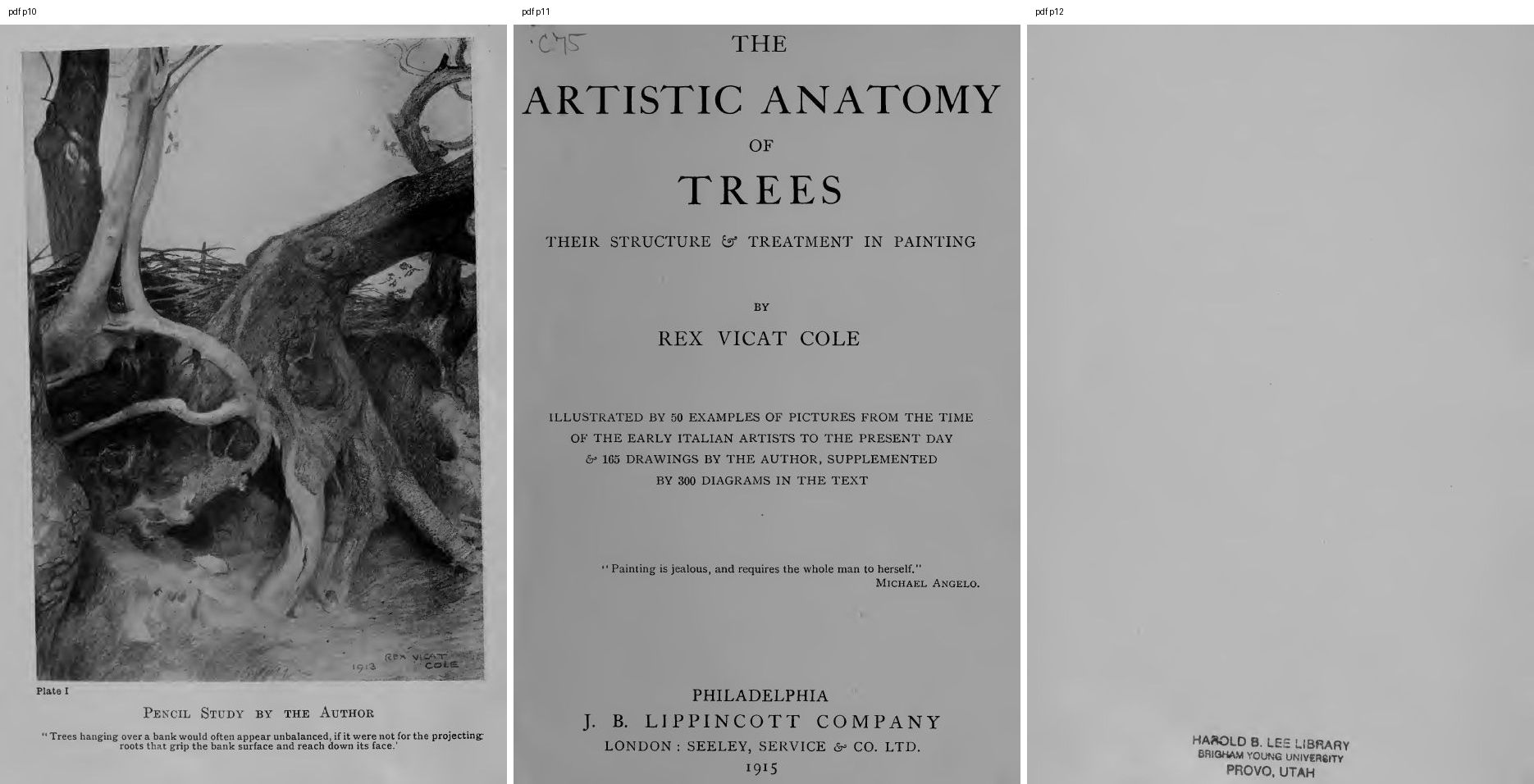 2. books/trees/pages/cole3/s010.jpg
Read: books/trees/pages/cole3/s037.jpg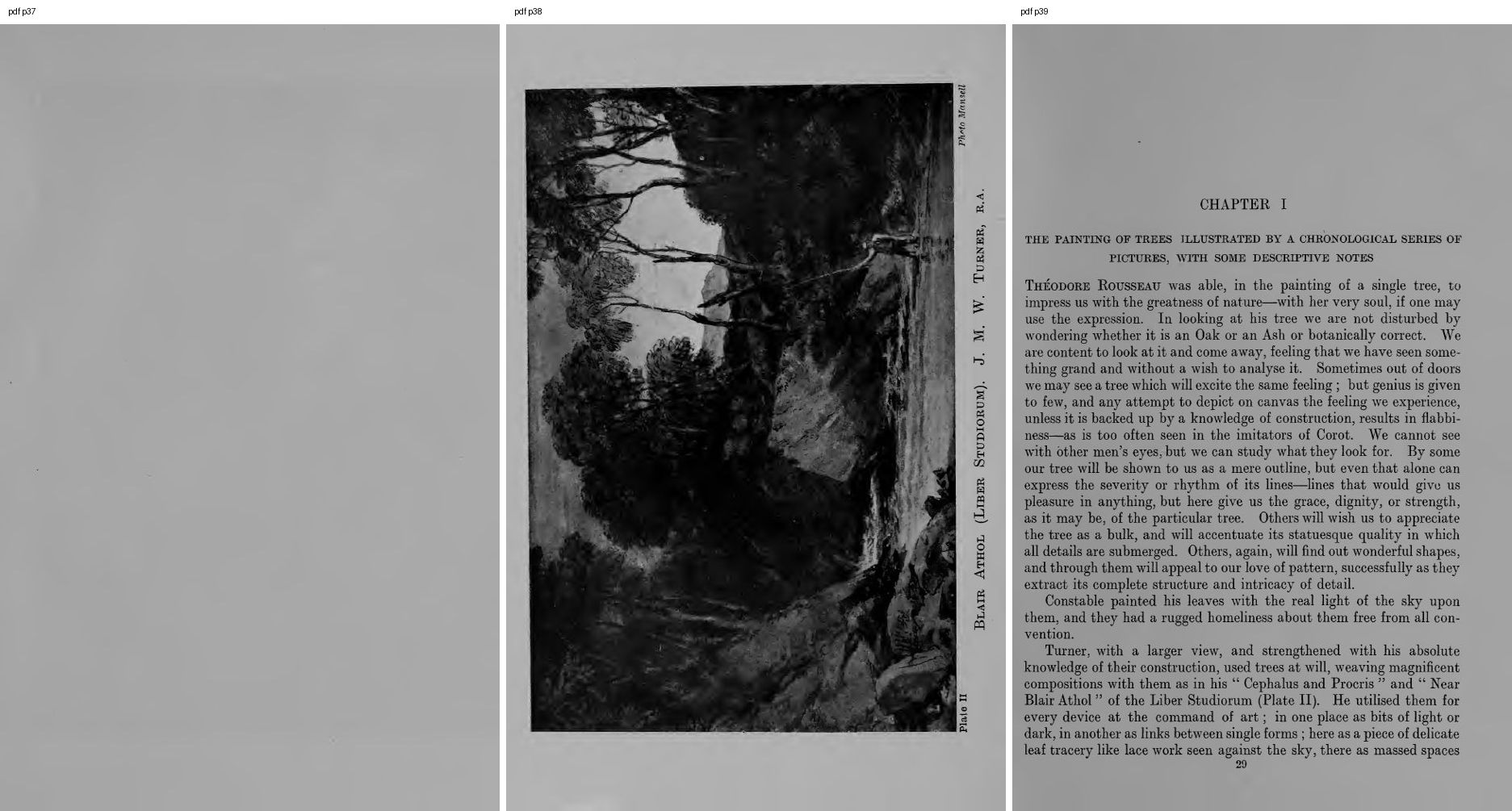 3. books/trees/pages/cole3/s037.jpg
Bash: cat (tmp) cd ~/work/pixelart-studies/books/trees; ls pages/cole | wc -l; pyt
cat (tmp) cd ~/work/pixelart-studies/books/trees; ls pages/cole | wc -l; python3 src/contact.py pages/cole pages/cole3 107 412; ls pages/cole3 | wc -l; du -sh pages

# output:
pdftoppm version 26.04.0
Copyright 2005-2026 The Poppler Developers - http://poppler.freedesktop.org
Copyright 1996-2011, 2022 Glyph & Cog, LLC
Usage: pdftoppm [options] [PDF-file [PPM-file-prefix]]
  -fpdftoppm version 26.04.0
 <int>                                 Copyright 2005-2026 The Poppler Developers - http://poppler.freedesktop.org
Copyright 1996-2011, 2022 Glyph & Cog, LLC
Usage: pdftoppm [options] [PDF-file [PPM-file-prefix]]: first page to print
  -l <int>                                 : last page to print
  -o                                       : print only odd pages
  -e                                       : print only even pages
  -singlefile                              : write only the first page and do not add digits
  -scale-dimension-before-rotation         : for rotated pdf, resize dimensions before the rotation
  -r <fp>                                  : resolution, in DPI (default is 150)
  -rx <fp>                                 : X resolution, in DPI (default is 150)
  -ry <fp>                                 : Y resolution, in DPI (default is 150)
  -scale-to <int>                          : scales each page to fit within scale-to*scale-to pixel box
  -scale-to-x <int>                        : scales each page horizontally to fit in scale-to-x pixels
  -scale-to-y <int>                        : scales each page vertically to fit in scale-to-y pixels
  -x <int>                                 : x-coordinate of the crop area top left corner
  -y <int>                                 : y-coordinate of the crop area top left corner
  -W <int>                                 : width of crop area in pixels (default is 0)
  -H <int>                                 : height of crop area in pixels (default is 0)
  -sz <int>                                : size of crop square in pixels (sets W and H)
  -cropbox                                 : use the crop box rather than media box
  -hide-annotations                        : do not show annotations
  -mono                                    : generate a monochrome PBM file
  -gray                                    : generate a grayscale PGM file
  -f <int>                                 : first page to print
  -l <int>                                 : last page to print
  -o                                       : print only odd pages
  -e                                       : print only even pages
  -singlefile                              : write only the first page and do not add digits
  -scale-dimension-before-rotation         : for rotated pdf, resize dimensions before the rotation
  -r <fp>                                  : resolution, in DPI (default is 150)
  -rx <fp>                                 : X resolution, in DPI (default is 150)
  -ry <fp>                                 : Y resolution, in DPI (default is 150)
  -scale-to <int>                          : scales each page to fit within scale-to*scale-to pixel box
  -scale-to-x <int>
Bash: cat > ~/work/pixelart-studies/books/trees/tmp/render.sh <<'E' #!/bin/bash cd ~/work/pixelart-studies/books/trees/pages/cole P=~/work/pixelart-studies/library/trees/artisticanatomyo
cat > ~/work/pixelart-studies/books/trees/tmp/render.sh <<'E'
#!/bin/bash
cd ~/work/pixelart-studies/books/trees/pages/cole
P=~/work/pixelart-studies/library/trees/artisticanatomyo1915cole.pdf
nice -n 10 pdftoppm -f 107 -l 183 -r 110 -gray -jpeg -jpegopt quality=80 $P p &
nice -n 10 pdftoppm -f 184 -l 260 -r 110 -gray -jpeg -jpegopt quality=80 $P p &
nice -n 10 pdftoppm -f 261 -l 336 -r 110 -gray -jpeg -jpegopt quality=80 $P p &
nice -n 10 pdftoppm -f 337 -l 412 -r 110 -gray -jpeg -jpegopt quality=80 $P p &
wait
ls | wc -l
E
chmod +x ~/work/pixelart-studies/books/trees/tmp/render.sh

# output:
(Bash completed with no output)
Bash: ~/work/pixelart-studies/books/trees/tmp/render.sh
~/work/pixelart-studies/books/trees/tmp/render.sh

# output:
Command running in background with ID: bb086nj1o. Output is being written to: (tmp) You will be notified when it completes. To check interim output, use Read on that file path.
Meanwhile, the historical plates.
Read: books/trees/pages/cole3/s040.jpgRead: books/trees/pages/cole3/s043.jpg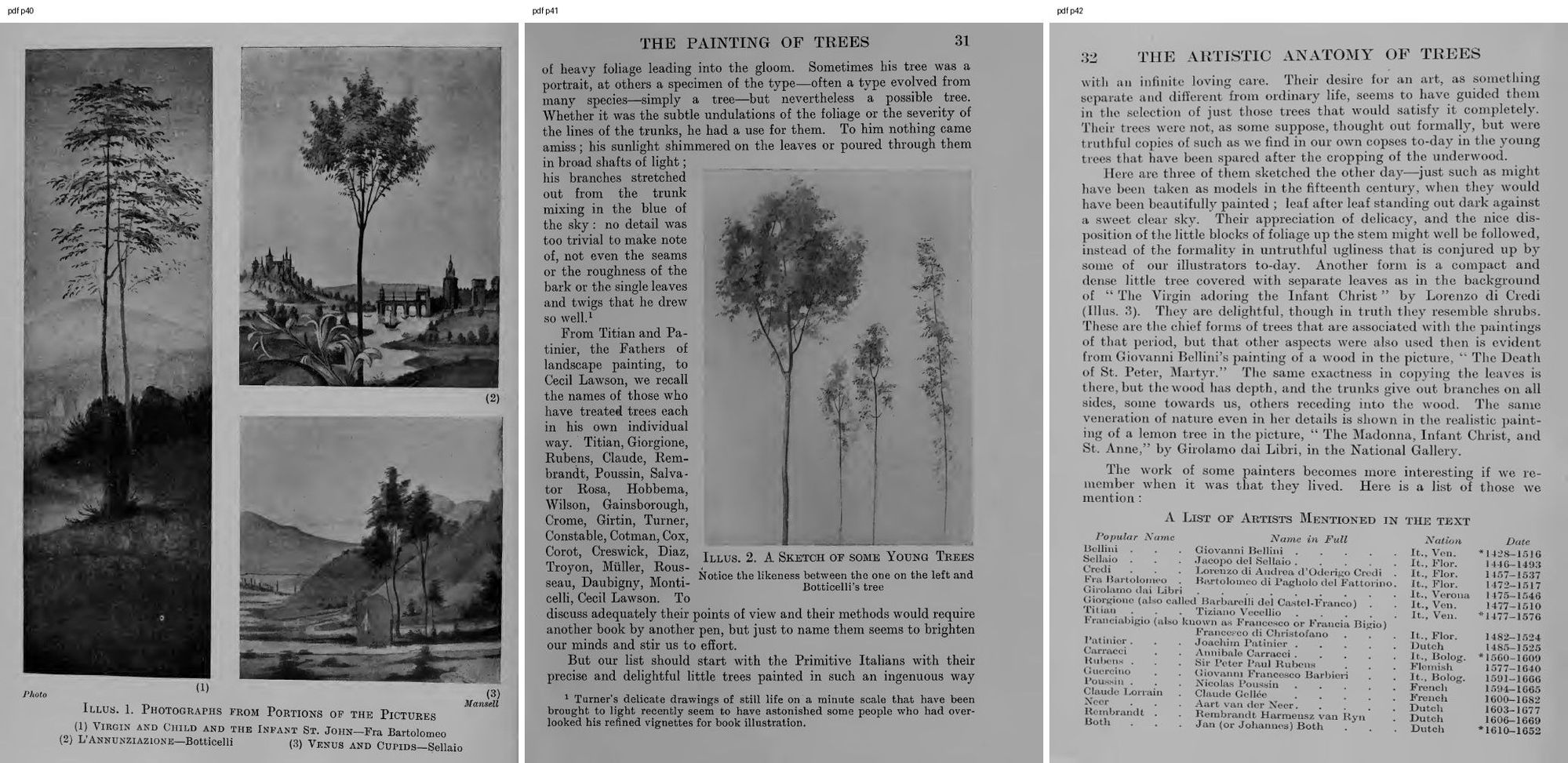 4. books/trees/pages/cole3/s040.jpg
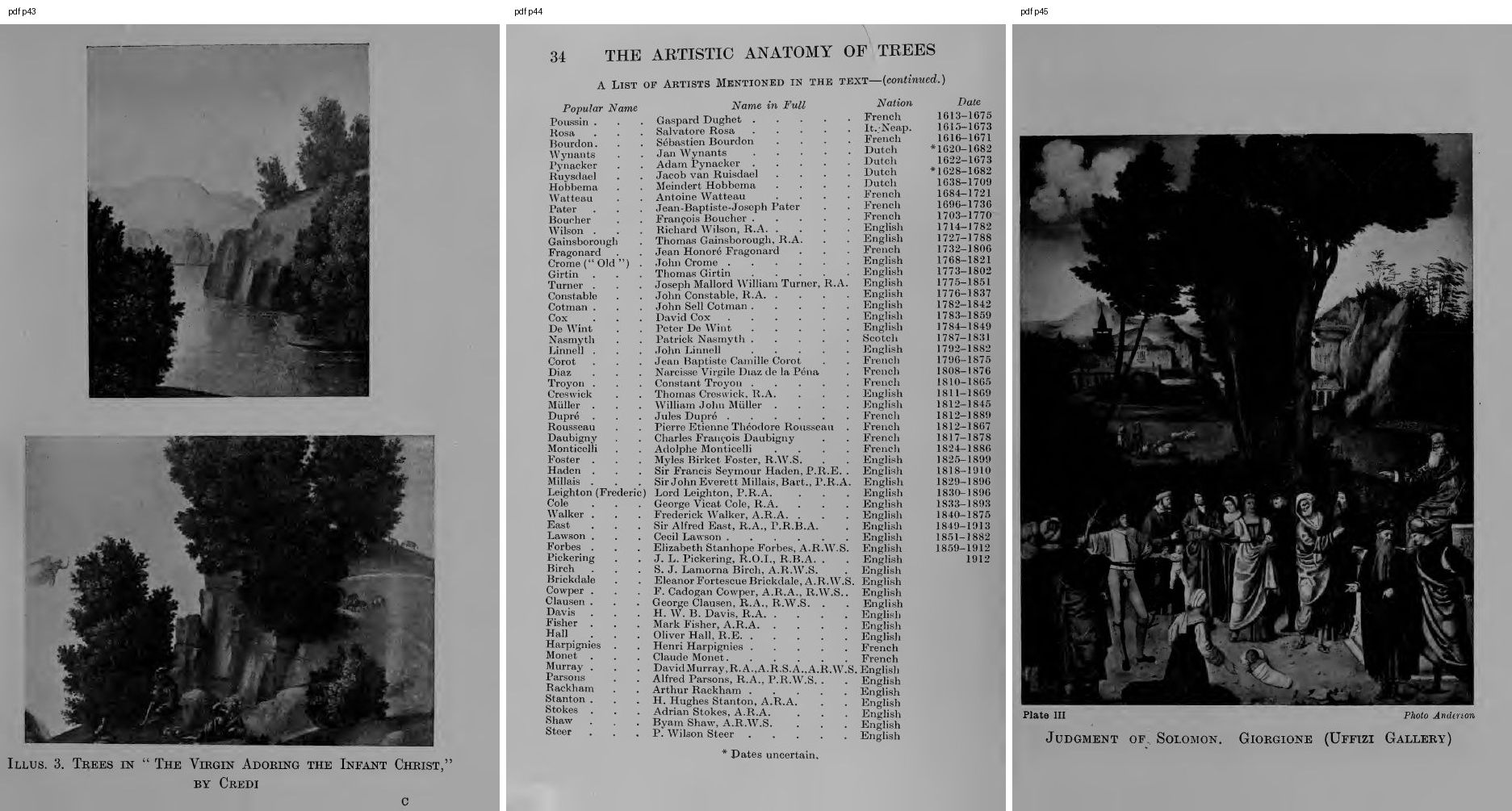 5. books/trees/pages/cole3/s043.jpg
Bash: cd ~/work/pixelart-studies/books/trees; python3 - <<'E' from PIL import Image, ImageDraw import os def grid(pages,out,cols=6,w=330): ims=[(p,Image.open(f'pages/cole/p-{p:03d}.j
cd ~/work/pixelart-studies/books/trees; python3 - <<'E'
from PIL import Image, ImageDraw
import os
def grid(pages,out,cols=6,w=330):
    ims=[(p,Image.open(f'pages/cole/p-{p:03d}.jpg')) for p in pages if os.path.exists(f'pages/cole/p-{p:03d}.jpg')]
    h=int(w*926/617)
    rows=(len(ims)+cols-1)//cols
    S=Image.new('L',(cols*w,rows*(h+14)),255);d=ImageDraw.Draw(S)
    for i,(p,im) in enumerate(ims):
        x=(i%cols)*w;y=(i//cols)*(h+14)
        S.paste(im.resize((w-4,h)),(x,y+14));d.text((x+4,y+1),str(p),fill=0)
    S.save(out,quality=85)
grid([46,47,48,49,50,51,53,54,55,56,59,60],'tmp/plates1.jpg')
grid([61,62,63,64,65,66,67,68,69,70,77,78],'tmp/plates2.jpg')
grid([80,81,82,85,86,87,88,101,102,105,106,108],'tmp/plates3.jpg')
E
ls pages/cole|wc -l

# output:
122
Read: books/trees/tmp/plates1.jpg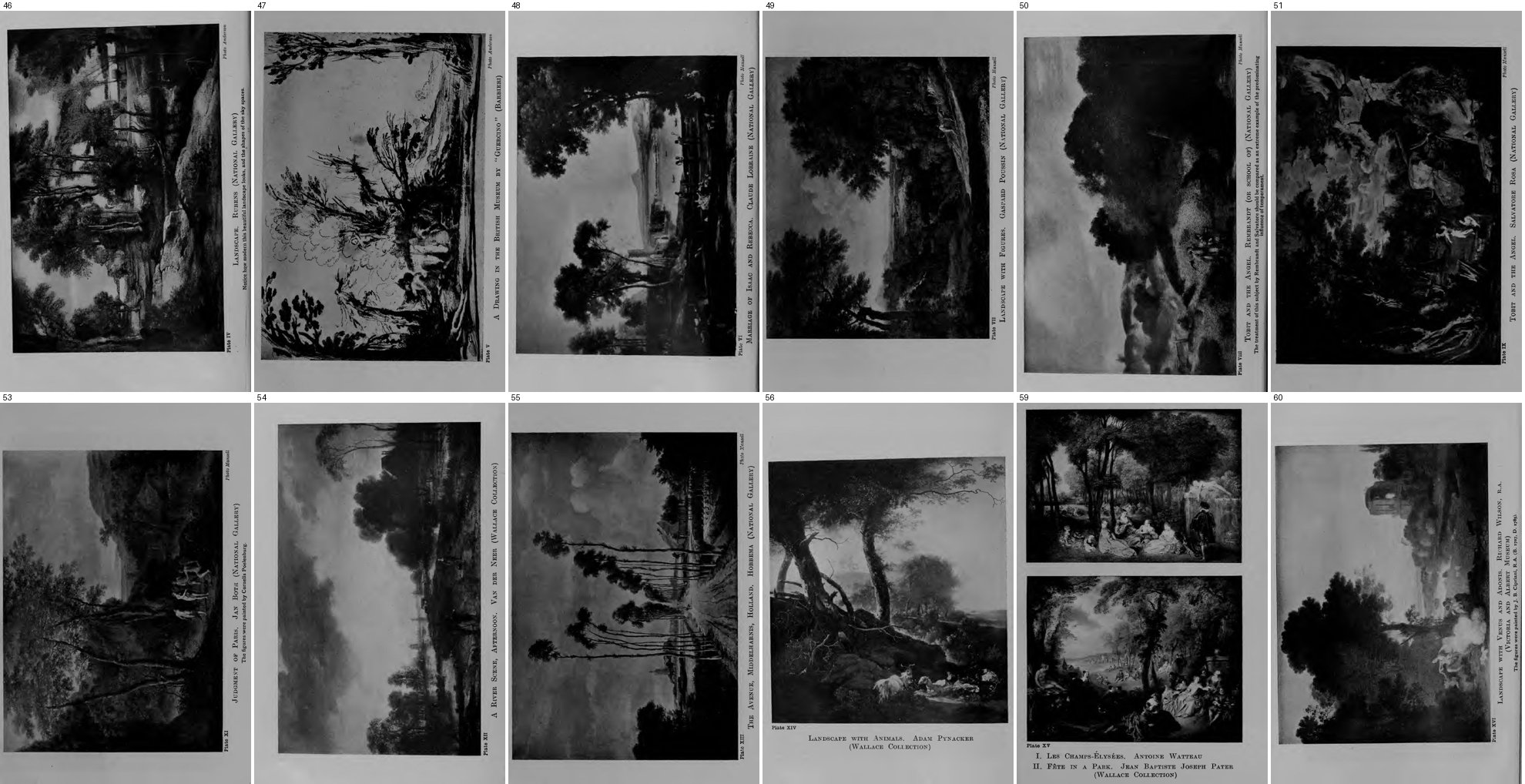 6. books/trees/tmp/plates1.jpg
Read: books/trees/tmp/plates2.jpgRead: books/trees/tmp/plates3.jpg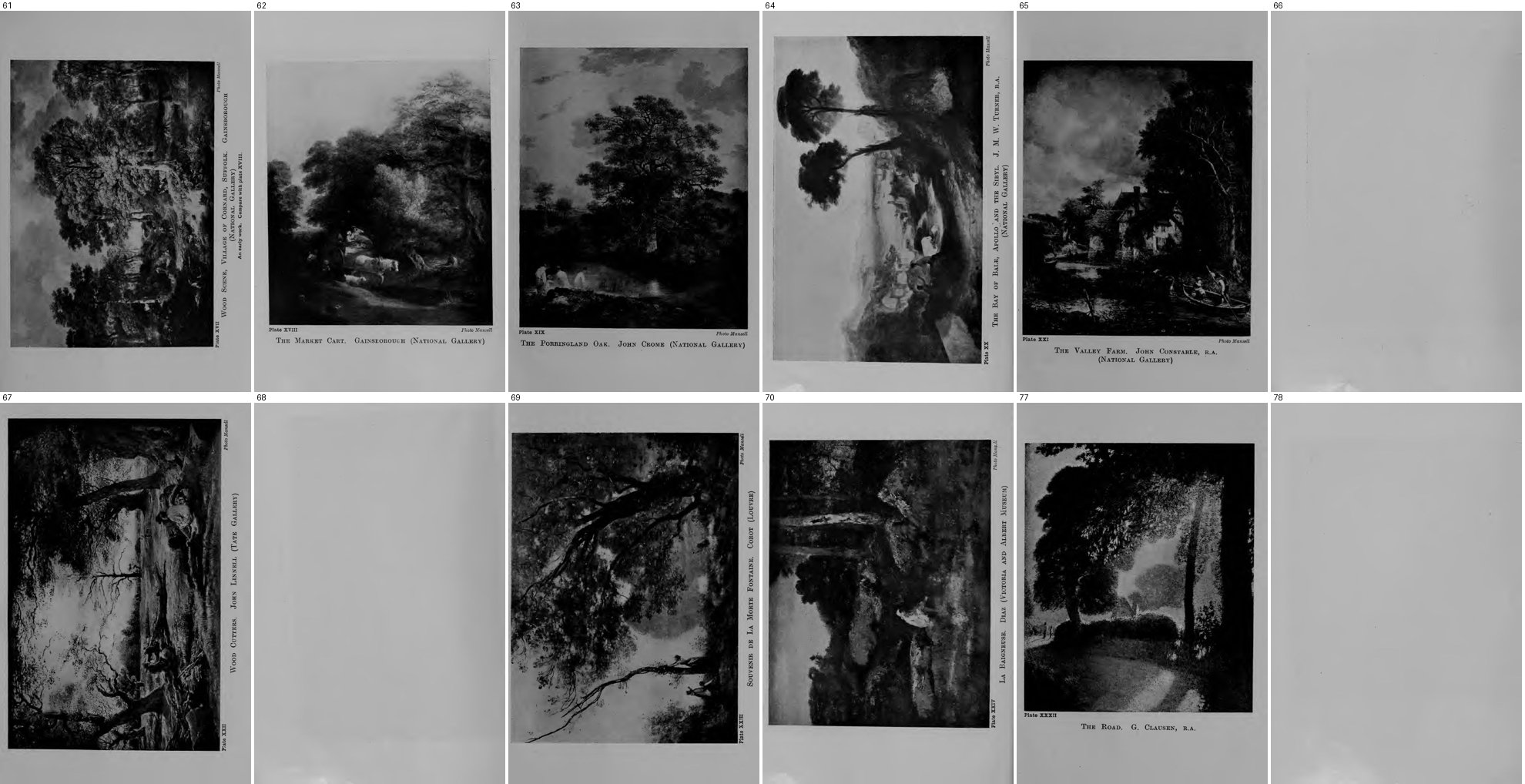 7. books/trees/tmp/plates2.jpg
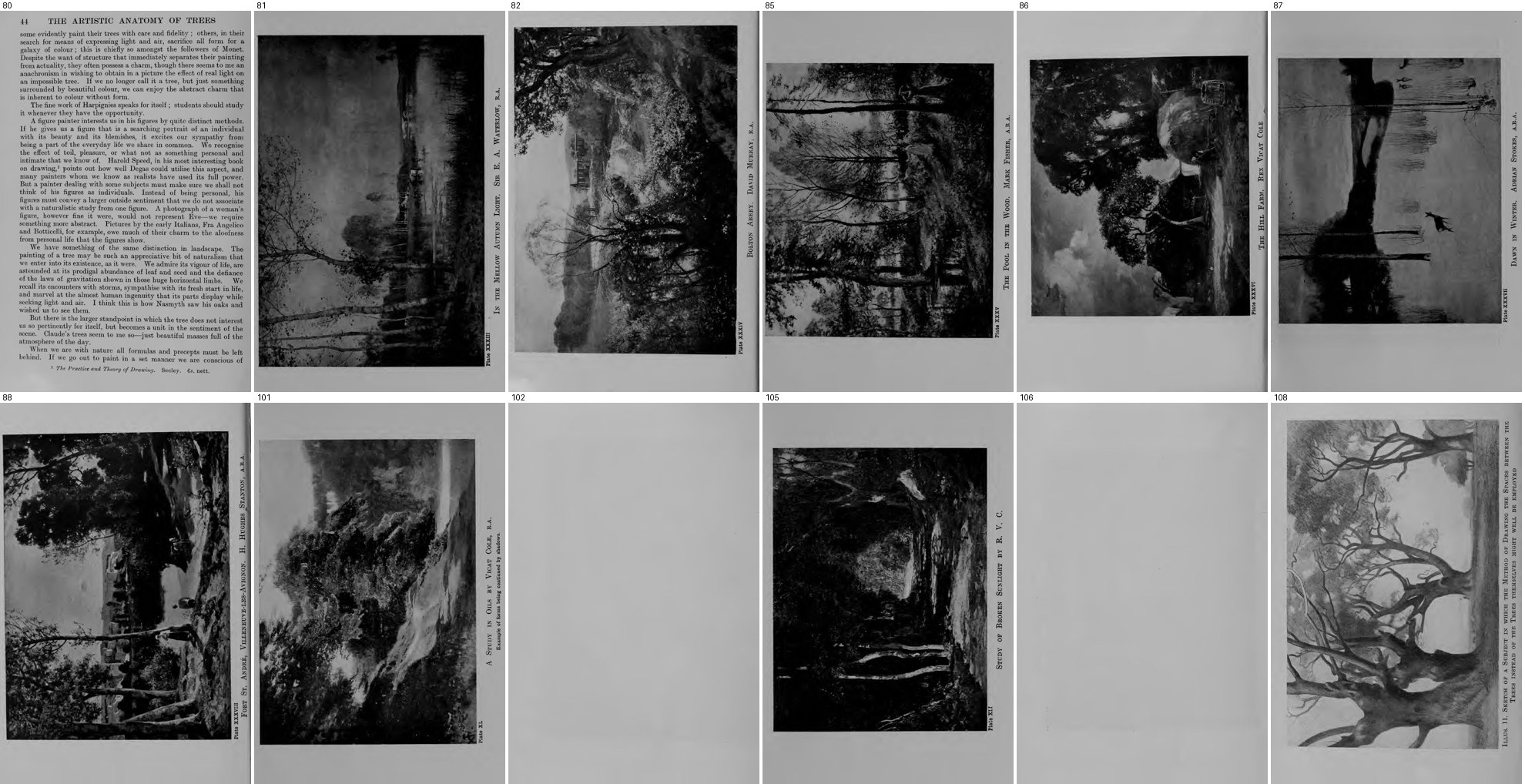 8. books/trees/tmp/plates3.jpg
Read: books/trees/pages/cole3/s088.jpg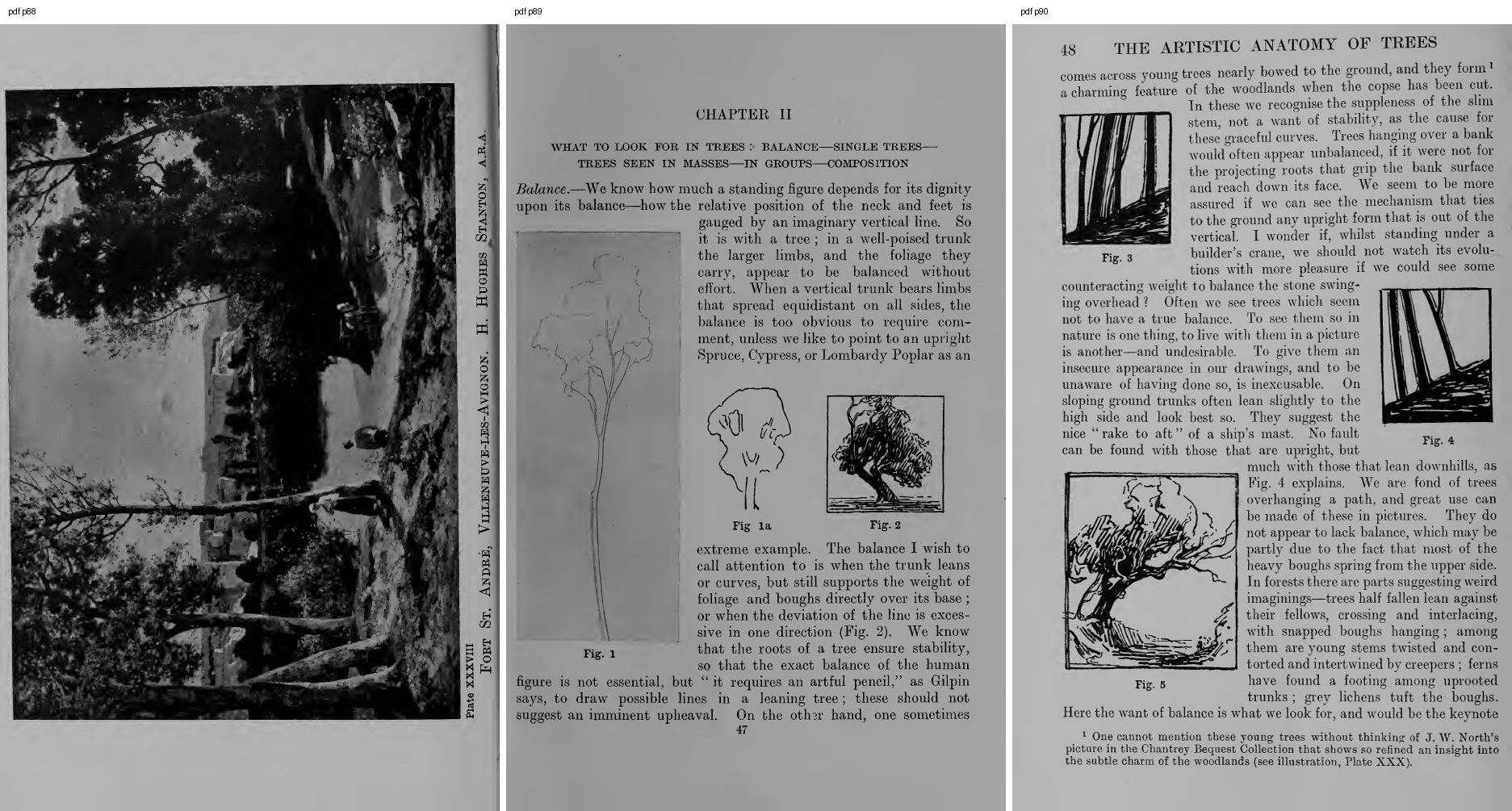 9. books/trees/pages/cole3/s088.jpg
Read: books/trees/pages/cole3/s091.jpg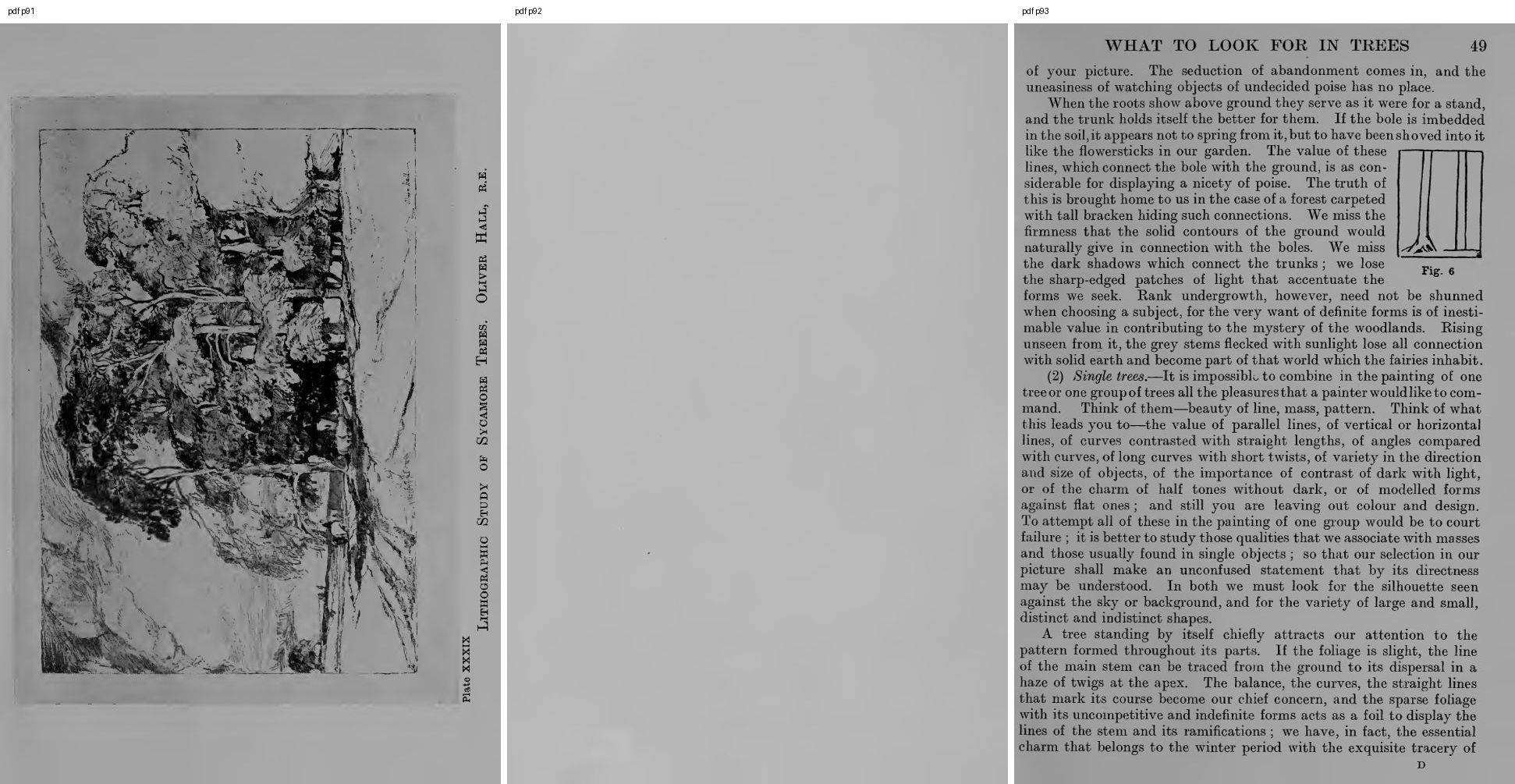 10. books/trees/pages/cole3/s091.jpg
Read: books/trees/pages/cole3/s094.jpg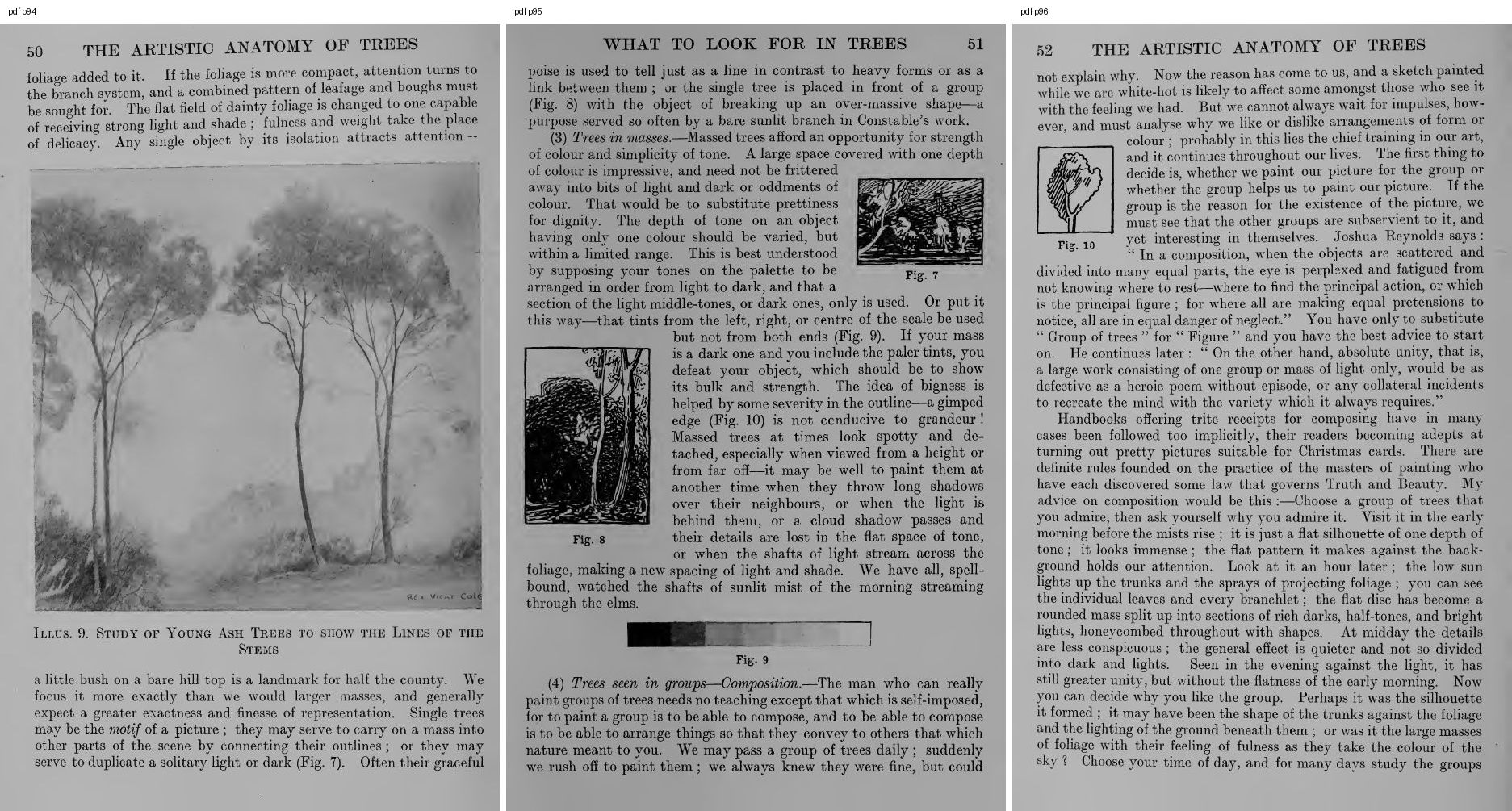 11. books/trees/pages/cole3/s094.jpg
Read: books/trees/pages/cole3/s097.jpgRead: books/trees/pages/cole3/s100.jpgRead: books/trees/pages/cole3/s103.jpg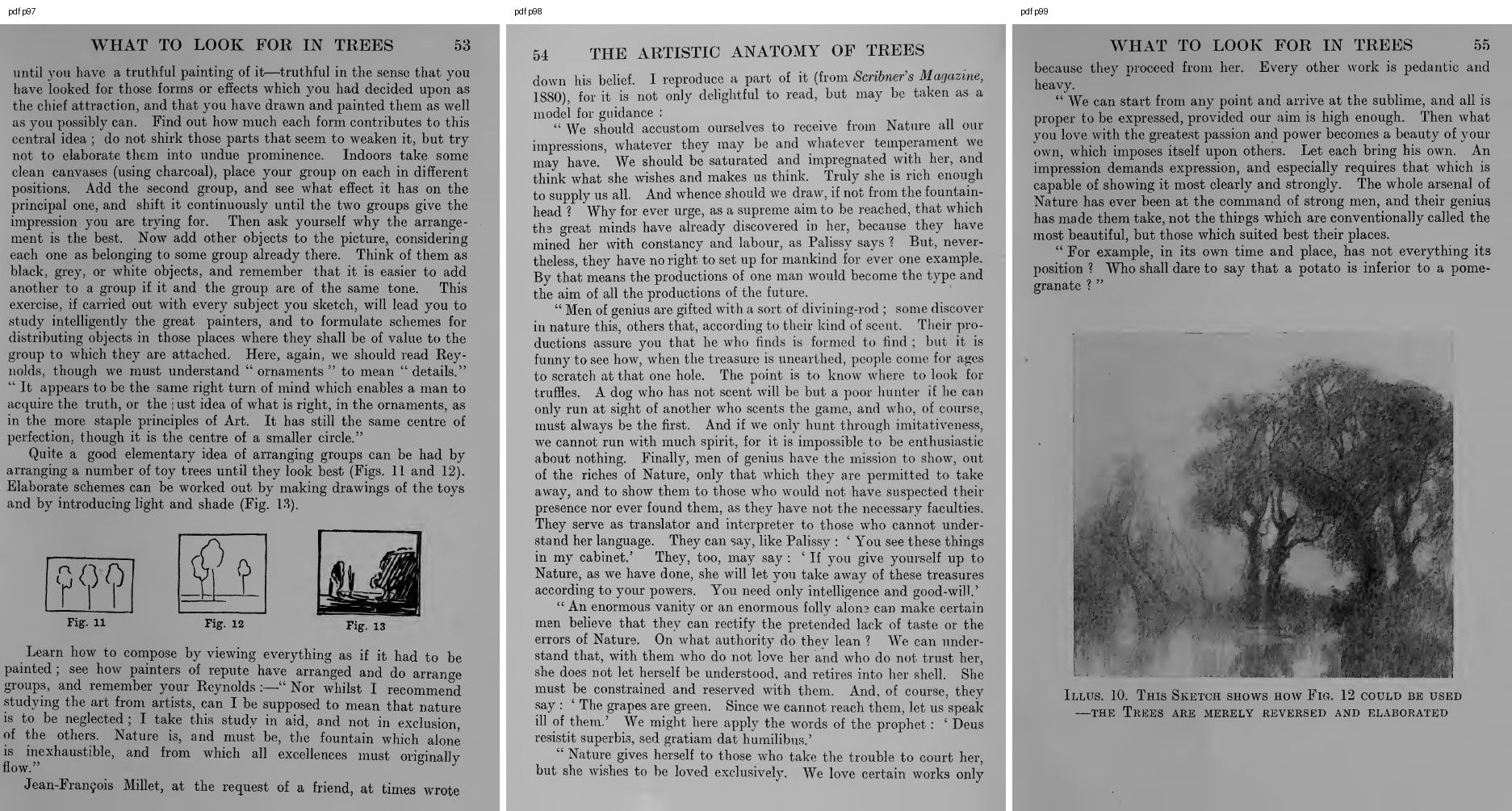 12. books/trees/pages/cole3/s097.jpg
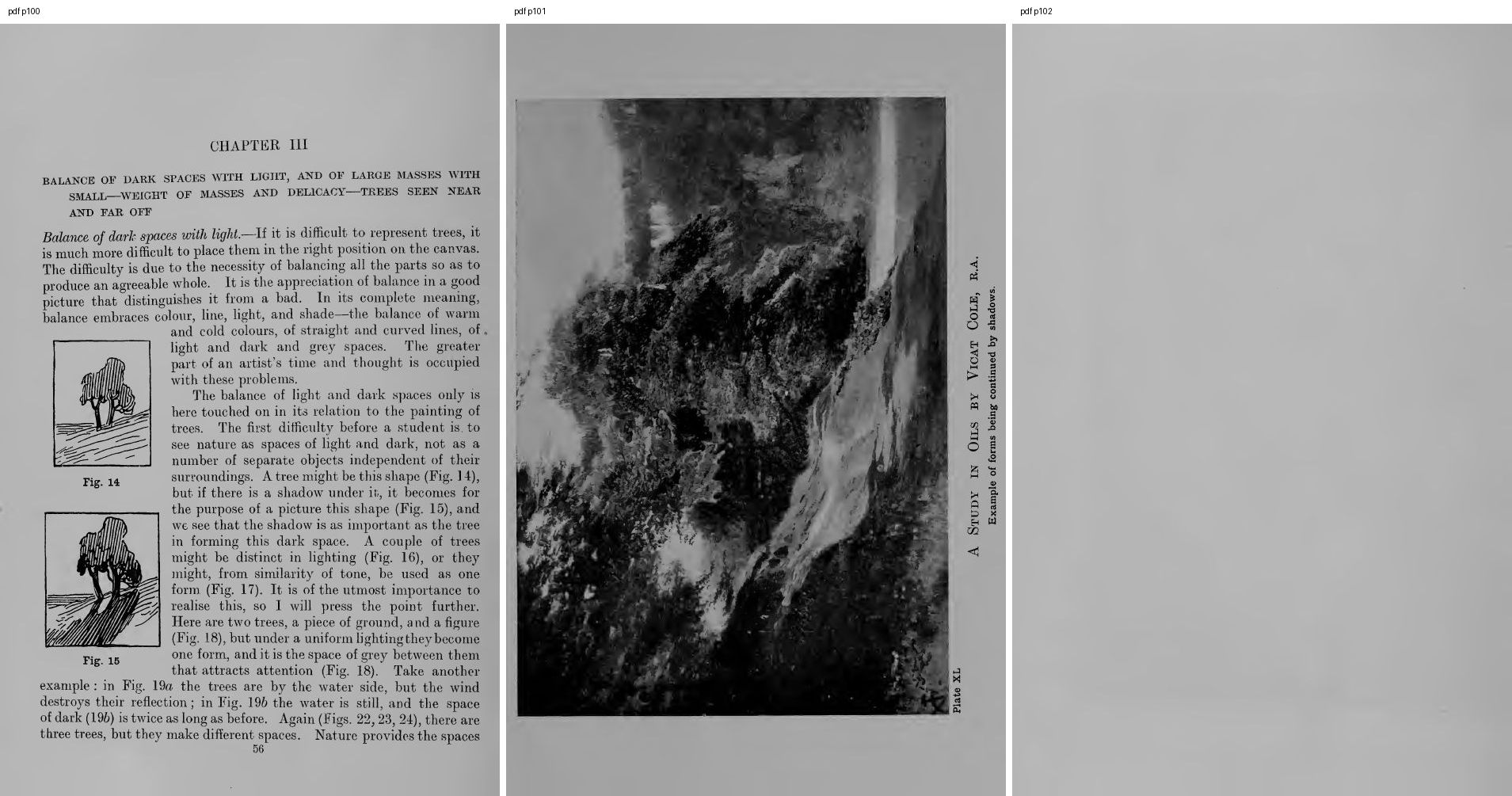 13. books/trees/pages/cole3/s100.jpg
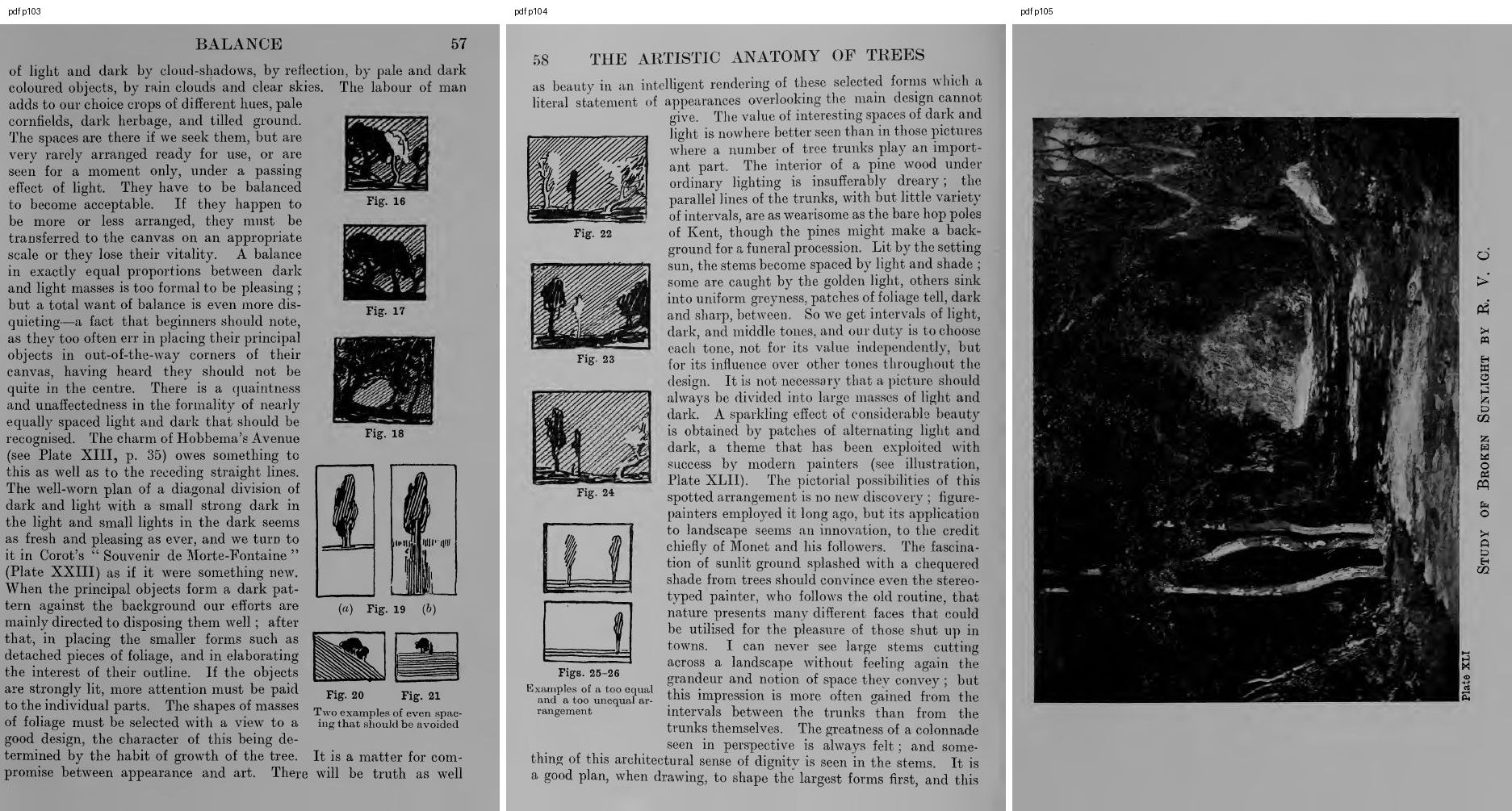 14. books/trees/pages/cole3/s103.jpg
Bash: cd ~/work/pixelart-studies/books/trees; ls pages/cole|wc -l; cat (tmp)
cd ~/work/pixelart-studies/books/trees; ls pages/cole|wc -l; cat (tmp)

# output:
172
Read: books/trees/pages/cole3/s106.jpgRead: books/trees/pages/cole3/s109.jpgRead: books/trees/pages/cole3/s112.jpgRead: books/trees/pages/cole3/s115.jpgRead: books/trees/pages/cole3/s118.jpg 15. books/trees/pages/cole3/s106.jpg
Bash: cd ~/work/pixelart-studies/elements/conifers; wc -l *.py LESSONS.md CRITIQUE.md; sed -n 1,120p LESSONS.md
cd ~/work/pixelart-studies/elements/conifers; wc -l *.py LESSONS.md CRITIQUE.md; sed -n 1,120p LESSONS.md

# output:
20 cmp.py
      13 cmp_voxtrees.py
     190 conifer.py
     198 foliage_fast.py
     494 grow.py
      13 lw.py
     443 paint.py
     158 palette.py
     285 render.py
      40 s0_copy.py
      12 s0_tune.py
      49 s1_branch.py
      30 s1_col.py
      22 s1_grey.py
       8 s1_near.py
      14 s2_ages.py
      21 s3_zoom.py
      19 s4_stand.py
      30 s5_bark.py
     158 sheets.py
      23 stats.py
     340 tree.py
     268 LESSONS.md
      84 CRITIQUE.md
    2932 total
# The great Pacific Northwest conifers, after Mark Ferrari: lessons

A student's log. Subject: Douglas-fir, western hemlock, western redcedar and Sitka spruce, as
individuals and as forest, from 1-cm needles to a 2.5 m/px iso region.

**Code** (all in this folder; numpy only, `nice -n 10`, one BLAS thread):

| file | what it is |
|---|---|
| `grow.py` | the four species grown as geometry in metres: trunk (lean, taper, buttress flare, flutes, hemlock's nodding leader), limbs in whorls or scattered with species droop / J-hook upturn, secondary *fans* on mature and old limbs, old-crown gaps, dead stubs, cedar candelabra leaders and silver spike tops. Species and age tables (`SP`, `AGE`) are the parameters. |
| `foliage_fast.py` | the foliage *elements* (fronds, strands, brush tufts, spurs, needle fill, coarse-scale area fill), vectorized (10-25x faster than the loop version `grow._foliage_slow`, which it matches; `tmp/vectorize_check.png`). |
| `paint.py` | the painter: light per foliage point, rasterize body + stroke marks, value plan, quantize to an index canvas (material, step), wood surfaces with bark patterns. |
| `palette.py` | the palette is the light: 8-step foliage ramps (shadow family 0-3, lit family 4-7) per species x hour x aerial depth; wood, ground and sky ramps. |
| `conifer.py` | public API: `tree(...)`, `stand(...)` (depth-composited stands with one shared shadow map and a ground plane with cast shadows). |
| `sheets.py` | the labelled parameter sheets in `sheets/`. |
| `tree.py`, `render.py`, `s0_copy.py`, `s0_tune.py`, `stats.py`, `lw.py` | stage 0 (the master copy), frozen as its regression. |
| `s1_*.py` ... `s5_bark.py` | one script per study stage; `cmp.py` side-by-side helpers; `cmp_voxtrees.py`. |

Photos: `refs/` (fetched with the studio's imgfetch; each folder has a `_sheet.jpg` contact
sheet). The ones I leaned on: the Hoh hemlock against sky
(`Tsuga_heterophylla/commons_Hoh_Rainforest_...`), the open-grown Sitka spruce
(`Douglas_fir_tree_crown/openverse_Sitka_Spruce_b36ebb43.jpg`), Big Lonely Doug
(`lone_Douglas_fir_tree/openverse_Big_Lonely_Doug_97f10fa9.jpg`), the ancient cedar
(`western_redcedar_candelabra_top/openverse_Thuja_plicata_..._ancient_form_...`), the Willapa cedar
bole, and the naturalist desk's guides (`~/work/naturalist/plants/02-trees.md`, `05-old-growth.md`),
which gave me real heights (mature 40-60 m, old 60-75 m), the bark and foliage colours, and the
single most useful sentence for a painter: *every hemlock's tip nods over like
Bash: cd ~/work/voxsim-wt/platform/docs 2>/dev/null && grep -n -i "tree\|species" PACKS.md | head -60; ls ~/work/voxsim-wt/platform/ 2>/dev/null | head
cd ~/work/voxsim-wt/platform/docs 2>/dev/null && grep -n -i "tree\|species" PACKS.md | head -60; ls ~/work/voxsim-wt/platform/ 2>/dev/null | head

# output:
4:its species (how they grow in the sim, how they look), colour ramps, and
5:places (which species a world of that place grows, how common, how big).
6:The sim and the renderer both read it. Adding a species is adding a file;
18:    species/oak.toml ...
21:    palette.toml             optional: ramps shared by your species
22:    species/douglas-fir.toml one species per file
26:One species per file means five lanes never edit the same file. Packs
27:never edit each other either: to change a base species for your place, use
38:- Loading makes a pack's species known to every consumer (the renderer can
40:  A new world grows the species of the *active* packs or place:
48:## A species file
53:based_on = "spruce"           # optional: start from another species (any loaded pack), override below
55:[sim]      # vox-flora: traits (vox_flora::species::Species)
57:[look]     # vox-trees: fallback structure generator + how it is painted (vox_trees::species::LookDoc)
58:[paint]    # vox-paint: sprite family for proportions / the non-vox-trees painter
61:Every section is optional; a species exists for a consumer only if it has
71:in metres and radians (it takes the tree's real size from the sim).
75:The fields of `vox_flora::species::Species`, all optional except `form`,
98:base species files are the worked examples; `packs/base/species/spruce.toml`
101:### `[look]` (vox-trees)
103:How vox-trees builds a structure when flora has none (studio sheets, far
104:fallbacks) and how it paints *any* structure of this species (flora's
132:marcescent = true         # young trees hold dead leaves in winter
155:A number is fixed; `[lo, hi]` is drawn per tree / per cluster. Field docs
156:are in `crates/vox-trees/src/species.rs`.
167:plants vox-trees doesn't draw (meadows). A plant without `[paint]` is not
172:`packs/base/palette.toml` holds vox-trees' ramps. A ramp is 5 levels (deep
177:[tree_ramps]
182:`alt` lists region-scale alternatives (one tree in five takes one, so a
184:cuts a hole in the canopy). A species can also define its ramps inline
214:packs = ["base", "wa-cascades"]      # species these packs define may grow here
215:species = ["douglas fir", "western hemlock", "fern", "moss"]   # optional: only these
218:[overrides."douglas fir".sim]        # optional: this place's version of a species
224:- Without `species`, every species of `packs` can grow; each still needs a
226:- `overrides` merge over the species file for worlds of this place. They
229:  that override the same species in one studio run conflict: give one of
230:  them its own species name instead).
236:- Base content must not move: `crates/vox-studio/scripts/studio-trees.sh
237:  --strict` (TREES OK), and for the sim `cargo run --release -p vox-flora
242:- A pack parse error panics with the file and section (`packs/x/species/y.toml
249:code today: voxel materials (vox-core's `Material` enum), fauna species,
Cargo.lock
Cargo.toml
NOTES.md
REEL.md
RESULTS.md
SPEC.md
crates
docs
justfile
packs
Bash: cd ~/work/voxsim-wt/platform; sed -n 48,160p docs/PACKS.md; ls packs/*/species | head -40; cat packs/base/species/douglas-fir.toml 2>/dev/null || ls packs/base/species
cd ~/work/voxsim-wt/platform; sed -n 48,160p docs/PACKS.md; ls packs/*/species | head -40; cat packs/base/species/douglas-fir.toml 2>/dev/null || ls packs/base/species # output: ## A species fileEvery section is optional; a species exists for a consumer only if it has that consumer's section (a plant with `[sim]` but no `[look]` grows in the sim and is drawn by vox-paint's own sprites, like meadows today). `based_on` merges tables key by key (deep), so `based_on = "spruce"` plus `[look.colour] leaf = "..."` changes only the needle colour. `name` and `aliases` never inherit. Chains are fine; cycles are errors. Units: the sim works in voxels (0.5 m) for heights and radii (`max_h = 120` is 60 m), years for ages, metres per second, degrees Celsius. The look works in metres and radians (it takes the tree's real size from the sim). ### `[sim]` (vox-flora traits) The fields of `vox_flora::species::Species`, all optional except `form`, defaults as in the source: | field | meaning | |---|---| | `form` | `broadleaf`, `conifer`, `bush`, `herb`, `reed`, `meadow`, `moss`, `fungus`, `crop`, `aquatic`, `deadwood` | | `max_h`, `max_cr` | mature height, crown radius (voxels) | | `photo`, `t_opt`, `t_width`, `frost_active`, `frost_dormant` | growth rate multiplier, temperature optimum/width, frost limits (C) | | `moist`, `wet_tol`, `shade_tol` | preferred soil moisture 0..1, waterlogging tolerance, shade tolerance | | `deciduous`, `fruit`, `fruit_name` | `fruit` is an item (`"nuts"`, `"berries"`, `"seeds"`, ...) | | `wind_seeds`, `spores`, `clonal`, `thorny`, `resinous`, `tannins`, `toxic`, `n_fix`, `browse`, `rock`, `acid` | flags | | `alt` | relative altitude band `[lo, hi]` (0 shore .. 1 highest land) | | `near_water` | max distance to water (voxels) for water-lovers, 0 = any | | `lifespan_years`, `mature_years`, `spacing`, `abundance`, `color` | placement: min spacing (voxels), weight where suitable | | `wood_density`, `rupture_mpa`, `rooting` | mechanics: green density kg/m3, modulus of rupture MPa, anchorage multiplier | | `stump_sprouts`, `pioneer`, `mycorrhizal` | resprouts from a fallen trunk / stump; keeps 40% on young volcanic soil; hosts chanterelles | ### `[growth]` (vox-flora growth grammar) The fields of `vox_flora::form::Arch` (Hallé-Oldeman style architecture: habit, fork height, limbs, angles, gravitropism, branching, foliage clusters, colours of the voxel body). Unset fields default per `form` (`Arch::for_form`: conifers start excurrent, whorled, cone profile). The base species files are the worked examname = "douglas fir" # the agent name; defaults to the file name, dashes as spaces aliases = [] # other names that resolve to it (renderer lookups) based_on = "spruce" # optional: start from another species (any loaded pack), override below [sim] # vox-flora: traits (vox_flora::species::Species) [growth] # vox-flora: the growth grammar of its skeleton (vox_flora::form::Arch) [look] # vox-trees: fallback structure generator + how it is painted (vox_trees::species::LookDoc) [paint] # vox-paint: sprite family for proportions / the non-vox-trees painter
Bash: cd ~/work/voxsim-wt/platform; cat packs/pnw/species/douglas-fir.toml; cat packs/base/species/spruce.toml; grep -n "pub [a-z_]*:" crates/vox-flora/src/form.rs | head -60
cd ~/work/voxsim-wt/platform; cat packs/pnw/species/douglas-fir.toml; cat packs/base/species/spruce.toml; grep -n "pub [a-z_]*:" crates/vox-flora/src/form.rs | head -60

# output:
name = "douglas fir"
# Pseudotsuga menziesii var. menziesii, coast Douglas-fir. The emergent of the
# west-side forest: a straight column to 60-75 m (old growth; 90+ m recorded),
# whorled near-level limbs with upswept tips, crown in the top third of a
# forest-grown tree above a long clear bole, bark deeply furrowed, corky,
# dark red-brown. Old trees lose the spire: an irregular, flattened top of a
# few big limbs. Sim values after lane-place-skykomish's research (naturalist
# plants/02-trees.md; Burns & Honkala 1990; Van Pelt 2001).

[sim]
form = "conifer"
max_h = 150.0            # voxels: 75 m
max_cr = 20.0            # 10 m crown radius
t_opt = 15.0
frost_active = -8.0
frost_dormant = -35.0
moist = 0.45
shade_tol = 0.35         # intermediate: regenerates in gaps and after fire
fruit = "seeds"
fruit_name = "douglas fir cone seeds"
wind_seeds = true
resinous = true
alt = [0.0, 0.7]
lifespan_years = 1000.0
mature_years = 15.0
spacing = 9.0
color = [47, 74, 44]
abundance = 1.2
wood_density = 750.0     # green, kg/m3
rupture_mpa = 53.0       # green modulus of rupture
rooting = 1.1
mycorrhizal = true       # Pacific golden chanterelle

[growth]
habit = "excurrent"
fork = 0.2
fork_max = 0.72
limbs = [3, 5]
whorled = true
angle = 86.0
angle_top = 55.0
gravi = -0.03
tip_up = 0.25
sinuous = 0.12
sub = [2, 3]
sub_angle = 55.0
sub_len = 0.45
apical = true
max_order = 2
cluster = 0.36
flat = 0.55
elong = 1.5
density = 0.85
gaps = 0.12
side_clusters = true
profile = "cone"
old_years = 250.0
buttress = true
pipe = 2.2
sleeve = true
girth = 1.25
bark = [74, 62, 54]
bark_top = [95, 82, 73]
leaf_spring = [159, 194, 90]
leaf = [47, 74, 44]
leaf_autumn = [47, 74, 44]
flower = [150, 90, 60]
fruit = [120, 90, 60]
old_umbrella = true      # old growth: a few long limbs carry a flattened top
mature_blend = true
flat_topped_when_old = true

[look]
generator = "conifer"
bark = "furrowed"
flare = [0.25, 0.45]
evergreen = true
needles = true
texture = { module = "comb", bundle = 1.0, holes = 0.45 }     # drooping sprays
region = { spire = "always" }
flora = { tier = 0.28 }

[look.colour]
leaf = { mid = "#2c4630", shift = 0.9, alt = ["SpruceNeedle", "PineNeedle"] }
bark = { mid = "#6e5e52", shift = 0.45, wood = true }

[look.conifer]
gnarl = 0.2
depth = 2
droop = 0.18
trunk_k = 0.016
whorl_m = 2.6
whorl = [3, 5]
crown_base = { base = 0.1, per_age = 0.45, closed = 0.35, max = 0.7, jitter = 0.8, spread = 0.4 }
stub_chance = 0.5
stub_len = [0.2, 0.8]
rise = [-0.15, 0.0]      # lower limbs level to drooping ...
rise_top = [0.2, 0.45]   # ... upper limbs sweep up
pad_width = [0.4, 0.6]
pad_thick = 0.2
pad_droop = [0.05, 0.25]
pad_density = [0.75, 0.95]

[look.conifer.old]
age = 0.75
base = 0.55
spread = 0.15
open = -0.15
widest = 0.6
profile = 0.5
skip = 0.25
whorl = [2, 4]
rise = [-0.05, 0.3]
gnarl = 0.6
depth = 2
laterals = 0.9
twigs = 0.5
pad = [0.2, 0.32]
pad_stretch = [1.0, 1.4]
pad_thick = [0.25, 0.4]

[paint]
class = "spruce"
name = "spruce"
# Norway spruce: narrow
Bash: cd ~/work/pixelart-studies/books/trees; ls pages/cole|wc -l
cd ~/work/pixelart-studies/books/trees; ls pages/cole|wc -l

# output:
221
Bash: cd ~/work/pixelart-studies/elements; for d in conifers broadleaf canopy treeline alpflora; do echo "== $d"; ls $d/refs | head -30; done; du -sh */refs 2>/dev/null | sort -h | tail
cd ~/work/pixelart-studies/elements; for d in conifers broadleaf canopy treeline alpflora; do echo "== $d"; ls $d/refs | head -30; done; du -sh */refs 2>/dev/null | sort -h | tail

# output:
== conifers
Douglas_fir_tree_crown
Douglas_fir_tree_field
Hoh_rainforest_old_growth
Olympic_peninsula_forest_ridge_trees
Pacific_Northwest_conifer_forest_aerial
Picea_sitchensis_tree
Pseudotsuga_menziesii_bark
Pseudotsuga_menziesii_tree
Sitka_spruce_branches_needles
Sitka_spruce_old_growth_giant
Sitka_spruce_tree_Olympic
Thuja_plicata
Tsuga_heterophylla
conifer_forest_hillside_Washington_fog
lone_Douglas_fir_tree
old_growth_Douglas_fir_crown
old_growth_Douglas_fir_trunk_bark
old_growth_forest_canopy_Olympic_Nationa
old_growth_western_red_cedar_tree
q.txt
q2.txt
q3.txt
western_hemlock_Tsuga_heterophylla_branc
western_hemlock_tree
western_hemlock_tree_drooping_leader
western_red_cedar_buttress_trunk_base
western_red_cedar_foliage_sprays
western_redcedar_candelabra_top
western_redcedar_tree_Thuja_plicata
young_Douglas_fir_sapling
== broadleaf
bigleaf_maple_moss_tree
bigleaf_maple_moss_tree.log
bigleaf_maple_tree
bigleaf_maple_tree.log
garry_oak_tree_meadow
garry_oak_tree_meadow.log
madrone_bark
madrone_bark.log
oregon_white_oak_tree
oregon_white_oak_tree.log
pacific_madrone_tree
pacific_madrone_tree.log
red_alder_grove_trunks
red_alder_grove_trunks.log
red_alder_tree
red_alder_tree.log
row_alder.jpg
row_madrone.jpg
row_maple.jpg
row_oak.jpg
== canopy
drape
lit
obl
oly_obliques_2016.jpg
photos
sj_obliques_2016.jpg
== treeline
Badger_Valley_Olympic
Cascade_Pass_meadow
Cascade_huckleberry_red_fall_meadow
Enchantment_Lakes
Enchantments_larch
Grand_Park_Mount_Rainier
Heather_Pass_larch
Hurricane_Ridge_meadow_subalpine_fir
Lake_Viviane_Enchantments
Larch_Lakes_Washington
Maple_Pass_larch
Mount_Rainier_Paradise_wildflowers_trees
Mount_Rainier_fall_color_meadow
Olympic_National_Park_subalpine_meadow
Paradise_meadow_Mount_Rainier_subalpine_
Sahale_Arm
Seven_Lakes_Basin_Olympic
Snow_Lakes_Enchantments
Spray_Park_Mount_Rainier
Sunrise_Mount_Rainier_meadow
Yellowstone_Lake_Sunrise_Rainier
alpine_larch_golden_meadow
avalanche_lily_snowbank
commons.log
commons_abies_lasiocarpa
commons_avalanche_lily
commons_enchantment_lakes
commons_enchantments
commons_hurricane_ridge
commons_krummholz
== alpflora
Camassia_quamash
Cape_Flattery
Cape_Perpetua_spruce
Cascade_huckleberry_fall_red
Cassiope_mertensiana
Castilleja_parviflora
Cattle_Point_San_Juan
Cladonia_lichen_rock
Ecola_State_Park_trees
Enchantment_Lakes
Enchantments_Core_zone
Garry_oak_meadow_camas
Gaultheria_shallon
Iceberg_Point_Lopez_Island
Kalaloch_tree_of_life
Larix_lyallii
Lupinus_latifolius
Olympic_National_Park_coast_headland_for
Olympic_coast_sea_stack_trees
Oregon_stonecrop
Phyllodoce_empetriformis
Pinus_albicaulis_krummholz
Plectritis_congesta
Point_of_the_Arches
Racomitrium_moss
Ruby_Beach
San_Juan_Islands_bald
Sedum_oreganum
Sedum_spathulifolium
Sitka_spruce_headland_Oregon
102M    conifers/refs
112M    canids/refs
123M    birds/refs
127M    alpflora/refs
132M    treeline/refs
137M    small-mammals/refs
138M    weather/refs
150M    marine-mammals/refs
151M    salmon/refs
200M    bear-cougar/refs
Bash: mkdir -p ~/work/pixelart-studies/books/trees/pages/halle; cd ~/work/pixelart-studies/books/trees/pages/halle; H="$HOME/work/pixelart-studies/library/purchased/Tropical trees and fo
mkdir -p ~/work/pixelart-studies/books/trees/pages/halle; cd ~/work/pixelart-studies/books/trees/pages/halle; H="$HOME/work/pixelart-studies/library/purchased/Tropical trees and forests  an architectural analysis (Hallé, Francis, Hallé-Oldeman).pdf"; time nice pdftoppm -f 50 -l 52 -r 70 -gray -jpeg "$H" h; ls

# output:
Syntax Error: Invalid XRef entry 0
nice pdftoppm -f 50 -l 52 -r 70 -gray -jpeg "$H" h  1.09s user 0.06s system 13% cpu 8.796 total
h-050.jpg
h-051.jpg
h-052.jpg
Read: books/trees/pages/halle/h-050.jpg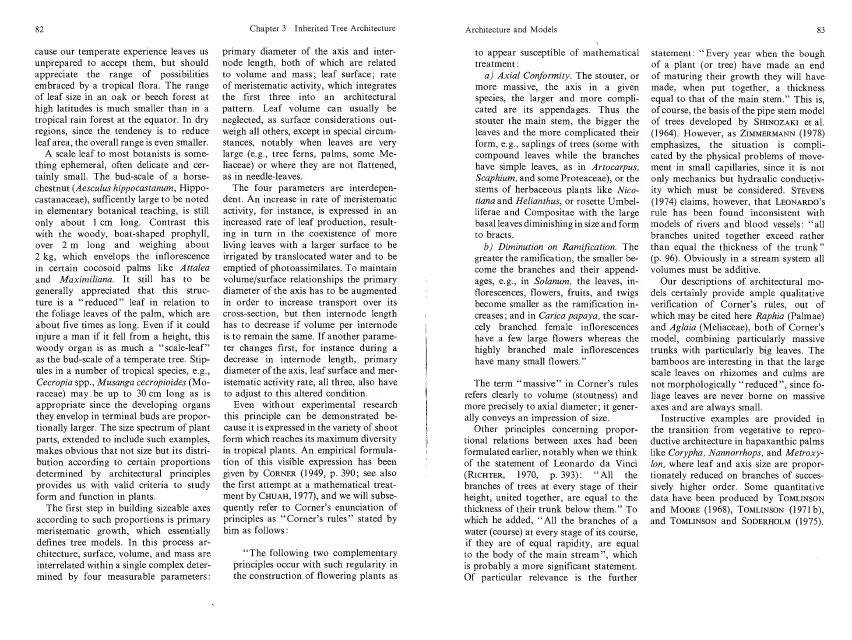 16. books/trees/pages/halle/h-050.jpg
Bash: cat > ~/work/pixelart-studies/books/trees/tmp/renderh.sh <<'E' #!/bin/bash cd ~/work/pixelart-studies/books/trees/pages/halle H="$HOME/work/pixelart-studies/library/purchased/Tropi
cat > ~/work/pixelart-studies/books/trees/tmp/renderh.sh <<'E'
#!/bin/bash
cd ~/work/pixelart-studies/books/trees/pages/halle
H="$HOME/work/pixelart-studies/library/purchased/Tropical trees and forests  an architectural analysis (Hallé, Francis, Hallé-Oldeman).pdf"
nice -n 10 pdftoppm -f 14 -l 60 -r 100 -gray -jpeg "$H" h 2>/dev/null &
nice -n 10 pdftoppm -f 61 -l 110 -r 100 -gray -jpeg "$H" h 2>/dev/null &
nice -n 10 pdftoppm -f 111 -l 160 -r 100 -gray -jpeg "$H" h 2>/dev/null &
nice -n 10 pdftoppm -f 161 -l 200 -r 100 -gray -jpeg "$H" h 2>/dev/null &
wait; ls | wc -l
E
chmod +x ~/work/pixelart-studies/books/trees/tmp/renderh.sh

# output:
(Bash completed with no output)
Bash: ls ~/work/pixelart-studies/books/trees/pages/cole|wc -l
ls ~/work/pixelart-studies/books/trees/pages/cole|wc -l

# output:
260
Bash: cd ~/work/pixelart-studies/books/trees; python3 src/contact.py pages/cole pages/cole3 106 183 >/dev/null; ls pages/cole3 | wc -l
cd ~/work/pixelart-studies/books/trees; python3 src/contact.py pages/cole pages/cole3 106 183 >/dev/null; ls pages/cole3 | wc -l

# output:
49
Read: books/trees/pages/cole3/s106.jpg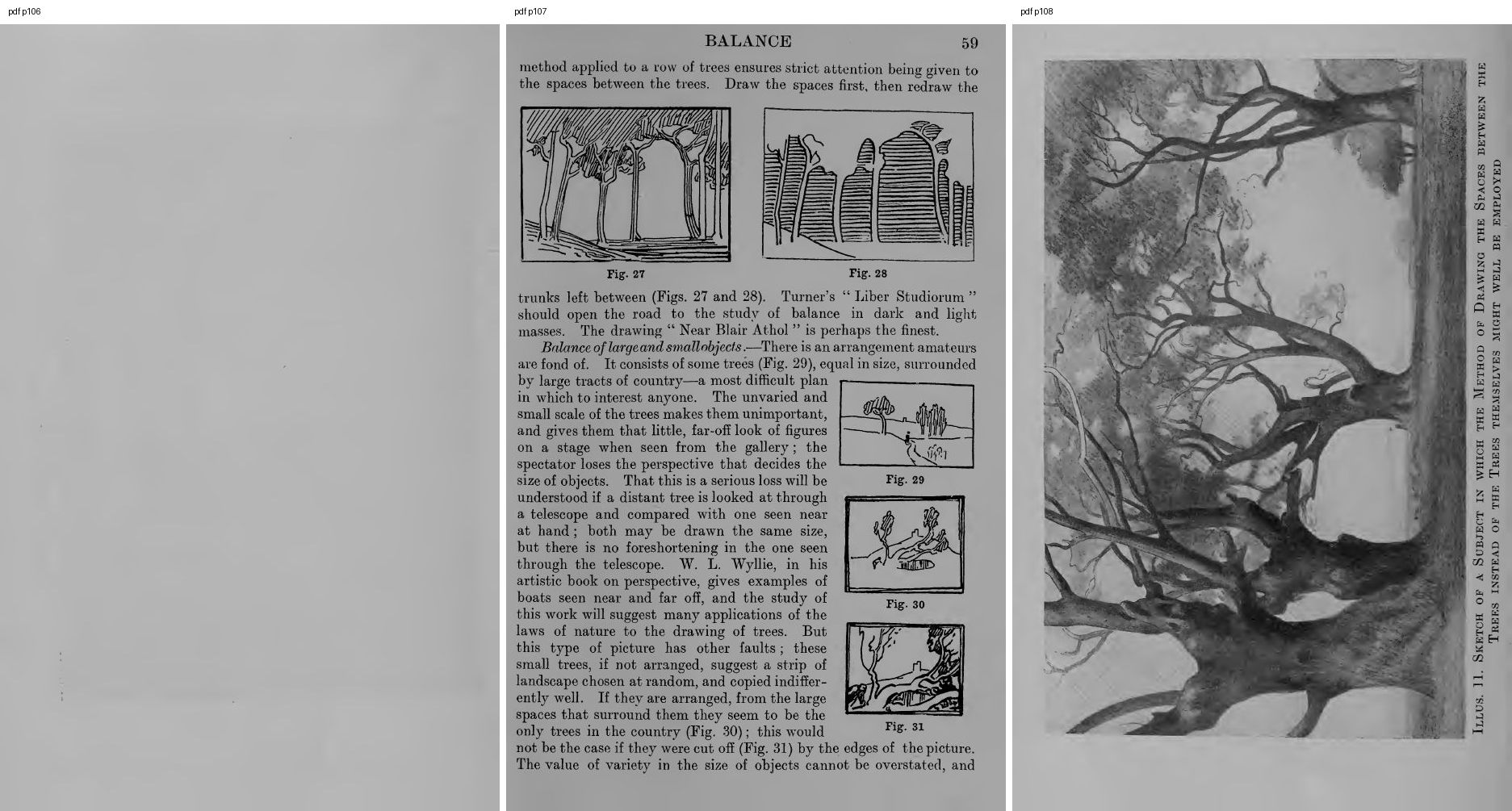 17. books/trees/pages/cole3/s106.jpg
Read: books/trees/pages/cole3/s109.jpg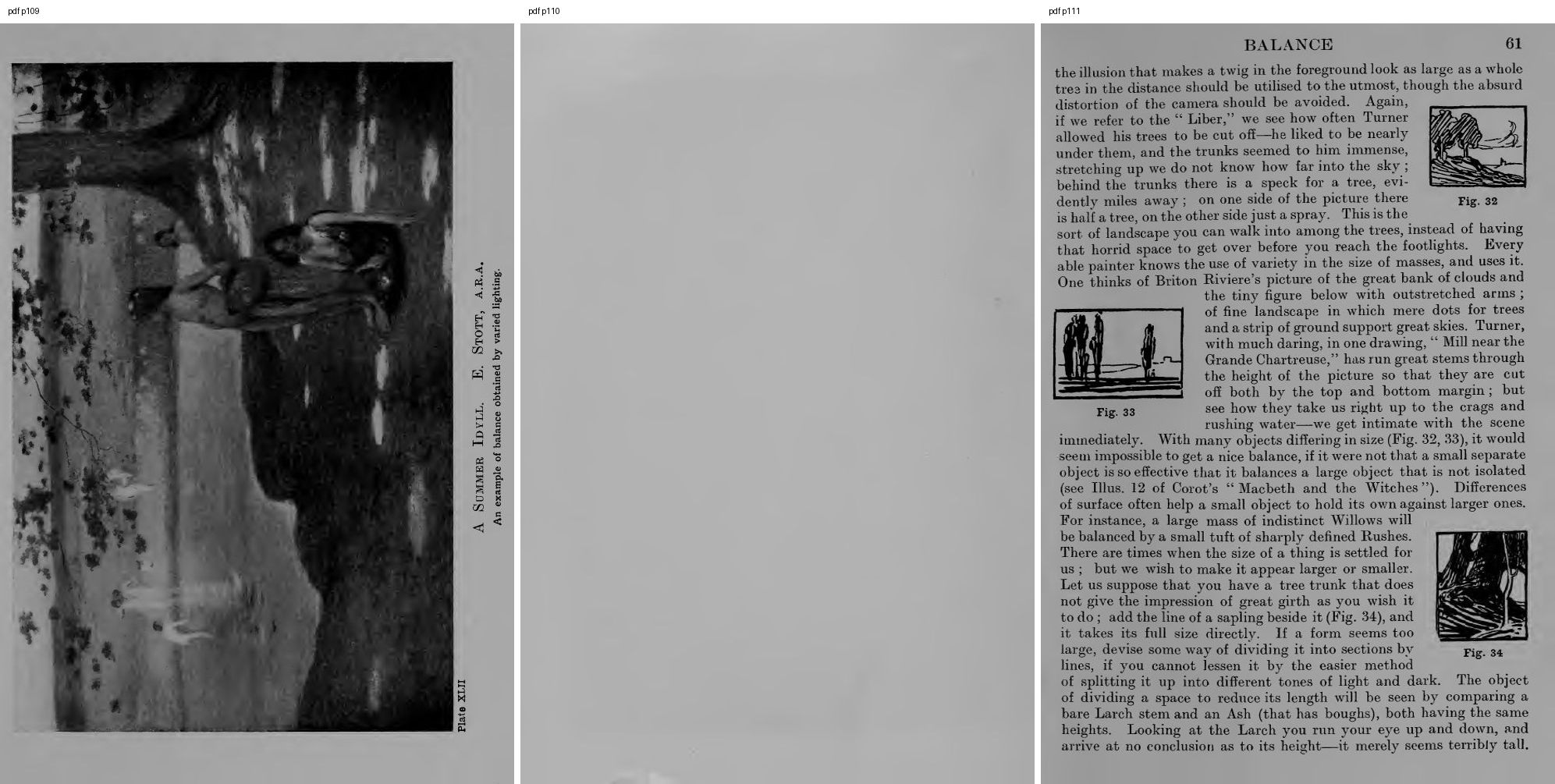 18. books/trees/pages/cole3/s109.jpg
Read: books/trees/pages/cole3/s112.jpg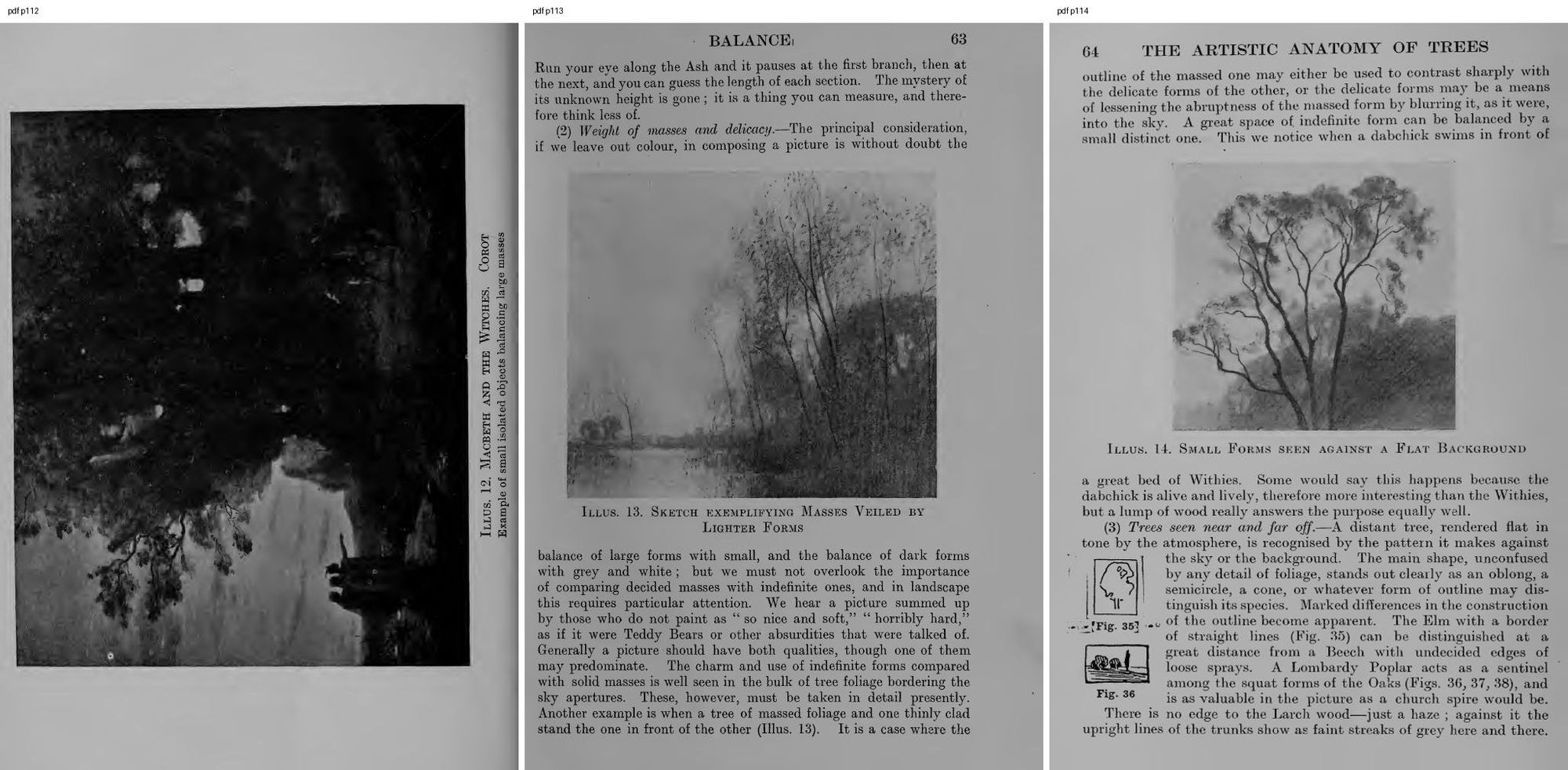 19. books/trees/pages/cole3/s112.jpg
Read: books/trees/pages/cole3/s115.jpg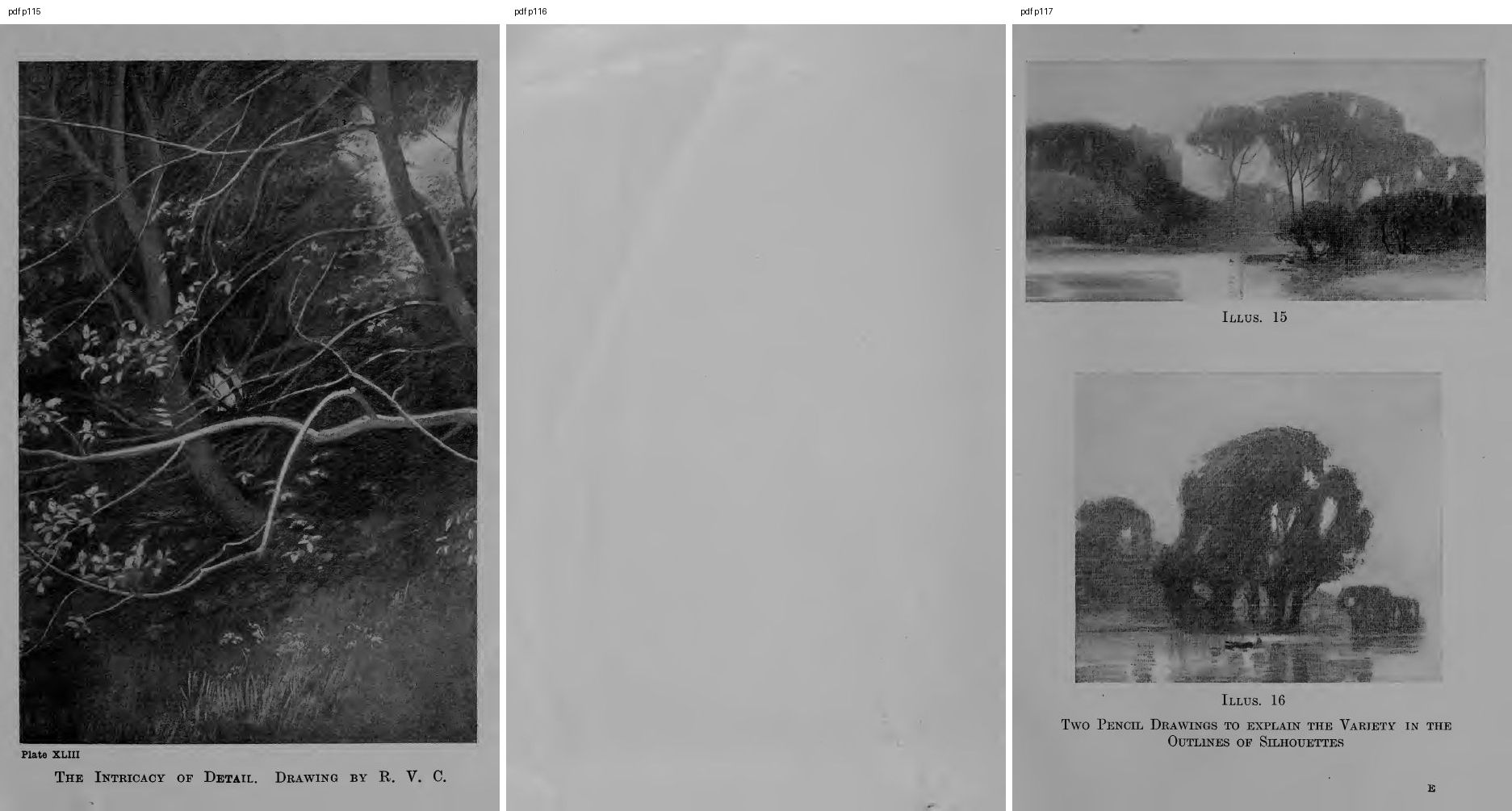 20. books/trees/pages/cole3/s115.jpg
Read: books/trees/pages/cole3/s118.jpg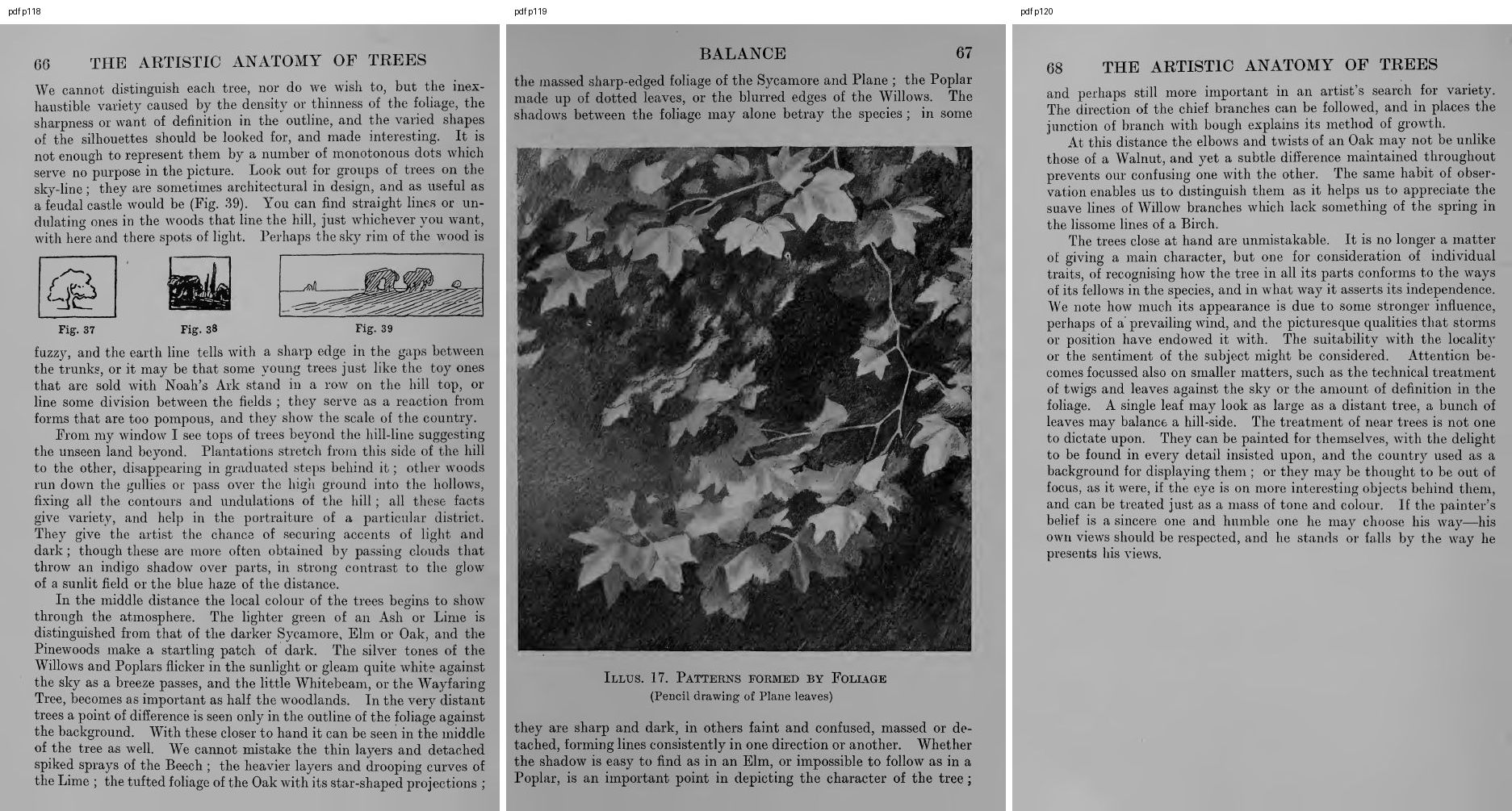 21. books/trees/pages/cole3/s118.jpg
Read: books/trees/pages/cole3/s121.jpg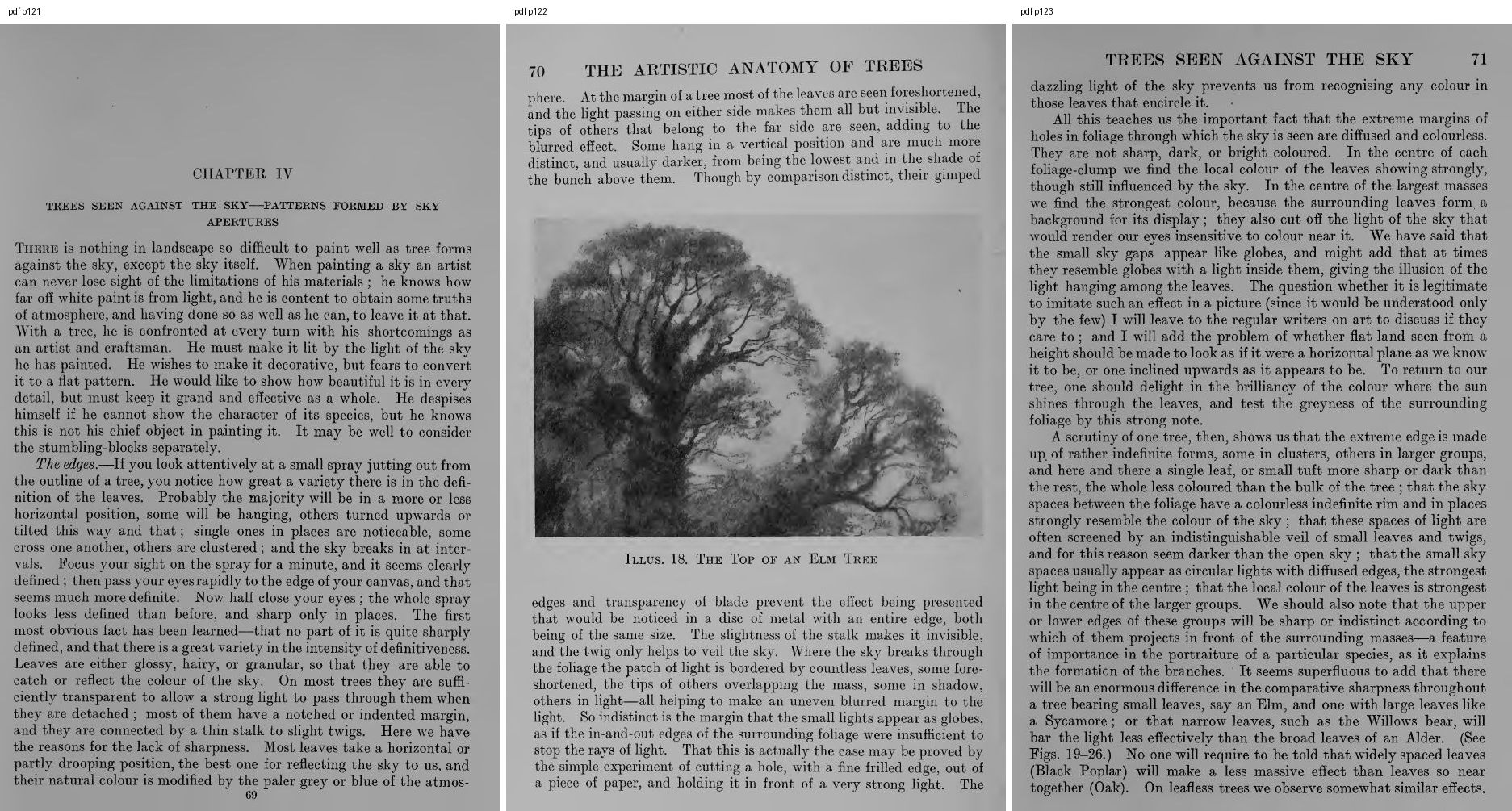 22. books/trees/pages/cole3/s121.jpg
Read: books/trees/pages/cole3/s124.jpg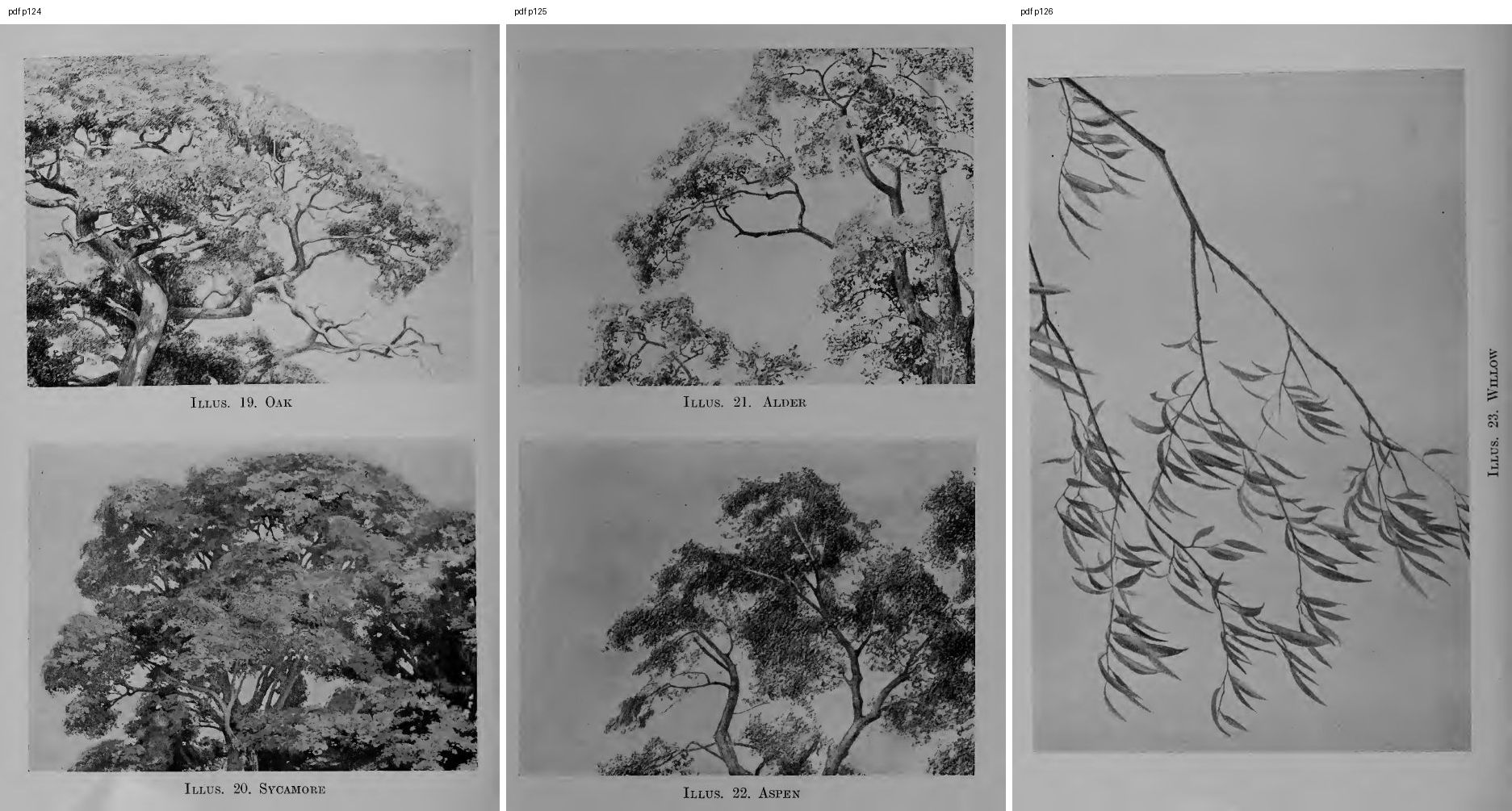 23. books/trees/pages/cole3/s124.jpg
Read: books/trees/pages/cole3/s127.jpg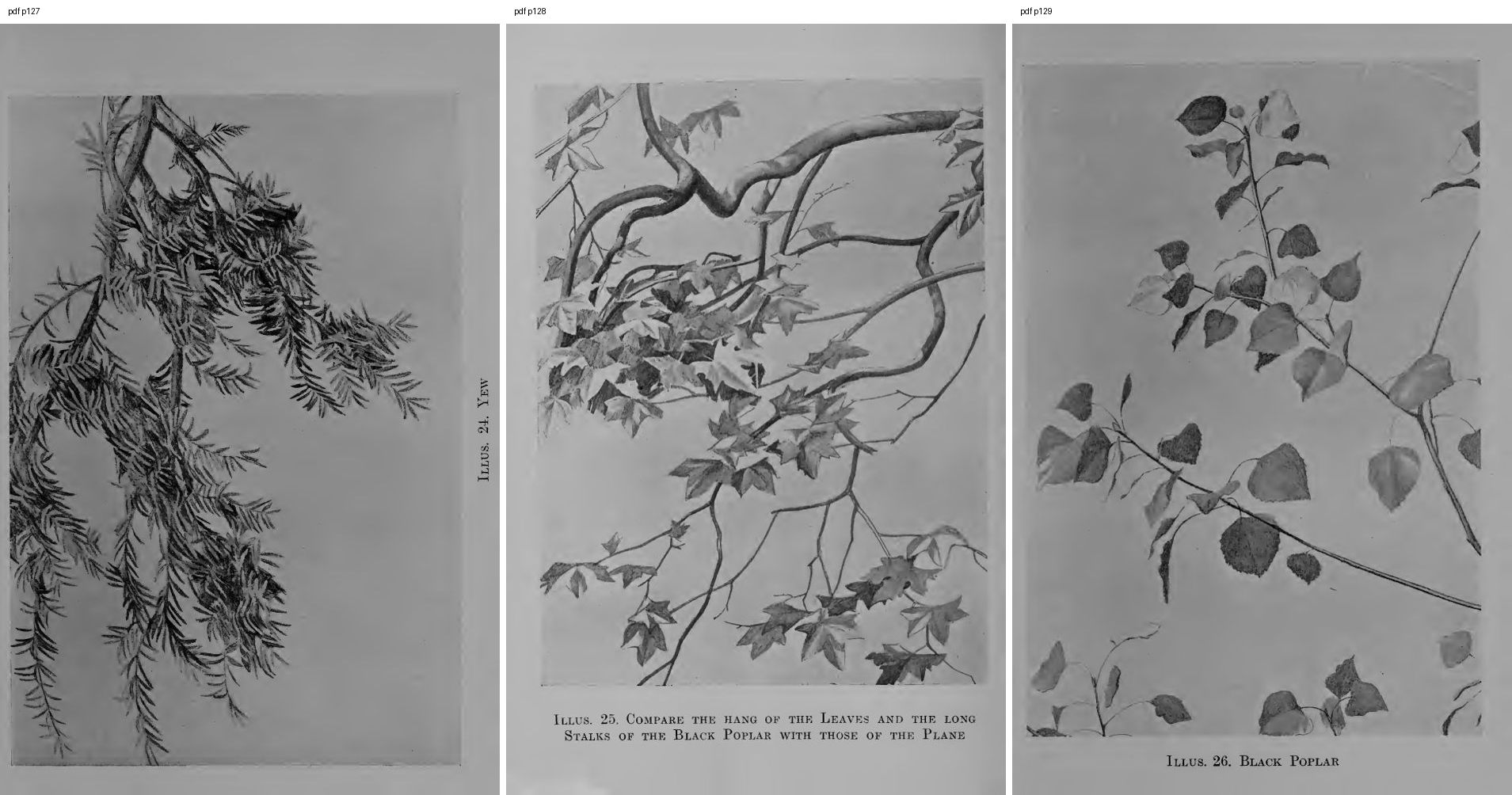 24. books/trees/pages/cole3/s127.jpg
Read: books/trees/pages/cole3/s130.jpg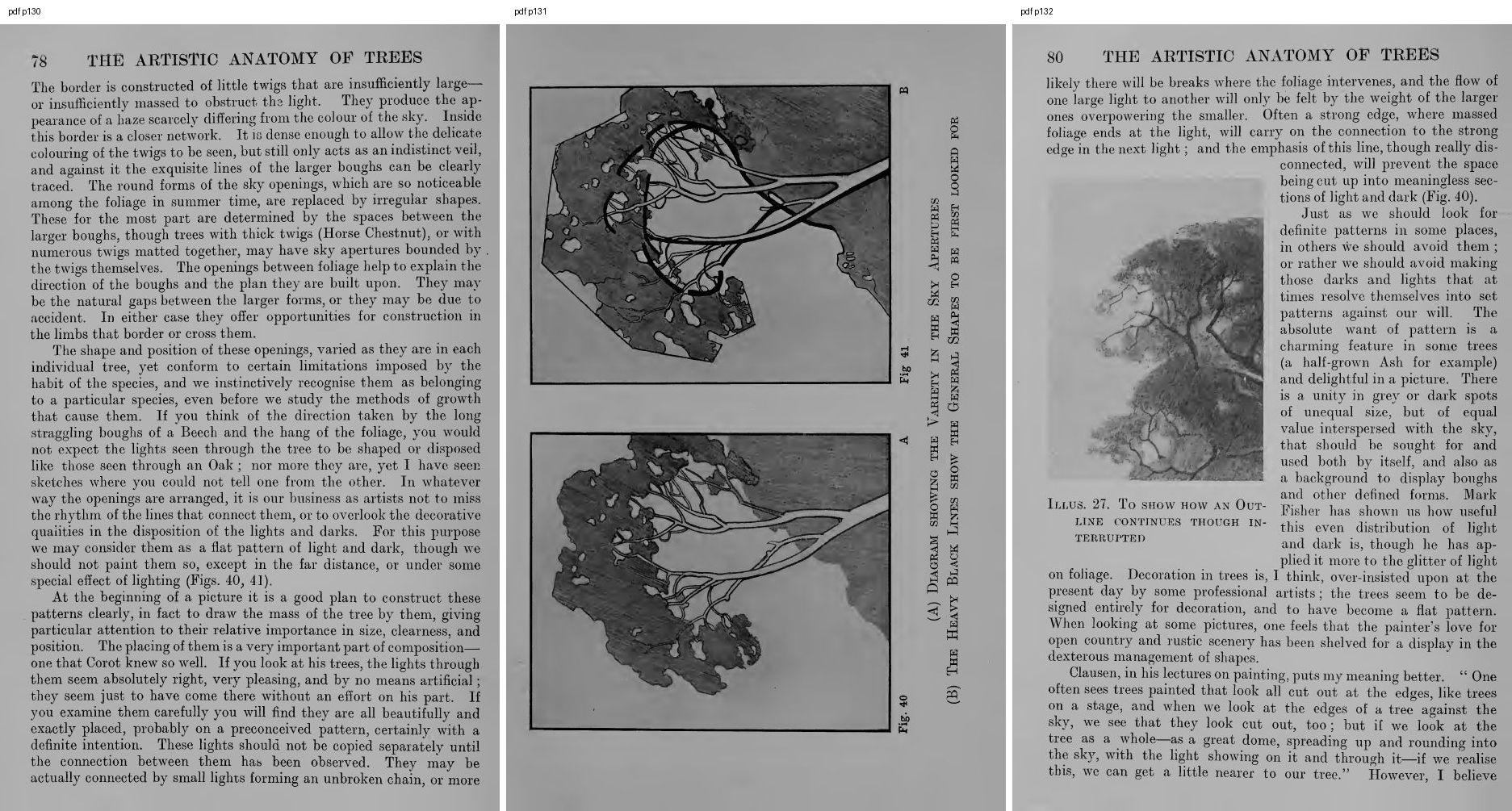 25. books/trees/pages/cole3/s130.jpg
Read: books/trees/pages/cole3/s133.jpg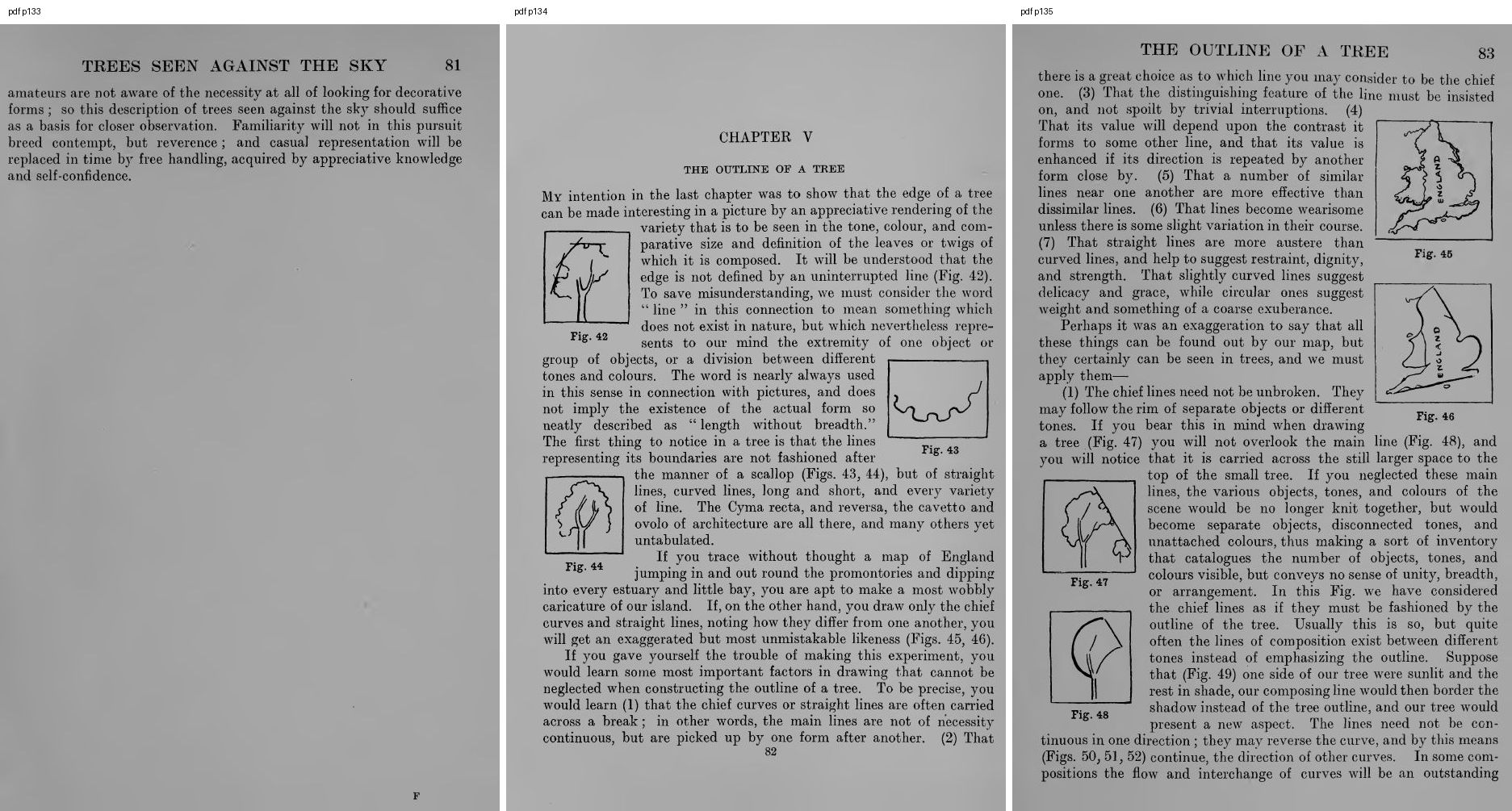 26. books/trees/pages/cole3/s133.jpg
Read: books/trees/pages/cole3/s136.jpg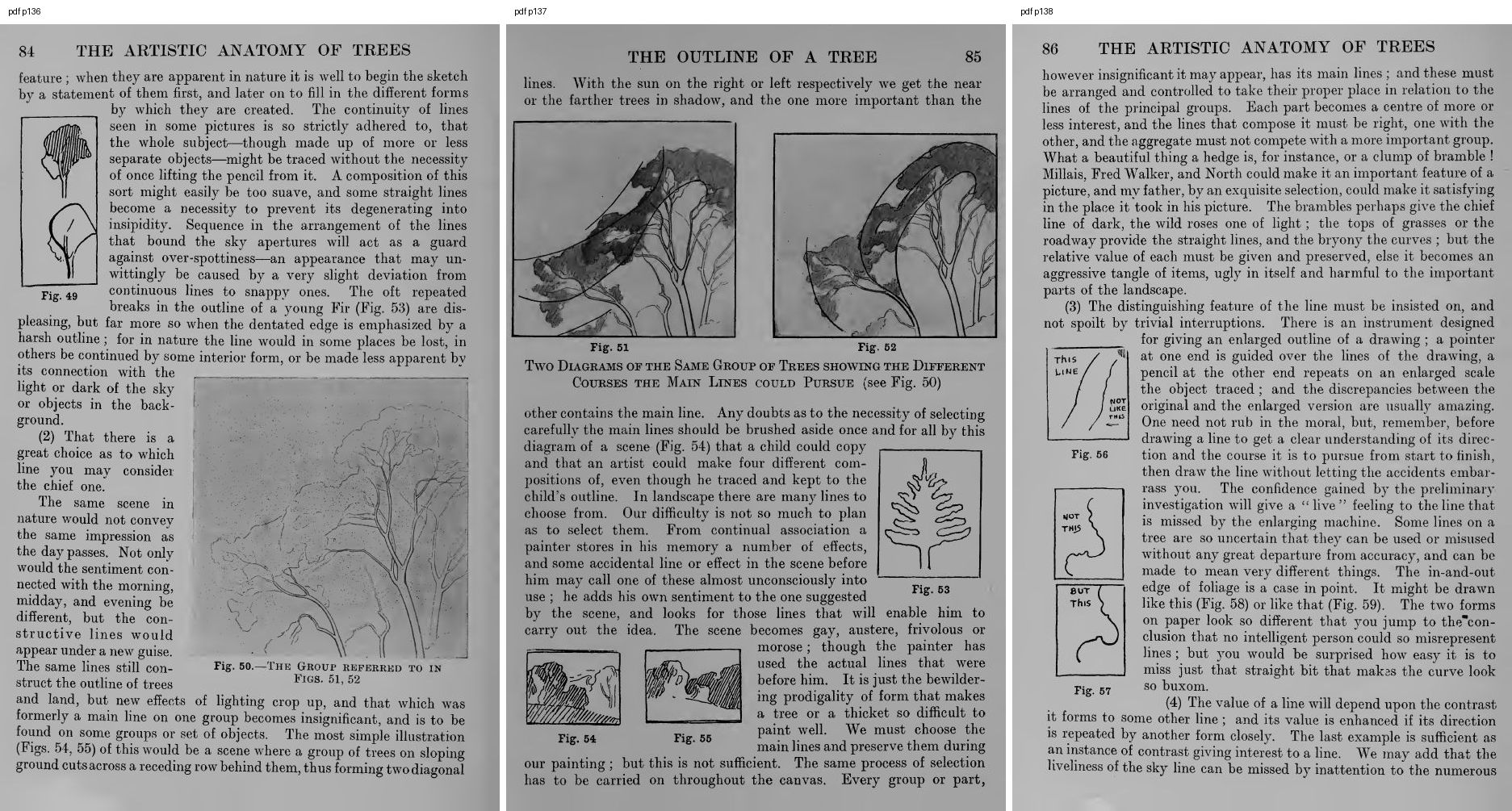 27. books/trees/pages/cole3/s136.jpg
Read: books/trees/pages/cole3/s139.jpg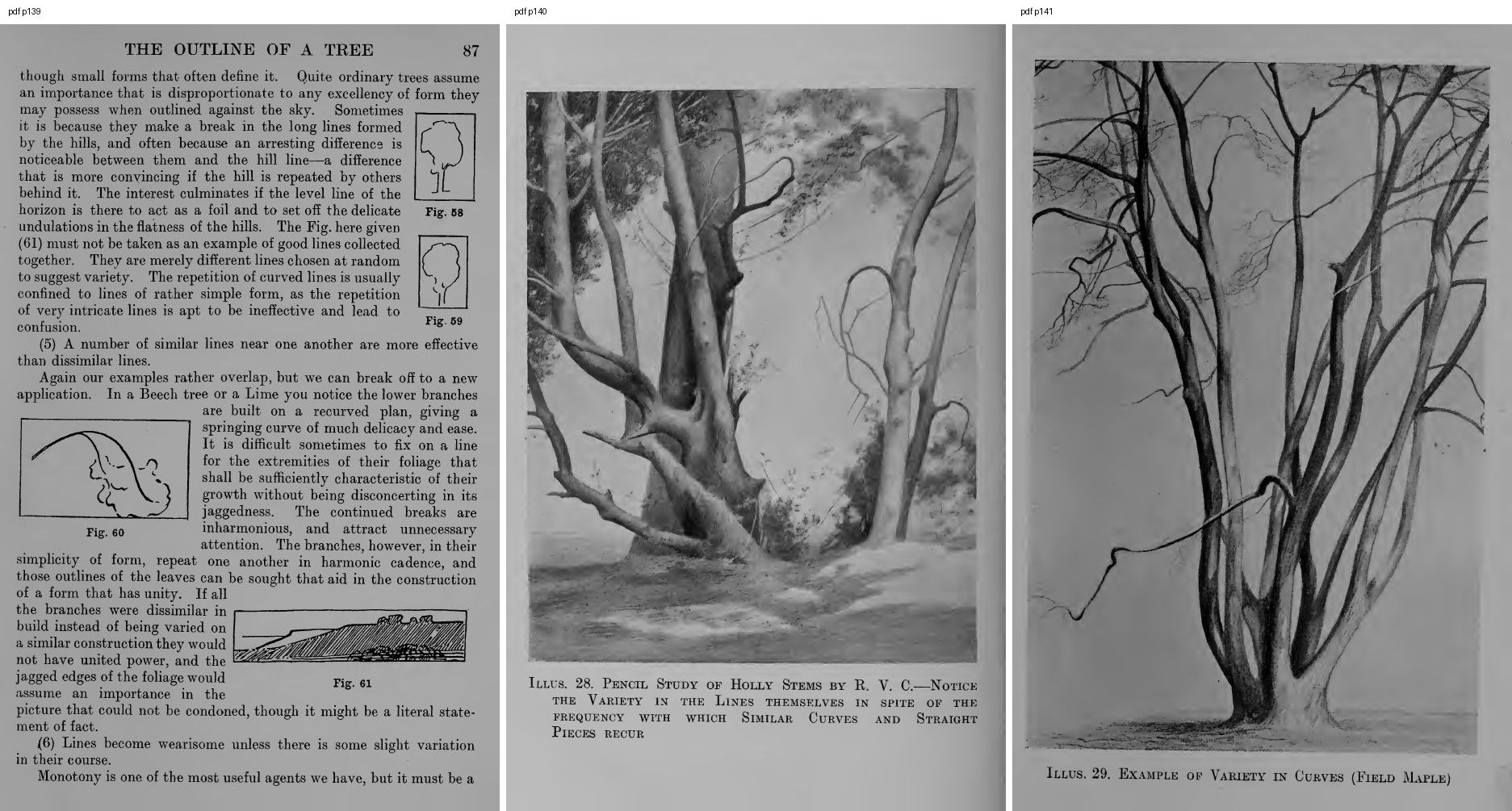 28. books/trees/pages/cole3/s139.jpg
Read: books/trees/pages/cole3/s142.jpg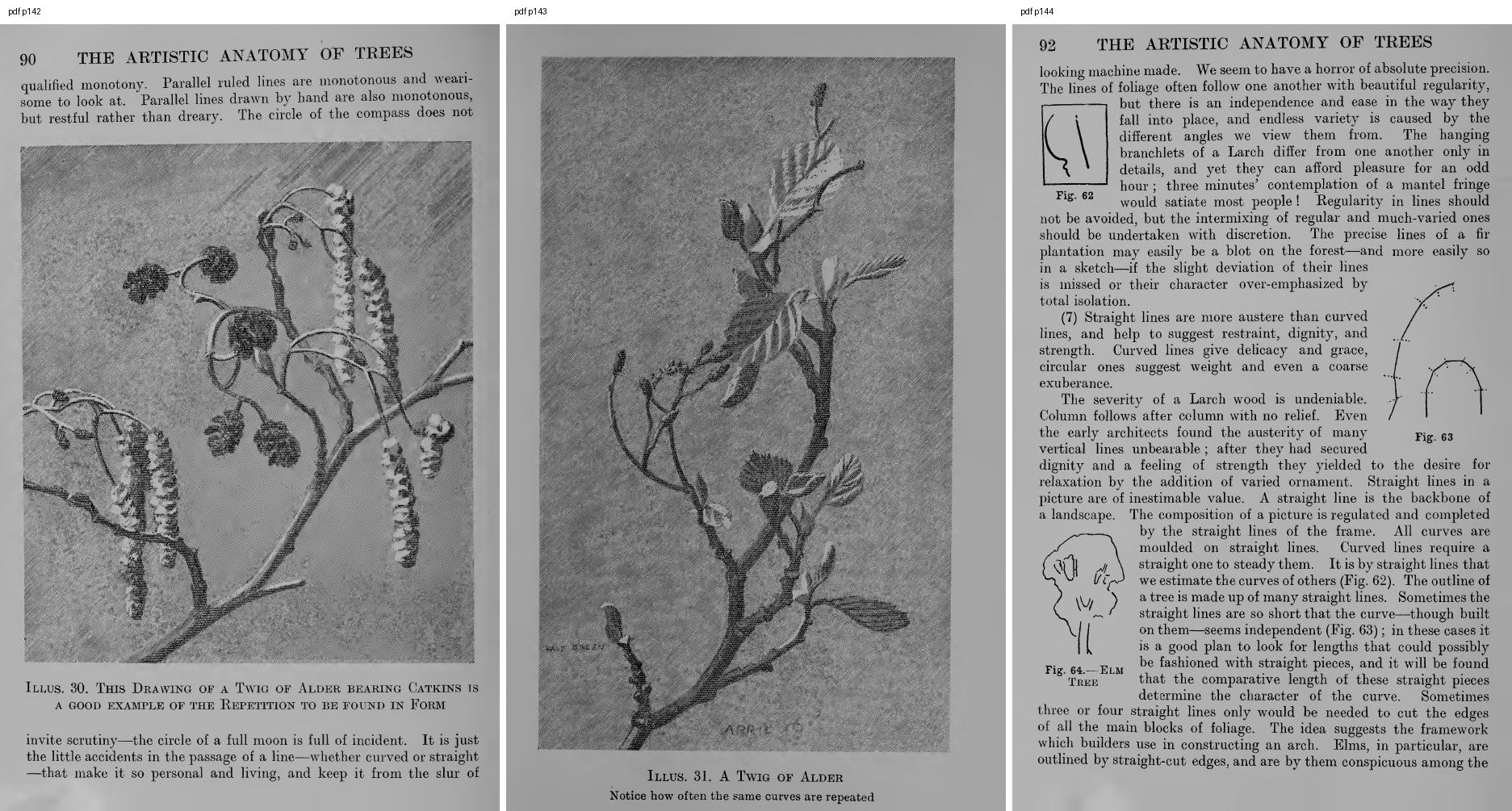 29. books/trees/pages/cole3/s142.jpg
Read: books/trees/pages/cole3/s145.jpg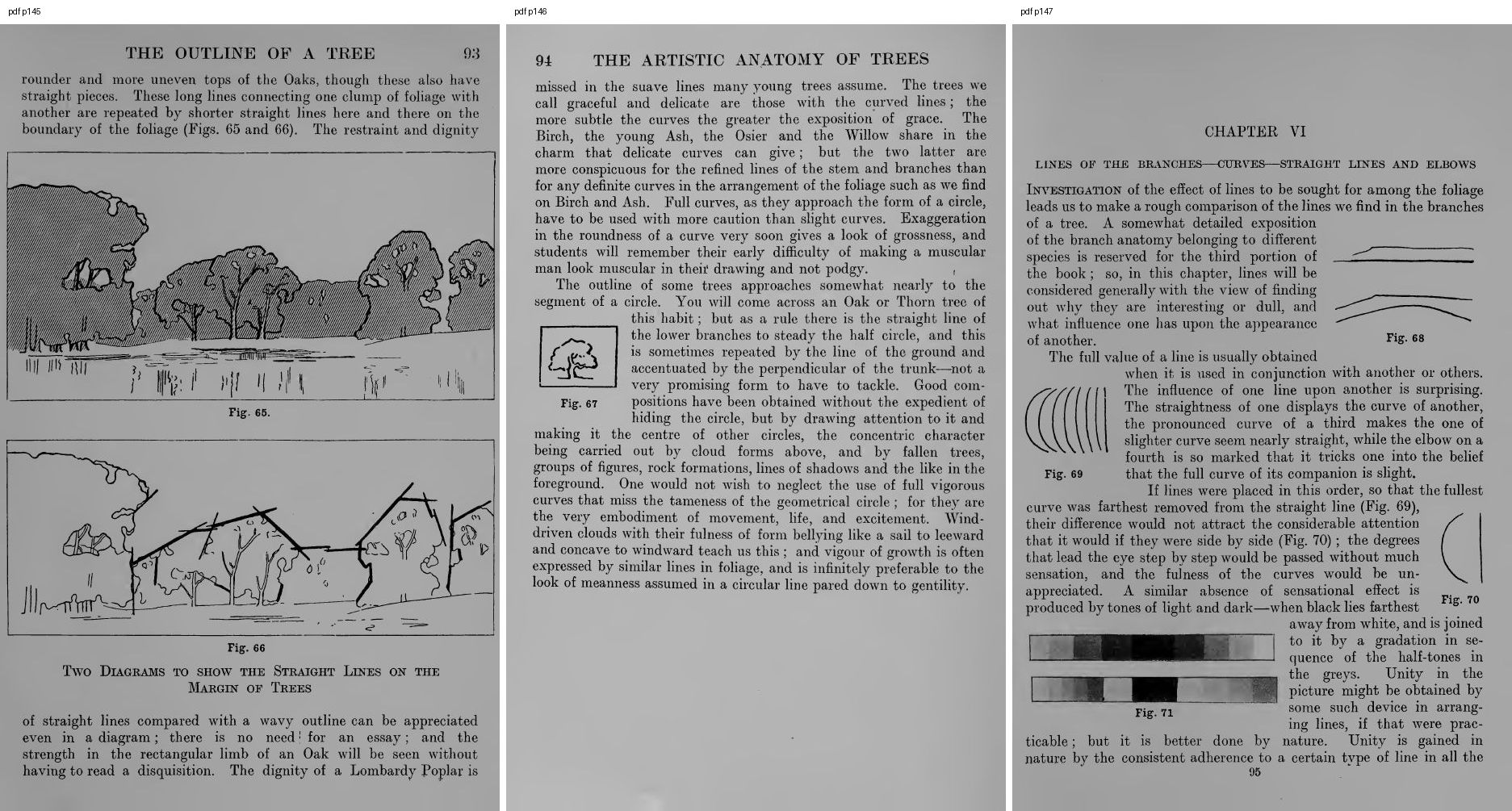 30. books/trees/pages/cole3/s145.jpg
Read: books/trees/pages/cole3/s148.jpgRead: books/trees/pages/cole3/s151.jpgRead: books/trees/pages/cole3/s154.jpgRead: books/trees/pages/cole3/s157.jpgBash: cd ~/work/pixelart-studies/books/trees; ls pages/cole|wc -l; ls pages/cole3 | tr '\n' ' '
cd ~/work/pixelart-studies/books/trees; ls pages/cole|wc -l; ls pages/cole3 | tr '\n' ' '

# output:
331
s001.jpg s004.jpg s007.jpg s010.jpg s013.jpg s016.jpg s019.jpg s022.jpg s025.jpg s028.jpg s031.jpg s034.jpg s037.jpg s040.jpg s043.jpg s046.jpg s049.jpg s052.jpg s055.jpg s058.jpg s061.jpg s064.jpg s067.jpg s070.jpg s073.jpg s076.jpg s079.jpg s082.jpg s085.jpg s088.jpg s091.jpg s094.jpg s097.jpg s100.jpg s103.jpg s106.jpg s109.jpg s112.jpg s115.jpg s118.jpg s121.jpg s124.jpg s127.jpg s130.jpg s133.jpg s136.jpg s139.jpg s142.jpg s145.jpg
Bash: cd ~/work/pixelart-studies/books/trees; python3 src/contact.py pages/cole pages/cole3 148 327 2>&1 | tail -3; ls pages/cole3 | wc -l
cd ~/work/pixelart-studies/books/trees; python3 src/contact.py pages/cole pages/cole3 148 327 2>&1 | tail -3; ls pages/cole3 | wc -l

# output:
95
Read: books/trees/pages/cole3/s148.jpg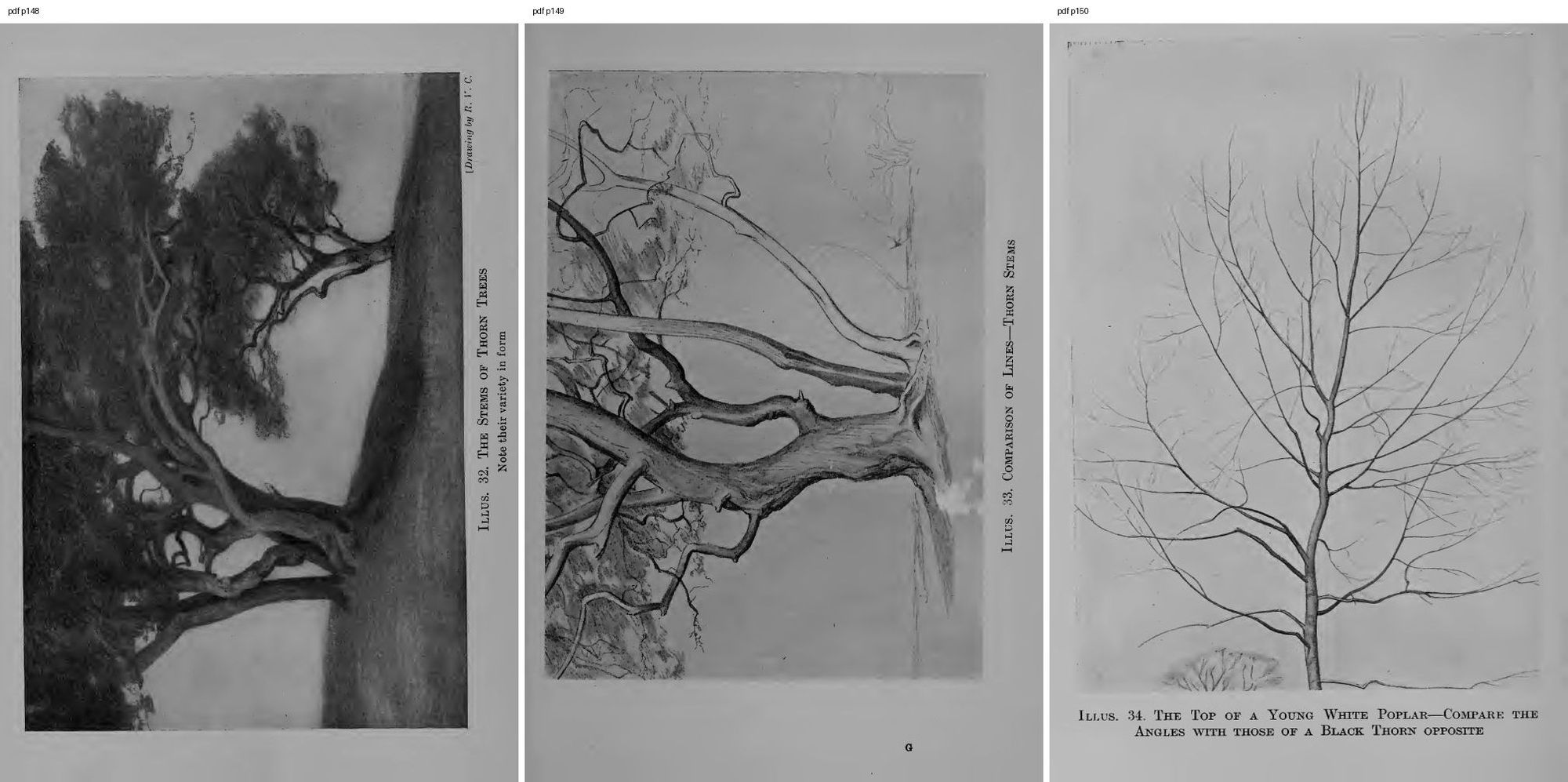 31. books/trees/pages/cole3/s148.jpg
Read: books/trees/pages/cole3/s151.jpg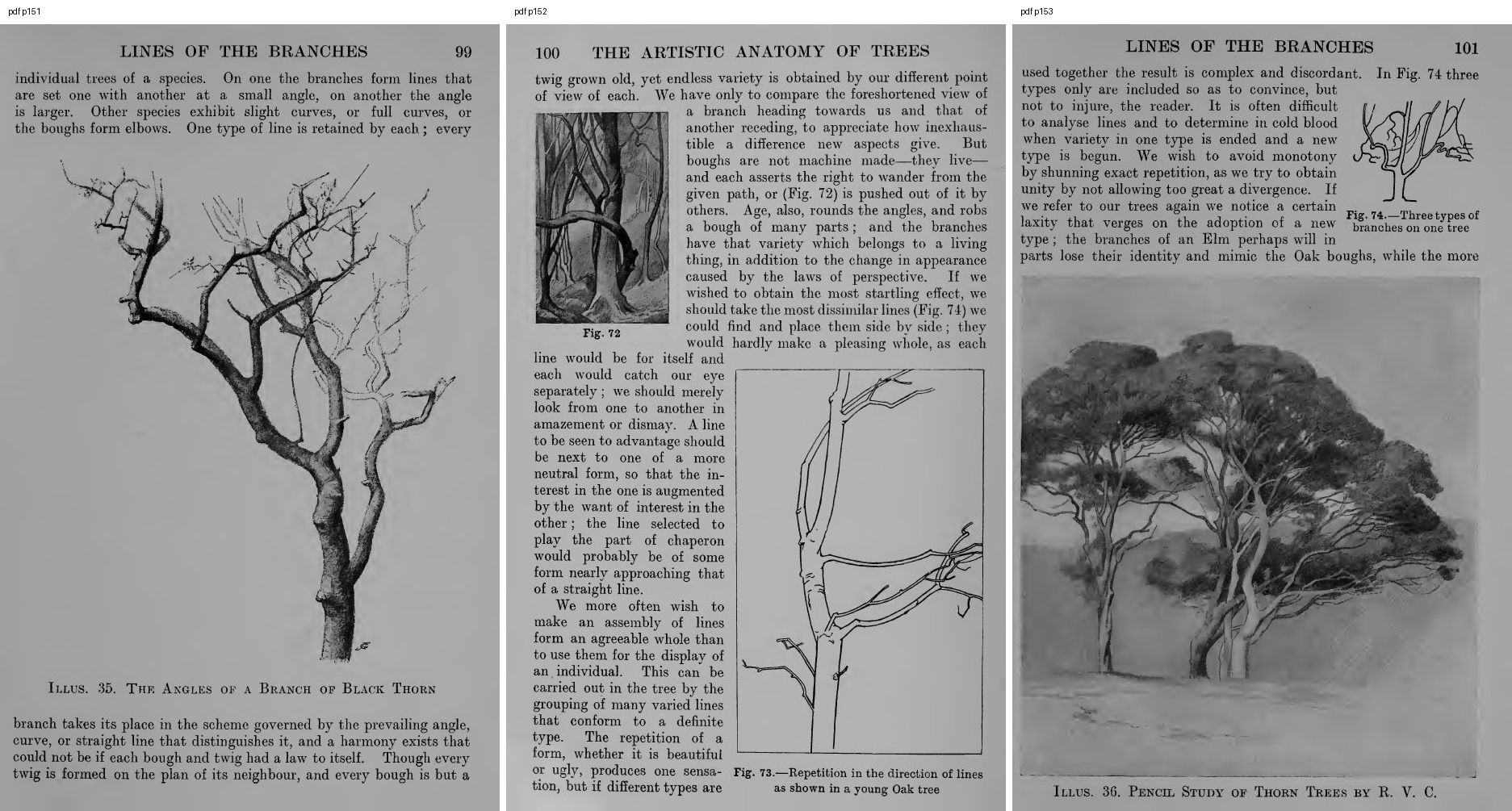 32. books/trees/pages/cole3/s151.jpg
Read: books/trees/pages/cole3/s154.jpgRead: books/trees/pages/cole3/s157.jpgRead: books/trees/pages/cole3/s160.jpg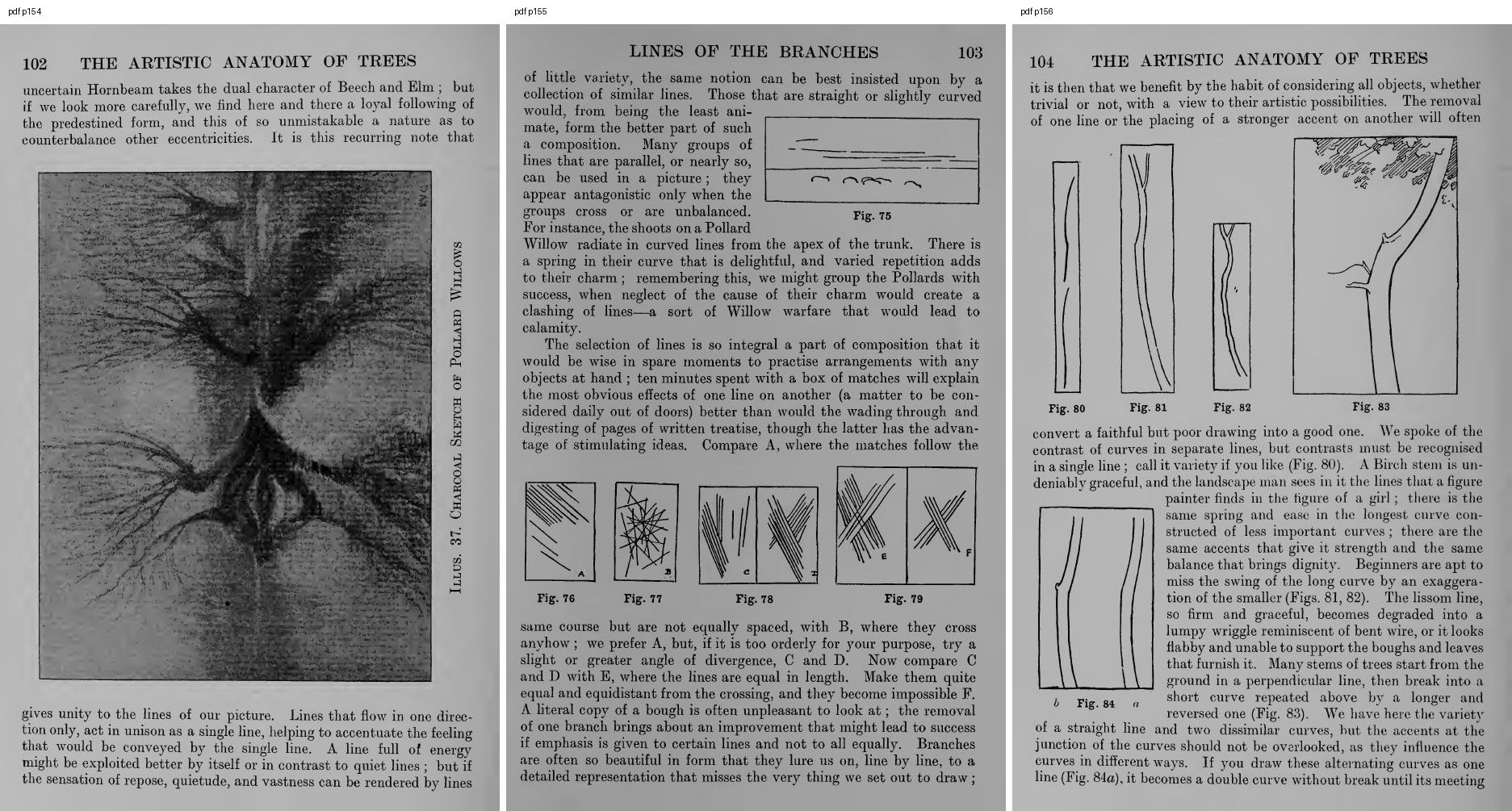 33. books/trees/pages/cole3/s154.jpg
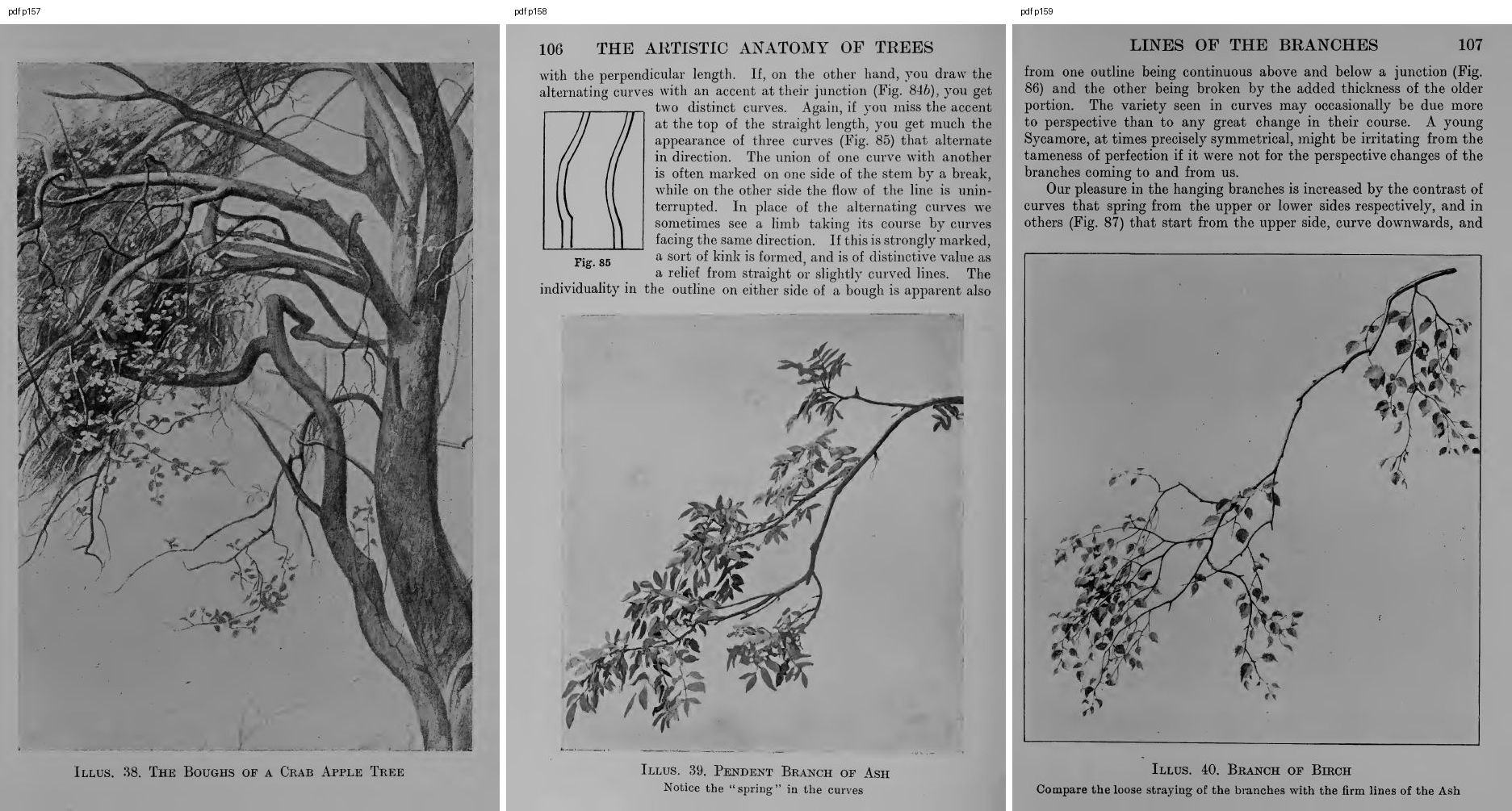 34. books/trees/pages/cole3/s157.jpg
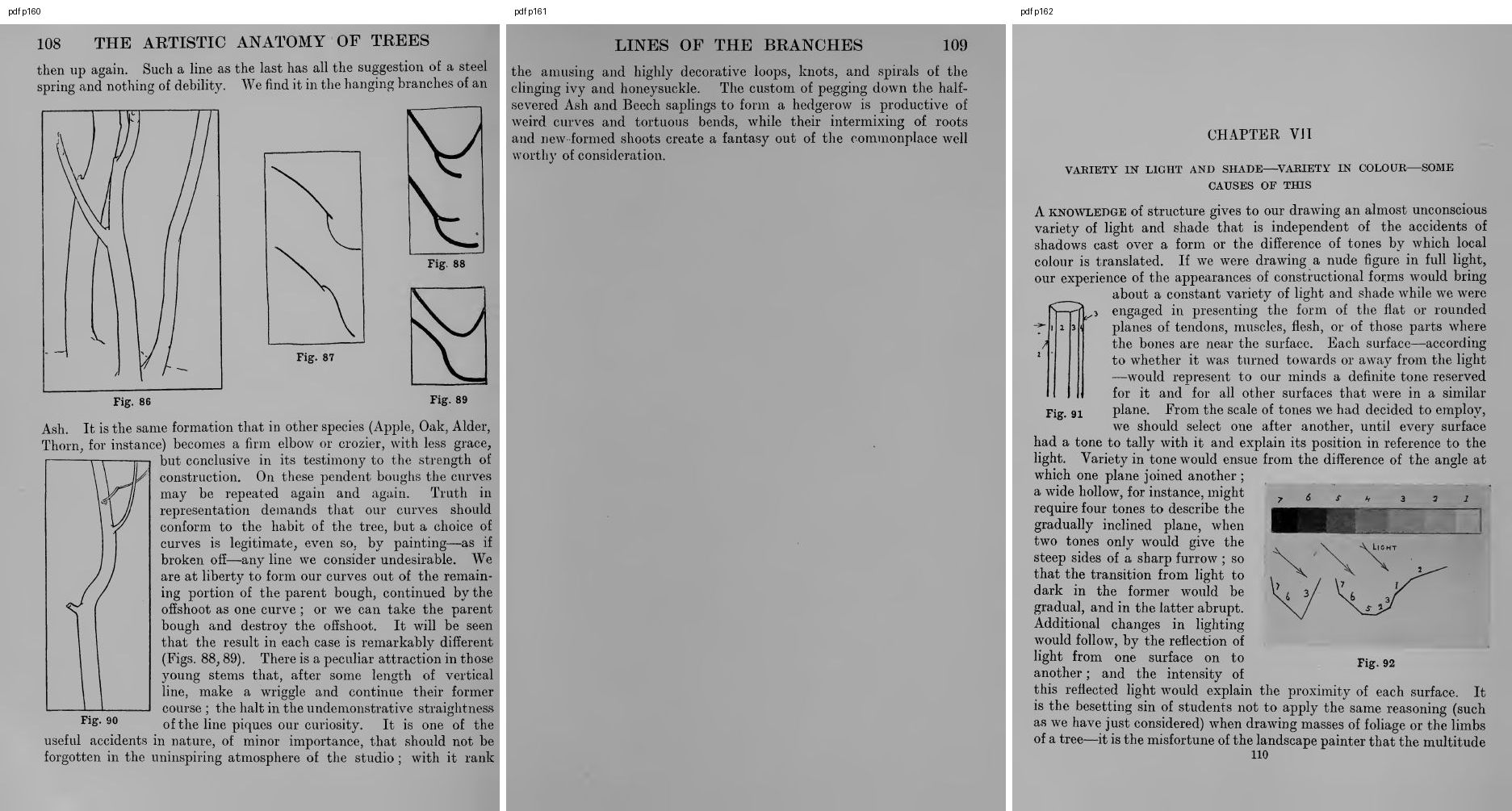 35. books/trees/pages/cole3/s160.jpg
Read: books/trees/pages/cole3/s163.jpg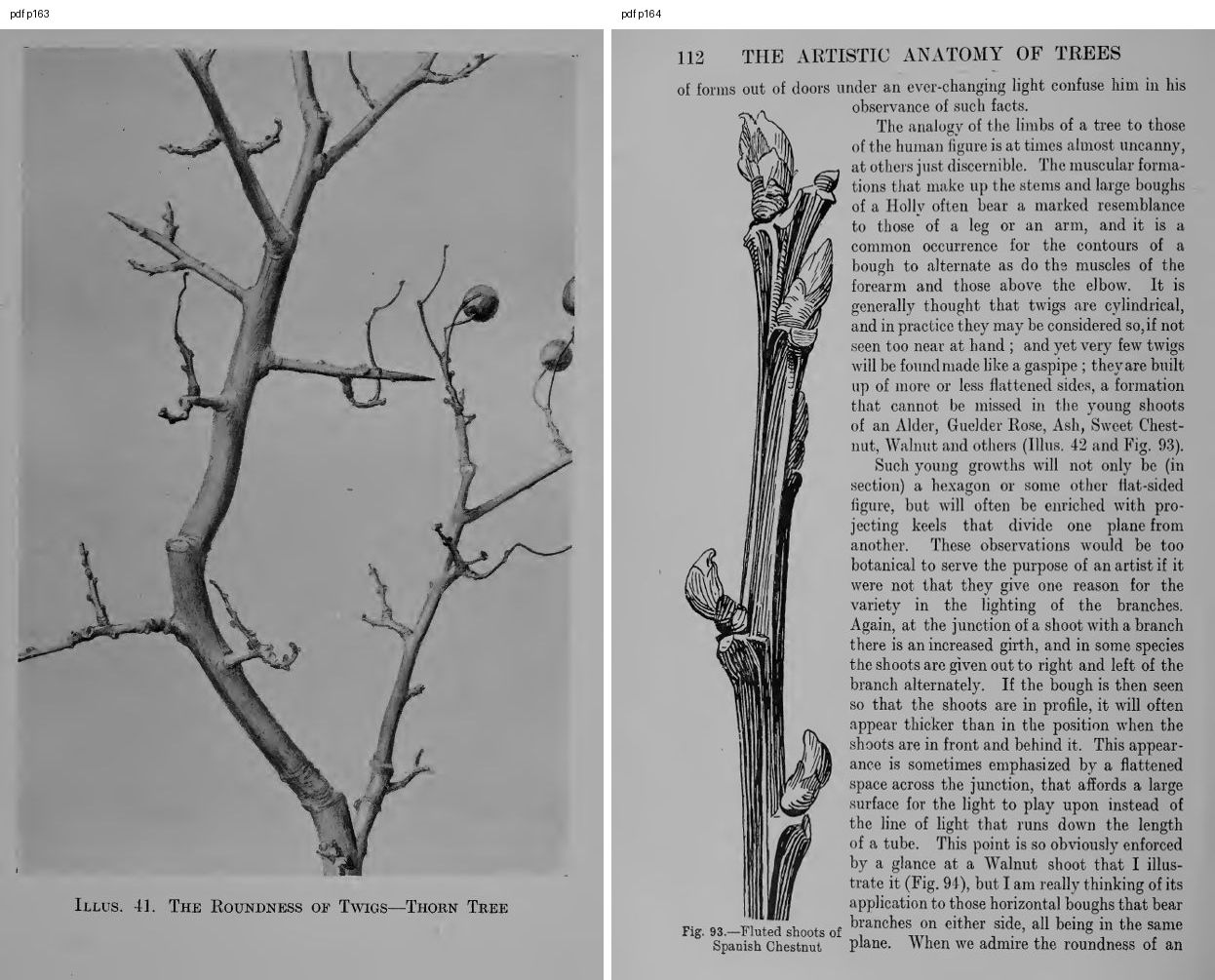 36. books/trees/pages/cole3/s163.jpg
Read: books/trees/pages/cole3/s166.jpgRead: books/trees/pages/cole3/s169.jpgRead: books/trees/pages/cole3/s172.jpgRead: books/trees/pages/cole3/s175.jpgRead: books/trees/pages/cole3/s178.jpgRead: books/trees/pages/cole3/s181.jpgBash: cd ~/work/pixelart-studies/books/trees; ls pages/cole|wc -l; cat (tmp) pytho
cd ~/work/pixelart-studies/books/trees; ls pages/cole|wc -l; cat (tmp) python3 src/contact.py pages/cole pages/cole3 148 412 2>&1|tail -3; ls pages/cole3|wc -l

# output:
375
     128
Read: books/trees/pages/cole3/s166.jpg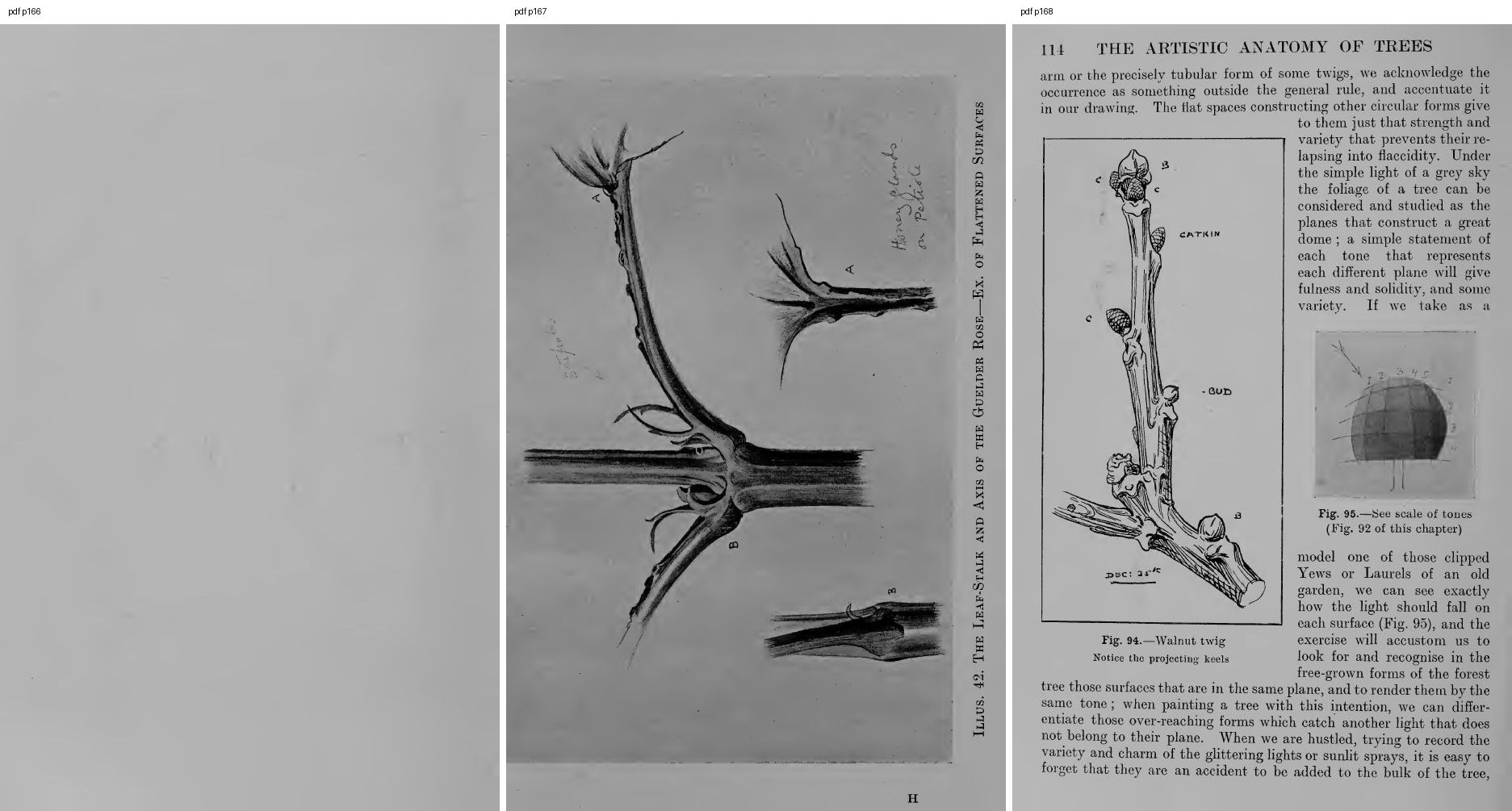 37. books/trees/pages/cole3/s166.jpg
Read: books/trees/pages/cole3/s169.jpg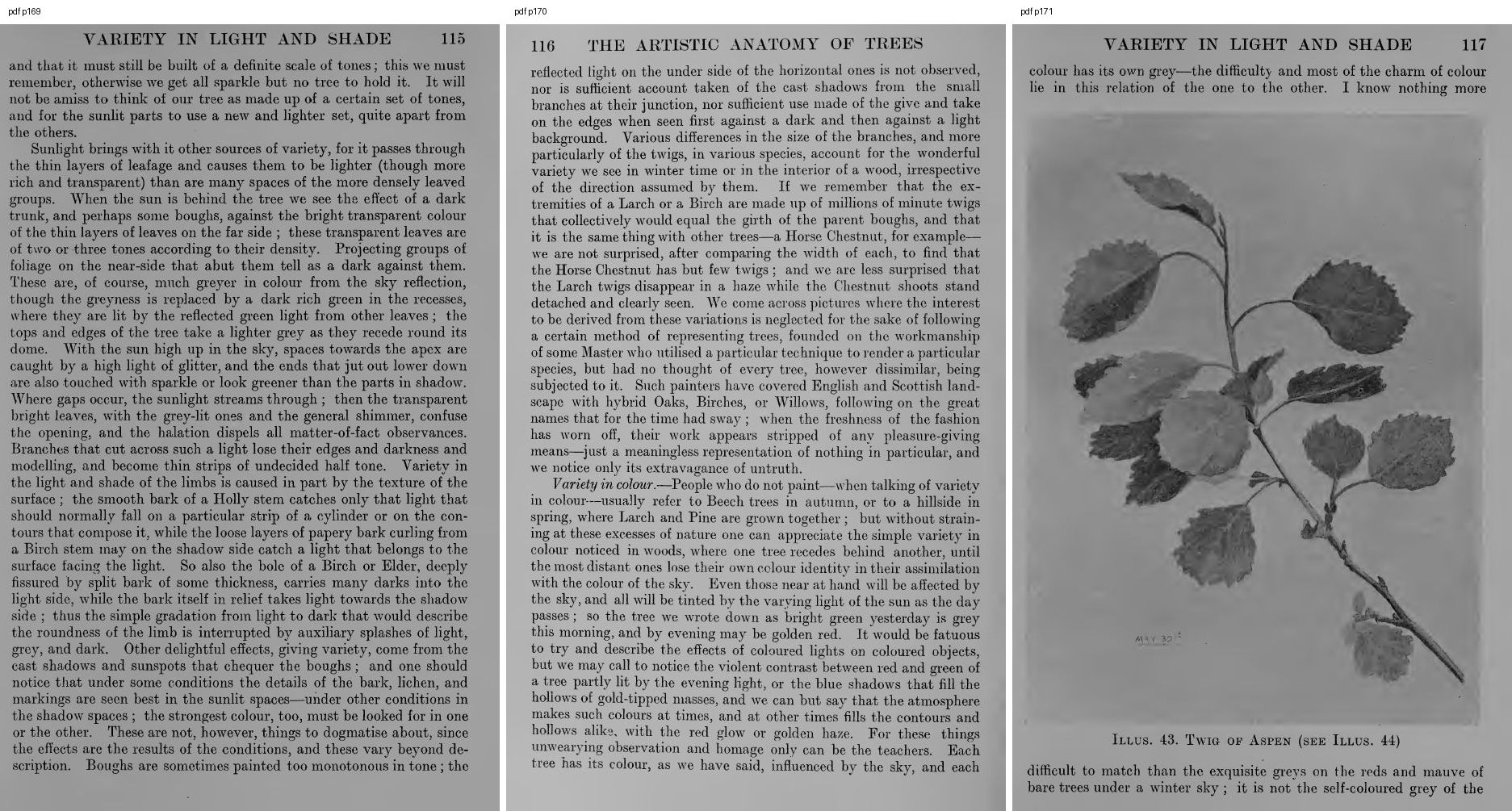 38. books/trees/pages/cole3/s169.jpg
Read: books/trees/pages/cole3/s172.jpgRead: books/trees/pages/cole3/s175.jpgRead: books/trees/pages/cole3/s178.jpg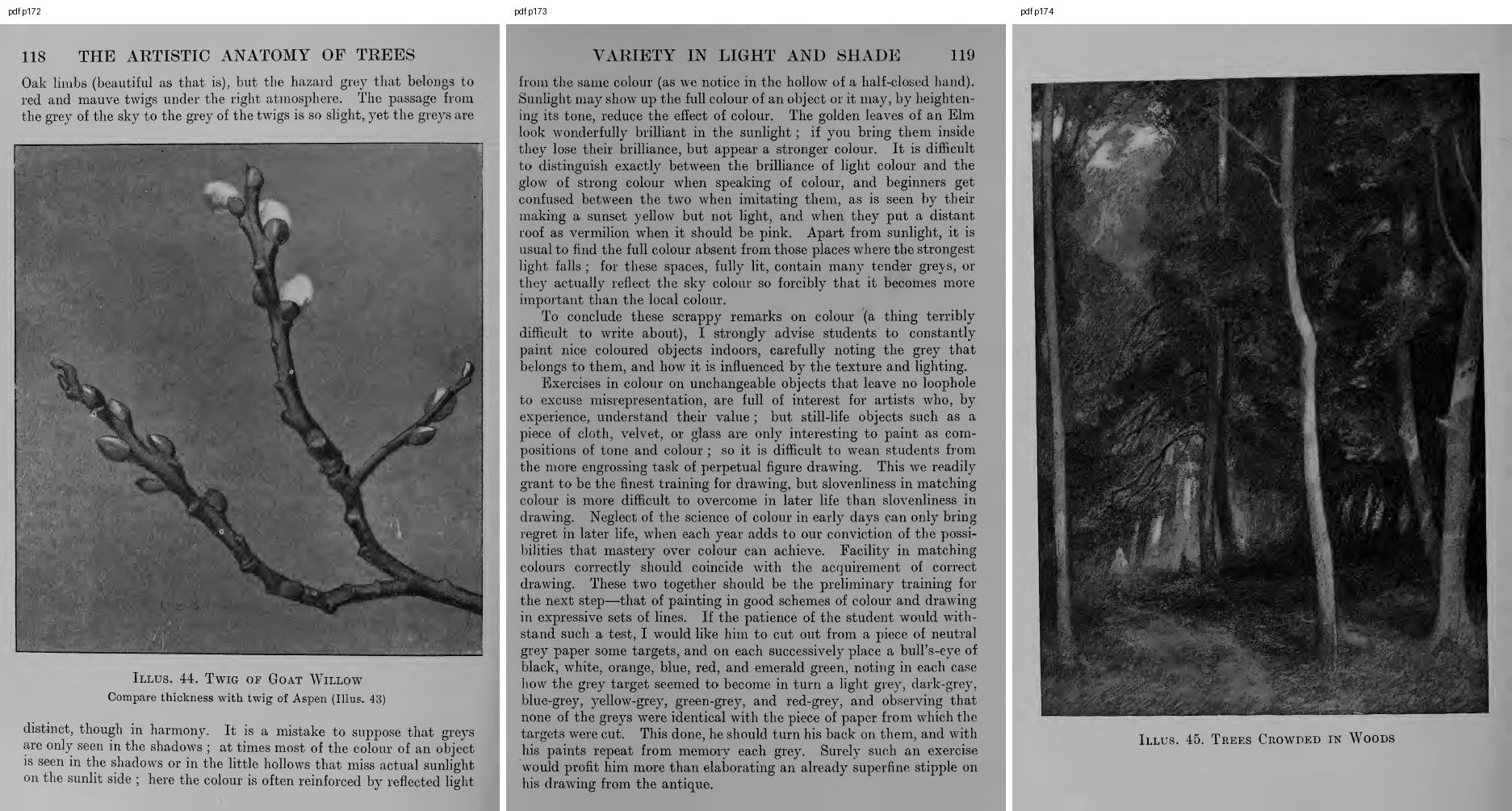 39. books/trees/pages/cole3/s172.jpg
Read: books/trees/pages/cole3/s181.jpgRead: books/trees/pages/cole3/s184.jpg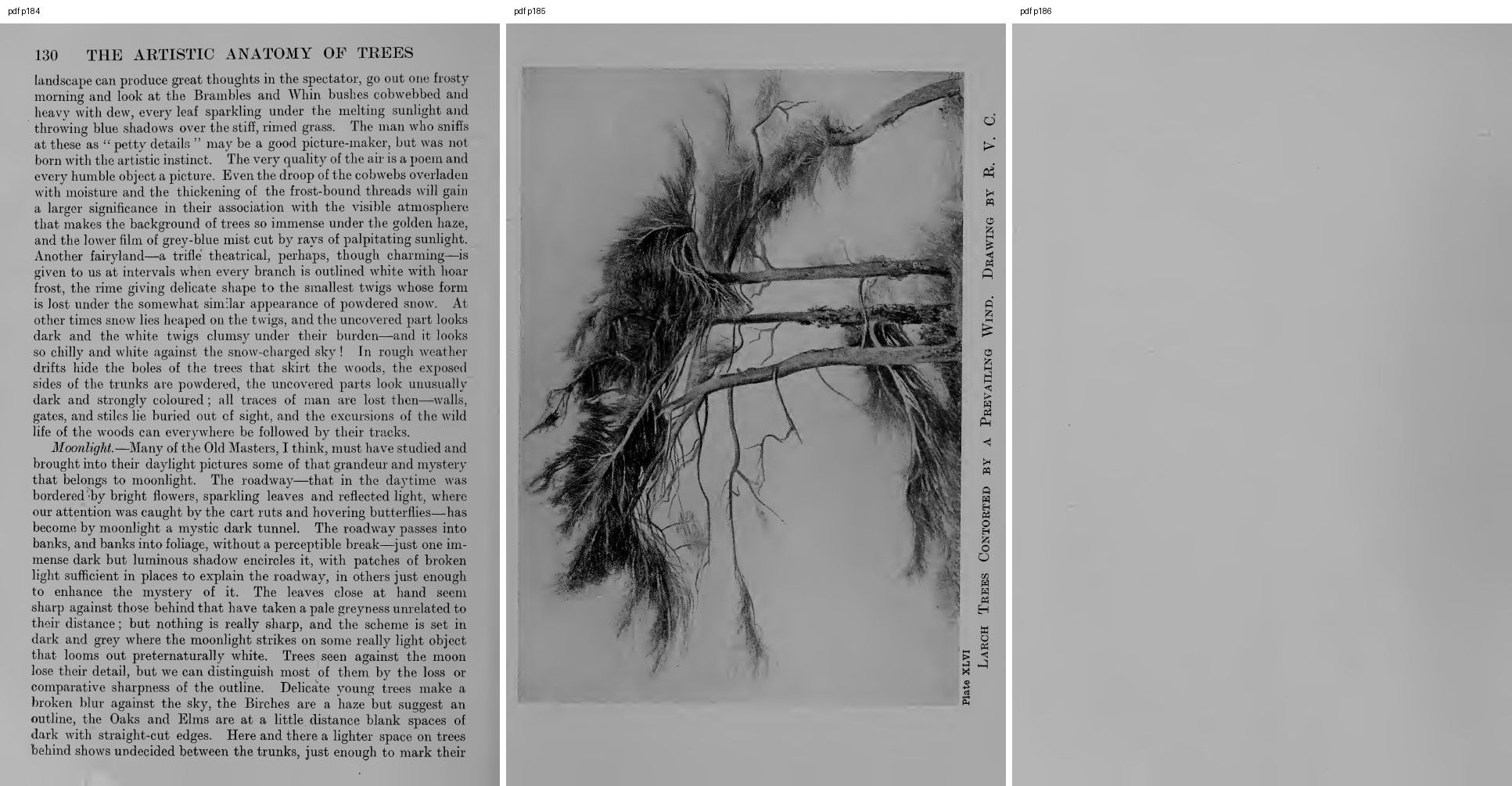 40. books/trees/pages/cole3/s184.jpg
Read: books/trees/pages/cole3/s187.jpg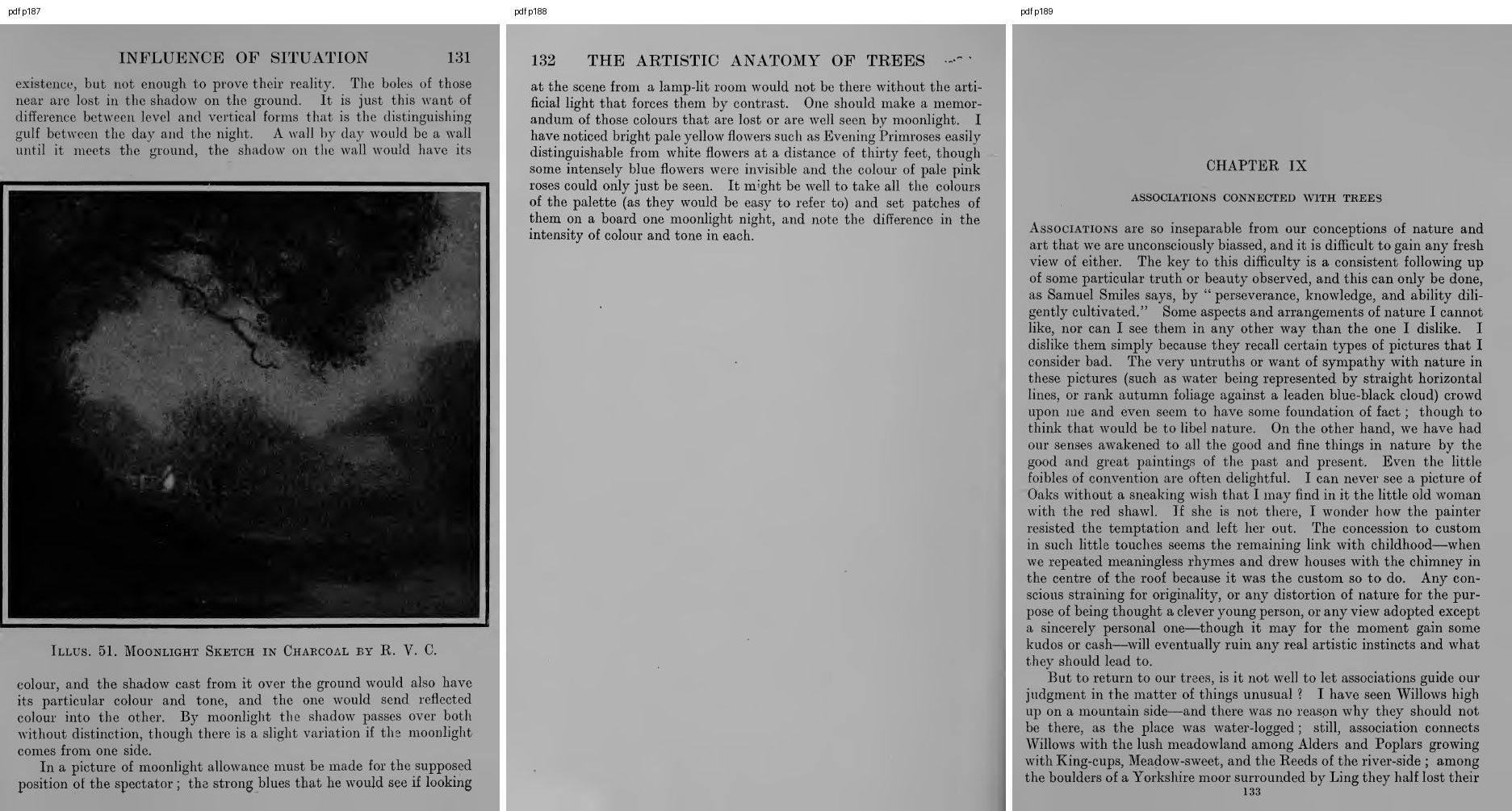 41. books/trees/pages/cole3/s187.jpg
Read: books/trees/pages/cole3/s190.jpg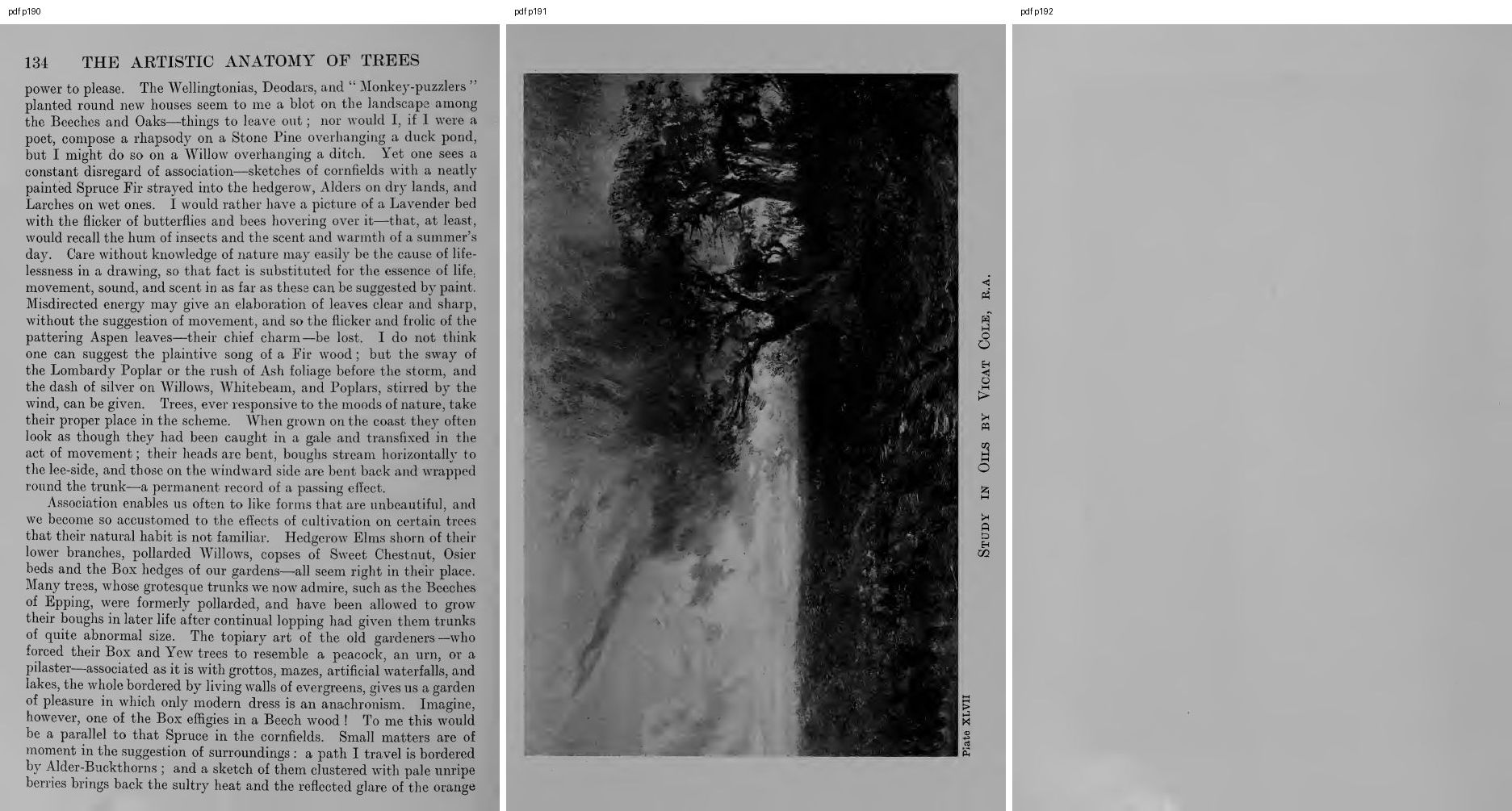 42. books/trees/pages/cole3/s190.jpg
Read: books/trees/pages/cole3/s193.jpg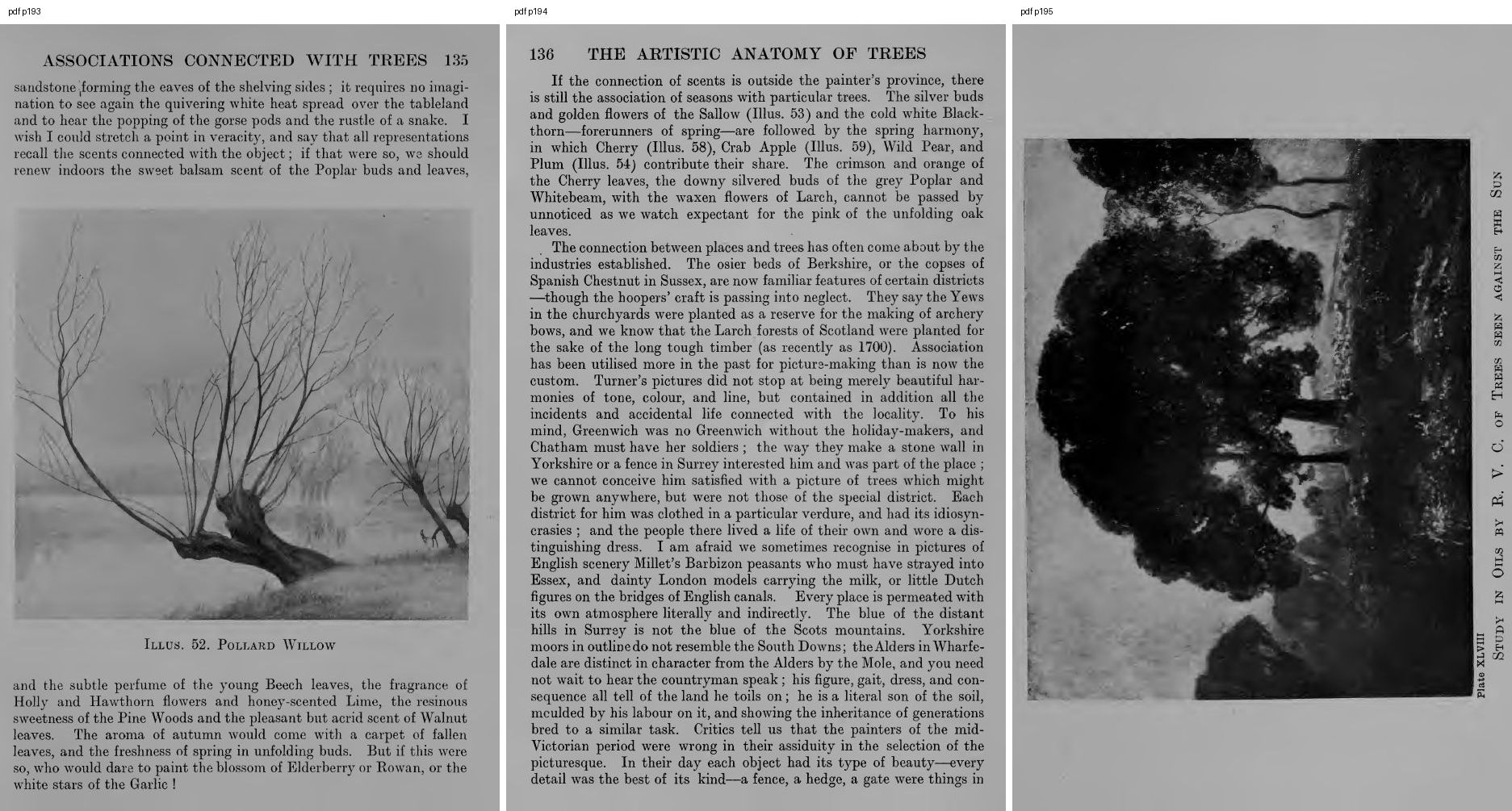 43. books/trees/pages/cole3/s193.jpg
Bash: cd ~/work/pixelart-studies/books/trees; python3 - <<'E' from PIL import Image, ImageDraw import os def grid(pages,out,cols=6,w=330): ims=[(p,Image.open(f'pages/cole/p-{p:03d}.j
cd ~/work/pixelart-studies/books/trees; python3 - <<'E'
from PIL import Image, ImageDraw
import os
def grid(pages,out,cols=6,w=330):
    ims=[(p,Image.open(f'pages/cole/p-{p:03d}.jpg')) for p in pages if os.path.exists(f'pages/cole/p-{p:03d}.jpg')]
    h=int(w*926/617); rows=(len(ims)+cols-1)//cols
    S=Image.new('L',(cols*w,rows*(h+14)),255);d=ImageDraw.Draw(S)
    for i,(p,im) in enumerate(ims):
        x=(i%cols)*w;y=(i//cols)*(h+14); S.paste(im.resize((w-4,h)),(x,y+14));d.text((x+4,y+1),str(p),fill=0)
    S.save(out,quality=85)
grid(list(range(196,208)),'tmp/g196.jpg')
E
ls pages/cole | wc -l

# output:
412
Cole render done. Start Hallé render and regenerate all sheets.
Bash: ~/work/pixelart-studies/books/trees/tmp/renderh.sh
~/work/pixelart-studies/books/trees/tmp/renderh.sh

# output:
Command running in background with ID: bb6ursfct. Output is being written to: (tmp) You will be notified when it completes. To check interim output, use Read on that file path.
Bash: cd ~/work/pixelart-studies/books/trees; python3 src/contact.py pages/cole pages/cole3 148 412; ls pages/cole3|wc -l
cd ~/work/pixelart-studies/books/trees; python3 src/contact.py pages/cole pages/cole3 148 412; ls pages/cole3|wc -l

# output:
138
Read: books/trees/tmp/g196.jpg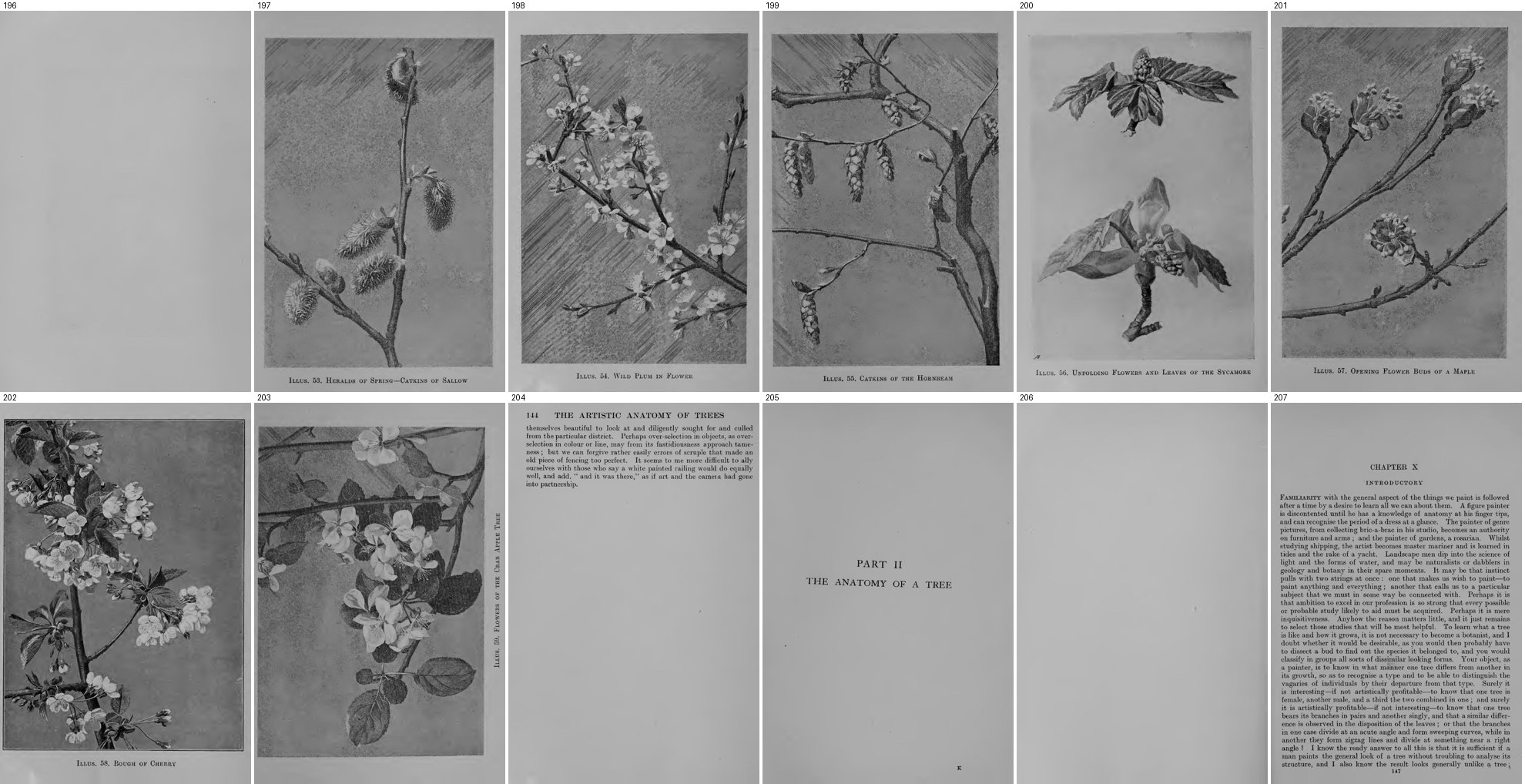 44. books/trees/tmp/g196.jpg
Now 175-183 then Part II.
Read: books/trees/pages/cole3/s175.jpg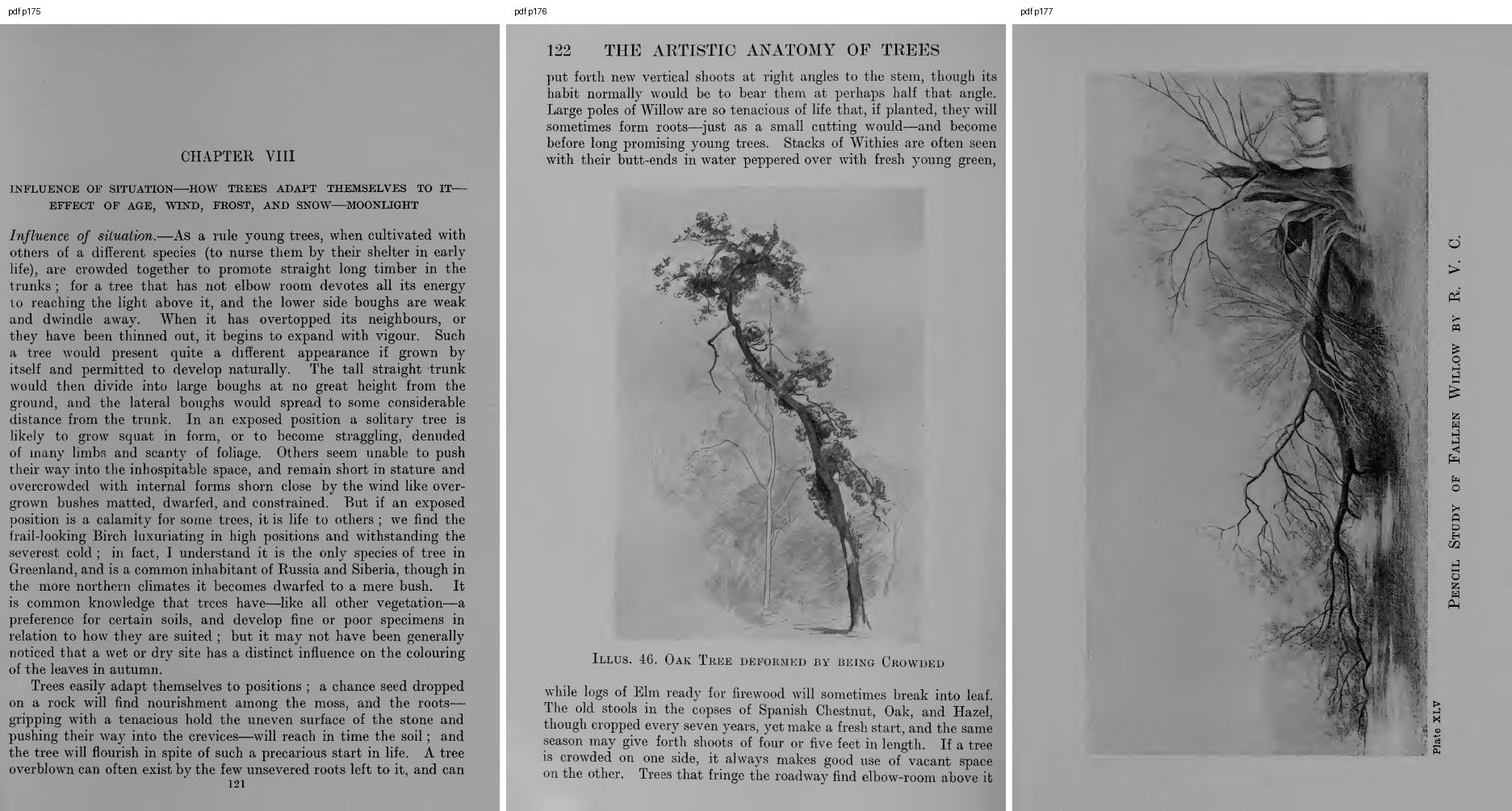 45. books/trees/pages/cole3/s175.jpg
Read: books/trees/pages/cole3/s178.jpg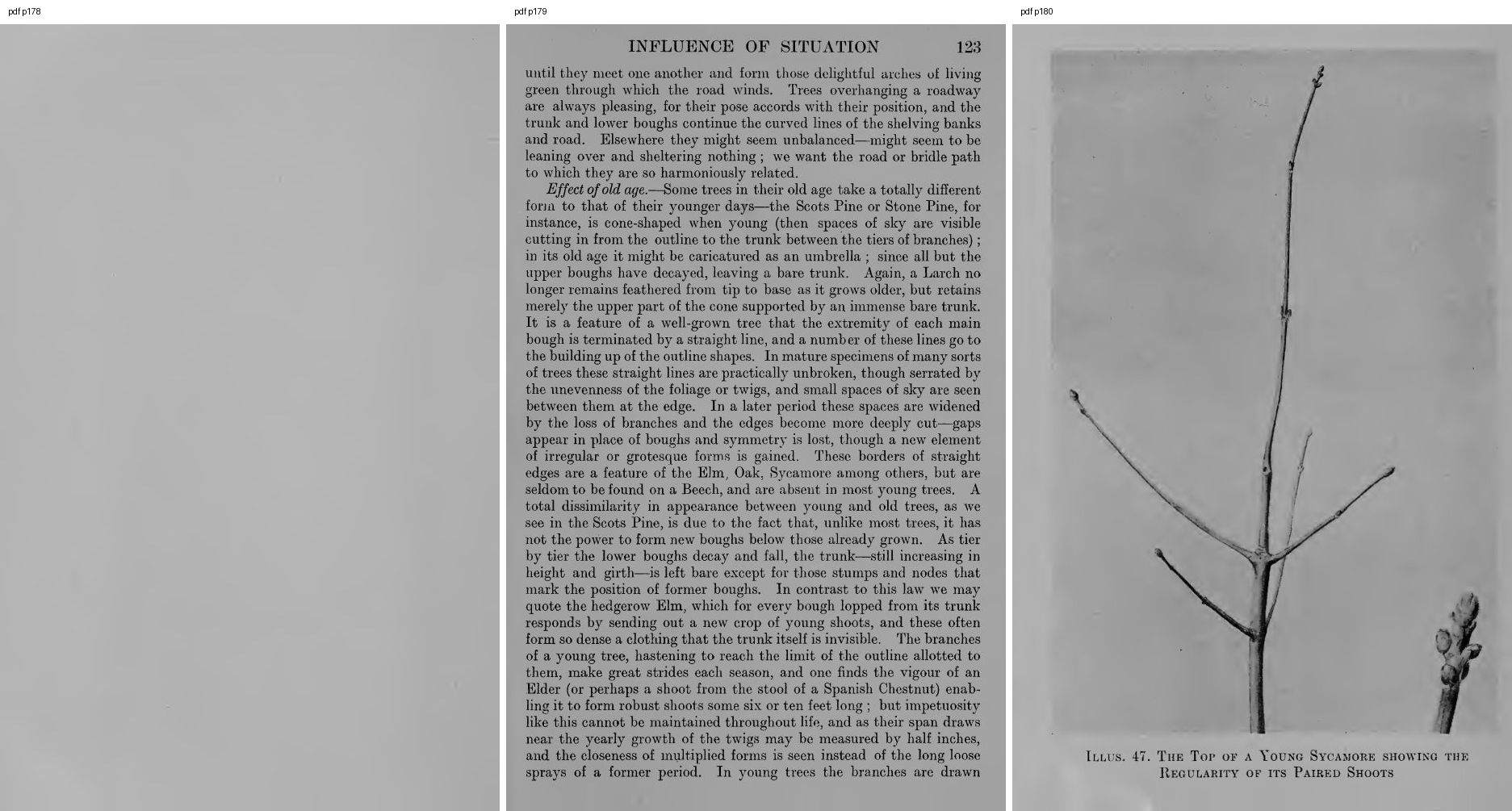 46. books/trees/pages/cole3/s178.jpg
Read: books/trees/pages/cole3/s181.jpgRead: books/trees/pages/cole3/s208.jpgRead: books/trees/pages/cole3/s211.jpgRead: books/trees/pages/cole3/s214.jpg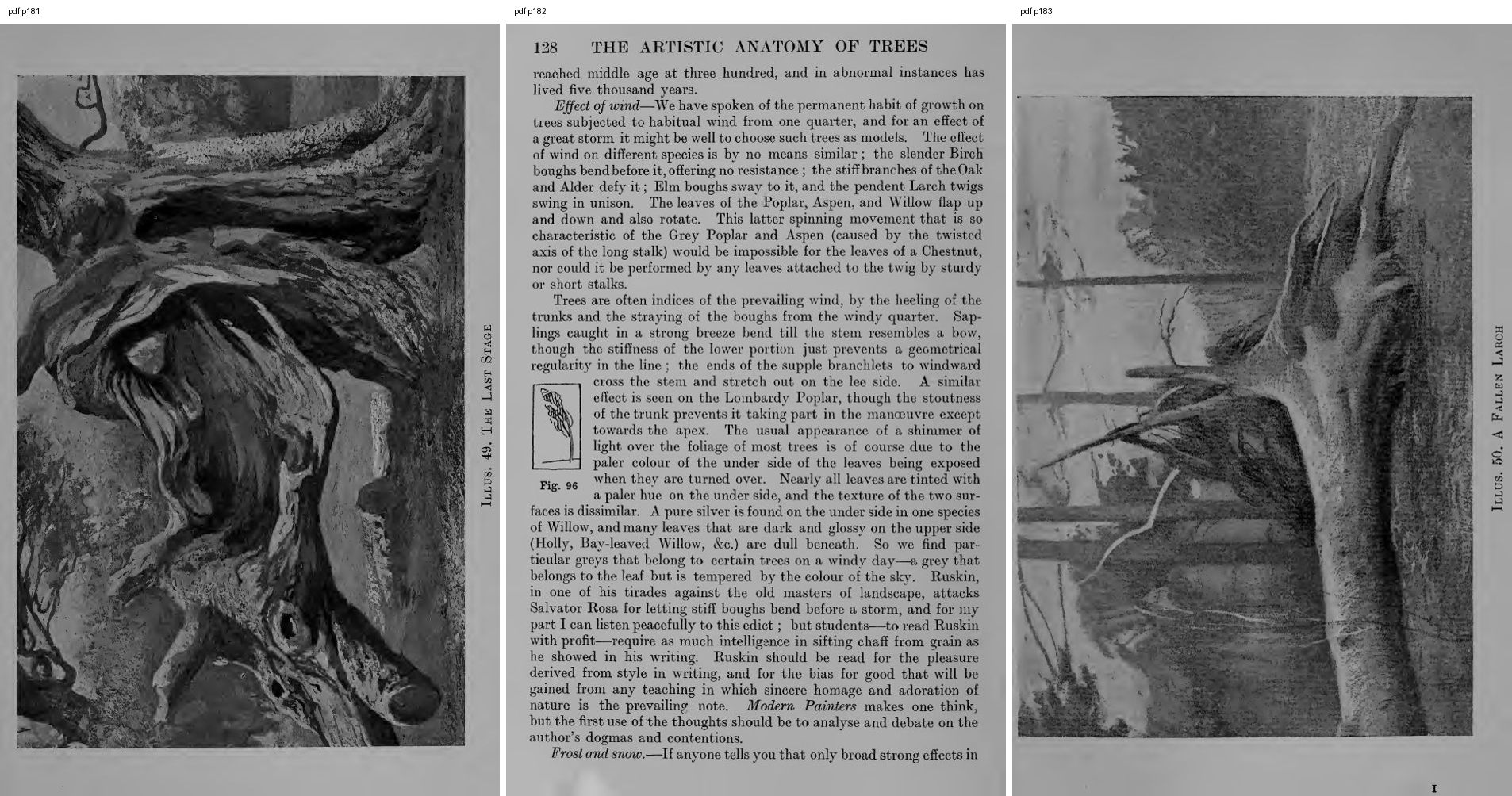 47. books/trees/pages/cole3/s181.jpg
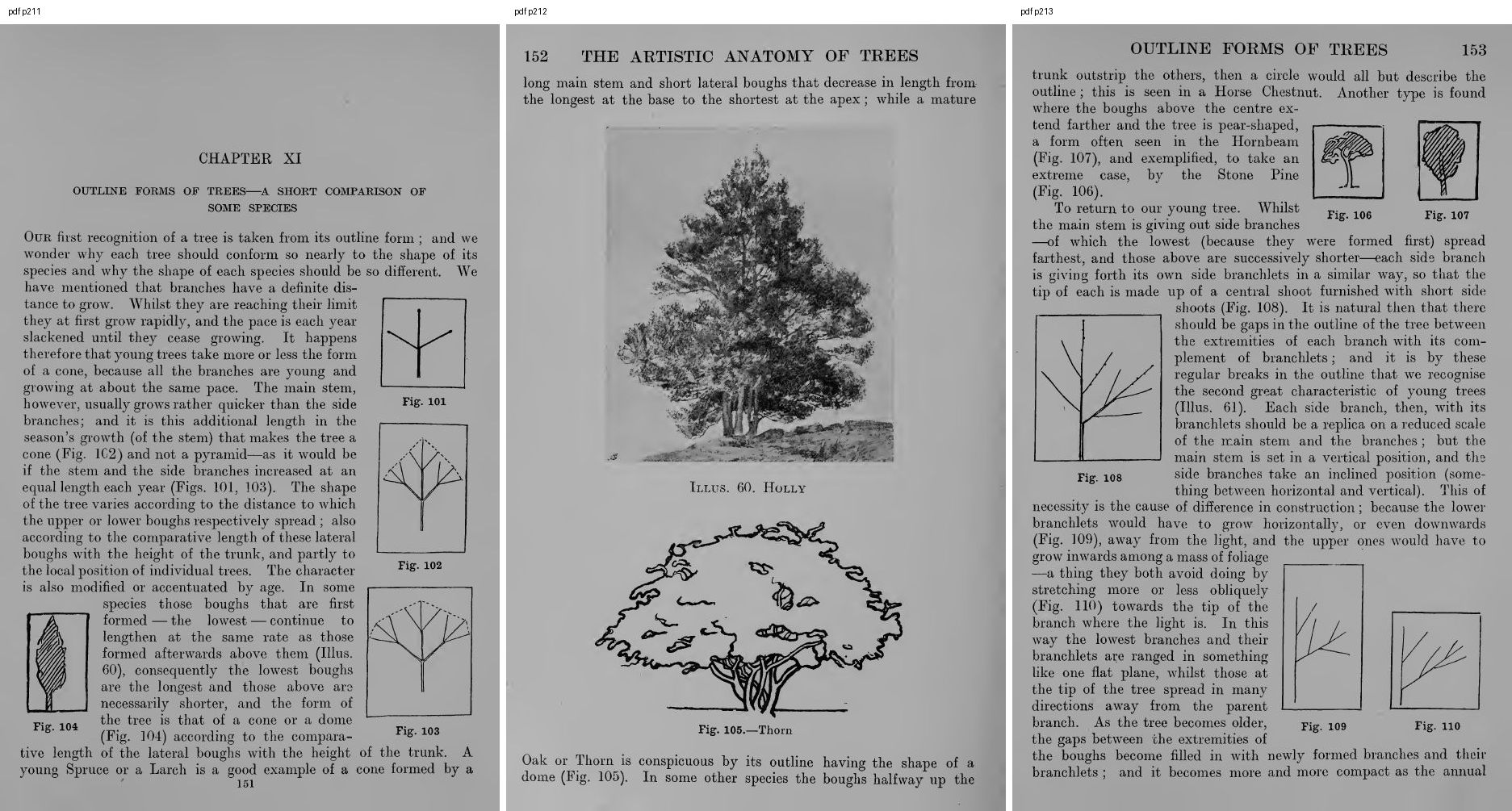 48. books/trees/pages/cole3/s211.jpg
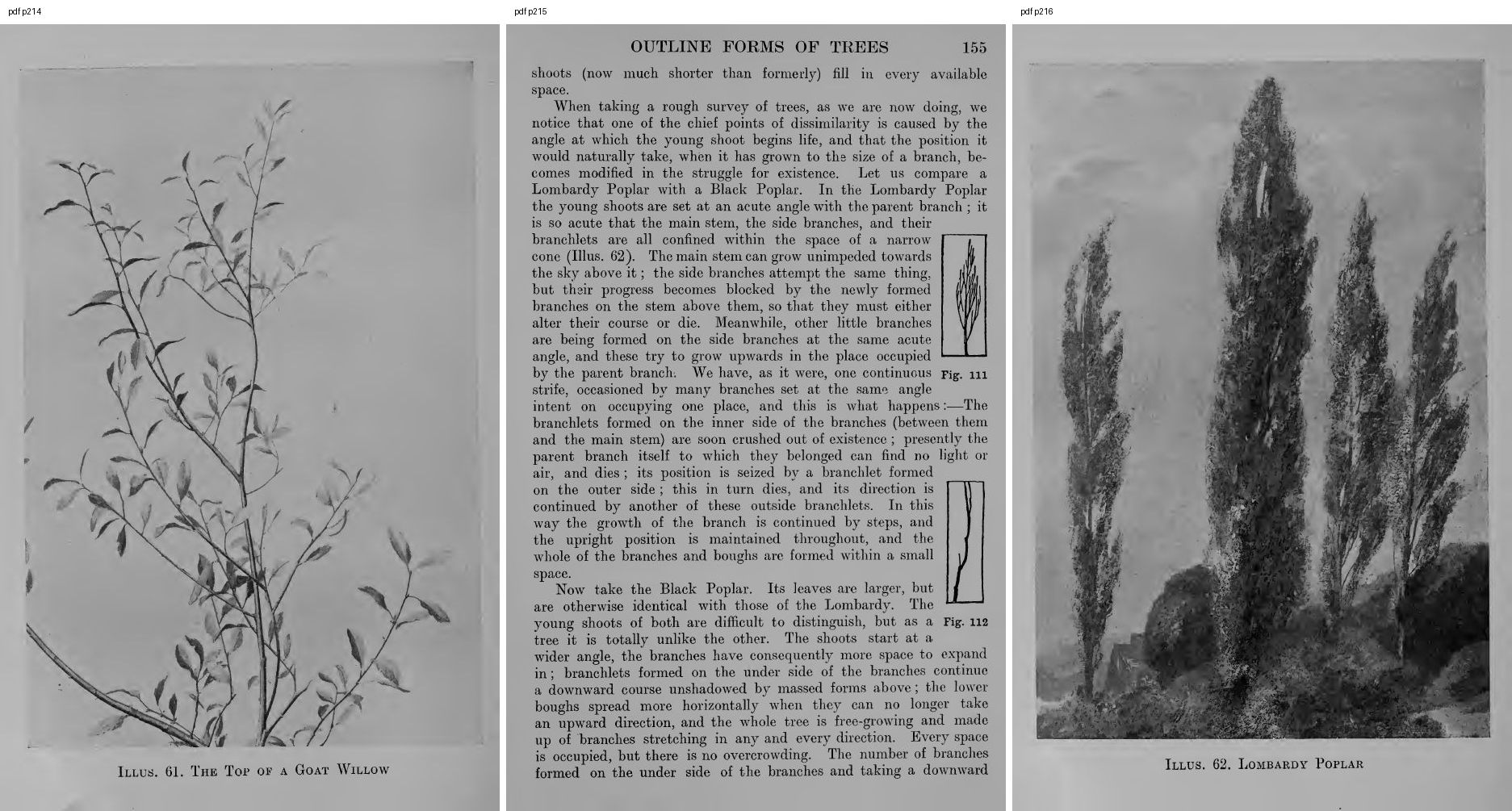 49. books/trees/pages/cole3/s214.jpg
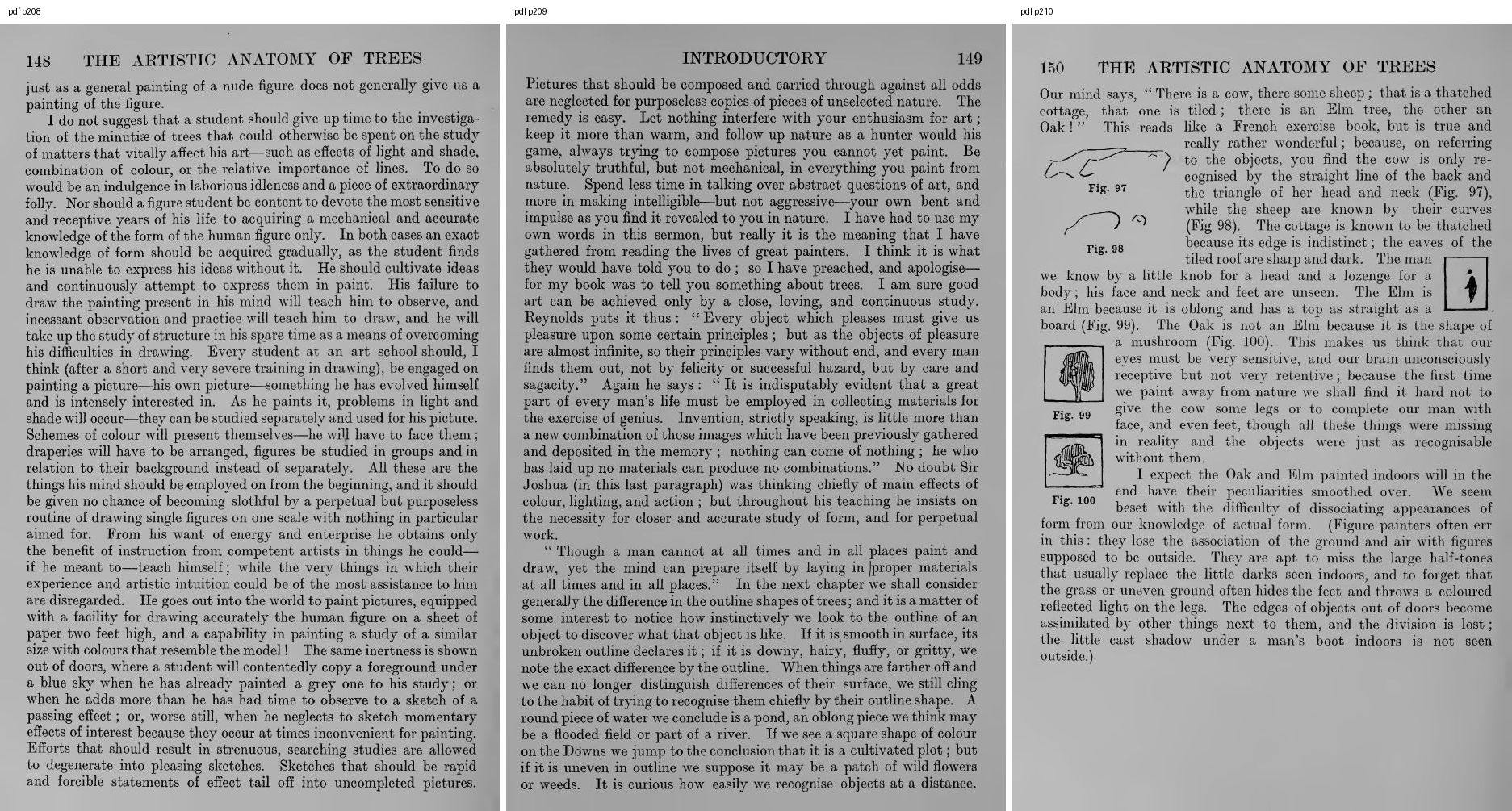 50. books/trees/pages/cole3/s208.jpg
Read: books/trees/pages/cole3/s217.jpg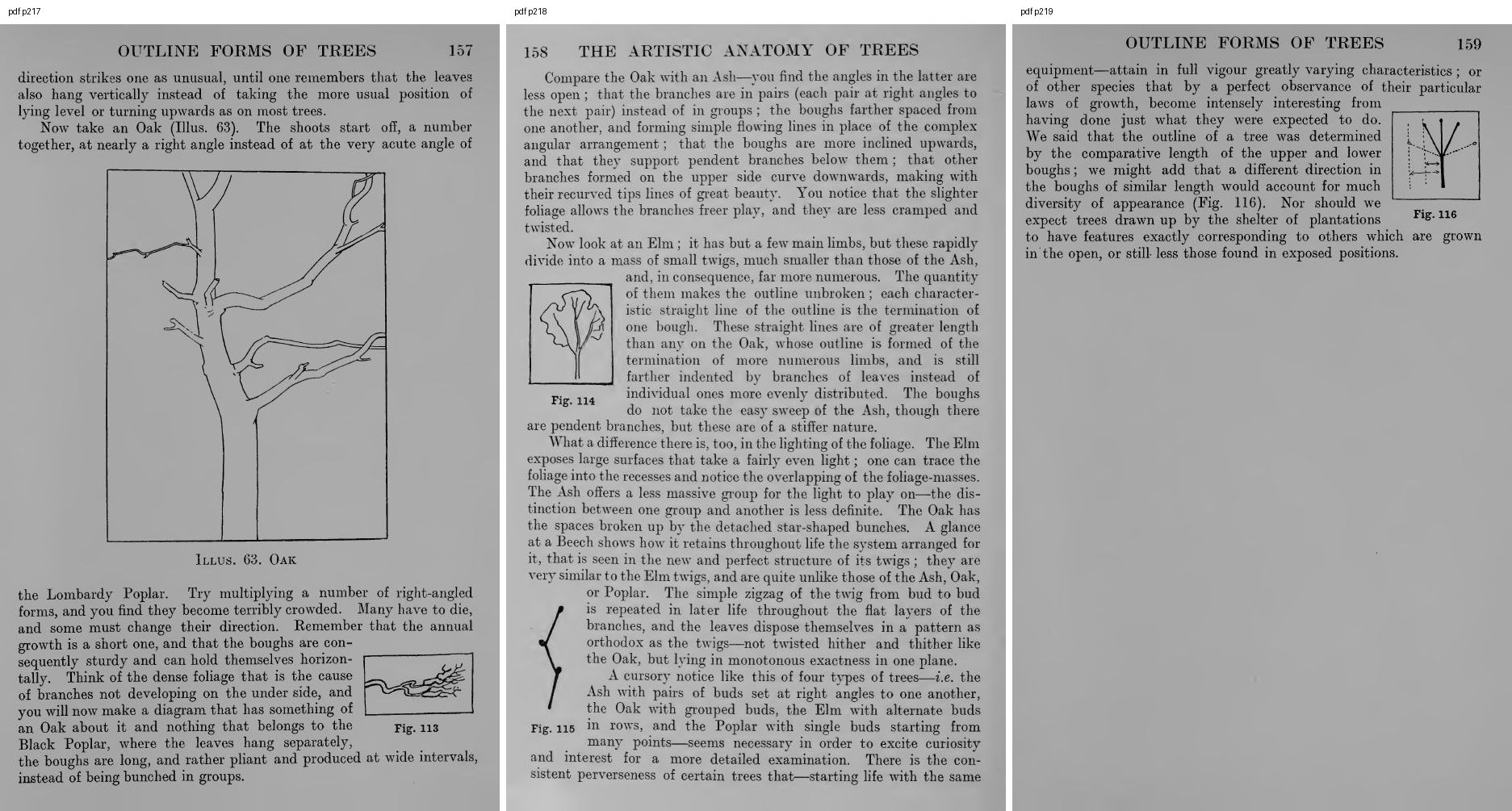 51. books/trees/pages/cole3/s217.jpg
Read: books/trees/pages/cole3/s220.jpg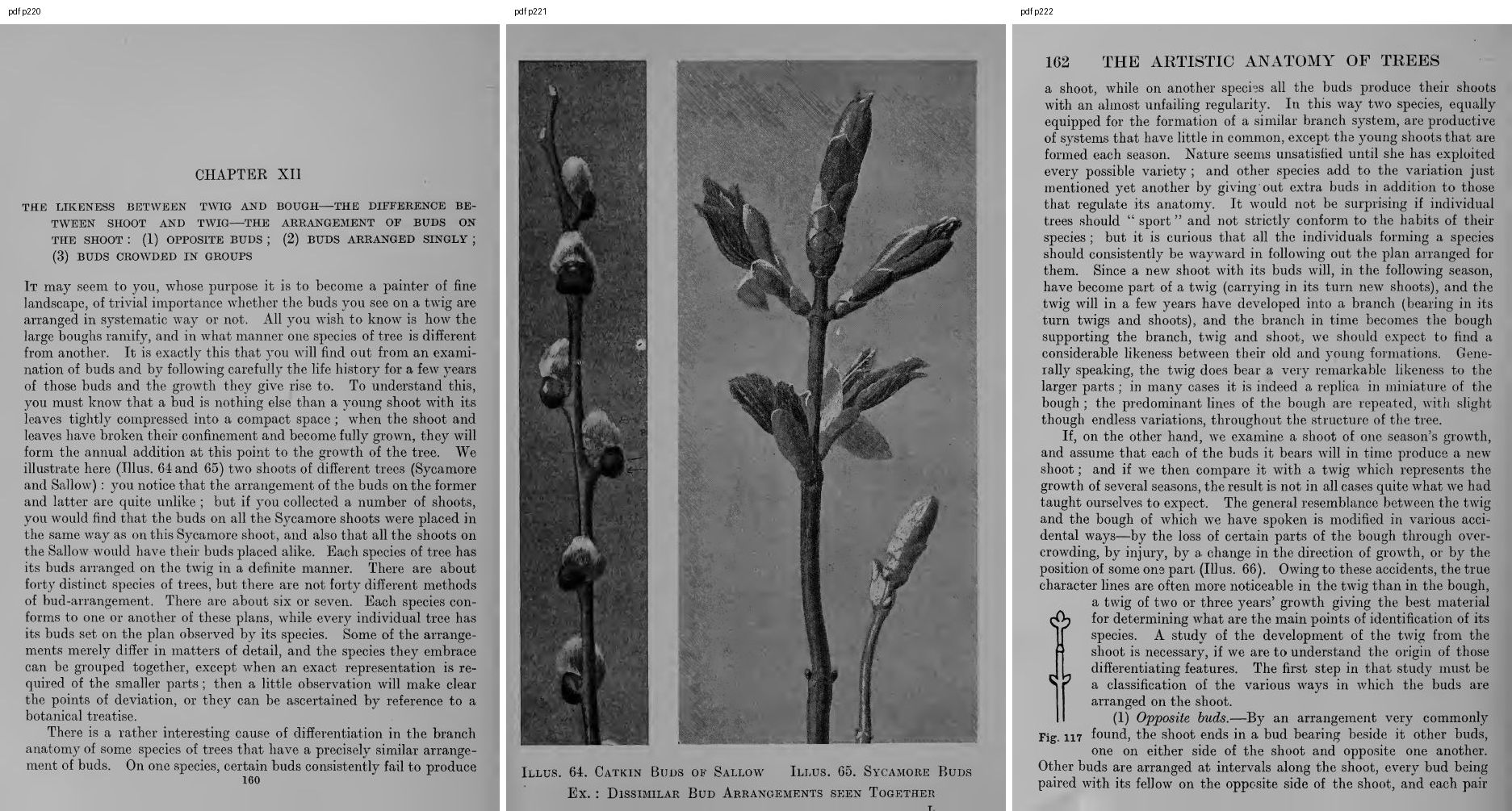 52. books/trees/pages/cole3/s220.jpg
Read: books/trees/pages/cole3/s223.jpg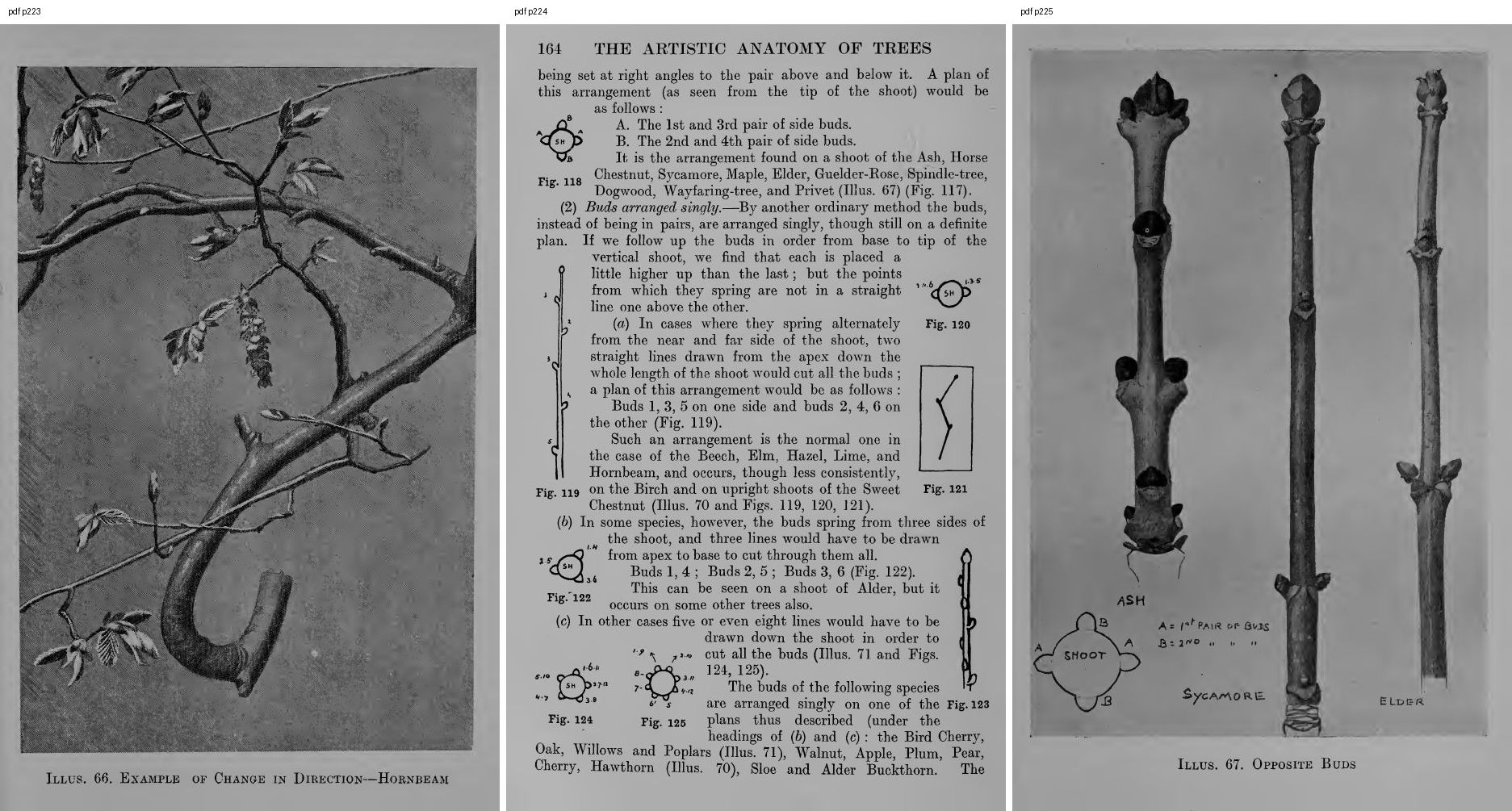 53. books/trees/pages/cole3/s223.jpg
Read: books/trees/pages/cole3/s226.jpg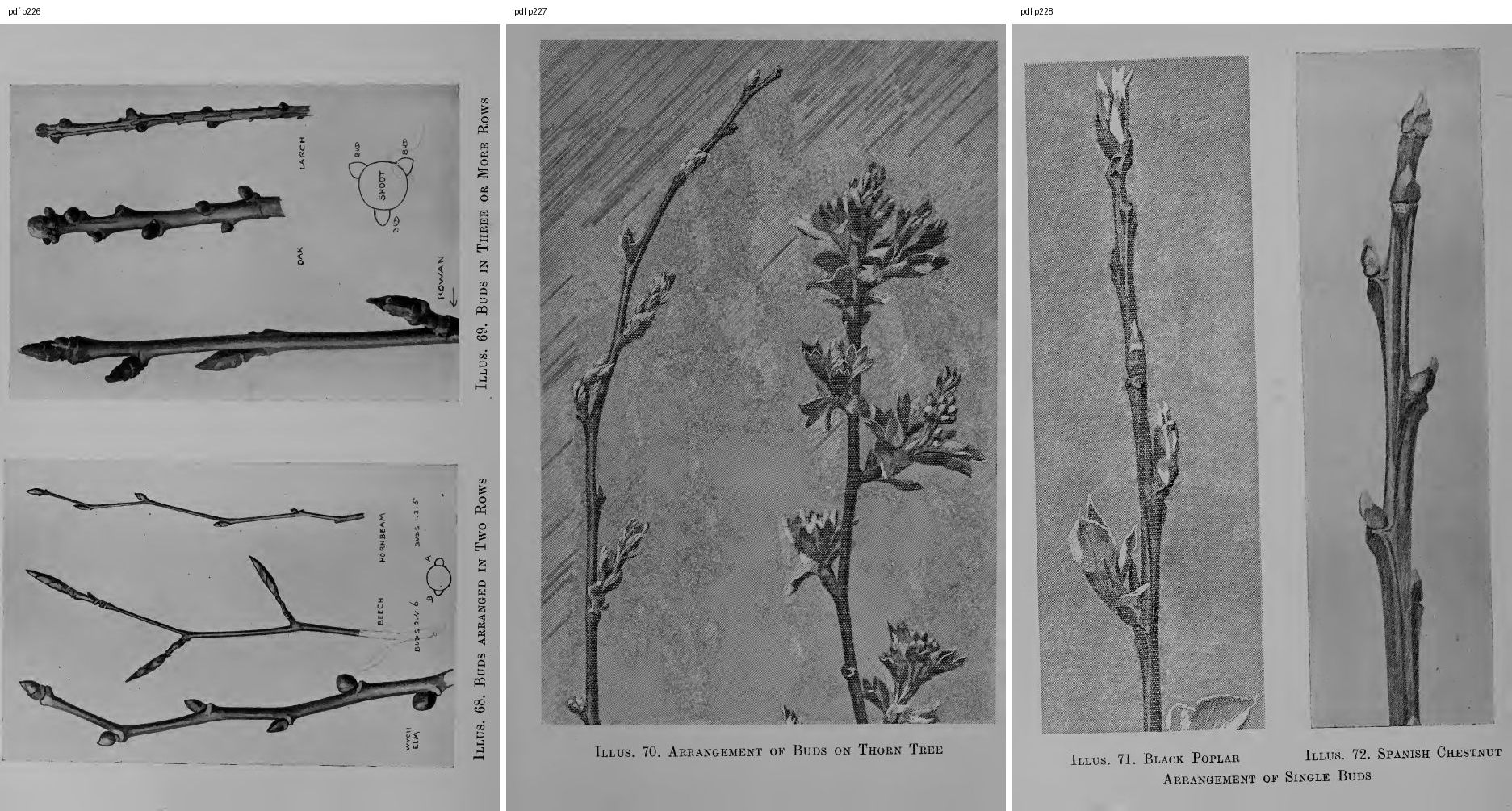 54. books/trees/pages/cole3/s226.jpg
Read: books/trees/pages/cole3/s229.jpgRead: books/trees/pages/cole3/s232.jpg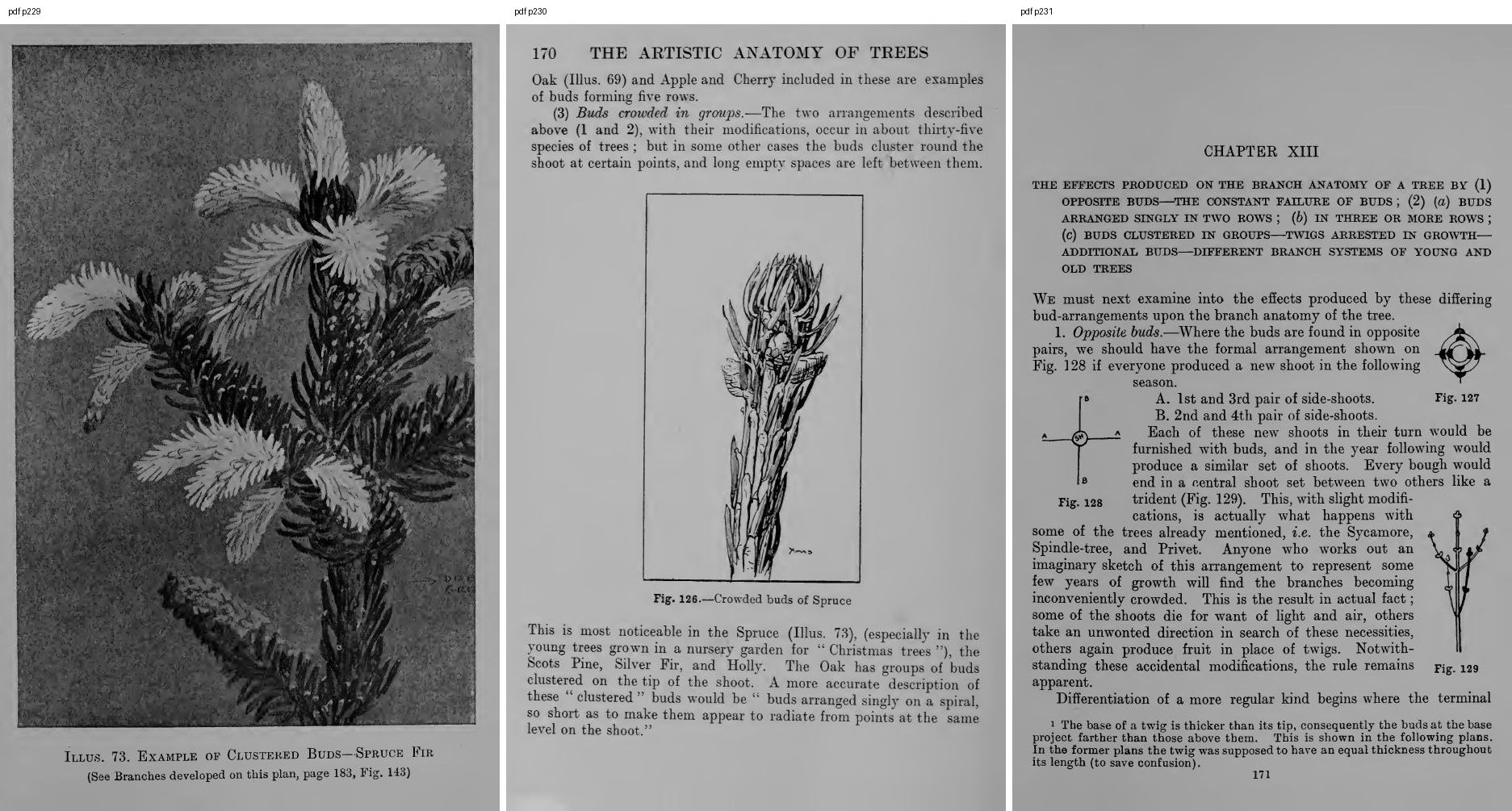 55. books/trees/pages/cole3/s229.jpg
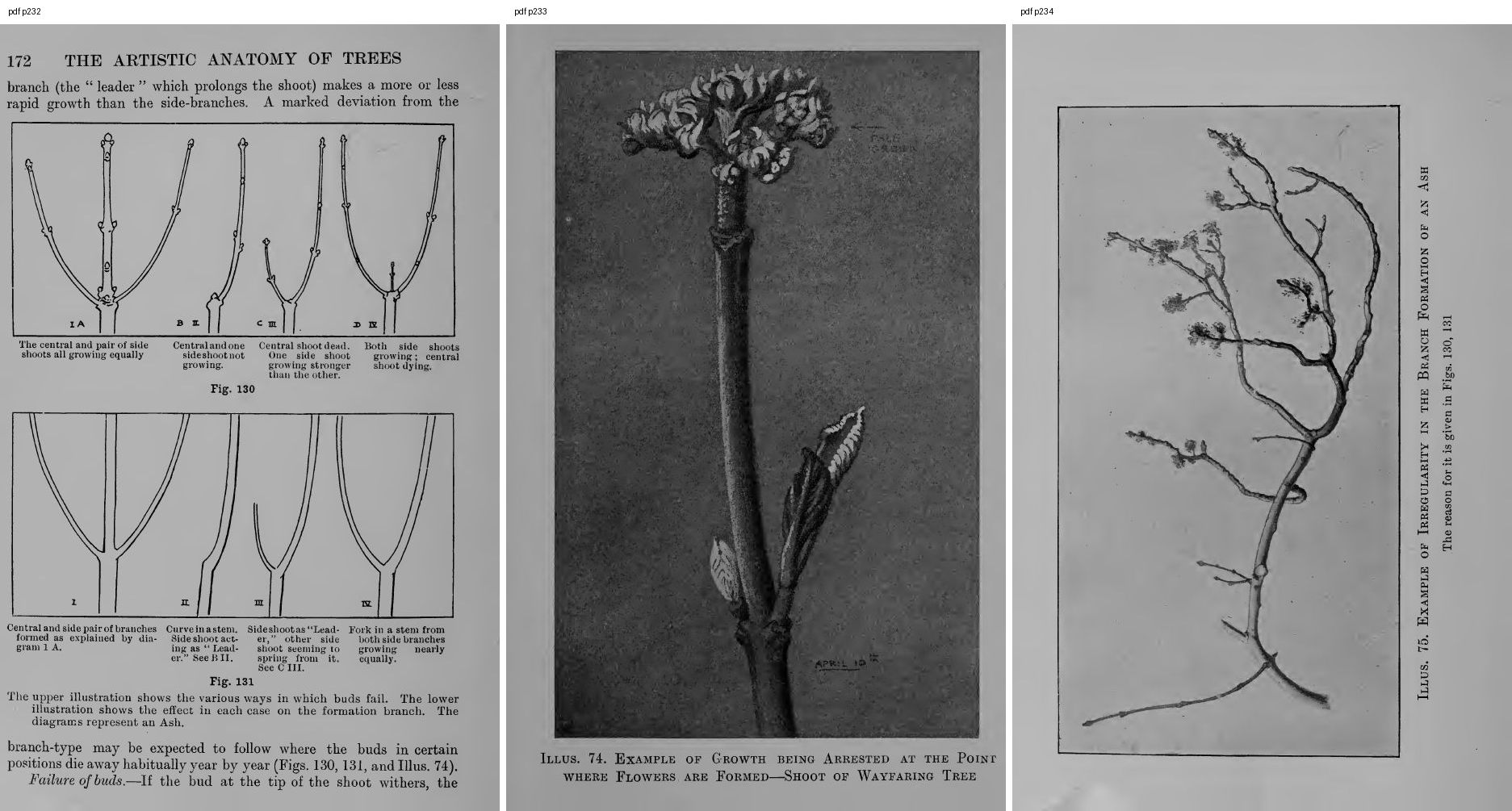 56. books/trees/pages/cole3/s232.jpg
Read: books/trees/pages/cole3/s235.jpgRead: books/trees/pages/cole3/s238.jpgRead: books/trees/pages/cole3/s241.jpgRead: books/trees/pages/cole3/s244.jpgRead: books/trees/pages/cole3/s247.jpg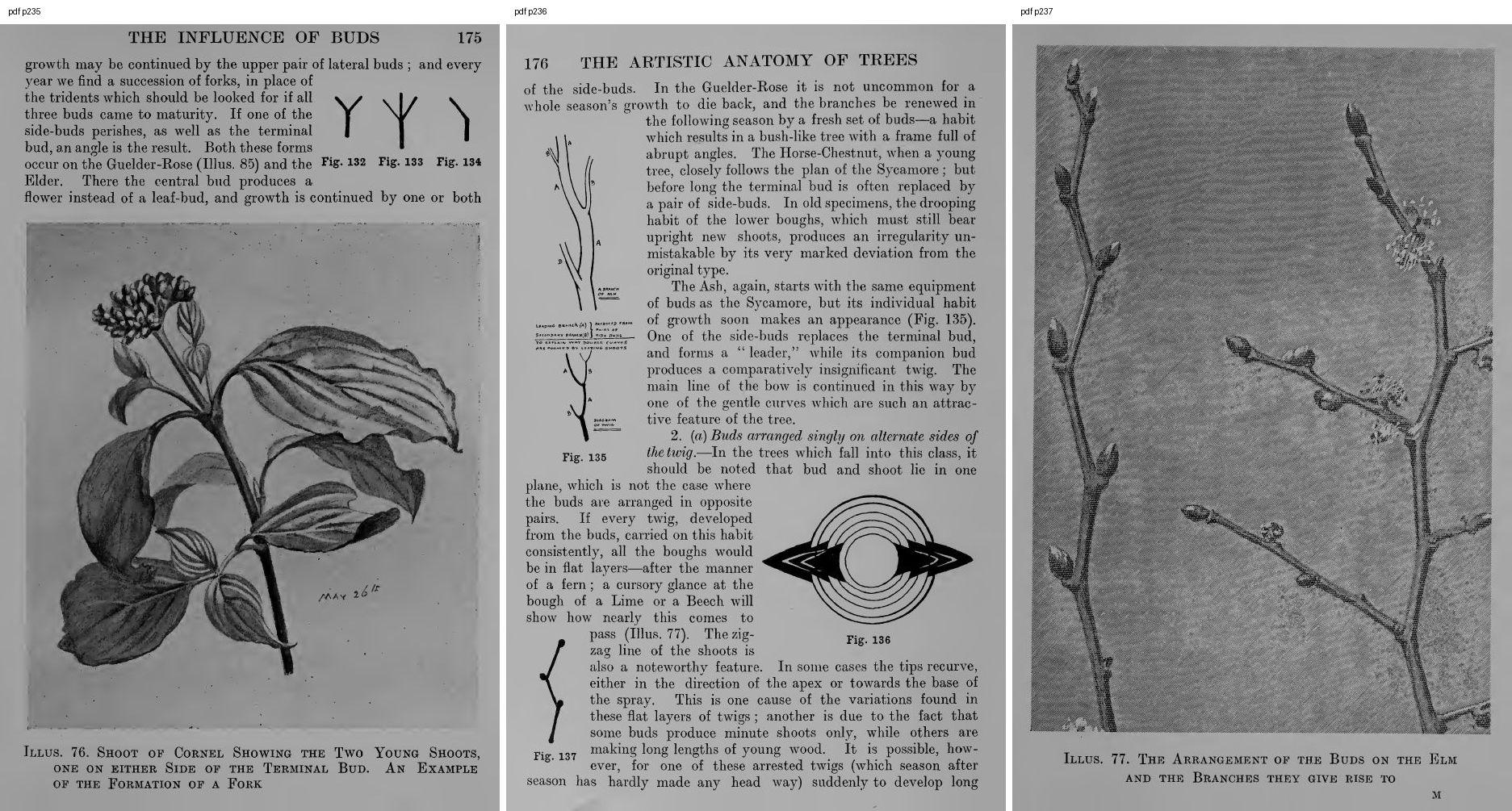 57. books/trees/pages/cole3/s235.jpg
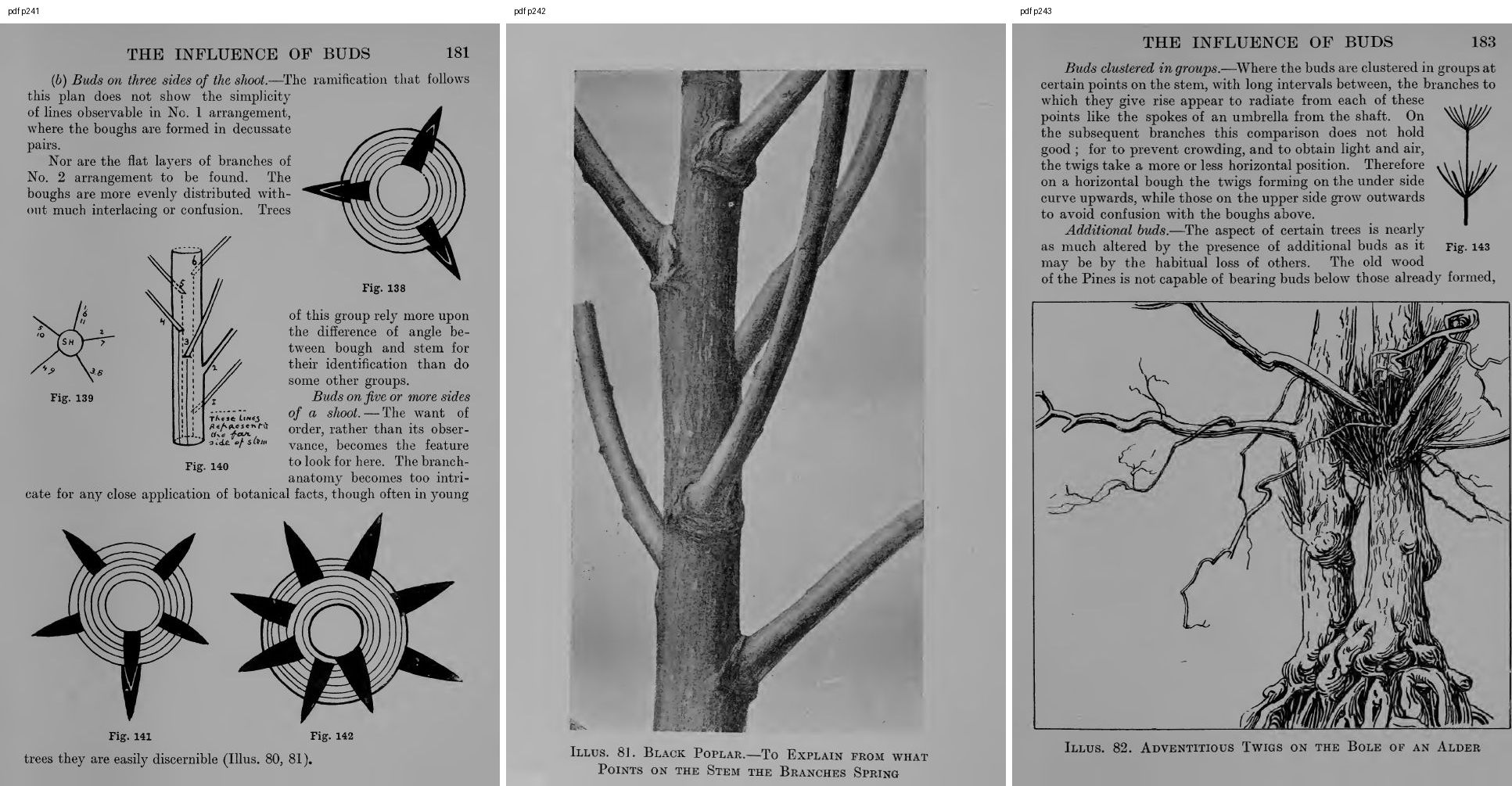 58. books/trees/pages/cole3/s241.jpg
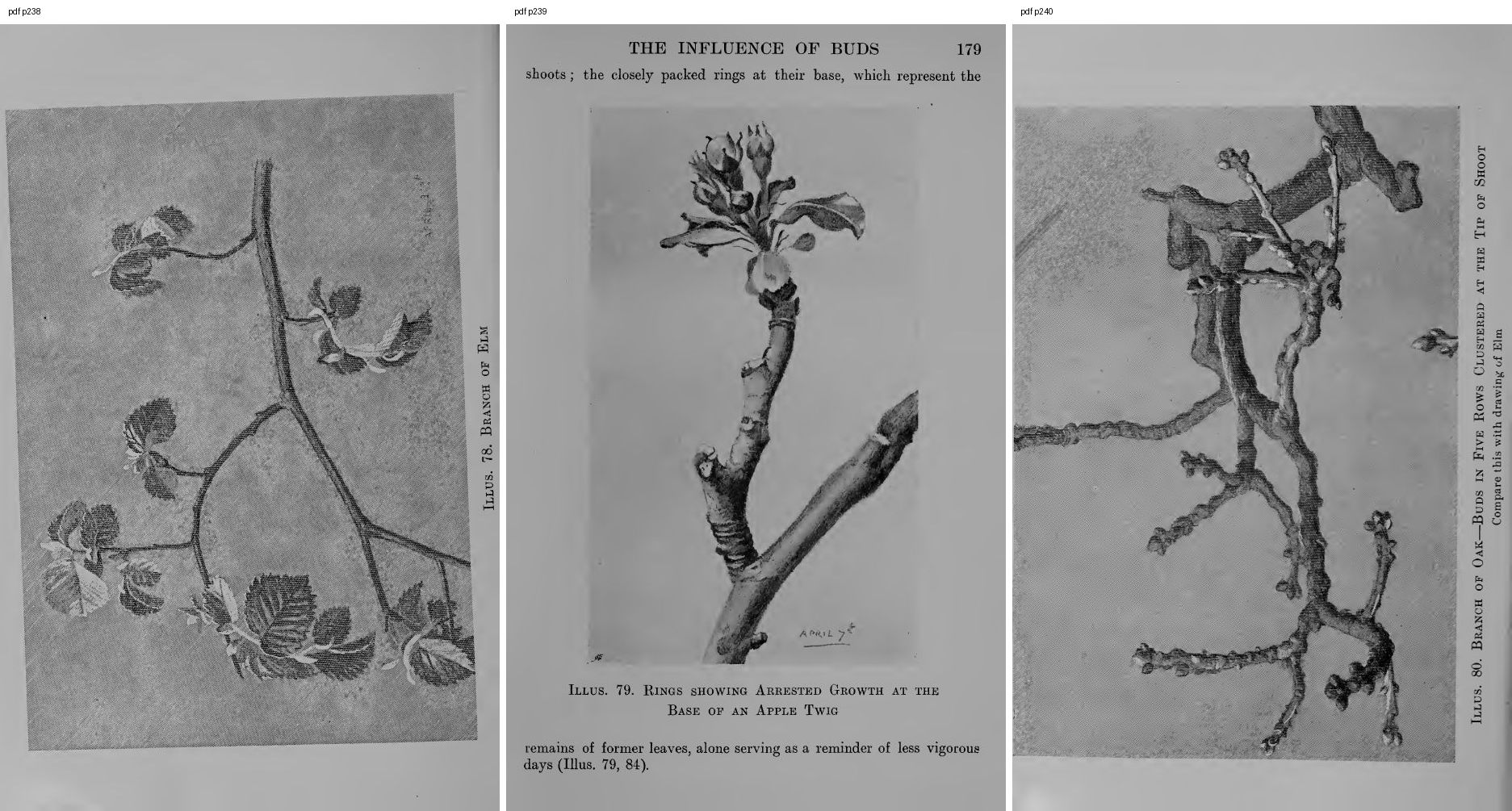 59. books/trees/pages/cole3/s238.jpg
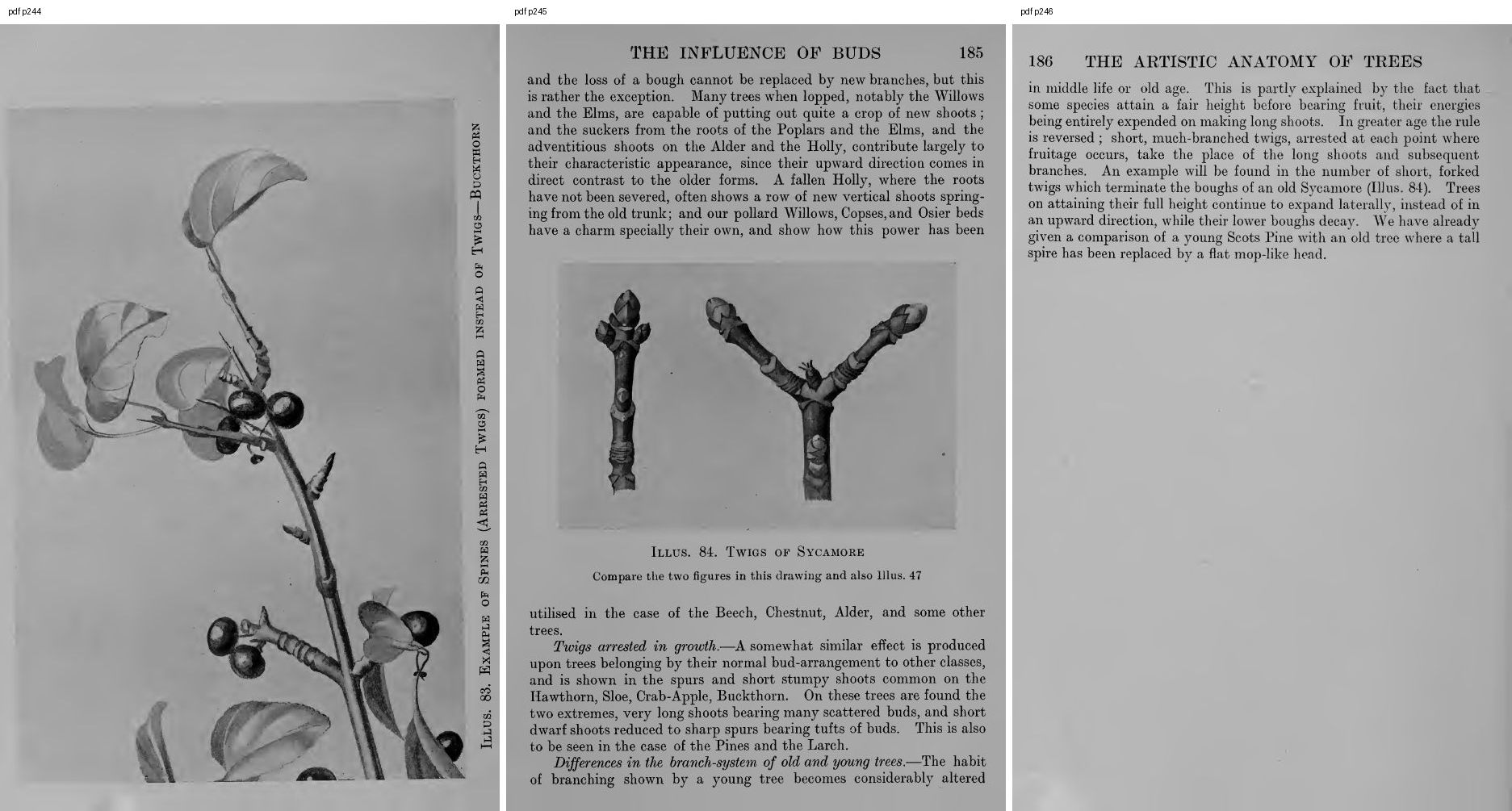 60. books/trees/pages/cole3/s244.jpg
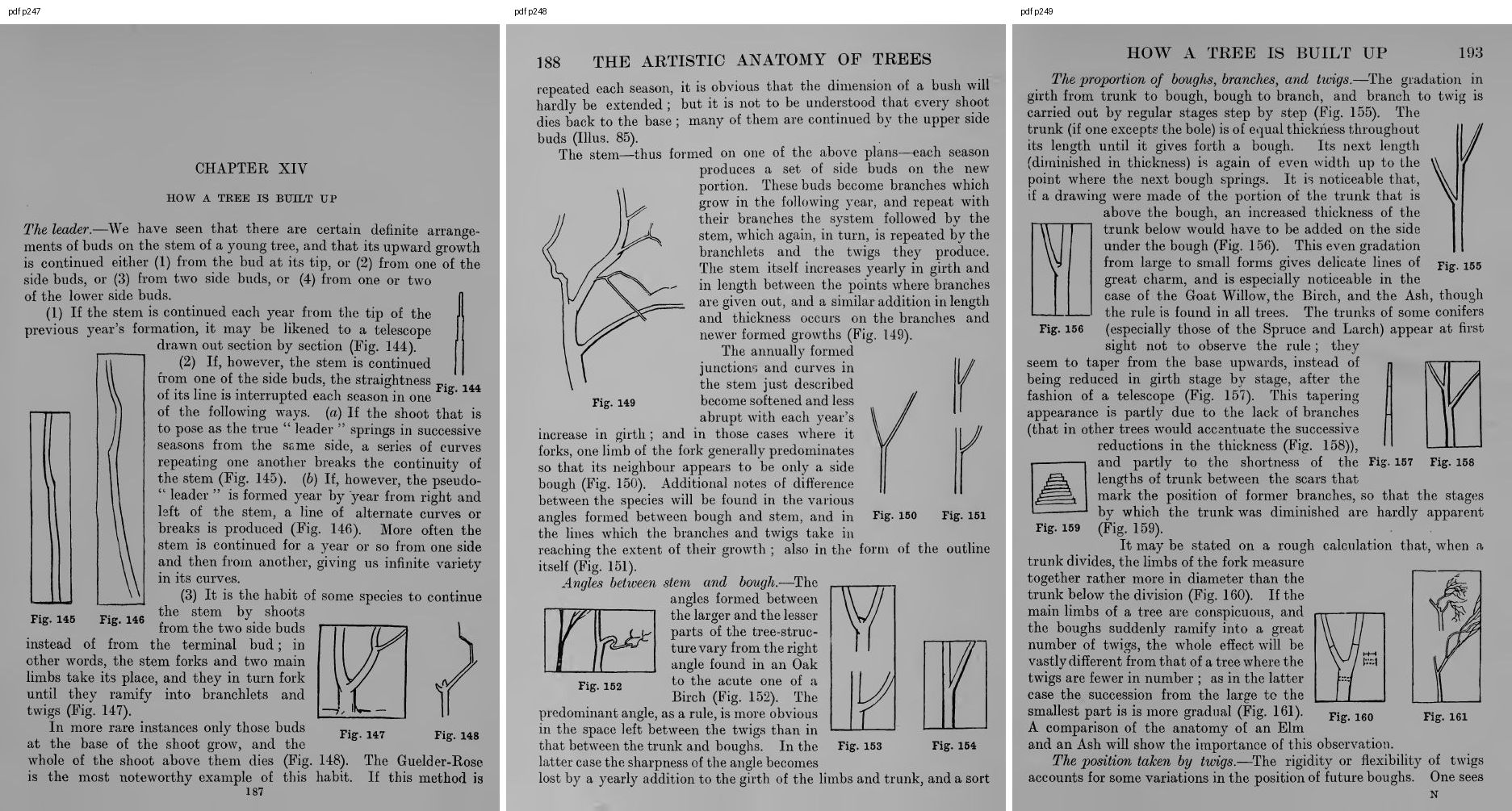 61. books/trees/pages/cole3/s247.jpg
Read: books/trees/pages/cole3/s250.jpg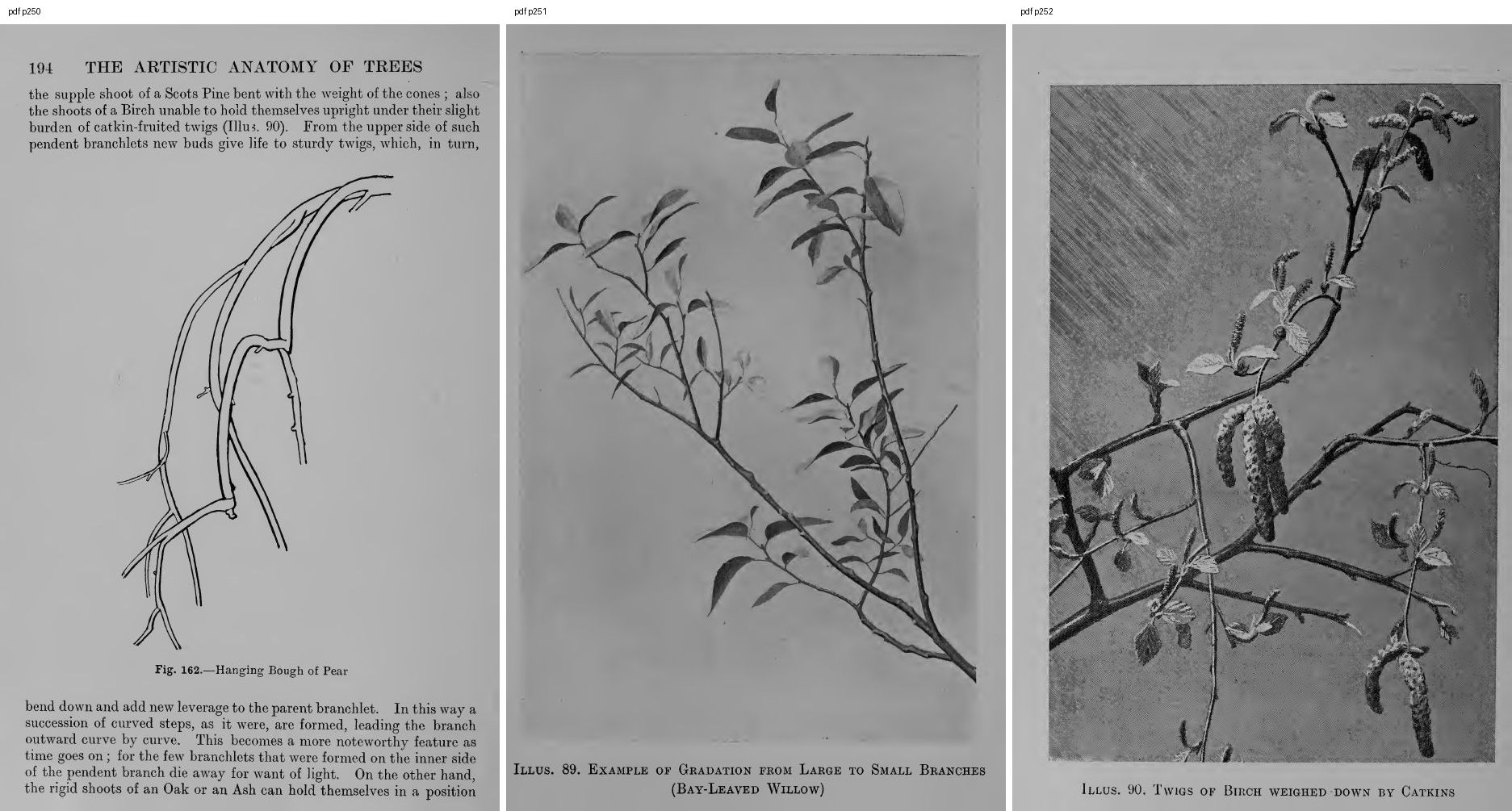 62. books/trees/pages/cole3/s250.jpg
Bash: cd ~/work/pixelart-studies/books/trees; python3 - <<'E' from PIL import Image, ImageDraw import os def grid(pages,out,cols=6,w=330): ims=[(p,Image.open(f'pages/cole/p-{p:03d}.j
cd ~/work/pixelart-studies/books/trees; python3 - <<'E'
from PIL import Image, ImageDraw
import os
def grid(pages,out,cols=6,w=330):
    ims=[(p,Image.open(f'pages/cole/p-{p:03d}.jpg')) for p in pages if os.path.exists(f'pages/cole/p-{p:03d}.jpg')]
    h=int(w*926/617); rows=(len(ims)+cols-1)//cols
    S=Image.new('L',(cols*w,rows*(h+14)),255);d=ImageDraw.Draw(S)
    for i,(p,im) in enumerate(ims):
        x=(i%cols)*w;y=(i//cols)*(h+14); S.paste(im.resize((w-4,h)),(x,y+14));d.text((x+4,y+1),str(p),fill=0)
    S.save(out,quality=85)
for a in range(253,413,12):
    grid(list(range(a,min(a+12,413))),f'tmp/g{a}.jpg')
E
ls tmp

# output:
g196.jpg
g253.jpg
g265.jpg
g277.jpg
g289.jpg
g301.jpg
g313.jpg
g325.jpg
g337.jpg
g349.jpg
g361.jpg
g373.jpg
g385.jpg
g397.jpg
g409.jpg
plates1.jpg
plates2.jpg
plates3.jpg
render.sh
renderh.sh
Read: books/trees/tmp/g253.jpg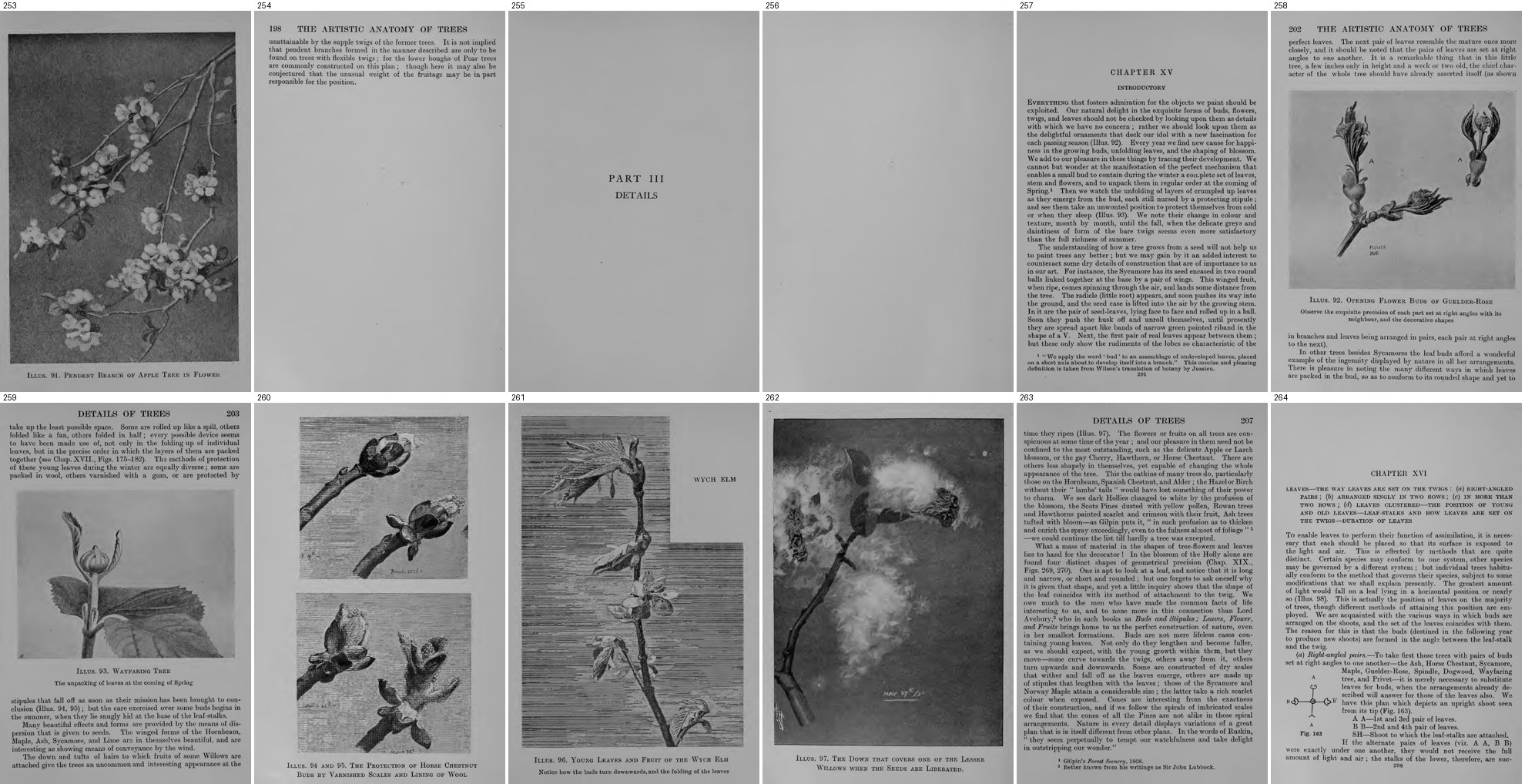 63. books/trees/tmp/g253.jpg
Read: books/trees/tmp/g265.jpg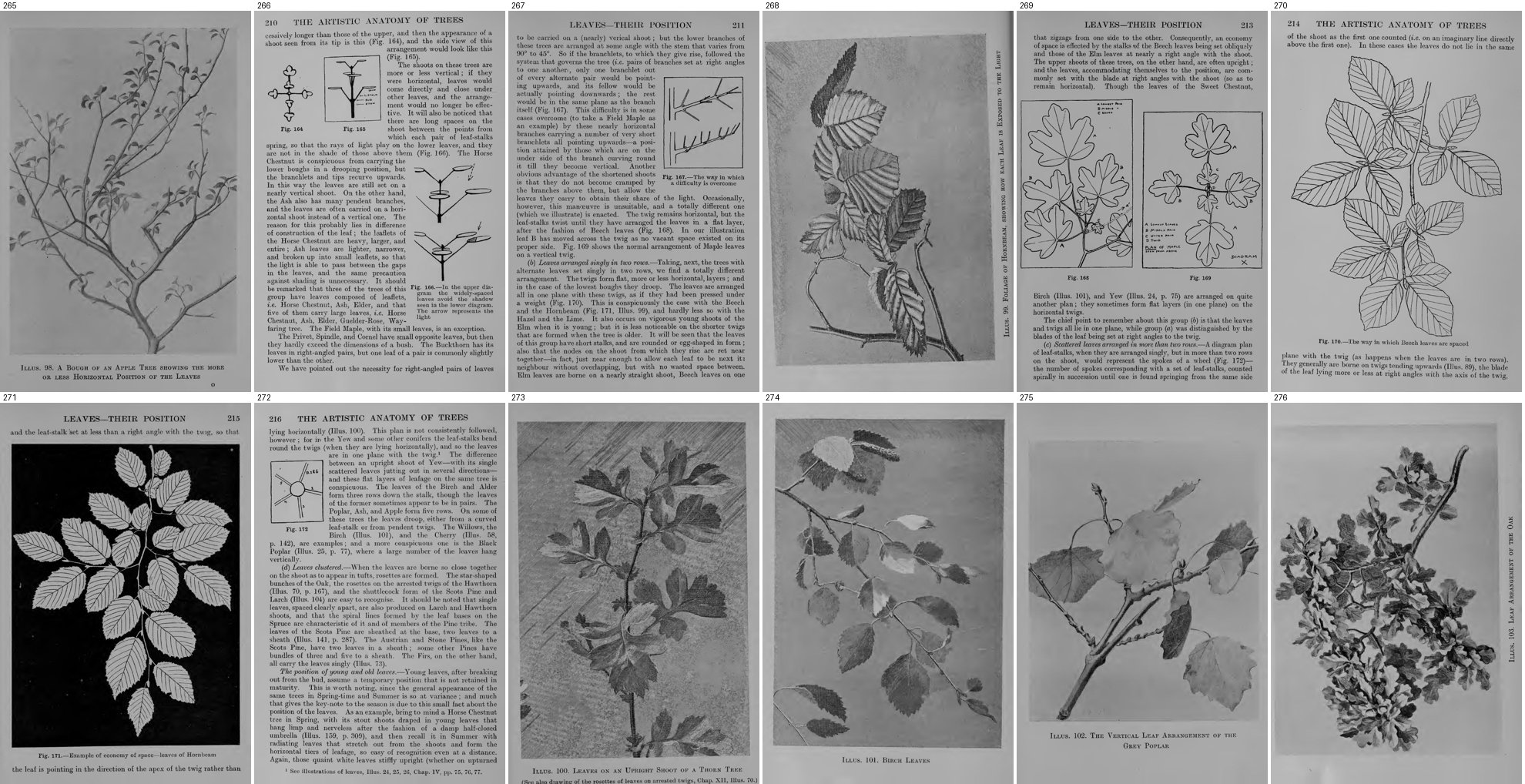 64. books/trees/tmp/g265.jpg
Read: books/trees/tmp/g277.jpg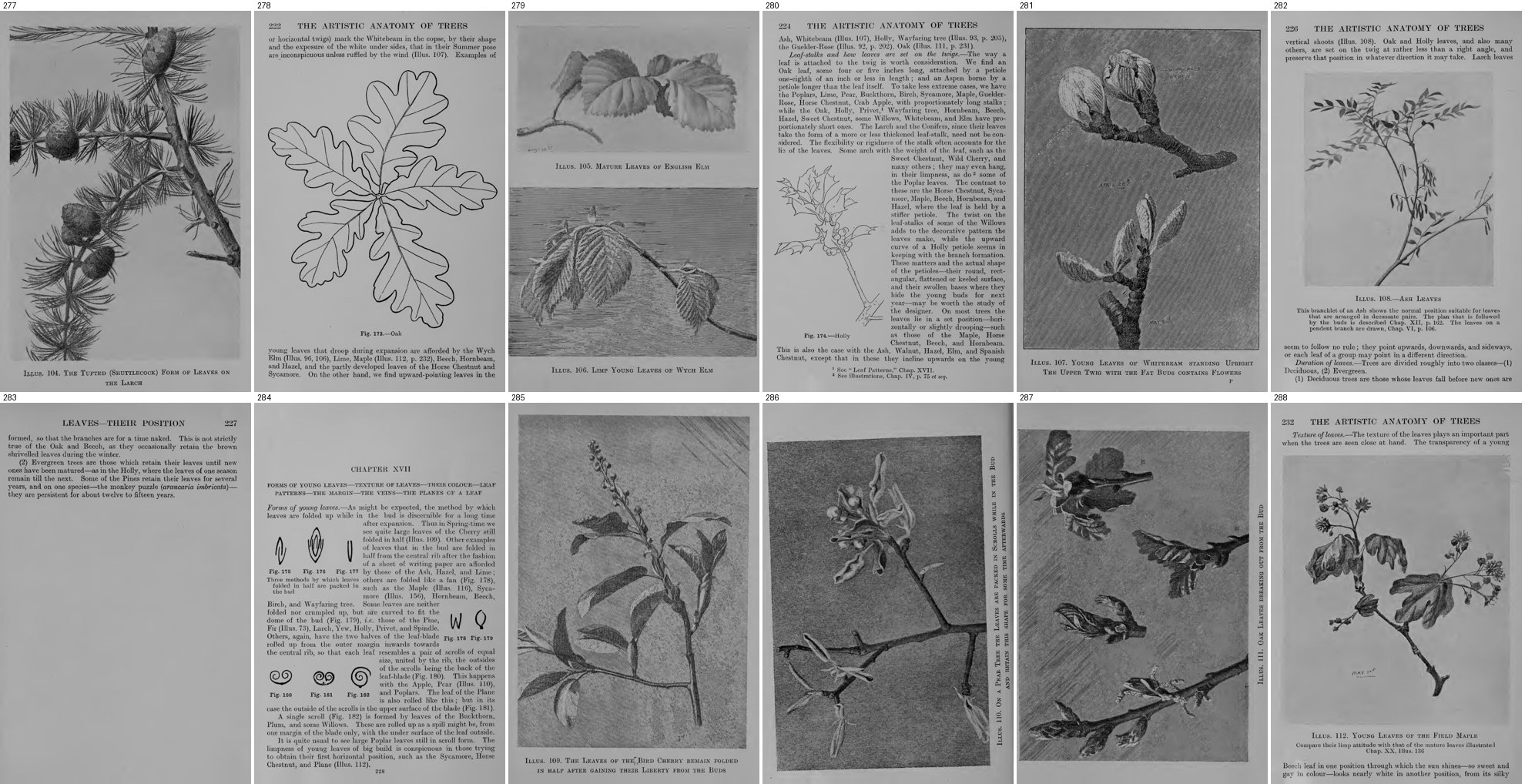 65. books/trees/tmp/g277.jpg
Read: books/trees/tmp/g289.jpg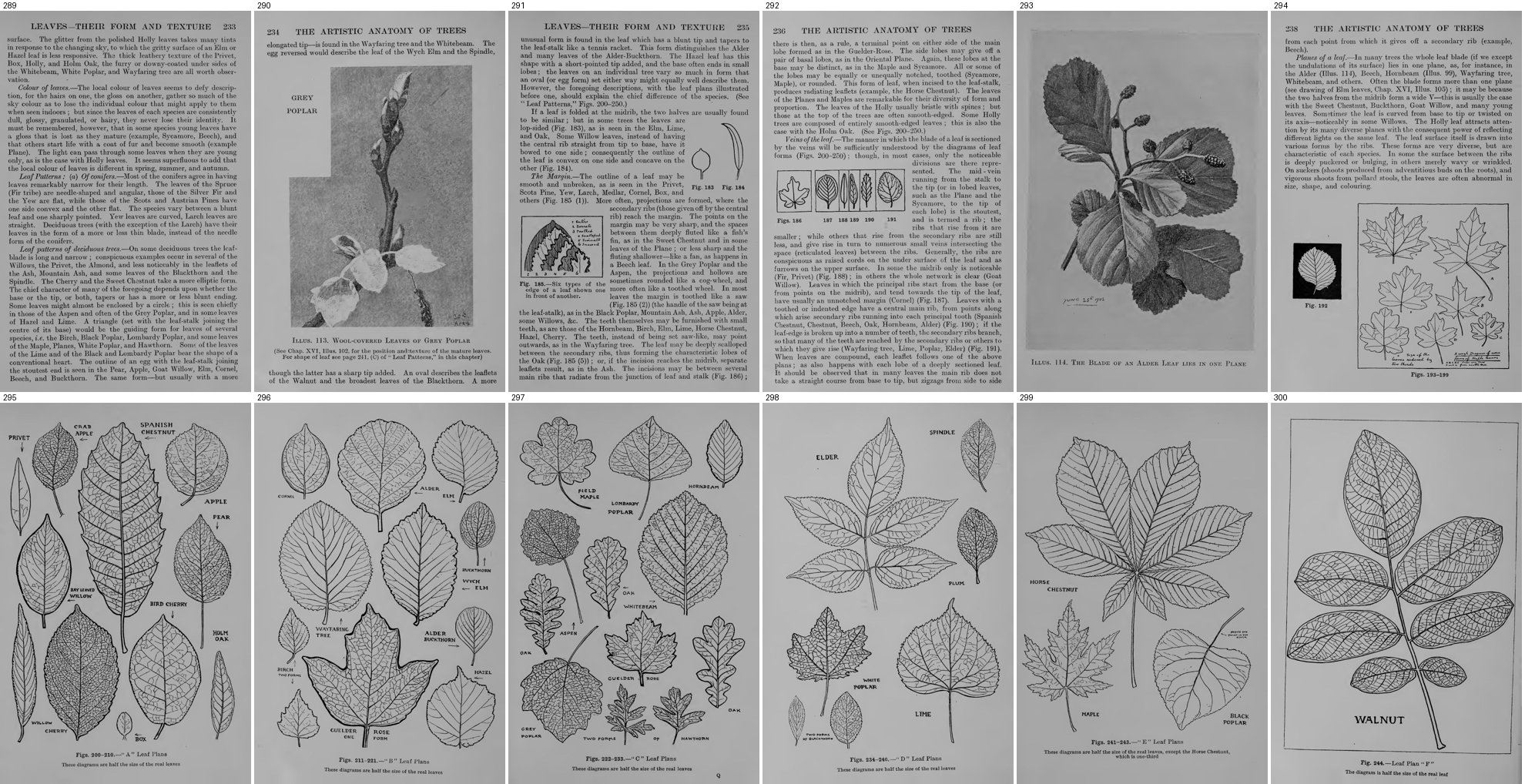 66. books/trees/tmp/g289.jpg
Read: books/trees/tmp/g301.jpg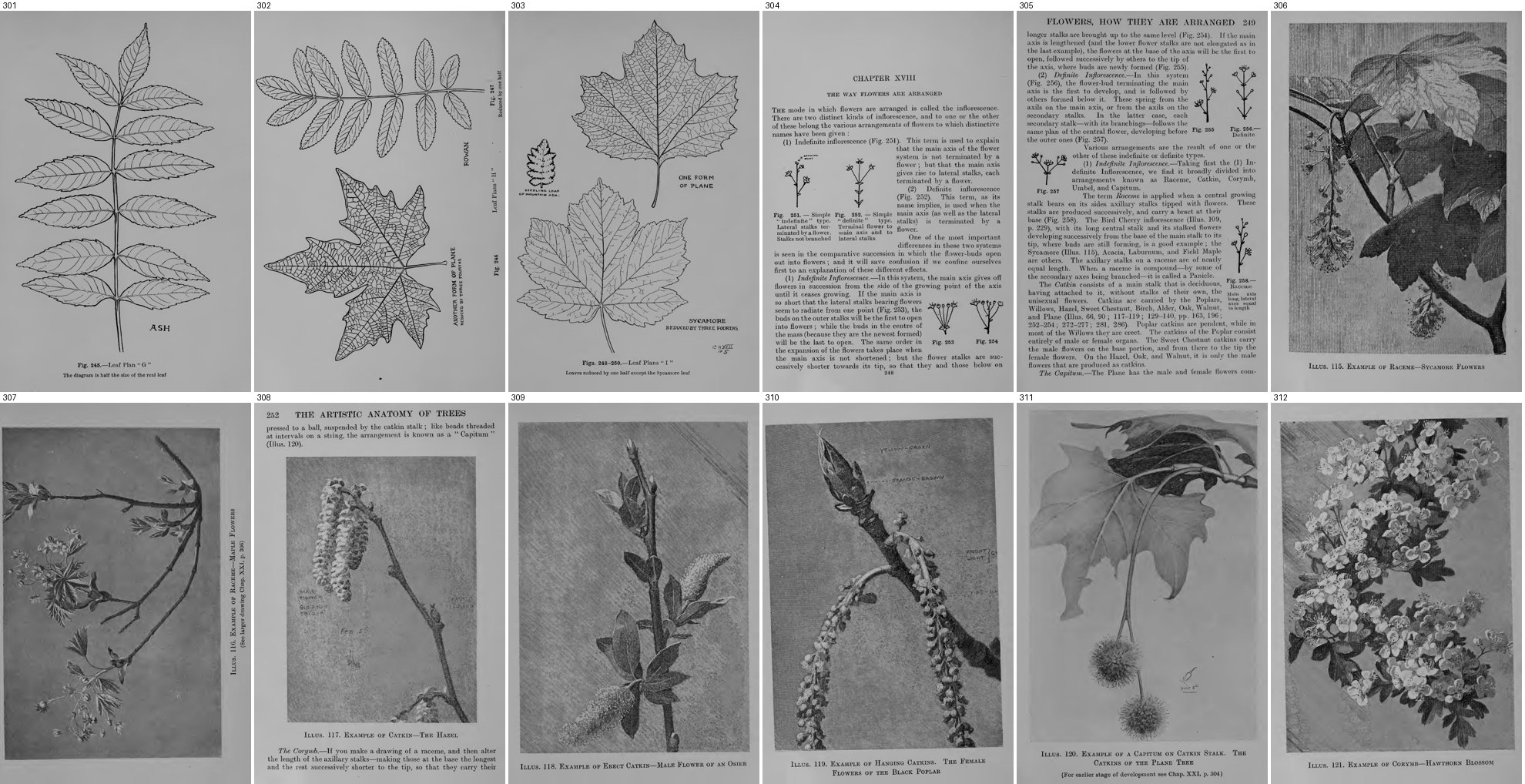 67. books/trees/tmp/g301.jpg
Read: books/trees/tmp/g313.jpg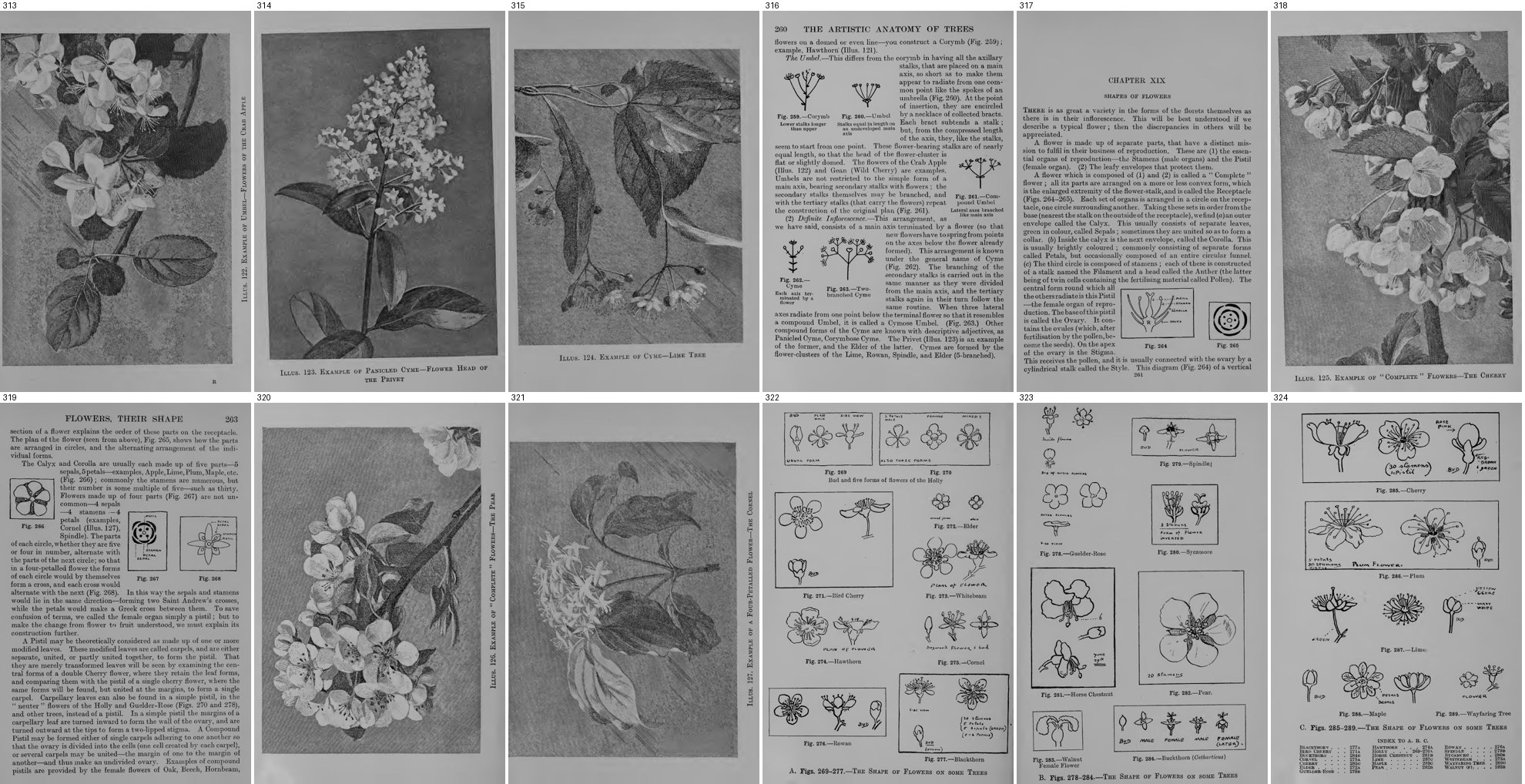 68. books/trees/tmp/g313.jpg
Read: books/trees/tmp/g325.jpg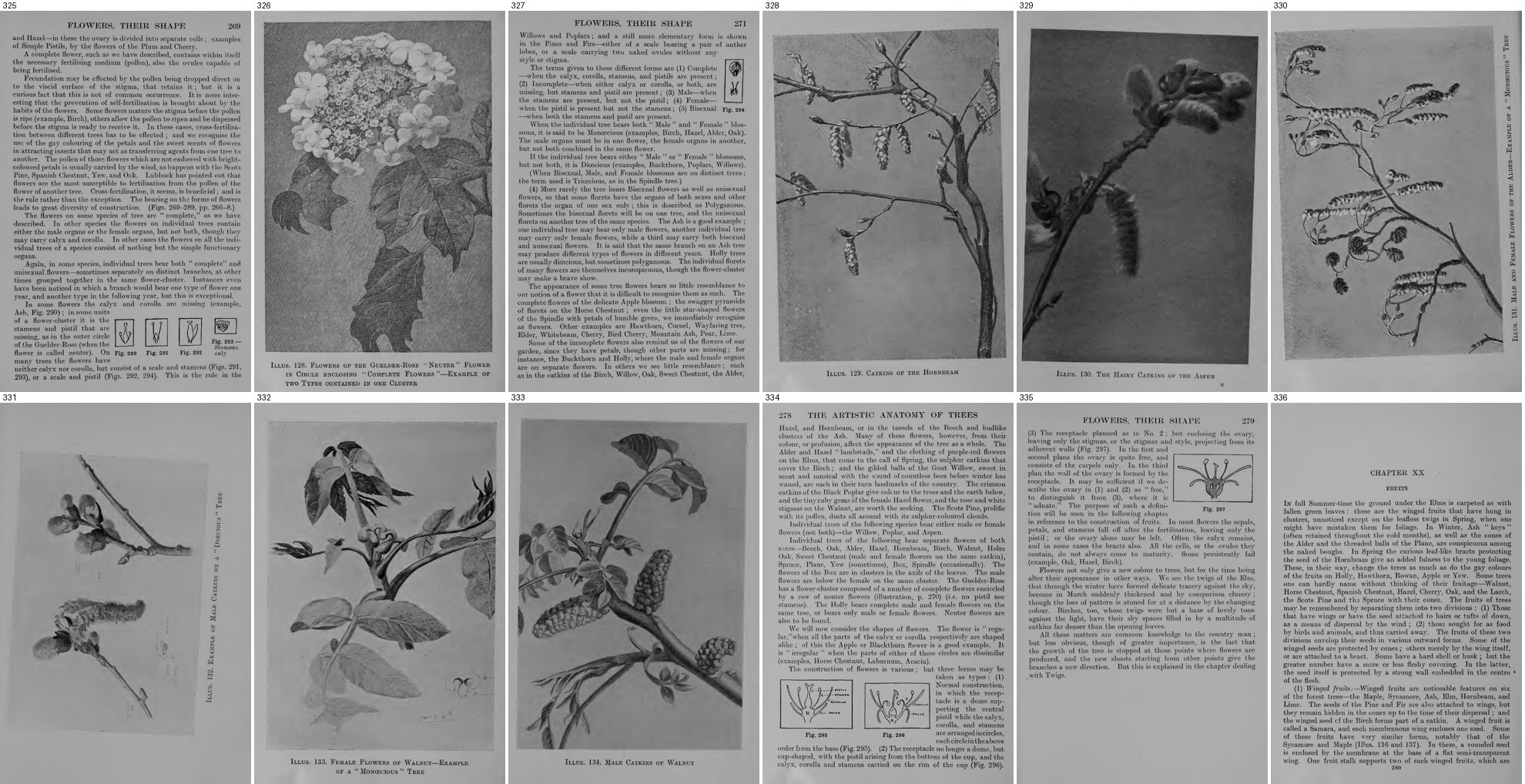 69. books/trees/tmp/g325.jpg
Read: books/trees/tmp/g337.jpg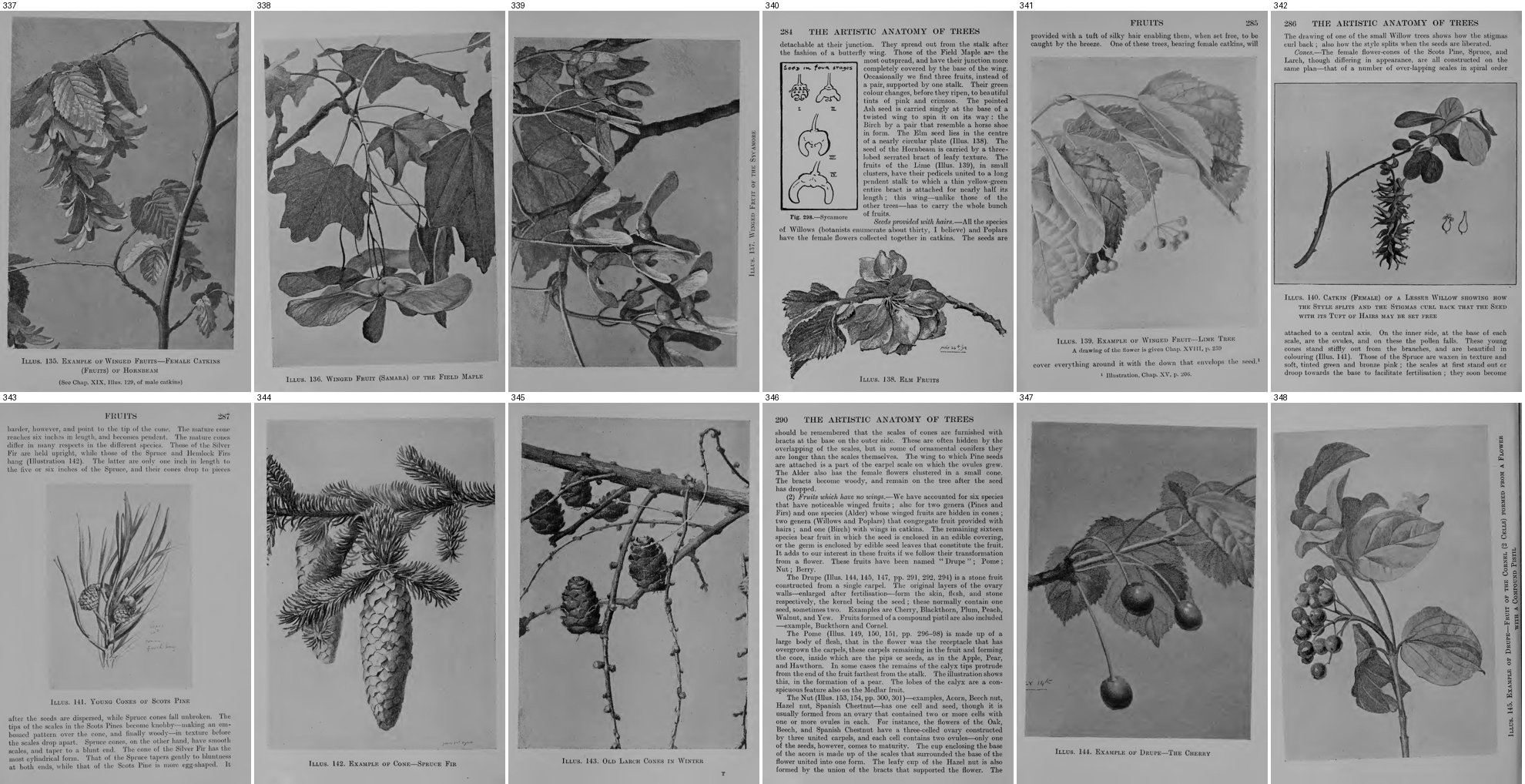 70. books/trees/tmp/g337.jpg
Read: books/trees/tmp/g349.jpg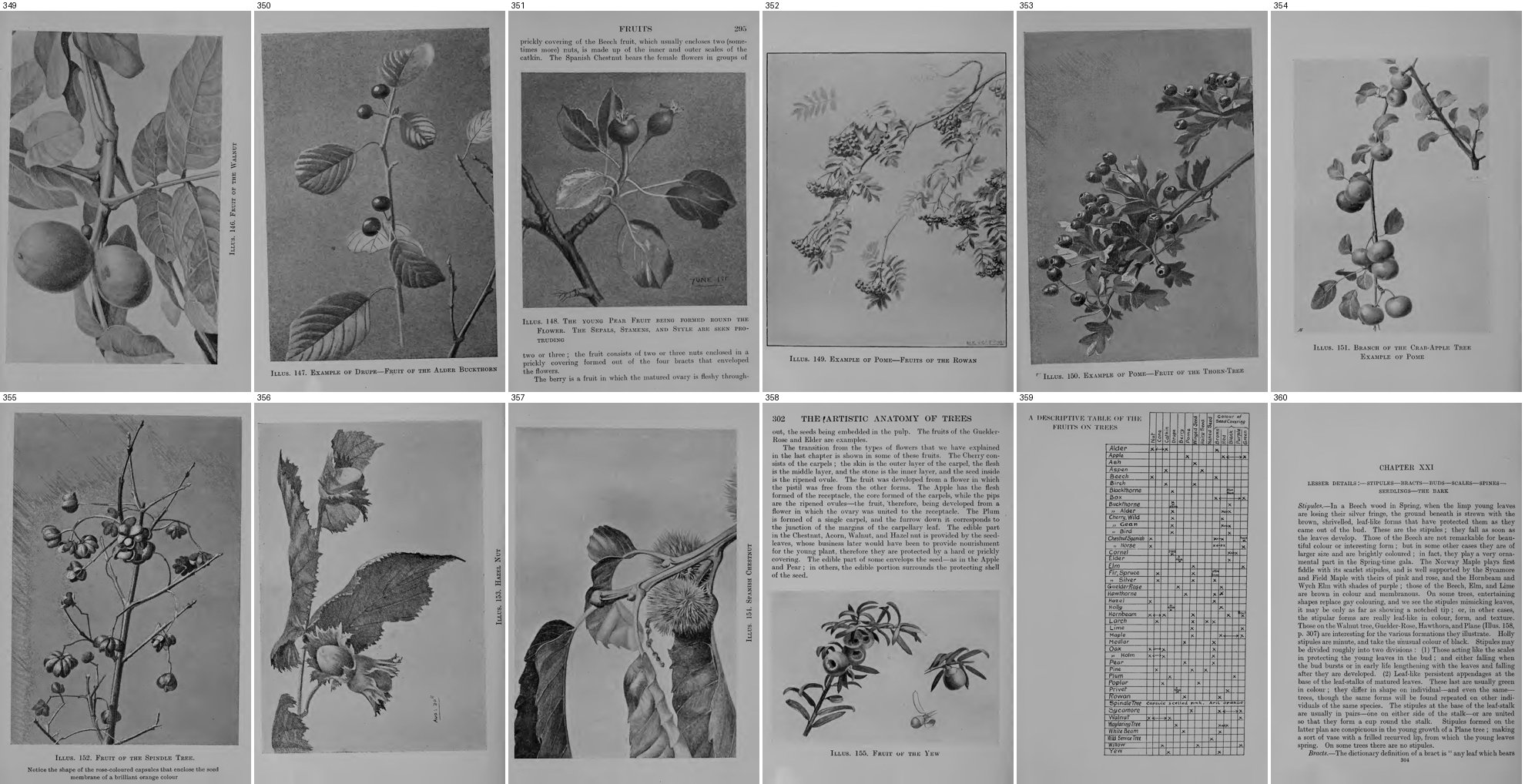 71. books/trees/tmp/g349.jpg
Read: books/trees/tmp/g361.jpg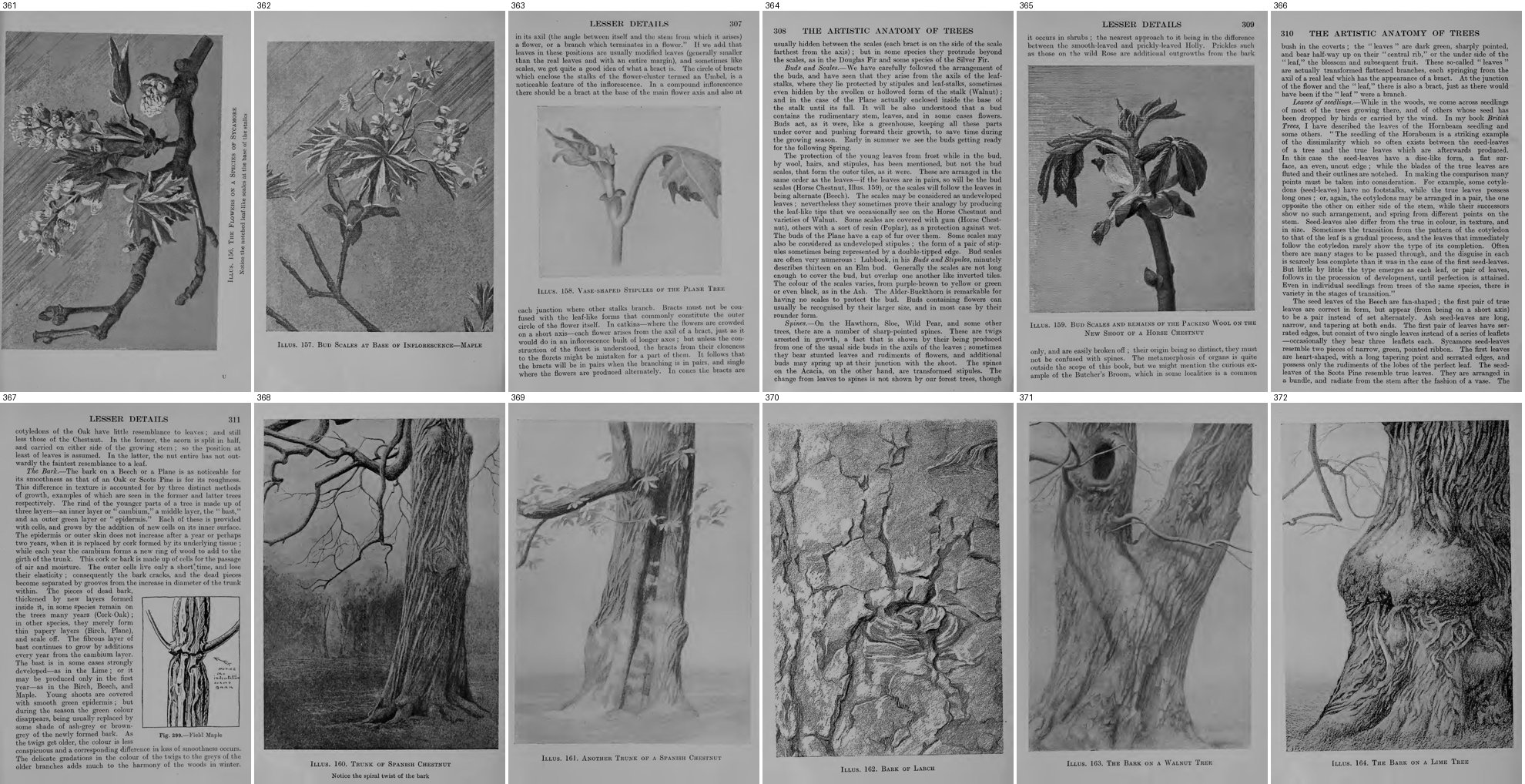 72. books/trees/tmp/g361.jpg
Read: books/trees/pages/cole3/s088.jpg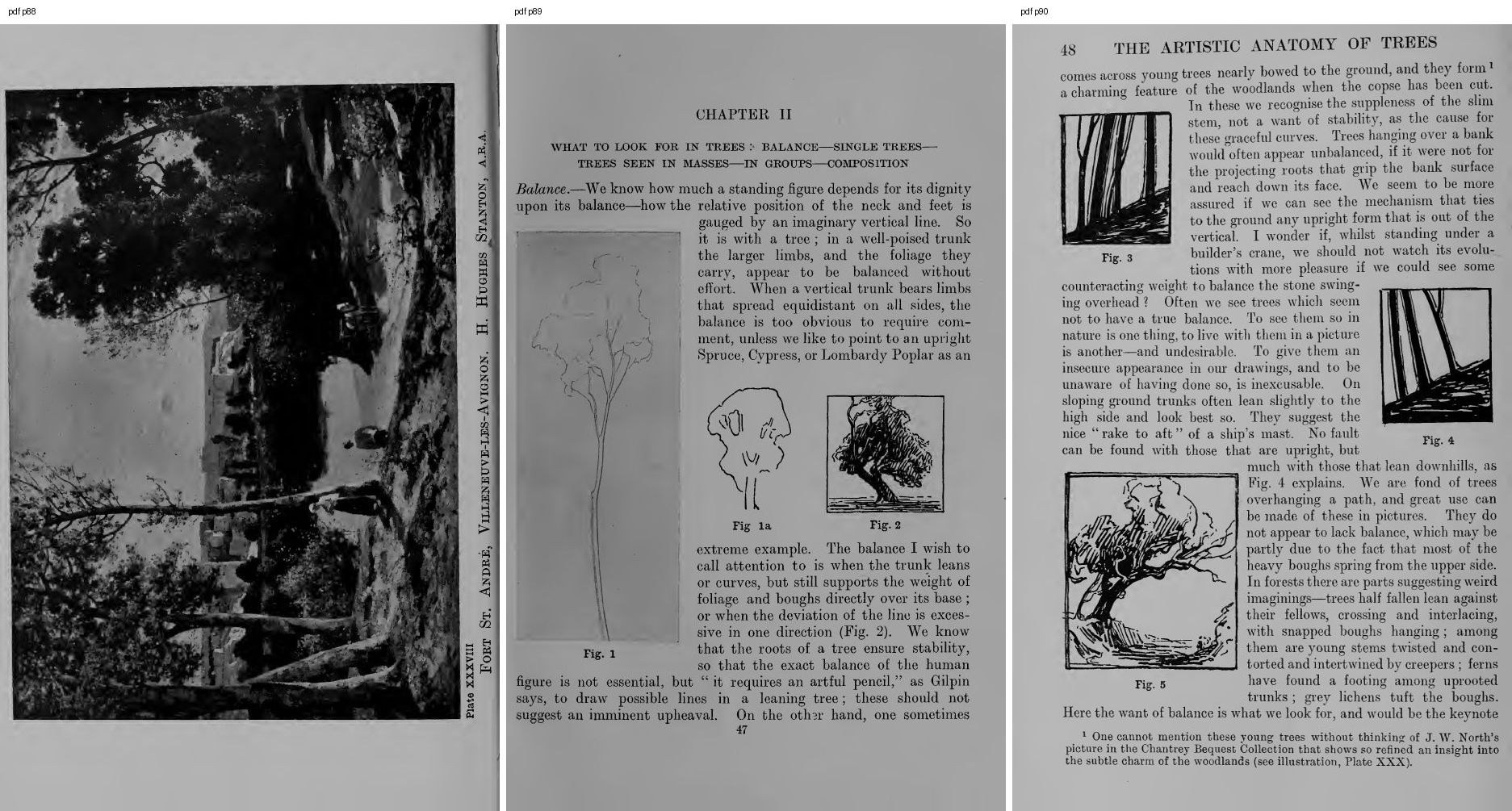 73. books/trees/pages/cole3/s088.jpg
Read: books/trees/pages/cole3/s094.jpg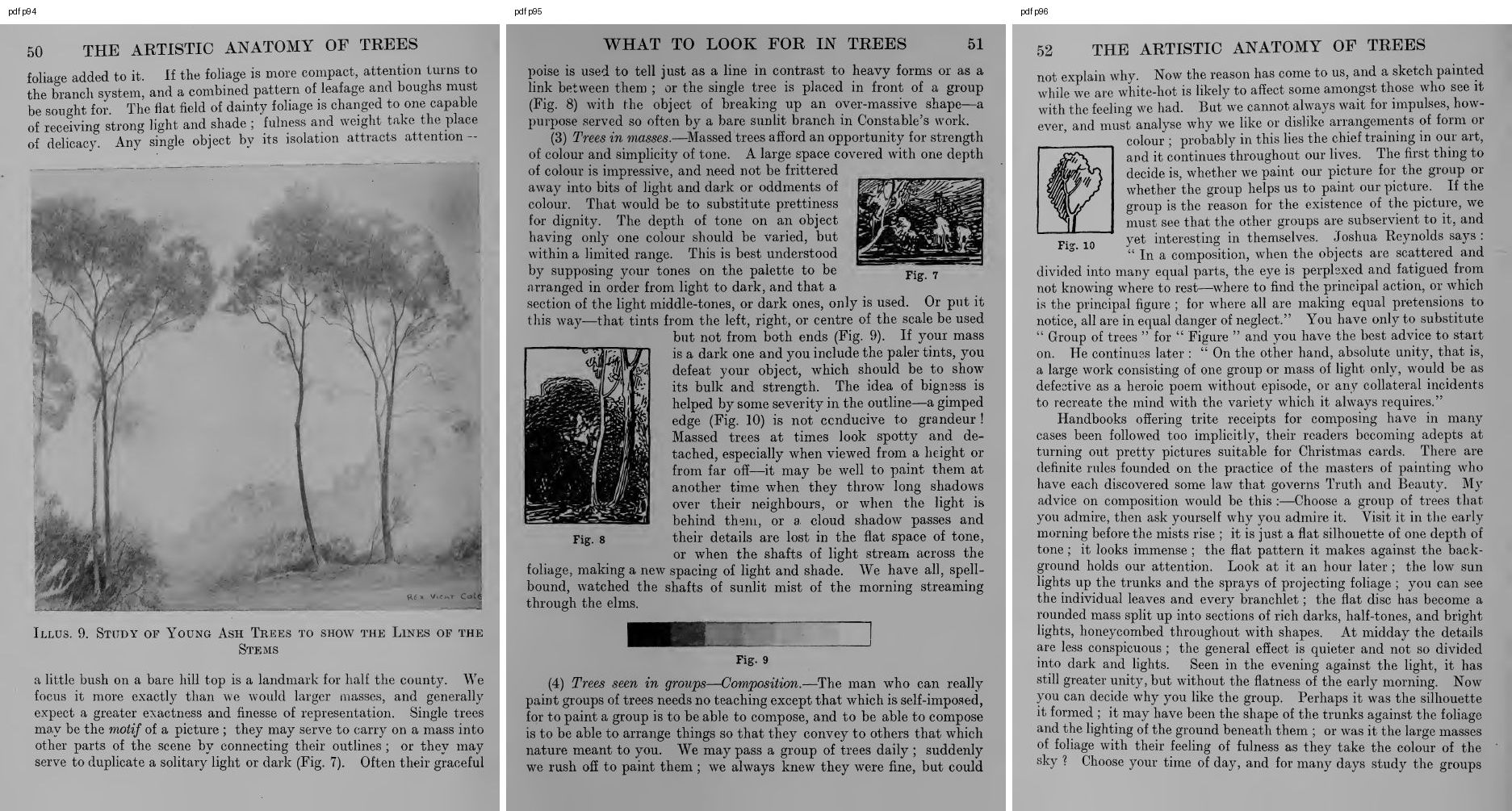 74. books/trees/pages/cole3/s094.jpg
Read: books/trees/pages/cole3/s097.jpg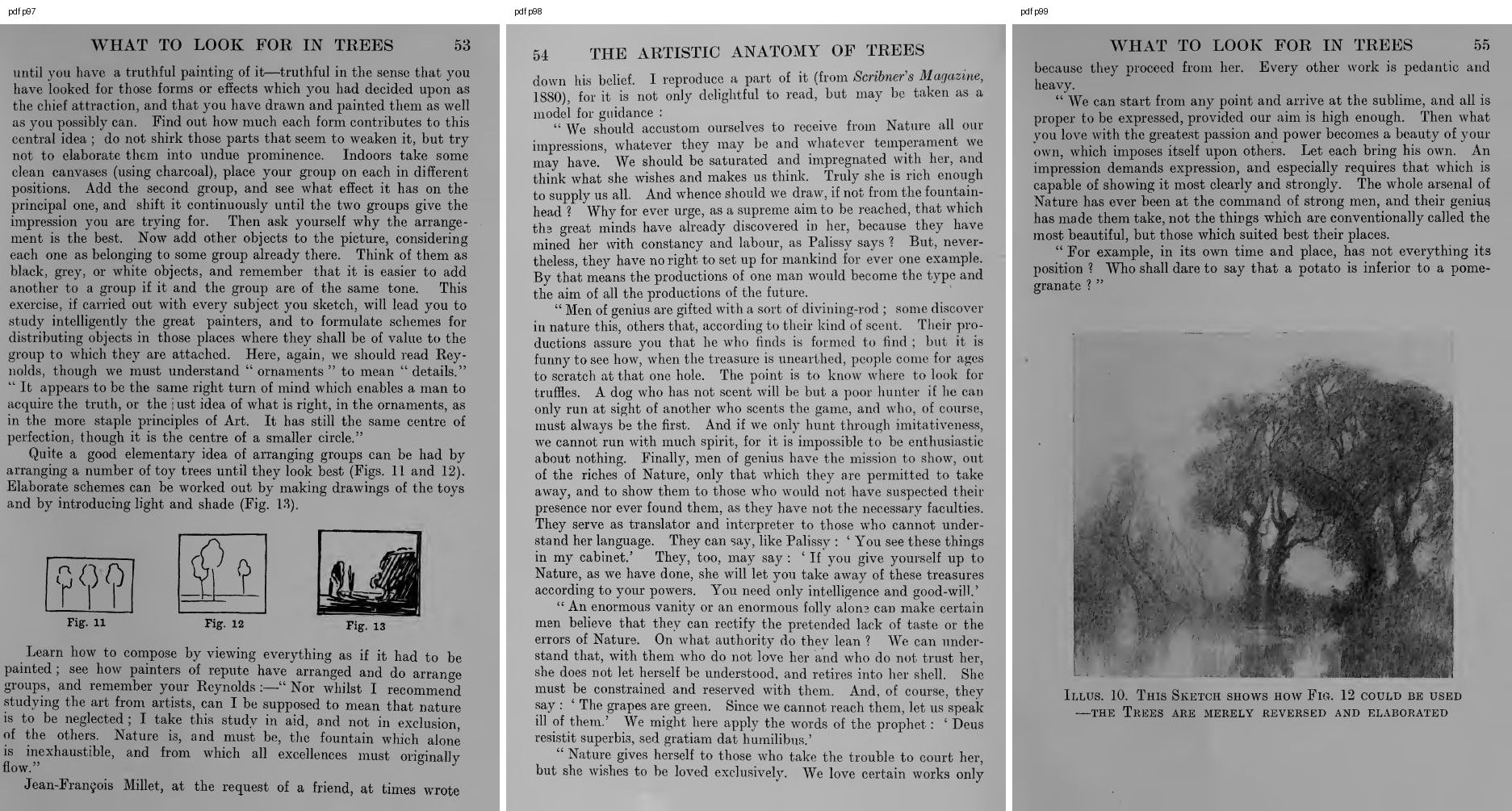 75. books/trees/pages/cole3/s097.jpg
Read: books/trees/pages/cole3/s100.jpg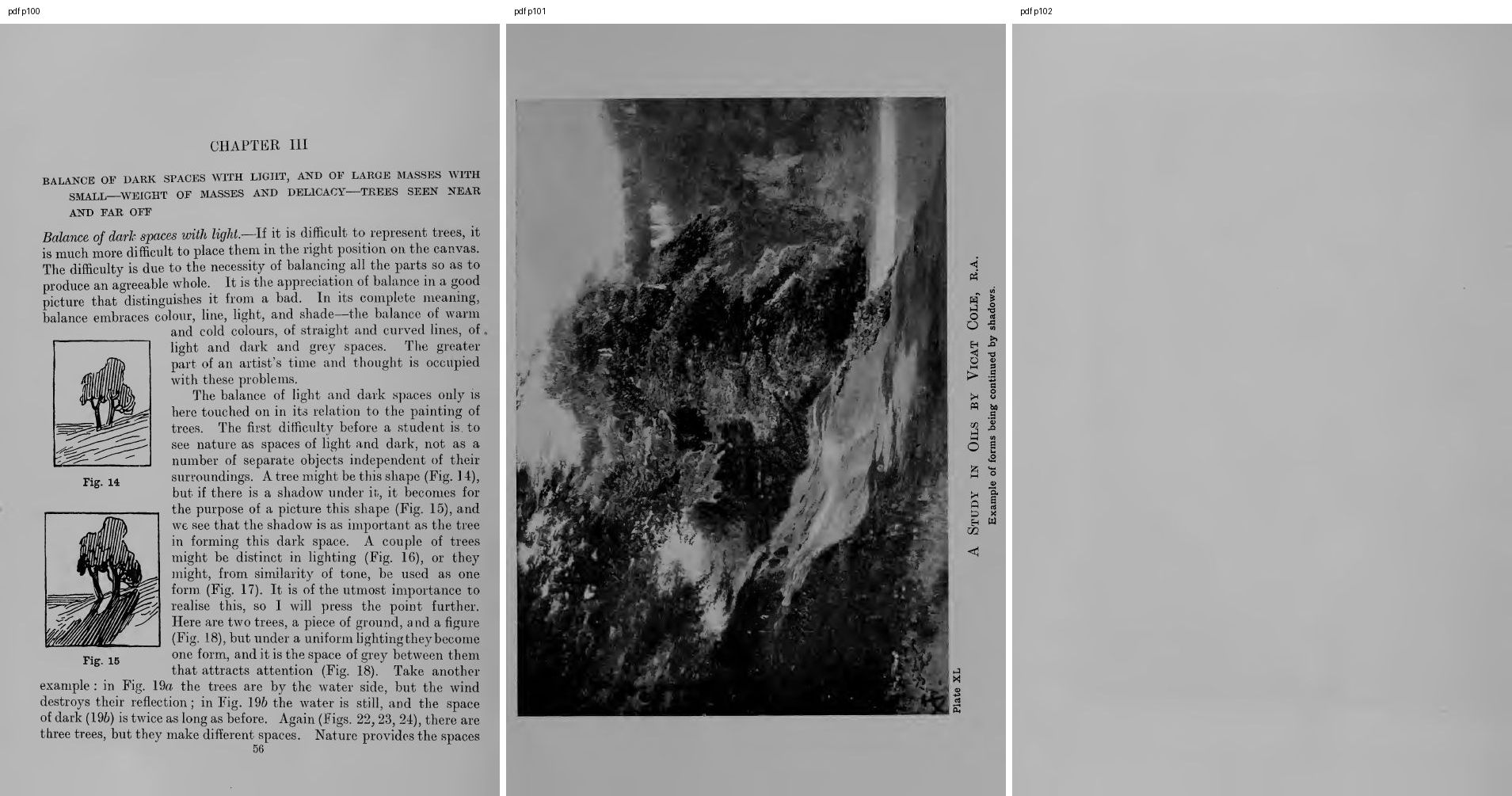 76. books/trees/pages/cole3/s100.jpg
Read: books/trees/pages/cole3/s103.jpg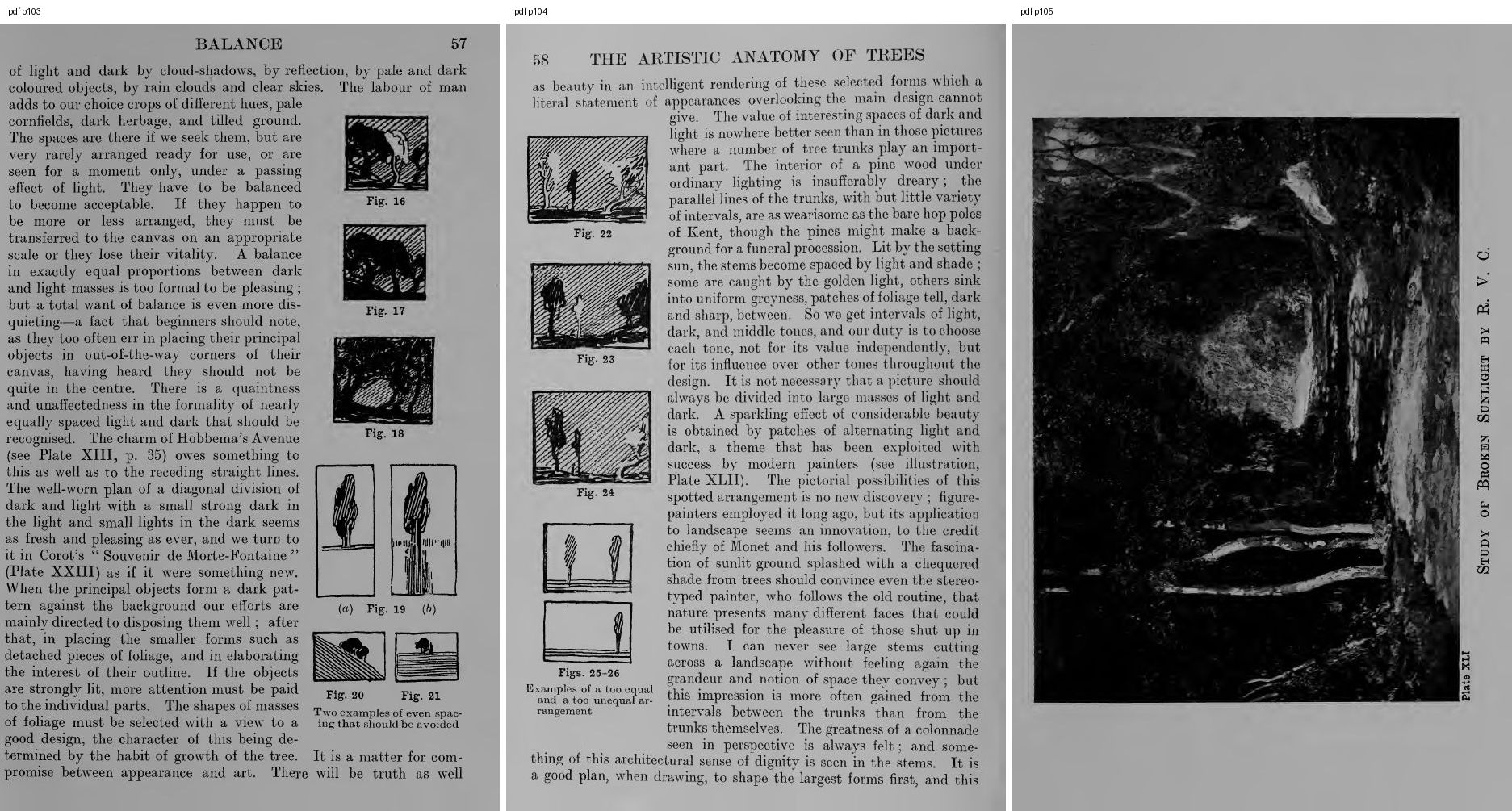 77. books/trees/pages/cole3/s103.jpg
Read: books/trees/pages/cole3/s106.jpg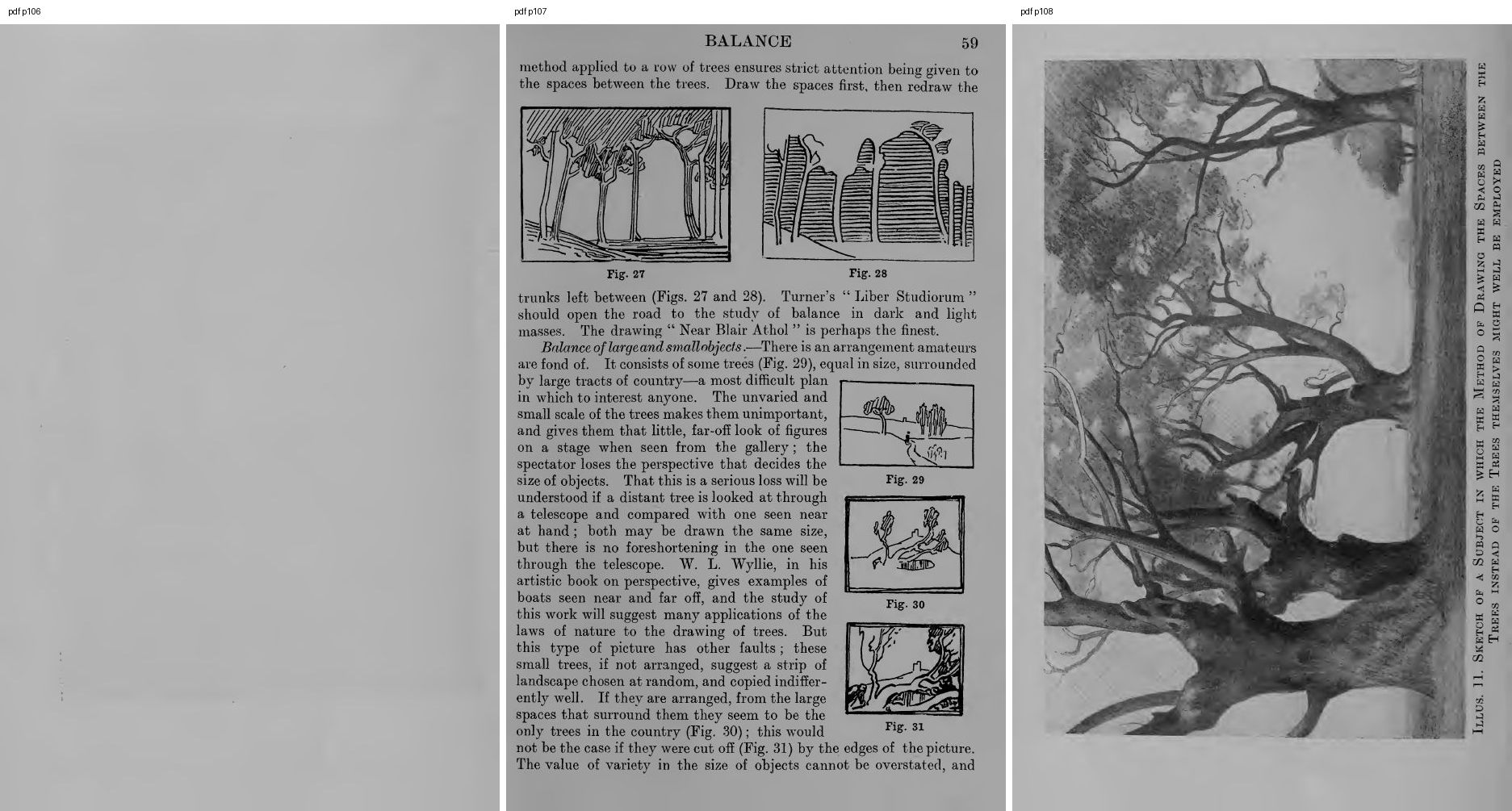 78. books/trees/pages/cole3/s106.jpg
Read: books/trees/pages/cole3/s112.jpgRead: books/trees/pages/cole3/s115.jpgRead: books/trees/pages/cole3/s118.jpgRead: books/trees/pages/cole3/s121.jpgRead: books/trees/pages/cole3/s124.jpgRead: books/trees/pages/cole3/s127.jpg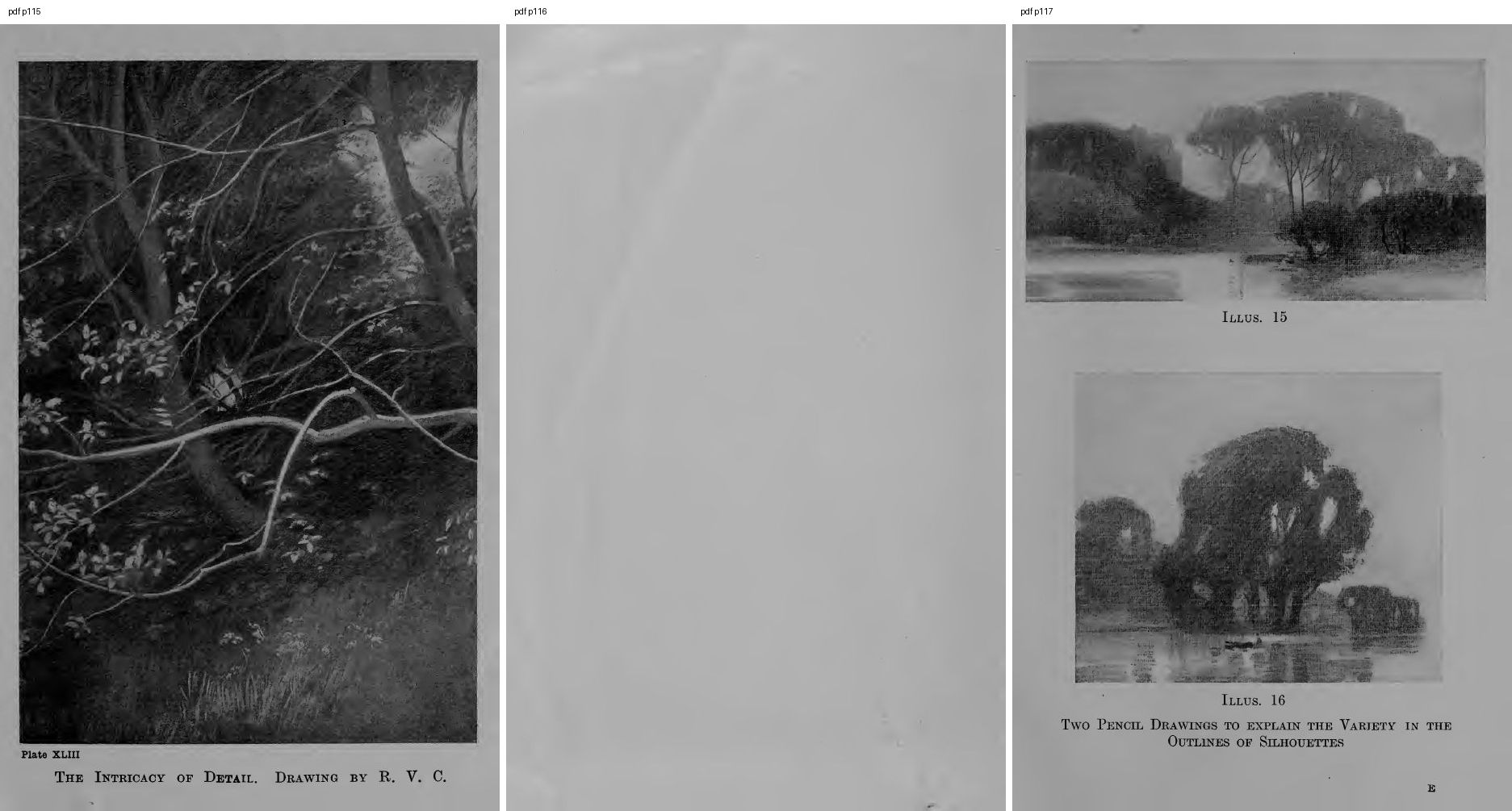 79. books/trees/pages/cole3/s115.jpg
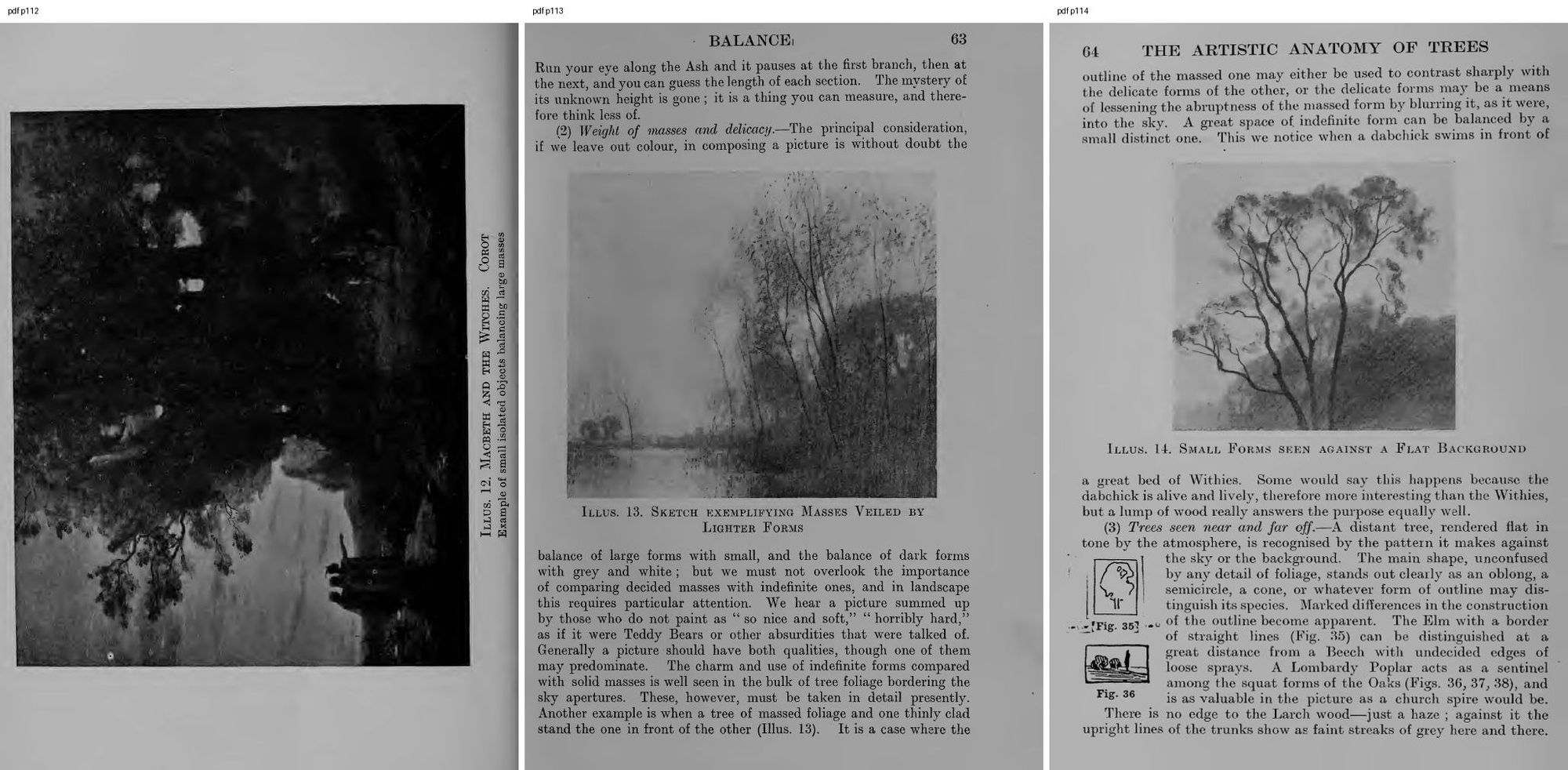 80. books/trees/pages/cole3/s112.jpg
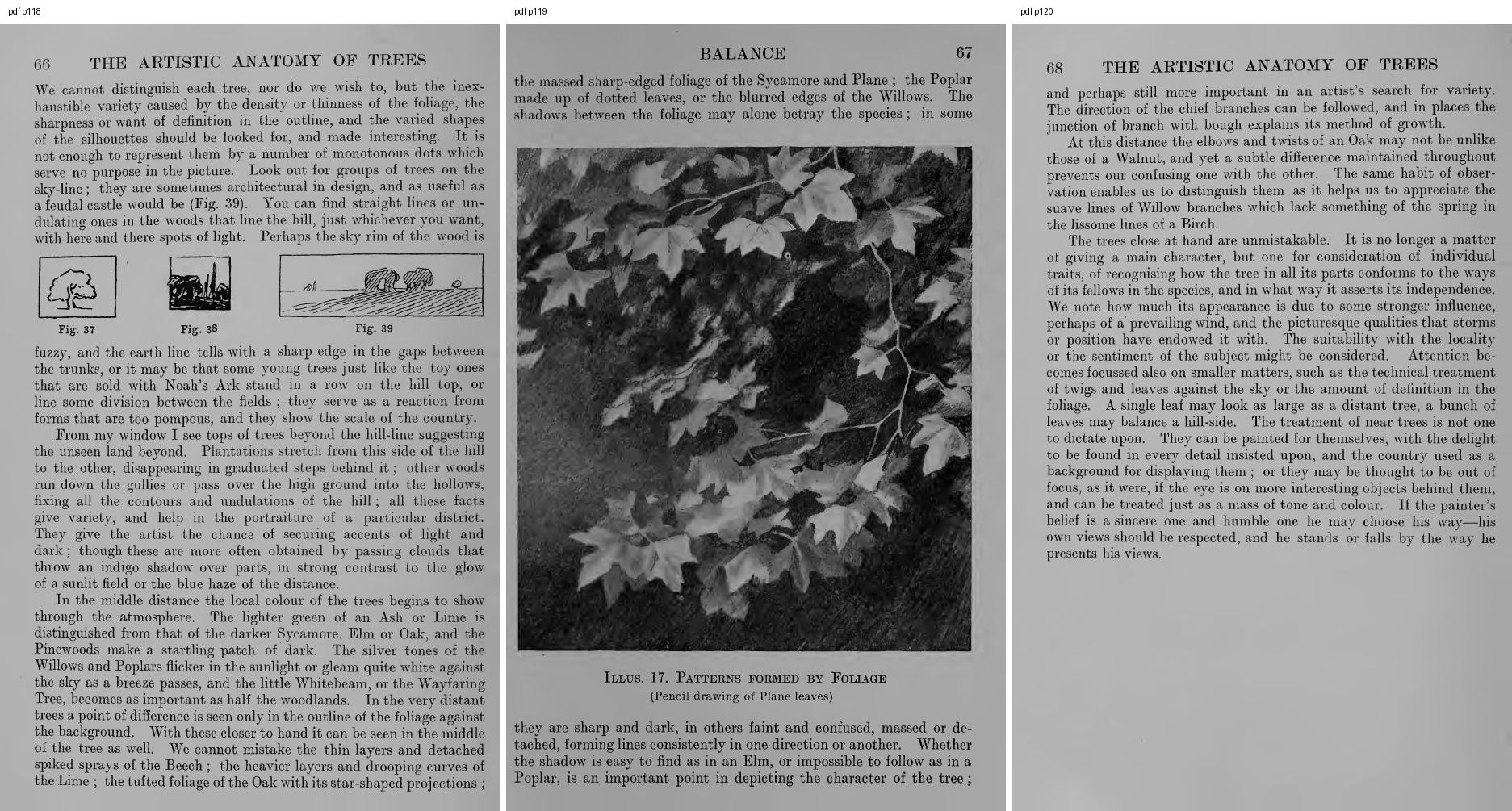 81. books/trees/pages/cole3/s118.jpg
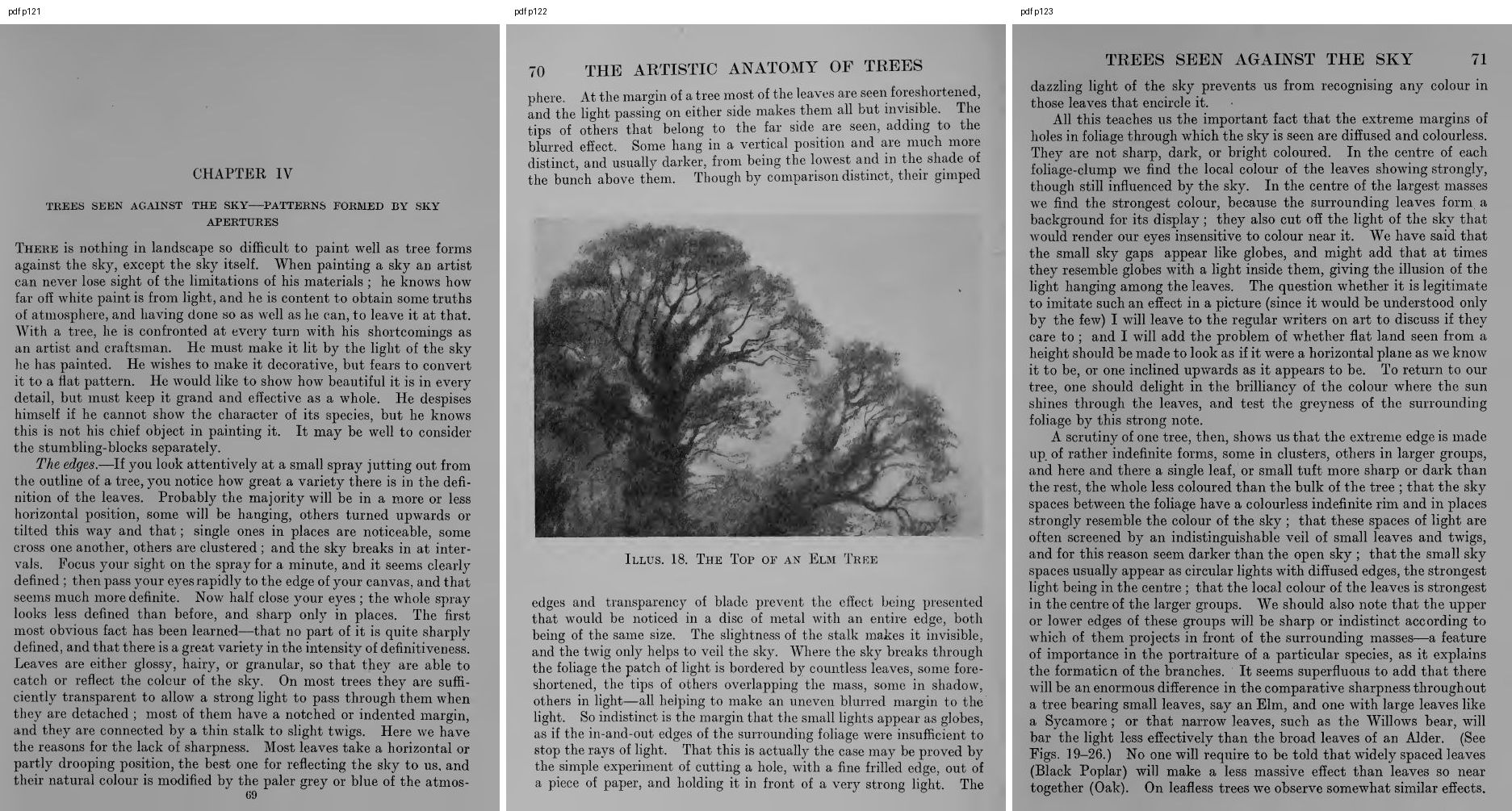 82. books/trees/pages/cole3/s121.jpg
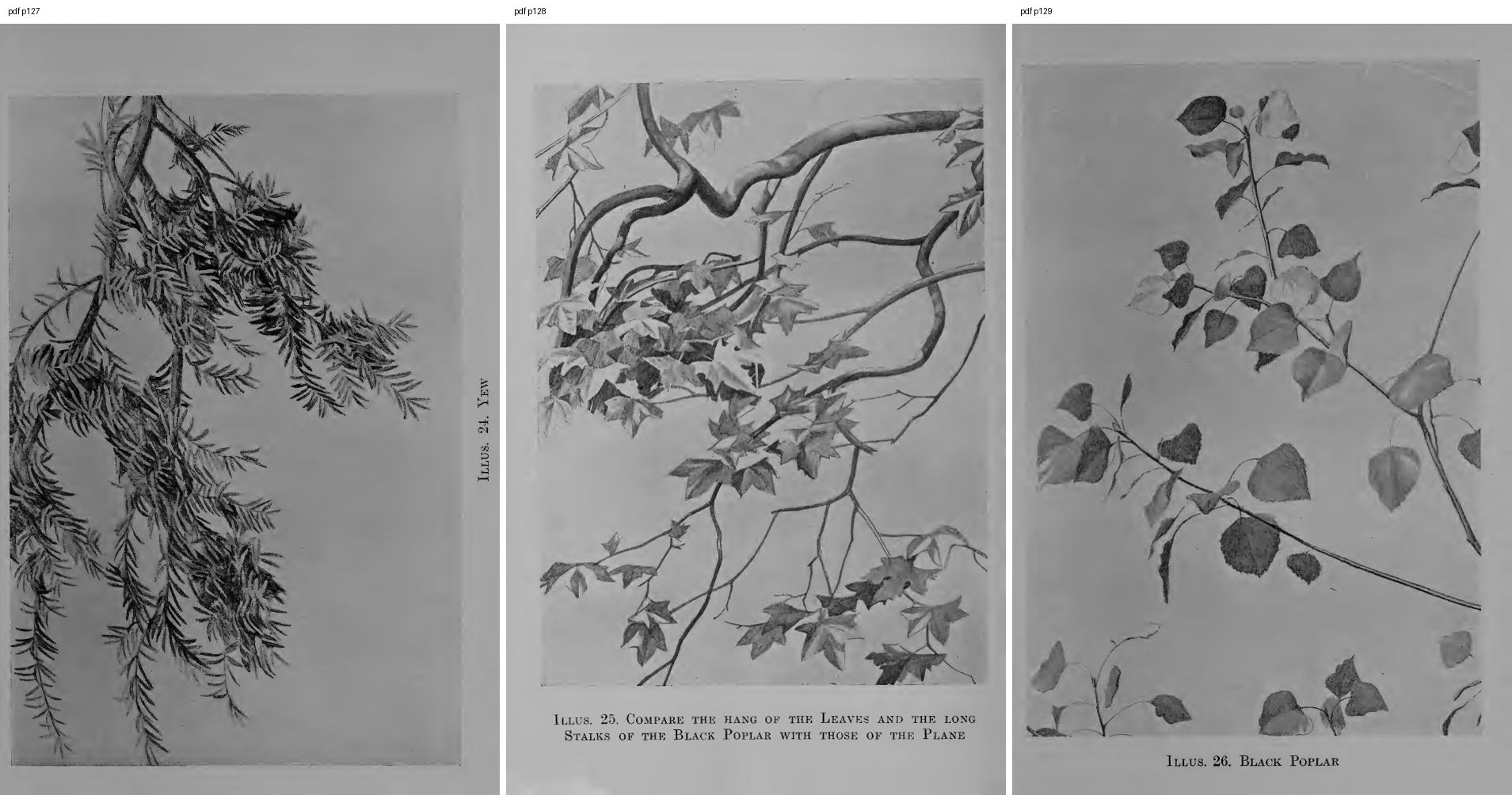 83. books/trees/pages/cole3/s127.jpg
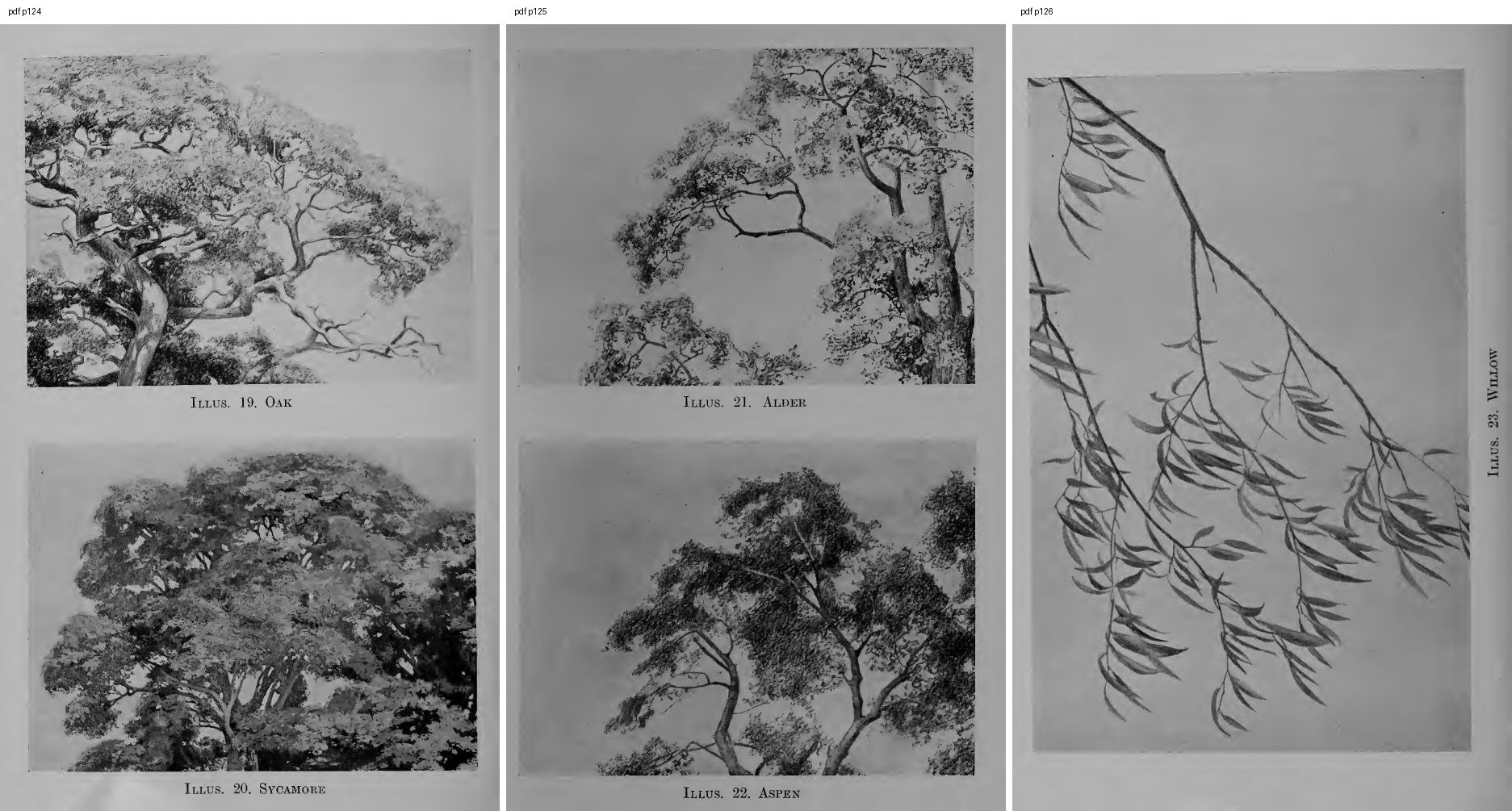 84. books/trees/pages/cole3/s124.jpg
Read: books/trees/pages/cole3/s130.jpgRead: books/trees/pages/cole3/s133.jpgRead: books/trees/pages/cole3/s136.jpg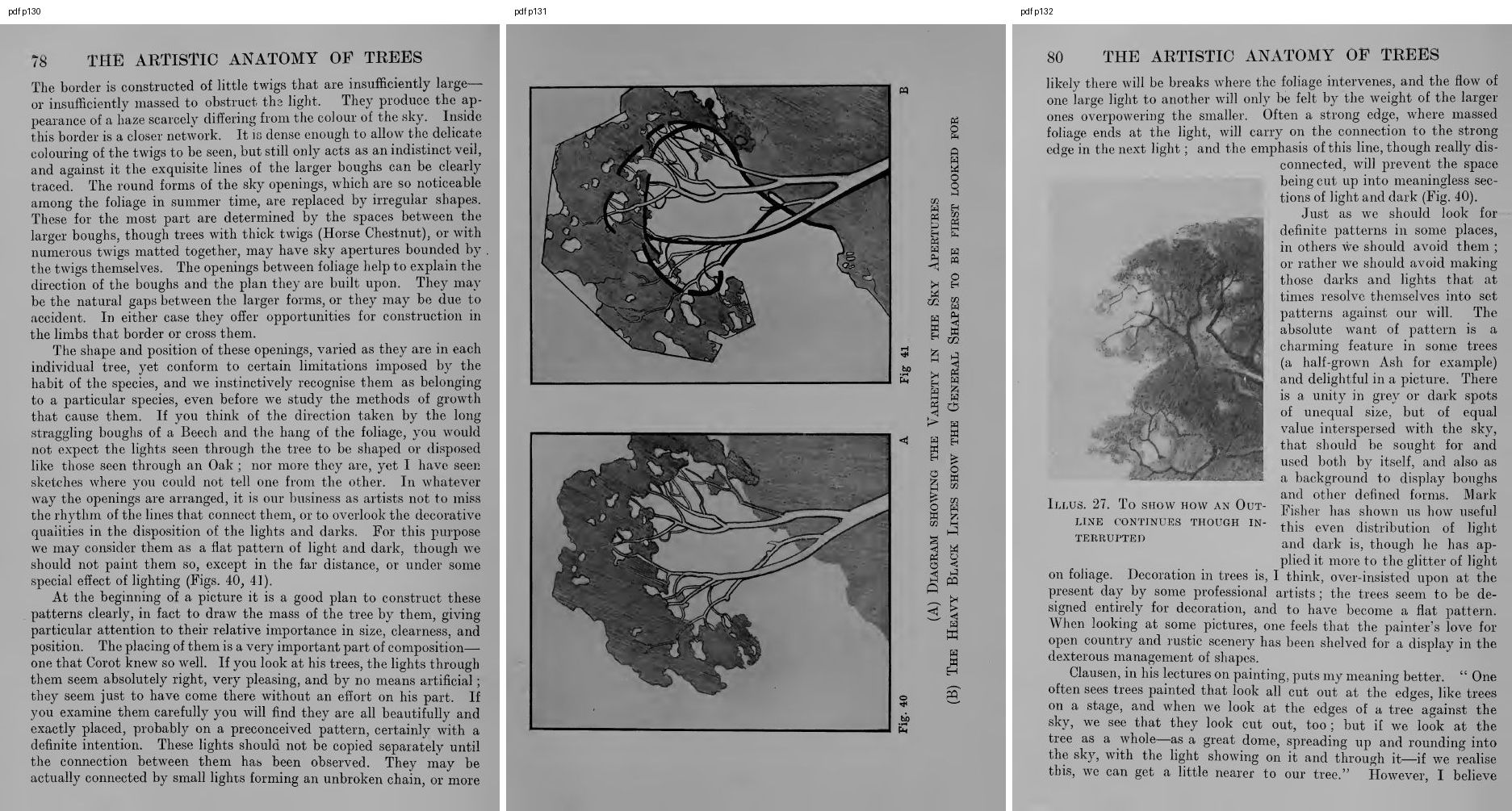 85. books/trees/pages/cole3/s130.jpg
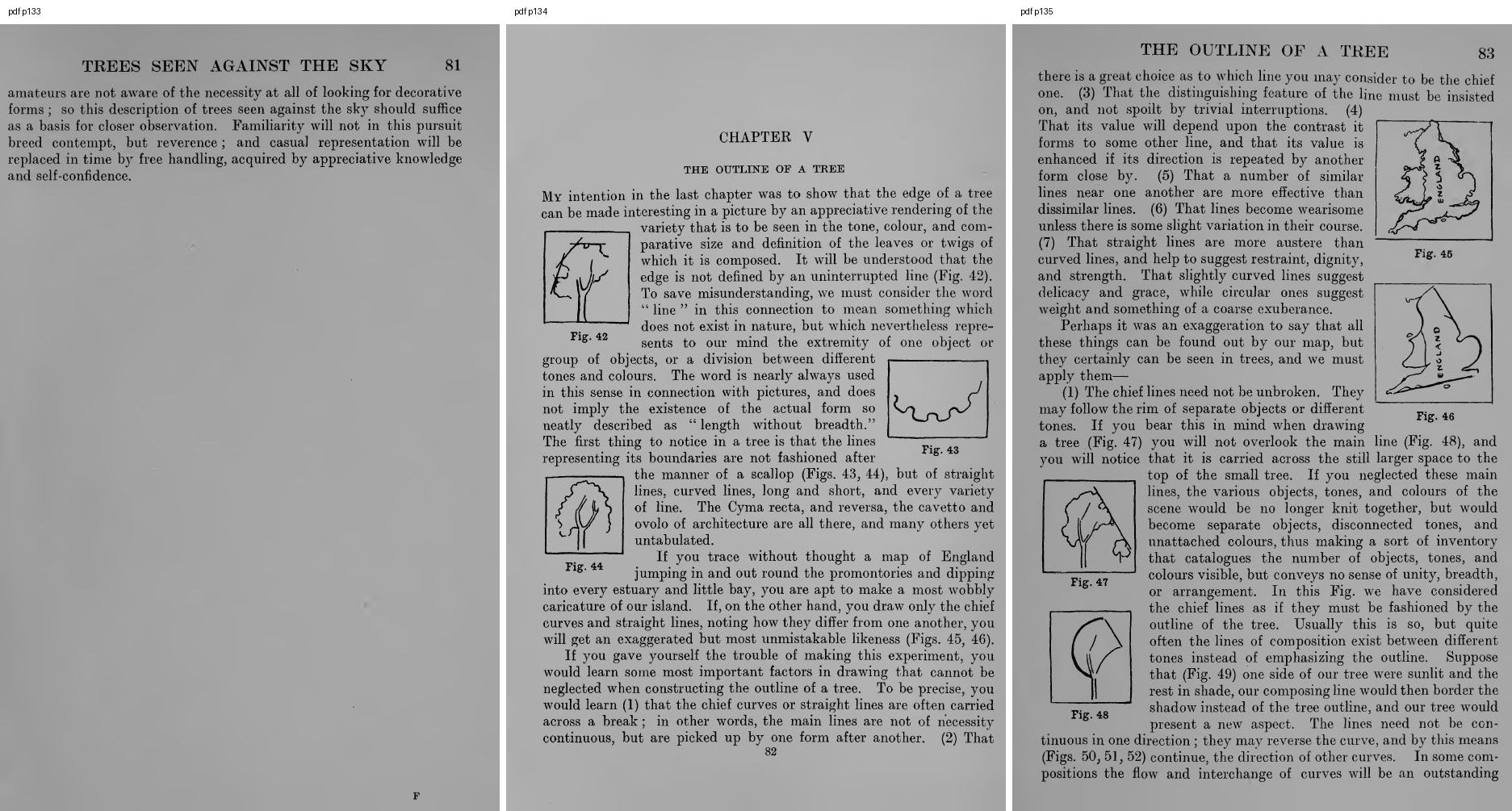 86. books/trees/pages/cole3/s133.jpg
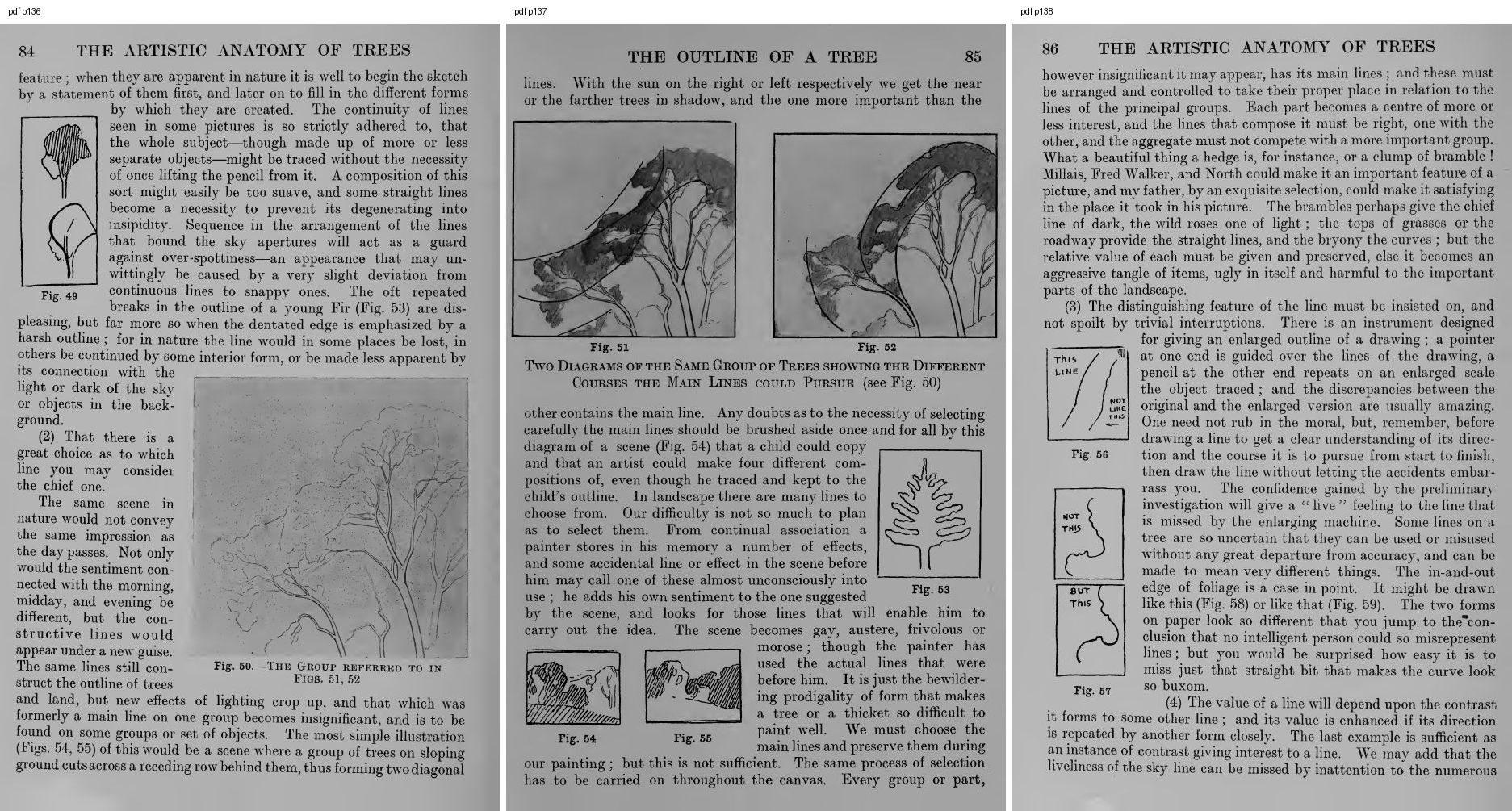 87. books/trees/pages/cole3/s136.jpg
Read: books/trees/pages/cole3/s142.jpg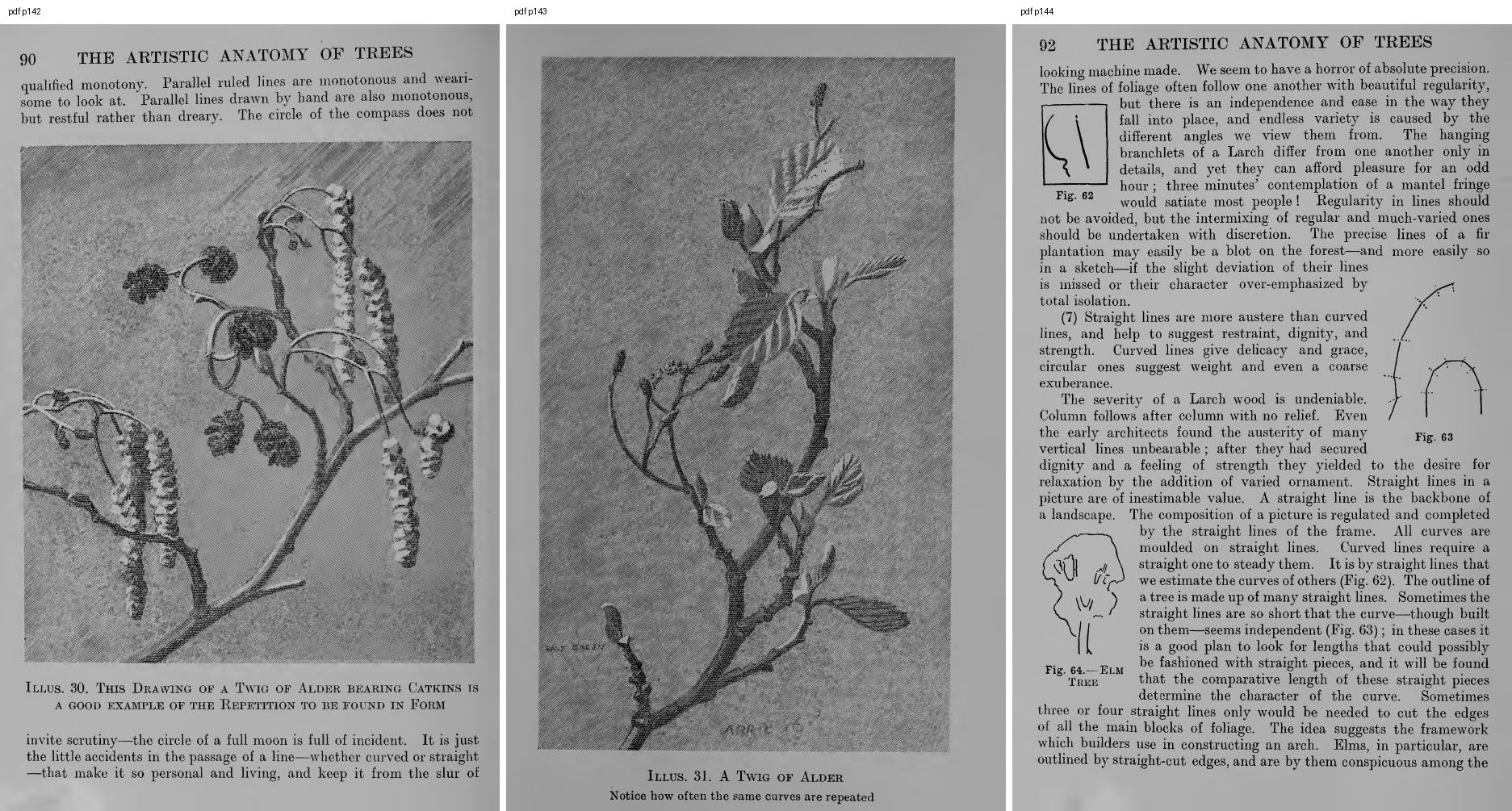 88. books/trees/pages/cole3/s142.jpg
Read: books/trees/pages/cole3/s145.jpg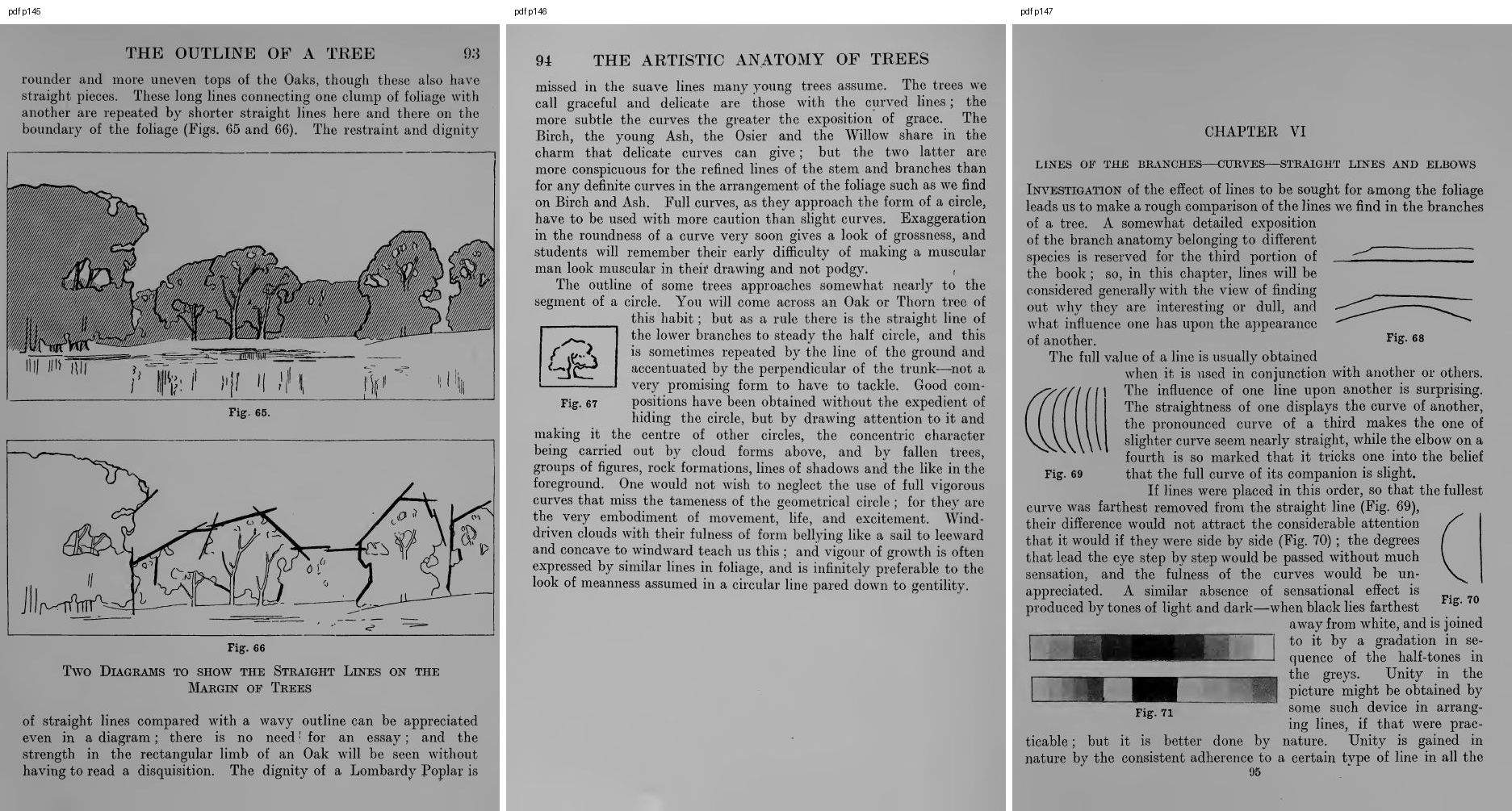 89. books/trees/pages/cole3/s145.jpg
Bash: cd ~/work/pixelart-studies/books/trees; python3 - <<'E' from PIL import Image, ImageDraw import os def grid(pages,out,cols=6,w=330): ims=[(p,Image.open(f'pages/cole/p-{p:03d}.j
cd ~/work/pixelart-studies/books/trees; python3 - <<'E'
from PIL import Image, ImageDraw
import os
def grid(pages,out,cols=6,w=330):
    ims=[(p,Image.open(f'pages/cole/p-{p:03d}.jpg')) for p in pages]
    h=int(w*926/617); rows=(len(ims)+cols-1)//cols
    S=Image.new('L',(cols*w,rows*(h+14)),255);d=ImageDraw.Draw(S)
    for i,(p,im) in enumerate(ims):
        x=(i%cols)*w;y=(i//cols)*(h+14); S.paste(im.resize((w-4,h)),(x,y+14));d.text((x+4,y+1),str(p),fill=0)
    S.save(out,quality=85)
grid([150,151,152,153,155,156,157,158,159,160,162,163],'tmp/gA.jpg')
grid([164,168,174,176,180,187,193,210,211,212,213,215],'tmp/gB.jpg')
grid([214,216,217,218,219,220],'tmp/gC.jpg')
E

# output:
(Bash completed with no output)
Read: books/trees/tmp/gA.jpgRead: books/trees/tmp/gB.jpgRead: books/trees/tmp/gC.jpg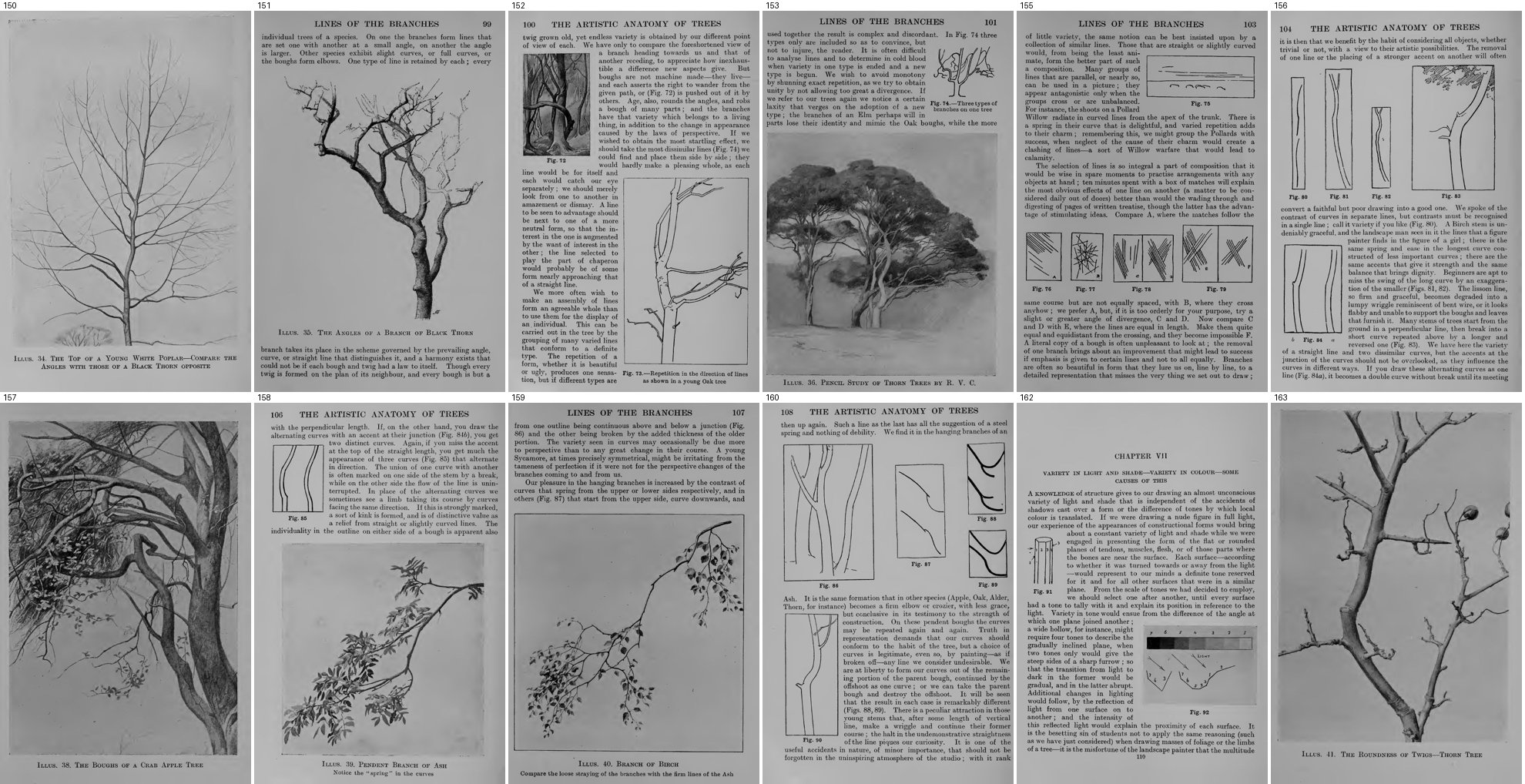 90. books/trees/tmp/gA.jpg
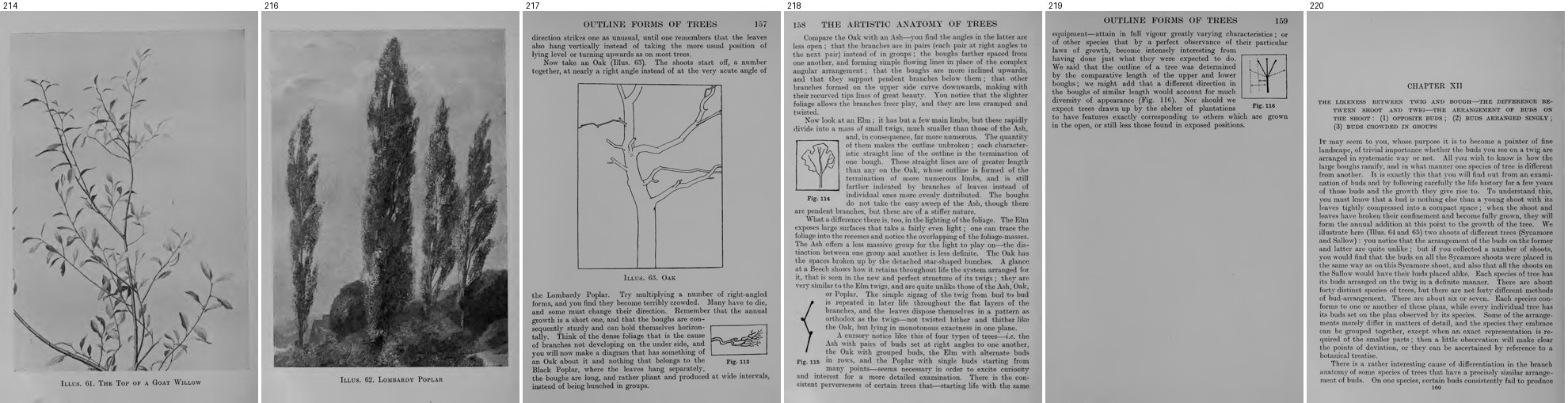 91. books/trees/tmp/gC.jpg
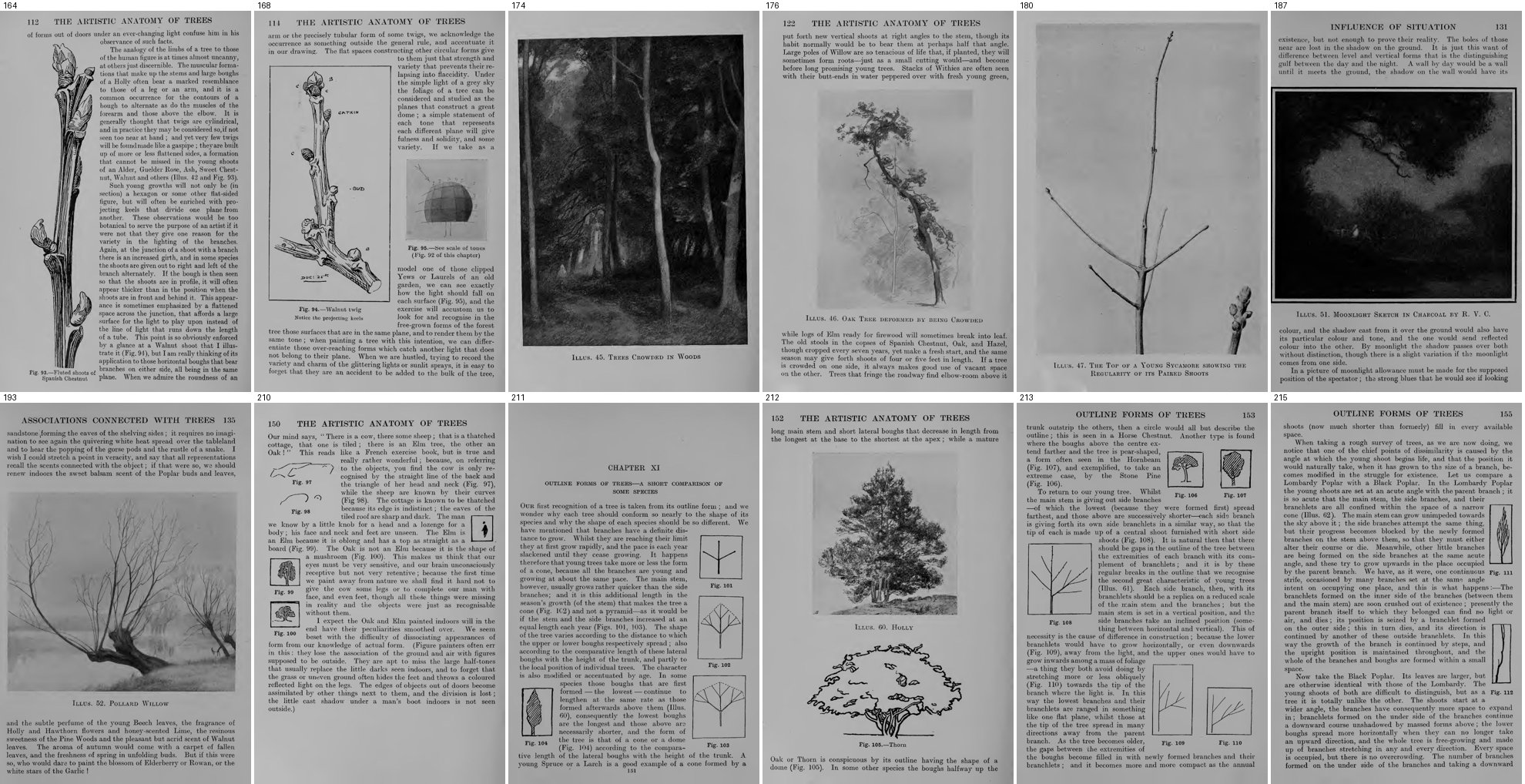 92. books/trees/tmp/gB.jpg
Bash: cd ~/work/pixelart-studies/books/trees/pages/halle; ls | wc -l; python3 -c " from PIL import Image; im=Image.open('h-060.jpg'); print(im.size)"; for p in 050 060 070 100 150; do pd
cd ~/work/pixelart-studies/books/trees/pages/halle; ls | wc -l; python3 -c "
from PIL import Image; im=Image.open('h-060.jpg'); print(im.size)"; for p in 050 060 070 100 150; do pdftotext -f $((10#$p)) -l $((10#$p)) "$HOME/work/pixelart-studies/library/purchased/Tropical trees and forests  an architectural analysis (Hallé, Francis, Hallé-Oldeman).pdf" - 2>/dev/null | grep -E '^[0-9]{2,3}$' | head -3 | tr '\n' ' '; echo " <- pdf $p"; done

# output:
187
(559, 782)
82 83  <- pdf 050
100  <- pdf 060
110  <- pdf 070
 <- pdf 100
190  <- pdf 150
Bash: cd ~/work/pixelart-studies/books/trees; python3 - <<'E' from PIL import Image, ImageDraw import os def grid(pages,out,cols=5,w=400): ims=[(p,Image.open(f'pages/halle/h-{p:03d}.
cd ~/work/pixelart-studies/books/trees; python3 - <<'E'
from PIL import Image, ImageDraw
import os
def grid(pages,out,cols=5,w=400):
    ims=[(p,Image.open(f'pages/halle/h-{p:03d}.jpg')) for p in pages if os.path.exists(f'pages/halle/h-{p:03d}.jpg')]
    h=int(w*782/559); rows=(len(ims)+cols-1)//cols
    S=Image.new('L',(cols*w,rows*(h+14)),255);d=ImageDraw.Draw(S)
    for i,(p,im) in enumerate(ims):
        x=(i%cols)*w;y=(i//cols)*(h+14); S.paste(im.convert('L').resize((w-4,h)),(x,y+14));d.text((x+4,y+1),str(p),fill=0)
    S.save(out,quality=85)
grid(range(50,60),'tmp/h50.jpg')
E

# output:
(Bash completed with no output)
Read: books/trees/tmp/h50.jpg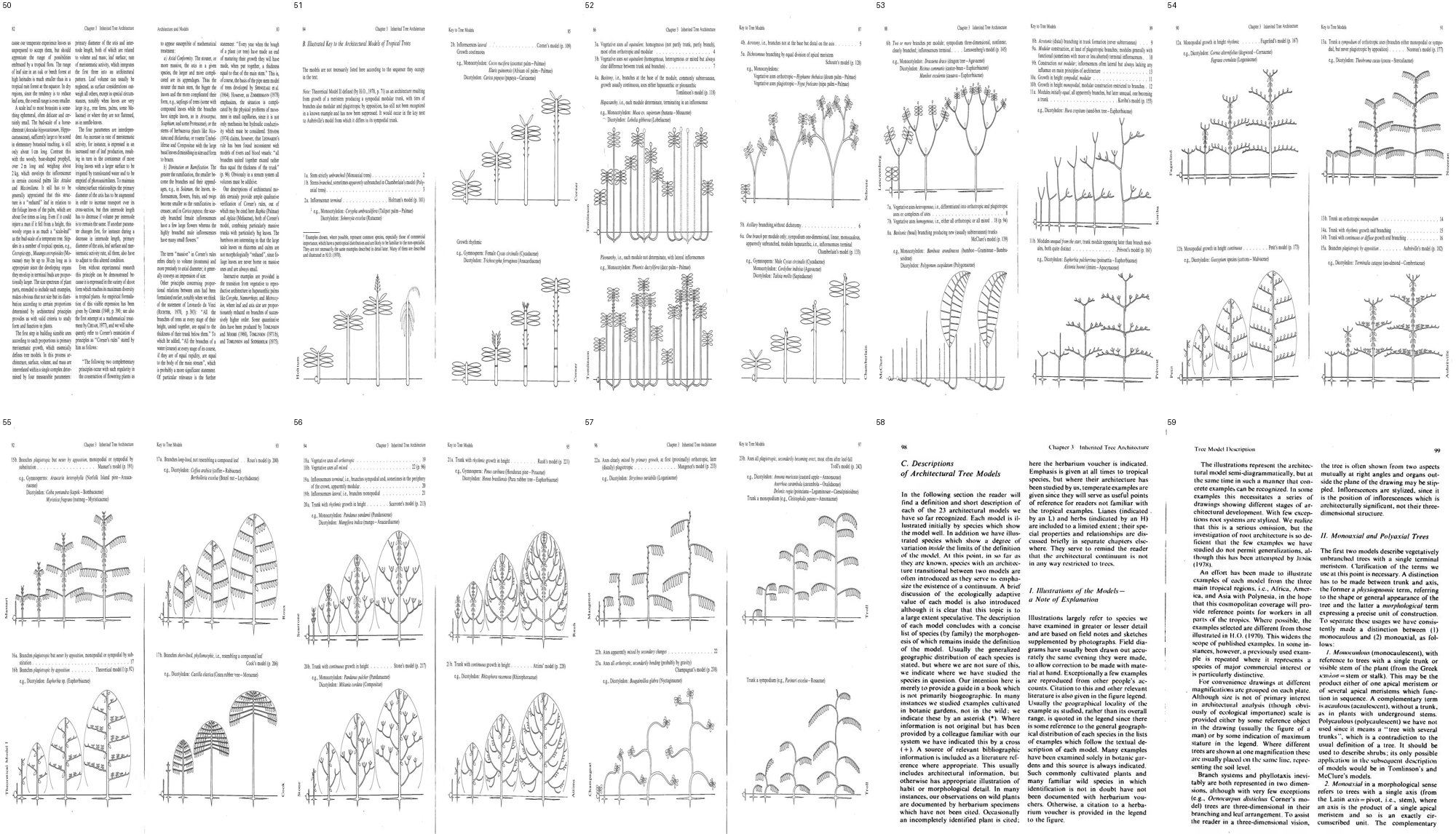 93. books/trees/tmp/h50.jpg
Read: books/trees/pages/halle/h-056.jpg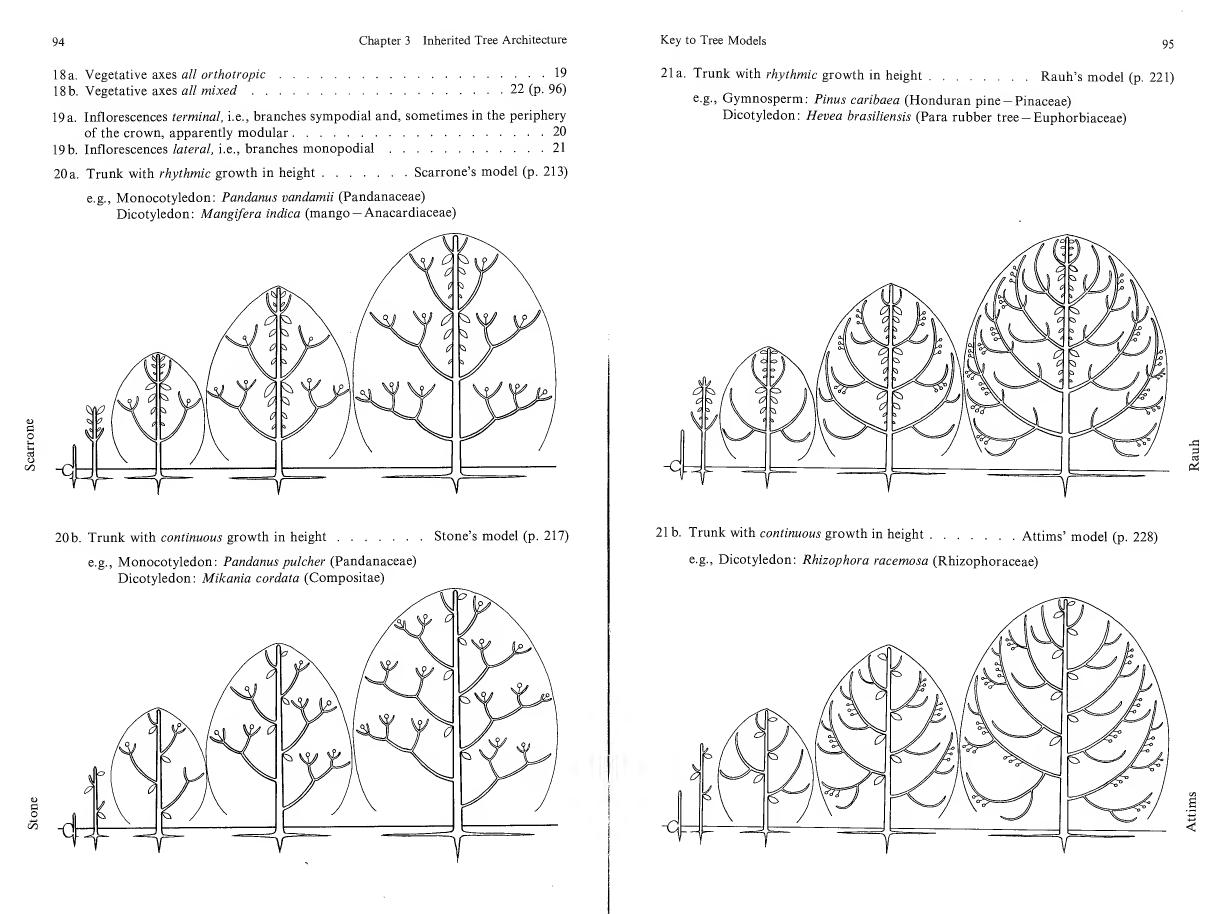 94. books/trees/pages/halle/h-056.jpg
Read: books/trees/pages/halle/h-055.jpgRead: books/trees/pages/halle/h-057.jpg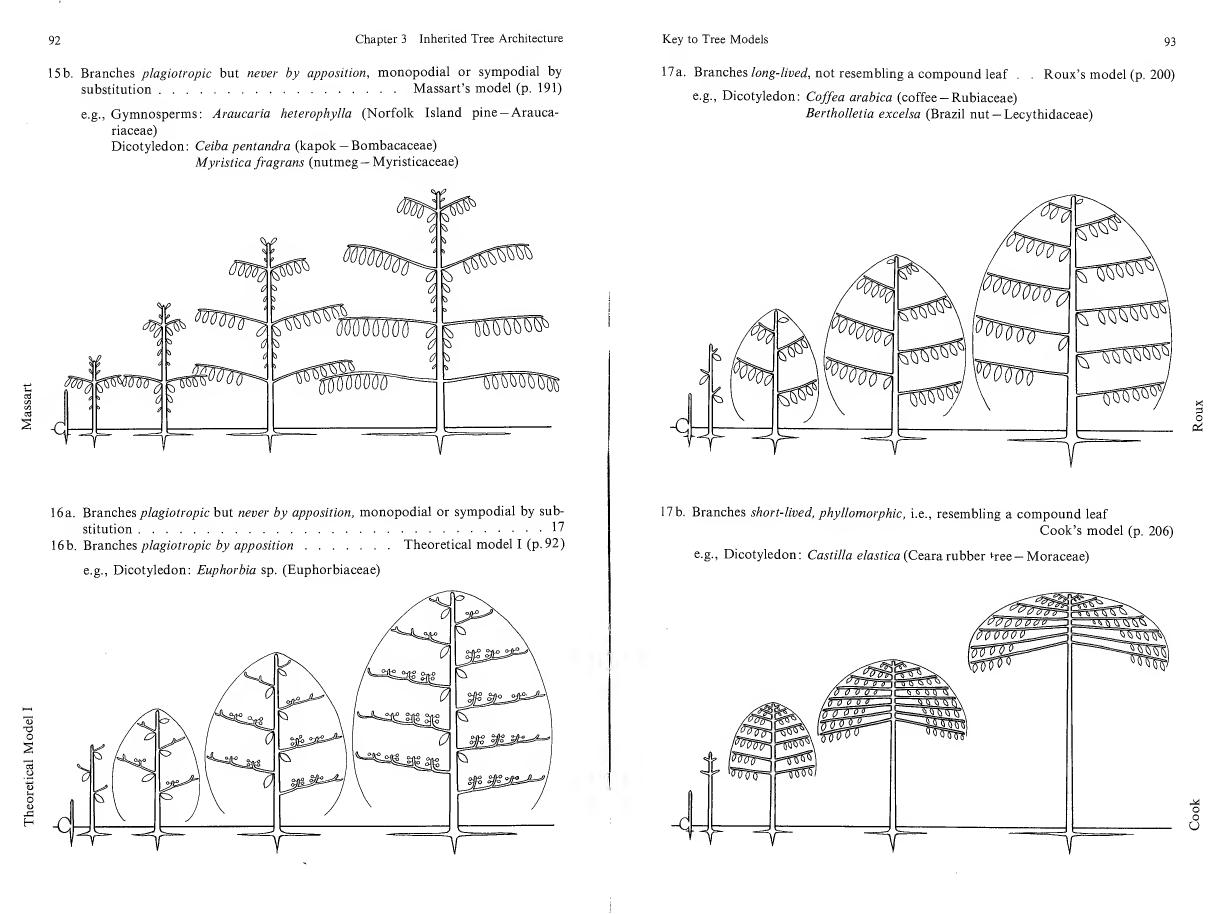 95. books/trees/pages/halle/h-055.jpg
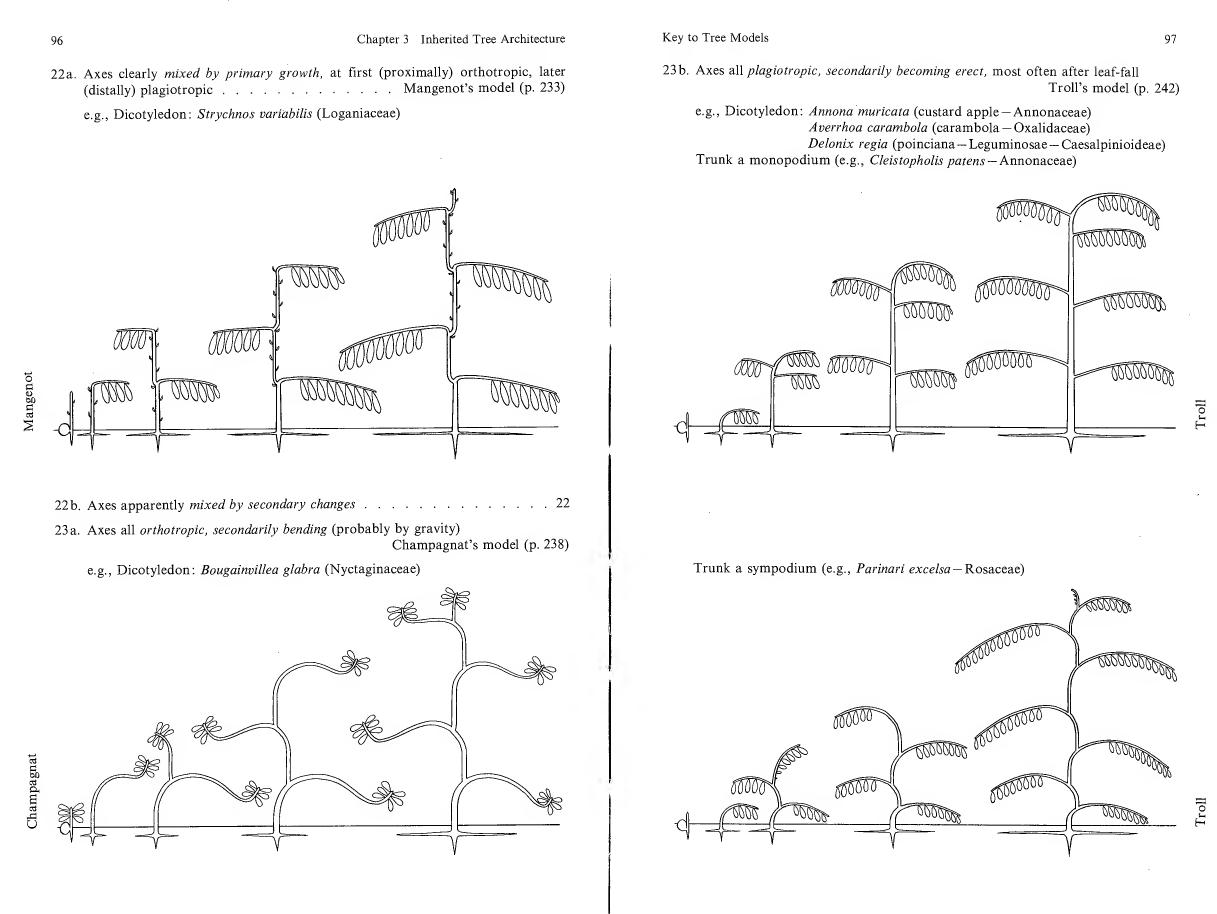 96. books/trees/pages/halle/h-057.jpg
Bash: cd ~/work/pixelart-studies/books/trees; python3 - <<'E' from PIL import Image, ImageDraw def grid(pages,out,cols=3,w=620): ims=[(p,Image.open(f'pages/halle/h-{p:03d}.jpg')) for
cd ~/work/pixelart-studies/books/trees; python3 - <<'E'
from PIL import Image, ImageDraw
def grid(pages,out,cols=3,w=620):
    ims=[(p,Image.open(f'pages/halle/h-{p:03d}.jpg')) for p in pages]
    h=int(w*782/559); rows=(len(ims)+cols-1)//cols
    S=Image.new('L',(cols*w,rows*(h+14)),255);d=ImageDraw.Draw(S)
    for i,(p,im) in enumerate(ims):
        x=(i%cols)*w;y=(i//cols)*(h+14); S.paste(im.convert('L').resize((w-4,h)),(x,y+14));d.text((x+4,y+1),str(p),fill=0)
    S.save(out,quality=85)
grid([147,148,149],'tmp/h147.jpg'); grid([172,173,174],'tmp/h172.jpg')
E

# output:
(Bash completed with no output)
Read: books/trees/tmp/h147.jpg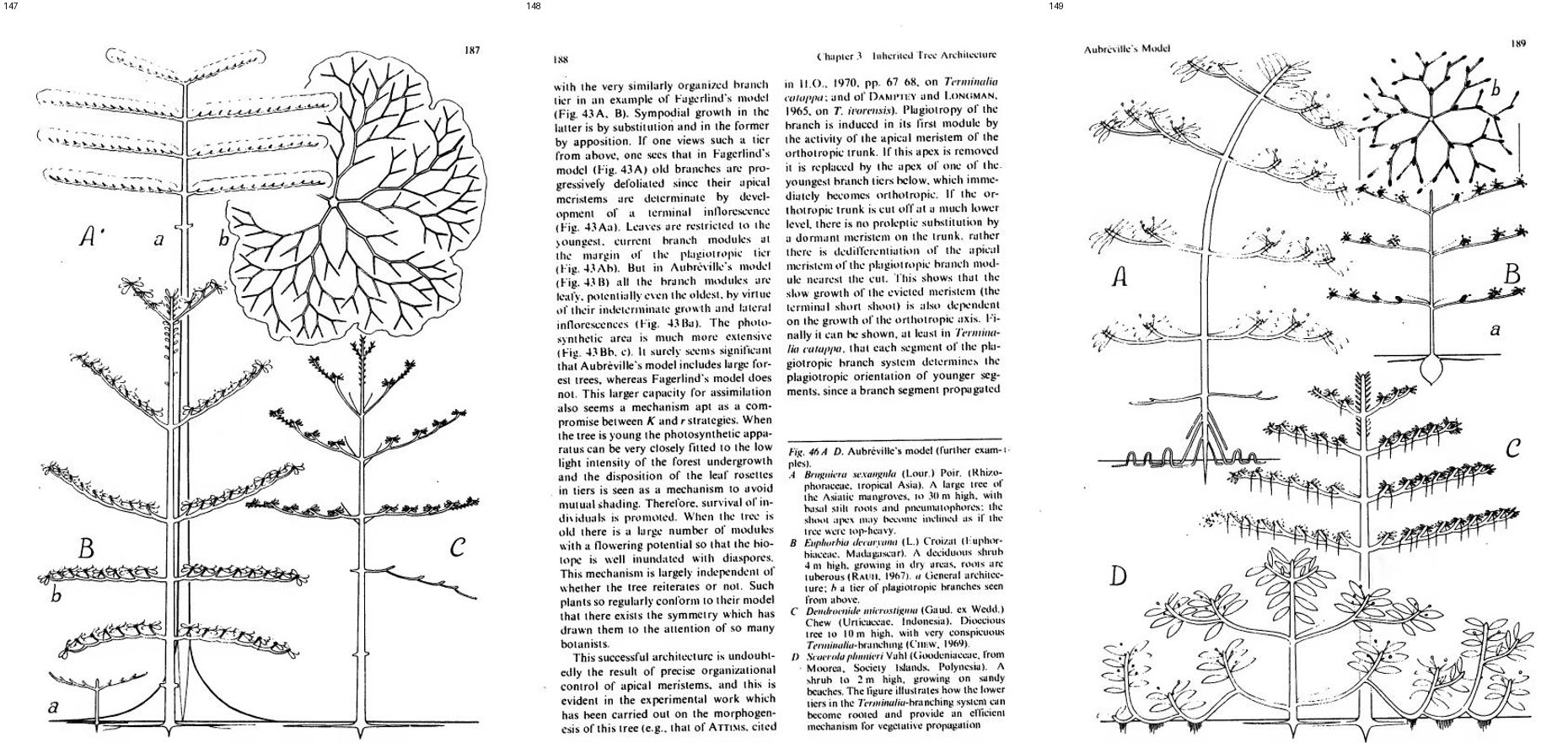 97. books/trees/tmp/h147.jpg
Bash: H="$HOME/work/pixelart-studies/library/purchased/Tropical trees and forests an architectural analysis (Hallé, Francis, Hallé-Oldeman).pdf"; for p in $(seq 190 300); do t=$(pdftote
H="$HOME/work/pixelart-studies/library/purchased/Tropical trees and forests  an architectural analysis (Hallé, Francis, Hallé-Oldeman).pdf"; for p in $(seq 190 300); do t=$(pdftotext -f $p -l $p "$H" - 2>/dev/null); echo "$t" | grep -q -E "Fig\. 7[45][A ]|Fig\. 93\.|Fig\. 107A|Fig\. 92\. " && echo "$p: $(echo "$t" | grep -o -E 'Fig\. (7[45]|93|107|92)[^ ]*' | head -3 | tr '\n' ' ')"; done

# output:
Exit code 1
227: Fig. 74) Fig. 74) Fig. 74A)
228: Fig. 74A-H.
229: Fig. 74B). Fig. 74C). Fig. 74
230: Fig. 75) Fig. 75A). Fig. 75
251: Fig. 92, Fig. 92.
254: Fig. 93.
271: Fig. 107A-D.
Bash: cd ~/work/pixelart-studies/books/trees/pages/halle; H="$HOME/work/pixelart-studies/library/purchased/Tropical trees and forests an architectural analysis (Hallé, Francis, Hallé-Ol
cd ~/work/pixelart-studies/books/trees/pages/halle; H="$HOME/work/pixelart-studies/library/purchased/Tropical trees and forests  an architectural analysis (Hallé, Francis, Hallé-Oldeman).pdf"; for p in 228 229 230 231 252 254 272 250 251; do nice pdftoppm -f $p -l $p -r 100 -gray -jpeg "$H" h 2>/dev/null; done; ls h-2* ; cd ../..; python3 - <<'E'
from PIL import Image, ImageDraw
def grid(pages,out,cols=3,w=620):
    ims=[(p,Image.open(f'pages/halle/h-{p:03d}.jpg')) for p in pages]
    hs=[int(w*im.size[1]/im.size[0]) for _,im in ims]; h=max(hs); rows=(len(ims)+cols-1)//cols
    S=Image.new('L',(cols*w,rows*(h+14)),255);d=ImageDraw.Draw(S)
    for i,(p,im) in enumerate(ims):
        x=(i%cols)*w;y=(i//cols)*(h+14); S.paste(im.convert('L').resize((w-4,int(w*im.size[1]/im.size[0]))),(x,y+14));d.text((x+4,y+1),str(p),fill=0)
    S.save(out,quality=85)
grid([228,229,230,231],'tmp/hR.jpg',cols=4,w=500); grid([250,251,252,254,272],'tmp/hF.jpg',cols=5,w=420)
E

# output:
h-200.jpg
h-228.jpg
h-229.jpg
h-230.jpg
h-231.jpg
h-250.jpg
h-251.jpg
h-252.jpg
h-254.jpg
h-272.jpg
Read: books/trees/tmp/hR.jpgRead: books/trees/tmp/hF.jpg 98. books/trees/tmp/hR.jpg
 99. books/trees/tmp/hF.jpg
Too small; view fig 74 and 75 pages directly.
Bash: cd ~/work/pixelart-studies/books/trees/pages/halle; python3 -c " from PIL import Image for p in [228,230,254]: im=Image.open(f'h-{p}.jpg'); w,h=im.size; im.crop((w//2,0,w,h)).s
cd ~/work/pixelart-studies/books/trees/pages/halle; python3 -c "
from PIL import Image
for p in [228,230,254]:
    im=Image.open(f'h-{p}.jpg'); w,h=im.size; im.crop((w//2,0,w,h)).save(f'../../tmp/hc{p}.jpg')
print(im.size)"

# output:
(1217, 914)
Read: books/trees/tmp/hc228.jpgRead: books/trees/tmp/hc230.jpg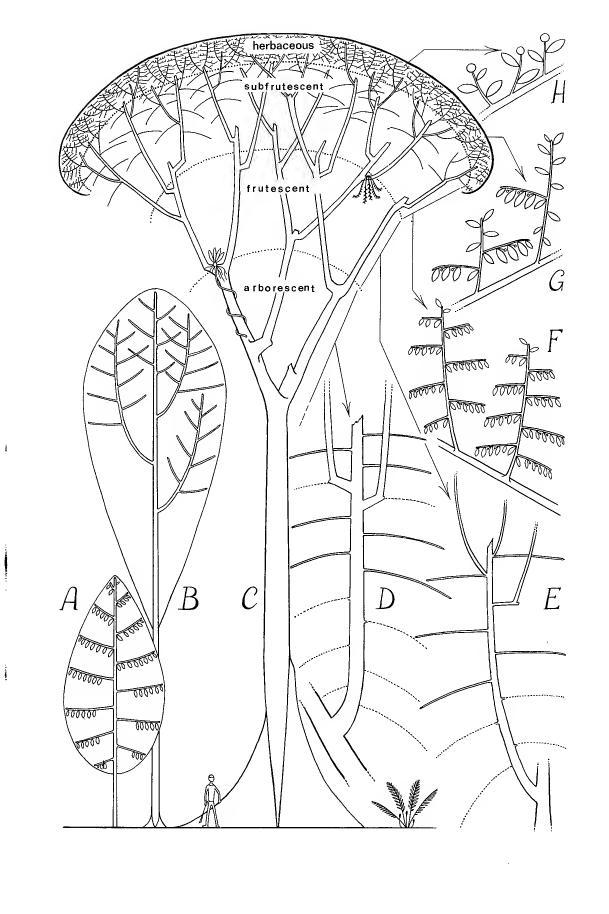 100. books/trees/tmp/hc228.jpg
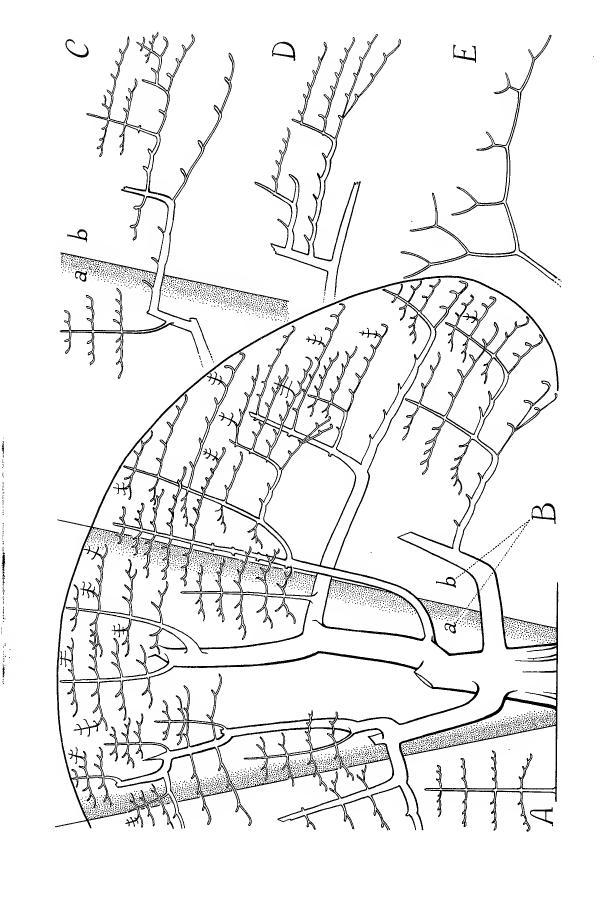 101. books/trees/tmp/hc230.jpg
Read: books/trees/tmp/hc254.jpg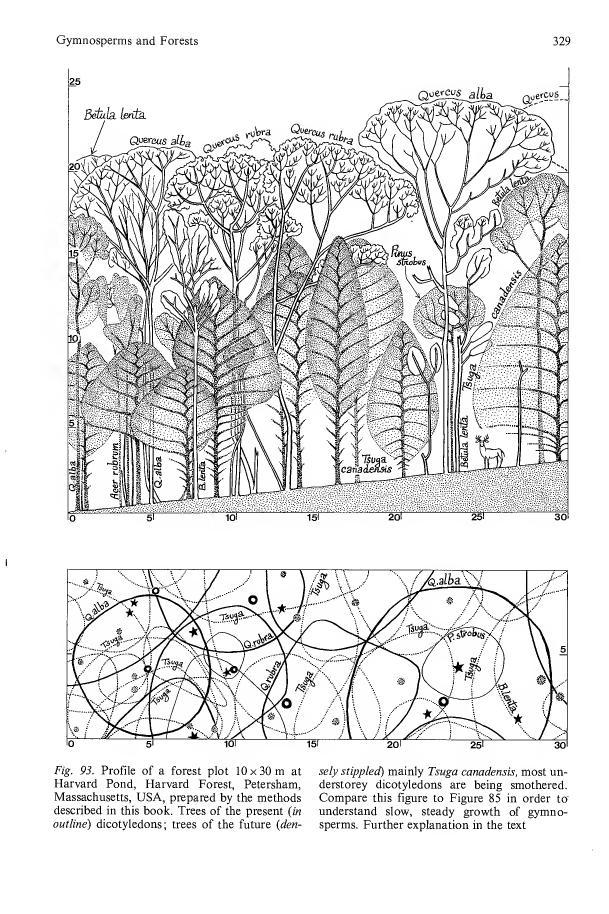 102. books/trees/tmp/hc254.jpg
Write: books/trees/MODEL.md
# The model: Cole (1915) and Hallé–Oldeman–Tomlinson (1978), in their own terms

Two books, read whole and looked at plate by plate (Cole: all 412 scanned pages as contact sheets in
`pages/cole3/`, figures zoomed where they carry the teaching; Hallé: the full text in
`library/text/`, and the plates of the illustrated key, the model descriptions I use, reiteration
and the forest profiles, `pages/halle/`). Page numbers are the books' own printed pages.
"Fig." and "Illus." are the books' own numbering. Where I paraphrase I stay in their vocabulary;
where I add a reading of my own it is marked **[mine]**.

The two books are one model seen from two ends. Cole is a painter who went to the botanists because
"the result looks generally unlike a tree" when the mechanism is not understood (p. 147). Hallé is a
botanist who found that a small number of growth programs generate a species' whole form. Cole's
Part II is, unknowingly, a sketch of Hallé's architecture (bud arrangement → branch plan → outline);
Hallé has nothing to say about light, edge, value or distance, which is most of Cole's Part I.
So: **Hallé tells you what the tree is; Cole tells you what it looks like, and why.**

---

## Part A. Cole, *The Artistic Anatomy of Trees*

Cole's aim, stated in the preface and again at p. 45: construction is not wanted "for a display of
learning", but because a painter who knows the type can paint the individual with freedom and keep
"the feeling of greatness" while drawing piece by piece. Knowledge of structure "gives to our
drawing an almost unconscious variety of light and shade" (p. 110).

### A1. Seeing: masses, spaces, balance (Ch. II–III, pp. 47–68)

- **Balance of the individual** (p. 47, Figs. 1–5). A leaning or curving trunk still carries its
  foliage over its base. On slopes trunks lean slightly *uphill* ("rake to aft" of a mast, Fig. 4);
  downhill lean looks wrong. Overhanging trees look balanced because their heavy boughs rise from
  the upper side. Exposed roots are "a stand"; a bole buried flush looks "shoved in like the
  flowersticks in our garden" (p. 49). The lines that tie bole to ground — roots, contact shadows,
  sharp-edged ground light between trunks — carry poise.
- **Single tree vs. mass** (pp. 49–51). A lone tree is read as pattern and line (stem traced to "a
  haze of twigs at the apex"); the isolated thing is focused more sharply and expected to be more
  exact. **Massed trees: one depth of colour; tones taken from one end or the middle of the scale,
  never both ends (Fig. 9)**; "some severity in the outline — a gimped edge (Fig. 10) is not conducive
  to grandeur". Massed trees seen from a height "look spotty and detached": paint them in long
  shadow, contre-jour, cloud shadow, or shafts of light, when detail is lost in flat tone.
- **Nature as spaces of light and dark** (p. 56, Figs. 14–24). A tree and its cast shadow are *one*
  dark shape (Figs. 14–15). Two trees of like tone are one form (16–17). Under uniform light, trees,
  ground and figure merge and "it is the space of grey between them that attracts attention" (18).
  Reflection doubles a dark (19). **Even spacing is to be avoided (Figs. 20–21, 25–26)**; exactly
  equal dark and light is too formal, total imbalance worse.
- **Draw the spaces first** (p. 59, Figs. 27–28, Illus. 11). For a row of trunks, draw the sky and
  ground spaces between them, then redraw the trunks left behind. A pine wood in flat light is "as
  wearisome as the bare hop poles of Kent"; low sun spaces the stems into lit, grey and dark.
- **Scale** (pp. 59–63). Equal small trees in open country look like figures on a stage (Fig. 29).
  Cut trees off at the frame (Fig. 31). A sapling beside a trunk gives the trunk its girth (Fig. 34).
  A bare larch stem "merely seems terribly tall"; an ash's branches divide it into measurable lengths.
- **Masses and delicacy** (pp. 63–64, Illus. 13–14). Decided masses against indefinite ones; a
  thinly clad tree in front of a massed one either contrasts sharply or blurs its edge into sky; "a
  great space of indefinite form can be balanced by a small distinct one".
- **The distance ladder** (pp. 64–68; Figs. 35–39). This is the single most important passage for us.
  - *Far:* "rendered flat in tone by the atmosphere, … recognised by the pattern it makes against the
    sky … an oblong, a semicircle, a cone". Elm = border of straight lines; beech = "undecided edges
    of loose sprays"; Lombardy poplar a sentinel among squat oaks; **"There is no edge to the Larch
    wood — just a haze; … the upright lines of the trunks show as faint streaks of grey"**. Skyline
    groups are "architectural"; woods fix the contours of hills; plantations step down behind a hill.
    Not "a number of monotonous dots which serve no purpose".
  - *Middle:* local colour shows through the air (ash lighter than sycamore, elm, oak; pinewoods "a
    startling patch of dark"); and **species now show inside the tree as well as at its edge: "The
    shadows between the foliage may alone betray the species; in some they are sharp and dark, in
    others faint and confused, massed or detached, forming lines consistently in one direction or
    another."** Beech: thin layers and detached spiked sprays; lime: heavier layers, drooping curves;
    oak: tufted, star-shaped projections; sycamore/plane: massed sharp-edged; poplar: dotted leaves;
    willow: blurred edges. Direction of the chief branches and the junctions can be followed.
  - *Near:* individual traits, wind, the treatment of twigs and leaves against the sky; "a single leaf
    may look as large as a distant tree".

### A2. The tree against the sky (Ch. IV, pp. 69–81)

The edge (pp. 69–71, Illus. 18): "no part of it is quite sharply defined, and there is a great
variety in the intensity of definitiveness." Reasons: foreshortened leaves at the margin, light
passing on either side, far-side tips seen through, stalks invisible. Lowest hanging leaves are
"much more distinct, and usually darker".

The rules for sky holes, which he states as a list (p. 71):

1. **The extreme margins of holes in foliage are diffused and colourless** — "not sharp, dark, or
   bright coloured".
2. **Small sky spaces appear as circular lights with diffused edges, the strongest light in the
   centre** ("globes").
3. **Holes veiled by small leaves and twigs are darker than the open sky.**
4. **Local colour is strongest in the centre of the largest masses**; the edge is less coloured than
   the bulk.
5. **The upper or lower edge of a foliage group is sharp or indistinct according to which projects
   in front** — "it explains the formation of the branches".
6. Small leaves (elm) vs. large (sycamore), narrow (willow) vs. broad (alder), spaced (black poplar)
   vs. close (oak) make completely different edges (Illus. 19–26).

Leafless trees (p. 78): a **border haze of little twigs "scarcely differing from the colour of the
sky"**, inside it a closer network that veils, and against the veil "the exquisite lines of the
larger boughs can be clearly traced". Winter holes are irregular, bounded by boughs.

Patterns of holes (pp. 78–80, Figs. 40–41): shaped by the habit of the species; **"construct these
patterns clearly, in fact to draw the mass of the tree by them"** (Corot places them on a preconceived
pattern). Holes are linked into chains — by small lights, or by "a strong edge, where massed foliage
ends at the light", carried to the next — so the mass is not "cut up into meaningless sections".
The opposite also has its place: in a half-grown ash, "grey or dark spots of unequal size, but of
equal value interspersed with the sky" (Illus. 27). Clausen's warning: trees "all cut out at the
edges, like trees on a stage"; see the tree as "a great dome, spreading up and rounding into the sky,
with the light showing on it and through it".

### A3. The outline (Ch. V, pp. 82–94)

Outline is not "a scallop" (Figs. 43–44). The map-of-England lesson (Figs. 45–46): draw the chief
curves and straight lines, not every inlet. Seven laws (pp. 82–83):

1. Chief lines are carried across breaks, picked up by one form after another (Figs. 47–48); the
   composing line can run along a *shadow* edge instead of the outline (Fig. 49).
2. There is a choice of chief line, and it changes with the hour (Figs. 50–55).
3. Insist on the line's distinguishing feature; don't let accidents interrupt it (Figs. 56–59):
   "how easy it is to miss just that straight bit that makes the curve look so buxom".
4. A line's value comes from contrast with another, and from repetition nearby.
5. Similar lines near one another beat dissimilar ones (the beech's recurved lower branches).
6. Lines weary without slight variation — "a qualified monotony"; ruled parallels are dreary.
7. **Straight lines = restraint, dignity, strength; slight curves = grace; circles = weight and
   "a coarse exuberance".** "The outline of a tree is made up of many straight lines. … **the
   comparative length of these straight pieces determine the character of the curve**" (p. 92,
   Figs. 62–64). Elms are "outlined by straight-cut edges"; three or four straight lines cut the
   edges of all the main blocks (Figs. 65–66). A young fir's "oft repeated breaks" are displeasing,
   "far more so when the dentated edge is emphasized by a harsh outline" (Fig. 53).

### A4. Lines of the branches (Ch. VI, pp. 95–109)

- **Each species keeps one type of line**: small angle, large angle, slight curve, full curve, or
  elbow; "every twig is formed on the plan of its neighbour, and every bough is but a twig grown old"
  (pp. 99–100, Illus. 34–36: white poplar vs. blackthorn). Unity from the recurring type; variety
  from viewpoint, foreshortening, age, accident (Fig. 72).
- Mixing types is "complex and discordant" (Fig. 74); lines in one direction act as one line
  (Fig. 73, young oak); the matches exercise (Figs. 76–79): parallel but unequally spaced good;
  crossing anyhow bad; equal length and equidistant "impossible".
- Stems: a vertical start breaking into a short curve then a longer reversed one (Figs. 83–85); the
  accent at a junction makes two curves out of one; one outline of a bough runs continuous past a
  junction while the other is broken (Fig. 86). Birch: the long curve made of lesser ones — beginners
  make "a lumpy wriggle reminiscent of bent wire" (Figs. 81–82).
- **Pendent branches**: from the upper side, down, then up — "all the suggestion of a steel spring"
  (ash, Fig. 87, Illus. 39); in apple, oak, alder, thorn the same formation "becomes a firm elbow or
  crozier". Birch branches "loose straying" vs. the firm lines of ash (Illus. 40).

### A5. Light and shade on structure (Ch. VII, pp. 110–120)

- **Planes and a tone scale** (pp. 110–114, Figs. 91–92): "Each surface … would represent to our
  minds a definite tone reserved for it and for all other surfaces that were in a similar plane." A
  wide hollow takes four tones, a sharp furrow two. Twigs are not gaspipes but flat-sided, keeled
  (Figs. 93–94); junctions give flat lit spaces.
- **The clipped-yew exercise** (p. 114, Fig. 95): "Under the simple light of a grey sky the foliage
  of a tree can be considered and studied as the planes that construct a great dome"; one tone per
  plane; over-reaching forms catch a light not of their plane.
- **Sun is a second set of tones** (pp. 114–115): glitter and sunlit sprays "are an accident to be
  added to the bulk of the tree … otherwise we get all sparkle but no tree to hold it. … think of our
  tree as made up of a certain set of tones, and for the sunlit parts to use a new and lighter set,
  quite apart from the others."
- **Contre-jour** (p. 115): dark trunk and boughs against bright thin far-side leaves "of two or three
  tones according to their density"; near projecting groups dark and greyer from sky reflection;
  "rich green in the recesses" from leaf-to-leaf bounce; tops and edges lighter grey "as they recede
  round its dome". High sun: glitter at the apex and the low jutting ends. Branches crossing a bright
  gap "lose their edges and darkness and modelling, and become thin strips of undecided half tone"
  (also p. 45: "slender forms seen against the light appear more slender").
- **Bark varies the cylinder** (p. 115): smooth holly takes only its strip of light; fissured bark
  carries darks into the light and lights into the shadow; reflected light under horizontal boughs;
  cast shadows of small branches at junctions; give-and-take of edges against dark and light grounds.
- **Twig number** (p. 116): the twigs of a larch or birch "collectively would equal the girth of the
  parent boughs"; larch twigs "disappear in a haze while the Chestnut shoots stand detached".
- **Colour** (pp. 116–119): distance assimilates to sky; "each colour has its own grey"; full colour
  is usually *absent* where the strongest light falls (the lit parts reflect the sky), and colour is
  often strongest in shadowed hollows reinforced by reflection.

### A6. Situation, age, weather (Ch. VIII, pp. 121–132)

- Crowded trees: long clean trunk, weak lower boughs; free-grown: divides low, spreads; exposed:
  squat or straggling, or "shorn close by the wind like over-grown bushes"; crowded on one side,
  fills the other; road trees arch.
- **Age** (pp. 123–128): Scots/stone pine cone → "umbrella" (it cannot form new boughs below old
  ones, so tiers die upward leaving a bare trunk with stumps and nodes); larch keeps only the upper
  cone on "an immense bare trunk". **In well-grown trees each main bough ends in a straight line and
  these build the outline, with small sky spaces between them; later the spaces widen, gaps appear,
  symmetry is lost and "irregular or grotesque forms" come.** Young trees make long loose sprays;
  old ones "the closeness of multiplied forms".
- Wind (p. 128): species respond differently (birch bends, oak and alder defy, larch twigs swing in
  unison); pale undersides give each species its windy-day grey; coast trees are "transfixed in the
  act of movement" (p. 134).
- Snow and hoar frost (pp. 129–130); moonlight (pp. 130–132): level and vertical merge in one shadow;
  trees distinguished only "by the loss or comparative sharpness of the outline" — birch a haze,
  oak and elm "blank spaces of dark with straight-cut edges".

### A7. Recognition by outline (Ch. X–XI, pp. 147–159)

- We read things by outline and by the *texture of the outline* (thatch: indistinct edge; tile:
  sharp and dark). The cow is a straight back and a triangle; the man a knob and a lozenge (Figs.
  97–100): the painter indoors adds legs and faces that were never visible.
- **Outline follows from branch lengths** (pp. 151–153, Figs. 101–107): the leader grows faster than
  the laterals, so a young tree is a *cone* not a pyramid; if the lowest boughs keep growing, a cone
  or dome; if the middle ones outstrip, a circle (horse chestnut); if the upper, a pear (hornbeam,
  stone pine). **Each side branch is a reduced replica of the whole, but inclined: its lower
  branchlets lie in one flat plane, its tip spreads in many directions (Figs. 108–110). The gaps
  between branch extremities are "the second great characteristic of young trees"; with age they
  fill in** (Illus. 61).
- **Branch angle makes the species** (pp. 155–158): Lombardy poplar's acute angle confines all in a
  narrow cone, branches advancing "by steps" as outer branchlets take over (Fig. 111); black poplar,
  same leaves, wide angle, free-growing; oak: right angles, crowded, sturdy horizontal boughs, no
  underside branches (Fig. 113); ash: paired, spaced, upswept boughs with pendent branches; elm: few
  limbs dividing rapidly into many small twigs, so "each characteristic straight line of the outline
  is the termination of one bough"; beech: the twig's zigzag repeated in flat layers (Fig. 115).

### A8. Buds make branches (Ch. XII–XIV, pp. 160–198)

- A bud is a compressed shoot; each species follows one of six or seven plans (p. 160): **opposite
  decussate** (ash, maple, sycamore, horse chestnut, elder); **alternate two-ranked** (beech, elm,
  hazel, lime, hornbeam: "bud and shoot lie in one plane … all the boughs would be in flat layers
  after the manner of a fern", zigzag shoots, p. 176, Fig. 136); **three-ranked** (alder: boughs
  "evenly distributed without much interlacing", identified by angle, p. 181); **five or more ranks**
  (oak, willows, poplars, cherry: "the want of order, rather than its observance, becomes the
  feature"); **clustered/whorled** (spruce, Scots pine, silver fir, holly: branches radiate "like the
  spokes of an umbrella"; on a horizontal bough the underside twigs curve up and the upper-side ones
  grow outward, p. 183, Fig. 143).
- **Failure of buds** (pp. 172–176, Figs. 130–135): tip lost → forks (Y); tip and one side lost → an
  angle; one side bud as leader → a curve; habitual substitution makes the ash's "gentle curves", the
  guelder rose's "frame full of abrupt angles".
- Additional buds (pp. 183–185): pines cannot bud from old wood; willows, elms, alders, hollies sprout
  (adventitious shoots on alder boles, Illus. 82; vertical shoots on fallen holly). Arrested twigs:
  spurs and long shoots (thorn, larch, pine). **Old trees: short much-forked twigs instead of long
  shoots; lateral spread; lower boughs decay** (p. 186).
- **How a tree is built up** (Ch. XIV, pp. 187–198): leader continued from the tip = "a telescope
  drawn out" (Fig. 144); from a side bud = repeated curves or alternating breaks (145–146); forks
  (147). Junctions soften with girth; in a fork one limb predominates (150). **The trunk is of equal
  thickness between boughs and steps down at each ("after the fashion of a telescope", Fig. 155);
  spruce and larch seem to taper only because their scars are close (157–159); the two limbs of a
  fork together measure rather more than the trunk below (Fig. 160).** A few conspicuous limbs that
  "suddenly ramify" (elm) look utterly different from a gradual succession (ash) (Fig. 161).
  **Pendent boughs grow "a succession of curved steps": weighted shoots bend, new shoots rise from
  their upper side and bend in turn; inner branchlets die for lack of light** (pp. 194–198, Fig. 162,
  Illus. 90–91).

### A9. Details (Ch. XV–XXI, pp. 201–318)

Leaves follow buds (p. 208): most leaves lie horizontal or slightly drooping; opposite pairs set at
right angles need vertical shoots (stalks lengthen below, Figs. 163–166); alternate two-ranked leaves
lie in one plane with their twigs "as if pressed under a weight" (beech, hornbeam, Figs. 170–171);
spirals point toward the twig tip; conifer needles bend round the twig into one plane on horizontal
shoots (yew); clustered = oak's star bunches, larch and pine shuttlecocks (Illus. 104). Young leaves
hang limp (horse chestnut "a damp half-closed umbrella") and set the seasonal key. Texture (glossy,
hairy, granular) decides how much sky a leaf reflects (p. 233). Leaf plans (Figs. 200–250). Flowers
and catkins change a tree's whole appearance (alder, hazel, birch catkins; p. 207, Illus. 131).
Bark (pp. 311–318): three methods of growth → smooth (beech), scaly (plane, birch), furrowed (oak);
twig colours grade into the greys of the old branches — "the harmony of the woods in winter".

---

## Part B. Hallé, Oldeman & Tomlinson, *Tropical Trees and Forests: An Architectural Analysis*

### B1. Architecture and model (pp. 74–81)

- **Architecture** = "the visible, morphological expression of the genetic blueprint of a tree at
  any one time"; **model** = "the growth program which determines the successive architectural
  phases" — visible only as *a series* of architectures (p. 75). Not shape, not habit; size-free:
  a 10-cm herb and a 50-m tree can share a model (p. 76).
- The models are named points in an **architectural continuum**, "centers of population on a
  demographic map" (p. 77). 23 models (key pp. 84–97).
- **Criteria** (pp. 80–81): (1) *life-span of meristems* — monopodial vs. sympodial (the most
  important); (2) *differentiation of meristems*: vegetative vs. sexual (terminal vs. lateral
  flowering), **orthotropy** (erect, radial, spiral/decussate) vs. **plagiotropy** (horizontal,
  dorsiventral, distichous), and *mixed* axes that change from one to the other; (3) **rhythmic**
  growth (tiers; short internodes + scale leaves alternating with long internodes) vs. continuous;
  (4) chronology of branching.
- **Corner's rules** (p. 83): axial conformity — the stouter the axis, the larger its appendages;
  diminution on ramification — the more branching, the smaller branches and leaves. Leonardo: all
  branches at a level equal the trunk (Stevens: in fact slightly *exceed* — Cole's Fig. 160 agrees).
- Visible branch orders are few: about 5–6 (Acer rubrum 5; Eucalyptus 7; Taxus 9 the upper limit);
  more in small-leaved species (p. 41).
- Secondary dorsiventrality (p. 39): horizontal shoots of spiral conifers turn their needles into
  one plane (Abies, Picea), with anisophylly in Tsuga.

### B2. The models that matter for Washington

(Definitions quoted from the text; illustrations: key pp. 92–97.)

| model | definition (their words, shortened) | temperate / PNW members |
|---|---|---|
| **Massart** (p. 191) | "orthotropic, monopodial trunk with rhythmic growth … regular tiers of branches"; branches **plagiotropic**, "become pendulous with age" | "a number of temperate conifers ('Christmas trees') like species of Abies, Picea", Taxus; Araucaria the type; **balsam fir krummholz at timberline: orthotropic shoots lost to wind, "plagiotropy is fixed and the branches continue to spread horizontally close to the ground"** (p. 199). Late self-pruning + adventitious branches form "nesting crowns" (p. 193). |
| **Rauh** (p. 221) | "monopodial trunk which grows rhythmically and so develops tiers of branches, the branches themselves morphogenetically identical with the trunk" (all orthotropic); flowers lateral | Pinus (most), **Quercus** ("probably most species"), **Acer**, Fraxinus. "Supple": any meristem replaces the leader; "almost impossible to find an individual of ash, oak, or maple which conforms precisely"; red oak "never has a straight trunk" (p. 226). |
| **Troll** (p. 242) | "Axes are all plagiotropic, the architecture being built by their continual superposition"; each axis part trunk, part branch, the base erected secondarily (after leaf fall) | Ulmus, Fagus; the commonest model (20–30% of trees); plastic — dome in the open, cone in the forest (p. 249). **Tsuga canadensis: "drooping leader" secondarily erected by compression wood; "strongly suggests … Troll's model"** (p. 246); elsewhere "hemlock may show Mangenot's model" (p. 329). |
| **Scarrone** (p. 213) | rhythmic orthotropic trunk; branches orthotropic, **sympodial through terminal inflorescences** | mango; candelabra crowns. **[mine]** a fit for Pacific madrone (terminal panicles, sympodial). |
| **Leeuwenberg** (p. 145) | sympodial throughout, each module ending in an inflorescence, 2+ branches below it | castor bean, dragon tree. **[mine]** madrone's periphery tends here. |
| **Attims** (p. 228) | as Rauh but continuous growth | uncommon. |
| **Mangenot / Champagnat** (pp. 233, 238) | mixed axes: erect then horizontal / erect then bending by weight | hemlock possibly Mangenot. |

The book does not treat Pseudotsuga, Thuja, Picea sitchensis, Larix, Alnus or Arbutus directly. My
assignments, with reasons, are in LESSONS.md and in `src/species_models.py` — all **[mine]**.

### B3. Reiteration (Ch. 4, pp. 269–284)

- **Reiteration** = "the repetition of overall plant growth patterns starting from meristems";
  a latent meristem makes a second copy of the model on the first (p. 272). Evidence: **bayonet
  joints** (a substituted trunk, p. 270), forks, stump and root suckers, the **river-bank effect** (a
  leaning trunk over water or a gap throws up vertical axes decreasing in size distally).
- *Sequential* branching (the model's own) vs. *reiteration* (delayed, irregular, unpredictable)
  (p. 273). Triggered by **surplus energy**: when the model's meristems run at capacity, extra light
  goes into new trunks (p. 278).
- **The forest tree** (Fig. 74, pp. 275–280): initial model in the undergrowth, then waves of
  reiteration, each wave "more numerous and smaller" — **arborescent** (the big limbs), **frutescent**
  ("shrubs" on them), **subfrutescent**, **herbaceous** (a "field of weeds" in the crown top without
  roots) — and at the herbaceous stage the tree has reached maximum size. The crown top becomes a
  flat dome of tiny complexes on a few big forked limbs.
- **The free-standing tree** (Fig. 75, pp. 280–284): reiteration starts early; the crown grows wider
  than tall, hemispheric, short trunk; the periphery and lower crown become **dorsiventral**
  (plagiotropic, one-sided, "river-bank effect"), the centre keeps ascending axes, "a microcosm of the
  whole forest canopy". Forest trees "zigzag to higher levels" through successive gaps.
- **Trees of the future / present / past** (pp. 320–325): future = model-conforming, suppressed,
  slender (can exceed H = 100·D in "ecological chimneys"); present = fully reiterated, stable;
  past = broken, a "cluster of rather humble reiterated complexes at or below the level where the
  trunk is broken", "architectural chaos", H ≪ 100·D.
- **Morphological inversion point** (pp. 325–327): the lowest living major branch or first reiterated
  fork; below it one big unit (the trunk), above it smaller and smaller units. **Crown depth / total
  height > ½ → free-standing; ≈ ½ → vigorous forest tree; < ½ → suppressed or senescent.**
- **Gymnosperms** (pp. 327–330): "model conformity is much stronger than reiteration"; sequential
  branch complexes of decreasing size do the job reiteration does in broadleaves, within strict
  symmetry; hemlock's higher-order branches are dorsiventral, almost like a compound leaf; hemlocks
  grow slowly and steadily under hardwoods and finally overtop them (Fig. 93, Harvard Pond profile).

### B4. The forest (Ch. 5, pp. 332–386)

- Forest plots are drawn as profiles (width ⅓–⅔ of forest height, length ≥ height) with sets of the
  present (outlined), future (stippled), past (p. 333ff.; Fig. 93).
- The **morphological inversion surface** joins the inversion points of the canopy trees: nearly
  horizontal above half-height in old well-structured forest, **wavy** in growing or disturbed forest
  (Fig. 104). The ecological inversion surface touches the ground at every gap.
- **Imbrication on slopes** (pp. 360–364, Figs. 106–107A): canopies overlap downhill "like roofing
  tiles"; crowns at the downhill edge of each tile are asymmetric toward the light; above ~25–35°
  continuous turnover. **Riverside** (Fig. 107D): the whole canopy is built of asymmetric crowns
  curving down to the water or road. **Chablis**: the fall of a tree and the gap, debris and damaged
  survivors it leaves (p. 368).

---

## Part C. Where the two meet (the joint model I work from) **[mine, from both]**

1. **Growth program → outline.** Hallé's criteria (orthotropic/plagiotropic, rhythmic/continuous,
   monopodial/sympodial) are the causes of Cole's outlines (cone vs. dome, gaps between branch
   extremities, flat layers, straight-cut edges, pendulous steps).
2. **Age is a program, not a scale factor.** Cole's cone → umbrella and "multiplied forms" of old
   age; Hallé's model → waves of reiteration → herbaceous crown; the inversion point rising.
3. **Every bough is a twig grown old** (Cole) = **reiteration repeats the model at smaller scale**
   (Hallé) = one type of line per species.
4. **Situation decides the shape the program takes**: crowded vs. free (Cole Ch. VIII) = forest vs.
   free-standing tree and the river-bank effect (Hallé Figs. 74–75).
5. **The painter's layer on top**: distance ladder, edge/hole rules, planes of a dome, sun as a
   second tone set, masses from one end of the scale — Cole only.
Bash: cd ~/work/pixelart-studies/elements/conifers; ls sheets stage2 | head -30; python3 -c " from PIL import Image for f in ['sheets/A_species_x_age.png','sheets/E_stand_x_hour.png']:
cd ~/work/pixelart-studies/elements/conifers; ls sheets stage2 | head -30; python3 -c "
from PIL import Image
for f in ['sheets/A_species_x_age.png','sheets/E_stand_x_hour.png']:
    print(f, Image.open(f).size)"

# output:
sheets:
A_species_x_age.png
B_species_x_hour.png
C_species_x_distance.png
D2_old_x_seed.png
D_species_x_seed.png
E2_iso_forest.png
E_stand_x_hour.png
F_zoom_strips_1x.png

stage2:
a1.png
a2.png
a3.png
sheets/A_species_x_age.png (1286, 2046)
sheets/E_stand_x_hour.png (674, 1406)
Read: elements/conifers/sheets/A_species_x_age.png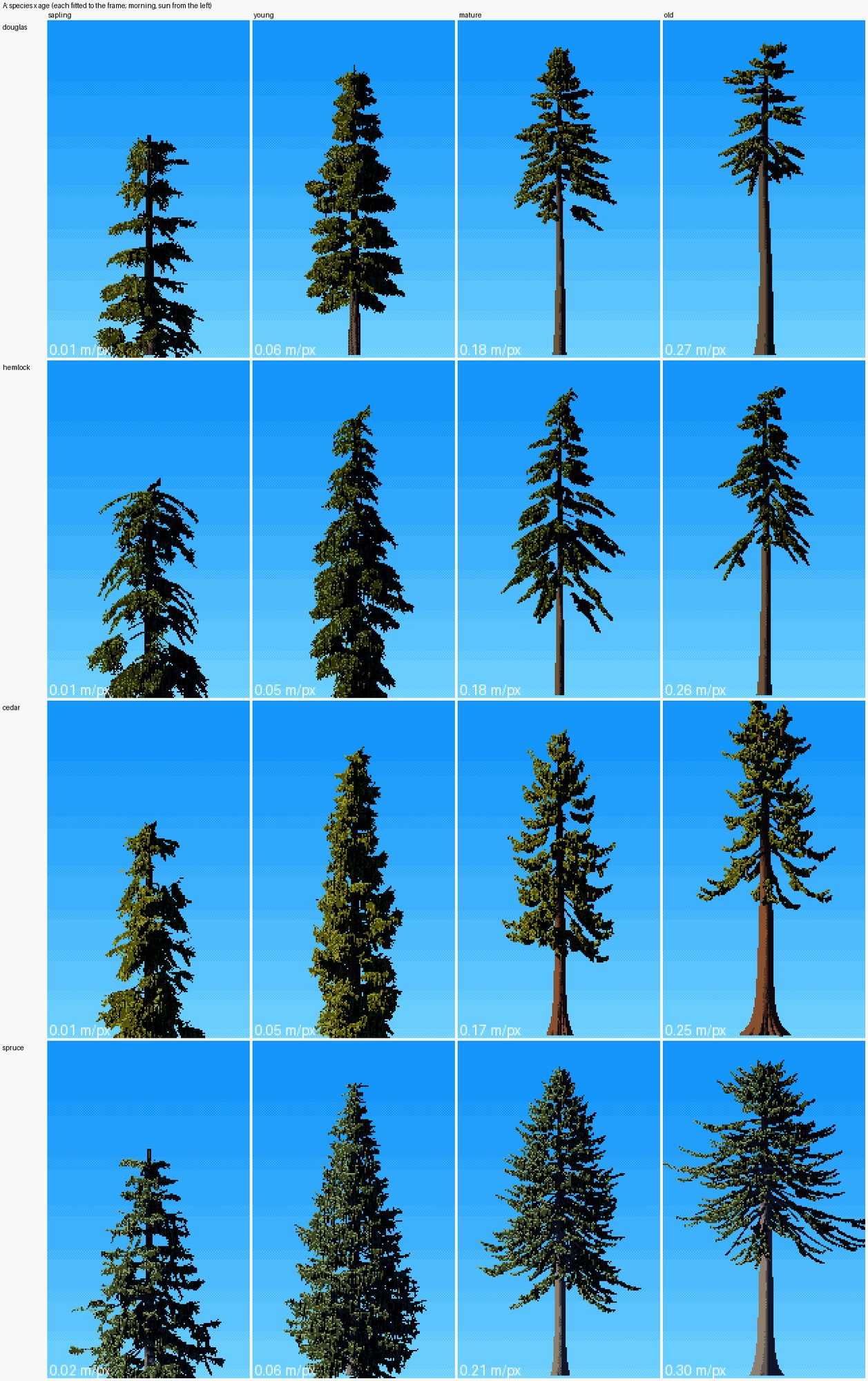 103. elements/conifers/sheets/A_species_x_age.png
Bash: cd ~/work/pixelart-studies/elements; ls treeline/sheets canopy/sheets broadleaf/sheets | head -40
cd ~/work/pixelart-studies/elements; ls treeline/sheets canopy/sheets broadleaf/sheets | head -40

# output:
broadleaf/sheets:
A_species_x_season.png
B_species_x_hour.png
C_species_x_age.png
D_species_x_seed.png
E_species_x_distance_side.png
F_species_x_distance_iso30.png
G_camera_x_sun.png
H_form_x_season.png

canopy/sheets:

treeline/sheets:
Bash: cd ~/work/pixelart-studies/elements; ls -t treeline/stage5 | head; ls -t canopy/stages | head; ls canopy/src treeline/src
cd ~/work/pixelart-studies/elements; ls -t treeline/stage5 | head; ls -t canopy/stages | head; ls canopy/src treeline/src

# output:
s1_crown
s0_data
canopy/src:
__pycache__
_refs
crown.py
drape.py
measure.py
paint.py
palette.py
placedata.py
refdata.py
remote.py
s1_crown.py
s1b_patch.py
s1c_paint.py
shade.py
stand.py
surface.py
usgs_fetch.py

treeline/src:
__pycache__
cmp.py
drape.py
overview.py
place.py
s1_island.py
s1_sheet.py
stats_cover.py
stats_islands.py
tl
tools
Write: books/trees/src/arch.py
"""Hallé–Oldeman architectural models as growth programs.

A tree is grown year by year from its apical meristems (Hallé ch. 2-3). Each axis has:

  - orthotropy (erect, radial) or plagiotropy (horizontal, dorsiventral) -- Hallé p. 81
  - rhythmic growth: one growth unit (GU) a year ending in a tier of laterals (Massart, Rauh)
  - monopodial (the apex lives on) or sympodial growth (the apex ends -- in a flower or
    by abortion -- and 1-3 laterals below it continue: Scarrone, Leeuwenberg; Cole's
    "failure of buds", figs. 130-135)
  - a lateral growth program: GUs shrink with the lateral's age (Cole p. 151: "branches have
    a definite distance to grow"), so the oldest -- lowest -- boughs are longest: the cone.
Then the opportunistic layer (Hallé ch. 4): self-pruning below the light, leader loss and
substitution ("bayonet joints"), and reiteration (a branch dedifferentiates into a new copy
of the model) once the tree has surplus vigour.

Units: metres, years. Output: Tree with segments (p0, p1, radius, order, kind) and foliage
clusters (position, size, normal, plagiotropic?). Radii by the pipe rule with exponent 2.4
(Cole fig. 160: the limbs of a fork together are "rather more" than the trunk below;
Hallé p. 83, Leonardo/Stevens).
"""
import numpy as np
from dataclasses import dataclass, field

UP = np.array([0.0, 0.0, 1.0])


def _norm(v):
    n = np.linalg.norm(v)
    return v / n if n > 1e-9 else v


def _perp(d):
    a = np.array([1.0, 0, 0]) if abs(d[0]) < 0.9 else np.array([0, 1.0, 0])
    u = _norm(np.cross(d, a))
    return u, np.cross(d, u)


@dataclass
class Species:
    name: str
    model: str = "massart"        # massart | rauh | troll | scarrone
    height: float = 60.0          # asymptotic height (m)
    h_rate: float = 0.9           # leader GU length when young (m/yr)
    h_tau: float = 90.0           # height approach time (yr)
    tier: tuple = (3, 5)          # laterals per tier (whorl) on the trunk
    inter: int = 0                # extra scattered laterals per GU (interwhorl branches)
    angle: float = 80.0           # insertion angle of trunk laterals (deg from vertical)
    angle_top: float = 55.0       # ... near the leader
    lat_rate: float = 0.55        # lateral GU length / leader GU length when young
    lat_tau: float = 18.0         # lateral GU decay time (yr): sets the bough's final length
    plagio: bool = True           # trunk laterals plagiotropic (Massart) or orthotropic (Rauh)
    sag: float = 0.010            # gravity bending per metre of bough per year (rad)
    tip_up: float = 0.0           # upturn of the bough tip (cedar J, spruce), rad per m near tip
    sub_n: int = 2                # laterals per GU on branches (order >=1)
    sub_angle: float = 55.0
    sub_rate: float = 0.45        # sub-branch GU / parent GU
    pendulous: float = 0.0        # 0..1: sub-branches hang (spruce curtains, cedar fans)
    max_order: int = 3
    shade_prune: float = 0.35     # crown base (fraction of height) reached in a closed forest
    open_prune: float = 0.05      # ... in the open
    stub_keep: float = 0.4        # chance a pruned bough leaves a dead stub
    leader_loss: float = 0.0      # yearly chance the leader is lost (Rauh "supple")
    sinuous: float = 0.0          # random wander of orthotropic axes (rad/yr)
    nod: float = 0.0              # leader nods (Troll/Mangenot hemlock): droop of current GU (rad)
    sympodial_age: int = 999      # from this age, apices end each year and fork (Scarrone)
    fork_n: tuple = (2, 3)
    reiter_age: int = 999         # from this age, reiteration can start
    reiter_rate: float = 0.0      # yearly chance per vigorous upper bough to turn orthotropic
    reiter_max: int = 12
    top_break: float = 0.0        # yearly chance of losing the top after reiter_age (old growth)
    needle_years: int = 5         # years of foliage kept on an axis
    cluster: float = 0.8          # foliage cluster radius (m) at order 1
    pad: bool = True              # dorsiventral pads (plagiotropic sprays) vs balls
    trunk_k: float = 0.012        # trunk radius per metre of height (pipe base)
    flare: float = 0.0            # root flare multiple


@dataclass
class Axis:
    pts: list                     # list of np points (node positions)
    order: int
    kind: str                     # 'ortho' | 'plagio'
    born: int
    alive: bool = True
    apex: bool = True
    parent: int = -1
    at: int = 0                   # index of parent node
    age_nodes: list = field(default_factory=list)   # year each node was made
    lat_age: int = 0              # years this lateral has grown
    dead: bool = False
    reiterated: bool = False


class Tree:
    def __init__(self, sp: Species, seed=0, open_grown=False):
        self.sp, self.rng, self.open = sp, np.random.default_rng(seed), open_grown
        self.axes = [Axis([np.zeros(3)], 0, 'ortho', 0, age_nodes=[0])]
        self.year = 0
        self.dir = {0: UP.copy()}
        self.nreiter = 0

    # ---- growth -------------------------------------------------------------------
    def leader_gu(self, y):
        sp = self.sp
        # height ~ H (1 - exp(-t/tau)) with initial rate h_rate; GU = derivative
        return max(0.02, sp.h_rate * np.exp(-y / sp.h_tau) if sp.h_rate * sp.h_tau >= sp.height
                   else sp.height / sp.h_tau * np.exp(-y / sp.h_tau))

    def height(self):
        return max(p[2] for a in self.axes if a.order == 0 or a.reiterated for p in a.pts)

    def grow(self, years):
        for _ in range(years):
            self.year += 1
            self._year()
        return self

    def _year(self):
        sp, rng, y = self.sp, self.rng, self.year
        lead = self.leader_gu(y)
        new = []
        for i, a in enumerate(self.axes):
            if not a.alive or not a.apex:
                continue
            d = self.dir[i]
            if a.order == 0 or a.reiterated:
                L = lead * (1.0 if a.order == 0 else 0.8)
            else:
                L = lead * sp.lat_rate * (sp.sub_rate ** (a.order - 1)) * np.exp(-a.lat_age / sp.lat_tau)
                if L < 0.015:
                    a.apex = False
                    continue
            # direction update
            if a.kind == 'ortho':
                d = _norm(d + 0.35 * UP + sp.sinuous * rng.normal(size=3) * np.array([1, 1, 0]))
            else:
                # plagiotropic: keeps near horizontal, bends by load
                hz = _norm(d * np.array([1, 1, 0])) if np.linalg.norm(d[:2]) > 1e-6 else d
                d = _norm(0.8 * d + 0.2 * hz)
            p0 = a.pts[-1]
            # rhythmic GU: 3 sub-nodes so bending shows as a curve
            nseg = 3 if L > 0.3 else 1
            for k in range(nseg):
                a.pts.append(p0 + d * L * (k + 1) / nseg)
                a.age_nodes.append(y)
            self.dir[i] = d
            if a.order > 0 and not a.reiterated:
                a.lat_age += 1
            # --- branching at the end of the GU (the tier) ---
            node = len(a.pts) - 1
            if a.order == 0 or a.reiterated:
                n = rng.integers(sp.tier[0], sp.tier[1] + 1)
                h = a.pts[-1][2] / max(1.0, sp.height)
                ang = np.radians(sp.angle + (sp.angle_top - sp.angle) * min(1, h) * 0) if y < 3 else np.radians(sp.angle)
                az0 = rng.uniform(0, 2 * np.pi)
                kids = [(np.radians(sp.angle_top) if y < 4 else ang, az0 + 2 * np.pi * j / n + rng.normal(0, 0.25), node) for j in range(n)]
                for j in range(sp.inter):  # interwhorl laterals along the GU
                    kids.append((ang, rng.uniform(0, 2 * np.pi), max(1, node - rng.integers(1, nseg + 1))))
                for (an, az, nd) in kids:
                    u, v = _perp(d)
                    kd = _norm(np.cos(an) * d + np.sin(an) * (np.cos(az) * u + np.sin(az) * v))
                    new.append((Axis([a.pts[nd].copy()], a.order + 1, 'plagio' if sp.plagio else 'ortho', y,
                                     parent=i, at=nd, age_nodes=[y]), kd))
            elif a.order < sp.max_order:
                # sub-branches: plagiotropic parents branch in their own plane (dorsiventral)
                for s in (-1, 1)[:sp.sub_n] if sp.sub_n <= 2 else range(sp.sub_n):
                    side = s if sp.sub_n <= 2 else rng.choice([-1, 1])
                    hz = _norm(np.cross(d, UP)) if a.kind == 'plagio' else _perp(d)[0]
                    an = np.radians(sp.sub_angle)
                    kd = _norm(np.cos(an) * d + np.sin(an) * side * hz)
                    if sp.pendulous > 0 and a.kind == 'plagio':
                        kd = _norm(kd - sp.pendulous * 1.2 * UP)
                    new.append((Axis([a.pts[node].copy()], a.order + 1, a.kind, y, parent=i, at=node,
                                     age_nodes=[y]), kd))
            # --- sympodial ending (Scarrone / Leeuwenberg / Cole's forks) ---
            if y >= sp.sympodial_age and (a.order > 0 or y > sp.sympodial_age + 2):
                a.apex = False
                nf = rng.integers(sp.fork_n[0], sp.fork_n[1] + 1)
                for j in range(nf):
                    u, v = _perp(d)
                    az = rng.uniform(0, 2 * np.pi)
                    kd = _norm(np.cos(0.6) * d + np.sin(0.6) * (np.cos(az) * u + np.sin(az) * v))
                    ax = Axis([a.pts[-1].copy()], a.order, a.kind, y, parent=i, at=len(a.pts) - 1, age_nodes=[y])
                    ax.lat_age, ax.reiterated = a.lat_age, a.reiterated
                    new.append((ax, kd))
        for ax, kd in new:
            self.axes.append(ax)
            self.dir[len(self.axes) - 1] = kd
        self._bend()
        self._opportunistic()

    def _bend(self):
        """Gravity: plagiotropic boughs sag with their length and age; tips may turn up."""
        sp = self.sp
        for i, a in enumerate(self.axes):
            if a.kind != 'plagio' or len(a.pts) < 2 or a.dead:
                continue
            P = np.array(a.pts)
            seg = np.diff(P, axis=0)
            Ls = np.linalg.norm(seg, axis=1)
            tot = Ls.sum()
            s = np.cumsum(Ls)
            # rotate each segment downward by sag * (load outboard of it)
            load = tot - s + Ls
            new = [P[0]]
            for k in range(len(seg)):
                v = seg[k]
                drop = sp.sag * load[k] * (1 + 0.5 * a.order)
                if sp.tip_up and s[k] > 0.7 * tot:
                    drop -= sp.tip_up * (s[k] - 0.7 * tot)
                h = np.linalg.norm(v[:2])
                if h > 1e-9:
                    ang = np.arctan2(v[2], h) - drop * 0.1
                    ang = np.clip(ang, -1.45, 1.2)
                    hv = v[:2] / h
                    L = np.linalg.norm(v)
                    v = np.array([hv[0] * np.cos(ang) * L, hv[1] * np.cos(ang) * L, np.sin(ang) * L])
                new.append(new[-1] + v)
            a.pts = list(new)
            if a.apex:
                self.dir[i] = _norm(new[-1] - new[-2])
        # children follow their parent's moved node
        for i, a in enumerate(self.axes):
            if a.parent >= 0 and a.pts:
                p = self.axes[a.parent].pts
                if a.at < len(p):
                    off = p[a.at] - a.pts[0]
                    if np.any(off):
                        a.pts = [q + off for q in a.pts]

    def _opportunistic(self):
        sp, rng, y = self.sp, self.rng, self.year
        H = self.height()
        # self-pruning: boughs below the crown base die (Hallé: the inversion point rises)
        frac = sp.open_prune if self.open else sp.shade_prune * min(1, y / 60.0)
        base = H * frac
        for a in self.axes:
            if a.order == 1 and not a.dead and a.pts[0][2] < base and not a.reiterated:
                a.dead, a.alive = True, False
                if rng.random() < sp.stub_keep:
                    # stub: keep the first metre or so
                    keep = [a.pts[0]]
                    for q in a.pts[1:]:
                        if np.linalg.norm(q - a.pts[0]) > rng.uniform(0.3, 1.5):
                            break
                        keep.append(q)
                    a.pts = keep if len(keep) > 1 else a.pts[:2]
                else:
                    a.pts = a.pts[:1]
        for a in self.axes:  # descendants of dead axes die
            if a.parent >= 0 and self.axes[a.parent].dead and not a.dead:
                a.dead, a.alive, a.pts = True, False, a.pts[:1]
        # leader loss -> substitution by the uppermost lateral (bayonet joint)
        lead = [i for i, a in enumerate(self.axes) if a.order == 0 and a.apex]
        if lead and sp.leader_loss and rng.random() < sp.leader_loss:
            i = lead[0]
            self.axes[i].apex = False
            kids = [j for j, a in enumerate(self.axes) if a.parent == i and a.alive and not a.dead]
            if kids:
                j = max(kids, key=lambda j: self.axes[j].pts[0][2] + 0.01 * j)
                k = self.axes[j]
                k.order, k.kind, k.lat_age, k.reiterated = 0, 'ortho', 0, False
                self.dir[j] = _norm(self.dir[j] + 1.5 * UP)
        # old growth: loss of the top
        if y > sp.reiter_age and sp.top_break and rng.random() < sp.top_break:
            tops = [a for a in self.axes if (a.order == 0 or a.reiterated) and a.apex]
            if tops:
                t = max(tops, key=lambda a: a.pts[-1][2])
                cut = max(2, len(t.pts) - rng.integers(3, 12))
                t.pts, t.apex = t.pts[:cut], False
                for a in self.axes:
                    if a.parent == self.axes.index(t) and a.at >= cut:
                        a.dead, a.alive, a.pts = True, False, a.pts[:1]
        # reiteration: a vigorous upper bough dedifferentiates into an orthotropic trunk
        if y > sp.reiter_age and self.nreiter < sp.reiter_max:
            cand = [i for i, a in enumerate(self.axes) if a.order == 1 and a.alive and not a.reiterated
                    and a.pts[0][2] > 0.5 * H and len(a.pts) > 3]
            for i in cand:
                if rng.random() < sp.reiter_rate:
                    a = self.axes[i]
                    a.reiterated, a.kind, a.apex, a.lat_age = True, 'ortho', True, 0
                    self.dir[i] = _norm(self.dir[i] * 0.3 + UP)
                    self.nreiter += 1

    # ---- outputs --------------------------------------------------------------------
    def segments(self):
        """(p0, p1, radius, order, dead) with pipe-rule radii."""
        sp = self.sp
        n = len(self.axes)
        kids = {i: [] for i in range(n)}
        for i, a in enumerate(self.axes):
            if a.parent >= 0:
                kids[a.parent].append(i)
        # leaf area proxy: count living tips; radius^2.4 ~ sum of tip weights outboard
        w_node = {}
        E = 2.4
        tipr = 0.004
        order = sorted(range(n), key=lambda i: -self.axes[i].born)

        def axis_r(i):
            a = self.axes[i]
            m = len(a.pts)
            acc = np.zeros(m)
            acc[-1] = tipr ** E if a.alive or a.apex else (tipr * 0.8) ** E
            # add children at their attachment
            for j in kids[i]:
                rj = w_node.get(j, tipr ** E)
                acc[min(a.at if False else self.axes[j].at, m - 1)] += rj
            # accumulate from tip to base; each year of age adds a ring
            r = np.cumsum(acc[::-1])[::-1]
            ages = np.array(a.age_nodes[:m]) if len(a.age_nodes) >= m else np.full(m, a.born)
            ring = (self.year - ages) * 0.0009
            rad = r ** (1 / E) + ring * (0.3 if a.order else 1.0)
            return rad
        rads = {}
        for i in order:
            rads[i] = axis_r(i)
            w_node[i] = rads[i][0] ** E
        segs = []
        for i, a in enumerate(self.axes):
            if len(a.pts) < 2:
                continue
            rr = rads[i]
            for k in range(len(a.pts) - 1):
                segs.append((a.pts[k], a.pts[k + 1], 0.5 * (rr[k] + rr[k + 1]), a.order, a.dead))
        return segs

    def foliage(self):
        """Clusters on the last needle_years of each living axis: (pos, r, normal, plagio)."""
        sp, out = self.sp, []
        for i, a in enumerate(self.axes):
            if a.dead or len(a.pts) < 2:
                continue
            if self.axes[a.parent].dead if a.parent >= 0 else False:
                continue
            ages = a.age_nodes
            for k in range(1, len(a.pts)):
                age = self.year - ages[k] if k < len(ages) else 0
                if age > sp.needle_years or (a.order == 0 and age > 1):
                    continue
                d = _norm(a.pts[k] - a.pts[k - 1])
                r = sp.cluster * (0.75 ** max(0, a.order - 1))
                if a.kind == 'plagio' and sp.pad:
                    nrm = _norm(UP - 0.4 * d[2] * d)
                    out.append((a.pts[k], r, nrm, True, d))
                else:
                    out.append((a.pts[k], r, UP, False, d))
        return out
Write: books/trees/src/diagram.py
"""Line diagrams of grown trees, in the manner of Hallé's key (side view, x-z plane)."""
import numpy as np
from PIL import Image, ImageDraw


def draw_tree(d, tree, ox, oy, s, leaves=True, ink=0, yaw=0.0):
    c, sn = np.cos(yaw), np.sin(yaw)

    def P(p):
        x = p[0] * c - p[1] * sn
        return (ox + x * s, oy - p[2] * s)
    for p0, p1, r, o, dead in tree.segments():
        w = max(1, int(round(2 * r * s)))
        d.line([P(p0), P(p1)], fill=(150 if dead else ink), width=w)
    if leaves:
        for pos, r, nrm, plag, dd in tree.foliage()[::3]:
            x, y = P(pos)
            rr = max(1.5, r * s * 0.5)
            if plag:
                d.ellipse([x - rr * 0.5, y - rr, x + rr * 0.5, y + rr * 0.2], outline=ink)
            else:
                d.ellipse([x - rr, y - rr, x + rr, y + rr], outline=ink)


def sequence(make, ages, s=6.0, W=None, H=None, label=""):
    """Grow one tree through ages and draw the architectures side by side on one soil line."""
    trees = []
    t = make()
    last = 0
    for a in ages:
        t.grow(a - last)
        last = a
        import copy
        trees.append(copy.deepcopy(t))
    hmax = max(tr.height() for tr in trees)
    widths = []
    for tr in trees:
        xs = [p[0] for ax in tr.axes for p in ax.pts]
        widths.append(max(4.0, max(xs) - min(xs)))
    Wd = int(sum(w + 3 for w in widths) * s) + 40 if W is None else W
    Hd = int(hmax * s) + 60 if H is None else H
    im = Image.new('L', (Wd, Hd), 255)
    d = ImageDraw.Draw(im)
    x = 20
    for tr, w in zip(trees, widths):
        xs = [p[0] for ax in tr.axes for p in ax.pts]
        ox = x + (-min(xs)) * s
        draw_tree(d, tr, ox, Hd - 30, s)
        d.text((x, Hd - 22), f"{tr.year} yr", fill=0)
        x += (w + 3) * s
    d.line([(0, Hd - 30), (Wd, Hd - 30)], fill=0)
    d.text((6, 4), label, fill=0)
    return im
Bash: mkdir -p ~/work/pixelart-studies/books/trees/ex1_models; cd ~/work/pixelart-studies/books/trees; cat > src/ex1.py <<'E' import sys; sys.path.insert(0,'src') from arch import Specie
mkdir -p ~/work/pixelart-studies/books/trees/ex1_models; cd ~/work/pixelart-studies/books/trees; cat > src/ex1.py <<'E'
import sys; sys.path.insert(0,'src')
from arch import Species, Tree
from diagram import sequence
from PIL import Image
M = dict(
 massart=Species('massart', model='massart', height=14, h_tau=40, h_rate=0.6, tier=(4,4), angle=85, lat_rate=0.6, lat_tau=12, plagio=True, sag=0.02, sub_n=2, max_order=2, shade_prune=0.0, open_prune=0.0, cluster=0.5, needle_years=3),
 rauh=Species('rauh', model='rauh', height=14, h_tau=40, h_rate=0.6, tier=(3,3), angle=45, lat_rate=0.6, lat_tau=12, plagio=False, sub_n=3, sub_angle=40, max_order=3, shade_prune=0.0, open_prune=0.0, cluster=0.5, pad=False, needle_years=2),
 troll=Species('troll', model='troll', height=14, h_tau=40, h_rate=0.6, tier=(2,2), angle=70, lat_rate=0.7, lat_tau=10, plagio=True, sag=0.05, nod=0.8, sub_n=2, max_order=2, shade_prune=0, open_prune=0, cluster=0.5, needle_years=2),
 scarrone=Species('scarrone', model='scarrone', height=14, h_tau=40, h_rate=0.6, tier=(3,3), angle=45, lat_rate=0.6, lat_tau=12, plagio=False, sub_n=0, max_order=4, sympodial_age=3, fork_n=(2,3), shade_prune=0, open_prune=0, cluster=0.5, pad=False, needle_years=2),
)
rows=[]
for k,sp in M.items():
    rows.append(sequence(lambda sp=sp: Tree(sp, seed=3, open_grown=True), [2,5,9,14], s=18, label=k))
W=max(r.size[0] for r in rows); H=sum(r.size[1] for r in rows)
S=Image.new('L',(W,H),255); y=0
for r in rows: S.paste(r,(0,y)); y+=r.size[1]
S.save('ex1_models/v1_keycopy.png')
E
python3 src/ex1.py && python3 -c "from PIL import Image; print(Image.open('ex1_models/v1_keycopy.png').size)"

# output:
Command did not complete within its 120s timeout and was moved to the background (ID: bvziu18l9). Output is being written to: (tmp) You will be notified when it completes. To check interim output, use Read on that file path.
Session cwd remains ~/work/pixelart-studies/library; directory changes made by the backgrounded command do not apply to subsequent commands.
Bash: pkill -f "src/ex1.py"; cd ~/work/pixelart-studies/books/trees; python3 - <<'E' import re s=open('src/arch.py').read() s=s.replace(" needle_years: int = 5 # years of foli
pkill -f "src/ex1.py"; cd ~/work/pixelart-studies/books/trees; python3 - <<'E'
import re
s=open('src/arch.py').read()
s=s.replace("    needle_years: int = 5         # years of foliage kept on an axis\n",
"    needle_years: int = 5         # years of foliage kept on an axis\n    twig_life: int = 8            # higher-order axes (order>=2) are shed after this many years\n")
s=s.replace("        for a in self.axes:  # descendants of dead axes die",
"""        for a in self.axes:  # inner twigs die for want of light (Cole p. 155, 194)
            if a.order >= 2 and not a.dead and not a.reiterated and y - a.born > sp.twig_life:
                a.dead, a.alive, a.pts = True, False, a.pts[:1]
        for a in self.axes:  # descendants of dead axes die""")
open('src/arch.py','w').write(s)
E
cat >> src/arch.py <<'E'


def compact(tree):
    """Drop dead single-point axes (keeps indices valid by remapping parents)."""
    keep = [i for i, a in enumerate(tree.axes) if not (a.dead and len(a.pts) <= 1)]
    remap = {o: n for n, o in enumerate(keep)}
    axes, dirs = [], {}
    for o in keep:
        a = tree.axes[o]
        a.parent = remap.get(a.parent, -1) if a.parent >= 0 else -1
        axes.append(a)
        dirs[remap[o]] = tree.dir.get(o, UP)
    tree.axes, tree.dir = axes, dirs
    return tree
E
python3 - <<'E'
import sys,time; sys.path.insert(0,'~/work/pixelart-studies/books/trees/src')
from arch import *
sp=Species('m', height=14, h_tau=40, h_rate=0.6, tier=(4,4), angle=85, lat_rate=0.6, lat_tau=12, sub_n=2, max_order=3, twig_life=5)
t=Tree(sp,seed=1,open_grown=True); t0=time.time()
for y in range(20):
    t.grow(1);
print(len(t.axes), sum(not a.dead for a in t.axes), time.time()-t0)
E

# output:
14017 4553 15.995965003967285
Bash: cd ~/work/pixelart-studies/books/trees; python3 - <<'E' s=open('src/arch.py').read() s=s.replace(" if a.kind != 'plagio' or len(a.pts) < 2 or a.dead:\n co
cd ~/work/pixelart-studies/books/trees; python3 - <<'E'
s=open('src/arch.py').read()
s=s.replace("            if a.kind != 'plagio' or len(a.pts) < 2 or a.dead:\n                continue\n            P = np.array(a.pts)",
"            if a.kind != 'plagio' or len(a.pts) < 2 or a.dead or a.order > 1:\n                continue\n            P = np.array(a.pts)")
s=s.replace("        self._bend()\n        self._opportunistic()","        self._bend()\n        self._opportunistic()\n        compact(self)")
s=s.replace("    max_order: int = 3\n","    max_order: int = 2\n")
open('src/arch.py','w').write(s)
E
python3 - <<'E'
import sys,time; sys.path.insert(0,'~/work/pixelart-studies/books/trees/src')
from arch import *
sp=Species('df', height=65, h_tau=120, h_rate=0.8, tier=(4,5), inter=2, lat_tau=25, sub_n=2, twig_life=6)
t=Tree(sp,seed=1); t0=time.time()
for y in range(6):
    t.grow(50); print(t.year, len(t.axes), round(t.height(),1), round(time.time()-t0,1))
E

# output:
Command did not complete within its 120s timeout and was moved to the background (ID: bmtcqn8yr). Output is being written to: (tmp) You will be notified when it completes. To check interim output, use Read on that file path.
Session cwd remains ~/work/pixelart-studies/library; directory changes made by the backgrounded command do not apply to subsequent commands.
Bash: sleep 45; cat (tmp)
sleep 45; cat (tmp)

# output:
<tool_use_error>Blocked: sleep 45 followed by: cat (tmp) To wait for a condition, use Monitor with an until-loop (e.g. `until <check>; do sleep 2; done`). To wait for a command you started, use run_in_background: true. Do not chain shorter sleeps to work around this block.</tool_use_error>
Bash: cat (tmp)
cat (tmp)

# output:
(Bash completed with no output)
Bash: pkill -f "grow(50)"; cd ~/work/pixelart-studies/books/trees/src; timeout 100 python3 -c " import cProfile,pstats,sys from arch import * sp=Species('df', height=65, h_tau=120, h_rat
pkill -f "grow(50)"; cd ~/work/pixelart-studies/books/trees/src; timeout 100 python3 -c "
import cProfile,pstats,sys
from arch import *
sp=Species('df', height=65, h_tau=120, h_rate=0.8, tier=(4,5), inter=2, lat_tau=25, sub_n=2, twig_life=6)
t=Tree(sp,seed=1)
cProfile.run('t.grow(15)','/tmp/p.out')
print(len(t.axes))
pstats.Stats('/tmp/p.out').sort_stats('cumtime').print_stats(12)" 2>&1 | tail -30

# output:
(eval):1: command not found: timeout
Bash: cd ~/work/pixelart-studies/books/trees/src; python3 -c " import cProfile,pstats,sys from arch import * sp=Species('df', height=65, h_tau=120, h_rate=0.8, tier=(4,5), inter=2, lat_t
cd ~/work/pixelart-studies/books/trees/src; python3 -c "
import cProfile,pstats,sys
from arch import *
sp=Species('df', height=65, h_tau=120, h_rate=0.8, tier=(4,5), inter=2, lat_tau=25, sub_n=2, twig_life=6)
t=Tree(sp,seed=1)
cProfile.run('t.grow(10)','/tmp/p.out')
print(len(t.axes))
pstats.Stats('/tmp/p.out').sort_stats('tottime').print_stats(8)" 2>&1 | tail -20

# output:
605
Sat Sep 26 13:55:33 2026    /tmp/p.out

         232291 function calls in 1.329 seconds

   Ordered by: internal time
   List reduced from 67 to 8 due to restriction <8>

   ncalls  tottime  percall  cumtime  percall filename:lineno(function)
       10    0.383    0.038    0.656    0.066 ~/work/pixelart-studies/books/trees/src/arch.py:193(_bend)
       10    0.237    0.024    1.329    0.133 ~/work/pixelart-studies/books/trees/src/arch.py:118(_year)
    13964    0.109    0.000    0.217    0.000 ~/miniconda3/lib/python3.12/site-packages/numpy/linalg/linalg.py:2383(norm)
      732    0.101    0.000    0.229    0.000 ~/miniconda3/lib/python3.12/site-packages/numpy/core/numeric.py:1468(cross)
    22434    0.040    0.000    0.040    0.000 {built-in method builtins.len}
     4392    0.035    0.000    0.078    0.000 ~/miniconda3/lib/python3.12/site-packages/numpy/core/numeric.py:1330(normalize_axis_tuple)
    13664    0.034    0.000    0.038    0.000 ~/miniconda3/lib/python3.12/site-packages/numpy/linalg/linalg.py:140(isComplexType)
     6193    0.034    0.000    0.034    0.000 {built-in method numpy.array}
Bash: cd ~/work/pixelart-studies/books/trees; python3 - <<'E' s=open('src/arch.py').read() a=s.index(" def _bend(self):"); b=s.index(" def _opportunistic(self):") new=''' def _b
cd ~/work/pixelart-studies/books/trees; python3 - <<'E'
s=open('src/arch.py').read()
a=s.index("    def _bend(self):"); b=s.index("    def _opportunistic(self):")
new='''    def _bend(self):
        """Gravity: plagiotropic boughs sag with their length and age; tips may turn up."""
        sp = self.sp
        moved = {}
        for i, a in enumerate(self.axes):
            if a.kind != 'plagio' or len(a.pts) < 2 or a.dead or a.order > 1:
                continue
            P = np.array(a.pts)
            seg = np.diff(P, axis=0)
            Ls = np.linalg.norm(seg, axis=1) + 1e-9
            tot = Ls.sum()
            s = np.cumsum(Ls)
            load = tot - s + Ls
            drop = sp.sag * load * (1 + 0.5 * a.order) * 0.1
            if sp.tip_up:
                drop = drop - sp.tip_up * 0.1 * np.clip(s - 0.7 * tot, 0, None)
            h = np.linalg.norm(seg[:, :2], axis=1) + 1e-9
            ang = np.clip(np.arctan2(seg[:, 2], h) - drop, -1.45, 1.2)
            hv = seg[:, :2] / h[:, None]
            v = np.stack([hv[:, 0] * np.cos(ang) * Ls, hv[:, 1] * np.cos(ang) * Ls, np.sin(ang) * Ls], 1)
            newP = np.vstack([P[:1], P[0] + np.cumsum(v, 0)])
            a.pts = list(newP)
            moved[i] = newP - P
            if a.apex:
                self.dir[i] = _norm(newP[-1] - newP[-2])
        if not moved:
            return
        for a in self.axes:
            if a.parent in moved and a.pts:
                off = moved[a.parent][min(a.at, len(moved[a.parent]) - 1)]
                if np.any(off):
                    a.pts = [q + off for q in a.pts]

'''
s=s[:a]+new+s[b:]
# sub-branch probability
s=s.replace("    sub_n: int = 2                # laterals per GU on branches (order >=1)\n",
"    sub_n: int = 2                # laterals per GU on branches (order >=1)\n    sub_p: float = 1.0            # chance a GU of a branch bears its sub-branches\n    reach: float = 0.0            # conifer sprays: foliage extends this far (m) either side of a bough\n")
s=s.replace("            elif a.order < sp.max_order:","            elif a.order < sp.max_order and rng.random() < sp.sub_p:")
open('src/arch.py','w').write(s)
E
cd src; python3 -c "
import time
from arch import *
sp=Species('df', height=65, h_tau=120, h_rate=0.8, tier=(4,5), inter=2, lat_tau=25, sub_n=0, twig_life=6, reach=1.0)
t=Tree(sp,seed=1); t0=time.time()
for k in range(6):
    t.grow(25); print(t.year, len(t.axes), round(t.height(),1), round(time.time()-t0,1))
"

# output:
25 152 18.0 1.1
50 279 32.6 3.8
75 412 44.4 8.1
100 552 54.1 13.4
125 697 61.9 18.1
150 852 68.2 25.1
Bash: cd ~/work/pixelart-studies/books/trees; sed -i '' 's/sub_n=2, max_order=2, shade_prune=0.0/sub_n=2, sub_p=0.6, max_order=2, shade_prune=0.0/; s/sub_n=3, sub_angle=40, max_order=3/s
cd ~/work/pixelart-studies/books/trees; sed -i '' 's/sub_n=2, max_order=2, shade_prune=0.0/sub_n=2, sub_p=0.6, max_order=2, shade_prune=0.0/; s/sub_n=3, sub_angle=40, max_order=3/sub_n=2, sub_p=0.7, sub_angle=40, max_order=3, twig_life=6/; s/sub_n=0, max_order=4, sympodial_age=3/sub_n=0, max_order=5, sympodial_age=3, twig_life=20/' src/ex1.py; time python3 src/ex1.py

# output:
Command did not complete within its 120s timeout and was moved to the background (ID: bk92n2n0g). Output is being written to: (tmp) You will be notified when it completes. To check interim output, use Read on that file path.
Session cwd remains ~/work/pixelart-studies/library; directory changes made by the backgrounded command do not apply to subsequent commands.
Bash: pkill -f src/ex1.py; cd ~/work/pixelart-studies/books/trees; python3 - <<'E' s=open('src/arch.py').read() s=s.replace(" if y >= sp.sympodial_age and (a.order > 0 or y >
pkill -f src/ex1.py; cd ~/work/pixelart-studies/books/trees; python3 - <<'E'
s=open('src/arch.py').read()
s=s.replace("            if y >= sp.sympodial_age and (a.order > 0 or y > sp.sympodial_age + 2):",
"            if y >= sp.sympodial_age and a.order < sp.max_order and (a.order > 0 or y > sp.sympodial_age + 2):")
s=s.replace("                    ax = Axis([a.pts[-1].copy()], a.order, a.kind, y,","                    ax = Axis([a.pts[-1].copy()], a.order + 1, a.kind, y,")
open('src/arch.py','w').write(s)
E
time python3 src/ex1.py

# output:
python3 src/ex1.py  1.39s user 0.67s system 52% cpu 3.959 total
Read: books/trees/ex1_models/v1_keycopy.png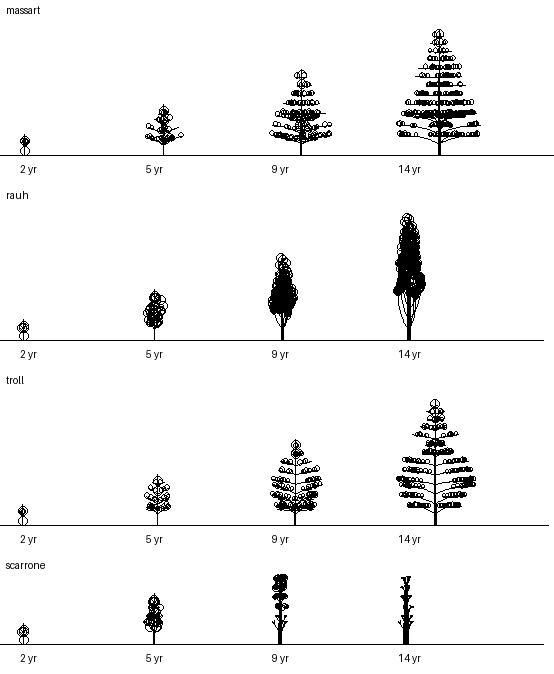 104. books/trees/ex1_models/v1_keycopy.png
Bash: cd ~/work/pixelart-studies/books/trees; python3 - <<'E' s=open('src/arch.py').read() s=s.replace(" d = _norm(d + 0.35 * UP + sp.sinuous"," d = _norm(d
cd ~/work/pixelart-studies/books/trees; python3 - <<'E'
s=open('src/arch.py').read()
s=s.replace("                d = _norm(d + 0.35 * UP + sp.sinuous","                d = _norm(d + (0.35 if (a.order == 0 or a.reiterated) else sp.ortho_k) * UP + sp.sinuous")
s=s.replace("    sinuous: float = 0.0 ","    ortho_k: float = 0.06         # upward tropism of orthotropic branches\n    sinuous: float = 0.0 ")
s=s.replace("                    kd = _norm(np.cos(0.6) * d + np.sin(0.6) * (np.cos(az) * u + np.sin(az) * v))\n                    ax = Axis(",
"                    fa = np.radians(sp.fork_angle)\n                    kd = _norm(np.cos(fa) * d + np.sin(fa) * (np.cos(az) * u + np.sin(az) * v))\n                    ax = Axis(")
s=s.replace("    fork_n: tuple = (2, 3)\n","    fork_n: tuple = (2, 3)\n    fork_angle: float = 35.0\n")
# nodding leader applied at output: bend the leader's youngest growth
s=s.replace('''    def segments(self):''','''    def nodded(self, i, pts):
        """Troll/Mangenot leaders nod: the current year's growth arcs over (erected later by
        compression wood, Hallé p. 246). Applied to the leader's last GU."""
        a, sp = self.axes[i], self.sp
        if not sp.nod or not (a.order == 0 or a.reiterated) or not a.apex:
            return pts
        P = np.array(pts, float)
        ages = np.array(a.age_nodes[:len(P)])
        young = np.where(ages >= self.year - sp.nod_years + 1)[0]
        if len(young) < 1:
            return pts
        k0 = max(1, young[0] - 1)
        az = self.nod_az if hasattr(self, 'nod_az') else 0.0
        hz = np.array([np.cos(az), np.sin(az), 0.0])
        out = list(P[:k0 + 1])
        seg = np.diff(P[k0:], axis=0)
        n = len(seg)
        for j, v in enumerate(seg):
            L = np.linalg.norm(v)
            th = sp.nod * (j + 1) / n        # angle from vertical grows toward the tip
            out.append(out[-1] + L * (np.cos(th) * UP + np.sin(th) * hz))
        return out

    def segments(self):''')
s=s.replace("        for i, a in enumerate(self.axes):\n            if len(a.pts) < 2:\n                continue\n            rr = rads[i]\n            for k in range(len(a.pts) - 1):\n                segs.append((a.pts[k], a.pts[k + 1],",
"        for i, a in enumerate(self.axes):\n            if len(a.pts) < 2:\n                continue\n            rr = rads[i]\n            pts = self.nodded(i, a.pts)\n            for k in range(len(pts) - 1):\n                segs.append((pts[k], pts[k + 1],")
s=s.replace("    nod: float = 0.0 ","    nod_years: int = 2\n    nod: float = 0.0 ")
open('src/arch.py','w').write(s)
E
grep -n "nod" src/arch.py | head

# output:
66:    nod_years: int = 2
67:    nod: float = 0.0              # leader nods (Troll/Mangenot hemlock): droop of current GU (rad)
85:    pts: list                     # list of np points (node positions)
92:    at: int = 0                   # index of parent node
93:    age_nodes: list = field(default_factory=list)   # year each node was made
102:        self.axes = [Axis([np.zeros(3)], 0, 'ortho', 0, age_nodes=[0])]
146:            # rhythmic GU: 3 sub-nodes so bending shows as a curve
150:                a.age_nodes.append(y)
155:            node = len(a.pts) - 1
161:                kids = [(np.radians(sp.angle_top) if y < 4 else ang, az0 + 2 * np.pi * j / n + rng.normal(0, 0.25), node) for j in range(n)]
Bash: cd ~/work/pixelart-studies/books/trees; python3 - <<'E' s=open('src/arch.py').read() s=s.replace("and (a.order > 0 or y > sp.sympodial_age + 2):","and (a.order > 0 or sp.trunk_symp
cd ~/work/pixelart-studies/books/trees; python3 - <<'E'
s=open('src/arch.py').read()
s=s.replace("and (a.order > 0 or y > sp.sympodial_age + 2):","and (a.order > 0 or sp.trunk_sympodial):")
s=s.replace("    fork_angle: float = 35.0\n","    fork_angle: float = 35.0\n    trunk_sympodial: bool = False\n")
open('src/arch.py','w').write(s)
e=open('src/ex1.py').read()
e=e.replace("rauh=Species('rauh', model='rauh', height=14, h_tau=40, h_rate=0.6, tier=(3,3), angle=45,","rauh=Species('rauh', model='rauh', height=14, h_tau=40, h_rate=0.6, tier=(3,3), angle=40, ortho_k=0.04,")
e=e.replace("tier=(2,2), angle=70, lat_rate=0.7, lat_tau=10, plagio=True, sag=0.05, nod=0.8,","tier=(2,3), angle=45, lat_rate=0.7, lat_tau=10, plagio=True, sag=0.25, nod=1.7,")
e=e.replace("sympodial_age=3, fork_n=(2,3),","sympodial_age=2, fork_n=(2,3), fork_angle=30, ortho_k=0.03, angle=40,")
e=e.replace("tier=(3,3), angle=45, lat_rate=0.6, lat_tau=12, plagio=False, sub_n=0","tier=(3,3), lat_rate=0.6, lat_tau=12, plagio=False, sub_n=0")
open('src/ex1.py','w').write(e)
E
python3 src/ex1.py

# output:
(Bash completed with no output)
Read: books/trees/ex1_models/v1_keycopy.png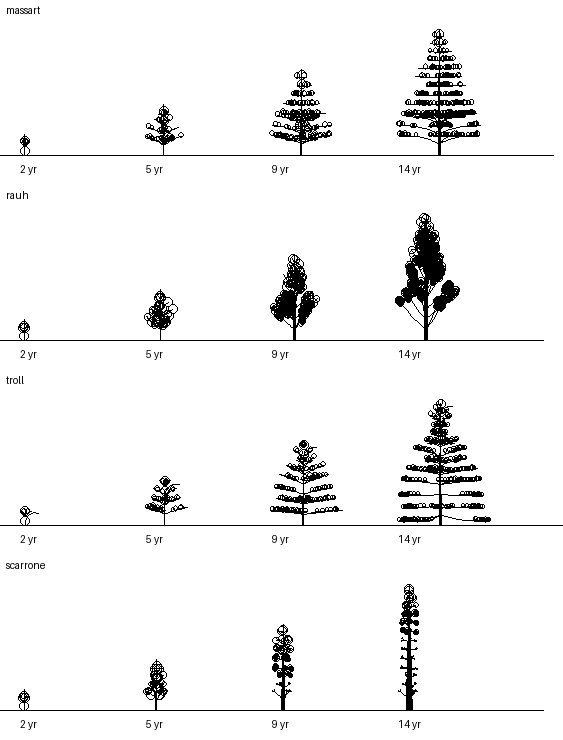 105. books/trees/ex1_models/v1_keycopy.png
Bash: cd ~/work/pixelart-studies/books/trees; python3 - <<'E' s=open('src/arch.py').read() s=s.replace(""" P = np.array(a.pts) seg = np.diff(P, axis=0)
cd ~/work/pixelart-studies/books/trees; python3 - <<'E'
s=open('src/arch.py').read()
s=s.replace("""            P = np.array(a.pts)
            seg = np.diff(P, axis=0)
            Ls = np.linalg.norm(seg, axis=1) + 1e-9""","""            P = np.array(a.pts)
            if a.rest is None or len(a.rest) != len(P) - 1:
                a.rest = np.diff(P, axis=0)
            seg = a.rest
            Ls = np.linalg.norm(seg, axis=1) + 1e-9""")
s=s.replace("            drop = sp.sag * load * (1 + 0.5 * a.order) * 0.1\n            if sp.tip_up:\n                drop = drop - sp.tip_up * 0.1 * np.clip(s - 0.7 * tot, 0, None)",
"            drop = sp.sag * load * (1 + sp.sag_age * (self.year - a.born))\n            if sp.tip_up:\n                drop = drop - sp.tip_up * np.clip(s - 0.7 * tot, 0, None)")
s=s.replace("    reiterated: bool = False\n","    reiterated: bool = False\n    rest: object = None           # segment vectors as grown (before gravity)\n",1)
s=s.replace("    sag: float = 0.010 ","    sag_age: float = 0.01         # bending grows slowly with the bough's age (pendulous with age)\n    sag: float = 0.010 ")
# when appending new points to a plagio axis, extend rest
s=s.replace("""            for k in range(nseg):
                a.pts.append(p0 + d * L * (k + 1) / nseg)
                a.age_nodes.append(y)""","""            for k in range(nseg):
                a.pts.append(p0 + d * L * (k + 1) / nseg)
                a.age_nodes.append(y)
            if a.rest is not None:
                # new growth is laid down along the current (bent) tip direction, un-bent
                a.rest = np.vstack([a.rest, np.tile(self.rest_dir.get(i, d) * L / nseg, (nseg, 1))])""")
open('src/arch.py','w').write(s)
E
grep -n "rest_dir\|self.dir\[i\] = d" src/arch.py

# output:
156:                a.rest = np.vstack([a.rest, np.tile(self.rest_dir.get(i, d) * L / nseg, (nseg, 1))])
157:            self.dir[i] = d
Bash: cd ~/work/pixelart-studies/books/trees; python3 - <<'E' s=open('src/arch.py').read() s=s.replace("self.rest_dir.get(i, d) * L / nseg","d * L / nseg") s=s.replace(""" mov
cd ~/work/pixelart-studies/books/trees; python3 - <<'E'
s=open('src/arch.py').read()
s=s.replace("self.rest_dir.get(i, d) * L / nseg","d * L / nseg")
s=s.replace("""            moved[i] = newP - P
            if a.apex:
                self.dir[i] = _norm(newP[-1] - newP[-2])""","""            moved[i] = newP - P""")
open('src/arch.py','w').write(s)
e=open('src/ex1.py').read()
e=e.replace("sag=0.02,","sag=0.03,").replace("sag=0.25, nod=1.7","sag=0.12, nod=1.7")
open('src/ex1.py','w').write(e)
d=open('src/diagram.py').read()
d=d.replace("""        for pos, r, nrm, plag, dd in tree.foliage()[::3]:
            x, y = P(pos)
            rr = max(1.5, r * s * 0.5)
            if plag:
                d.ellipse([x - rr * 0.5, y - rr, x + rr * 0.5, y + rr * 0.2], outline=ink)
            else:
                d.ellipse([x - rr, y - rr, x + rr, y + rr], outline=ink)""","""        for pos, r, nrm, plag, dd in tree.foliage()[::2]:
            x, y = P(pos)
            rr = max(1.5, r * s * 0.25)
            if plag:   # Hallé draws distichous leaves as hanging loops
                d.ellipse([x - rr * 0.35, y, x + rr * 0.35, y + rr * 1.6], outline=ink)""")
open('src/diagram.py','w').write(d)
E
sed -i '' 's/s=18,/s=34,/' src/ex1.py; python3 src/ex1.py

# output:
(Bash completed with no output)
Read: books/trees/ex1_models/v1_keycopy.png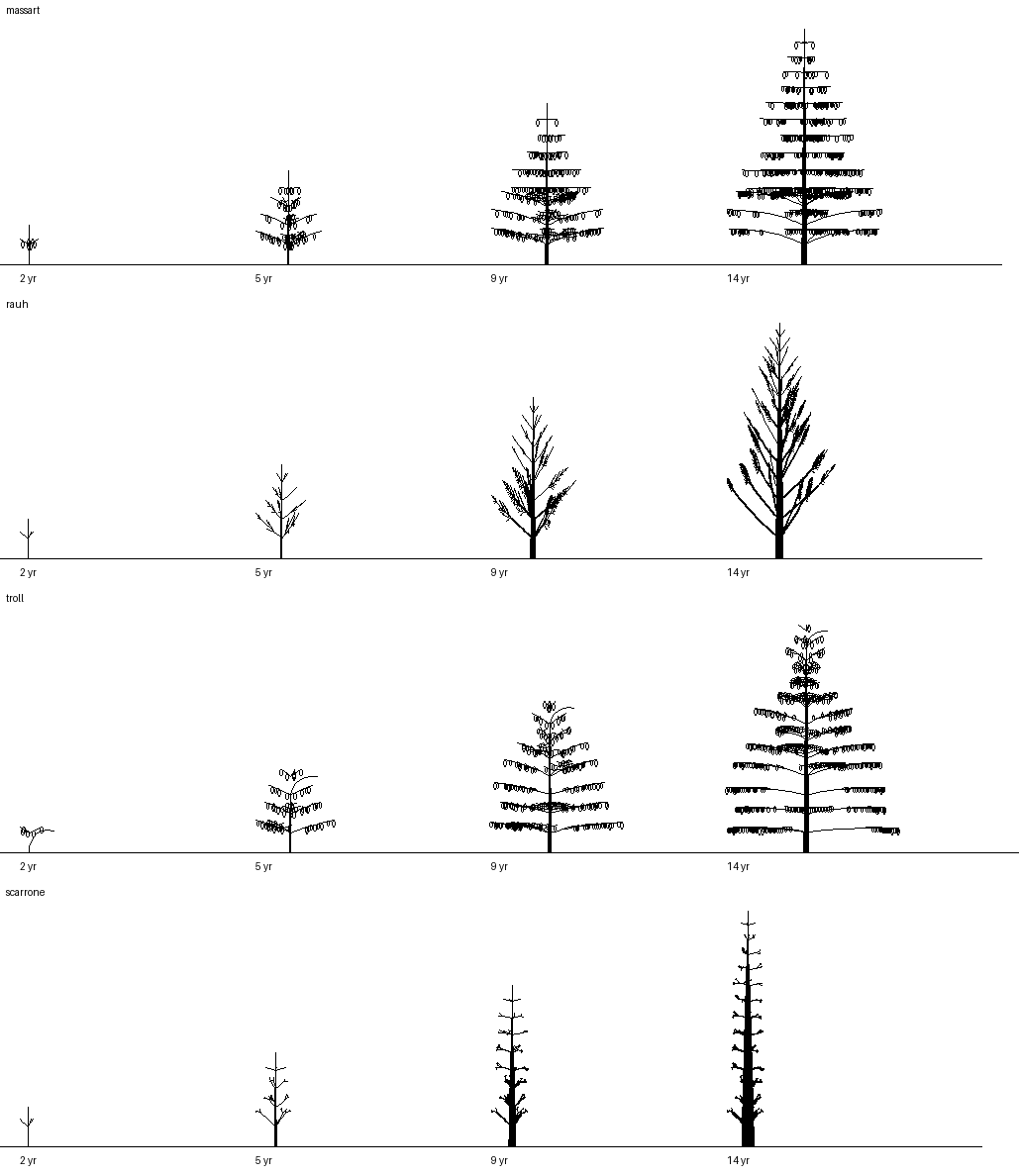 106. books/trees/ex1_models/v1_keycopy.png
Bash: cd ~/work/pixelart-studies/books/trees/src; python3 -c " from arch import * sp=Species('troll', height=14, h_tau=40, h_rate=0.6, tier=(2,3), angle=45, lat_rate=0.7, lat_tau=10, pla
cd ~/work/pixelart-studies/books/trees/src; python3 -c "
from arch import *
sp=Species('troll', height=14, h_tau=40, h_rate=0.6, tier=(2,3), angle=45, lat_rate=0.7, lat_tau=10, plagio=True, sag=0.12, nod=1.7, sub_n=2,sub_p=0.6)
t=Tree(sp,seed=3,open_grown=True); t.grow(9)
for a in t.axes[:12]:
    if a.order==1 and len(a.pts)>3:
        P=np.array(a.pts); print(a.born, np.round(P[:,2]-P[0,2],2)[:8], a.rest is not None)
"

# output:
1 [0.   0.03 0.06 0.09 0.11 0.13 0.16 0.17] True
1 [0.   0.03 0.06 0.09 0.11 0.13 0.16 0.17] True
1 [0.   0.03 0.06 0.09 0.11 0.13 0.16 0.17] True
2 [0.   0.03 0.06 0.1  0.12 0.15 0.17 0.19] True
2 [0.   0.03 0.06 0.1  0.12 0.15 0.17 0.19] True
2 [0.   0.03 0.06 0.1  0.12 0.15 0.17 0.19] True
3 [0.   0.03 0.07 0.11 0.13 0.16 0.19 0.25] True
3 [0.   0.03 0.07 0.11 0.13 0.16 0.19 0.25] True
Bash: cd ~/work/pixelart-studies/books/trees; python3 - <<'E' s=open('src/arch.py').read() s=s.replace("drop = sp.sag * load * (1 + sp.sag_age * (self.year - a.born))","drop = sp.sag * l
cd ~/work/pixelart-studies/books/trees; python3 - <<'E'
s=open('src/arch.py').read()
s=s.replace("drop = sp.sag * load * (1 + sp.sag_age * (self.year - a.born))","drop = sp.sag * load / (0.1 * sp.height) * (1 + sp.sag_age * (self.year - a.born))")
s=s.replace("                d = _norm(0.8 * d + 0.2 * hz)","                d = _norm((1 - sp.flatten) * d + sp.flatten * hz)")
s=s.replace("    sag: float = 0.010 ","    flatten: float = 0.1          # plagiotropic meristems return toward horizontal each year\n    sag: float = 0.010 ")
s=s.replace("L = lead * sp.lat_rate * (sp.sub_rate ** (a.order - 1)) * np.exp(-a.lat_age / sp.lat_tau)",
 "L = lead * sp.lat_rate * ((sp.fork_rate if y >= sp.sympodial_age else sp.sub_rate) ** (a.order - 1)) * np.exp(-a.lat_age / sp.lat_tau)")
s=s.replace("    fork_angle: float = 35.0\n","    fork_angle: float = 35.0\n    fork_rate: float = 0.85\n")
open('src/arch.py','w').write(s)
e=open('src/ex1.py').read()
e=e.replace("sag=0.03,","sag=0.25,").replace("sag=0.12, nod=1.7","sag=0.9, flatten=0.02, nod=1.7")
open('src/ex1.py','w').write(e)
E
python3 src/ex1.py

# output:
(Bash completed with no output)
Read: books/trees/ex1_models/v1_keycopy.png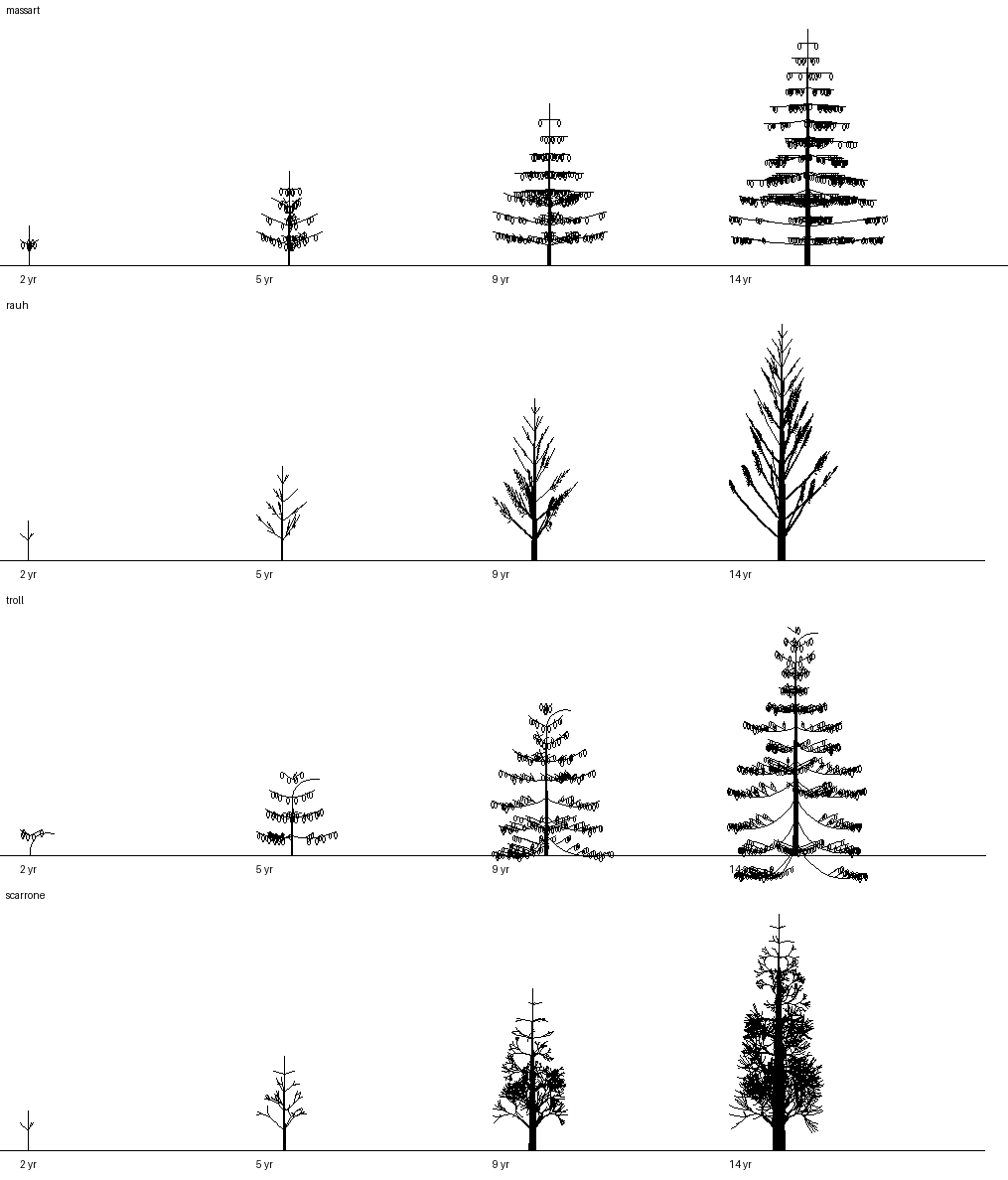 107. books/trees/ex1_models/v1_keycopy.png
Write: books/trees/src/paint.py
"""Cole's painter layer over a grown tree: index canvas (material, step), then palette.

Materials: 0 sky/none, 1 foliage, 2 wood, 3 ground.
Foliage steps: 0..3 the sky-lit set (Cole p. 114: planes of a dome, one tone per plane),
               4..6 the sun set (p. 115: "a new and lighter set, quite apart from the others").
Wood steps: 0..4 (cylinder: shadow, core, half, lit, highlight).

Everything is in pixels of a chosen m/px; the tree is projected orthographically (side view,
azimuth yaw), sun from azimuth sun_az (0 = from the left of the picture) and elevation sun_el.
"""
import numpy as np
from scipy import ndimage as ndi


def project(pts, yaw, mpp, ox, oy):
    c, s = np.cos(yaw), np.sin(yaw)
    x = pts[..., 0] * c - pts[..., 1] * s
    depth = pts[..., 0] * s + pts[..., 1] * c          # + toward the viewer
    return ox + x / mpp, oy - pts[..., 2] / mpp, depth


class Canvas:
    def __init__(self, W, H):
        self.W, self.H = W, H
        self.mat = np.zeros((H, W), np.uint8)
        self.step = np.zeros((H, W), np.uint8)


def splat_foliage(tree, W, H, mpp, yaw, ox, oy, sun):
    """Accumulate foliage density, mean depth, and a 'light' value per pixel.

    Each cluster is a small ellipse (pads flatter than tall). Light per cluster = its own
    upward-facing normal . sun, times its unoccluded fraction from an opacity map built by
    slicing clusters along the sun direction (the conifer student's shadow map, simplified).
    """
    F = tree.foliage()
    if not F:
        return None
    P = np.array([f[0] for f in F])
    R = np.array([f[1] for f in F])
    N = np.array([f[2] for f in F])
    plag = np.array([f[3] for f in F])
    x, y, dep = project(P, yaw, mpp, ox, oy)
    # --- occlusion toward the sun: bin clusters in the plane perpendicular to the sun ---
    s = sun / np.linalg.norm(sun)
    a = np.cross(s, [0, 0, 1.0]); a = a / (np.linalg.norm(a) + 1e-9); b = np.cross(s, a)
    u, v, t = P @ a, P @ b, P @ s
    cell = max(0.6, np.median(R) * 1.2)
    iu, iv = np.floor(u / cell).astype(int), np.floor(v / cell).astype(int)
    key = iu * 100003 + iv
    order = np.lexsort((-t, key))           # within a column, highest along sun first
    occl = np.zeros(len(P))
    ks, ts = key[order], t[order]
    run = 0.0
    for j in range(len(order)):
        if j == 0 or ks[j] != ks[j - 1]:
            run = 0.0
        occl[order[j]] = run
        run += R[order[j]] ** 2 / cell ** 2 * 0.5
    transm = np.exp(-occl)
    lam = np.clip(N @ s, 0, 1) * transm
    # --- rasterize ---
    dens = np.zeros((H, W)); lsum = np.zeros((H, W)); dsum = np.zeros((H, W))
    rp = R / mpp
    for i in np.argsort(dep):
        cx, cy, r = x[i], y[i], max(0.5, rp[i])
        ry = r * (0.45 if plag[i] else 0.9)
        x0, x1 = int(np.floor(cx - r)), int(np.ceil(cx + r)) + 1
        y0, y1 = int(np.floor(cy - ry)), int(np.ceil(cy + ry)) + 1
        if x1 < 0 or y1 < 0 or x0 >= W or y0 >= H:
            continue
        xs = np.arange(max(0, x0), min(W, x1)); ys = np.arange(max(0, y0), min(H, y1))
        if len(xs) == 0 or len(ys) == 0:
            continue
        X, Y = np.meshgrid(xs + 0.5, ys + 0.5)
        w = np.clip(1 - ((X - cx) / r) ** 2 - ((Y - cy) / ry) ** 2, 0, None)
        sl = (slice(ys[0], ys[-1] + 1), slice(xs[0], xs[-1] + 1))
        dens[sl] += w
        lsum[sl] += w * lam[i]
        dsum[sl] += w * dep[i]
    L = np.where(dens > 0, lsum / np.maximum(dens, 1e-9), 0)
    D = np.where(dens > 0, dsum / np.maximum(dens, 1e-9), 0)
    return dens, L, D


def raster_wood(tree, W, H, mpp, yaw, ox, oy, sun_x):
    """Wood coverage, depth and a cylinder light coordinate (-1 shadow side .. +1 lit side)."""
    cov = np.zeros((H, W), bool); cyl = np.zeros((H, W)); dep = np.full((H, W), -1e9)
    dead = np.zeros((H, W), bool)
    for p0, p1, r, o, dd in tree.segments():
        (x0, y0, d0), (x1, y1, d1) = [project(np.array(p), yaw, mpp, ox, oy) for p in (p0, p1)]
        rp = r / mpp
        if rp < 0.18:          # thinner than ~1/5 px: invisible (Cole p. 45, 116: twigs a haze)
            continue
        L = max(1e-6, np.hypot(x1 - x0, y1 - y0))
        pad = rp + 1
        xa, xb = int(min(x0, x1) - pad), int(max(x0, x1) + pad) + 1
        ya, yb = int(min(y0, y1) - pad), int(max(y0, y1) + pad) + 1
        xa, ya, xb, yb = max(0, xa), max(0, ya), min(W, xb), min(H, yb)
        if xa >= xb or ya >= yb:
            continue
        X, Y = np.meshgrid(np.arange(xa, xb) + 0.5, np.arange(ya, yb) + 0.5)
        t = np.clip(((X - x0) * (x1 - x0) + (Y - y0) * (y1 - y0)) / L ** 2, 0, 1)
        px, py = x0 + t * (x1 - x0), y0 + t * (y1 - y0)
        dx, dy = X - px, Y - py
        dist = np.hypot(dx, dy)
        rr = max(rp, 0.5)
        m = dist <= rr
        # sub-pixel twigs: draw only if they cover at least ~half a pixel along their core
        if rp < 0.5:
            m = dist <= 0.5
        nx, ny = -(y1 - y0) / L, (x1 - x0) / L       # normal in screen
        side = (dx * nx + dy * ny) / rr
        side = side * np.sign(nx * sun_x + 1e-9)     # + toward the sun
        dz = d0 + t * (d1 - d0)
        sl = (slice(ya, yb), slice(xa, xb))
        upd = m & (dz > dep[sl])
        cov[sl] |= m
        cyl[sl] = np.where(upd, side, cyl[sl])
        dep[sl] = np.where(upd, dz, dep[sl])
        dead[sl] |= m & dd
    return cov, cyl, dep, dead
Write: books/trees/src/cole.py
"""Cole's rules as pixel operations. Each rule is a function with its page reference and a switch,
so a sheet can show the tree with and without it (the ablation is the exercise).

Pipeline (render()):
  grow (arch.py) -> splat foliage + raster wood (paint.py)
  -> R1 mass: coverage from density, one foliage mass            (Cole pp. 51, 80)
  -> R2 outline of straight pieces                               (pp. 82-94, fig. 63-66)
  -> R3 dome planes under sky light: one tone per plane          (p. 114, fig. 95)
  -> R4 sun set: a separate lighter family, only where lit        (pp. 114-115)
  -> R5 sky holes: colourless rims, globes, veiled holes darker   (pp. 69-81)
  -> R6 wood: telescope trunk, thin boughs lose modelling in light (pp. 115, 193, 45)
  -> palette
"""
import numpy as np
from scipy import ndimage as ndi
from paint import splat_foliage, raster_wood

FOL, WOOD, GROUND, SKY = 1, 2, 3, 0
RIM = 7          # foliage step used for the colourless hole/edge rim (a greyed mid tone)


def rules(**kw):
    r = dict(straight=True, dome=True, sunset=True, holes=True, rim=True, fringe=True,
             thin_in_light=True, straight_tol=1.2, holes_min=2, veil=True)
    r.update(kw)
    return r


def crown_mask(dens, thr):
    return dens > thr


def straighten(mask, tol, keep_small=True):
    """R2. Rebuild the silhouette from straight pieces: trace each outer contour, simplify with
    Douglas-Peucker at `tol` px, refill. Cole p. 92: 'The outline of a tree is made up of many
    straight lines ... the comparative length of these straight pieces determine the character of
    the curve.' Holes (sky apertures) are kept from the original mask."""
    from PIL import Image, ImageDraw
    try:
        import cv2
    except ImportError:
        cv2 = None
    H, W = mask.shape
    if cv2 is None:
        return mask
    m8 = mask.astype(np.uint8)
    cs, hier = cv2.findContours(m8, cv2.RETR_CCOMP, cv2.CHAIN_APPROX_NONE)
    out = np.zeros_like(m8)
    for k, c in enumerate(cs):
        if hier[0][k][3] != -1:
            continue                 # holes handled separately
        if len(c) < 8:
            cv2.drawContours(out, [c], -1, 1, -1)
            continue
        ap = cv2.approxPolyDP(c, tol, True)
        cv2.fillPoly(out, [ap], 1)
    # holes from the original survive (they are drawn by R5)
    holes = ndi.binary_fill_holes(mask) & ~mask
    out = out.astype(bool) & ~holes
    return out


def dome_steps(mask, n=4, sun_x=-1.0):
    """R3. The crown as planes of a dome under a grey sky (Cole fig. 95): normal from the smoothed
    mass, tone by how much the plane faces the sky, quantized into n steps (0 dark .. n-1 light).
    Returns float coordinate 0..n-1."""
    if not mask.any():
        return np.zeros(mask.shape)
    dist = ndi.distance_transform_edt(mask)
    scale = max(2.0, np.percentile(dist[mask], 95))
    h = np.sqrt(np.clip(dist / scale, 0, 1))           # dome height from edge distance
    hs = ndi.gaussian_filter(h, max(1.0, scale * 0.25))
    gy, gx = np.gradient(hs)
    nz = 1.0 / np.sqrt(1 + (gx * scale) ** 2 + (gy * scale) ** 2)
    ny = -gy * scale * nz                               # + = facing up
    sky = 0.55 * nz + 0.45 * np.clip(ny, -1, 1)        # grey sky: up-facing planes lightest
    sky = sky + 0.12 * np.clip(-gx * scale * nz * np.sign(sun_x), -1, 1)
    v = (sky - sky[mask].min()) / (np.ptp(sky[mask]) + 1e-9)
    return v * (n - 1)


def render(tree, mpp, W, H, ox=None, oy=None, yaw=0.0, sun_az=0.0, sun_el=35.0, R=None,
           dens_thr=0.35):
    R = R or rules()
    ox = W / 2 if ox is None else ox
    oy = H - 2 if oy is None else oy
    az, el = np.radians(sun_az), np.radians(sun_el)
    # sun vector: az 0 -> light comes from the left of the picture (sun at -x, toward viewer a bit)
    sun = np.array([-np.cos(az) * np.cos(el), -np.sin(az) * np.cos(el), np.sin(el)])
    sun_x = -np.cos(az)
    mat = np.zeros((H, W), np.uint8); step = np.zeros((H, W), np.uint8)
    # wood
    cov, cyl, wdep, dead = raster_wood(tree, W, H, mpp, yaw, ox, oy, sun_x)
    ws = np.clip(np.round((cyl + 1) / 2 * 3 + 0.3), 0, 4).astype(np.uint8)
    mat[cov] = WOOD; step[cov] = ws[cov]
    sp = splat_foliage(tree, W, H, mpp, yaw, ox, oy, sun)
    if sp is None:
        return mat, step, {}
    dens, L, D = sp
    m = crown_mask(dens, dens_thr)
    raw = m.copy()
    if R['straight']:
        m = straighten(m, R['straight_tol'])
    # R3 dome / R4 sun
    if R['dome']:
        base = dome_steps(m, 4, sun_x)
    else:
        base = np.full(m.shape, 1.5)
    fs = np.clip(np.round(base), 0, 3).astype(np.uint8)
    if R['sunset']:
        lit = (L > np.quantile(L[m], 0.55)) & m if m.any() else m
        # sun marks only on the sun-facing upper part of each clump: pixel above not denser
        sun_step = np.where(L > np.quantile(L[m], 0.85) if m.any() else False, 6, 5).astype(np.uint8)
        fs = np.where(lit, np.maximum(sun_step - 1 + (base > 2), 4), fs).astype(np.uint8)
    # wood in front of foliage stays; foliage in front of wood covers it (depth test)
    front = m & ~(cov & (wdep > D + 0.3))
    mat[front] = FOL; step[front] = fs[front]
    info = dict(raw=raw, mask=m, dens=dens, L=L)
    # R5 holes
    if R['holes']:
        holes = ndi.binary_fill_holes(m) & ~m
        lab, n = ndi.label(holes)
        sizes = ndi.sum(holes, lab, range(1, n + 1))
        for k, sz in enumerate(sizes, 1):
            hk = lab == k
            if sz < R['holes_min']:
                mat[hk & ~cov] = FOL; step[hk & ~cov] = 1   # tiny pinholes close up
                continue
            if R['veil']:
                # veiled holes (twigs/leaves in them) are darker than open sky (p. 71)
                vd = dens[hk].mean() / max(dens_thr, 1e-9)
                if vd > 0.15:
                    mat[hk & (mat == SKY)] = SKY
                    step[hk & (mat == SKY)] = 1                  # sky step 1 = veiled sky
        if R['rim']:
            # rims of holes are colourless: foliage pixels touching a hole take the rim tone
            ring = ndi.binary_dilation(holes, iterations=1) & m & (mat == FOL)
            step[ring & (step < 4)] = RIM
    if R['rim']:
        # the outer edge 'less coloured than the bulk' (p. 71): outline pixels facing sky
        edge = m & ~ndi.binary_erosion(m) & (mat == FOL)
        step[edge & (step < 4) & (step > 0)] = RIM
    info['holes'] = ndi.binary_fill_holes(m) & ~m if R['holes'] else None
    return mat, step, info


def palette_default():
    """Morning, westside conifer. Foliage 0-3 sky set (blue-black to grey-green), 4-6 sun set
    (brown-olive to warm tip), 7 rim (a greyed mid, between foliage and sky)."""
    fol = [(14, 24, 22), (26, 42, 36), (40, 60, 48), (58, 80, 62),
           (92, 94, 44), (128, 126, 58), (170, 160, 84), (84, 104, 104)]
    wood = [(30, 22, 20), (52, 38, 32), (82, 62, 50), (118, 92, 72), (150, 122, 96)]
    return dict(fol=fol, wood=wood, sky=[(150, 196, 230), (118, 158, 186)], ground=[(60, 50, 40)])


def to_rgb(mat, step, pal, sky_grad=True):
    H, W = mat.shape
    out = np.zeros((H, W, 3), np.uint8)
    if sky_grad:
        top, bot = np.array((110, 160, 214)), np.array((188, 214, 232))
        t = np.linspace(0, 1, H)[:, None]
        g = (top * (1 - t) + bot * t)
        out[:] = np.round(g[:, None, :]).astype(np.uint8)
    veiled = (mat == SKY) & (step == 1)
    out[veiled] = (np.array(out[veiled], float) * 0.82).astype(np.uint8)
    for k, c in enumerate(pal['fol']):
        out[(mat == FOL) & (step == k)] = c
    for k, c in enumerate(pal['wood']):
        out[(mat == WOOD) & (step == k)] = c
    return out
Bash: python3 -c "import cv2; print(cv2.__version__)"
python3 -c "import cv2; print(cv2.__version__)"

# output:
4.10.0
Now species file and a first render.
Write: books/trees/src/species_models.py
"""Washington species as Hallé models with Cole's habits. Assignments marked [mine] are my
reading; the book assigns only the genera noted.

Douglas-fir   Massart-like [mine]: rhythmic leader with whorls + interwhorl laterals, plagiotropic
              near-level boughs with upswept tips; clear bole in the forest; old: reiterated
              upper limbs and broken top (Van Pelt; naturalist 05-old-growth).
W. hemlock    Troll/Mangenot (Hallé p. 246, 329: Tsuga's drooping leader); drooping boughs,
              dorsiventral sprays; shade tolerant: deep crown.
W. redcedar   Massart-like with J-limbs [mine]: boughs droop then turn up (Cole's 'steel spring',
              fig. 87), pendulous sprays; old: many reiterated leaders (candelabra), dead spike.
Sitka spruce  Massart (Hallé: Picea): stiff level boughs, upturned tips, pendulous branchlets.
Subalpine fir Massart (Hallé: Abies; krummholz p. 199): narrow spire, short boughs.
Red alder     Rauh [mine] (Cole: 3-ranked buds, boughs evenly spaced, 'identified by angle').
Bigleaf maple Rauh (Hallé: Acer) with forks from terminal flowering (Cole figs. 130-131).
Garry oak     Rauh (Hallé: Quercus) 'supple': leaders replaced, sinuous; right-angled boughs (Cole).
Madrone       Scarrone [mine]: sympodial through terminal panicles, leaning, few big limbs.
"""
from arch import Species

SP = {
    'douglas': Species('douglas-fir', model='massart', height=70, h_rate=0.9, h_tau=110,
                       tier=(3, 5), inter=2, angle=84, angle_top=60, lat_rate=0.42, lat_tau=30,
                       plagio=True, flatten=0.03, sag=0.10, tip_up=0.012, sub_n=0, max_order=1,
                       shade_prune=0.55, open_prune=0.06, stub_keep=0.5, needle_years=7,
                       cluster=1.1, reach=1.2, reiter_age=220, reiter_rate=0.02, reiter_max=8,
                       top_break=0.004, trunk_k=0.013),
    'hemlock': Species('western hemlock', model='troll', height=55, h_rate=0.7, h_tau=110,
                       tier=(2, 4), inter=3, angle=70, angle_top=55, lat_rate=0.40, lat_tau=28,
                       plagio=True, flatten=0.02, sag=0.35, tip_up=0.0, sub_n=0, max_order=1,
                       nod=1.4, nod_years=2, shade_prune=0.30, open_prune=0.03, needle_years=5,
                       cluster=0.9, needle=None) if False else
               Species('western hemlock', model='troll', height=55, h_rate=0.7, h_tau=110,
                       tier=(2, 4), inter=3, angle=70, angle_top=55, lat_rate=0.40, lat_tau=28,
                       plagio=True, flatten=0.02, sag=0.35, sub_n=0, max_order=1,
                       nod=1.4, nod_years=2, shade_prune=0.30, open_prune=0.03, needle_years=5,
                       cluster=0.9),
    'cedar': Species('western redcedar', model='massart', height=55, h_rate=0.6, h_tau=140,
                     tier=(2, 4), inter=3, angle=75, angle_top=50, lat_rate=0.42, lat_tau=35,
                     plagio=True, flatten=0.0, sag=0.30, tip_up=0.06, sub_n=0, max_order=1,
                     shade_prune=0.35, open_prune=0.04, needle_years=6, cluster=1.0,
                     reiter_age=250, reiter_rate=0.04, reiter_max=14, top_break=0.006, flare=1.6),
    'spruce': Species('sitka spruce', model='massart', height=65, h_rate=0.9, h_tau=110,
                      tier=(4, 6), inter=2, angle=88, angle_top=60, lat_rate=0.45, lat_tau=30,
                      plagio=True, flatten=0.05, sag=0.12, tip_up=0.03, sub_n=0, max_order=1,
                      shade_prune=0.35, open_prune=0.03, needle_years=7, cluster=1.0,
                      reiter_age=300, reiter_rate=0.01),
    'subalpine': Species('subalpine fir', model='massart', height=22, h_rate=0.35, h_tau=90,
                         tier=(3, 5), inter=0, angle=95, angle_top=65, lat_rate=0.30, lat_tau=15,
                         plagio=True, flatten=0.05, sag=0.25, sub_n=0, max_order=1,
                         shade_prune=0.05, open_prune=0.0, needle_years=9, cluster=0.45),
    'alder': Species('red alder', model='rauh', height=25, h_rate=1.1, h_tau=25,
                     tier=(2, 3), inter=1, angle=45, lat_rate=0.55, lat_tau=14, plagio=False,
                     ortho_k=0.03, sub_n=2, sub_p=0.5, sub_angle=45, sub_rate=0.5, max_order=2,
                     twig_life=6, shade_prune=0.45, open_prune=0.15, needle_years=1,
                     cluster=1.0, pad=False, leader_loss=0.02),
    'maple': Species('bigleaf maple', model='rauh', height=28, h_rate=0.8, h_tau=35,
                     tier=(2, 2), inter=0, angle=40, lat_rate=0.7, lat_tau=20, plagio=False,
                     ortho_k=0.04, sub_n=2, sub_p=0.6, sub_angle=40, sub_rate=0.55, max_order=2,
                     twig_life=8, shade_prune=0.3, open_prune=0.12, needle_years=1,
                     cluster=1.5, pad=False, leader_loss=0.08, sympodial_age=15,
                     fork_n=(2, 2), fork_angle=30, fork_rate=0.9),
    'oak': Species('garry oak', model='rauh', height=20, h_rate=0.45, h_tau=60,
                   tier=(3, 4), inter=0, angle=65, lat_rate=0.7, lat_tau=25, plagio=False,
                   ortho_k=0.01, sinuous=0.12, sub_n=2, sub_p=0.5, sub_angle=70, sub_rate=0.55,
                   max_order=2, twig_life=10, shade_prune=0.25, open_prune=0.1,
                   needle_years=1, cluster=1.1, pad=False, leader_loss=0.10),
    'madrone': Species('pacific madrone', model='scarrone', height=22, h_rate=0.6, h_tau=45,
                       tier=(2, 3), inter=0, angle=40, lat_rate=0.65, lat_tau=25, plagio=False,
                       ortho_k=0.04, sinuous=0.08, sub_n=0, max_order=4, sympodial_age=6,
                       fork_n=(2, 3), fork_angle=28, fork_rate=0.9, twig_life=30,
                       shade_prune=0.3, open_prune=0.15, needle_years=2, cluster=1.3, pad=False),
}
Bash: cd ~/work/pixelart-studies/books/trees; python3 - <<'E' s=open('src/arch.py').read() a=s.index(" def foliage(self):") s=s[:a]+''' def foliage(self): """Clusters: (pos
cd ~/work/pixelart-studies/books/trees; python3 - <<'E'
s=open('src/arch.py').read()
a=s.index("    def foliage(self):")
s=s[:a]+'''    def foliage(self):
        """Clusters: (pos, r, normal, plagio, dir).
        Leaders carry only this year's tuft. Branches carry foliage on nodes younger than
        spray_years: on a plagiotropic bough each node bears a flat fan of branchlets (Cole
        figs. 108-110: 'the lowest branchlets ranged in something like one flat plane'),
        widest a few years back from the tip and narrowing to the tip, so each bough ends in a
        wedge. The fan is splatted as clusters offset to either side in the bough's plane."""
        sp, out = self.sp, []
        sy = sp.spray_years or sp.needle_years
        for i, a in enumerate(self.axes):
            if a.dead or len(a.pts) < 2:
                continue
            ages = a.age_nodes
            pts = self.nodded(i, a.pts)
            for k in range(1, len(pts)):
                age = self.year - ages[k] if k < len(ages) else 0
                if a.order == 0 or a.reiterated:
                    if age > 1:
                        continue
                    out.append((pts[k], sp.cluster * 0.6, UP, False, UP))
                    continue
                if age > sy:
                    continue
                d = _norm(pts[k] - pts[k - 1])
                r = sp.cluster * (0.75 ** max(0, a.order - 1))
                if a.kind == 'plagio' and sp.pad:
                    w = sp.reach * min(1.0, (age + 1) / 6.0)       # fan half-width grows back from tip
                    side = _norm(np.cross(d, UP))
                    nrm = _norm(UP - 0.4 * d[2] * d)
                    out.append((pts[k], r, nrm, True, d))
                    if w > 0.2:
                        for sgn in (-1, 1):
                            q = pts[k] + sgn * w * side - UP * sp.fan_droop * w
                            out.append((q, r * 0.85, nrm, True, d))
                else:
                    out.append((pts[k], r, UP, False, d))
        return out
'''
s=s.replace("    reach: float = 0.0 ","    spray_years: int = 0          # years a bough node keeps its branchlet fan (0 = needle_years)\n    fan_droop: float = 0.3        # fan edges hang below the bough (sprays droop)\n    reach: float = 0.0 ")
open('src/arch.py','w').write(s)
E
python3 - <<'E'
import re
p='~/work/pixelart-studies/books/trees/src/species_models.py'
s=open(p).read()
s=s.replace("needle_years=7,\n                       cluster=1.1, reach=1.2,","needle_years=7, spray_years=40,\n                       cluster=1.1, reach=1.4,")
s=s.replace("nod=1.4, nod_years=2, shade_prune=0.30, open_prune=0.03, needle_years=5,\n                       cluster=0.9),","nod=1.4, nod_years=2, shade_prune=0.30, open_prune=0.03, needle_years=5,\n                       spray_years=35, reach=1.2, fan_droop=0.6, cluster=0.9),")
s=s.replace("shade_prune=0.35, open_prune=0.04, needle_years=6, cluster=1.0,","shade_prune=0.35, open_prune=0.04, needle_years=6, spray_years=45, reach=1.3, fan_droop=0.9, cluster=1.0,")
s=s.replace("shade_prune=0.35, open_prune=0.03, needle_years=7, cluster=1.0,","shade_prune=0.35, open_prune=0.03, needle_years=7, spray_years=40, reach=1.2, fan_droop=0.5, cluster=1.0,")
s=s.replace("shade_prune=0.05, open_prune=0.0, needle_years=9, cluster=0.45),","shade_prune=0.05, open_prune=0.0, needle_years=9, spray_years=30, reach=0.5, cluster=0.45),")
open(p,'w').write(s)
E
cd src; python3 -c "import species_models"

# output:
(Bash completed with no output)
Write: books/trees/src/lib.py
"""Shared helpers: cached growth, sheet assembly, 8x zoom."""
import os, pickle, sys
import numpy as np
from PIL import Image, ImageDraw
sys.path.insert(0, os.path.dirname(__file__))
from arch import Tree
from species_models import SP

ROOT = os.path.dirname(os.path.dirname(os.path.abspath(__file__)))
CACHE = os.path.join(ROOT, 'tmp', 'cache')
os.makedirs(CACHE, exist_ok=True)


def grow(name, age, seed=0, open_grown=False, **over):
    import dataclasses
    sp = SP[name]
    if over:
        sp = dataclasses.replace(sp, **over)
    key = f"{name}_{age}_{seed}_{int(open_grown)}_" + "_".join(f"{k}{v}" for k, v in sorted(over.items()))
    f = os.path.join(CACHE, key.replace('/', '') + '.pkl')
    if os.path.exists(f):
        return pickle.load(open(f, 'rb'))
    t = Tree(sp, seed=seed, open_grown=open_grown)
    t.nod_az = 0.6
    t.grow(age)
    pickle.dump(t, open(f, 'wb'))
    return t


def up(im, k):
    im = im if isinstance(im, Image.Image) else Image.fromarray(im)
    return im.resize((im.size[0] * k, im.size[1] * k), Image.NEAREST)


def sheet(cells, cols, pad=6, labels=None, title=None, bg=(245, 245, 240)):
    """cells: list of PIL images (any size); arranged in a grid with labels under each."""
    cells = [c if isinstance(c, Image.Image) else Image.fromarray(c) for c in cells]
    cw = max(c.size[0] for c in cells); ch = max(c.size[1] for c in cells)
    rows = (len(cells) + cols - 1) // cols
    th = 18 if title else 0
    S = Image.new('RGB', (cols * (cw + pad) + pad, th + rows * (ch + pad + 14) + pad), bg)
    d = ImageDraw.Draw(S)
    if title:
        d.text((pad, 3), title, fill=(0, 0, 0))
    for i, c in enumerate(cells):
        x = pad + (i % cols) * (cw + pad); y = th + pad + (i // cols) * (ch + pad + 14)
        S.paste(c.convert('RGB'), (x, y))
        if labels:
            d.text((x, y + c.size[1] + 1), labels[i], fill=(0, 0, 0))
    return S


def photo(path, h):
    im = Image.open(path).convert('RGB')
    w = int(im.size[0] * h / im.size[1])
    return im.resize((w, h), Image.LANCZOS)
Bash: mkdir -p ~/work/pixelart-studies/books/trees/work; cd ~/work/pixelart-studies/books/trees/src; cat > t_first.py <<'E' from lib import * from cole import render, to_rgb, palette_def
mkdir -p ~/work/pixelart-studies/books/trees/work; cd ~/work/pixelart-studies/books/trees/src; cat > t_first.py <<'E'
from lib import *
from cole import render, to_rgb, palette_default, rules
import time
cells=[];labs=[]
for name,age,op in [('douglas',80,False),('douglas',80,True),('hemlock',80,False),('cedar',120,False),('spruce',100,True),('subalpine',80,True)]:
    t0=time.time(); t=grow(name,age,seed=1,open_grown=op)
    H=t.height(); mpp=0.25
    W=int(24/mpp); Hh=int((H+3)/mpp)
    mat,step,info=render(t,mpp,W,Hh)
    cells.append(up(to_rgb(mat,step,palette_default()),2)); labs.append(f"{name} {age} {'open' if op else 'forest'} {time.time()-t0:.0f}s")
sheet(cells,6,labels=labs,title='first render 0.25 m/px x2').save('../work/first.png')
E
python3 t_first.py

# output:
Exit code 1
Traceback (most recent call last):
  File "~/work/pixelart-studies/books/trees/src/t_first.py", line 6, in <module>
    t0=time.time(); t=grow(name,age,seed=1,open_grown=op)
                      ^^^^^^^^^^^^^^^^^^^^^^^^^^^^^^^^^^^
  File "~/work/pixelart-studies/books/trees/src/lib.py", line 25, in grow
    t.grow(age)
  File "~/work/pixelart-studies/books/trees/src/arch.py", line 127, in grow
    self._year()
  File "~/work/pixelart-studies/books/trees/src/arch.py", line 207, in _year
    compact(self)
    ^^^^^^^
NameError: name 'compact' is not defined
Bash: cd ~/work/pixelart-studies/books/trees/src; cat >> arch.py <<'E' def compact(tree): """Drop dead single-point axes (remapping parent indices).""" keep = [i for i, a in en
cd ~/work/pixelart-studies/books/trees/src; cat >> arch.py <<'E'


def compact(tree):
    """Drop dead single-point axes (remapping parent indices)."""
    keep = [i for i, a in enumerate(tree.axes) if not (a.dead and len(a.pts) <= 1)]
    if len(keep) == len(tree.axes):
        return tree
    remap = {o: n for n, o in enumerate(keep)}
    axes, dirs = [], {}
    for o in keep:
        a = tree.axes[o]
        a.parent = remap.get(a.parent, -1) if a.parent >= 0 else -1
        axes.append(a)
        dirs[remap[o]] = tree.dir.get(o, UP)
    tree.axes, tree.dir = axes, dirs
    return tree
E
python3 t_first.py

# output:
Command did not complete within its 120s timeout and was moved to the background (ID: bwmc2u9y3). Output is being written to: (tmp) You will be notified when it completes. To check interim output, use Read on that file path.
Session cwd remains ~/work/pixelart-studies/library; directory changes made by the backgrounded command do not apply to subsequent commands.
Bash: cat (tmp) ls ~/work/pixelart-studies/books/trees/tmp/cache
cat (tmp) ls ~/work/pixelart-studies/books/trees/tmp/cache

# output:
[exited with code 0]
cedar_120_1_0_.pkl
douglas_80_1_0_.pkl
douglas_80_1_1_.pkl
hemlock_80_1_0_.pkl
spruce_100_1_1_.pkl
subalpine_80_1_1_.pkl
Read: books/trees/work/first.png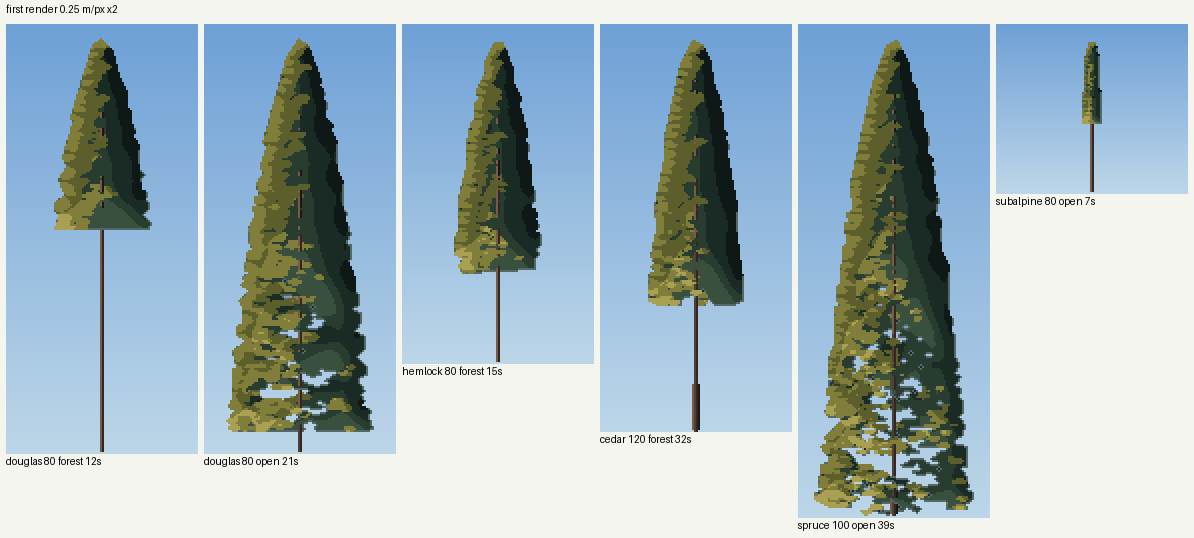 108. books/trees/work/first.png
Bash: cd ~/work/pixelart-studies/books/trees/src; cat > t_dbg.py <<'E' from lib import * from cole import render, to_rgb, palette_default, rules import numpy as np t=grow('douglas',80,se
cd ~/work/pixelart-studies/books/trees/src; cat > t_dbg.py <<'E'
from lib import *
from cole import render, to_rgb, palette_default, rules
import numpy as np
t=grow('douglas',80,seed=1,open_grown=True)
mpp=0.25;H=t.height();W=int(24/mpp);Hh=int((H+3)/mpp)
cells=[]
for R in [rules(straight=False,dome=False,sunset=False,holes=False,rim=False), rules(straight=False), rules()]:
    mat,step,info=render(t,mpp,W,Hh,R=R)
    cells.append(up(to_rgb(mat,step,palette_default()),3))
d=info['dens']; im=(np.clip(d/np.percentile(d[d>0],95),0,1)*255).astype(np.uint8)
cells.append(up(Image.fromarray(im),3))
print(len(t.foliage()), sum(1 for a in t.axes if a.order==1 and not a.dead))
sheet(cells,4).save('../work/dbg.png')
E
python3 t_dbg.py

# output:
41145 457
Read: books/trees/work/dbg.png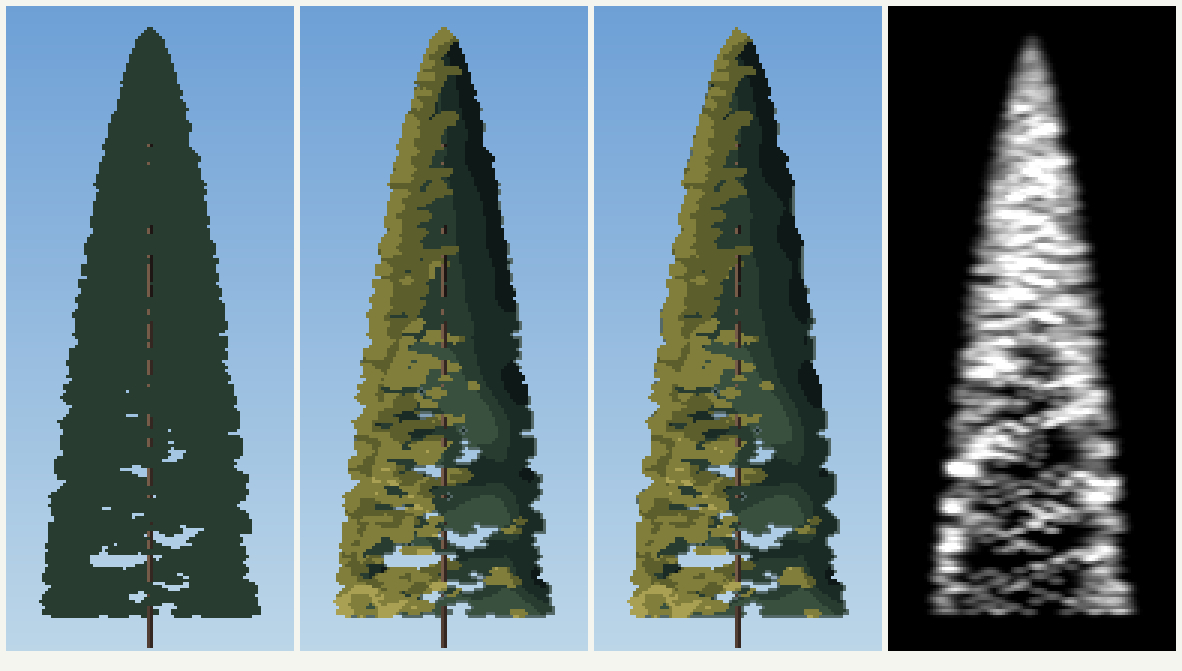 109. books/trees/work/dbg.png
Bash: cd ~/work/pixelart-studies/books/trees/src; python3 - <<'E' s=open('arch.py').read() s=s.replace(" fan_droop: float = 0.3 "," pad_thick: float = 0.35 # vertical thickne
cd ~/work/pixelart-studies/books/trees/src; python3 - <<'E'
s=open('arch.py').read()
s=s.replace("    fan_droop: float = 0.3 ","    pad_thick: float = 0.35       # vertical thickness (m) of a plagiotropic spray pad\n    fan_droop: float = 0.3 ")
open('arch.py','w').write(s)
p=open('paint.py').read()
p=p.replace("    plag = np.array([f[3] for f in F])","    plag = np.array([f[3] for f in F])\n    thick = getattr(tree.sp, 'pad_thick', 0.35)")
p=p.replace("        ry = r * (0.45 if plag[i] else 0.9)","        ry = max(0.5, thick / mpp / 2) if plag[i] else r * 0.9")
open('paint.py','w').write(p)
m=open('species_models.py').read()
m=m.replace("tier=(3, 5), inter=2, angle=84","tier=(3, 5), inter=1, angle=84")
open('species_models.py','w').write(m)
E
rm ../tmp/cache/douglas*; python3 t_dbg.py

# output:
34614 387
Read: books/trees/work/dbg.png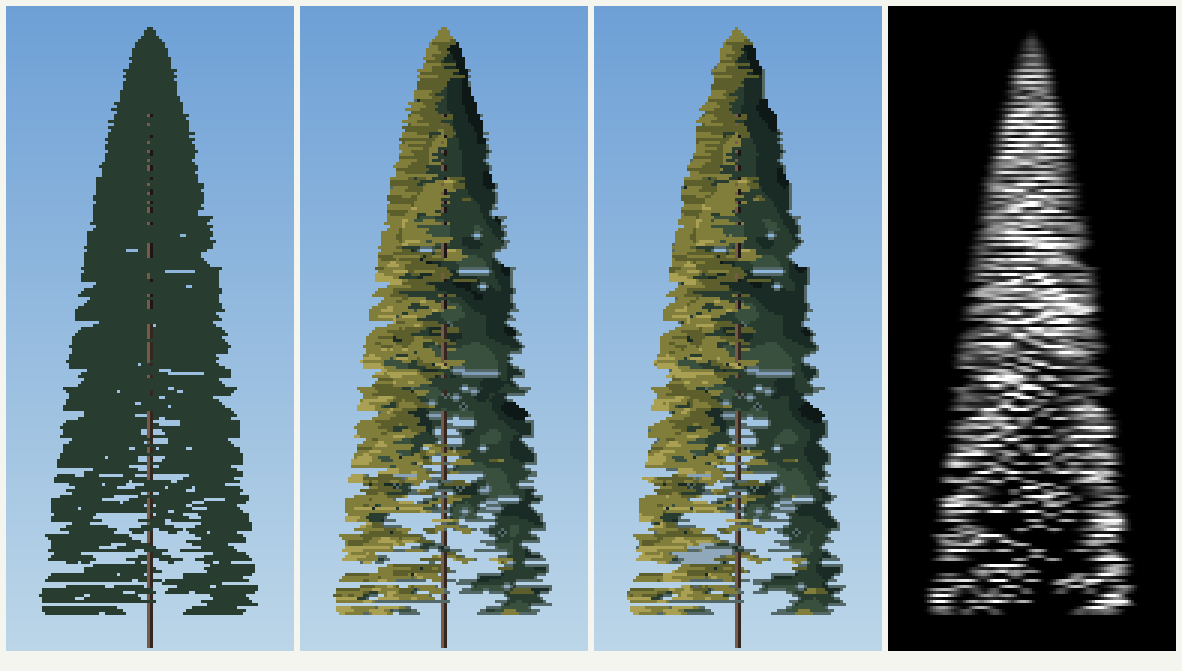 110. books/trees/work/dbg.png
Bash: cd ~/work/pixelart-studies/elements/conifers/refs; ls Douglas_fir_tree_field lone_Douglas_fir_tree Pseudotsuga_menziesii_tree | head -40
cd ~/work/pixelart-studies/elements/conifers/refs; ls Douglas_fir_tree_field lone_Douglas_fir_tree Pseudotsuga_menziesii_tree | head -40

# output:
Douglas_fir_tree_field:
_sheet.jpg
openverse_1939_A_Brief_Review_of_Forest_Insect_Problems_in_7dc27d07.jpg
openverse_1966_John_Wear_in_a_helicopter_that_hovers_next__57035363.jpg
openverse_Cinder_Cone_from_Route_53_Near_Bandera_Ice_Caves_c62a67da.jpg
openverse_Cow_Bay_Ravine_ef89ccf3.jpg
openverse_Day_134_of_366_Around_The_PNW_Edition_5ca75e95.jpg
openverse_Douglas_Fir_seedlings_4602ecea.jpg
openverse_Entering_El_Malpais_National_Monument_Route_53_N_a934eb3a.jpg
openverse_Ethan_taking_field_notes_Douglas_Fir_c0acfe4e.jpg
openverse_Harvesting_Grass_Seed_in_Oregon_ebfb5a35.jpg
openverse_Meadow_c24ea30c.jpg
openverse_Tall_trees_Eucalyptus_regnans_fe377338.jpg
openverse_Wild_Flowers_ac8c1cc1.jpg
sources.tsv

Pseudotsuga_menziesii_tree:
_sheet.jpg
commons_Douglasie_Pseudotsuga_menziesii_jpg_c3e539b4.jpg
commons_Lonely_tree_at_Fairy_lake_jpg_6056449e.jpg
commons_Pam_tn_strom_douglaska_tisolist_u_lesn_kolky_u_h_05b424ea.jpg
commons_Pam_tn_strom_douglaska_tisolist_u_lesn_kolky_u_h_aa6a4bdc.jpg
commons_Pseudotsuga_menziesii_lammas_growth_2_JPG_b80ef417.jpg
commons_Pseudotsuga_menziesii_lammas_growth_JPG_e00f548e.jpg
commons_Pseudotsuga_menziesii_seed_cones_jpg_2e3bf25e.jpg
commons_Pseudotsuga_menziesii_subsp_glauca_kz02_jpg_83f9b0ac.jpg
commons_Pseudotsuga_menziesii_var_glauca_young_female_co_ebd070cf.jpg
sources.tsv

lone_Douglas_fir_tree:
_sheet.jpg
openverse_Big_Lonely_Doug_73566d69.jpg
openverse_Big_Lonely_Doug_97f10fa9.jpg
openverse_Big_trees_threatened_with_clearcutting_926df4d2.jpg
openverse_Clearcut_in_Oregon_s_temperate_rainforest_a8bab9d9.jpg
openverse_Cypress_Island_and_Guemes_channel_858b627a.jpg
openverse_Edworthy_Park_Douglas_Fir_f1516998.jpg
openverse_Lone_Douglas_Fir_Tree_in_Central_Park_New_York_b403a603.jpg
openverse_Lone_Douglas_Fir_Tree_in_Central_Park_New_York_f915308f.jpg
openverse_Lone_PSME_bf9dee7e.jpg
Read: elements/conifers/refs/Pseudotsuga_menziesii_tree/_sheet.jpg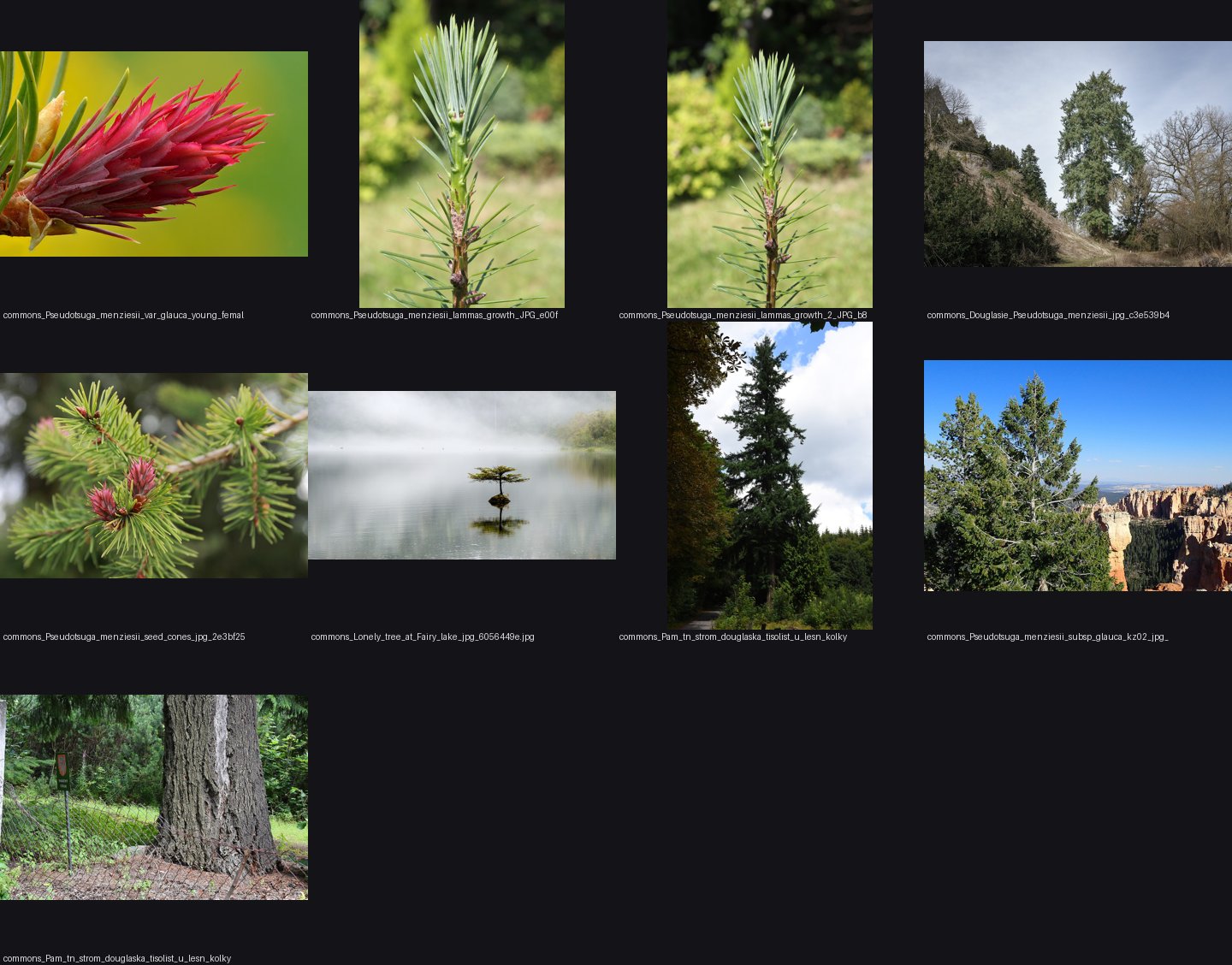 111. elements/conifers/refs/Pseudotsuga_menziesii_tree/_sheet.jpg
Read: elements/conifers/refs/lone_Douglas_fir_tree/_sheet.jpg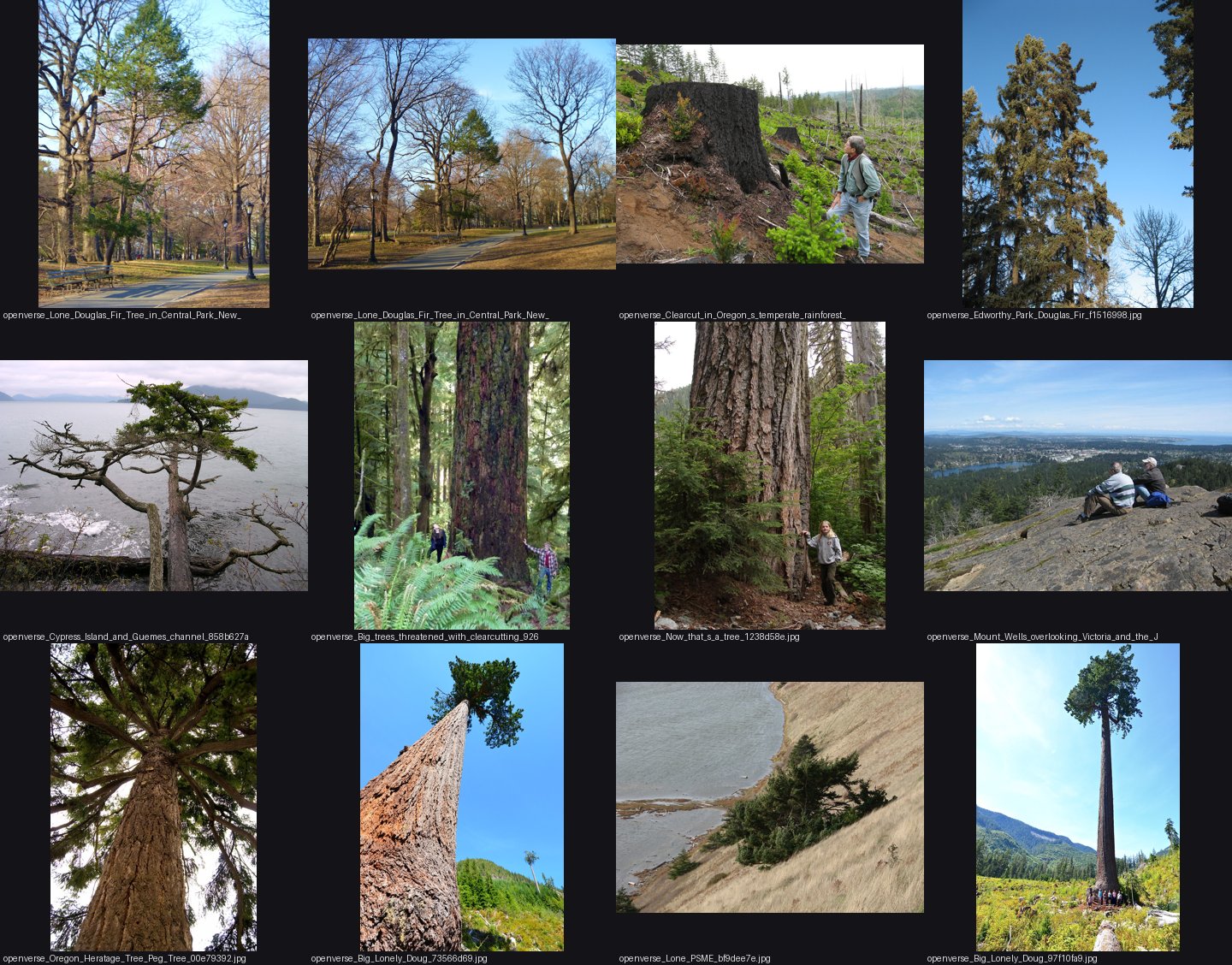 112. elements/conifers/refs/lone_Douglas_fir_tree/_sheet.jpg
Bash: cd ~/work/pixelart-studies/books/trees/src; python3 - <<'E' s=open('arch.py').read() s=s.replace(" rest: object = None "," vig: float = 1.0\n rest: object = None ",1) s=s.
cd ~/work/pixelart-studies/books/trees/src; python3 - <<'E'
s=open('arch.py').read()
s=s.replace("    rest: object = None ","    vig: float = 1.0\n    rest: object = None ",1)
s=s.replace("                L = lead * sp.lat_rate *","                L = a.vig * lead * sp.lat_rate *")
s=s.replace("""        for ax, kd in new:
            self.axes.append(ax)""","""        for ax, kd in new:
            if ax.order == 1 and not ax.reiterated:
                ax.vig = float(np.exp(rng.normal(0, sp.vig_sd)))
            elif ax.parent >= 0:
                ax.vig = self.axes[ax.parent].vig
            self.axes.append(ax)""")
s=s.replace("""        for a in self.axes:  # inner twigs die""","""        for a in self.axes:  # weak boughs are suppressed and die (Cole p. 155: 'many have to die')
            if a.order == 1 and not a.dead and not a.reiterated and y - a.born > 3:
                if rng.random() < sp.thin * max(0.0, 1.2 - a.vig):
                    a.dead, a.alive = True, False
                    if rng.random() > sp.stub_keep:
                        a.pts = a.pts[:1]
                    else:
                        a.pts = a.pts[:min(len(a.pts), 3)]
        for a in self.axes:  # inner twigs die""")
s=s.replace("    shade_prune: float = 0.35 ","    vig_sd: float = 0.35          # lognormal spread of bough vigour (some boughs lead, most lag)\n    thin: float = 0.03            # yearly death chance of weak boughs inside the crown\n    shade_prune: float = 0.35 ")
open('arch.py','w').write(s)
E
rm -f ../tmp/cache/*; python3 t_dbg.py

# output:
Permission for this command was denied by a built-in Claude Code safety check, not by the user. The check stops removals that can delete far more than intended: a system, home or workspace directory, or a target it cannot resolve, such as a shell variable that, if unset or empty, turns this into `rm -rf /` or `rm -rf /*`. Only a person may approve such a removal, and no person did (the permission prompt timed out, or this session cannot prompt). The command was NOT run; do not claim it succeeded. Do not work around the check by splitting, scripting, or re-issuing the removal through another tool or shell: the check exists because a removal like this can destroy the user's data, and getting past it would not make it safe. If the text below suggests a safe rewrite, run that instead; it goes through the same check. Otherwise finish the rest of the task without this removal, tell the user what you wanted to delete and why, and leave the removal to them. What was flagged: Dangerous rm operation detected: '~/work/pixelart-studies/tmp/cache/*'

This command changes directories before the removal, so the relative glob target cannot be statically resolved. This requires explicit approval and cannot be auto-allowed by permission rules.
Bash: cd ~/work/pixelart-studies/books/trees/src && sed -i '' 's/ key = f"{name}_{age}/ key = f"v{VERSION}_{name}_{age}/; s/^CACHE = /VERSION = 2\nCACHE = /' lib.py && python3 t_db
cd ~/work/pixelart-studies/books/trees/src && sed -i '' 's/    key = f"{name}_{age}/    key = f"v{VERSION}_{name}_{age}/; s/^CACHE = /VERSION = 2\nCACHE = /' lib.py && python3 t_dbg.py

# output:
34614 387
Bash: cd ~/work/pixelart-studies/books/trees/src && grep -n "vig" arch.py | head; ls ../tmp/cache
cd ~/work/pixelart-studies/books/trees/src && grep -n "vig" arch.py | head; ls ../tmp/cache

# output:
13:of the model) once the tree has surplus vigour.
79:    reiter_rate: float = 0.0      # yearly chance per vigorous upper bough to turn orthotropic
289:        # reiteration: a vigorous upper bough dedifferentiates into an orthotropic trunk
cedar_120_1_0_.pkl
douglas_80_1_1_.pkl
hemlock_80_1_0_.pkl
spruce_100_1_1_.pkl
subalpine_80_1_1_.pkl
v2_douglas_80_1_1_.pkl
Bash: cd ~/work/pixelart-studies/books/trees/src && python3 - <<'E' s=open('arch.py').read() s=s.replace(" rest: object = None "," vig: float = 1.0\n rest: object = None ",1) s=
cd ~/work/pixelart-studies/books/trees/src && python3 - <<'E'
s=open('arch.py').read()
s=s.replace("    rest: object = None ","    vig: float = 1.0\n    rest: object = None ",1)
s=s.replace("                L = lead * sp.lat_rate *","                L = a.vig * lead * sp.lat_rate *")
s=s.replace("""        for ax, kd in new:
            self.axes.append(ax)""","""        for ax, kd in new:
            if ax.order == 1 and not ax.reiterated:
                ax.vig = float(np.exp(rng.normal(0, sp.vig_sd)))
            elif ax.parent >= 0:
                ax.vig = self.axes[ax.parent].vig
            self.axes.append(ax)""")
s=s.replace("""        for a in self.axes:  # inner twigs die""","""        for a in self.axes:  # weak boughs are suppressed and die (Cole p. 155: 'many have to die')
            if a.order == 1 and not a.dead and not a.reiterated and y - a.born > 3:
                if rng.random() < sp.thin * max(0.0, 1.2 - a.vig):
                    a.dead, a.alive = True, False
                    if rng.random() > sp.stub_keep:
                        a.pts = a.pts[:1]
                    else:
                        a.pts = a.pts[:min(len(a.pts), 3)]
        for a in self.axes:  # inner twigs die""")
s=s.replace("    shade_prune: float = 0.35 ","    vig_sd: float = 0.35          # lognormal spread of bough vigour (some boughs lead, most lag)\n    thin: float = 0.03            # yearly death chance of weak boughs inside the crown\n    shade_prune: float = 0.35 ")
open('arch.py','w').write(s)
E
grep -c vig arch.py; sed -i '' 's/^VERSION = 2/VERSION = 3/' lib.py; python3 t_dbg.py

# output:
9
30090 334
Read: books/trees/work/dbg.png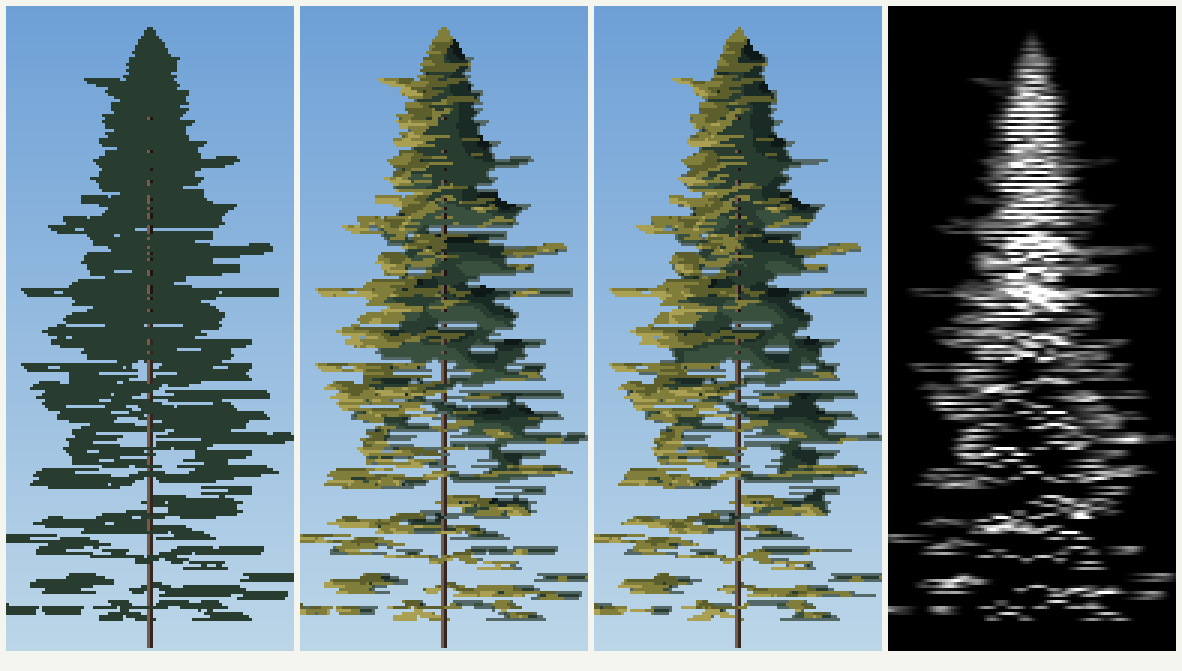 113. books/trees/work/dbg.png
Bash: cd ~/work/pixelart-studies/books/trees/src && python3 - <<'E' s=open('arch.py').read() s=s.replace(""" out.append((pts[k], r, nrm, True, d))
cd ~/work/pixelart-studies/books/trees/src && python3 - <<'E'
s=open('arch.py').read()
s=s.replace("""                    out.append((pts[k], r, nrm, True, d))
                    if w > 0.2:
                        for sgn in (-1, 1):
                            q = pts[k] + sgn * w * side - UP * sp.fan_droop * w
                            out.append((q, r * 0.85, nrm, True, d))""","""                    th = sp.pad_thick * min(3.0, 0.6 + age / 8.0)   # older sprays hang deeper
                    out.append((pts[k] - UP * th * 0.3, r, nrm, th))
                    if w > 0.2:
                        for sgn in (-1, 1):
                            q = pts[k] + sgn * w * side - UP * (sp.fan_droop * w + th * 0.3)
                            out.append((q, r * 0.85, nrm, th))""")
s=s.replace("                    out.append((pts[k], sp.cluster * 0.6, UP, False, UP))","                    out.append((pts[k], sp.cluster * 0.6, UP, 0.0))")
s=s.replace("                    out.append((pts[k], r, UP, False, d))","                    out.append((pts[k], r, UP, 0.0))")
s=s.replace('"""Clusters: (pos, r, normal, plagio, dir).','"""Clusters: (pos, r, normal, thickness) -- thickness > 0 marks a flat plagiotropic pad.')
open('arch.py','w').write(s)
p=open('paint.py').read()
p=p.replace("    plag = np.array([f[3] for f in F])\n    thick = getattr(tree.sp, 'pad_thick', 0.35)","    TH = np.array([f[3] for f in F])\n    plag = TH > 0")
p=p.replace("        ry = max(0.5, thick / mpp / 2) if plag[i] else r * 0.9","        ry = max(0.5, TH[i] / mpp / 2) if plag[i] else r * 0.9")
open('paint.py','w').write(p)
d=open('diagram.py').read()
d=d.replace("        for pos, r, nrm, plag, dd in tree.foliage()[::2]:","        for pos, r, nrm, plag in tree.foliage()[::2]:")
open('diagram.py','w').write(d)
E
sed -i '' 's/^VERSION = 3/VERSION = 4/' lib.py; python3 t_dbg.py

# output:
30090 334
Bash: cd ~/work/artschool/posts/master-copy; wc -l POST.md TUTORIAL.md; sed -n 1,200p TUTORIAL.md
cd ~/work/artschool/posts/master-copy; wc -l POST.md TUTORIAL.md; sed -n 1,200p TUTORIAL.md
# output:
332 POST.md
69 TUTORIAL.md
401 total
# Copying Ferrari passage by passage
*By the master-copy student. The story of how I learned this, dead ends included, is in [POST.md](POST.md); my raw working thread is [the notebook](../../notebooks/master-copy/notebook.md).*
I learned to paint in Mark Ferrari's pixel language by copying him: I picked passages of his tarn painting and wrote a small program to rebuild each one, compared at 3× and 8× against the real thing, until it held up. Those copies were the best work I did, better than the full painter I built from them afterwards. So this is what I teach: **how to study a master's passages, and the passage recipes I got out of it.** Each recipe shows his passage beside my copy, the real code from my study that made it, what I measured to get there, and the traps, each with the bad image I actually made.
The code lives in my study folder, `~/work/pixelart-studies/pedagogy/master-copy/src/`: one file per copy (`c1_sky_rock.py` … `c5_boulder.py`), the shared toolkit `fl.py`, and the full painter `tarn.py`.

*The grass island: Ferrari (left), my copy (right), at 4×.*
---
## Method
1. **[Read the master's own files](howto/01-read-the-masters-files.md).** Find the native pixel grid, get his original indexed pictures, align your reference to them, and read a passage as text. The key finding: in his colour-cycling scenes the morning and afternoon versions share one index map, so **the index map is the form and the palette is the light.** Paint classes, not colours. (My own mound copy relights with his morning palette exactly as his does.)

2. **[Compare obsessively, and measure the texture](howto/02-compare-and-measure.md).** A fixed 3×/8× comparison sheet; blurLab, colour histogram and run lengths; and the cheap statistics that found what my eye couldn't: class shares by region, dither structure against random, which class caps a run, and which class sits beside which, against its base rate.
## Passages
3. **[The banded dusk sky](howto/03-banded-sky.md).** 11 near-isovalue steps, flat bands, 2×2 checker seams.

4. **[A sunlit rock ridge](howto/04-lit-ridge-with-echo.md).** A broken-checker violet mass, a hot rim only on sun-facing crests, the echo line 2–3 px inside, clean stair-step slopes, and snow that borrows the sky's colours.

5. **[Pines from their anatomy](howto/05-pines.md).** A 1-px spire, tiers every 4–5 rows, 20% holes, lit ochre on the sun-side tips; read character by character off his pixels.

6. **[The four-class mound with a fringed crest](howto/06-four-class-mound.md).** Reflected light | core shadow | halftone | lit, scattered so no zone is pure, checker-biased in shade and clumped in light, and a crest that's a fringe, not a cut.

7. **[The sunlit bank](howto/Bash: mkdir -p ~/work/pixelart-studies/books/trees/copies; cd ~/work/pixelart-studies/books/trees; python3 - <<'E' from PIL import Image im=Image.open('pages/halle/h-055.jpg').convert('L
mkdir -p ~/work/pixelart-studies/books/trees/copies; cd ~/work/pixelart-studies/books/trees; python3 - <<'E'
from PIL import Image
im=Image.open('pages/halle/h-055.jpg').convert('L'); print(im.size)
im.crop((60,180,570,460)).save('copies/ref_massart.png')
im=Image.open('pages/halle/h-056.jpg').convert('L')
im.crop((655,220,1180,480)).save('copies/ref_rauh.png')
im=Image.open('pages/halle/h-057.jpg').convert('L')
im.crop((660,180,1190,440)).save('copies/ref_troll.png')
E

# output:
(1217, 914)
Read: books/trees/copies/ref_massart.pngRead: books/trees/copies/ref_troll.png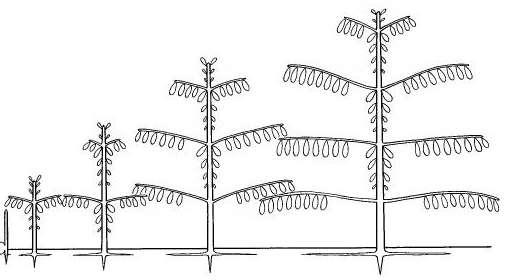 114. books/trees/copies/ref_massart.png
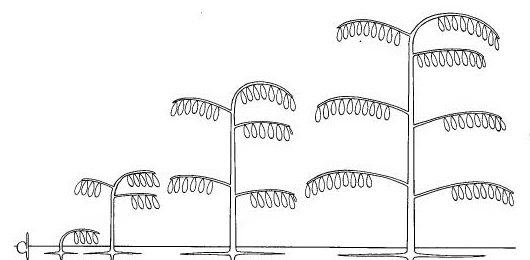 115. books/trees/copies/ref_troll.png
Write: books/trees/src/px.py
"""A small hand-drawing kit for deliberate pixel placement.

Everything drawn here is placed by coordinates or ASCII rows I write while looking at the
book's figure (and its box-downsampled guide). No procedural geometry.

Canvas holds palette indices. ASCII stamping: each character maps to an index ('.' or ' ' = leave).
"""
import numpy as np
from PIL import Image


class Canvas:
    def __init__(self, w, h, bg=0):
        self.a = np.full((h, w), bg, np.uint8)
        self.w, self.h = w, h

    def px(self, x, y, c):
        if 0 <= x < self.w and 0 <= y < self.h:
            self.a[y, x] = c

    def hrun(self, x, y, n, c):
        for i in range(n):
            self.px(x + i, y, c)

    def vrun(self, x, y, n, c):
        for i in range(n):
            self.px(x, y + i, c)

    def steps(self, x, y, runs, c, dx=1, dy=-1, vertical=False):
        """A clean-run line: runs = list of run lengths. Horizontal runs stepping dy each run
        (or vertical runs stepping dx if vertical). Returns end point."""
        for n in runs:
            for i in range(n):
                self.px(x, y, c)
                if vertical:
                    y += dy if dy else 1
                else:
                    x += dx
            if vertical:
                x += dx
            else:
                y += dy
        return x, y

    def stamp(self, rows, x0, y0, cmap):
        for j, row in enumerate(rows):
            for i, ch in enumerate(row):
                if ch in cmap:
                    self.px(x0 + i, y0 + j, cmap[ch])

    def poly(self, pts, c):
        from PIL import ImageDraw
        m = Image.new('L', (self.w, self.h), 0)
        ImageDraw.Draw(m).polygon(pts, fill=1)
        self.a[np.array(m, bool)] = c

    def img(self, pal, k=1):
        rgb = np.array(pal, np.uint8)[self.a]
        im = Image.fromarray(rgb)
        return im.resize((self.w * k, self.h * k), Image.NEAREST) if k > 1 else im


def guide(path, w, h, levels=" .:-=+*#%@", crop=None, invert=True, show=True):
    """Box-downsample a reference to w x h and print it as characters (dark = dense)."""
    im = Image.open(path).convert('L')
    if crop:
        im = im.crop(crop)
    g = np.array(im.resize((w, h), Image.BOX), float) / 255.0
    if invert:
        g = 1 - g
    g = (g - g.min()) / (np.ptp(g) + 1e-9)
    idx = np.clip((g * (len(levels) - 1)).round().astype(int), 0, len(levels) - 1)
    rows = ["".join(levels[i] for i in r) for r in idx]
    if show:
        print("     " + "".join(str((i // 10) % 10) for i in range(w)))
        print("     " + "".join(str(i % 10) for i in range(w)))
        for j, r in enumerate(rows):
            print(f"{j:3d}  {r}")
    return g
Bash: cd ~/work/pixelart-studies/books/trees/src; python3 -c " from px import guide guide('../copies/ref_massart.png', 64, 66, levels=' .:+#', crop=(255,0,510,270))"
cd ~/work/pixelart-studies/books/trees/src; python3 -c "
from px import guide
guide('../copies/ref_massart.png', 64, 66, levels=' .:+#', crop=(255,0,510,270))"

# output:
0000000000111111111122222222223333333333444444444455555555556666
     0123456789012345678901234567890123456789012345678901234567890123
  0
  1
  2                               :..:
  3                               .++.
  4                        +:.    .:::   .+#.
  5                       .:::+:. .++ .:+:::..
  6                      ..:....:+.:++:+..:...
  7                      ::...:.. :::. .:..:
  8                        . ::. .:+#.....
  9                           .. .::::.
 10                              :.::..
 11                              ..:+:.
 12                              ..:::.
 13                                ::
 14                               :++:
 15          ...                  ::::                ..:..
 16          +:+:+:::.             :+           .:++:+.::::
 17         .....: +.++:.         .++:       .:++.....:..: .
 18         .........: :++:        ::      .+:+.............
 19         ::...........::+:.     ::    :+::..:....: : ....
 20           . :.:.:......:::+:.  :: .:+.:..:.....
 21                 . :......  .:++::+:.  :..:..
 22                     :....    .:++..   .:
 23                       ..     .:::. :
 24                             .:.::..:
 25                               .++:.
 26                              ..::::
 27                              ..::.:
 28                               .++:
 29                               +:::.
 30     .::+                       ::
 31  ::+.:..:                     .+::
 32  : :.....                     .::.
 33  ......:+:::::::::......       ::           .:::::++++++#+.
 34  :..:  +:+.: ::.:.::.+:+++++:..::..::::+++++::+.:: + :: :.:.
 35       ...... .... .... ..   ..::.+:::..  :..:.......:. ..::.
 36       ..............:....    ..::+:      ..... .. ......:: .
 37       ....:. :.... .:.. .   ...:::.:     ..:. :..:... .  .
 38            . . .. .... .    ...:::..     .. .
 39                              ..+.::
 40                              ..:.:::
Bash: cd ~/work/pixelart-studies/books/trees/src; cat > copy_halle.py <<'E' """Master copies of Hallé's key figures (pp. 92-97), drawn pixel by pixel.""" from px import Canvas, guide fro
cd ~/work/pixelart-studies/books/trees/src; cat > copy_halle.py <<'E'
"""Master copies of Hallé's key figures (pp. 92-97), drawn pixel by pixel."""
from px import Canvas, guide
from lib import sheet, up
from PIL import Image
PAPER, INK, LEAF = 0, 1, 2
PAL = [(236, 232, 220), (30, 28, 26), (96, 92, 84)]


def leaves_below(c, pts, every=2):
    """Hallé's hanging leaf loops: a 2-px drop under every other branch pixel."""
    for i, (x, y) in enumerate(pts):
        if i % every == 0:
            c.px(x, y + 1, LEAF); c.px(x, y + 2, LEAF)


def path(c, x, y, moves, col=INK):
    """moves: string of steps; 'r','l' = 1 px horizontal, 'u','d' vertical, 'R','L' diagonal up
    (R = up-right, L = up-left), 'r3' style repeats. Returns list of pixels drawn."""
    import re
    out = [(x, y)]
    c.px(x, y, col)
    for m, n in re.findall(r'([rludRLFB])(\d*)', moves):
        for _ in range(int(n or 1)):
            dx, dy = dict(r=(1, 0), l=(-1, 0), u=(0, -1), d=(0, 1), R=(1, -1), L=(-1, -1),
                          F=(1, 1), B=(-1, 1))[m]
            x, y = x + dx, y + dy
            c.px(x, y, col); out.append((x, y))
    return out


def massart_big(c, x0, y0):
    """Largest stage of Massart's key figure (p. 92). Trunk at x0, ground at y0.
    Tiers at 4 levels; branches plagiotropic: rise gently from the trunk, run level, the lower
    (older) ones droop at the tip; leaves hang as loops under the outer two thirds."""
    X = x0
    # trunk: 2 px wide below the 2nd tier, 1 px above; root peg below the ground
    c.vrun(X, y0 - 58, 58, INK); c.vrun(X + 1, y0 - 38, 38, INK)
    c.vrun(X, y0 + 1, 4, INK)
    c.hrun(X - 31, y0, 64, INK)
    # leader tip: small paired leaves (spiral phyllotaxis on the orthotropic axis)
    for yy in range(y0 - 57, y0 - 2, 4):
        c.px(X - 1, yy, LEAF); c.px(X + 2 if yy > y0 - 38 else X + 1, yy + 2, LEAF)
    # tier 1 (youngest, y0-54): short, rising
    L = path(c, X - 1, y0 - 53, "l2L1l2L1l3")
    R = path(c, X + 1, y0 - 53, "r2R1r2R1r3")
    leaves_below(c, L[3:]); leaves_below(c, R[3:])
    # tier 2 (y0-38): long, rising to the outside, tip level
    L = path(c, X - 1, y0 - 38, "l3L1l3L1l3L1l4L1l6")
    R = path(c, X + 2, y0 - 38, "r3R1r3R1r3R1r4R1r6")
    leaves_below(c, L[6:]); leaves_below(c, R[6:])
    # tier 3 (y0-27): near level, long; outer third droops a little then the tip turns up
    L = path(c, X - 1, y0 - 27, "l5L1l8L1l10B1l4L1")
    R = path(c, X + 2, y0 - 27, "r5R1r8R1r10F1r4R1")
    leaves_below(c, L[5:]); leaves_below(c, R[5:])
    # tier 4 (oldest, y0-13): longest; level then pendulous with age
    L = path(c, X - 1, y0 - 13, "l4L1l9L1l10B1l3B1l2")
    R = path(c, X + 2, y0 - 13, "r4R1r9R1r10F1r3F1r2")
    leaves_below(c, L[5:]); leaves_below(c, R[5:])


def massart_small(c, x0, y0, h, tiers, spans):
    c.vrun(x0, y0 - h, h, INK); c.vrun(x0, y0 + 1, 2, INK)
    for (dy, sp) in zip(tiers, spans):
        L = path(c, x0 - 1, y0 - dy, "l%dL1l%d" % (sp // 2, sp - sp // 2))
        R = path(c, x0 + 1, y0 - dy, "r%dR1r%d" % (sp // 2, sp - sp // 2))
        leaves_below(c, L[2:]); leaves_below(c, R[2:])
    for yy in range(y0 - h + 1, y0 - 1, 4):
        c.px(x0 - 1, yy, LEAF)


if __name__ == '__main__':
    c = Canvas(190, 72)
    g = 66
    massart_small(c, 8, g, 10, [7], [4])
    massart_small(c, 30, g, 20, [16, 7], [4, 8])
    massart_small(c, 66, g, 34, [30, 19, 8], [5, 13, 16])
    massart_big(c, 140, g)
    c.hrun(0, g, 190, INK)
    ref = Image.open('../copies/ref_massart.png').convert('RGB').resize((190 * 3, int(280 * 190 * 3 / 510)))
    S = sheet([ref, c.img(PAL, 3)], 1, labels=['Hallé p. 92, Massart (book)', 'pixel copy, 190x72, shown 3x'])
    S.save('../copies/massart_v1.png')
E
python3 copy_halle.py

# output:
(Bash completed with no output)
Read: books/trees/copies/massart_v1.png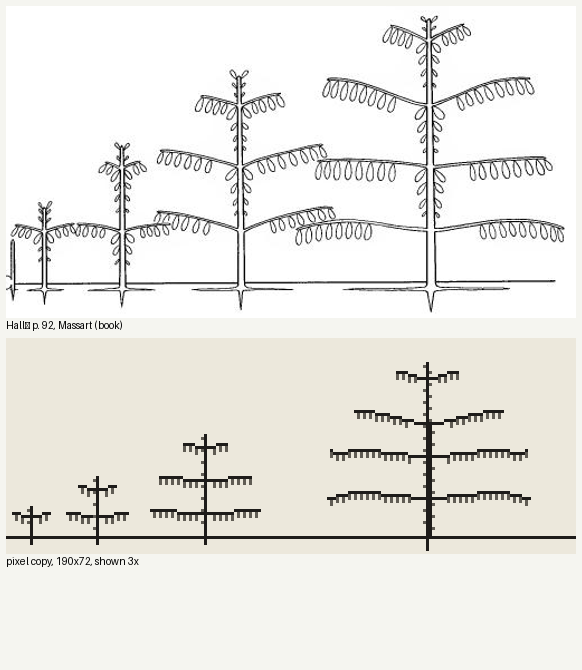 116. books/trees/copies/massart_v1.png
Bash: cd ~/work/pixelart-studies/books/trees/src; python3 - <<'E' s=open('copy_halle.py').read() s=s.replace('''def massart_big(c, x0, y0):''','''def arc(c, x, y, dirx, runs, dys, col=IN
cd ~/work/pixelart-studies/books/trees/src; python3 - <<'E'
s=open('copy_halle.py').read()
s=s.replace('''def massart_big(c, x0, y0):''','''def arc(c, x, y, dirx, runs, dys, col=INK):
    """A curve built from straight runs (Cole p. 92): runs[i] pixels horizontally, then step
    dys[i] vertically (-1 up, +1 down, 0 none). Returns pixels."""
    out = []
    for n, dy in zip(runs, dys):
        for _ in range(n):
            c.px(x, y, col); out.append((x, y)); x += dirx
        y += dy
    return out


def massart_big(c, x0, y0):''')
s=s.replace('''    # tier 1 (youngest, y0-54): short, rising
    L = path(c, X - 1, y0 - 53, "l2L1l2L1l3")
    R = path(c, X + 1, y0 - 53, "r2R1r2R1r3")
    leaves_below(c, L[3:]); leaves_below(c, R[3:])
    # tier 2 (y0-38): long, rising to the outside, tip level
    L = path(c, X - 1, y0 - 38, "l3L1l3L1l3L1l4L1l6")
    R = path(c, X + 2, y0 - 38, "r3R1r3R1r3R1r4R1r6")
    leaves_below(c, L[6:]); leaves_below(c, R[6:])
    # tier 3 (y0-27): near level, long; outer third droops a little then the tip turns up
    L = path(c, X - 1, y0 - 27, "l5L1l8L1l10B1l4L1")
    R = path(c, X + 2, y0 - 27, "r5R1r8R1r10F1r4R1")
    leaves_below(c, L[5:]); leaves_below(c, R[5:])
    # tier 4 (oldest, y0-13): longest; level then pendulous with age
    L = path(c, X - 1, y0 - 13, "l4L1l9L1l10B1l3B1l2")
    R = path(c, X + 2, y0 - 13, "r4R1r9R1r10F1r3F1r2")
    leaves_below(c, L[5:]); leaves_below(c, R[5:])''','''    # tier 1 (youngest, y0-53): short, steep: runs lengthen as the curve flattens
    for d in (-1, 1):
        P = arc(c, X + (2 if d > 0 else -1), y0 - 53, d, [1, 1, 2, 2, 3], [-1, -1, -1, 0, 0])
        leaves_below(c, P[3:])
    # tier 2 (y0-38): rises to the outside and flattens: runs 1,2,2,3,4,5,6
    for d in (-1, 1):
        P = arc(c, X + (2 if d > 0 else -1), y0 - 38, d, [1, 2, 2, 3, 4, 5, 6], [-1, -1, -1, -1, -1, -1, 0])
        leaves_below(c, P[6:])
    # tier 3 (y0-27): a long low arch: up, level, and the tip sinks
    for d in (-1, 1):
        P = arc(c, X + (2 if d > 0 else -1), y0 - 27, d, [3, 5, 8, 9, 3, 2], [-1, -1, 0, 1, 1, 0])
        leaves_below(c, P[5:])
    # tier 4 (oldest, y0-13): longest, lowest arch, pendulous at the end
    for d in (-1, 1):
        P = arc(c, X + (2 if d > 0 else -1), y0 - 13, d, [4, 7, 10, 5, 2, 1], [-1, -1, 1, 1, 1, 0])
        leaves_below(c, P[5:])''')
s=s.replace("    ref = Image.open('../copies/ref_massart.png').convert('RGB').resize((190 * 3, int(280 * 190 * 3 / 510)))",
"    ref = Image.open('../copies/ref_massart.png').convert('RGB').resize((int(510 * 0.25 * 3), int(270 * 0.25 * 3)))")
s=s.replace("massart_small(c, 30, g, 20, [16, 7], [4, 8])\n    massart_small(c, 66, g, 34, [30, 19, 8], [5, 13, 16])\n    massart_big(c, 140, g)",
"massart_small(c, 25, g, 17, [13, 6], [3, 7])\n    massart_small(c, 52, g, 27, [24, 14, 6], [4, 10, 12])\n    massart_big(c, 95, g)")
s=s.replace("c = Canvas(190, 72)","c = Canvas(128, 72)").replace("c.hrun(0, g, 190, INK)","c.hrun(0, g, 128, INK)")
open('copy_halle.py','w').write(s)
E
python3 copy_halle.py

# output:
(Bash completed with no output)
Read: books/trees/copies/massart_v1.png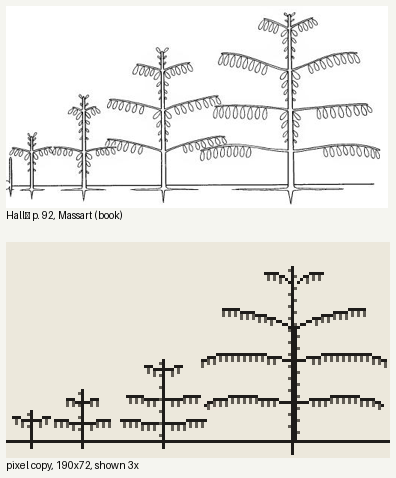 117. books/trees/copies/massart_v1.png
Bash: cd ~/work/pixelart-studies/books/trees/src; python3 -c " from px import guide guide('../copies/ref_troll.png', 52, 64, levels=' .:+#', crop=(300,0,510,258))"
cd ~/work/pixelart-studies/books/trees/src; python3 -c "
from px import guide
guide('../copies/ref_troll.png', 52, 64, levels=' .:+#', crop=(300,0,510,258))"

# output:
0000000000111111111122222222223333333333444444444455
     0123456789012345678901234567890123456789012345678901
  0
  1
  2
  3                                  .:::+#+::.
  4               ..:.             .:+:++:.::+:#:.
  5            .:#++:++#+:.       .+:. ::.:....::+:
  6           :++..:::.: #++.    ::.   .:.:.......++.
  7           ::.::.+.:....+:+: .:.    .::.:.+:.:.:.+.
  8           .+.::+:::....:.::+::            .:::.::+
  9           :::.    ..::...:  ::               .:+.+:
 10           ..   .      :.:. .:.                .:.:.
 11                         .. .:.                 .:..
 12                            .:. .::+#+#+++#+:.    :.
 13                            ..##+:+..:::: +.+++
 14                            ..::::.:.....:.+.::+
 15                            ....:.:.:::.::::.+.+
 16                            .......: : :  ....+:
 17                            ...
 18                            ...
 19                            ...
 20                            ...
 21                            ...
 22                            ..:
 23           .::..            : :
 24        .+#++:+:+++::       : :
 25      .+#.+.:.:.:.::+#+:.   : :
 26      +.::.: : .....:+ +:+:.: :
 27      :: +.:.:.::.:::.:.. :++ :          .:::..:.
 28     . + ::.: ...:.:: : .   : :     .:+#++:+:+:#:#+.
 29     ...:            :.+    : :  .:+++.:::..:.:.::+#
 30      :                     : +:+:.  .:..:......+.:+:
 31                            : ::     ..::::::.:::::+:
 32                            : :       :..         .::
 33                            : :
 34                            : :
 35                            : :
 36                            : :
 37                            : :
 38                            : :
 39                            : :
 40                            : :
 41                            : :
 42        .::#++++:...        : :
 43      :+++.+.:.::+++++::    : :
 44    .#+:.::.+.:::.::  ..+:. : :
 45   :++: : : + :::.:.     .:++ :        .::+++#+++:.
 46   .:.+ :.::.:.:....        : :     :+++:+.:.:.:.:++:.
 47   ...:: .                  : : .:+:.  .:::.: +.:..:+:
 48   ::.                      : ++:.     ......:::::...+
 49                            : :         +..:
Bash: cd ~/work/pixelart-studies/books/trees/src; cat >> copy_halle.py <<'E' def troll_big(c, X, g): """Largest stage of Troll's key figure (p. 97, monopodial trunk). Every axis is
cd ~/work/pixelart-studies/books/trees/src; cat >> copy_halle.py <<'E'


def troll_big(c, X, g):
    """Largest stage of Troll's key figure (p. 97, monopodial trunk). Every axis is plagiotropic:
    it arches up out of the trunk, crests, and falls; leaves hang only from the arch. The trunk is
    the erected base of the relay axes; the current leader is itself an arch (top)."""
    c.vrun(X, g - 49, 49, INK); c.vrun(X + 1, g - 30, 30, INK); c.vrun(X, g + 1, 3, INK)
    # the leader arch: up, then over to the right (nodding tip)
    P = arc(c, X, g - 50, 1, [1, 1, 2, 3, 4, 3, 2, 1, 1, 1], [-1, -1, -1, -1, 0, 1, 1, 1, 1, 1])
    for x, y in P[1:2]: pass
    c.vrun(X, g - 52, 3, INK)
    leaves_below(c, P[4:])
    # arches: (height above ground, side, runs, dys) -- chosen off the guide
    specs = [
        (49, -1, [1, 2, 3, 4, 3, 2, 1], [-1, -1, -1, 0, 1, 1, 1]),
        (48, 1, [1, 2, 3, 5, 4, 2, 1, 1], [-1, -1, 0, 0, 1, 1, 1, 1]),
        (31, -1, [1, 1, 2, 3, 5, 4, 3, 2], [-1, -1, -1, -1, 0, 1, 1, 1]),
        (30, 1, [1, 2, 3, 5, 5, 3, 2], [-1, -1, -1, 0, 1, 1, 1]),
        (13, -1, [1, 2, 3, 5, 6, 3, 2, 1], [-1, -1, -1, 0, 0, 1, 1, 1]),
        (13, 1, [1, 2, 3, 5, 6, 4, 2, 1], [-1, -1, -1, 0, 0, 1, 1, 1]),
    ]
    for h, d, runs, dys in specs:
        P = arc(c, X + (2 if d > 0 else -1), g - h, d, runs, dys)
        leaves_below(c, P[3:])


def troll_small(c, X, g, h, specs):
    c.vrun(X, g - h, h, INK); c.vrun(X, g + 1, 2, INK)
    P = arc(c, X, g - h - 1, 1, [1, 1, 2, 2, 1, 1], [-1, -1, 0, 1, 1, 1])
    leaves_below(c, P[2:])
    for hh, d, runs, dys in specs:
        P = arc(c, X + (1 if d > 0 else -1), g - hh, d, runs, dys)
        leaves_below(c, P[2:])


def troll_sheet():
    c = Canvas(132, 70)
    g = 66
    troll_small(c, 10, g, 3, [])
    troll_small(c, 30, g, 12, [(12, -1, [1, 2, 3, 2, 1], [-1, -1, 0, 1, 1]), (6, 1, [1, 2, 3, 2], [-1, 0, 1, 1])])
    troll_small(c, 58, g, 24, [(24, -1, [1, 2, 3, 3, 2, 1], [-1, -1, 0, 1, 1, 1]),
                               (18, 1, [1, 2, 3, 3, 2], [-1, -1, 0, 1, 1]),
                               (8, -1, [1, 2, 4, 3, 2], [-1, -1, 0, 1, 1]),
                               (7, 1, [1, 2, 4, 3, 2], [-1, -1, 0, 1, 1])])
    troll_big(c, 100, g)
    c.hrun(0, g, 132, INK)
    ref = Image.open('../copies/ref_troll.png').convert('RGB')
    ref = ref.resize((int(ref.size[0] * 0.25 * 3), int(ref.size[1] * 0.25 * 3)))
    sheet([ref, c.img(PAL, 3)], 1, labels=['Hallé p. 97, Troll (book), same scale', 'pixel copy 132x70, 3x']).save('../copies/troll_v1.png')


troll_sheet()
E
python3 copy_halle.py

# output:
(Bash completed with no output)
Read: books/trees/copies/troll_v1.png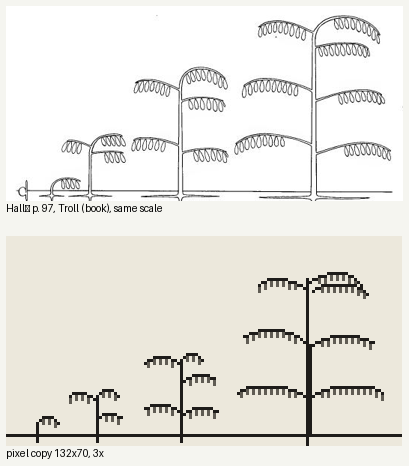 118. books/trees/copies/troll_v1.png
Bash: cd ~/work/pixelart-studies/books/trees; mkdir -p pages/hi; P=~/work/pixelart-studies/library/trees/artisticanatomyo1915cole.pdf; for p in 131 122 211 212 100 103 107 114 118 124 12
cd ~/work/pixelart-studies/books/trees; mkdir -p pages/hi; P=~/work/pixelart-studies/library/trees/artisticanatomyo1915cole.pdf; for p in 131 122 211 212 100 103 107 114 118 124 125 145 153 216 174; do nice pdftoppm -f $p -l $p -r 220 -gray -jpeg $P pages/hi/c 2>/dev/null; done; ls pages/hi

# output:
c-100.jpg
c-103.jpg
c-107.jpg
c-114.jpg
c-118.jpg
c-122.jpg
c-124.jpg
c-125.jpg
c-131.jpg
c-145.jpg
c-153.jpg
c-174.jpg
c-211.jpg
c-212.jpg
c-216.jpg
Bash: cd ~/work/pixelart-studies/books/trees; python3 -c " from PIL import Image im=Image.open('pages/hi/c-131.jpg'); print(im.size) im=im.rotate(-90,expand=True); im.save('tmp/c131r.jpg
cd ~/work/pixelart-studies/books/trees; python3 -c "
from PIL import Image
im=Image.open('pages/hi/c-131.jpg'); print(im.size)
im=im.rotate(-90,expand=True); im.save('tmp/c131r.jpg'); print(im.size)
im.resize((im.size[0]//2,im.size[1]//2)).save('tmp/c131r_s.jpg')"

# output:
(1238, 1950)
(1950, 1238)
Read: books/trees/tmp/c131r_s.jpg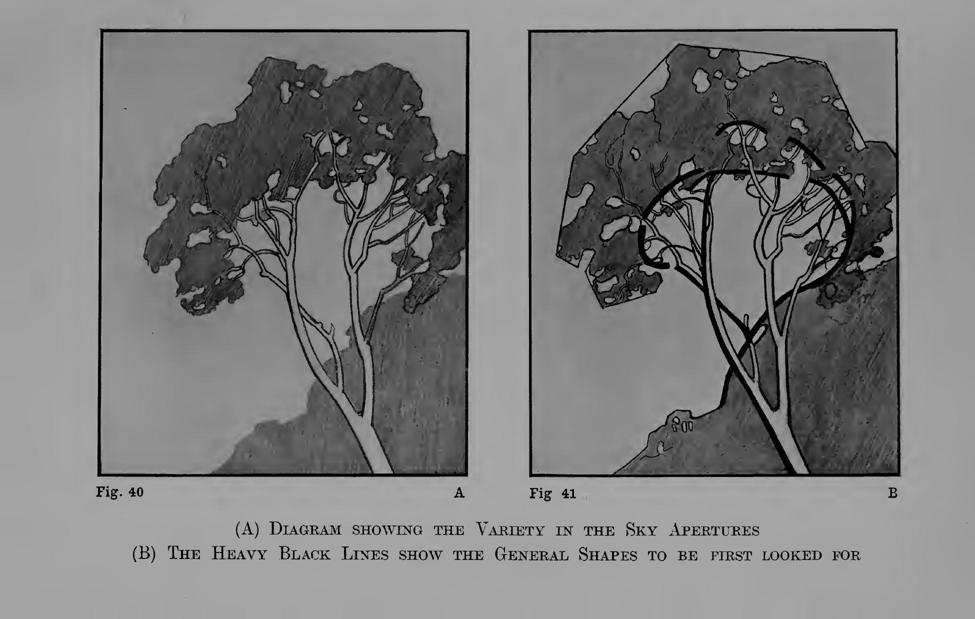 119. books/trees/tmp/c131r_s.jpg
Bash: cd ~/work/pixelart-studies/books/trees/src; python3 -c " from PIL import Image im=Image.open('../tmp/c131r.jpg').convert('L'); im.crop((204,64,934,948)).save('../copies/ref_fig40.p
cd ~/work/pixelart-studies/books/trees/src; python3 -c "
from PIL import Image
im=Image.open('../tmp/c131r.jpg').convert('L'); im.crop((204,64,934,948)).save('../copies/ref_fig40.png'); im.crop((1062,64,1792,948)).save('../copies/ref_fig41.png')
from px import guide
guide('../copies/ref_fig40.png', 60, 72, levels=' .:+#')"

# output:
000000000011111111112222222222333333333344444444445555555555
     012345678901234567890123456789012345678901234567890123456789
  0  :...................................................       .
  1  :...........................................               .
  2  ............................................               .
  3  ...............................................            .
  4  ..........................:+:::..............              .
  5  .........................:+:++++..::.........:+:..         .
  6  .........................++++++++++++....:+:++++++:.       .
  7  ........................:+++++++++++:.:++++++++++++..      .
  8  ........................++++++:#:+#+::++++++++++++++.      .
  9  ...............  .......:++++::+++:+++++++++++++++++:...   .
 10  . .......     ..........++++++.++++:++++++++++++++++:...   .
 11  .             .........+++++++++++++++++++:++++++++++..    .
 12  .  .           .......++++++++++++++++++++++++++++:+:..    .
 13  .         ..     .....++++++++++++++++++++++++++++++::... ..
 14  .          .........::+++++++++++++++++++++:++++++++++......
 15  .           ...::+:++++++++++++++++++++++++++::+++++++:.....
 16  . .     ..  ..:++++++++++++++++++++++++#++++++::++++++:.....
 17  . .     ..  .:::++++++++++++++++++::::.++++++++++++++++.....
 18  . .     .....+::++++++++++++++++++++..#.+++++++++++++++.....
 19  . ..    .....+++++++++++++++++++++++::+.+++#+++#++++++:..+::
 20  .....   ....:++++++:++++++++++++++#++++++++...++#++++:::++##
 21  .....   ...+++++++:+:+++++++++++#+++++++++++::.+#+++++++++##
 22  ..  .  ...:++:+++++++++++++++#++##:+++:+++:++:.+#++++++++###
 23  ..  .....:++++++++++++++++++.++##+++++++++#++..:#+++++++####
 24   . . ....++++++++++++++++++:.+++++:++#+++:.#:...::#+:.+++###
 25   ........++++++++++++++++++++++:+:..+::+.. + ..::#++.:++.###
 26   .......:++++++++++++++++++:#+:.+.....::. .:  .+:++++#+#:###
 27  ........:+:.+++++++++++++++::+:::.....:++.::  +++:++++######
 28   ........:.:+++.:++++++:.::::..+........::+. :++:::++##:+###
 29    .........++++::+#++++..+:+::++........:::.++::::.:+##.####
 30    ........:++++++++++++::++::.:+........+:+:.:.:...+:##.+#++
 31    ..  .. :++++++++++++...::.:..:........::..:::. .+.:::.+#+#
 32    .. .. .+++++++::+::+.....+:..+....... :: ::. ..+:.:.:+#++#
 33       . :+:++++:..:+:..:....:+..:...... .:. ::..:+:.:..++++++
 34         :++++++.:+++++:::....::.:........:..:+:+: .+...+++++#
 35         +++++++++++++++::::::::::........: .:.  ..:+:..++++++
 36        .+:+++++++++++:...++..++::........: ::   :++++.:+++++:
 37        .:+++..+++:++++:.+.::..:::. ......:::. . .+++++:+++++:
 38        ..+:..:++++++++++:..+...::........:::     ::++.:++++.:
 39       .......+++++++++.::..+:..::.... .  ::.    .+:++++++::::
 40       .......+++++++++#+....:::::.... .  :..    .+:.+++::+::+
 41       .......:++++++++++......:+:....    :..  .:+:..+++++:::+
 42       .......++::++###++:......+:.....   :....::..:++++#+:::+
 43       ........+:+++##:+:.......
Bash: cd ~/work/pixelart-studies/books/trees/src; python3 -c " from px import guide g=guide('../copies/ref_fig40.png', 60, 72, show=False) import numpy as np # print value map as digits
cd ~/work/pixelart-studies/books/trees/src; python3 -c "
from px import guide
g=guide('../copies/ref_fig40.png', 60, 72, show=False)
import numpy as np
# print value map as digits 0-9
for j,r in enumerate(g):
    print(f'{j:2d} '+''.join(str(min(9,int(v*10))) for v in r))
" | head -75

# output:
0 422211112221112212112222222222222111222211111111111111100002
 1 321111111111111111111111111111111111111111111000000000000002
 2 311111111111111111111111111111111211121111111100000000000002
 3 311111111111111111111111111111112221111111111111000000000002
 4 311111111111111111111111114655432111111111111111111100000002
 5 311111111111111111111111137567782265211111113575311100000002
 6 311111111111111111111111267667777777721125666677775111000013
 7 311111111111111111111122577667777777524767776677777311100012
 8 311111111111111111111112676676594887546766777777867721111012
 9 311111111111111111111111467776478767767777786777767751111112
10 311111111111111111111113776776377765777767877778777751111112
11 311111111111111111111136676777677777777767577777778761111102
12 311111111111111111111267666777677777777678677777765851111113
13 211111111111111101111177767777787777777677777777776743111113
14 211111111111111111233577767777777777777777657777788787211113
15 211110111111111466577777767777777777767887776648788777311113
16 211111111111114666676777677777777776766977777745888776511113
17 211111111111145566777777777777777855353877877687888777821113
18 211111111111166666777777777777787767138267877787787676831113
19 211111111111266676777677787777877788447177887778887777512644
20 211111011113566777757677777778778888887777832277877774456789
21 211111011136666778575777778778889887887777774537877777877789
22 111111111266666778676777777788888968776677578428877887788899
23 111111111566666777777777778628889878878887978314987876689899
24 111111112666767787777777788337788736896785385213539742887999
25 111111112666767688777777787777747412634621171115598715772999
26 111111115667677788777787888588526111116531241127568778795989
27 111111114662677678778877787556664111115672531167647788898989
28 111111111323766137778875265643262111111356821586446879958899
29 011111111126667656977761276745672111111335526635441589929899
30 011111111156667777778765566551472111111165653525313649938988
31 011111111466666678777721255352162111111155115541016354537988
32 011111113767666644845631112653172111111135034111275241379878
33 001111136666664114753251112573361111111153043215633511777778
34 001101156677772467767554111155351111111351156664136211667878
35 000001066677687766667645544556541111111340341111257311787787
36 000001276777787666665212763366441111111350440004778734776784
37 000000156773287666677416244115441111111353521113787675767774
38 001111117411477666777775126213441111111135411111566616777624
39 001111113112777767877264227531541111111153210111747678663335
40 001111111111677777777972211454541111111042200002662776557657
41 000111111122587667888883111135641111111142211146412876675557
42 000011111112664467998874111112832111111132211363248777865557
43 000011111122264888985842111111723111111132311644578779555557
44 000011111112288658732311111111436111111132314855577885555557
45 000011111112137876322111111111254511110023456655667765555557
46 000011111122122321111111111111153451100013657656655554
Bash: cd ~/work/pixelart-studies/books/trees/src; cat > copy_fig40.py <<'E' """Master copy of Cole fig. 40 (p. 79): the sky apertures of a tree, as pixels. Underpainting from the box-dow
cd ~/work/pixelart-studies/books/trees/src; cat > copy_fig40.py <<'E'
"""Master copy of Cole fig. 40 (p. 79): the sky apertures of a tree, as pixels.
Underpainting from the box-downsampled plate, then my decisions, each from Cole's text:

  - the outline cut in straight pieces (p. 92, fig. 41's polygon)
  - holes: pinholes closed; each hole gets a colourless rim (p. 71 rule 1), the open ones the
    sky's light in the centre (rule 2), veiled ones a darker sky (rule 3)
  - the limbs: lit bands against the dark mass, lost (thinned) where they cross open sky
    (p. 45 'slender forms seen against the light appear more slender').
"""
import numpy as np, cv2
from scipy import ndimage as ndi
from PIL import Image
from px import guide, Canvas
from lib import sheet

SKY, VEIL, RIM, DARK, MID, WOODL, WOODD, HILL, HILLD = range(9)
PAL = [(190, 200, 204), (160, 170, 176), (120, 128, 124), (44, 52, 50), (70, 78, 72),
       (176, 172, 158), (96, 92, 84), (98, 100, 96), (80, 82, 80)]

g = guide('../copies/ref_fig40.png', 60, 72, show=False)
v = np.clip((g * 10).astype(int), 0, 9)
H, W = v.shape
yy, xx = np.mgrid[0:H, 0:W]
hill = ((v >= 3) & (((yy >= 40) & (xx >= 40)) | (yy >= 62) | ((xx >= 55) & (yy >= 19))))
crown = (v >= 5) & (yy < 48) & ~hill
# naive quantization (for the comparison panel)
naive = np.where(hill, HILL, np.where(crown, DARK, np.where(v >= 3, MID, SKY))).astype(np.uint8)

# --- my copy ---
a = np.full((H, W), SKY, np.uint8)
a[hill] = HILL
# 1. crown outline in straight pieces
m = ndi.binary_closing(crown, iterations=1)
cs, hier = cv2.findContours(m.astype(np.uint8), cv2.RETR_CCOMP, cv2.CHAIN_APPROX_NONE)
out = np.zeros((H, W), np.uint8)
for k, c in enumerate(cs):
    if hier[0][k][3] == -1 and len(c) > 6:
        cv2.fillPoly(out, [cv2.approxPolyDP(c, 1.6, True)], 1)
cm = out.astype(bool)
holes = cm & ~ndi.binary_opening(crown | ~cm, iterations=0) if False else cm & (v <= 4)
lab, n = ndi.label(holes)
keep = np.zeros_like(holes)
for k in range(1, n + 1):
    h = lab == k
    if h.sum() >= 3:                     # pinholes close up: the mass keeps its bulk
        keep |= h
a[cm] = DARK
# texture inside the mass: the plate's lighter hatching read as a sparse mid, on the left/top
a[cm & (v == 6) & (xx < 40)] = MID
# 2. holes: open (value <=2) = sky; veiled (3-4) = veiled sky; 1-px colourless rim around each
for k in range(1, ndi.label(keep)[1] + 1):
    pass
a[keep & (v <= 2)] = SKY
a[keep & (v >= 3)] = VEIL
rim = ndi.binary_dilation(keep, iterations=1) & cm & ~keep
a[rim] = RIM
# outer edge against sky: a broken colourless rim on the upper edges only (less coloured edge)
edge = cm & ~ndi.binary_erosion(cm) & (a == DARK)
up_open = np.roll(~cm, 1, axis=0)
a[edge & up_open & ((xx + yy) % 3 != 0)] = RIM
# 3. limbs: the pale wood of the plate (low values inside the crown's hull, below the mass)
hull = ndi.binary_fill_holes(cm) | ndi.binary_closing(cm, iterations=6)
wood = (v <= 3) & (yy >= 14) & ~keep
# the plate's limbs are pale strokes; take the guide's pale thin features inside the hull + trunk
trunk = np.zeros_like(wood)
for y in range(40, H):
    # trunk: the pale band between crown/hill, from the guide rows (value 0-2 run near x 36-46)
    row = v[y]
    xs = [x for x in range(30, 50) if row[x] <= 2 and hill[y, min(W - 1, x + 3)]]
    for x in xs[-4:]:
        trunk[y, x] = True
limb = (wood & hull & ndi.binary_dilation(cm, iterations=2)) | trunk
a[limb & (a != SKY)] = WOODL
# shadow side of each limb (sun from the left): right-hand edge pixel dark
sh = limb & ~np.roll(limb, -1, axis=1)
a[sh & (a == WOODL)] = WOODD

def img(arr, k=4):
    return Image.fromarray(np.array(PAL, np.uint8)[arr]).resize((W * k, H * k), Image.NEAREST)

ref = Image.open('../copies/ref_fig40.png').convert('RGB').resize((W * 4, H * 4))
sheet([ref, img(naive), img(a)], 3, labels=['Cole fig. 40 (plate)', 'naive: plate quantized', 'copy: Cole\'s rules']).save('../copies/fig40_v1.png')
np.save('../copies/fig40_v1.npy', a)
E
python3 copy_fig40.py

# output:
(Bash completed with no output)
Read: books/trees/copies/fig40_v1.png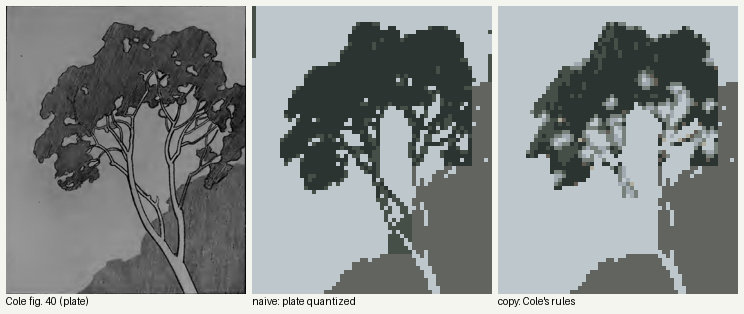 120. books/trees/copies/fig40_v1.png
Bash: cd ~/work/pixelart-studies/books/trees/src; python3 -c " from px import guide g=guide('../copies/ref_fig40.png', 44, 54, show=False) print(' '+''.join(str(i%10) for i in range(44
cd ~/work/pixelart-studies/books/trees/src; python3 -c "
from px import guide
g=guide('../copies/ref_fig40.png', 44, 54, show=False)
print('   '+''.join(str(i%10) for i in range(44)))
for j,r in enumerate(g):
    print(f'{j:2d} '+''.join(str(min(9,int(v*10))) for v in r))
"

# output:
01234567890123456789012345678901234567890123
 0 32211121111111122222222111222111111111100001
 1 32111111111111111111111111111111100000000001
 2 21111111111111111111111122111111111000000001
 3 21111111111111111115655312211111112101000001
 4 21111111111111111146677657521133477641000002
 5 21111111111111111266777778724677767775100002
 6 21111111111111111377666788757677777867311002
 7 21111111111111111367764774777778777777511102
 8 21111111111111112676776777777677777778611102
 9 21111111111111116766777877776777777767411112
10 21101111111111126767777777777775777777741112
11 21100111111455677767777777778877767787761112
12 21100111114666777777777776666887765887762112
13 11110111135667777777777876447577778887775112
14 21110111146767777787778778454578778887763254
15 21110111366777577778788888887786137877756789
16 11110114666786777777888986887777745877877889
17 11111126666887777778568987878877823978868999
18 11111146667787777788278863886735511578358699
19 11111156767787778787784431226314114788588499
20 11111166467787788786675511125616017568889999
21 01111122476157787356543411111565166446896899
22 01111112667778776466626411111455554424695999
23 01111116666787783255334311111452443126463788
24 01111156666438453113644411111341411371426878
25 00001466664248644211553411111422556344136788
26 00000567777766684533464311111503411265148788
27 00001767677666731463363311111515102787477775
28 00001375257667774424134311111454111677466874
29 01111141277668756327414311111341010557677334
30 00111111277777787211444311110330001636766667
31 00011121287478888211135311110231136328777557
32 00011111244889885211115311101241163578785556
33 00011111248677231111115421100141475577755556
34 00011111214542211111114352000045665666545556
35 00001111221221111111112446210036756665555556
36 00000111111111111111111421430346755555555556
37 00000011111111111111111421140154655555554556
38 00000001111111111111111143032361655555554556
39 00000000111111111111000143124444456545554555
40 00000000011111111111000123456444355555445555
41 00000000000111100000000015255545355555445555
42 00000000000000000000000002434545355444445456
43 00000000000000000000000014622555344455445556
44 00000000000000000000000015451445344444445556
45 00000000000000000000000025445155345544444456
46 00000000000000100000000135445235355544444446
47 00000000000111100012322454445500455544444446
48 00000000000010000035555544445530255544445457
49 00000000000000001344455444445450055444555457
50 00000000000001103443445444444453045544545457
51 00000000000000024444445444544456016544554457
52 00000000000000254444445555544556204545555567
53 11111100001103565655555555555556502655656678
Bash: cd ~/work/pixelart-studies/books/trees/src; cat > copy_fig40b.py <<'E' """Master copy of Cole fig. 40 (p. 79), drawn by hand at 44x54. Every mass is a polygon whose vertices I chos
cd ~/work/pixelart-studies/books/trees/src; cat > copy_fig40b.py <<'E'
"""Master copy of Cole fig. 40 (p. 79), drawn by hand at 44x54.
Every mass is a polygon whose vertices I chose off the plate (the outline in straight pieces,
fig. 41 / p. 92); every hole, limb and rim pixel is placed. Cole's rules applied by hand:
 p. 71 (1) hole rims colourless  (2) small holes are globes, lightest centre  (3) veiled holes
 darker than open sky  (4) local colour strongest in the middle of the big masses
 p. 80 holes linked in chains by strong edges; p. 45 limbs thin where they cross bright sky."""
import numpy as np
from PIL import Image
from px import Canvas
from lib import sheet

SKY, VEIL, RIM, DARK, CORE, LIT, WOOD, WOODD, HILL, HILLD, SKYC = range(11)
PAL = [(188, 198, 202), (156, 166, 170), (122, 130, 128), (52, 60, 56), (38, 46, 44),
       (78, 88, 80), (182, 178, 164), (118, 112, 102), (104, 106, 100), (86, 88, 84),
       (206, 214, 216)]
c = Canvas(44, 54, SKY)
# hill (right and bottom): straight pieces
c.poly([(40, 14), (43, 13), (43, 53), (12, 53), (16, 48), (22, 46), (24, 40), (26, 36),
        (30, 35), (33, 31), (38, 24), (40, 20)], HILL)
c.poly([(14, 53), (17, 49), (23, 47), (28, 47), (29, 53)], HILLD)
# crown: two masses joined, cut by straight pieces
c.poly([(17, 3), (22, 2), (26, 4), (29, 3), (33, 3), (38, 5), (41, 9), (41, 14), (39, 18),
        (40, 22), (37, 27), (33, 31), (31, 29), (30, 20), (28, 18), (24, 18), (22, 20),
        (21, 27), (19, 32), (16, 35), (10, 35), (6, 33), (5, 29), (6, 24), (5, 20), (8, 17),
        (12, 13), (15, 11), (16, 7)], DARK)
# core: strongest colour in the middle of the large masses (rule 4)
c.poly([(19, 6), (27, 7), (34, 7), (38, 11), (36, 16), (29, 15), (22, 14), (15, 16), (12, 20),
        (9, 26), (12, 31), (16, 28), (18, 20)], CORE)
# lit tops of the clumps (grey sky light from above: upper planes lighter, p. 114)
for x, y, n in [(18, 4, 4), (23, 3, 3), (30, 4, 5), (35, 6, 3), (13, 12, 3), (9, 17, 3),
                (31, 18, 2), (37, 19, 2), (6, 24, 2)]:
    c.hrun(x, y, n, LIT)
# the central bay: open sky under the crown, framed by limbs (the biggest aperture)
# holes: (x, y, shape) -- shapes as small row lists; 'o' open sky, 'v' veiled, 'c' globe centre
H = {
    'g2': ["oo", "oo"],
    'g3': [".o.", "oco", ".o."],
    'g4': [".oo.", "occo", ".oo."],
    'v3': ["vv.", "vvv", ".v."],
    'v4': [".vv.", "vvvv", ".vv."],
    'e5': [".oo..", "ocoo.", ".oooo", "..oo."],
}
for key, x, y in [('g3', 27, 11), ('g2', 24, 14), ('g4', 32, 15), ('g2', 36, 17), ('v3', 29, 8),
                  ('g3', 19, 18), ('e5', 11, 22), ('g3', 16, 23), ('g2', 8, 20), ('v4', 13, 26),
                  ('g2', 7, 28), ('v3', 20, 9), ('g3', 34, 22), ('v3', 15, 30)]:
    for j, row in enumerate(H[key]):
        for i, ch in enumerate(row):
            if ch != '.':
                c.px(x + i, y + j, {'o': SKY, 'c': SKYC, 'v': VEIL}[ch])
# rims: every foliage pixel 4-adjacent to a hole or the bay takes the colourless rim (rule 1),
# but only on the lower/left edges of holes -- where the upper foliage projects in front the
# edge stays sharp and dark (rule 5: the upper edge sharp explains the branch above).
a = c.a
foli = np.isin(a, [DARK, CORE, LIT])
hole = np.isin(a, [SKY, VEIL, SKYC])
inside = np.zeros_like(foli)
import scipy.ndimage as ndi
filled = ndi.binary_fill_holes(foli | np.isin(a, [VEIL, SKYC]) | ndi.binary_fill_holes(foli))
for y in range(1, 53):
    for x in range(1, 43):
        if foli[y, x]:
            below = hole[y + 1, x]; left = hole[y, x - 1]; right = hole[y, x + 1]
            if (below or left or right) and not hole[y - 1, x]:
                a[y, x] = RIM
# limbs, placed pixel by pixel (lit left, shadow right; sun from the left)
def limb(pts, w):
    for (x, y) in pts:
        for k in range(w):
            a[y, x + k] = WOOD if k < w - 1 or w == 1 else WOODD
trunk = [(28, 53), (28, 52), (28, 51), (27, 50), (27, 49), (27, 48), (26, 47), (26, 46), (26, 45),
         (25, 44), (25, 43), (25, 42), (24, 41), (24, 40), (24, 39), (23, 38), (23, 37), (23, 36),
         (23, 35), (22, 34)]
limb(trunk, 3)
left = [(21, 33), (20, 32), (19, 31), (18, 30), (17, 29), (16, 28), (15, 27), (14, 27), (13, 26),
        (12, 25), (11, 24), (10, 23)]
limb(left, 2)
mid = [(22, 33), (22, 32), (22, 31), (22, 30), (22, 29), (22, 28), (22, 27), (22, 26), (22, 25),
       (22, 24), (22, 23), (21, 22), (21, 21), (21, 20)]
limb(mid, 1)   # crossing the bright bay: thin (p. 45)
right = [(24, 33), (25, 32), (26, 31), (27, 30), (27, 29), (28, 28), (28, 27), (29, 26), (29, 25),
         (29, 24), (30, 23), (30, 22), (30, 21), (31, 20), (31, 19)]
limb(right, 1)
for p in [(17, 22), (16, 21), (15, 20), (26, 24), (25, 23), (24, 22), (32, 18), (33, 17)]:
    a[p[1], p[0]] = WOOD
ref = Image.open('../copies/ref_fig40.png').convert('RGB').resize((44 * 5, 54 * 5))
prev = Image.open('../copies/fig40_v1.png')
sheet([ref, c.img(PAL, 5), c.img(PAL, 1).resize((44 * 2, 54 * 2), Image.NEAREST)], 3,
      labels=['Cole fig. 40', 'hand copy 44x54 at 5x', 'at 2x']).save('../copies/fig40_v2.png')
E
python3 copy_fig40b.py

# output:
(Bash completed with no output)
Read: books/trees/copies/fig40_v2.png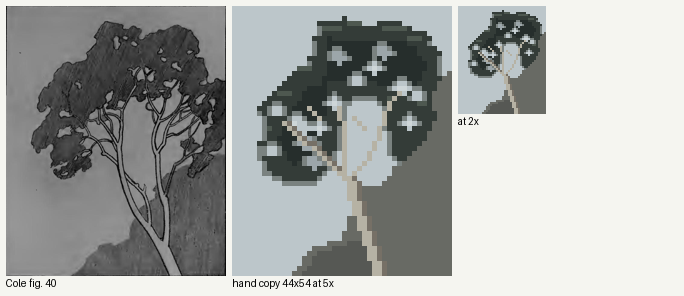 121. books/trees/copies/fig40_v2.png
Bash: cd ~/work/pixelart-studies/books/trees/src; cat > copy_fig40c.py <<'E' """Cole fig. 40 (p. 79) copied by hand, 44x54, as ASCII rows typed against the plate's box-downsampled value
cd ~/work/pixelart-studies/books/trees/src; cat > copy_fig40c.py <<'E'
"""Cole fig. 40 (p. 79) copied by hand, 44x54, as ASCII rows typed against the plate's
box-downsampled value map. Legend:
  .  sky            ,  veiled sky (p. 71 rule 3: holes screened by twigs are darker than sky)
  o  hole centre    (rule 2: small holes are globes with the light in the middle)
  r  colourless rim (rule 1)   #  foliage   %  core (rule 4: strongest colour mid-mass)
  +  lit upper plane (p. 114)  W  wood, lit  w  wood, shadow side  h/H hill, hill shade
"""
import numpy as np
from PIL import Image
from px import Canvas
from lib import sheet

ROWS = """
............................................
............................................
............................................
...................r##r.....................
..................r####r.......+r##r........
.................r+######r.,..r+#####r......
.................#+++####%#..r+++####%#.....
................r#++##%%%%%#r#+++#%%%%#r....
................##++#%%%%%r,r#++#%%%%%##....
...............r#+##%%%%%r,,r##%%%%%%%%#r...
..............r##+#%%%%%%%r,r#%%%%%%%%%##...
...........r+##+##%%%%%%%%%%%%%%r..r%%%##...
..........r+++##%%%%%%%%%%%%%r,..,r%%%%%#r..
.........r++#%%%%%%%%%%%%r,,r%%%%%%%%%%%#r..
.........#++##%%%%%%%%%%r,o,r%%%%%%%%%%%##hh
........r+###%%%%%%%%%%%%rr%%%%%%%r.or%%%hhh
.......r++#%%%#%%%%%%%%%%%%%%%%r..%%%%%%#hhh
......r##%%%%#%%%%%%%%%%%%r..r%%%%%%%r,.r#hh
......#+#%%%%%#%%%%%%r.r%%r.W.r%%%%%%r,,r#hh
......##%%%%%%%%%%%%r.oW.rr..W.r%%%%%%%%%#hh
......##%%r.r%%%%%%r..W....W...W.r%%%%%%##hh
......r#%r.o.r%%%%r..W.....W...W..r%%%%%#hhh
.......#%%r.r%W%%r..W......W....W.r%%%%##hhh
.......#%%%%%%%Wr..W.......W....W..r%##hhhhh
......r#%%%r..r%W.W........W.....W..r#hhhhhh
.....r#%%%r.o.r%%W.........W.....W...rhhhhhh
.....#%%%%%r.r%%%W.........W.....W...hhhhhhh
.....##%%%%%%%%%%%W........W......W..hhhhhhh
.....r#%%r,r%%%%%%W........W......W.hhhhhhhh
......#%%r,,r%%%%%%W.......W.....W.hhhhhhhhh
......r#%%rr%%%%%%%%W......W.....W.hhhhhhhhh
.......r#%%%%%%%%%%%%W.....W....W.hhhhhhhhhh
........r##%%%%%%%%%%%W....W...W.hhhhhhhhhhh
.........r#%%%%%#r..r##W...W..W.hhhhhhhhhhhh
..........r###r.......rWW..W.W.hhhhhhhhhhhhh
.......................rWWwWW.hhhhhhhhhhhhhh
.......................WWWw.hhhhhhhhhhhhhhhh
.......................WWw.hhhhhhhhhhhhhhhhh
.......................WWwhhhhhhhhhhhhhhhhhh
.......................WWwhhhhhhhhhhhhhhhhhh
........................WWwhhhhhhhhhhhhhhhhh
........................WWwhhhhhhhhhhhhhhhhh
........................WWWwhhhhhhhhhhhhhhhh
.........................WWwhhhhhhhhhhhhhhhh
.........................WWWwhhhhhhhhhhhhhhh
.........................hWWwhhhhhhhhhhhhhhh
..........................hWWwhhhhhhhhhhhhhh
................HHHhhhhhhhhWWwhhhhhhhhhhhhhh
..............HHhhhhhhhhhhhWWWwhhhhhhhhhhhhh
.............Hhhhhhhhhhhhhh.WWwhhhhhhhhhhhhh
............Hhhhhhhhhhhhhhh.WWWwhhhhhhhhhhhh
...........Hhhhhhhhhhhhhhhhh.WWWwhhhhhhhhhhh
..........Hhhhhhhhhhhhhhhhhhh.WWWwhhhhhhhhhh
.........HHhhhhhhhhhhhhhhhhhhh.WWWWwhhhhhhhh
""".strip('\n').split('\n')
KEY = {'.': 0, ',': 1, 'o': 10, 'r': 2, '#': 3, '%': 4, '+': 5, 'W': 6, 'w': 7, 'h': 8, 'H': 9}
PAL = [(188, 198, 202), (156, 166, 170), (122, 130, 128), (52, 60, 56), (38, 46, 44),
       (78, 88, 80), (182, 178, 164), (118, 112, 102), (104, 106, 100), (86, 88, 84),
       (206, 214, 216)]
if __name__ == '__main__':
    assert all(len(r) == 44 for r in ROWS), [len(r) for r in ROWS]
    c = Canvas(44, len(ROWS))
    c.stamp(ROWS, 0, 0, KEY)
    ref = Image.open('../copies/ref_fig40.png').convert('RGB').resize((44 * 5, 54 * 5))
    sheet([ref, c.img(PAL, 5), c.img(PAL, 2)], 3, labels=['Cole fig. 40', 'hand copy v3, 5x', '2x']).save('../copies/fig40_v3.png')
E
python3 copy_fig40c.py

# output:
(Bash completed with no output)
Read: books/trees/copies/fig40_v3.png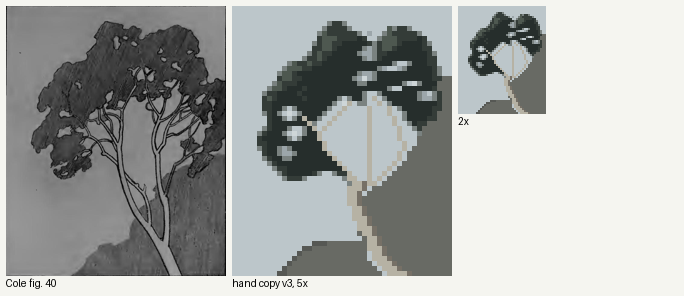 122. books/trees/copies/fig40_v3.png
Bash: cd ~/work/pixelart-studies/books/trees/src; python3 - <<'E' s=open('copy_fig40c.py').read() a=s.index('ROWS = """')+len('ROWS = """'); b=s.index('""".strip') rows=s[a:b].strip('\n'
cd ~/work/pixelart-studies/books/trees/src; python3 - <<'E'
s=open('copy_fig40c.py').read()
a=s.index('ROWS = """')+len('ROWS = """'); b=s.index('""".strip')
rows=s[a:b].strip('\n').split('\n')
new = """
............................................
............................................
............................................
...................r##r.....................
..................r####r.......+r##r........
.................r+######r.,..r+#####r......
.................#+++####%#..r+++####%#.....
................r#++##%%%%%#r#+++#%%%%#r....
................##++#%%%%%r,r#++#%%%%%##....
...............r#+##%%%%%r,,r##%%%%%%%%#r...
..............r##+#%%%%%%%r,r#%%%%%%%%%##...
...........r+##+##%%%%%%%%%%%%%%r..r%%%##...
..........r+++##%%%%%%%%%%%%%r,..,r%%%%%#r..
.........r++#%%%%%%%%%%%%r,,r%%%%%%%%%%%#r..
.........#++##%%%%%%%%%%r,o,r%%%%%%%%%%%##Hh
........r+###%%%%%%%%%%%%rr%%%%%%%r.or%%%%Hh
.......r++#%%%#%%%%%%%%%%%%%%%%r..%%%%%%%%Hh
......r##%%%%#%%%%%%%%%%%%r..r%%%%%%%r,.r%%H
......#+#%%%%%#%%%%%%r.r%%r..r%%%%%%%r,,r%%H
......##%%%%%%%%%%%%r.oWw.rr.r%%%%%%%%%%%%%H
......##%%r.r%%%%%%r..Ww....Ww..r%%%%%%%%%HH
......r#%r.o.r%%%%r..Ww.....Ww...r%%%%%%%%HH
.......#%%r.r%Ww%r..Ww.....Ww.....r%%%%%%HHh
.......#%%%%%%%Wwr.Ww......Ww......r%%%%HHhh
......r#%%%r..r%Ww.Ww.....Ww........r%%HHhhh
.....r#%%%r.o.r%%WWw......Ww..Ww.....rHHhhhh
.....#%%%%%r.r%%%%Ww......Ww.Ww.....HHhhhhhh
.....##%%%%%%%%%%%Ww.....Ww.Ww.....HHhhhhhhh
.....r#%%r,r%%%%%%%Ww....WwWw.....HHhhhhhhhh
......#%%r,,r%%%%%%%Ww...WWw.....HHhhhhhhhhh
......r#%%rr%%%%%%%%%Ww..WWw....HHhhhhhhhhhh
.......r#%%%%%%%%%%%%%Ww.WWw...HHhhhhhhhhhhh
........r##%%%%%%%%%%%%WwWWw..HHhhhhhhhhhhhh
.........r#%%%%%#r..r##WWWw..HHhhhhhhhhhhhhh
..........r###r.......rWWWw.HHhhhhhhhhhhhhhh
......................WWWw.HHhhhhhhhhhhhhhhh
......................WWWwHHhhhhhhhhhhhhhhhh
......................WWWwHhhhhhhhhhhhhhhhhh
.......................WWWwhhhhhhhhhhhhhhhhh
.......................WWWwhhhhhhhhhhhhhhhhh
........................WWWwhhhhhhhhhhhhhhhh
........................WWWwhhhhhhhhhhhhhhhh
........................WWWwhhhhhhhhhhhhhhhh
.........................WWWwhhhhhhhhhhhhhhh
.........................WWWwhhhhhhhhhhhhhhh
.........................hWWWwhhhhhhhhhhhhhh
..........................hWWWwhhhhhhhhhhhhh
................HHHhhhhhhhhWWWwhhhhhhhhhhhhh
..............HHhhhhhhhhhhhWWWWwhhhhhhhhhhhh
.............Hhhhhhhhhhhhhh.WWWwhhhhhhhhhhhh
............Hhhhhhhhhhhhhhh.WWWWwhhhhhhhhhhh
...........Hhhhhhhhhhhhhhhhh.WWWWwhhhhhhhhhh
..........Hhhhhhhhhhhhhhhhhhh.WWWWwhhhhhhhhh
.........HHhhhhhhhhhhhhhhhhhhh.WWWWWwhhhhhhh
"""
s=s[:a]+new+s[b:]
s=s.replace("'hand copy v3, 5x'","'hand copy v4, 5x'").replace("fig40_v3.png","fig40_v4.png")
s=s.replace("(104, 106, 100), (86, 88, 84)","(92, 96, 92), (70, 76, 72)")
open('copy_fig40c.py','w').write(s)
E
python3 copy_fig40c.py

# output:
(Bash completed with no output)
Read: books/trees/copies/fig40_v4.png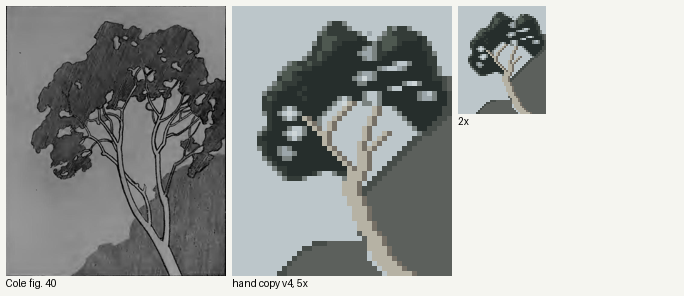 123. books/trees/copies/fig40_v4.png
Bash: cd ~/work/pixelart-studies/books/trees; python3 -c " from PIL import Image im=Image.open('pages/hi/c-145.jpg'); print(im.size); im.crop((0,280,1238,1560)).resize((930,960)).save('t
cd ~/work/pixelart-studies/books/trees; python3 -c "
from PIL import Image
im=Image.open('pages/hi/c-145.jpg'); print(im.size); im.crop((0,280,1238,1560)).resize((930,960)).save('tmp/c145.jpg')"

# output:
(1238, 1950)
Read: books/trees/tmp/c145.jpg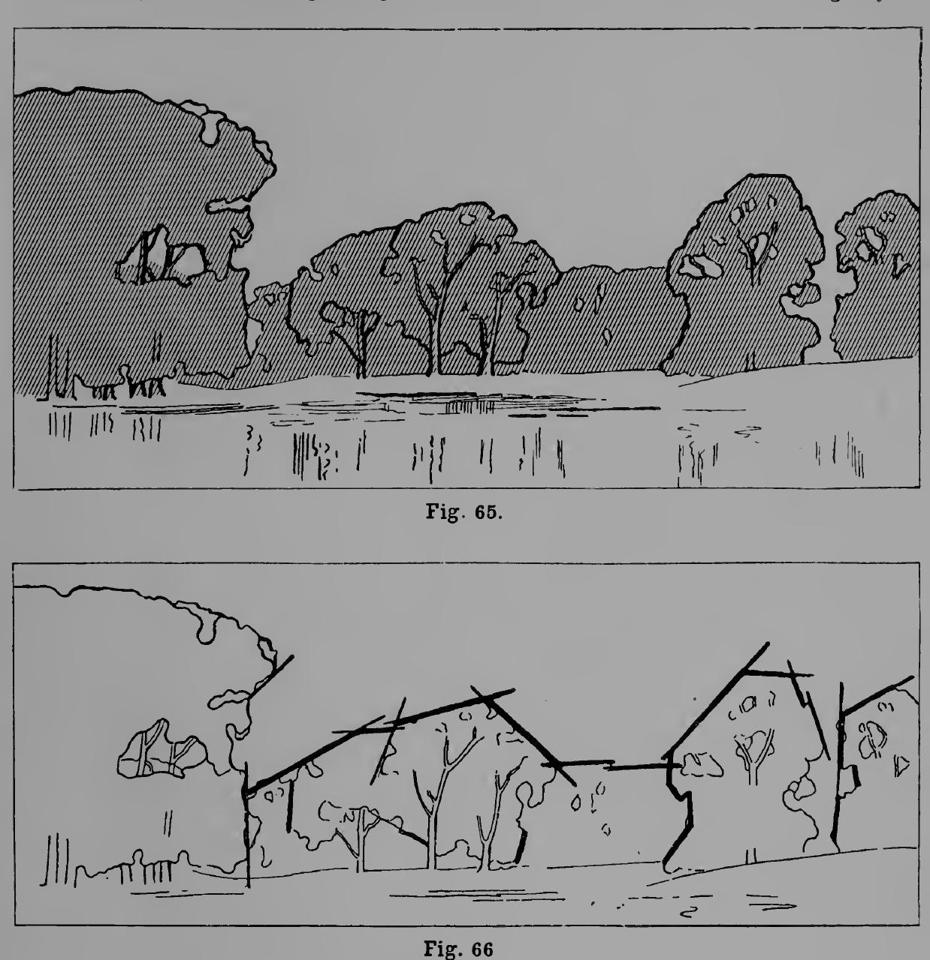 124. books/trees/tmp/c145.jpg
Bash: cd ~/work/pixelart-studies/books/trees/src; python3 -c " from PIL import Image im=Image.open('../pages/hi/c-145.jpg').convert('L'); im.crop((20,320,1225,930)).save('../copies/ref_f
cd ~/work/pixelart-studies/books/trees/src; python3 -c "
from PIL import Image
im=Image.open('../pages/hi/c-145.jpg').convert('L'); im.crop((20,320,1225,930)).save('../copies/ref_fig65.png')
from px import guide
g=guide('../copies/ref_fig65.png', 96, 48, show=False)
import numpy as np
from scipy import ndimage as ndi
print('   '+''.join(str(i%10) for i in range(96)))
for j,r in enumerate(g): print(f'{j:2d} '+''.join(str(min(9,int(v*10))) for v in r))
"

# output:
012345678901234567890123456789012345678901234567890123456789012345678901234567890123456789012345
 0 000000000000000000000000000000000000000000111000000000000000000000000000000000000000000000000000
 1 000000000000000000000000000000000000000000000000000000000000000000000000000000000000000000000000
 2 000000000000000000000000000000000000000000000000000000000000000000000000000000000000000000000001
 3 000000000000000000000000000000000000000000000000000000000000000000000000000000000000000000000001
 4 000000000000000000000000000000000000000000000000000000000000000000000000000000000000000000000001
 5 000000110000000000000000000000000000000000000000000000000000000000000000000000000000000000000001
 6 467765776655541000000000000000000000000000000000000000000000000000000000000000000000000000000001
 7 454454444444446554441000000000000000000000000000000000000000000000000000000000000000000000000001
 8 444444444444444446526420000000000000000000000000000000000000000000000000000000000000000000000001
 9 454545445444444444461472000000000000000000000000000000000000000000000000000000000000000000000001
10 445445455444444444462545630000000000000000000000000000000000000000000000000000000000000000000001
11 444444454444444444462644473000000000000000000000000000000000000000000000000000000000000000000001
12 454444445544454444445444464200000000000000000000000000000000000000000000000000000000000000000001
13 444444444555544444444444436400000000000000000000000000000000000000000000000000000000000000000001
14 544544444555544444445444444600000000000000000000000000000000000000000000000000000000000000000001
15 444444445545444444444444445300000000000000000000000000000000000000000000000015666630000000000001
16 454555444444444454444444462000000000000000000000000000000000000000000000000153344450000000002001
17 455554444454444444444656840000000000000000000000000000000000000000000000001744445335000000454551
18 454554444454444544546353600000000000000000001456664000000000000000000000055456443337200005323337
19 444544545544444444446646710000000000000001165334427430000000000000000000344526334443500254335444
20 444444545555445744444445530000000000003465644445543362000000000000000001744454447444510534544335
21 444444444455488464444456710000000025675474544544544561000000000000000005442454655444360434355444
22 444444444444687176774449400000000454444655445745877645650000000000000045345447435444350535725335
23 454544444445482195145462000000026444445575544646845544555000000000000345553456573334450635573545
24 544555544556293392118471100000254554445644654758455555554401232000021663514445954334730674554555
25 445444544465498662357556700001755554446664644784455756655655444555544754452544743333500446343855
26 445444444445676668844554512336455454444454755864545686755755545444444744544443633356510005443434
27 444444444444444444444444444557444444444444658644545767677555465444445765444333343555340244444445
28 444445444444454444444444655656445754444445577646444747766445545444444446444333443344310733434445
29
Bash: cd ~/work/pixelart-studies/books/trees/src; cat > copy_fig65.py <<'E' """Cole figs. 65-66 (p. 93): a tree line whose margin is built of straight pieces carried from clump to clump.
cd ~/work/pixelart-studies/books/trees/src; cat > copy_fig65.py <<'E'
"""Cole figs. 65-66 (p. 93): a tree line whose margin is built of straight pieces carried from
clump to clump. Copied by hand at 96x48 (landscape scale, ~0.6 m/px for trees ~20 m high).
The vertices are my choice of the 'builder's frame' (fig. 66's heavy lines)."""
import numpy as np
from PIL import Image
from px import Canvas
from lib import sheet

SKY, MASS, SHADE, RIM, TRUNK, GROUND, REED, WATER = range(8)
PAL = [(200, 206, 204), (86, 94, 84), (66, 74, 66), (128, 136, 128), (150, 150, 136),
       (176, 178, 162), (60, 64, 56), (188, 194, 192)]
c = Canvas(96, 48, SKY)
V = [(0, 6), (14, 6), (20, 7), (24, 9), (27, 12), (27, 16), (25, 18), (26, 21), (25, 24), (28, 26),
     (30, 23), (34, 21), (39, 20), (42, 18), (47, 18), (51, 19), (54, 21), (57, 24), (60, 24),
     (70, 24), (72, 21), (74, 17), (76, 15), (81, 15), (83, 17), (84, 21), (86, 25), (87, 26),
     (88, 21), (91, 17), (95, 16), (95, 36), (0, 36)]
c.poly(V, MASS)
# shade side of the separate crowns (sun from the left): a second tone of the same mass,
# from the same end of the scale (fig. 9) -- kept to the right-hand third of each crown
for poly in [[(18, 7), (24, 9), (27, 12), (27, 16), (25, 18), (26, 21), (25, 24), (20, 26)],
             [(47, 18), (51, 19), (54, 21), (57, 24), (52, 30), (48, 26)],
             [(81, 15), (83, 17), (84, 21), (86, 25), (82, 30), (80, 22)]]:
    c.poly(poly, SHADE)
a = c.a
# the big hole in the left tree, with the stems seen through it (fig. 65)
hole = ["..oooo.oo", ".ooooooooo", "oooooooooo.", ".ooooooo..", "..ooo...."]
for j, row in enumerate(hole):
    for i, ch in enumerate(row):
        if ch == 'o':
            a[21 + j, 11 + i] = SKY
for (x, y) in [(13, 21), (13, 22), (13, 23), (14, 24), (16, 22), (16, 23), (17, 24), (15, 25)]:
    a[y, x] = MASS                   # stems crossing the hole: dark, thin
# small holes: rims colourless, shapes varied (never stamped)
for pts in [[(41, 21), (42, 21), (42, 22)], [(77, 20), (78, 20), (78, 21), (79, 21)],
            [(90, 21), (91, 22), (90, 22)], [(62, 28)], [(33, 25), (34, 25)], [(46, 23)]]:
    for (x, y) in pts:
        a[y, x] = SKY
for y in range(1, 47):
    for x in range(1, 95):
        if a[y, x] in (MASS, SHADE) and (a[y + 1, x] == SKY or a[y, x - 1] == SKY) and a[y - 1, x] != SKY and y > 8:
            a[y, x] = RIM
# stems of the middle group, lit against the dark under-crown (Cole: trunks tell against foliage)
for x0, top, lean in [(35, 27, 0), (37, 29, 1), (44, 25, 0), (47, 27, -1), (58, 29, 0), (82, 30, 0)]:
    x = x0
    for y in range(top, 36):
        a[y, x] = TRUNK
        if lean and (y - top) % 4 == 3:
            x += lean
# ground: flat contact, a darker line under the mass (the contact line), then light field
a[36, :] = SHADE
a[37:, :] = GROUND
for x in range(0, 96):
    if (x * 7) % 11 < 3:
        a[37, x] = MASS
# water strip with reflections (fig. 65 has a pond): lighter band, broken dashes
a[38:40, 20:70] = WATER
for x in range(22, 68, 5):
    a[38 + (x % 2), x:x + 2] = RIM
# reeds: clustered vertical strokes of 2-5 px, uneven gaps (never evenly spaced, fig. 20-21)
for x, h in [(1, 5), (2, 4), (4, 3), (8, 4), (9, 6), (11, 3), (27, 4), (29, 6), (30, 5), (31, 3),
             (36, 3), (43, 5), (44, 3), (52, 4), (53, 2), (56, 5), (70, 4), (71, 6), (73, 3),
             (86, 4), (88, 5), (89, 3)]:
    for y in range(46 - h, 46):
        a[y, x] = REED
ref = Image.open('../copies/ref_fig65.png').convert('RGB').resize((96 * 5, int(610 / 1205 * 96 * 5)))
sheet([ref, c.img(PAL, 5), c.img(PAL, 2)], 1, labels=['Cole fig. 65', 'hand copy 96x48, 5x', '2x']).save('../copies/fig65_v1.png')
E
python3 copy_fig65.py

# output:
(Bash completed with no output)
Read: books/trees/copies/fig65_v1.png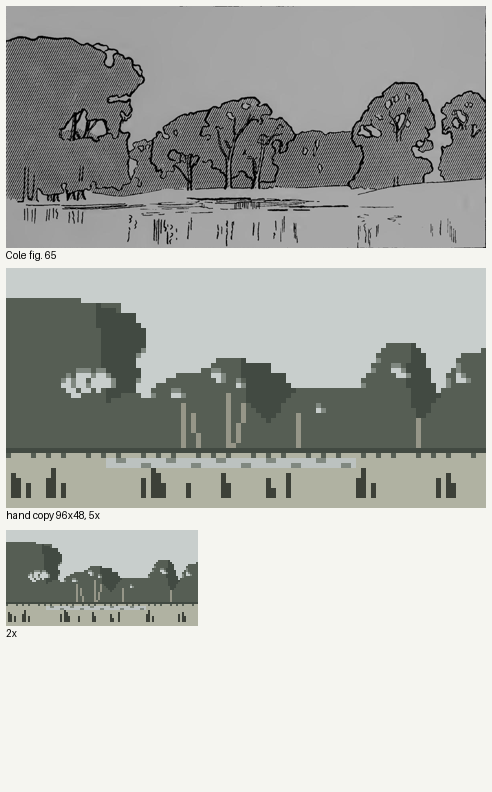 125. books/trees/copies/fig65_v1.png
Bash: cd ~/work/pixelart-studies/books/trees/src; python3 - <<'E' s=open('copy_fig65.py').read() a=s.index("V = ["); b=s.index("c.poly(V, MASS)") s=s[:a]+'''V = [(0, 7), (3, 6), (8, 6),
cd ~/work/pixelart-studies/books/trees/src; python3 - <<'E'
s=open('copy_fig65.py').read()
a=s.index("V = ["); b=s.index("c.poly(V, MASS)")
s=s[:a]+'''V = [(0, 7), (3, 6), (8, 6), (12, 5), (15, 6), (18, 6), (20, 8), (22, 8), (24, 10), (26, 11),
     (27, 13), (26, 15), (27, 17), (25, 19), (26, 21), (25, 23), (26, 25), (28, 26),
     (29, 24), (31, 24), (33, 22), (36, 21), (38, 20), (39, 18), (42, 17), (45, 17), (47, 18),
     (49, 18), (51, 20), (53, 20), (54, 22), (56, 23), (58, 25), (61, 24), (66, 23), (70, 23),
     (71, 21), (73, 19), (74, 16), (76, 15), (79, 14), (81, 15), (83, 16), (83, 19), (85, 21),
     (84, 23), (86, 26), (87, 25), (88, 21), (90, 18), (92, 17), (95, 16), (95, 36), (0, 36)]
'''+s[b:]
# shade: replace polygon blocks with a band along the right-hand side of each crown's outline,
a=s.index("# shade side of the separate crowns"); b=s.index("a = c.a")
s=s[:a]+'''# shade side: the right-hand flank of each crown, 2-4 px in from the outline, same end of the scale
m = c.a == MASS
for y in range(6, 36):
    row = m[y]
    for x in range(1, 95):
        if row[x] and not row[x + 1]:            # right edge of a clump
            w = 3 if y < 26 else 2
            for k in range(w):
                if m[y, x - k] and ((x - k + y) % 5 != 0 or k == 0):
                    c.a[y, x - k] = SHADE
'''+s[b:]
s=s.replace("for x, h in [(1, 5), (2, 4), (4, 3), (8, 4), (9, 6), (11, 3), (27, 4), (29, 6), (30, 5), (31, 3),\n             (36, 3), (43, 5), (44, 3), (52, 4), (53, 2), (56, 5), (70, 4), (71, 6), (73, 3),\n             (86, 4), (88, 5), (89, 3)]:",
"for x, h in [(1, 5), (2, 3), (4, 2), (8, 4), (9, 6), (10, 2), (27, 2), (29, 5), (30, 3), (32, 2),\n             (36, 2), (43, 4), (44, 2), (52, 3), (53, 2), (56, 4), (70, 3), (71, 5), (73, 2),\n             (86, 3), (88, 4), (89, 2)]:")
s=s.replace("fig65_v1.png","fig65_v2.png")
open('copy_fig65.py','w').write(s)
E
python3 copy_fig65.py

# output:
(Bash completed with no output)
Read: books/trees/copies/fig65_v2.png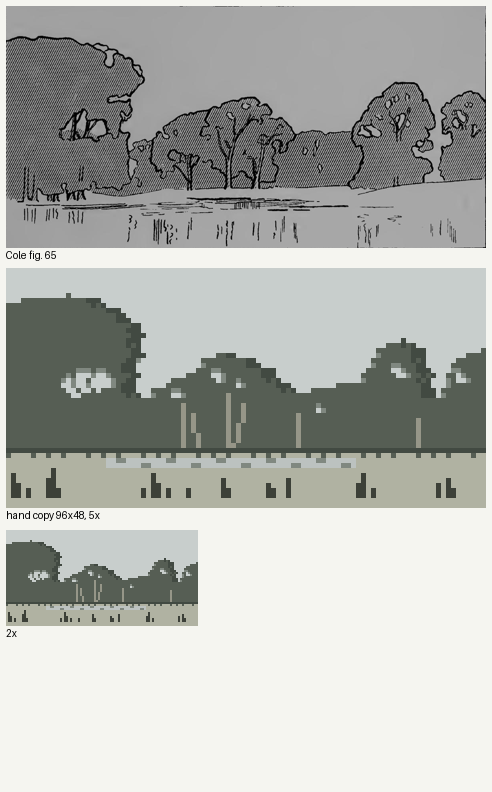 126. books/trees/copies/fig65_v2.png
Bash: cd ~/work/pixelart-studies/books/trees; python3 -c " from PIL import Image a=Image.open('pages/hi/c-212.jpg'); b=Image.open('pages/hi/c-216.jpg'); print(a.size) a.crop((150,200,110
cd ~/work/pixelart-studies/books/trees; python3 -c "
from PIL import Image
a=Image.open('pages/hi/c-212.jpg'); b=Image.open('pages/hi/c-216.jpg'); print(a.size)
a.crop((150,200,1100,1150)).resize((600,600)).save('tmp/holly.jpg'); b.crop((80,150,1180,1650)).resize((550,750)).save('tmp/lomb.jpg')"

# output:
(1238, 1950)
Read: books/trees/tmp/holly.jpg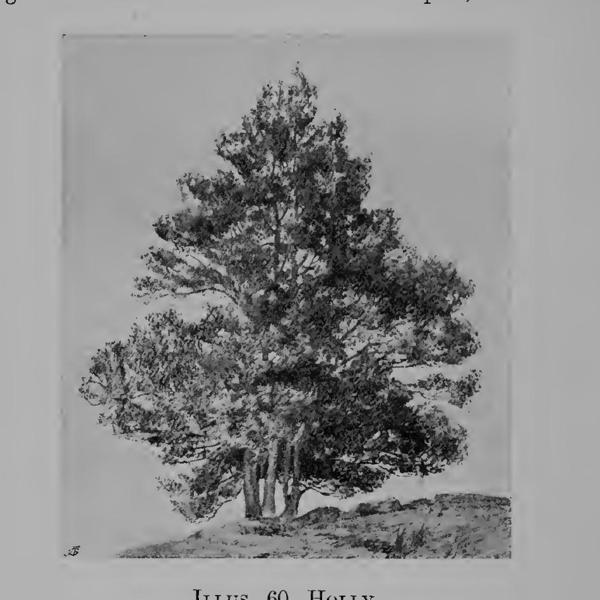 127. books/trees/tmp/holly.jpg
Read: books/trees/tmp/lomb.jpg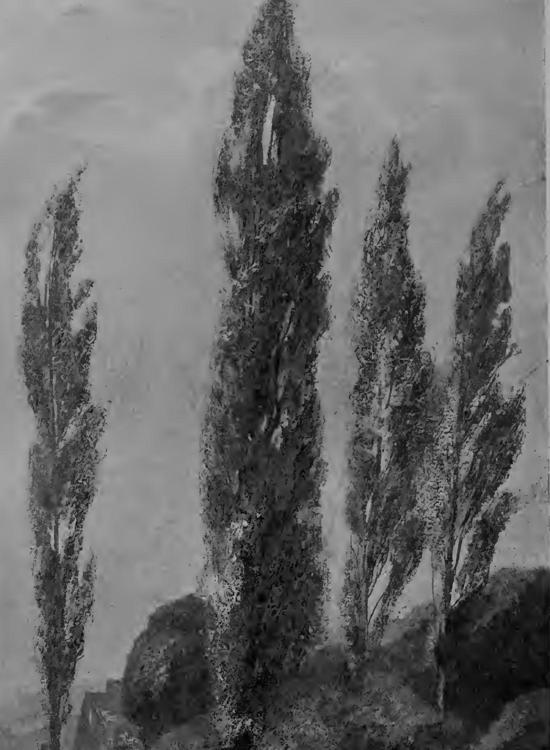 128. books/trees/tmp/lomb.jpg
Bash: cd ~/work/pixelart-studies/books/trees/src; python3 -c " from PIL import Image a=Image.open('../pages/hi/c-212.jpg').convert('L'); a.crop((330,280,970,920)).save('../copies/ref_hol
cd ~/work/pixelart-studies/books/trees/src; python3 -c "
from PIL import Image
a=Image.open('../pages/hi/c-212.jpg').convert('L'); a.crop((330,280,970,920)).save('../copies/ref_holly.png')
from px import guide
g=guide('../copies/ref_holly.png', 64, 64, show=False)
print('   '+''.join(str(i%10) for i in range(64)))
for j,r in enumerate(g): print(f'{j:2d} '+''.join(str(min(9,int(v*10))) for v in r))
"

# output:
0123456789012345678901234567890123456789012345678901234567890123
 0 0000000000000000000000000000000000000000000000000000000000000000
 1 0000000000000000000000000000010000000000000000000000000000000000
 2 0000000000000000000000000000110000000000000000000000000000000000
 3 0000000000000000000000000000220000000000000000000000000000000000
 4 0000000000000000000000000010023000000000000000000000000000000000
 5 0000000000000000000000012021225210000000000000000000000000000000
 6 0000000000000000000000024132545410000000000000000000000000000000
 7 0000000000000000000000133032314110000000000000000000000000000000
 8 0000000000000000000000152243334200000000000000000000000000000000
 9 0000000000000000000001453223451410010000000000000000000000000000
10 0000000000000000000021443242555300031001000000000000000000000000
11 0000000000000000000033574654577212454001000000000000000000000000
12 0000000000000000010124367767564352574100000000000000000000000000
13 0000000000000000133556445777453554673001000000000000000000000000
14 0000000000000000254344555777734532452011000000000000000000000000
15 0000000000000000421135665776745456364101110000000000000000001100
16 0000000000000001345666652587556676467111111000000000000000001100
17 0000000000000000015785572475356886557553311000000000000000001100
18 1000000000001001101587643343378888677776301111000000000000001100
19 1000000001022110334177423446678747535764201111000000000000000010
20 1000000000343343446237656653677734447774210111000000000000000100
21 1000000000225664777546657865677754378765301110000000000000001100
22 1100000001215665776777776785466766578775200111000000000000001100
23 1110000001121366566867787777477778678883100011000000000000001100
24 1111000000011245466677557736556788788881001111100000000000001100
25 1111001011342343667663565533246776778776344521110000000000001100
26 0001101223655666777765765541357896777389845532110000000000001100
27 0000113553557877786432556554457678876787775541010000000000001110
28 0000003765557779773237536635678587977456574641100000000000000010
29 0000000565635785533555333433677886887577334752101000000000000000
30 0000000013557866555445523653577974888563336673111000001000000000
31 0000022311322444344555655576635776778776567543320000001000000000
32 0000225644111036454466555645503366778676776212231011001100000000
33 0000032565520102456677766642431224788667786352432443221000000000
34 0000014333124554125667675542535433798878778654653555431000000000
35 0000011243213566524567564475645346899999877566655666663100000000
36 0002343223565645655355566655626678988888877786777656676220000000
37 0001443334235534234324457954667767787688888888885666665531010000
38 0001121113222210022545236588757844675366888987886766744641010000
39 0000111000010000002436465477656677653342557799898786535200000000
40 0000000001000013212245577788545777655654447888778886563100000000
41 0000001233000004323036588886477787688665357988678888851101100000
42 0000022364200143643304677764656888875555546865467764642111100000
43 00010145
Bash: cd ~/work/pixelart-studies/books/trees/src; python3 -c " from PIL import Image a=Image.open('../pages/hi/c-212.jpg').convert('L'); a.crop((290,260,1010,1080)).save('../copies/ref_h
cd ~/work/pixelart-studies/books/trees/src; python3 -c "
from PIL import Image
a=Image.open('../pages/hi/c-212.jpg').convert('L'); a.crop((290,260,1010,1080)).save('../copies/ref_holly.png')
from px import guide
g=guide('../copies/ref_holly.png', 60, 68, show=False)
print('   '+''.join(str(i%10) for i in range(60)))
for j,r in enumerate(g): print(f'{j:2d} '+''.join(str(min(9,int(v*10))) for v in r))
"

# output:
012345678901234567890123456789012345678901234567890123456789
 0 000000000000000000000000000000000000000000000000000000000000
 1 110011110000000000000000000000000000000000000000000000000000
 2 100000000000000000000000000000000000000000000000000000000000
 3 100000000000000000000000000100000000000000000000000000000000
 4 100000000000000000000000000210000000000000000000000000000000
 5 100000000000000000000000010140000000000000000000000000000000
 6 000000000000000000000002122243100000000000000000000000000000
 7 000000000000000000000015233343100000000000000000000000000000
 8 001000000000000000000032143232000000000000000000000000000000
 9 001000000000000000000254224433100100000000000000000000000000
10 000000000000000000002253343664012300100000000000000000000000
11 100000000000000000003366665673236610100000000000000000000000
12 100000000000000012234445775553646410100000000000000000000000
13 100000000000000013434645776436335401100001110000000000000000
14 110000000000000114113565676655655510111001110000000001100000
15 111000000000100114566563586567755722211001100000000011100000
16 111111100000000010278664453468875776421111110111100011100000
17 111111100010111013228652345688674676511111111111111001100000
18 111111100001333333634655655777353576411111111111111001100000
19 111110000001256657754666865677544876510111111111111101100000
20 111111000011236668677776784567776877410111101111111101100000
21 111111100001212565677878866677877888100111101111001011100000
22 000111101001233445676455633467778887323311100010000001100000
23 000111101224545567766576542468857848855531110011000001100000
24 000000112544668877743356554466787778866531110011111001110000
25 000000001766467776334645636686888746655641110001111001110000
26 000000000145567754455532443678668867434762111001111100100000
27 000000002103445545444554575668767865557653210000110000000000
28 000000124643111453446665645233777867667322320100110000000000
29 000000013565311134567676642422258876787452424432100000000000
30 000000002432145541466765454544348888878655645554300000000000
31 000000231234435565445565465555689988887676666666621000000000
32 000000344323465343533456845566788777888887766666643110000000
33 000000112113223212354426687678556646788988867665463010000000
34 000000111000100000144656477556784534357798887863530000000000
35 000000000011000242214568886557776665436888678876310100000000
36 000000012253000245212668885668887766546887578766110100000000
37 000000103445323666552467654677877334546732366436532110000000
38 000001313425576663554565266667886343233541276226743100000000
39 000002332423655642333344468546766533222223355455676101000000
40 002543345343454034464445466545666621343335564357564300000000
41 034553345545655333454425233555366615643424675345575100000000
42 244253456454444545544424344578453545656433565445520000000000
43 464462335346653565664345777888875456657621100010002110000000
44 234351135556554455536478899989885676656420001452023310000000
45 22434343465444335365666666777788876778755335545546621000
Bash: cd ~/work/pixelart-studies/books/trees/src; cat > copy_holly.py <<'E' """Cole Illus. 60 (Holly, p. 152), copied at 60x68. Clumps are placed by hand off the plate (list below). Each
cd ~/work/pixelart-studies/books/trees/src; cat > copy_holly.py <<'E'
"""Cole Illus. 60 (Holly, p. 152), copied at 60x68.
Clumps are placed by hand off the plate (list below). Each clump is painted with Cole's planes
(p. 114): its upper surface faces the grey sky and takes the light tone, the body the middle,
the underside and inner recess the dark; the whole dome adds a second, slower gradient (the
tree's planes: left/top light, right/bottom dark). Only adjacent tones meet. Edges: sprays
break the outline on the lit side, the shadow side is kept closer (p. 71: edges lose colour)."""
import numpy as np
from PIL import Image
from px import Canvas
from lib import sheet

SKY, EDGE, T1, T2, T3, T4, WOOD, WOODD, GRD, GRDD = range(10)
PAL = [(206, 206, 196), (160, 162, 150), (132, 136, 122), (100, 106, 94), (72, 78, 68),
       (46, 52, 46), (120, 108, 92), (70, 62, 54), (168, 162, 140), (130, 124, 104)]
W, H = 60, 68
# (cx, cy, rx, ry) -- read off the plate's value map, top to bottom
CLUMPS = [
    (27, 5, 2, 2), (26, 8, 3, 2), (28, 10, 4, 2), (24, 12, 3, 2), (31, 12, 4, 2), (35, 12, 3, 2),
    (20, 15, 4, 2), (27, 15, 5, 3), (34, 16, 4, 2), (39, 15, 2, 1),
    (18, 19, 4, 2), (25, 19, 5, 3), (32, 20, 5, 3), (37, 20, 3, 2),
    (12, 24, 5, 2), (19, 24, 4, 3), (27, 24, 5, 3), (34, 24, 5, 3), (40, 23, 3, 2),
    (10, 29, 4, 2), (17, 29, 5, 3), (25, 29, 5, 3), (33, 29, 6, 3), (41, 29, 5, 3), (47, 31, 4, 2),
    (14, 34, 5, 2), (22, 34, 5, 3), (30, 34, 6, 3), (38, 33, 6, 3), (45, 34, 5, 3), (50, 33, 3, 2),
    (6, 41, 5, 2), (13, 40, 5, 3), (21, 40, 6, 3), (30, 40, 6, 3), (39, 39, 6, 3), (47, 39, 5, 3),
    (3, 46, 4, 2), (10, 45, 5, 3), (18, 45, 5, 3), (27, 45, 7, 3), (37, 45, 6, 3), (46, 45, 5, 3),
    (5, 50, 4, 2), (14, 50, 5, 3), (24, 50, 6, 3), (34, 50, 7, 3), (44, 50, 6, 3), (51, 49, 3, 2),
    (17, 55, 5, 2), (27, 55, 7, 3), (37, 55, 7, 3), (46, 54, 4, 2),
]
rng = np.random.default_rng(7)
tone = np.full((H, W), -1.0)
yy, xx = np.mgrid[0:H, 0:W]
for (cx, cy, rx, ry) in CLUMPS:
    d = ((xx - cx) / (rx + 0.5)) ** 2 + ((yy - cy) / (ry + 0.5)) ** 2
    # ragged edge: sprays -- a clump's edge is broken by 1-px notches and jutting tips
    jag = rng.uniform(-0.35, 0.35, size=(H, W))
    inside = d + jag * (d > 0.5) < 1.0
    # plane within the clump: top rows light (faces the sky), underside dark
    v = (yy - (cy - ry)) / (2 * ry + 1)          # 0 top .. 1 bottom
    plane = np.clip(v, 0, 1)
    # dome gradient: the tree as one dome -- lighter up/left, darker down/right
    dome = 0.45 * (yy - 5) / 55 + 0.35 * (xx - 8) / 45
    t = 0.55 * plane + dome
    tone = np.where(inside, t, tone)            # later (lower) clumps overlap earlier
c = Canvas(W, H, SKY)
fol = tone >= 0
q = np.digitize(tone, [0.2, 0.42, 0.62])        # 0..3 -> T1..T4
c.a[fol] = (T1 + q)[fol]
# edges facing sky lose colour: outline pixels on the left/top take EDGE (colourless rim)
a = c.a
for y in range(1, H - 1):
    for x in range(1, W - 1):
        if fol[y, x] and (not fol[y, x - 1] or not fol[y - 1, x]) and x < 34:
            a[y, x] = EDGE if a[y, x] in (T1, T2) else a[y, x]
# stems: several trunks from one stool (the holly's multiple stems), pale on the left
for x0, top, lean in [(24, 50, 0), (27, 49, 1), (30, 51, 0), (33, 50, -1)]:
    x = x0
    for y in range(top, 61):
        if a[y, x] in (T3, T4) or y > 56:
            a[y, x] = WOOD
            a[y, x + 1] = WOODD
        if lean and (y - top) % 5 == 4:
            x += lean
# ground: the bank, flat contact, a dark pocket under the boughs
a[60:, :] = GRD
a[60, 14:52] = GRDD
for x in range(20, 44):
    if x % 3: a[61, x] = GRDD
ref = Image.open('../copies/ref_holly.png').convert('RGB').resize((W * 5, H * 5))
sheet([ref, c.img(PAL, 5), c.img(PAL, 2)], 3, labels=['Cole Illus. 60 Holly', 'copy 60x68 5x', '2x']).save('../copies/holly_v1.png')
E
python3 copy_holly.py

# output:
(Bash completed with no output)
Read: books/trees/copies/holly_v1.png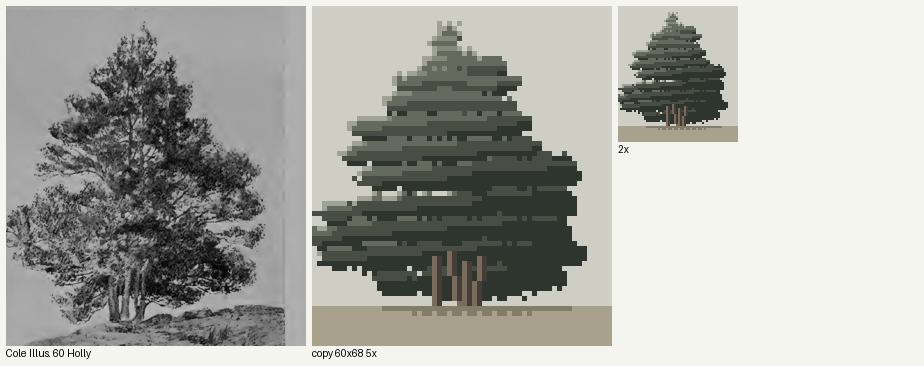 129. books/trees/copies/holly_v1.png
Bash: cd ~/work/pixelart-studies/books/trees/src; cat > copy_holly2.py <<'E' """Cole Illus. 60 (Holly) -- v2: box-downsampled plate as the underpainting (the studio's 'paint from the pho
cd ~/work/pixelart-studies/books/trees/src; cat > copy_holly2.py <<'E'
"""Cole Illus. 60 (Holly) -- v2: box-downsampled plate as the underpainting (the studio's
'paint from the photo at game res' method), then Cole's decisions applied pixel-class by class:

 1. four tones only, from one end of the scale for the shadow mass (fig. 9), the light tones
    reserved for the upper planes of clumps (p. 114);
 2. sky holes: plate-light pixels inside the crown kept as sky, pinholes (1 px) closed,
    each hole's lower/side rim colourless (p. 71);
 3. outline: foliage/sky boundary cleaned of single-pixel noise (no 'gimped edge', fig. 10), but
    spray tips kept on the lit left side;
 4. stems and ground drawn by hand."""
import numpy as np
from scipy import ndimage as ndi
from PIL import Image
from px import Canvas, guide
from lib import sheet
from copy_holly import PAL, SKY, EDGE, T1, T2, T3, T4, WOOD, WOODD, GRD, GRDD, W, H

g = guide('../copies/ref_holly.png', W, H, show=False)
v = g * 10
yy, xx = np.mgrid[0:H, 0:W]
crown = (v >= 2.2) & (yy < 60)
crown = ndi.binary_opening(crown, structure=np.ones((2, 1))) | (crown & ndi.binary_erosion(crown))
lab, n = ndi.label(crown)
big = np.argmax(ndi.sum(crown, lab, range(1, n + 1))) + 1
crown = lab == big                                   # one tree
hull = ndi.binary_fill_holes(ndi.binary_closing(crown, iterations=2))
holes = hull & ~crown
hl, hn = ndi.label(holes)
for k in range(1, hn + 1):
    if (hl == k).sum() <= 1:
        crown |= hl == k                             # pinholes close
holes = hull & ~crown
a = np.full((H, W), SKY, np.uint8)
# tones: plate value -> 4 tones; smooth first so marks are clumps not static
vs = ndi.gaussian_filter(v, 0.6)
q = np.digitize(vs, [3.6, 5.2, 6.8])
a[crown] = (T1 + q)[crown]
# rims of holes and the outer edge on the lit side
rim = crown & ~ndi.binary_erosion(crown) & (xx < 32)
a[rim & np.isin(a, [T1, T2, T3])] = EDGE
rimh = ndi.binary_dilation(holes) & crown & ~ndi.binary_dilation(holes, structure=[[0, 0, 0], [0, 1, 0], [0, 1, 0]])
a[ndi.binary_dilation(holes) & crown & np.isin(a, [T1, T2])] = EDGE
# stems by hand: four stems from the stool, dark with a lit left edge, seen under the boughs
for x0, top in [(20, 55), (23, 53), (27, 54), (31, 55)]:
    for y in range(top, 61):
        a[y, x0] = WOOD; a[y, x0 + 1] = WOODD
a[60:, :] = GRD
for x in range(8, 58):
    a[60, x] = GRDD if (x % 4) else GRD
for x, y in [(3, 62), (4, 62), (40, 61), (41, 61), (42, 62), (50, 61), (51, 61), (52, 61), (55, 62)]:
    a[y, x] = GRDD
c = Canvas(W, H); c.a = a
ref = Image.open('../copies/ref_holly.png').convert('RGB').resize((W * 5, H * 5))
sheet([ref, c.img(PAL, 5), c.img(PAL, 2)], 3, labels=['Cole Illus. 60', 'copy v2 5x', '2x']).save('../copies/holly_v2.png')
np.save('../copies/holly_v2.npy', a)
E
python3 copy_holly2.py

# output:
(Bash completed with no output)
Read: books/trees/copies/holly_v2.png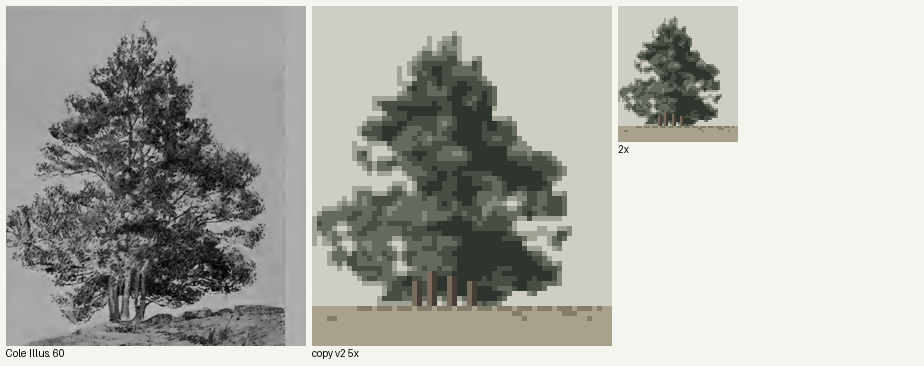 130. books/trees/copies/holly_v2.png
Bash: cd ~/work/voxsim-wt/platform; ls crates/vox-trees/; ls crates/vox-trees/src | head -30; find . -name "*.png" -path "*tree*" -newer Cargo.toml 2>/dev/null | head -20
cd ~/work/voxsim-wt/platform; ls crates/vox-trees/; ls crates/vox-trees/src | head -30; find . -name "*.png" -path "*tree*" -newer Cargo.toml 2>/dev/null | head -20

# output:
Cargo.toml
NOTES.md
examples
src
canvas.rs
gen.rs
icon.rs
lib.rs
modules.rs
paint.rs
palette.rs
registry.rs
rng.rs
species.rs
view.rs
./docs/paint-far/img/15_tree_shadows_055.png
Bash: cd ~/work/voxsim-wt/platform; ls crates/vox-trees/examples; grep -n "studio-trees" -r crates/vox-studio/scripts 2>/dev/null | head -3; ls crates/vox-studio/scripts 2>/dev/null | he
cd ~/work/voxsim-wt/platform; ls crates/vox-trees/examples; grep -n "studio-trees" -r crates/vox-studio/scripts 2>/dev/null | head -3; ls crates/vox-studio/scripts 2>/dev/null | head; find / -name "studio-trees*" -maxdepth 6 2>/dev/null | head

# output:
sheet.rs
crates/vox-studio/scripts/studio-trees.sh:6:# Report + side-by-sides in $OUT/report (default renders/studio-trees/report).
crates/vox-studio/scripts/studio-trees.sh:7:#   crates/vox-studio/scripts/studio-trees.sh              # report, exit 0
crates/vox-studio/scripts/studio-trees.sh:8:#   crates/vox-studio/scripts/studio-trees.sh --strict     # exit 1 if tree pixels changed
studio-ab.sh
studio-bench.sh
studio-trees.sh
studio.sh
~/work/voxsim/renders/studio-trees
Bash: ls ~/work/voxsim/renders/studio-trees | head -30; ls ~/work/voxsim/renders/studio-trees/* | head -30
ls ~/work/voxsim/renders/studio-trees | head -30; ls ~/work/voxsim/renders/studio-trees/* | head -30

# output:
render
report
sheet
~/work/voxsim/renders/studio-trees/render:
camp_night.ids.png
camp_night.json
camp_night.png
crane.ids.png
crane.json
crane.png
dusk.ids.png
dusk.json
dusk.png
fawn.ids.png
fawn.json
fawn.png
gale.ids.png
gale.json
gale.png
stream.ids.png
stream.json
stream.png

~/work/voxsim/renders/studio-trees/report:
camp_night.png
crane.png
dusk.png
fawn.png
gale.png
report.txt
sheet_hero_scene.png
sheet_individuals_apple.png
sheet_individuals_beech.png
Bash: ls ~/work/voxsim/renders/studio-trees/sheet ~/work/voxsim/renders/studio-trees/report | head -60
ls ~/work/voxsim/renders/studio-trees/sheet ~/work/voxsim/renders/studio-trees/report | head -60

# output:
~/work/voxsim/renders/studio-trees/report:
camp_night.png
crane.png
dusk.png
fawn.png
gale.png
report.txt
sheet_hero_scene.png
sheet_individuals_apple.png
sheet_individuals_beech.png
sheet_individuals_birch.png
sheet_individuals_oak.png
sheet_individuals_oak_scene.png
sheet_individuals_pine.png
sheet_individuals_spruce.png
sheet_individuals_walnut.png
sheet_individuals_willow.png
sheet_region_forest.png
sheet_region_legend.png
sheet_species_0.png
sheet_species_1.png
stream.png

~/work/voxsim/renders/studio-trees/sheet:
hero_scene.png
individuals_apple.png
individuals_beech.png
individuals_birch.png
individuals_oak.png
individuals_oak_scene.png
individuals_pine.png
individuals_spruce.png
individuals_walnut.png
individuals_willow.png
region_forest.png
region_legend.png
species_0.png
species_1.png
Read: voxsim/renders/studio-trees/sheet/individuals_spruce.png 131. voxsim/renders/studio-trees/sheet/individuals_spruce.png
Write: books/trees/src/shelf.py
"""The shelf painter: a grown tree (arch.py) painted the way Cole teaches, in pixels.

Unit of painting = one bough's spray shelf (Cole figs. 108-110: a side branch's branchlets lie in
one flat plane; Hallé: plagiotropic, dorsiventral). Each shelf is rasterized as columns under its
bough line; its pixels know where they sit in the shelf (top row / body / underside / tip).

Tones (index steps per material):
  FOL 0 deepest recess, 1 underside/shadow, 2 body, 3 sky-lit upper plane      (the grey-sky set)
  FOL 4 sun set low, 5 sun set high                                              (the sun set)
  FOL 6 colourless rim (edges and hole margins, Cole p. 71)
Wood 0..3: shadow, core, half, lit.
A pixel in a shelf's top row takes the upper-plane tone (3) -- Cole's planes of the dome, and the
conifer student's tier-top light; if the sun reaches it (not screened by a shelf above along
the sun direction) and it faces the sun, it takes the sun set instead (4/5) -- Cole's 'new and
lighter set, quite apart from the others'. Far-side shelves (behind the trunk) drop a step and
never take the sun set: they are seen through the crown's own shade.
"""
import numpy as np
from scipy import ndimage as ndi

FOL, WOOD, SKY = 1, 2, 0


def _h(*a):
    """Deterministic hash -> [0,1) for per-pixel/per-shelf dithers (no stamped randomness)."""
    x = 0
    for v in a:
        x = (x * 1000003 + int(v)) & 0xFFFFFFFF
    x ^= x >> 13; x = (x * 0x5bd1e995) & 0xFFFFFFFF; x ^= x >> 15
    return (x & 0xFFFF) / 65536.0


def project(p, yaw, mpp, ox, oy):
    c, s = np.cos(yaw), np.sin(yaw)
    x = p[..., 0] * c - p[..., 1] * s
    dep = p[..., 0] * s + p[..., 1] * c
    return ox + x / mpp, oy - p[..., 2] / mpp, dep


def paint(tree, mpp, W, H, ox=None, oy=None, yaw=0.0, sun_side=-1, sun_el=40, seed=0,
          shelf_scale=1.0, droop_px=None, rim=True, sunset=True, far_step=True):
    sp = tree.sp
    ox = W / 2 if ox is None else ox
    oy = H - 2 if oy is None else oy
    mat = np.zeros((H, W), np.uint8)
    step = np.zeros((H, W), np.uint8)
    zb = np.full((H, W), -1e9)
    sid = np.full((H, W), -1, np.int32)
    vpos = np.zeros((H, W), np.float32)    # 0 top .. 1 bottom within a shelf
    far = np.zeros((H, W), bool)
    # --- trunk(s) and bare wood first (painted, then covered by nearer foliage) ---
    for p0, p1, r, o, dead in tree.segments():
        if o > 1 and not dead:
            continue
        (x0, y0, d0), (x1, y1, d1) = [project(np.asarray(p, float), yaw, mpp, ox, oy) for p in (p0, p1)]
        rp = r / mpp
        if rp < 0.25:
            continue
        n = int(max(abs(x1 - x0), abs(y1 - y0)) * 2) + 1
        for t in np.linspace(0, 1, n):
            cx, cy, dz = x0 + t * (x1 - x0), y0 + t * (y1 - y0), d0 + t * (d1 - d0)
            w = max(1, int(round(2 * rp)))
            xa = int(round(cx - w / 2))
            iy = int(round(cy))
            if not 0 <= iy < H:
                continue
            for k in range(w):
                ix = xa + k
                if 0 <= ix < W and dz >= zb[iy, ix] - 0.5:
                    # cylinder: 4 classes across the width, lit toward the sun
                    f = (k + 0.5) / w
                    f = f if sun_side < 0 else 1 - f
                    cls = 3 if f < 0.3 else (2 if f < 0.55 else (1 if f < 0.85 else 0))
                    if w == 1:
                        cls = 1
                    if w == 2:
                        cls = 2 if k == (0 if sun_side < 0 else 1) else 0
                    mat[iy, ix] = WOOD; step[iy, ix] = cls; zb[iy, ix] = dz
    # --- shelves ---
    trunk_axes = [i for i, a in enumerate(tree.axes) if a.order == 0 or a.reiterated]
    tx = np.mean([project(np.asarray(tree.axes[trunk_axes[0]].pts[0]), yaw, mpp, ox, oy)[0]])
    shelves = []
    for i, a in enumerate(tree.axes):
        if a.dead or len(a.pts) < 2:
            continue
        pts = np.array(tree.nodded(i, a.pts), float)
        ages = np.array(a.age_nodes[:len(pts)])
        X, Y, D = project(pts, yaw, mpp, ox, oy)
        if a.order == 0 or a.reiterated:
            # leader: last few years carry a spire of short shelves (the young top)
            young = ages >= tree.year - 3
            for k in np.where(young)[0]:
                shelves.append((i, X[k], Y[k], D[k], 1.0, 1.0, 0, 'tip'))
            continue
        for k in range(1, len(pts)):
            age = tree.year - ages[k]
            if age > (sp.spray_years or sp.needle_years):
                continue
            shelves.append((i, X[k], Y[k], D[k], X[k] - X[k - 1], Y[k] - Y[k - 1], age, 'bough'))
    # paint back to front
    shelves.sort(key=lambda s: s[3])
    reach_px = max(1.0, sp.reach * shelf_scale / mpp)
    th0 = max(1.0, sp.pad_thick / mpp)
    for (i, x, y, dz, dx, dy, age, kind) in shelves:
        if kind == 'tip':
            hw, th = max(1, int(round(reach_px * 0.3))), max(1, int(round(th0)))
        else:
            grow = min(1.0, (age + 1) / 6.0)
            hw = max(1, int(round(reach_px * grow)))            # wedge: narrow at the tip
            th = max(1, int(round(th0 * min(3.0, 0.6 + age / 8.0))))
        L = np.hypot(dx, dy) + 1e-9
        ux, uy = dx / L, dy / L                                # along the bough on screen
        # the shelf is a band along the bough segment, thick downward (sprays hang)
        span = int(np.ceil(max(abs(dx), 1))) + 1
        for s_ in range(-hw if kind == 'tip' else -int(max(1, abs(dx))), hw + 1 if kind == 'tip' else 1):
            cx = x + (s_ if kind == 'tip' else s_ * np.sign(dx) * 0 + s_ * ux)
            cy = y + (0 if kind == 'tip' else s_ * uy)
            # lateral fan: sprays spread sideways in the bough plane -> in side view they add
            # thickness below (fan edges droop) and a little width
            extra = int(_h(i, s_, 7, seed) * 2.0 + (sp.fan_droop * hw * 0.5 if kind == 'bough' else 0))
            ix = int(round(cx)); top = int(round(cy)) - (1 if th > 2 else 0)
            for yy in range(top, top + th + extra):
                if not (0 <= ix < W and 0 <= yy < H):
                    continue
                if dz >= zb[yy, ix] - 0.3 or mat[yy, ix] == 0:
                    mat[yy, ix] = FOL; zb[yy, ix] = dz; sid[yy, ix] = i
                    vpos[yy, ix] = (yy - top) / max(1, th + extra - 1)
                    far[yy, ix] = dz < -0.5 * sp.reach
    # --- tone the foliage ---
    F = mat == FOL
    up_same = np.zeros_like(F)
    up_same[1:] = F[:-1] & (sid[:-1] == sid[1:])
    top_row = F & ~up_same
    below_same = np.zeros_like(F)
    below_same[:-1] = F[1:] & (sid[1:] == sid[:-1])
    bottom_row = F & ~below_same
    # sun screening: march toward the sun (up and to sun_side) a few px; foliage of another
    # shelf there screens this pixel
    kx = -1 if sun_side < 0 else 1
    ky = -1
    screened = np.zeros_like(F)
    n = max(2, int(3 / np.tan(np.radians(max(10, sun_el))) + 1))
    for k in range(1, n + 1):
        sx, sy = int(round(k * kx / np.tan(np.radians(sun_el)) * 0.6)), k * ky
        sh = np.zeros_like(F)
        ys, xs = slice(max(0, -sy), H - max(0, sy)), slice(max(0, -sx), W - max(0, sx))
        yd, xd = slice(max(0, sy), H - max(0, -sy)), slice(max(0, sx), W - max(0, -sx))
        sh[ys, xs] = F[yd, xd] & (sid[yd, xd] != sid[ys, xs])
        screened |= sh
    tone = np.full((H, W), 2, np.uint8)
    tone[bottom_row] = 1
    tone[F & (vpos > 0.75)] = 1
    tone[top_row] = 3
    # sun-facing side of the crown: which side of the trunk
    xs_ = np.arange(W)[None, :].repeat(H, 0)
    sunward = (xs_ - tx) * sun_side > -2
    if sunset:
        tone[top_row & ~screened & sunward] = 5
        tone[top_row & ~screened & ~sunward] = 4
        # second row under a sun-lit top: the low sun tone on the sunward side only
        sec = np.zeros_like(F); sec[1:] = top_row[:-1] & ~screened[:-1]
        tone[sec & F & sunward & (tone == 2)] = 4
    # recesses: body pixels screened and far-side -> deepest
    tone[F & screened & (tone == 2) & ~sunward] = 1
    if far_step:
        tone[F & far & (tone >= 2)] -= 1
        tone[F & far & (tone >= 4)] = 2
    # rims: foliage pixels whose neighbour toward the sky (up or sunward side) is open sky take
    # the colourless rim -- only where they would otherwise be mid/dark body (p. 71)
    if rim:
        open_ = mat == SKY
        nb = np.zeros_like(F)
        nb[1:] |= open_[:-1]
        nb[:, 1:] |= open_[:, :-1] if sun_side < 0 else False
        nb[:, :-1] |= open_[:, 1:] if sun_side > 0 else False
        tone[F & nb & (tone <= 2) & ~top_row] = 6
    step[F] = tone[F]
    return mat, step


def palette(fol=None, wood=None, sky=((120, 170, 214), (190, 214, 230))):
    fol = fol or [(12, 22, 20), (24, 38, 32), (38, 56, 44), (62, 82, 64),
                  (104, 104, 50), (150, 144, 70), (96, 116, 116)]
    wood = wood or [(34, 24, 20), (58, 42, 34), (88, 66, 52), (124, 98, 76)]
    return dict(fol=fol, wood=wood, sky=sky)


def to_rgb(mat, step, pal):
    H, W = mat.shape
    top, bot = np.array(pal['sky'][0]), np.array(pal['sky'][1])
    t = np.linspace(0, 1, H)[:, None, None]
    out = np.round(top * (1 - t) + bot * t).astype(np.uint8).repeat(W, 1)
    for k, c in enumerate(pal['fol']):
        out[(mat == FOL) & (step == k)] = c
    for k, c in enumerate(pal['wood']):
        out[(mat == WOOD) & (step == k)] = c
    return out
Bash: cd ~/work/pixelart-studies/books/trees/src; python3 - <<'E' s=open('shelf.py').read() a=s.index(" L = np.hypot(dx, dy) + 1e-9"); b=s.index(" # --- tone the foliage ---")
cd ~/work/pixelart-studies/books/trees/src; python3 - <<'E'
s=open('shelf.py').read()
a=s.index("        L = np.hypot(dx, dy) + 1e-9"); b=s.index("    # --- tone the foliage ---")
s=s[:a]+'''        if kind == 'tip':
            samples = [(x + s_, y) for s_ in range(-hw, hw + 1)]
        else:
            n = int(max(abs(dx), abs(dy))) + 1
            samples = [(x - dx * t, y - dy * t) for t in np.linspace(0, 1, n + 1)]
        for j, (cx, cy) in enumerate(samples):
            ix = int(round(cx))
            if not 0 <= ix < W:
                continue
            # hanging sprays: the shelf's lower edge is ragged (0-2 px extra), never ruled
            extra = int(_h(i, ix, seed) * (2.0 + sp.fan_droop * 2))
            top = int(round(cy))
            for yy in range(top, top + th + extra):
                if 0 <= yy < H and (dz >= zb[yy, ix] - 0.3 or mat[yy, ix] == 0):
                    mat[yy, ix] = FOL; zb[yy, ix] = dz; sid[yy, ix] = i
                    vpos[yy, ix] = (yy - top) / max(1, th + extra - 1)
                    far[yy, ix] = dz < -0.5 * sp.reach
'''+s[b:]
open('shelf.py','w').write(s)
E
cat > t_shelf.py <<'E'
from lib import *
import shelf
cells=[];labs=[]
for name,age,op in [('douglas',80,False),('douglas',80,True),('hemlock',80,False),('cedar',120,False),('spruce',100,True),('subalpine',80,True)]:
    t=grow(name,age,seed=1,open_grown=op)
    mpp=0.35; H=int((t.height()+3)/mpp); W=int(26/mpp)
    mat,step=shelf.paint(t,mpp,W,H)
    cells.append(up(shelf.to_rgb(mat,step,shelf.palette()),2)); labs.append(f"{name} {age} {'open' if op else 'forest'}")
sheet(cells,6,labels=labs,title='shelf painter v1, 0.35 m/px, 2x').save('../work/shelf_v1.png')
E
python3 t_shelf.py

# output:
Command did not complete within its 120s timeout and was moved to the background (ID: b4b2k12yf). Output is being written to: (tmp) You will be notified when it completes. To check interim output, use Read on that file path.
Session cwd remains ~/work/pixelart-studies/library; directory changes made by the backgrounded command do not apply to subsequent commands.
Bash: cd ~/work/pixelart-studies/books/trees/src; python3 -c " from lib import sheet from PIL import Image ims=[Image.open('../copies/'+f) for f in ['massart_v1.png','troll_v1.png','fig4
cd ~/work/pixelart-studies/books/trees/src; python3 -c "
from lib import sheet
from PIL import Image
ims=[Image.open('../copies/'+f) for f in ['massart_v1.png','troll_v1.png','fig40_v4.png','fig65_v2.png','holly_v2.png']]
print([i.size for i in ims])"

# output:
[(396, 478), (409, 466), (684, 296), (492, 792), (924, 366)]
Read: books/trees/work/shelf_v1.png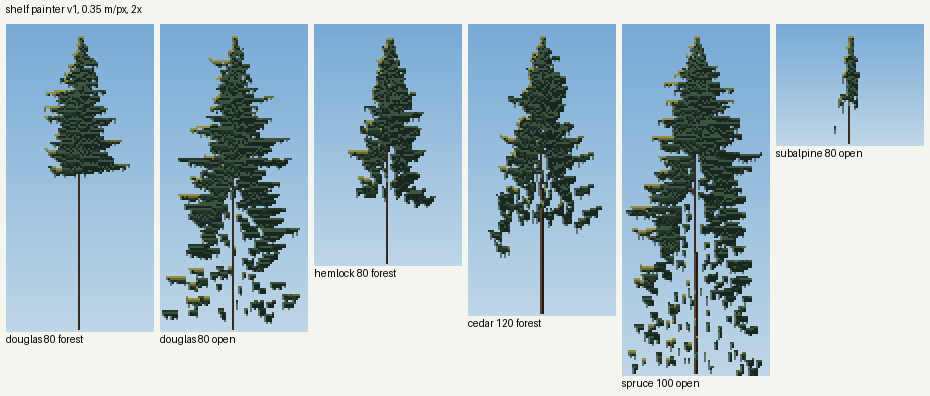 132. books/trees/work/shelf_v1.png
Bash: cd ~/work/pixelart-studies/books/trees/src; grep -n "spray_years or sp.needle_years" shelf.py arch.py
cd ~/work/pixelart-studies/books/trees/src; grep -n "spray_years or sp.needle_years" shelf.py arch.py

# output:
shelf.py:97:            if age > (sp.spray_years or sp.needle_years):
arch.py:390:        sy = sp.spray_years or sp.needle_years
Bash: cd ~/work/pixelart-studies/books/trees/src; python3 - <<'E' s=open('shelf.py').read() s=s.replace(""" for k in range(1, len(pts)): age = tree.year - ages[k]
cd ~/work/pixelart-studies/books/trees/src; python3 - <<'E'
s=open('shelf.py').read()
s=s.replace("""        for k in range(1, len(pts)):
            age = tree.year - ages[k]
            if age > (sp.spray_years or sp.needle_years):
                continue""","""        # foliage on the outer keep_m metres of the bough (inner branchlets die for want of
        # light, Cole p. 194; Hallé ch. 4) -- more in the open, where light reaches in
        seg = np.linalg.norm(np.diff(pts, axis=0), axis=1)
        from_tip = np.concatenate([np.cumsum(seg[::-1])[::-1], [0.0]])
        keep = sp.keep_m * (1.8 if tree.open else 1.0)
        for k in range(1, len(pts)):
            age = tree.year - ages[k]
            if from_tip[k] > keep:
                continue""")
s=s.replace("n = max(2, int(3 / np.tan(np.radians(max(10, sun_el))) + 1))","n = 2")
s=s.replace("""    fol = fol or [(12, 22, 20), (24, 38, 32), (38, 56, 44), (62, 82, 64),
                  (104, 104, 50), (150, 144, 70), (96, 116, 116)]""","""    fol = fol or [(10, 18, 18), (20, 34, 30), (36, 54, 42), (72, 92, 66),
                  (112, 108, 48), (162, 150, 70), (92, 112, 112)]""")
open('shelf.py','w').write(s)
a=open('arch.py').read()
a=a.replace("    spray_years: int = 0 ","    keep_m: float = 4.0           # metres of foliage kept at the outer end of each bough\n    spray_years: int = 0 ")
open('arch.py','w').write(a)
m=open('species_models.py').read()
m=m.replace("spray_years=40,\n                       cluster=1.1, reach=1.4,","spray_years=40, keep_m=4.5,\n                       cluster=1.1, reach=1.4,")
open('species_models.py','w').write(m)
E
python3 t_shelf.py

# output:
(Bash completed with no output)
Read: books/trees/work/shelf_v1.png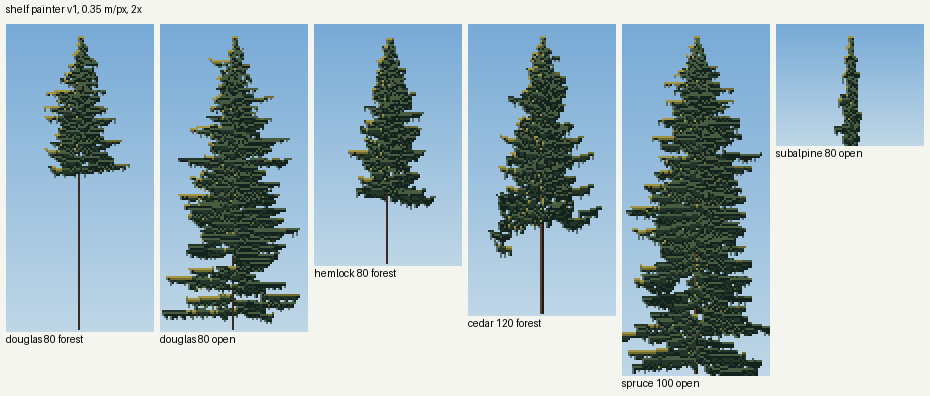 133. books/trees/work/shelf_v1.png
Bash: cd ~/work/pixelart-studies/books/trees/src; python3 -c " from lib import * from diagram import draw_tree from PIL import Image, ImageDraw im=Image.new('L',(900,500),255); d=ImageDr
cd ~/work/pixelart-studies/books/trees/src; python3 -c "
from lib import *
from diagram import draw_tree
from PIL import Image, ImageDraw
im=Image.new('L',(900,500),255); d=ImageDraw.Draw(im)
for k,(n,a) in enumerate([('hemlock',80),('cedar',120),('douglas',80)]):
    t=grow(n,a,seed=1); draw_tree(d,t,150+k*300,490,7,leaves=False)
    import numpy as np
    b=[x for x in t.axes if x.order==1 and not x.dead]
    P=np.array(b[len(b)//2].pts); print(n, np.round(P[:,2]-P[0,2],1)[::3], len(b))
im.save('../work/skel.png')"

# output:
hemlock [0.  0.1 0.1 0.2 0.3 0.3 0.4 0.4 0.4] 309
cedar [0.  0.  0.1 0.1 0.1 0.2 0.2 0.2 0.2 0.3 0.3 0.3 0.3] 420
douglas [0.  0.  0.1 0.1 0.1 0.1 0.1 0.1] 196
Bash: cd ~/work/pixelart-studies/books/trees/src; python3 - <<'E' s=open('arch.py').read() s=s.replace("drop = sp.sag * load / (0.1 * sp.height) * (1 + sp.sag_age * (self.year - a.born))
cd ~/work/pixelart-studies/books/trees/src; python3 - <<'E'
s=open('arch.py').read()
s=s.replace("drop = sp.sag * load / (0.1 * sp.height) * (1 + sp.sag_age * (self.year - a.born))","drop = sp.sag * load * (1 + sp.sag_age * (self.year - a.born))")
open('arch.py','w').write(s)
m=open('species_models.py').read()
import re
def setp(block,key,val):
    return re.sub(r'(%s=)[-0-9.]+'%key, r'\g<1>%s'%val, block, count=1)
parts=m.split("    '")
out=[parts[0]]
vals={'douglas':dict(sag=0.018,tip_up=0.10),'hemlock':dict(sag=0.05),'cedar':dict(sag=0.07,tip_up=0.35),
      'spruce':dict(sag=0.02,tip_up=0.12),'subalpine':dict(sag=0.03)}
for p in parts[1:]:
    name=p.split("'")[0]
    for k,v in vals.get(name,{}).items():
        if k+'=' in p: p=setp(p,k,v)
        else: p=p.replace("plagio=True,","plagio=True, %s=%s,"%(k,v),1)
    out.append(p)
open('species_models.py','w').write("    '".join(out))
E
grep -n "sag=" species_models.py | head; sed -i '' 's/^VERSION = 4/VERSION = 5/' lib.py
python3 -c "
from lib import *
from diagram import draw_tree
from PIL import Image, ImageDraw
im=Image.new('L',(1200,520),255); d=ImageDraw.Draw(im)
for k,(n,a) in enumerate([('hemlock',80),('cedar',120),('douglas',80),('spruce',100)]):
    t=grow(n,a,seed=1); draw_tree(d,t,150+k*300,510,7,leaves=False)
im.save('../work/skel.png')"

# output:
23:                       plagio=True, flatten=0.03, sag=0.018, tip_up=0.1, sub_n=0, max_order=1,
29:                       plagio=True, flatten=0.02, sag=0.05, tip_up=0.0, sub_n=0, max_order=1,
34:                       plagio=True, flatten=0.02, sag=0.35, sub_n=0, max_order=1,
39:                     plagio=True, flatten=0.0, sag=0.07, tip_up=0.35, sub_n=0, max_order=1,
44:                      plagio=True, flatten=0.05, sag=0.02, tip_up=0.12, sub_n=0, max_order=1,
49:                         plagio=True, flatten=0.05, sag=0.03, sub_n=0, max_order=1,
Bash: cd ~/work/pixelart-studies/books/trees/src; python3 - <<'E' s=open('species_models.py').read() a=s.index(" 'hemlock': Species("); b=s.index(" Species('western heml
cd ~/work/pixelart-studies/books/trees/src; python3 - <<'E'
s=open('species_models.py').read()
a=s.index("    'hemlock': Species("); b=s.index("               Species('western hemlock'")
s=s[:a]+"    'hemlock': "+s[b:].lstrip()
s=s.replace("plagio=True, flatten=0.02, sag=0.35, sub_n=0, max_order=1,","plagio=True, flatten=0.02, sag=0.05, sub_n=0, max_order=1,")
open('species_models.py','w').write(s)
E
sed -n 20,40p species_models.py; python3 -c "
from lib import *
from diagram import draw_tree
from PIL import Image, ImageDraw
im=Image.new('L',(1200,520),255); d=ImageDraw.Draw(im)
for k,(n,a) in enumerate([('hemlock',80),('cedar',120),('douglas',80),('spruce',100)]):
    t=grow(n,a,seed=1); draw_tree(d,t,150+k*300,510,7,leaves=False)
im.save('../work/skel.png')"

# output:
SP = {
    'douglas': Species('douglas-fir', model='massart', height=70, h_rate=0.9, h_tau=110,
                       tier=(3, 5), inter=1, angle=84, angle_top=60, lat_rate=0.42, lat_tau=30,
                       plagio=True, flatten=0.03, sag=0.018, tip_up=0.1, sub_n=0, max_order=1,
                       shade_prune=0.55, open_prune=0.06, stub_keep=0.5, needle_years=7, spray_years=40, keep_m=4.5,
                       cluster=1.1, reach=1.4, reiter_age=220, reiter_rate=0.02, reiter_max=8,
                       top_break=0.004, trunk_k=0.013),
    'hemlock': Species('western hemlock', model='troll', height=55, h_rate=0.7, h_tau=110,
                       tier=(2, 4), inter=3, angle=70, angle_top=55, lat_rate=0.40, lat_tau=28,
                       plagio=True, flatten=0.02, sag=0.05, sub_n=0, max_order=1,
                       nod=1.4, nod_years=2, shade_prune=0.30, open_prune=0.03, needle_years=5,
                       spray_years=35, reach=1.2, fan_droop=0.6, cluster=0.9),
    'cedar': Species('western redcedar', model='massart', height=55, h_rate=0.6, h_tau=140,
                     tier=(2, 4), inter=3, angle=75, angle_top=50, lat_rate=0.42, lat_tau=35,
                     plagio=True, flatten=0.0, sag=0.07, tip_up=0.35, sub_n=0, max_order=1,
                     shade_prune=0.35, open_prune=0.04, needle_years=6, spray_years=45, reach=1.3, fan_droop=0.9, cluster=1.0,
                     reiter_age=250, reiter_rate=0.04, reiter_max=14, top_break=0.006, flare=1.6),
    'spruce': Species('sitka spruce', model='massart', height=65, h_rate=0.9, h_tau=110,
                      tier=(4, 6), inter=2, angle=88, angle_top=60, lat_rate=0.45, lat_tau=30,
                      plagio=True, flatten=0.05, sag=0.02, tip_up=0.12, sub_n=0, max_order=1,
                      shade_prune=0.35, open_prune=0.03, needle_years=7, spray_years=40, reach=1.2, fan_droop=0.5, cluster=1.0,
Read: books/trees/work/skel.png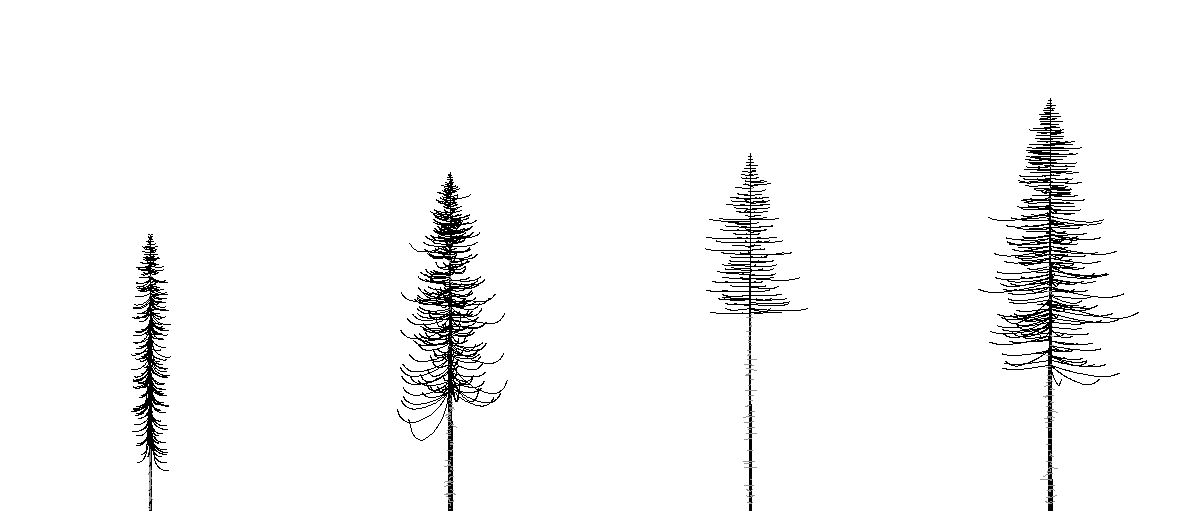 134. books/trees/work/skel.png
Bash: cd ~/work/pixelart-studies/books/trees/src; python3 t_shelf.py
cd ~/work/pixelart-studies/books/trees/src; python3 t_shelf.py

# output:
(Bash completed with no output)
Read: books/trees/work/shelf_v1.png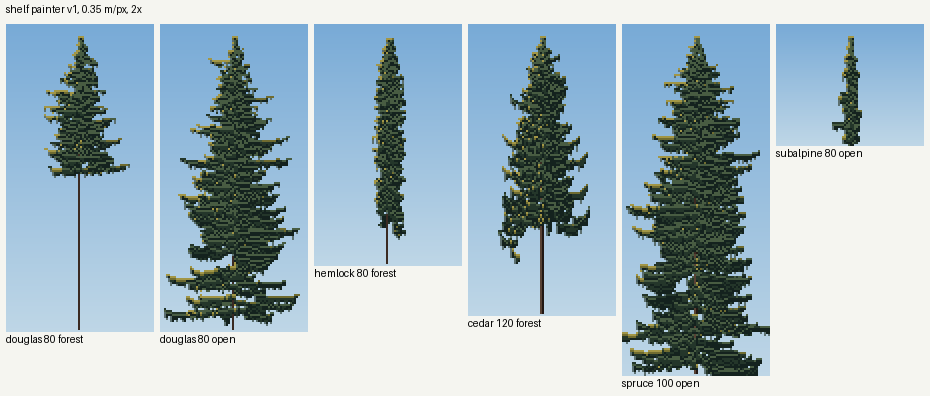 135. books/trees/work/shelf_v1.png
Bash: cd ~/work/pixelart-studies/elements/conifers/refs; ls western_hemlock_tree western_redcedar_tree_Thuja_plicata Sitka_spruce_tree_Olympic western_hemlock_tree_drooping_leader
cd ~/work/pixelart-studies/elements/conifers/refs; ls western_hemlock_tree western_redcedar_tree_Thuja_plicata Sitka_spruce_tree_Olympic western_hemlock_tree_drooping_leader

# output:
Sitka_spruce_tree_Olympic:
_sheet.jpg
openverse_2014_Sitka_spruce_tree_failure_from_Phaeolus_sch_9d4eac44.jpg
openverse_Ferns_growing_on_bottom_of_uprooted_stump_Hoh_Ra_4de2c826.jpg
openverse_Lake_Quinault_2010_08_17_005_56bee193.jpg
openverse_Old_Man_of_the_Woods_eaa42959.jpg
openverse_Quinault_Rain_Forest_874eeba3.jpg
openverse_Quinault_Rain_Forest_Olympic_National_Park_Washi_295a47db.jpg
openverse_Quinault_Rain_Forest_Olympic_National_Park_Washi_bf6d6ba4.jpg
openverse_Quinault_Rain_Forest_f7f86967.jpg
openverse_Tree_Hugger_8ef6ad8e.jpg
openverse_Two_Bald_Eagles_in_Sitka_Spruce_Tree_273d179a.jpg
sources.tsv

western_hemlock_tree:
_sheet.jpg
openverse_2014_Vancouver_Alaska_Cruise_Lighthouse_Park_Poi_536df496.jpg
openverse_Below_Table_Rock_f04c1984.jpg
openverse_Dead_Western_Hemlock_Tree_with_Fungi_86aa6aa3.jpg
openverse_Dead_Western_Hemlock_Tree_with_Fungi_94fdf38c.jpg
openverse_Lighthouse_Park_long_exposure_using_10_stop_filt_484f919e.jpg
openverse_Neskowin_46ef43a1.jpg
openverse_Pink_sunrise_at_Big_Lake_Oregon_9d576551.jpg
openverse_Rosecrans_Bog_Natural_Area_Revisited_1_da2d5105.jpg
openverse_Table_Rocks_Wilderness_232faee9.jpg
openverse_The_Gigantic_Silver_Linden_at_Chanticleer_An_Ame_f2bfc341.jpg
openverse_Through_the_Trees_4a4b56b9.jpg
sources.tsv

western_hemlock_tree_drooping_leader:
_sheet.jpg
openverse_2014_Vancouver_Alaska_Cruise_Lighthouse_Park_Poi_536df496.jpg
openverse_Below_Table_Rock_f04c1984.jpg
openverse_Dead_Western_Hemlock_Tree_with_Fungi_86aa6aa3.jpg
openverse_Dead_Western_Hemlock_Tree_with_Fungi_94fdf38c.jpg
openverse_Lighthouse_Park_long_exposure_using_10_stop_filt_484f919e.jpg
openverse_Neskowin_46ef43a1.jpg
openverse_The_Gigantic_Silver_Linden_at_Chanticleer_An_Ame_f2bfc341.jpg
openverse_Through_the_Trees_4a4b56b9.jpg
openverse_Western_Hemlock_Tsuga_heterophylla_6781885d.jpg
sources.tsv

western_redcedar_tree_Thuja_plicata:
_sheet.jpg
openverse_Hemlock_Redcedar_Douglas_Fir_4d9911c2.jpg
openverse_Hoar_frost_on_tiny_green_western_redcedar_branch_b5eefab1.jpg
openverse_Maeres_Island_galore_5_0901642c.jpg
openverse_T_and_B_and_Giant_Tree_bf95f3fb.jpg
openverse_Thuja_plicata_Western_Red_Cedar_near_July_Creek_136c3582.jpg
openverse_Thuja_plicata_a4b40243.jpg
openverse_Thuja_plicata_c7432d23.jpg
openverse_Western_Red_cedar_with_Icmadophila_ericetorum_Li_752523b2.jpg
openverse_Western_Redcedar_f04df54b.jpg
sources.tsv
Read: elements/conifers/refs/western_hemlock_tree/_sheet.jpg 136. elements/conifers/refs/western_hemlock_tree/_sheet.jpg
Bash: ls ~/work/pixelart-studies/tools; head -40 ~/work/pixelart-studies/tools/imgfetch* 2>/dev/null | head -60
ls ~/work/pixelart-studies/tools; head -40 ~/work/pixelart-studies/tools/imgfetch* 2>/dev/null | head -60

# output:
imgfetch.py
notebooks.py
#!/usr/bin/env python3
"""imgfetch: fast, polite reference-image sourcing (Wikimedia Commons + Openverse).

  python3 imgfetch.py "cinder cone scoria slope" -n 12 -o refs/cinder
  python3 imgfetch.py -f queries.txt -n 8 -o refs            # one query per line; subdir per query
  options: --src commons,openverse   --width 1200   --sheet (writes <out>/_sheet.jpg)

Writes images plus <out>/sources.tsv (file, title, license, author, page url).
Cached: files already present are skipped. Handles 429/5xx with Retry-After backoff.
Parallel downloads (4 workers) with a shared per-host rate limiter (~3 req/s; Wikimedia's media
host is kept to 1 per 2 s and slows further on any 429, since it throttles hard per IP after bursts).
Openverse (mostly Flickr-hosted CC images) is the primary source because it stays fast.
"""
import argparse, concurrent.futures as cf, json, os, re, sys, threading, time, urllib.error, urllib.parse, urllib.request

UA = "pixelart-studies-imgfetch/1.0 (research; contact: local)"
_locks = {}; _last = {}; _glock = threading.Lock()

SLOW_HOSTS = {"upload.wikimedia.org": 2.0}   # Wikimedia media host: ~1 req/s or it 429s

def _throttle(host, min_gap=0.34):
    min_gap = SLOW_HOSTS.get(host, min_gap)
    with _glock:
        lk = _locks.setdefault(host, threading.Lock())
    with lk:
        dt = time.time() - _last.get(host, 0)
        if dt < min_gap:
            time.sleep(min_gap - dt)
        _last[host] = time.time()

def get(url, tries=4, timeout=25):
    host = urllib.parse.urlparse(url).netloc
    if host == "upload.wikimedia.org":
        tries = 2  # fail fast; other sources fill in
    for i in range(tries):
        _throttle(host)
        try:
            req = urllib.request.Request(url, headers={"User-Agent": UA})
            return urllib.request.urlopen(req, timeout=timeout).read()
        except urllib.error.HTTPError as e:
Bash: cd ~/work/pixelart-studies/books/trees; cat > refs/q.txt <<'E' Tsuga heterophylla tree habit western hemlock tree against sky Thuja plicata tree habit Douglas fir tree open grown P
cd ~/work/pixelart-studies/books/trees; cat > refs/q.txt <<'E'
Tsuga heterophylla tree habit
western hemlock tree against sky
Thuja plicata tree habit
Douglas fir tree open grown
Picea sitchensis tree habit
Abies lasiocarpa subalpine fir
Quercus garryana tree
Arbutus menziesii tree
Alnus rubra tree
Acer macrophyllum tree
E
python3 ~/work/pixelart-studies/tools/imgfetch.py -f refs/q.txt -n 10 -o refs --width 900 --sheet 2>&1 | tail -5; du -sh refs

# output:
'Abies lasiocarpa subalpine fir': 5 images -> refs/Abies_lasiocarpa_subalpine_fir
'Quercus garryana tree': 10 images -> refs/Quercus_garryana_tree
'Arbutus menziesii tree': 10 images -> refs/Arbutus_menziesii_tree
'Alnus rubra tree': 8 images -> refs/Alnus_rubra_tree
'Acer macrophyllum tree': 10 images -> refs/Acer_macrophyllum_tree
 31M    refs
Read: books/trees/refs/Tsuga_heterophylla_tree_habit/_sheet.jpg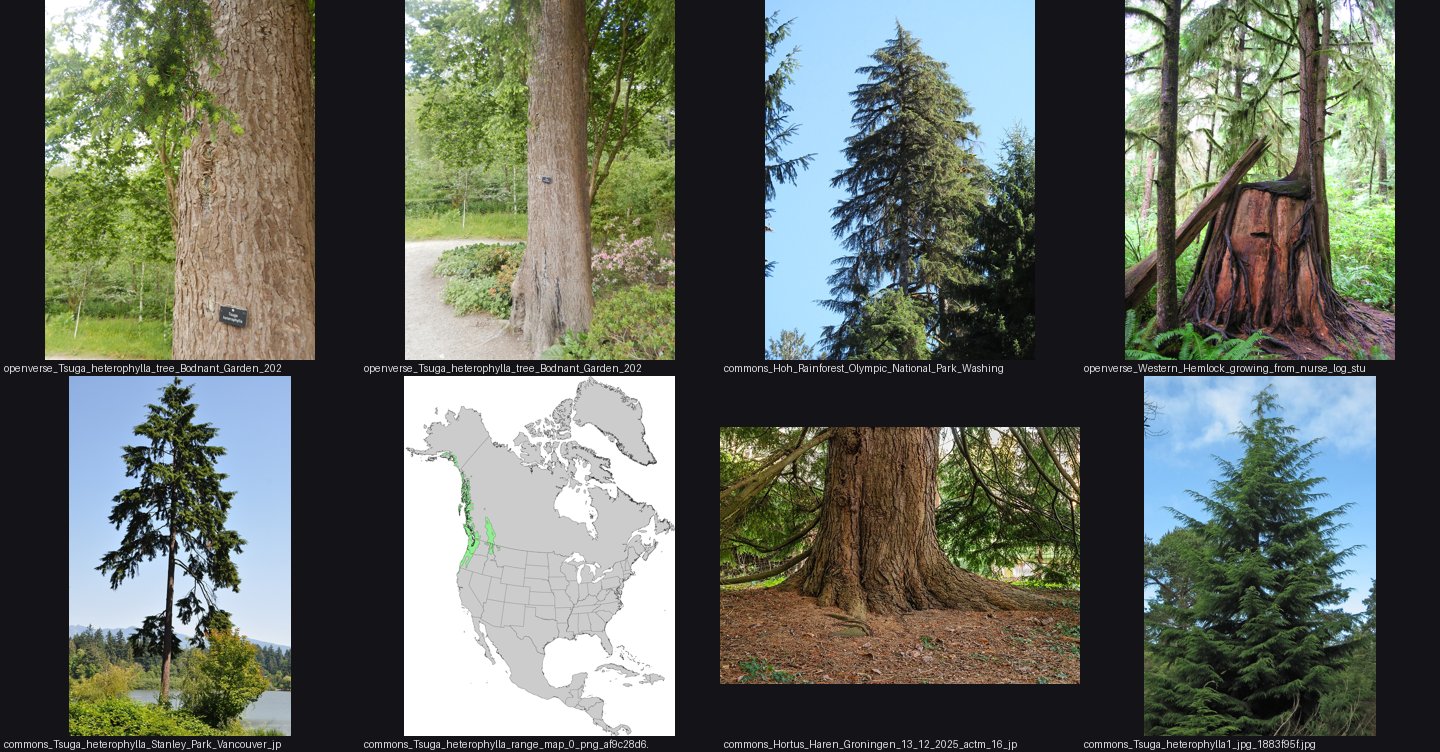 137. books/trees/refs/Tsuga_heterophylla_tree_habit/_sheet.jpg
Read: books/trees/refs/Thuja_plicata_tree_habit/_sheet.jpgRead: books/trees/refs/Douglas_fir_tree_open_grown/_sheet.jpgRead: books/trees/refs/Picea_sitchensis_tree_habit/_sheet.jpg 138. books/trees/refs/Thuja_plicata_tree_habit/_sheet.jpg
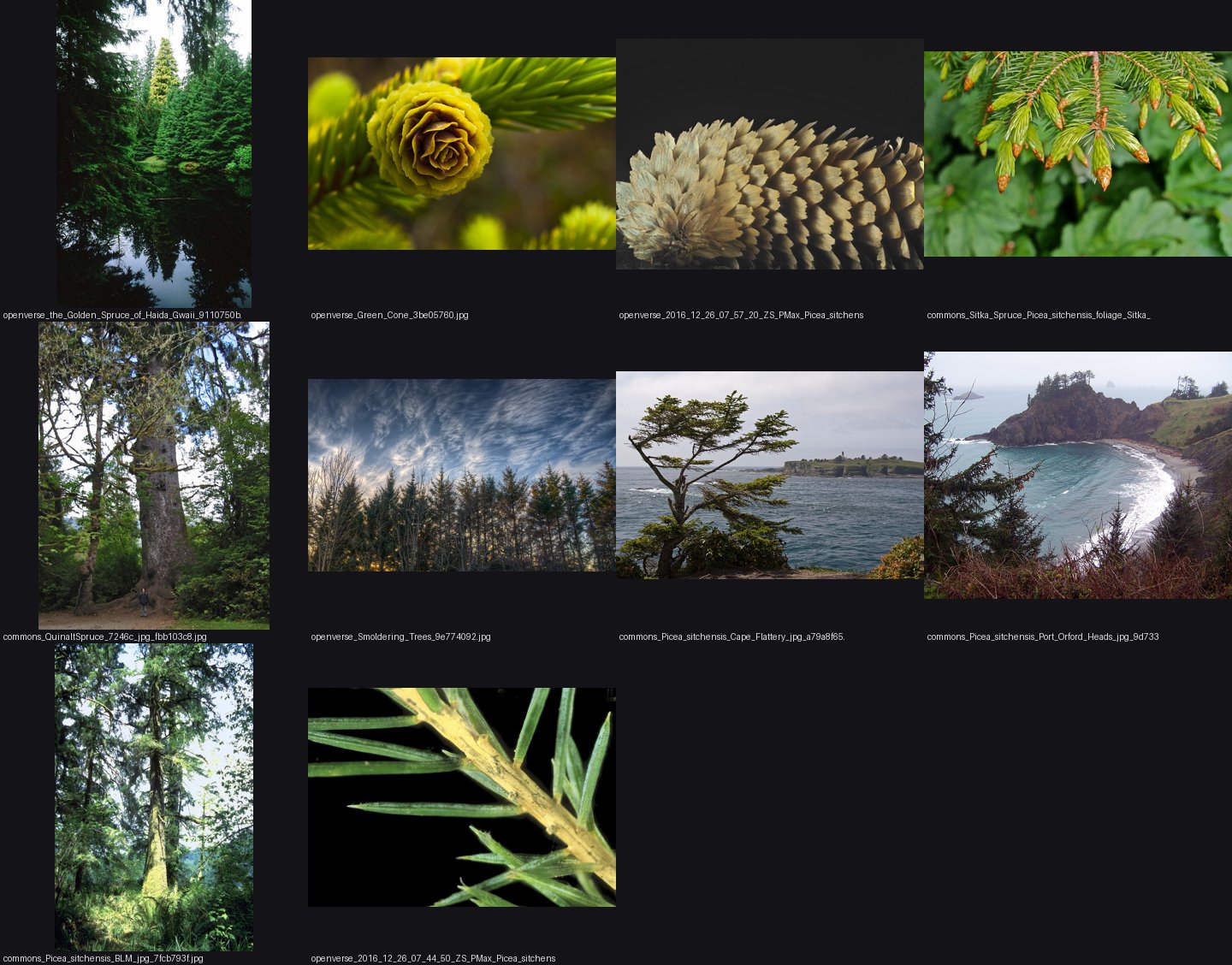 139. books/trees/refs/Picea_sitchensis_tree_habit/_sheet.jpg
 140. books/trees/refs/Douglas_fir_tree_open_grown/_sheet.jpg
Read: books/trees/refs/Quercus_garryana_tree/_sheet.jpgRead: books/trees/refs/Arbutus_menziesii_tree/_sheet.jpg 141. books/trees/refs/Quercus_garryana_tree/_sheet.jpg
 142. books/trees/refs/Arbutus_menziesii_tree/_sheet.jpg
Bash: cd ~/work/pixelart-studies/books/trees/refs; ls Tsuga_heterophylla_tree_habit; python3 -c " from PIL import Image im=Image.open('Tsuga_heterophylla_tree_habit/'+[f for f in __impor
cd ~/work/pixelart-studies/books/trees/refs; ls Tsuga_heterophylla_tree_habit; python3 -c "
from PIL import Image
im=Image.open('Tsuga_heterophylla_tree_habit/'+[f for f in __import__('os').listdir('Tsuga_heterophylla_tree_habit') if 'Stanley' in f][0]); print(im.size)"

# output:
_sheet.jpg
commons_Hoh_Rainforest_Olympic_National_Park_Washington__2bc4d56b.jpg
commons_Hortus_Haren_Groningen_13_12_2025_actm_16_jpg_8aad3bf9.jpg
commons_Tsuga_heterophylla1_jpg_1883f95f.jpg
commons_Tsuga_heterophylla_Stanley_Park_Vancouver_jpg_c32773e6.jpg
commons_Tsuga_heterophylla_range_map_0_png_af9c28d6.png
openverse_Tsuga_heterophylla_tree_Bodnant_Garden_2021_Jun__4790a3c0.jpg
openverse_Tsuga_heterophylla_tree_Bodnant_Garden_2021_Jun__9208ab43.jpg
openverse_Western_Hemlock_growing_from_nurse_log_stump_a7ece076.jpg
sources.tsv
(960, 1556)
Bash: cd ~/work/pixelart-studies/books/trees; python3 -c " from PIL import Image im=Image.open('refs/Tsuga_heterophylla_tree_habit/commons_Tsuga_heterophylla_Stanley_Park_Vancouver_jpg_c
cd ~/work/pixelart-studies/books/trees; python3 -c "
from PIL import Image
im=Image.open('refs/Tsuga_heterophylla_tree_habit/commons_Tsuga_heterophylla_Stanley_Park_Vancouver_jpg_c32773e6.jpg')
im.resize((480,778)).save('tmp/hem_photo.jpg')
im.resize((60,97),Image.BOX).resize((360,582),Image.NEAREST).save('tmp/hem_box.png')"

# output:
(Bash completed with no output)
Read: books/trees/tmp/hem_photo.jpg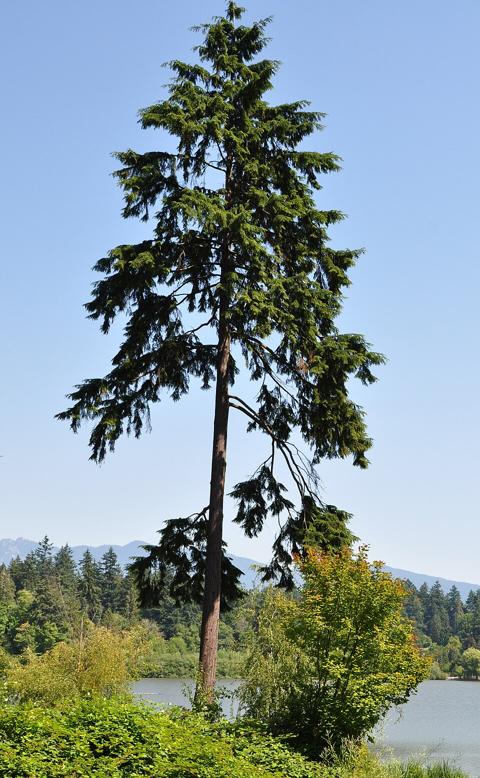 143. books/trees/tmp/hem_photo.jpg
Bash: cd ~/work/pixelart-studies/books/trees/src; python3 - <<'E' s=open('arch.py').read() s=s.replace(" drop = sp.sag * load * (1 + sp.sag_age * (self.year - a.born))", """
cd ~/work/pixelart-studies/books/trees/src; python3 - <<'E'
s=open('arch.py').read()
s=s.replace("            drop = sp.sag * load * (1 + sp.sag_age * (self.year - a.born))",
"""            # thick base is stiff, thin outer bough flexible (stiffness ~ r^4): droop grows outward
            flex = 2.0 * np.clip(s / tot, 0, 1) ** sp.flex_p
            drop = sp.sag * load * flex * (1 + sp.sag_age * (self.year - a.born))""")
s=s.replace("    sag: float = 0.010 ","    flex_p: float = 1.5           # how strongly the droop concentrates toward the bough tip\n    hang: float = 0.0             # pendulous branchlet curtains (m) under old bough nodes\n    sag: float = 0.010 ")
open('arch.py','w').write(s)
sh=open('shelf.py').read()
sh=sh.replace("""            # hanging sprays: the shelf's lower edge is ragged (0-2 px extra), never ruled
            extra = int(_h(i, ix, seed) * (2.0 + sp.fan_droop * 2))""","""            # hanging sprays: the shelf's lower edge is ragged (0-2 px extra), never ruled;
            # species with pendulous branchlets hang curtains (hemlock, cedar, spruce), with
            # gaps between the strands where the sky shows (Cole p. 71, 92: larch branchlets)
            extra = int(_h(i, ix, seed) * (2.0 + sp.fan_droop * 2))
            if sp.hang > 0 and kind == 'bough':
                hlen = sp.hang / mpp * min(1.0, age / 12.0)
                r_ = _h(i, ix, 3, seed)
                if r_ < 0.7:
                    extra += int(hlen * (0.4 + 0.6 * _h(i, ix, 5, seed)))""")
open('shelf.py','w').write(sh)
m=open('species_models.py').read()
m=m.replace("""    'hemlock': Species('western hemlock', model='troll', height=55, h_rate=0.7, h_tau=110,
                       tier=(2, 4), inter=3, angle=70, angle_top=55, lat_rate=0.40, lat_tau=28,
                       plagio=True, flatten=0.02, sag=0.05,""","""    'hemlock': Species('western hemlock', model='troll', height=55, h_rate=0.7, h_tau=110,
                       tier=(2, 4), inter=3, angle=55, angle_top=45, lat_rate=0.45, lat_tau=28,
                       plagio=True, flatten=0.0, sag=0.035, flex_p=2.0, hang=2.2, pad_thick=0.3,""")
m=m.replace("plagio=True, flatten=0.0, sag=0.07, tip_up=0.35,","plagio=True, flatten=0.0, sag=0.07, tip_up=0.35, hang=1.6, flex_p=1.0,")
m=m.replace("plagio=True, flatten=0.05, sag=0.02, tip_up=0.12,","plagio=True, flatten=0.05, sag=0.02, tip_up=0.12, hang=1.0,")
open('species_models.py','w').write(m)
E
sed -i '' 's/^VERSION = 5/VERSION = 6/' lib.py
cat > t_hem.py <<'E'
from lib import *
import shelf
from PIL import Image
t=grow('hemlock',90,seed=2,open_grown=True)
mpp=0.35; H=int((t.height()+3)/mpp); W=int(28/mpp)
mat,step=shelf.paint(t,mpp,W,H)
mine=shelf.to_rgb(mat,step,shelf.palette())
ph=photo('../refs/Tsuga_heterophylla_tree_habit/commons_Tsuga_heterophylla_Stanley_Park_Vancouver_jpg_c32773e6.jpg', H*3)
box=Image.open('../refs/Tsuga_heterophylla_tree_habit/commons_Tsuga_heterophylla_Stanley_Park_Vancouver_jpg_c32773e6.jpg').convert('RGB')
box=box.resize((int(box.size[0]*H/box.size[1]),H),Image.BOX)
sheet([ph, up(box,3), up(mine,3)],3,labels=['photo','photo box-downsampled to game res','mine 0.35 m/px']).save('../work/hem_v1.png')
print(t.height())
E
python3 t_hem.py

# output:
42.82977400653344
Read: books/trees/work/hem_v1.png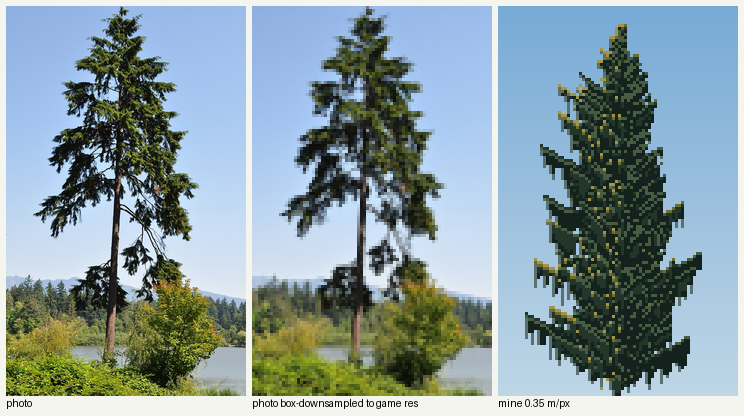 144. books/trees/work/hem_v1.png
Bash: cd ~/work/pixelart-studies/books/trees/src; python3 -c " from lib import * from diagram import draw_tree from PIL import Image, ImageDraw im=Image.new('L',(700,520),255); d=ImageDr
cd ~/work/pixelart-studies/books/trees/src; python3 -c "
from lib import *
from diagram import draw_tree
from PIL import Image, ImageDraw
im=Image.new('L',(700,520),255); d=ImageDraw.Draw(im)
t=grow('hemlock',90,seed=2,open_grown=True); draw_tree(d,t,350,510,11,leaves=False)
im.save('../work/skel_hem.png')
import numpy as np
b=[x for x in t.axes if x.order==1 and not x.dead]
for a in b[::40]:
    P=np.array(a.pts); print(t.year-a.born, len(P), np.round((P[:,2]-P[0,2]),1)[::2])"

# output:
88 91 [0.  0.2 0.4 0.6 0.7 0.9 1.1 1.2 1.4 1.5 1.7 1.8 1.9 2.3 2.6 2.9 3.1 3.4
 3.6 3.8 3.9 4.1 4.2 4.4 4.5 4.6 4.7 4.8 4.9 5.  5.  5.1 5.2 5.2 5.3 5.3
 5.4 5.4 5.5 5.5 5.5 5.6 5.6 5.6 5.7 5.7]
77 64 [0.  0.3 0.5 0.7 0.9 1.1 1.3 1.4 1.5 1.6 1.7 1.8 1.9 2.  2.1 2.1 2.2 2.3
 2.3 2.4 2.4 2.4 2.5 2.5 2.6 2.6 2.6 2.6 2.7 2.7 2.7 2.7]
66 66 [0.  0.3 0.6 0.8 1.1 1.2 1.4 1.6 1.7 1.8 2.  2.1 2.2 2.3 2.3 2.4 2.5 2.5
 2.6 2.7 2.7 2.8 2.8 2.8 2.9 2.9 2.9 3.  3.  3.  3.  3.1 3.1]
57 66 [0.  0.1 0.3 0.4 0.5 0.6 0.8 1.1 1.3 1.6 1.8 2.  2.2 2.3 2.5 2.6 2.7 2.9

 3.  3.  3.1 3.2 3.3 3.4 3.4 3.5 3.5 3.6 3.6 3.7 3.7 3.8 3.8]
48 49 [0.  0.2 0.3 0.5 0.6 0.7 0.8 0.9 1.  1.1 1.1 1.2 1.3 1.3 1.4 1.4 1.4 1.5
 1.5 1.6 1.6 1.6 1.6 1.7 1.7]
39 40 [0.  0.1 0.3 0.4 0.5 0.6 0.7 0.8 0.8 0.9 1.  1.  1.1 1.1 1.2 1.2 1.2 1.3
 1.3 1.3]
31 42 [0.  0.1 0.3 0.4 0.5 0.7 0.8 0.9 1.1 1.4 1.7 1.9 2.1 2.3 2.5 2.7 2.8 2.9
 3.1 3.2 3.3]
24 25 [0.  0.2 0.4 0.5 0.7 0.8 0.9 1.  1.1 1.2 1.3 1.4 1.5]
17 18 [0.  0.1 0.3 0.4 0.5 0.6 0.6 0.7 0.8]
10 11 [0.  0.1 0.2 0.3 0.4 0.5]
3 4 [0.  0.2]
Bash: cd ~/work/pixelart-studies/books/trees/src; python3 - <<'E' s=open('arch.py').read() a=s.index(" # thick base is stiff"); b=s.index(" h = np.linalg.norm(seg[:
cd ~/work/pixelart-studies/books/trees/src; python3 - <<'E'
s=open('arch.py').read()
a=s.index("            # thick base is stiff"); b=s.index("            h = np.linalg.norm(seg[:, :2], axis=1) + 1e-9")
s=s[:a]+'''            # curvature accumulates from base to tip (slope = integral of curvature); the thin
            # outer bough bends more per metre than the stiff base (Cole's pendent boughs, p. 194)
            kappa = sp.sag * Ls * (tot / np.maximum(load, 0.3)) ** (0.5 * sp.flex_p) / tot ** 0.5
            kappa *= (1 + sp.sag_age * (self.year - a.born))
            drop = np.cumsum(kappa)
            if sp.tip_up:
                drop = drop - sp.tip_up * np.clip(s - 0.6 * tot, 0, None)
'''+s[b:]
open('arch.py','w').write(s)
E
sed -i '' 's/^VERSION = 6/VERSION = 7/' lib.py
python3 -c "
from lib import *
from diagram import draw_tree
from PIL import Image, ImageDraw
im=Image.new('L',(1500,520),255); d=ImageDraw.Draw(im)
for k,(n,a) in enumerate([('hemlock',90),('cedar',120),('douglas',80),('spruce',100),('subalpine',80)]):
    t=grow(n,a,seed=2,open_grown=True); draw_tree(d,t,150+k*300,510,7,leaves=False)
im.save('../work/skel.png')"

# output:
Command did not complete within its 120s timeout and was moved to the background (ID: b6rn8mkfj). Output is being written to: (tmp) You will be notified when it completes. To check interim output, use Read on that file path.
Session cwd remains ~/work/pixelart-studies/library; directory changes made by the backgrounded command do not apply to subsequent commands.
Write: books/trees/LESSONS.md
# Cole and Hallé–Oldeman in pixels: lessons

A student's log, kept honestly as it goes. The book's model in its own terms is in MODEL.md.
Code in `src/`, master copies in `copies/`, work-in-progress in `work/`, final sheets in `sheets/`.

## 0. Reading (done first)

Read Cole whole (text + every page as contact sheets, key figures at 220 dpi) and Hallé's
chapters 2–5 (text, the illustrated key, the model descriptions for the temperate genera,
reiteration, the forest chapter). MODEL.md holds the result with page references.

The first thing the reading changed: I had expected Cole to be about *drawing trees* and Hallé
about *growing* them. Cole's Part II turned out to be a naive architecture — bud arrangement →
branch plan → outline — and Hallé's reiteration chapter turned out to be the missing account of
what Cole calls "the closeness of multiplied forms" of old trees. They are one model.

## 1. First mistake: I built a renderer before I could draw

I read, then wrote a growth simulator (`arch.py`, Hallé's models as programs) and a generic
painter (`cole.py`: splat foliage, dome shading, straightened outline). The first renders
(`work/first.png`, `work/dbg.png`) were exactly what the coordinator warned of from the Genge
study: generic lumps, Cole's rules applied to a blob that had none of his drawing in it. The
dome shading gave a smooth two-tone cone with a vertical terminator — the thing the conifer
student's critic had already killed. I stopped and went to master copies.

## 2. Master copies

Rule for myself: place pixels deliberately, at small size, against the book's own figure;
compare at 3–5×; repeat until the copy carries what the figure carries.

### 2a. Hallé's key, Massart and Troll (`copies/massart_v1.png`, `copies/troll_v1.png`)

Drawn with `src/copy_halle.py`: every branch is a list of straight runs (`arc(runs, dys)`),
which is Cole's p. 92 made literal — *"the comparative length of these straight pieces
determine the character of the curve."* A Massart branch rising and flattening is runs
1,2,2,3,4,5,6 stepping up; the oldest tier's droop is runs 4,7,10 up-level then 5,2,1 down.
Hallé's hanging leaf loops became a 2-px drop under every other branch pixel.

What carried: the four-stage sequence on one soil line *is* the model — the same tree read as
architectures in time (Hallé p. 75). The tier spacing, the trunk thickening below the second
tier, the young top with spiral leaves. Troll's arches (up, crest, fall) read at 1×.
What didn't: at this size the loops are a comb; Hallé's loops are the only place his drawing is
decorative, and pixel combs are the studio's known failure ("barcode"). They are not needed —
the arch alone says plagiotropic.

### 2b. Cole fig. 40, the sky apertures (`copies/fig40_v1..v4.png`)

v1 (automatic: plate thresholded, rules applied by code) was mush. v2 (polygons + stamped
holes) had "+"-shaped holes — the studio's *stamped ellipse* failure. v3–v4 are typed as ASCII
rows against the plate's value map (`src/copy_fig40c.py`), with Cole's legend: sky, veiled sky,
hole centre, colourless rim, foliage, core, lit plane, wood lit/shadow, hill.

What the copy taught, by pixels:

- **The colourless rim is one pixel.** A mid grey between the dark mass and the sky, on the
  lower and side margins of each hole (not the top: rule 5 — where the upper foliage projects,
  the edge is sharp). At 2× that single grey pixel makes the holes read as light *hanging among
  the leaves* rather than cut-outs. This is the most transferable thing in Chapter IV.
- **Holes are never symmetric.** They elongate along the lines between clumps and link into
  chains (p. 80); a 2×2 or plus-shaped hole is a stamp.
- **Veiled holes one step darker than sky** carry depth for free.
- Still wrong in v4: the plate's pale limbs cross *over* the dark mass ("against the veil the
  exquisite lines of the larger boughs can be clearly traced", p. 78); mine stop at the crown.

### 2c. Cole figs. 65–66, a tree line of straight pieces (`copies/fig65_v1..v2.png`)

Landscape scale, 96×48, one flat mass (Cole p. 51: massed trees, one depth of colour). The
outline is a polygon whose vertices I chose — the "builder's frame" of fig. 66. v1 had long
axis-aligned runs (a flat top on the big tree) and read as cut cardboard; v2 uses short angled
pieces with small bites, and reads as a tree line at 2×. The shade tone is kept to a 2–3 px band
on each crown's right flank, from the same end of the scale as the mass (fig. 9).
Honest gap: the plate's clumps have more small secondary notches than mine.

### 2d. Cole Illus. 60, Holly (`copies/holly_v1..v2.png`)

A conifer-like cone at close scale, the nearest thing in Cole to a young Douglas-fir or spruce.
v1 placed ~50 clumps by hand, each painted with Cole's planes (top light, body, underside dark)
plus a dome gradient: the result was a *striped cake* — regular ellipses, no holes, the value
bands in rows. v2 used the studio's method (box-downsample the plate to game resolution and paint
from that) and then applied the rules class by class: four tones, pinholes closed, colourless
rims on the lit side, hand-drawn stems and bank. v2 carries the form at 2× but is still blotchy:
the plate's marks are strokes following hanging sprays, and a downsample cannot give strokes.

(continued below as the work proceeds)
Bash: cat (tmp) ls -la ~/work/pixelart-studies/books/trees/work/skel.png
cat (tmp) ls -la ~/work/pixelart-studies/books/trees/work/skel.png

# output:
-rw-r--r--  1 user  staff  18956 Sep 26 14:58 ~/work/pixelart-studies/books/trees/work/skel.png
Read: books/trees/work/skel.png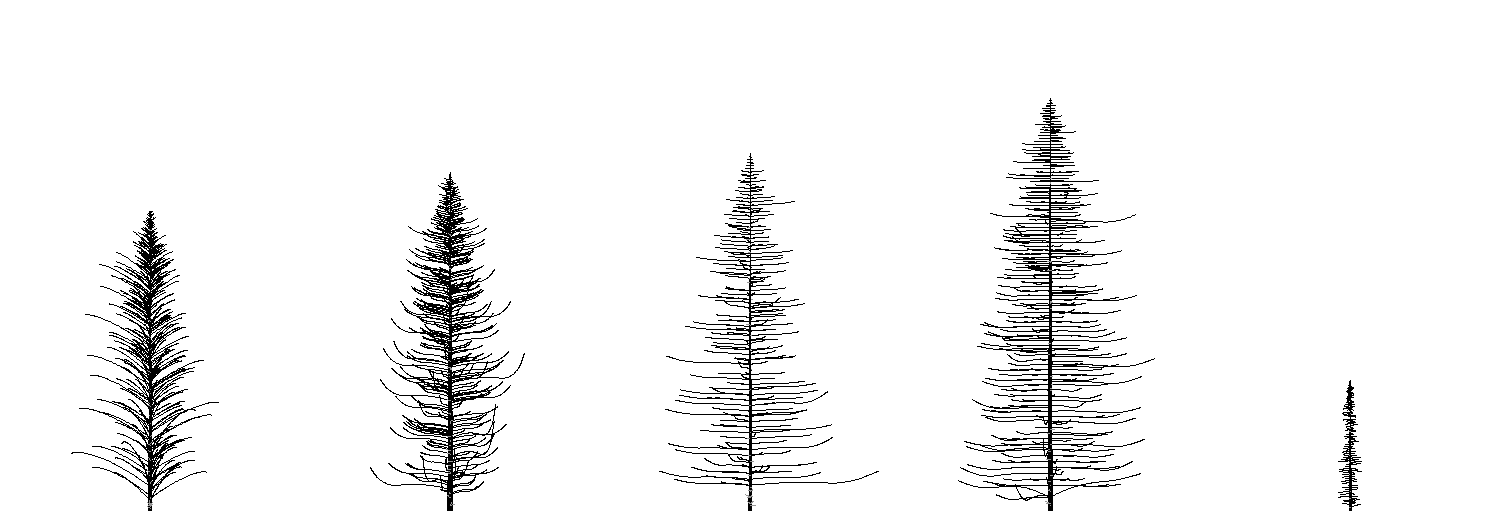 145. books/trees/work/skel.png
Bash: cd ~/work/pixelart-studies/books/trees/src; python3 t_hem.py
cd ~/work/pixelart-studies/books/trees/src; python3 t_hem.py

# output:
42.82977400653344
Read: books/trees/work/hem_v1.png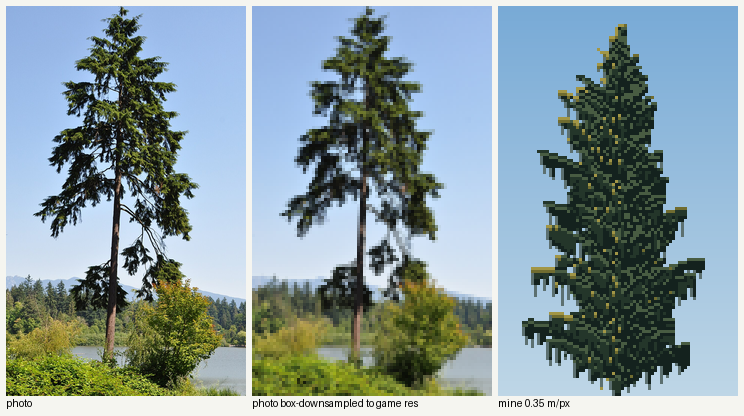 146. books/trees/work/hem_v1.png
Bash: cd ~/work/pixelart-studies/books/trees/src; python3 - <<'E' m=open('species_models.py').read() m=m.replace("tier=(2, 4), inter=3, angle=55, angle_top=45, lat_rate=0.45, lat_tau=28,
cd ~/work/pixelart-studies/books/trees/src; python3 - <<'E'
m=open('species_models.py').read()
m=m.replace("tier=(2, 4), inter=3, angle=55, angle_top=45, lat_rate=0.45, lat_tau=28,","tier=(2, 3), inter=1, angle=55, angle_top=45, lat_rate=0.5, lat_tau=30, thin=0.07, vig_sd=0.5,")
m=m.replace("spray_years=35, reach=1.2, fan_droop=0.6, cluster=0.9),","spray_years=35, keep_m=5.0, reach=1.6, fan_droop=0.6, cluster=0.9),")
open('species_models.py','w').write(m)
t=open('t_hem.py').read().replace("t=grow('hemlock',90,seed=2,open_grown=True)","t=grow('hemlock',90,seed=2,open_grown=False)")
open('t_hem.py','w').write(t)
E
python3 t_hem.py

# output:
42.82977400653344
Read: books/trees/work/hem_v1.png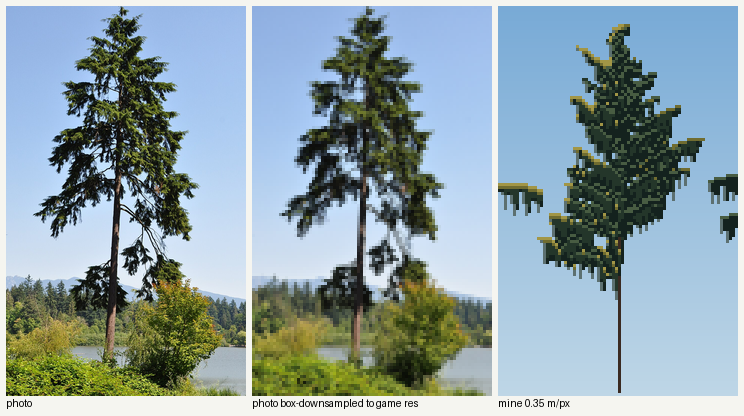 147. books/trees/work/hem_v1.png
Bash: cd ~/work/pixelart-studies/books/trees/src; sed -i '' 's/lat_rate=0.5, lat_tau=30, thin=0.07, vig_sd=0.5,/lat_rate=0.5, lat_tau=30, thin=0.16, vig_sd=0.6,/' species_models.py; pyth
cd ~/work/pixelart-studies/books/trees/src; sed -i '' 's/lat_rate=0.5, lat_tau=30, thin=0.07, vig_sd=0.5,/lat_rate=0.5, lat_tau=30, thin=0.16, vig_sd=0.6,/' species_models.py; python3 - <<'E'
t=open('t_hem.py').read().replace("t=grow('hemlock',90,seed=2,open_grown=False)","t=grow('hemlock',90,seed=2,open_grown=False, shade_prune=0.15)")
open('t_hem.py','w').write(t)
E
python3 t_hem.py

# output:
42.82977400653344
Read: books/trees/work/hem_v1.png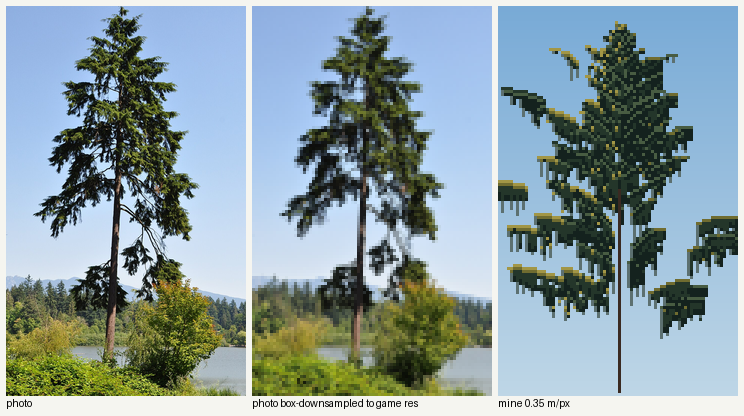 148. books/trees/work/hem_v1.png
Bash: cd ~/work/pixelart-studies/books/trees/src; sed -i '' 's/lat_rate=0.5, lat_tau=30, thin=0.16, vig_sd=0.6,/lat_rate=0.36, lat_tau=30, thin=0.10, vig_sd=0.6,/' species_models.py; pyt
cd ~/work/pixelart-studies/books/trees/src; sed -i '' 's/lat_rate=0.5, lat_tau=30, thin=0.16, vig_sd=0.6,/lat_rate=0.36, lat_tau=30, thin=0.10, vig_sd=0.6,/' species_models.py; python3 t_hem.py

# output:
42.82977400653344
Read: books/trees/work/hem_v1.png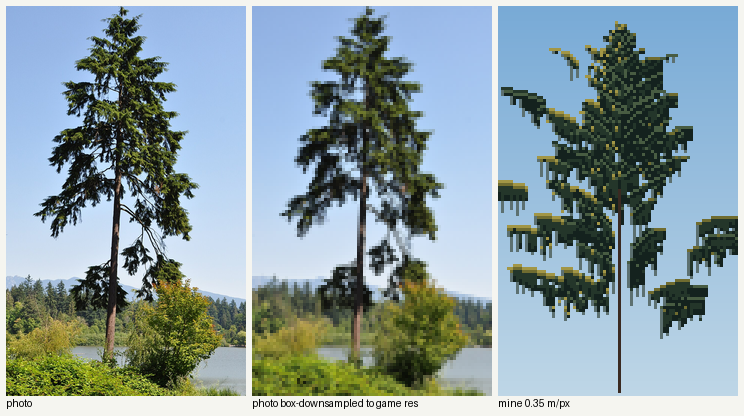 149. books/trees/work/hem_v1.png
Bash: cd ~/work/pixelart-studies/books/trees/src; python3 - <<'E' s=open('lib.py').read() s=s.replace(''' key = f"v{VERSION}_{name}_{age}_{seed}_{int(open_grown)}_" + "_".join(f"{k}{v
cd ~/work/pixelart-studies/books/trees/src; python3 - <<'E'
s=open('lib.py').read()
s=s.replace('''    key = f"v{VERSION}_{name}_{age}_{seed}_{int(open_grown)}_" + "_".join(f"{k}{v}" for k, v in sorted(over.items()))''','''    import hashlib
    hsh = hashlib.md5(repr(sp).encode()).hexdigest()[:10]
    key = f"v{VERSION}_{name}_{age}_{seed}_{int(open_grown)}_{hsh}"''')
open('lib.py','w').write(s)
E
python3 t_hem.py

# output:
42.82977400653344
Read: books/trees/work/hem_v1.png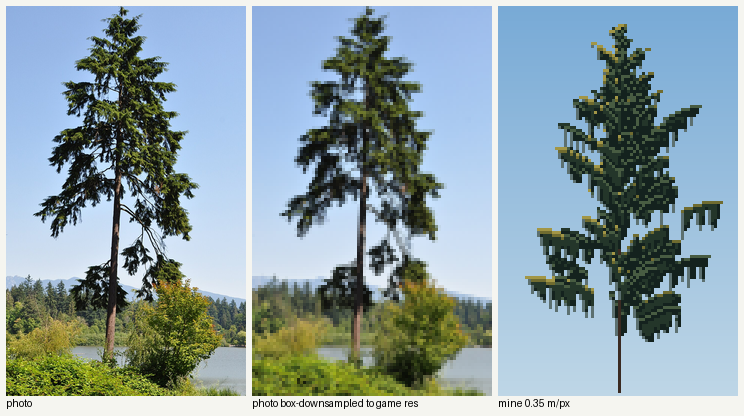 150. books/trees/work/hem_v1.png
Bash: cd ~/work/pixelart-studies/books/trees/src; grep -n "shelves.append\|for (i, x, y, dz, dx, dy, age, kind) in shelves" shelf.py; sed -n 80,140p shelf.py
cd ~/work/pixelart-studies/books/trees/src; grep -n "shelves.append\|for (i, x, y, dz, dx, dy, age, kind) in shelves" shelf.py; sed -n 80,140p shelf.py

# output:
93:                shelves.append((i, X[k], Y[k], D[k], 1.0, 1.0, 0, 'tip'))
104:            shelves.append((i, X[k], Y[k], D[k], X[k] - X[k - 1], Y[k] - Y[k - 1], age, 'bough'))
109:    for (i, x, y, dz, dx, dy, age, kind) in shelves:
    trunk_axes = [i for i, a in enumerate(tree.axes) if a.order == 0 or a.reiterated]
    tx = np.mean([project(np.asarray(tree.axes[trunk_axes[0]].pts[0]), yaw, mpp, ox, oy)[0]])
    shelves = []
    for i, a in enumerate(tree.axes):
        if a.dead or len(a.pts) < 2:
            continue
        pts = np.array(tree.nodded(i, a.pts), float)
        ages = np.array(a.age_nodes[:len(pts)])
        X, Y, D = project(pts, yaw, mpp, ox, oy)
        if a.order == 0 or a.reiterated:
            # leader: last few years carry a spire of short shelves (the young top)
            young = ages >= tree.year - 3
            for k in np.where(young)[0]:
                shelves.append((i, X[k], Y[k], D[k], 1.0, 1.0, 0, 'tip'))
            continue
        # foliage on the outer keep_m metres of the bough (inner branchlets die for want of
        # light, Cole p. 194; Hallé ch. 4) -- more in the open, where light reaches in
        seg = np.linalg.norm(np.diff(pts, axis=0), axis=1)
        from_tip = np.concatenate([np.cumsum(seg[::-1])[::-1], [0.0]])
        keep = sp.keep_m * (1.8 if tree.open else 1.0)
        for k in range(1, len(pts)):
            age = tree.year - ages[k]
            if from_tip[k] > keep:
                continue
            shelves.append((i, X[k], Y[k], D[k], X[k] - X[k - 1], Y[k] - Y[k - 1], age, 'bough'))
    # paint back to front
    shelves.sort(key=lambda s: s[3])
    reach_px = max(1.0, sp.reach * shelf_scale / mpp)
    th0 = max(1.0, sp.pad_thick / mpp)
    for (i, x, y, dz, dx, dy, age, kind) in shelves:
        if kind == 'tip':
            hw, th = max(1, int(round(reach_px * 0.3))), max(1, int(round(th0)))
        else:
            grow = min(1.0, (age + 1) / 6.0)
            hw = max(1, int(round(reach_px * grow)))            # wedge: narrow at the tip
            th = max(1, int(round(th0 * min(3.0, 0.6 + age / 8.0))))
        if kind == 'tip':
            samples = [(x + s_, y) for s_ in range(-hw, hw + 1)]
        else:
            n = int(max(abs(dx), abs(dy))) + 1
            samples = [(x - dx * t, y - dy * t) for t in np.linspace(0, 1, n + 1)]
        for j, (cx, cy) in enumerate(samples):
            ix = int(round(cx))
            if not 0 <= ix < W:
                continue
            # hanging sprays: the shelf's lower edge is ragged (0-2 px extra), never ruled;
            # species with pendulous branchlets hang curtains (hemlock, cedar, spruce), with
            # gaps between the strands where the sky shows (Cole p. 71, 92: larch branchlets)
            extra = int(_h(i, ix, seed) * (2.0 + sp.fan_droop * 2))
            if sp.hang > 0 and kind == 'bough':
                hlen = sp.hang / mpp * min(1.0, age / 12.0)
                r_ = _h(i, ix, 3, seed)
                if r
Bash: cd ~/work/pixelart-studies/books/trees/src; python3 - <<'E' s=open('shelf.py').read() s=s.replace("shelves.append((i, X[k], Y[k], D[k], 1.0, 1.0, 0, 'tip'))","shelves.append((i, X[
cd ~/work/pixelart-studies/books/trees/src; python3 - <<'E'
s=open('shelf.py').read()
s=s.replace("shelves.append((i, X[k], Y[k], D[k], 1.0, 1.0, 0, 'tip'))","shelves.append((i, X[k], Y[k], D[k], 1.0, 1.0, 0, 'tip', 0.5))")
s=s.replace("            shelves.append((i, X[k], Y[k], D[k], X[k] - X[k - 1], Y[k] - Y[k - 1], age, 'bough'))",
"            u = 1.0 - from_tip[k] / keep                   # 0 inner end of the foliage .. 1 tip\n            shelves.append((i, X[k], Y[k], D[k], X[k] - X[k - 1], Y[k] - Y[k - 1], age, 'bough', u))")
s=s.replace("    for (i, x, y, dz, dx, dy, age, kind) in shelves:","    curtain = np.zeros((H, W), bool)\n    for (i, x, y, dz, dx, dy, age, kind, u) in shelves:")
s=s.replace("""            if sp.hang > 0 and kind == 'bough':
                hlen = sp.hang / mpp * min(1.0, age / 12.0)
                r_ = _h(i, ix, 3, seed)
                if r_ < 0.7:
                    extra += int(hlen * (0.4 + 0.6 * _h(i, ix, 5, seed)))""","""            hang_from = th + extra
            if sp.hang > 0 and kind == 'bough':
                # a hand-shaped curtain: longest two-thirds out, short at base and tip
                prof = np.sin(np.pi * np.clip(0.15 + 0.85 * u, 0, 1)) ** 0.6
                hlen = sp.hang / mpp * prof * min(1.0, age / 10.0 + 0.3)
                # strands come in pairs/threes (correlated), with gaps where the sky shows
                grp = _h(i, ix // 2, 3, seed)
                if grp < 0.72:
                    extra += int(round(hlen * (0.45 + 0.55 * _h(i, ix, 5, seed))))""")
s=s.replace("""                    vpos[yy, ix] = (yy - top) / max(1, th + extra - 1)""","""                    vpos[yy, ix] = (yy - top) / max(1, th + extra - 1)
                    curtain[yy, ix] = (yy - top) >= hang_from""")
# tones: curtain dark with dither, body upper half flecks
s=s.replace("""    tone[top_row] = 3""","""    # body: the upper half of a shelf carries sparse flecks of the sky-lit tone (spray tops)
    hsh = np.fromfunction(lambda y, x: ((x * 73856093) ^ (y * 19349663)) % 1000 / 1000.0, (H, W))
    tone[F & ~curtain & (vpos < 0.5) & (hsh < 0.22)] = 3
    # curtains of hanging branchlets: dark (Cole p. 70: the lowest, hanging leaves are more
    # distinct and darker), with a second dark green through them (not flat black)
    tone[F & curtain] = 1
    tone[F & curtain & (hsh < 0.3)] = 2
    tone[top_row] = 3""")
open('shelf.py','w').write(s)
E
python3 t_hem.py

# output:
Exit code 1
Traceback (most recent call last):
  File "~/work/pixelart-studies/books/trees/src/t_hem.py", line 6, in <module>
    mat,step=shelf.paint(t,mpp,W,H)
             ^^^^^^^^^^^^^^^^^^^^^^
  File "~/work/pixelart-studies/books/trees/src/shelf.py", line 172, in paint
    hsh = np.fromfunction(lambda y, x: ((x * 73856093) ^ (y * 19349663)) % 1000 / 1000.0, (H, W))
          ^^^^^^^^^^^^^^^^^^^^^^^^^^^^^^^^^^^^^^^^^^^^^^^^^^^^^^^^^^^^^^^^^^^^^^^^^^^^^^^^^^^^^^^
  File "~/miniconda3/lib/python3.12/site-packages/numpy/core/numeric.py", line 1845, in fromfunction
    return function(*args, **kwargs)
           ^^^^^^^^^^^^^^^^^^^^^^^^^
  File "~/work/pixelart-studies/books/trees/src/shelf.py", line 172, in <lambda>
    hsh = np.fromfunction(lambda y, x: ((x * 73856093) ^ (y * 19349663)) % 1000 / 1000.0, (H, W))
                                        ~~~~~~~~~~~~~~~^~~~~~~~~~~~~~~~
TypeError: ufunc 'bitwise_xor' not supported for the input types, and the inputs could not be safely coerced to any supported types according to the casting rule ''safe''
Bash: cd ~/work/pixelart-studies/books/trees/src; sed -i '' 's/ hsh = np.fromfunction(lambda y, x: ((x \* 73856093) ^ (y \* 19349663)) % 1000 \/ 1000.0, (H, W))/ hsh = np.fromfunct
cd ~/work/pixelart-studies/books/trees/src; sed -i '' 's/    hsh = np.fromfunction(lambda y, x: ((x \* 73856093) ^ (y \* 19349663)) % 1000 \/ 1000.0, (H, W))/    hsh = np.fromfunction(lambda y, x: ((x.astype(np.int64) * 73856093) ^ (y.astype(np.int64) * 19349663)) % 1000 \/ 1000.0, (H, W))/' shelf.py; python3 t_hem.py

# output:
42.82977400653344
Read: books/trees/work/hem_v1.png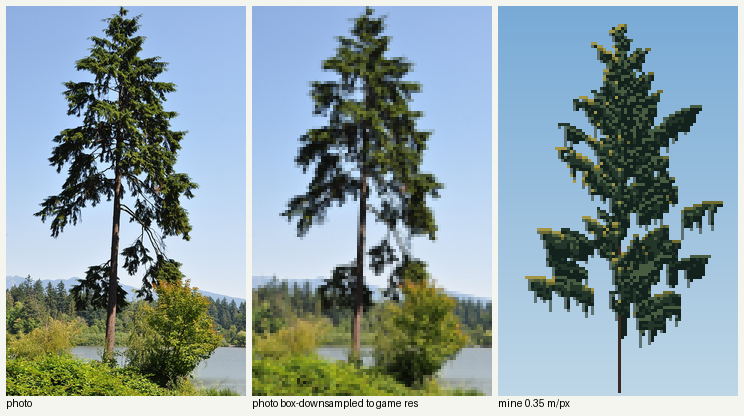 151. books/trees/work/hem_v1.png
Bash: cd ~/work/pixelart-studies/books/trees/src; cat >> t_hem.py <<'E' crop=Image.fromarray(mine).crop((W//2-30, int(H*0.35), W//2+30, int(H*0.35)+50)) boxc=box.crop((box.size[0]//2-30,
cd ~/work/pixelart-studies/books/trees/src; cat >> t_hem.py <<'E'
crop=Image.fromarray(mine).crop((W//2-30, int(H*0.35), W//2+30, int(H*0.35)+50))
boxc=box.crop((box.size[0]//2-30, int(H*0.35), box.size[0]//2+30, int(H*0.35)+50))
sheet([up(boxc,6), up(crop,6)],2,labels=['photo at game res, 6x','mine, 6x']).save('../work/hem_zoom.png')
E
python3 t_hem.py

# output:
42.82977400653344
Read: books/trees/work/hem_zoom.png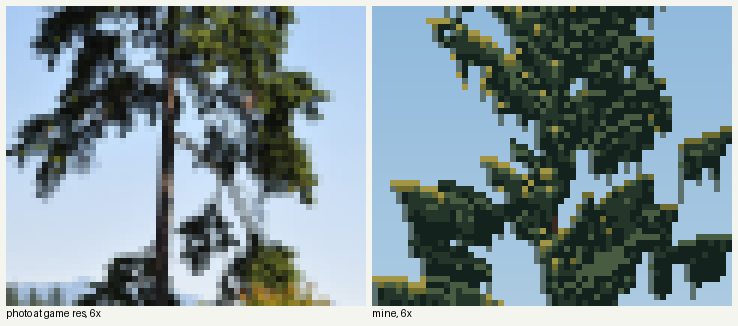 152. books/trees/work/hem_zoom.png
Bash: cd ~/work/pixelart-studies/books/trees/src; cat > t_ages.py <<'E' from lib import * import shelf, time, sys from PIL import Image mpp=0.4 names=sys.argv[1].split(',') if len(sys.ar
cd ~/work/pixelart-studies/books/trees/src; cat > t_ages.py <<'E'
from lib import *
import shelf, time, sys
from PIL import Image
mpp=0.4
names=sys.argv[1].split(',') if len(sys.argv)>1 else ['douglas','hemlock','cedar','spruce']
ages=[15,40,90,250]
cells=[];labs=[]
Hmax=int(80/mpp); Wc=int(34/mpp)
for n in names:
    for a in ages:
        t0=time.time(); t=grow(n,a,seed=3,open_grown=False)
        mat,step=shelf.paint(t,mpp,Wc,Hmax)
        cells.append(shelf.to_rgb(mat,step,shelf.palette())); labs.append(f'{n} {a} yr  {t.height():.0f} m  ({time.time()-t0:.0f}s)')
        print(labs[-1], flush=True)
sheet([up(c,2) for c in cells],len(ages),labels=labs,title='species x age (Hallé sequence), forest-grown, 0.4 m/px, 2x').save('../work/ages_v1.png')
E
python3 t_ages.py 2>&1 | tail -20

# output:
Command running in background with ID: b99avk15n. Output is being written to: (tmp) You will be notified when it completes. To check interim output, use Read on that file path.
Session cwd remains ~/work/pixelart-studies/library; directory changes made by the backgrounded command do not apply to subsequent commands.
Bash: cd ~/work/pixelart-studies/books/trees; ls refs/Quercus_garryana_tree | grep -i oregon; python3 -c " from PIL import Image im=Image.open('refs/Quercus_garryana_tree/openverse_Orego
cd ~/work/pixelart-studies/books/trees; ls refs/Quercus_garryana_tree | grep -i oregon; python3 -c "
from PIL import Image
im=Image.open('refs/Quercus_garryana_tree/openverse_Oregon_s_Oak_Tree_d831e9b1.jpg').convert('RGB'); print(im.size)
im.save('tmp/oak_photo.jpg')"

# output:
openverse_Oregon_s_Oak_Tree_d831e9b1.jpg
(855, 1024)
Read: books/trees/tmp/oak_photo.jpg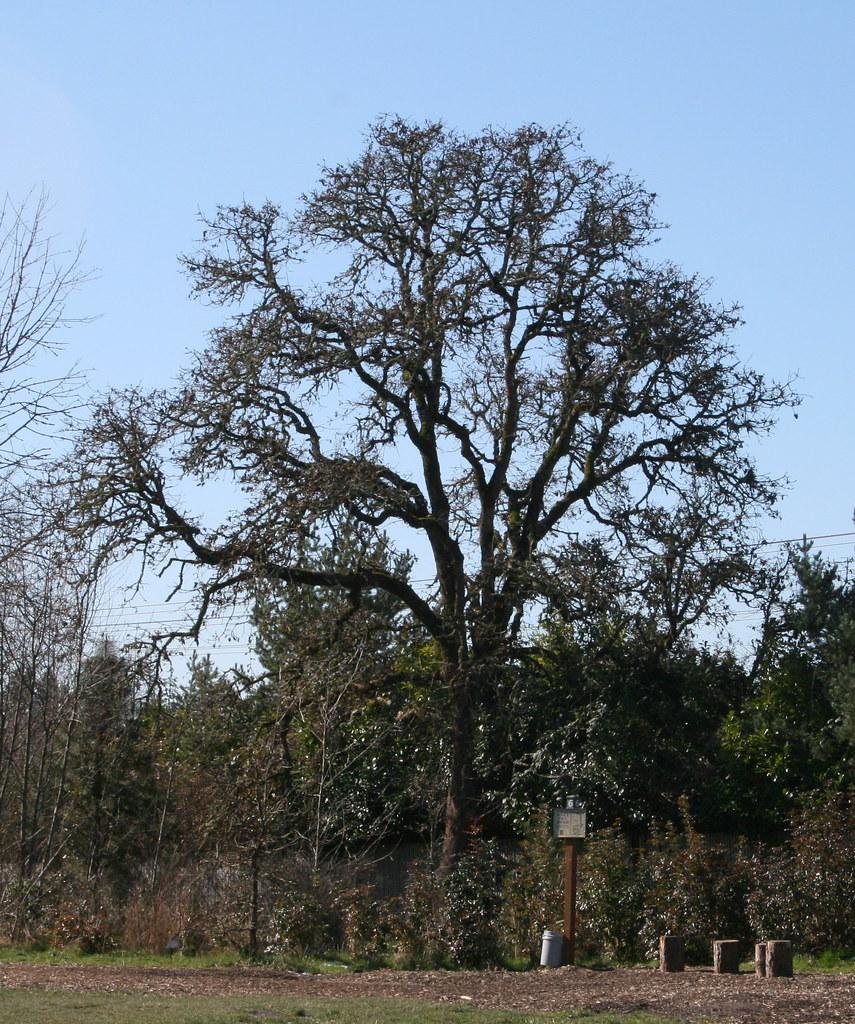 153. books/trees/tmp/oak_photo.jpg
Bash: cd ~/work/pixelart-studies/books/trees/src; python3 -c " from PIL import Image im=Image.open('../tmp/oak_photo.jpg') im.crop((40,100,820,880)).resize((100,100),Image.BOX).resize((5
cd ~/work/pixelart-studies/books/trees/src; python3 -c "
from PIL import Image
im=Image.open('../tmp/oak_photo.jpg')
im.crop((40,100,820,880)).resize((100,100),Image.BOX).resize((500,500),Image.NEAREST).save('../tmp/oak_box.png')
from px import guide
g=guide('../tmp/oak_photo.jpg',100,100,crop=(40,100,820,880),show=False)
print('   '+''.join(str(i%10) for i in range(100)))
for j,r in enumerate(g[:80]): print(f'{j:2d} '+''.join(str(min(9,int(v*10))) for v in r))
" | head -85

# output:
0123456789012345678901234567890123456789012345678901234567890123456789012345678901234567890123456789
 0 0000000111111111111111111111111111111111111111111111111111111111111111111111111111111111111111111111
 1 0000000000111111111111111111111111111111111111111111111111111111111111111111111111111111111111111111
 2 0000000000111101111111111111111111111111111212211111111111111111111111111111111111111111111111111111
 3 0000000000011100000111111111111111111111112324523253111112111232212211111111111111111111111111111111
 4 0000000000000001010000101111111111111111112455556664322123323555634222111111111111111111111111111111
 5 0000000000000000000000000000111111111111112357776644233544545765443222111111111111111111111111111111
 6 0000000000000000000000000000000110111111113343666523465553355551455111111111111111111111111111111111
 7 0000000000000000000000000000000000011101145355456334656665355763665212311111111111111111111111111111
 8 0000000000000000000000000000000000011122455456576437677664544675765424443211111111111111111111111111
 9 0000000000000000000000000000000000002454665655677555566663555465532443352212111111111111111111111111
10 0000000000000000000000000000000000013356564556666567655565655577545364433223111111111111111111111111
11 0000000000000000000000000000000001112465463552456576743644665676525443342233321111111111111111111111
12 1000000000000000000000000010010002246664456553137675543565645787335523543343224111111111111111111111
13 1000000000000000000000111121131001344565665653347565554654435587547233665534342111111111111111111111
14 0000000000000000000010123354353112465455665654477785644665447677664313765564441111111111111111111111
15 0000000000000000000011122234551123555666536656457873224527438777642125753574242111111111111111111111
16 0000000000000000000001223444451134343357677776655733435557777667521127776777333111111111111111111111
17 0000000000000000000012123554532212333446744477874744478545667547311347877775321111111111111111111111
18 1000010000000000000011111341342112111122156465886633775645567656445665777655422111111111111111111111
19 1000010000000000001012001244442421100101224666746854677551247757554457764642111111111111111111111111
20 1000100000000000012314422335564211000000344355553777442351144456755753676434311111111111111111111111
21 1000100000000000001445554444361100000002531114554676422466155465358742761113432222111111111111111111
22 1011010000000000001123556674472100000123421111743674335655776776647665751324234433111111111111111111
23 0111100000000000000134344544463100011222420113642772456667966764556577545657864546441211111111111111
24 0110000000000000000122224411236521111122231123754766635753774424356646655667565675452111111111111111
25 1100000000000000000111122200245864123433231232674677657531268212368888547877675575653111111111111111
26 0100000000000000000001111002655675333435425435686876567533247445588876435877875768864311121111111111
27 1010000000000000000000001225336577766554455577777774555244447115747157656678777786764524
Bash: cd ~/work/pixelart-studies/books/trees/src; cat > study_oak_winter.py <<'E' """Study: a Garry oak in winter, after Cole p. 78 (leafless trees) and ch. VI (the oak's elbows), from t
cd ~/work/pixelart-studies/books/trees/src; cat > study_oak_winter.py <<'E'
"""Study: a Garry oak in winter, after Cole p. 78 (leafless trees) and ch. VI (the oak's elbows),
from the photo refs/Quercus_garryana_tree/openverse_Oregon_s_Oak_Tree. 100x100 px, ~0.22 m/px.

Cole p. 78: 'The border is constructed of little twigs ... a haze scarcely differing from the
colour of the sky. Inside this border is a closer network ... an indistinct veil, and against it
the exquisite lines of the larger boughs can be clearly traced.'
Cole p. 157 / Hallé Rauh: oak shoots at near right angles, sturdy, elbowed; supple, the leader
replaced again and again, so the crown is a set of reiterated limbs, no straight trunk above
the fork.
The limbs are traced by hand (lists of points read off the photo at game resolution) and
drawn as clean runs; the telescope rule (Cole fig. 155) steps their width down at each fork.
The haze and veil are zones by distance from the limb network inside a hand-cut hull."""
import numpy as np
from scipy import ndimage as ndi
from PIL import Image, ImageDraw
from px import Canvas
from lib import sheet, up

SKY0, SKY1, HAZE, VEIL, NET, BARK, BARKL, BARKD, GRD, GRDD, BG, BGD = range(12)
PAL = [(150, 186, 222), (168, 198, 228), (136, 158, 176), (108, 116, 118), (80, 80, 78),
       (62, 56, 50), (104, 96, 84), (40, 36, 34), (116, 104, 80), (92, 82, 64), (56, 70, 52),
       (38, 50, 38)]
W, H = 100, 100
c = Canvas(W, H, SKY0)
a = c.a
a[:40][np.add.outer(np.arange(40), np.arange(W)) % 2 == 0] = SKY0
a[45:, :] = SKY1
for y in range(38, 46):                        # dithered seam between the two sky bands
    a[y, (np.arange(W) + y) % 2 == 0] = SKY1

# limbs: (points, width at start, width at end); elbows are written in as sharp turns
LIMBS = [
    ([(53, 99), (53, 90), (52, 80), (52, 70), (51, 62), (51, 59)], 5, 4),                 # trunk
    ([(51, 59), (44, 60), (37, 60), (33, 58), (28, 59), (23, 57), (18, 55), (14, 50), (10, 47), (7, 42)], 3, 1),  # A
    ([(50, 55), (47, 50), (43, 44), (38, 40), (33, 35), (30, 29), (24, 23), (22, 19), (20, 16)], 3, 1),          # B
    ([(52, 53), (52, 45), (51, 36), (48, 30), (50, 24), (49, 19), (46, 12), (46, 6)], 3, 1),                     # C
    ([(54, 52), (57, 46), (61, 38), (64, 33), (67, 26), (67, 20), (69, 13)], 2, 1),                             # D
    ([(55, 56), (61, 52), (69, 47), (75, 46), (82, 41), (88, 39), (93, 36)], 2, 1),                             # E
    ([(57, 59), (65, 60), (74, 59), (79, 55), (84, 54), (89, 50)], 2, 1),                                       # F
    ([(28, 59), (25, 54), (22, 50), (20, 45), (17, 41)], 1, 1),
    ([(18, 55), (14, 54), (10, 53), (6, 53)], 1, 1),
    ([(33, 35), (36, 30), (38, 26), (38, 21), (40, 15)], 1, 1),
    ([(24, 23), (27, 18), (27, 13), (30, 9)], 1, 1),
    ([(51, 36), (55, 31), (57, 28), (57, 22), (59, 17), (58, 11)], 1, 1),
    ([(61, 38), (66, 36), (72, 33), (76, 29), (80, 27)], 1, 1),
    ([(69, 47), (72, 42), (75, 36), (76, 30), (79, 25)], 1, 1),
    ([(43, 44), (40, 47), (35, 48), (30, 46), (26, 45)], 1, 1),
    ([(74, 59), (78, 62), (84, 62)], 1, 1),
    ([(46, 12), (42, 8), (39, 5)], 1, 1),
    ([(67, 20), (72, 16), (75, 12)], 1, 1),
]
net = np.zeros((H, W), bool)
def seg(p, q, w, col):
    x0, y0 = p; x1, y1 = q
    n = max(abs(x1 - x0), abs(y1 - y0)) + 1
    for t in np.linspace(0, 1, n):
        x = int(round(x0 + t * (x1 - x0))); y = int(round(y0 + t * (y1 - y0)))
        for k in range(w):
            xx = x + k - w // 2
            if 0 <= xx < W and 0 <= y < H:
                a[y, xx] = BARKL if (k == 0 and w > 2) else (BARKD if (k == w - 1 and w > 1) else col)
                net[y, xx] = True
for pts, w0, w1 in LIMBS:
    m = len(pts) - 1
    for k in range(m):
        w = int(round(w0 + (w1 - w0) * k / max(1, m - 1)))       # steps down along the limb
        seg(pts[k], pts[k + 1], w, BARK)

# the crown hull cut in straight pieces (Cole p. 92): the oak's border is shorter, more broken
# pieces than an elm's, with star-shaped projections
HULL = [(3, 42), (6, 33), (12, 25), (18, 14), (26, 8), (36, 3), (46, 1), (55, 2), (62, 5), (70, 7),
        (76, 12), (82, 18), (86, 26), (93, 30), (98, 36), (96, 42), (90, 50), (92, 56), (84, 60),
        (72, 64), (58, 63), (44, 64), (30, 63), (18, 60), (10, 56), (4, 50)]
hm = Image.new('L', (W, H), 0); ImageDraw.Draw(hm).polygon(HULL, fill=1)
hull = np.array(hm, bool)
d = ndi.distance_transform_edt(~net)
edge_d = ndi.distance_transform_edt(hull)
hsh = np.fromfunction(lambda y, x: (((x.astype(np.int64) * 92821) ^ (y.astype(np.int64) * 68917)) % 997) / 997.0, (H, W))
sky = ~net
# network: within 2 px of the limbs, dense veil; 2-5 px, veil half; outer: haze thin
zone_net = hull & sky & (d <= 1.5)
zone_veil = hull & sky & (d > 1.5) & (d <= 4.5)
zone_haze = hull & sky & (d > 4.5)
a[zone_net & (hsh < 0.75)] = NET
a[zone_net & (hsh >= 0.75)] = VEIL
a[zone_veil & (hsh < 0.55)] = VEIL
a[zone_veil & (hsh >= 0.55) & (hsh < 0.75)] = HAZE
a[zone_haze & (hsh < 0.45)] = HAZE
# the extreme border: haze thins to nothing over the last 2 px (no edge -- p. 78)
border = hull & (edge_d <= 2) & sky
a[border & (hsh < 0.7) & (a == HAZE)] = SKY1 if False else a[border & (hsh < 0.7) & (a == HAZE)]
a[border & (hsh >= 0.25) & np.isin(a, [HAZE, VEIL])] = SKY0
# background: the dark evergreen line behind, and the ground
bg = np.zeros((H, W), bool)
prof = [62, 60, 64, 58, 55, 57, 61, 63, 60, 62]
for x in range(W):
    top = prof[x // 10] + (1 if (x * 7) % 5 == 0 else 0)
    bg[top:88, x] = True
a[bg & ~net] = BG
a[bg & ~net & (hsh < 0.35)] = BGD
a[88:, :] = GRD
a[88, :] = GRDD
seg((53, 88), (53, 99), 5, BARK)
ref = Image.open('../tmp/oak_box.png').convert('RGB')
ph = Image.open('../tmp/oak_photo.jpg').crop((40, 100, 820, 880)).resize((500, 500))
sheet([ph, ref, c.img(PAL, 5)], 3, labels=['photo', 'photo at 100 px (box)', 'study v1, 5x']).save('../work/oak_winter_v1.png')
c.img(PAL, 1).save('../work/oak_winter_v1_1x.png')
E
python3 study_oak_winter.py

# output:
(Bash completed with no output)
Read: books/trees/work/oak_winter_v1.png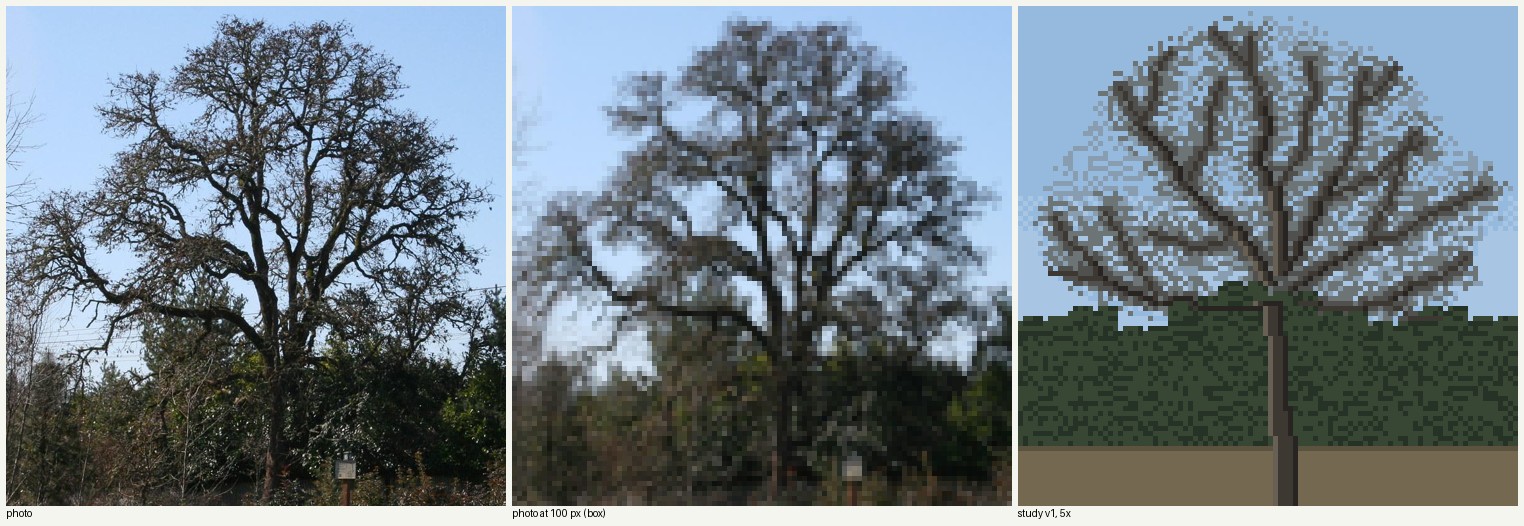 154. books/trees/work/oak_winter_v1.png
Bash: cd ~/work/pixelart-studies/books/trees/src; python3 - <<'E' s=open('study_oak_winter.py').read() s=s.replace("""PAL = [(150, 186, 222), (168, 198, 228), (136, 158, 176), (108, 116,
cd ~/work/pixelart-studies/books/trees/src; python3 - <<'E'
s=open('study_oak_winter.py').read()
s=s.replace("""PAL = [(150, 186, 222), (168, 198, 228), (136, 158, 176), (108, 116, 118), (80, 80, 78),
       (62, 56, 50), (104, 96, 84), (40, 36, 34),""","""PAL = [(150, 186, 222), (168, 198, 228), (128, 148, 164), (92, 98, 100), (60, 60, 58),
       (44, 40, 36), (84, 78, 68), (28, 26, 24),""")
# elbows: jitter the interior points into zigzags of short straight pieces
s=s.replace("net = np.zeros((H, W), bool)","""def elbow(pts, amp=1.5, every=1):
    # Cole ch. VI: the oak's line is the elbow -- break each span into two pieces with a sharp
    # turn, alternating sides (a zigzag of short straight lengths, never a smooth curve)
    out = [pts[0]]
    for k in range(len(pts) - 1):
        (x0, y0), (x1, y1) = pts[k], pts[k + 1]
        mx, my = (x0 + x1) / 2, (y0 + y1) / 2
        nx, ny = -(y1 - y0), (x1 - x0)
        L = max(1e-6, (nx * nx + ny * ny) ** 0.5)
        sgn = 1 if k % 2 == 0 else -1
        out.append((int(round(mx + sgn * amp * nx / L)), int(round(my + sgn * amp * ny / L))))
        out.append((x1, y1))
    return out
LIMBS = [(p if i == 0 else elbow(p, 1.4 if w0 > 1 else 1.0), w0, w1) for i, (p, w0, w1) in enumerate(LIMBS)]
net = np.zeros((H, W), bool)""")
a0=s.index("# network: within 2 px"); b0=s.index("# background: the dark evergreen line behind")
s=s[:a0]+'''# twig clumps (the oak's tufts, Cole p. 66/158: 'tufted ... star-shaped projections'): centred on
# the limb ends and at intervals along the outer limbs; each clump a dense core of network,
# a veil ring, then haze -- so the crown is clusters with sky between, not an even stipple
ends = []
for pts, w0, w1 in LIMBS[1:]:
    ends.append(pts[-1])
    for q in pts[len(pts) // 2::3]:
        ends.append(q)
cl = np.zeros((H, W))
yy, xx = np.mgrid[0:H, 0:W]
for k, (ex, ey) in enumerate(ends):
    r = 2.5 + 2.5 * ((k * 37) % 7) / 7
    # star-shaped: radius modulated by angle (5 points)
    ang = np.arctan2(yy - ey, xx - ex)
    rr = r * (1 + 0.35 * np.cos(5 * ang + k))
    dd = np.hypot(xx - ex, yy - ey) / rr
    cl = np.maximum(cl, np.clip(1.2 - dd, 0, 1))
cl *= hull
zn = sky & (cl > 0.75); zv = sky & (cl > 0.45) & ~zn; zh = sky & (cl > 0.12) & ~zn & ~zv
a[zn & (hsh < 0.8)] = NET; a[zn & (hsh >= 0.8)] = VEIL
a[zv & (hsh < 0.6)] = VEIL; a[zv & (hsh >= 0.6) & (hsh < 0.8)] = HAZE
a[zh & (hsh < 0.4)] = HAZE
'''+s[b0:]
s=s.replace("oak_winter_v1","oak_winter_v2").replace("'study v1, 5x'","'study v2, 5x'")
open('study_oak_winter.py','w').write(s)
E
python3 study_oak_winter.py

# output:
(Bash completed with no output)
Read: books/trees/work/oak_winter_v2.png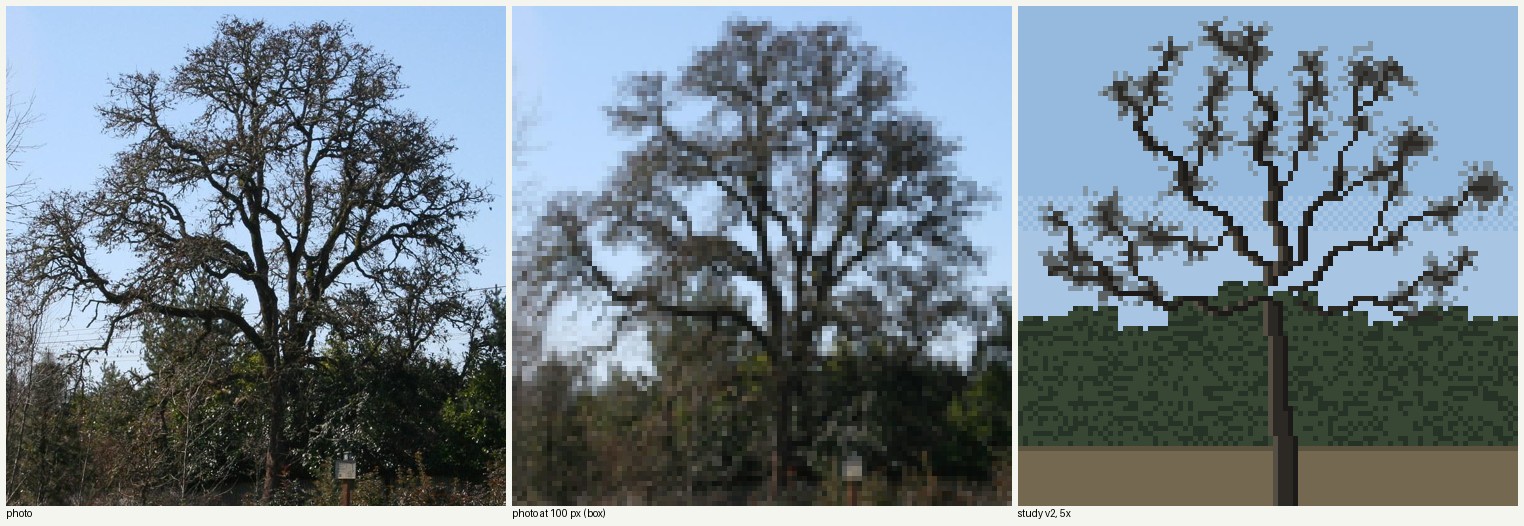 155. books/trees/work/oak_winter_v2.png
Bash: cd ~/work/pixelart-studies/books/trees/src; python3 - <<'E' s=open('study_oak_winter.py').read() s=s.replace("""ends = [] for pts, w0, w1 in LIMBS[1:]: ends.append(pts[-1])
cd ~/work/pixelart-studies/books/trees/src; python3 - <<'E'
s=open('study_oak_winter.py').read()
s=s.replace("""ends = []
for pts, w0, w1 in LIMBS[1:]:
    ends.append(pts[-1])
    for q in pts[len(pts) // 2::3]:
        ends.append(q)""","""ends = []
# second-order twigs: short 1-px shoots at near right angles off the outer limbs (Cole fig. 113,
# the oak's crowded right-angled shoots), alternating sides; their ends carry the tufts
for li, (pts, w0, w1) in enumerate(LIMBS[1:]):
    ends.append(pts[-1])
    for j in range(len(pts) // 3, len(pts) - 1, 2):
        (x0, y0), (x1, y1) = pts[j], pts[j + 1]
        dx, dy = x1 - x0, y1 - y0
        L = max(1e-6, (dx * dx + dy * dy) ** 0.5)
        sgn = 1 if (j + li) % 2 else -1
        nx, ny = -dy / L * sgn, dx / L * sgn
        ln = 3 + (j * 5 + li) % 3
        tx, ty = int(round(x0 + nx * ln + dx / L)), int(round(y0 + ny * ln + dy / L - 1))
        seg((x0, y0), (tx, ty), 1, BARK)
        ends.append((tx, ty))""")
s=s.replace("    r = 2.5 + 2.5 * ((k * 37) % 7) / 7","    r = 1.8 + 1.8 * ((k * 37) % 7) / 7")
s=s.replace("cl *= hull\n","""cl *= hull
# a thin general haze through the whole hull, denser low in the crown's middle where the limbs
# overlap (the photo is darkest there), thinning to nothing at the border
gen = hull * np.clip(edge_d / 6.0, 0, 1) * (0.25 + 0.25 * np.clip((yy - 15) / 45.0, 0, 1))
cl = np.maximum(cl, gen)
""")
s=s.replace("for y in range(38, 46):                        # dithered seam between the two sky bands\n    a[y, (np.arange(W) + y) % 2 == 0] = SKY1",
"for y in range(40, 45):                        # dithered seam between the two sky bands\n    a[y, (np.arange(W) * 3 + y * 5) % 7 < (y - 39)] = SKY1")
s=s.replace("oak_winter_v2","oak_winter_v3").replace("'study v2, 5x'","'study v3, 5x'")
open('study_oak_winter.py','w').write(s)
E
python3 study_oak_winter.py

# output:
(Bash completed with no output)
Read: books/trees/work/oak_winter_v3.png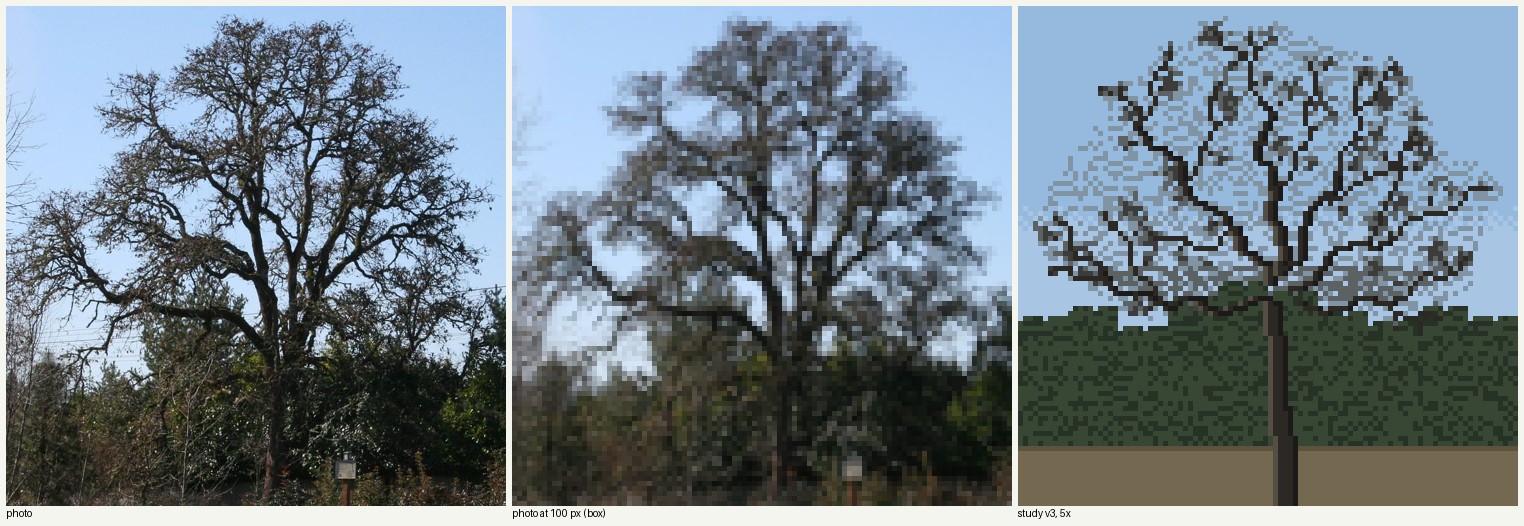 156. books/trees/work/oak_winter_v3.png
Bash: cat (tmp)
cat (tmp)

# output:
(Bash completed with no output)
Bash: cd ~/work/pixelart-studies/books/trees/src; cat > study_far.py <<'E' """Cole p. 64-66: 'A distant tree, rendered flat in tone by the atmosphere, is recognised by the pattern it mak
cd ~/work/pixelart-studies/books/trees/src; cat > study_far.py <<'E'
"""Cole p. 64-66: 'A distant tree, rendered flat in tone by the atmosphere, is recognised by the
pattern it makes against the sky ... Marked differences in the construction of the outline
become apparent.' Washington trees as far silhouettes, typed by hand at ~1.5 m/px.
'#' = the flat far tone, '+' = the one lighter tone allowed at middle distance on the upper
planes (used only in the MID set), '.' = sky. Each silhouette states its species by the
construction of its outline, per Cole: straight pieces vs loose sprays, spire vs dome, the tip."""
from px import Canvas
from lib import sheet, up
from PIL import Image

T = {}
T['douglas-fir, old'] = """
......##......
.....####.....
....######....
..##########..
.....####.....
...########...
..###########.
.....####.....
..##########..
.############.
....######....
.....#..#.....
......##......
......##......
......##......
......##......
......##......
......##......
......##......
......##......
......##......
......##......
......##......
.....####.....
"""
T['douglas-fir, mature'] = """
.......#.......
.......#.......
......###......
.....#####.....
......###......
....#######....
.....#####.....
...#########...
....#######....
..###########..
....#######....
..###########..
.#############.
...#########...
.#############.
..###########..
.......#.......
.......#.......
.......#.......
......###......
"""
T['western hemlock'] = """
........#......
.......#.......
.......##......
......####.....
.....######....
......####.....
....########...
...##########..
....########...
..############.
.#.##########..
...###########.
.##.#########.#
..###########..
.#.##.####.##.#
.......#.......
.......#.......
......###......
"""
T['western redcedar, old'] = """
......#..#.....
......#..#.....
.....##.##.....
....#######....
.....#####.....
...#########...
..###########..
...#########...
.#############.
..###########..
#.###########.#
.#############.
#..##.####.#..#
.......#.......
......###......
.....#####.....
"""
T['sitka spruce'] = """
.......#.......
......###......
......###......
.....#####.....
.....#####.....
....#######....
....#######....
...#########...
...#########...
..###########..
..###########..
.#############.
.#############.
###############
.......#.......
.......#.......
......###......
"""
T['subalpine fir'] = """
...#...
...#...
..###..
..###..
..###..
.#####.
..###..
.#####.
.#####.
.#####.
#######
.#####.
#######
#######
...#...
"""
T['red alder'] = """
.....####....
...########..
..##########.
.###########.
.############
############.
.###########.
..#########..
....#.##.....
.....##......
.....#.......
.....#.......
"""
T['bigleaf maple'] = """
....######.......
..###########....
.##############..
#################
################.
.###############.
..#############..
....##.#.##......
......#.#........
......###........
.......#.........
"""
T['garry oak, open'] = """
.....###.####.....
...#############..
..###############.
.#################
##################
.################.
..###.######.###..
.......####.......
........##........
........##........
........##........
"""
T['pacific madrone'] = """
..........####.....
....###..#######...
..#######.#######..
.##########.######.
..########...####..
.....#.##....#.....
......#.#...#......
.......#.#.#.......
........###........
.........#.........
"""


def rows(s):
    r = [x for x in s.strip('\n').split('\n')]
    w = max(len(x) for x in r)
    return [x.ljust(w, '.') for x in r]


FAR = [(170, 182, 190), (116, 128, 132), (150, 160, 164)]   # sky, far tone, lit
cells, labs = [], []
for k, s in T.items():
    r = rows(s)
    c = Canvas(len(r[0]) + 4, 50, 0)
    c.stamp(r, 2, 50 - len(r) - 1, {'#': 1, '+': 2})
    cells.append(c.img(FAR, 4)); labs.append(k)
sheet(cells, 10, labels=labs, title="far silhouettes, hand-typed, ~1.5 m/px, 4x (Cole p. 64: species by outline alone)").save('../work/far_v1.png')
E
python3 study_far.py

# output:
(Bash completed with no output)
Read: books/trees/work/far_v1.png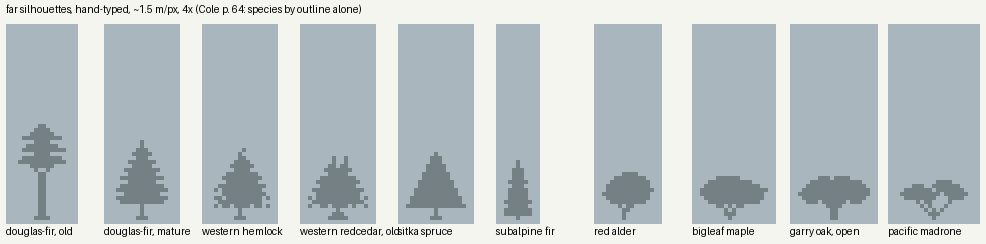 157. books/trees/work/far_v1.png
Bash: cat (tmp) ls ~/work/pixelart-studies/books/trees/tmp/cache | tail
cat (tmp) ls ~/work/pixelart-studies/books/trees/tmp/cache | tail

# output:
v7_hemlock_250_3_0_9e995f02c0.pkl
v7_hemlock_40_3_0_9e995f02c0.pkl
v7_hemlock_90_2_0_.pkl
v7_hemlock_90_2_0_1dc8186f45.pkl
v7_hemlock_90_2_0_shade_prune0.15.pkl
v7_hemlock_90_2_1_.pkl
v7_hemlock_90_3_0_9e995f02c0.pkl
v7_spruce_100_2_1_.pkl
v7_spruce_15_3_0_d458c4c85d.pkl
v7_subalpine_80_2_1_.pkl
Bash: cd ~/work/pixelart-studies/books/trees/src; python3 - <<'E' s=open('lib.py').read() s=s.replace(''' t = Tree(sp, seed=seed, open_grown=open_grown) t.nod_az = 0.6 t.grow(
cd ~/work/pixelart-studies/books/trees/src; python3 - <<'E'
s=open('lib.py').read()
s=s.replace('''    t = Tree(sp, seed=seed, open_grown=open_grown)
    t.nod_az = 0.6
    t.grow(age)''','''    import glob
    t, have = None, 0
    for g in glob.glob(os.path.join(CACHE, f"v{VERSION}_{name}_*_{seed}_{int(open_grown)}_{hsh}.pkl")):
        ag = int(os.path.basename(g).split('_')[2])
        if have < ag < age:
            have, t = ag, g
    if t:
        t = pickle.load(open(t, 'rb'))          # continue growing a younger cached tree
    else:
        t = Tree(sp, seed=seed, open_grown=open_grown)
        t.nod_az = 0.6
    t.grow(age - have)''')
open('lib.py','w').write(s)
E
echo ok

# output:
ok
Agent: Cold critic read round 1Bash: cd ~/work/voxsim-wt/platform/crates/vox-flora/src; grep -n "pub struct Arch" -A 140 form.rs | grep -E "pub |///" | head -150
cd ~/work/voxsim-wt/platform/crates/vox-flora/src; grep -n "pub struct Arch" -A 140 form.rs | grep -E "pub |///" | head -150

# output:
526:pub struct Arch {
527-    pub habit: Habit,
528-    /// Fork height (decurrent) / crown base (excurrent) as a fraction of height, open-grown.
529-    pub fork: f32,
530-    /// ... fully self-pruned in a dense stand.
531-    pub fork_max: f32,
532-    /// Main limbs (decurrent), branches per whorl (excurrent whorled), stems (multi-stem kinds).
533-    pub limbs: (u8, u8),
534-    pub whorled: bool,
535-    /// Decurrent: one limb keeps growing upright as a leader (beech).
536-    pub leader: bool,
537-    /// Open-grown trees keep 1-2 big low limbs from the trunk (oak, walnut, apple).
538-    pub low_limbs: bool,
539-    /// Limb angle from vertical, degrees (bottom / top of an excurrent crown).
540-    pub angle: f32,
541-    pub angle_top: f32,
542-    /// Gravitropic bending per segment (+ up, - droop) and tip upturn.
543-    pub gravi: f32,
544-    pub tip_up: f32,
545-    /// Random crookedness of segments.
546-    pub sinuous: f32,
547-    /// Children per branch, their angle from the parent, their length ratio.
548-    pub sub: (u8, u8),
549-    pub sub_angle: f32,
550-    pub sub_len: f32,
551-    /// Children in the branch's horizontal plane (flat sprays: beech, hazel, spruce).
552-    pub distichous: bool,
553-    /// Children along the branch rather than forking at its end (apical control).
554-    pub apical: bool,
555-    pub max_order: u8,
556-    /// 0..1 pendulous twigs (willow curtains 1, birch 0.4).
557-    pub weep: f32,
558-    /// Foliage cluster radius as a fraction of crown radius; vertical/horizontal
559-    /// ratio; elongation along the branch; fill; chance a tip bears no cluster.
560-    pub cluster: f32,
561-    pub flat: f32,
562-    pub elong: f32,
563-    pub density: f32,
564-    pub gaps: f32,
565-    /// Clusters along the last branch orders too, not just at tips.
566-    pub side_clusters: bool,
567-    pub profile: Profile,
568-    /// Age (years) at which the species looks old.
569-    pub old_years: f32,
570-    pub buttress: bool,
571-    /// Pipe-model exponent: parent^e = sum child^e (2 = da Vinci; higher = thicker limbs).
572-    pub pipe: f32,
573-    /// Children bend outward, away from the stem (plagiotropic spreading crowns).
574-    pub outward: f32,
575-    /// Foliage sleeves along whole main branches (conifer tiers), not just at tips.
576-    pub sleeve: bool,
577-    /// Trunk girth multiplier (slender birch 0.7 .. stout willow 1.2).
578-    pub girth: f32,
579-    /// Resprouts from the trunk after damage (epicormic shoots).
580-    pub resprouts: bool,
581-    pub bark: [u8; 3],
582-    pub bark_top: [u8; 3],
583-    pub leaf_spring: [u8; 3],
584-    pub leaf: [u8; 3],
585-    pub leaf_autumn: [u8; 3],
586-    pub flower: [u8; 3],
587-    pub fruit: [u8; 3],
588-    /// Chance a tree grows multi-stemmed instead (alders by water: 0.3).
589-    pub multistem: f32,
590-    /// Old excurrent crowns flatten into an umbrella of long near-level limbs
591-    /// high on the bole (old Scots pine).
Bash: cat (tmp) ls -t ~/work/pixelart-studies/books/trees/tmp/cache | head -3
cat (tmp) ls -t ~/work/pixelart-studies/books/trees/tmp/cache | head -3

# output:
douglas 15 yr  13 m  (1s)
douglas 40 yr  30 m  (2s)
douglas 90 yr  55 m  (8s)
douglas 250 yr  88 m  (76s)
hemlock 15 yr  10 m  (1s)
hemlock 40 yr  23 m  (2s)
hemlock 90 yr  43 m  (7s)
hemlock 250 yr  69 m  (32s)
cedar 15 yr  9 m  (1s)
cedar 40 yr  21 m  (3s)
cedar 90 yr  40 m  (11s)
cedar 250 yr  70 m  (147s)
spruce 15 yr  13 m  (2s)
spruce 40 yr  30 m  (7s)
spruce 90 yr  55 m  (29s)
spruce 250 yr  88 m  (187s)

[exited with code 0]
v7_spruce_250_3_0_d458c4c85d.pkl
v7_spruce_90_3_0_d458c4c85d.pkl
v7_spruce_40_3_0_d458c4c85d.pkl
Read: books/trees/work/ages_v1.png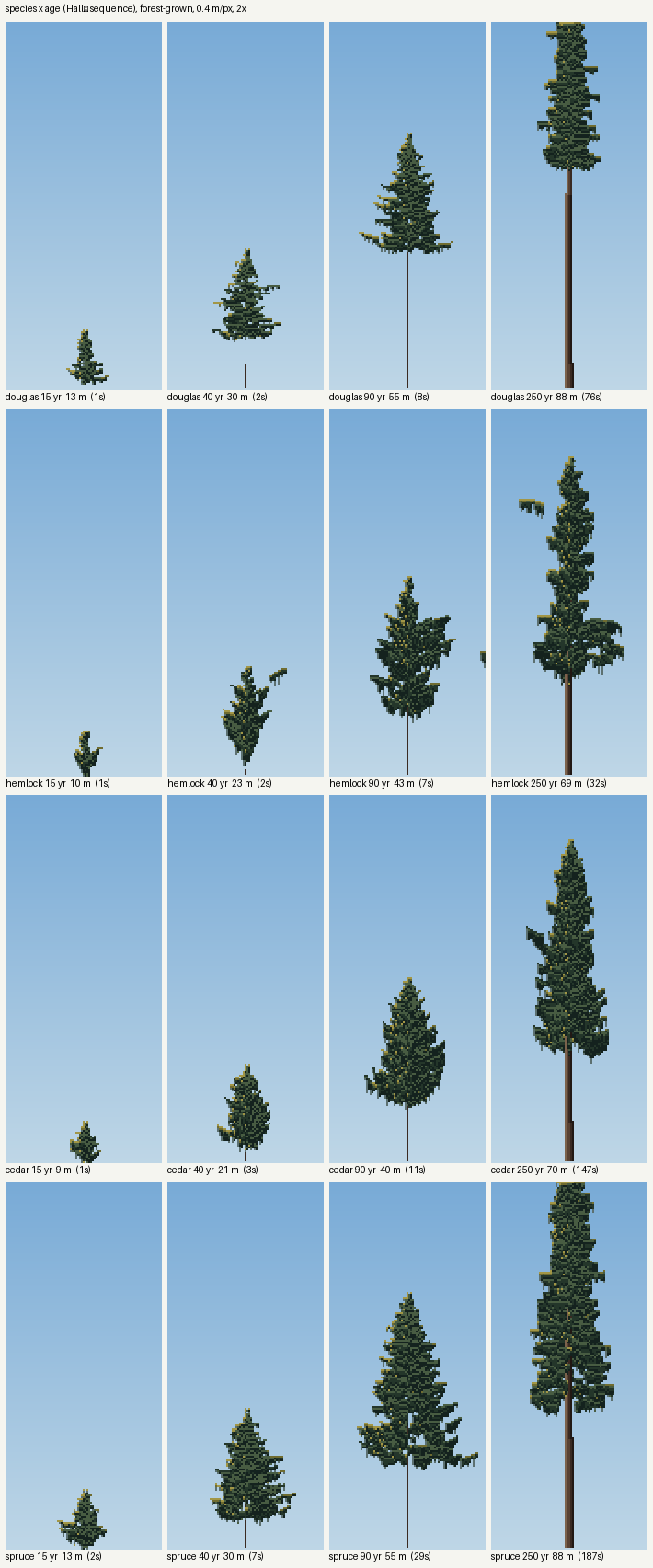 158. books/trees/work/ages_v1.png
Bash: cd ~/work/pixelart-studies/books/trees/src; python3 -c " from PIL import Image import numpy as np im=Image.open('../refs/Tsuga_heterophylla_tree_habit/commons_Tsuga_heterophylla_St
cd ~/work/pixelart-studies/books/trees/src; python3 -c "
from PIL import Image
import numpy as np
im=Image.open('../refs/Tsuga_heterophylla_tree_habit/commons_Tsuga_heterophylla_Stanley_Park_Vancouver_jpg_c32773e6.jpg').convert('RGB')
b=im.resize((60,97),Image.BOX); a=np.array(b).astype(int)
L=(0.3*a[...,0]+0.59*a[...,1]+0.11*a[...,2]).astype(int)
print('   '+''.join(str(i%10) for i in range(60)))
for j,r in enumerate(L[:75]): print(f'{j:2d} '+''.join(str(min(9,v//26)) for v in r))
"

# output:
012345678901234567890123456789012345678901234567890123456789
 0 666666666666666666666666666655666666666666666666666666666677
 1 666666666666666666666666666732576666666666666666667666777777
 2 666666666666666666666666666445666566666666666667677777777777
 3 666666666666666666666666554214434667666666666777777777777777
 4 666666666666666666666666762121104677767676777777777777777777
 5 666666666666666666666677651121013677777777777777777777777777
 6 666666666666666666666677621221025777777777777777777777777777
 7 666666666666666666666667753132356567777777777777777777777777
 8 666666666666666666676423355222321257777777777777777777777777
 9 666666666666666666777631233432221267777777777777777777777777
10 666666666666666667776543553233310377777777777777777777777777
11 666666666666666677777422333322002677777777777777777777777777
12 666666666666666777766432232331004677666777777777777777777777
13 666666666666667776522232221131122331256777777777777777777777
14 666666666666777775321232122321121112122367777777777777777777
15 666666666677777775222113331311132322222567777777777777777777
16 666666666777777777777411221332222111213677777777777777777777
17 666676777777777777777741423313212332147777777777777777777777
18 777777777777777767777742537512201324477777777777777777777777
19 777777777777775222101332237631211111212334677777777777777777
20 777777777777777511113342245411132211411223677777777777777777
21 777777777777774231114473368631121210352456677777777777777777
22 777777777777776331011065778821011210144477777777777777777777
23 777777777777777521103125446520022330224477777777777777777777
24 777777777777777532135112332310112343224777777777777777777777
25 777777777777777633364122233311212123232677777777777777777777
26 777777777777777314562233423433330112332343577777777777777777
27 777777777777777676562154533222221112321233577777777777777777
28 777777777777777777741154532210332211011257777777777777777777
29 777777777777777777742221112110224111011137777777777777777777
30 777777777777776553021120011212234421121047777777777777777777
31 777777777777763111210110003111112531011223435677777777777777
32 777777777777423212311111003101112142032312026777777777777777
33 777777777776223111111322013402312223111423247777777777777777
34 777777777777751000022423014313202244135431267777777777777777
35 777777777776200000156566235312214332223431257777777777777777
36 777777777775100121257576222014423313113332587777777777777777
37 777777777774010251000163521213223212112322677777777777777777
38 777777777762114461000275533212123332112233588777777777777777
39 777777777774526831000568884320111222212214788777777777777777
40 777777777777637710122248765111252222111313888877777777777777
41 777777777777768610235244588211122373312324566788777777777777
42 777777777777888600432111478335224883311423222578888877778778
43 777777777778887101430001201148422552211122321378888887888887
44 777777777778883211100011101137543312342211233334788888888888
45 77777777778888311012002121312575325114222011325678888888
Write: books/trees/src/colepx.py
"""Cole's rules as pixel operations on an index canvas -- usable on a box-downsampled photo, a
vox-trees render or another student's scene.

  plan(rgb)          -> classes: sky / foliage / wood / other, from colour
  value_plan(...)    Cole fig. 9 and p. 114: the foliage mass on 4 steps from the DARK end of one
                     ramp (the grey-sky set); the sunlit accidents on a separate 2-step family,
                     only on the upper surface of a clump (the pixel above is sky or lighter).
  holes(...)         Cole p. 71: sky inside the crown is either open (sky) or veiled (one step
                     darker than sky); holes come in runs, pinholes close; each hole gets a
                     colourless rim one step toward the foliage on its lower/side margins, not
                     on the top (rule 5), and holes of 3+ px keep a lighter centre (globes).
  edges(...)         the outer margin: mixed pixels become the colourless rim, not salt.
  declutter(...)     clusters, not static: an isolated pixel whose neighbours agree takes theirs.
Returns an index canvas (material, step) and a palette maker.
"""
import numpy as np
from scipy import ndimage as ndi
from PIL import Image

SKY, FOL, WOOD, OTHER = 0, 1, 2, 3
# foliage steps: 0 deepest .. 3 sky-lit upper plane, 4-5 sun set, 6 colourless rim
# sky steps: 0 open sky, 1 veiled sky, 2 globe centre (lighter)


def lum(a):
    a = a.astype(float)
    return 0.3 * a[..., 0] + 0.59 * a[..., 1] + 0.11 * a[..., 2]


def downsample(path, w, crop=None):
    im = Image.open(path).convert('RGB')
    if crop:
        im = im.crop(crop)
    h = int(round(im.size[1] * w / im.size[0]))
    return np.array(im.resize((w, h), Image.BOX)).astype(int)


def classify(rgb, sky_rule=None):
    r, g, b = rgb[..., 0], rgb[..., 1], rgb[..., 2]
    L = lum(rgb)
    if sky_rule is None:
        sky = (b > r + 18) & (b > g - 5) & (L > 120)
    else:
        sky = sky_rule(rgb)
    wood = ~sky & (r > g + 6) & (r > b + 10) & (L < 150)
    mat = np.full(L.shape, FOL, np.uint8)
    mat[sky] = SKY
    mat[wood] = WOOD
    return mat, L


def crown_hull(mat, close=2):
    tree = mat != SKY
    return ndi.binary_fill_holes(ndi.binary_closing(tree, iterations=close)) | tree


def run(rgb, sky_rule=None, close=2, sun_side=-1, keep_holes=2, rim=True, globes=True,
        sunset=True, declutter_passes=1, n_fol=4, other_mask=None):
    mat, L = classify(rgb, sky_rule)
    if other_mask is not None:
        mat[other_mask] = OTHER
    H, W = mat.shape
    step = np.zeros((H, W), np.uint8)
    hull = crown_hull(mat, close)
    F = mat == FOL
    # sky brightness reference (median of open sky), foliage darks
    skyL = np.median(L[mat == SKY]) if (mat == SKY).any() else 200
    # 1. mixed pixels at the crown: sky pixels inside the hull are holes; decide open / veiled
    inner_sky = (mat == SKY) & hull
    lab, n = ndi.label(inner_sky)
    sizes = ndi.sum(inner_sky, lab, range(1, n + 1))
    for k, sz in enumerate(sizes, 1):
        hk = lab == k
        if sz < keep_holes:
            mat[hk] = FOL                    # pinholes close up: the mass keeps its bulk
            step[hk] = 6 if rim else 2       # ... as a colourless rim pixel
            continue
        veiled = L[hk].mean() < skyL - 25
        step[hk] = 1 if veiled else 0
        if globes and sz >= 4 and not veiled:
            # the light hanging among the leaves: the brightest pixel(s) of the hole
            ys, xs = np.where(hk)
            j = np.argmax(L[ys, xs])
            step[ys[j], xs[j]] = 2
    F = mat == FOL
    # 2. value plan: foliage on n_fol steps from the dark end (quantiles inside the tree)
    fl = L[F & (step != 6)]
    if fl.size:
        qs = np.quantile(fl, [0.35, 0.65, 0.88])
        s = np.digitize(L, qs).astype(np.uint8)          # 0..3
        s = np.minimum(s, n_fol - 1)
        step[F & (step != 6)] = s[F & (step != 6)]
    # 3. sun set: bright warm foliage on the upper surface of a clump only
    if sunset and fl.size:
        r, g, b = rgb[..., 0], rgb[..., 1], rgb[..., 2]
        warm = (g > b + 15) & (r > b)
        bright = L > np.quantile(fl, 0.8)
        above_open = np.zeros_like(F)
        above_open[1:] = (mat[:-1] == SKY) | (L[:-1] > L[1:] + 8)
        side_open = np.zeros_like(F)
        if sun_side < 0:
            side_open[:, 1:] = mat[:, :-1] == SKY
        else:
            side_open[:, :-1] = mat[:, 1:] == SKY
        sun = F & warm & bright & (above_open | side_open)
        step[sun] = 5
        # a lower sun step directly under a sun top, on bright pixels
        under = np.zeros_like(F); under[1:] = sun[:-1]
        step[under & F & bright & (step < 4)] = 4
    # 4. rims: foliage pixels bordering a hole below/beside it (not above), or open sky outside
    if rim:
        sky_now = mat == SKY
        nb = np.zeros_like(F)
        nb[:-1] |= sky_now[1:]              # hole/sky below
        nb[:, 1:] |= sky_now[:, :-1]
        nb[:, :-1] |= sky_now[:, 1:]
        up_open = np.zeros_like(F); up_open[1:] = sky_now[:-1]
        rimpx = F & nb & ~up_open & (step <= 2)
        # only where the photo pixel is mixed (lighter than the mass): the margin is diffused
        mixed = L > np.quantile(fl, 0.5) if fl.size else np.zeros_like(F)
        step[rimpx & mixed] = 6
    # 5. declutter: an isolated foliage step whose 4 neighbours agree takes theirs
    for _ in range(declutter_passes):
        s = step.copy()
        for y in range(1, H - 1):
            for x in range(1, W - 1):
                if mat[y, x] != FOL or step[y, x] in (5, 6):
                    continue
                nbv = [step[y - 1, x], step[y + 1, x], step[y, x - 1], step[y, x + 1]]
                nm = [mat[y - 1, x], mat[y + 1, x], mat[y, x - 1], mat[y, x + 1]]
                if all(m == FOL for m in nm):
                    vals, cnt = np.unique(nbv, return_counts=True)
                    if cnt.max() >= 3 and vals[np.argmax(cnt)] != step[y, x] and abs(int(vals[np.argmax(cnt)]) - int(step[y, x])) >= 1:
                        s[y, x] = vals[np.argmax(cnt)]
        step = s
    # 6. wood: 3 steps by brightness
    Wm = mat == WOOD
    if Wm.any():
        wq = np.quantile(L[Wm], [0.4, 0.8])
        step[Wm] = np.digitize(L[Wm], wq)
    return mat, step


def palette(kind='conifer'):
    if kind == 'conifer':
        fol = [(14, 24, 22), (26, 42, 34), (42, 62, 46), (66, 88, 64), (116, 118, 58), (160, 154, 82),
               (98, 116, 112)]
    else:
        fol = [(22, 32, 20), (38, 54, 30), (60, 80, 42), (88, 108, 56), (136, 142, 64), (180, 176, 96),
               (116, 130, 118)]
    return dict(fol=fol, wood=[(40, 30, 26), (78, 58, 46), (120, 96, 76)],
                sky=[(150, 190, 228), (128, 162, 190), (178, 210, 236)], other=[(70, 90, 60)])


def to_rgb(mat, step, pal, rgb=None):
    H, W = mat.shape
    out = np.zeros((H, W, 3), np.uint8)
    if rgb is not None:
        out[:] = np.clip(rgb, 0, 255)
    for k, c in enumerate(pal['sky']):
        m = (mat == SKY) & (step == k)
        if rgb is not None and k == 0:
            continue                          # keep the photo's own open sky gradient
        out[m] = c
    for k, c in enumerate(pal['fol']):
        out[(mat == FOL) & (step == k)] = c
    for k, c in enumerate(pal['wood']):
        out[(mat == WOOD) & (step == k)] = c
    return out
Bash: cd ~/work/pixelart-studies/books/trees/src; cat > t_colepx_hem.py <<'E' from lib import * import colepx as cp from PIL import Image import numpy as np P='../refs/Tsuga_heterophylla
cd ~/work/pixelart-studies/books/trees/src; cat > t_colepx_hem.py <<'E'
from lib import *
import colepx as cp
from PIL import Image
import numpy as np
P='../refs/Tsuga_heterophylla_tree_habit/commons_Tsuga_heterophylla_Stanley_Park_Vancouver_jpg_c32773e6.jpg'
rgb=cp.downsample(P,60,crop=(0,0,960,1100))
mat,step=cp.run(rgb)
out=cp.to_rgb(mat,step,cp.palette('conifer'),rgb=rgb)
ph=Image.open(P).crop((0,0,960,1100)).resize((360,412))
box=Image.fromarray(rgb.astype(np.uint8))
sheet([ph, up(box,6), up(out,6)],3,labels=['photo','box 60 px','Cole rules on the box']).save('../work/hem_colepx_v1.png')
E
python3 t_colepx_hem.py

# output:
(Bash completed with no output)
Read: books/trees/work/hem_colepx_v1.png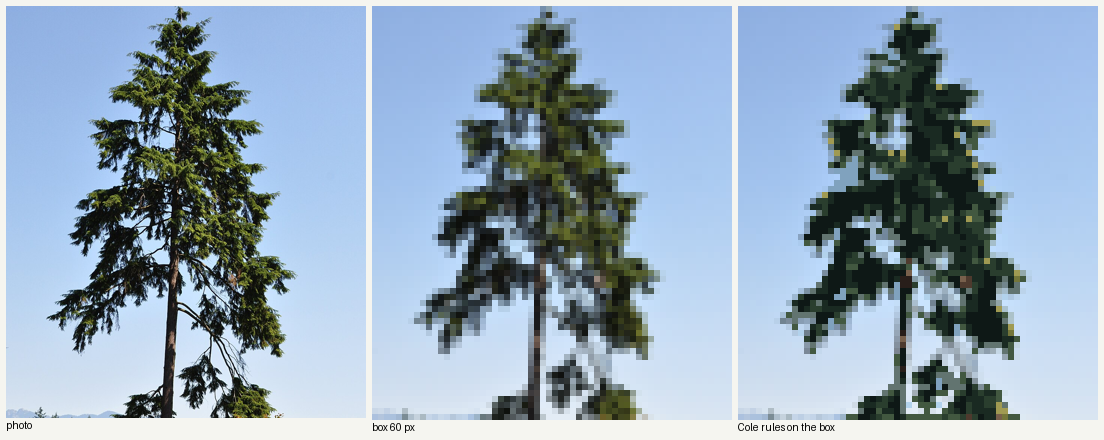 159. books/trees/work/hem_colepx_v1.png
Bash: cd ~/work/pixelart-studies/books/trees/src; python3 - <<'E' s=open('colepx.py').read() a=s.index(" # 2. value plan"); b=s.index(" # 4. rims") s=s[:a]+''' # 2. value plan:
cd ~/work/pixelart-studies/books/trees/src; python3 - <<'E'
s=open('colepx.py').read()
a=s.index("    # 2. value plan"); b=s.index("    # 4. rims")
s=s[:a]+'''    # 2. value plan: two families that never mix (Cole pp. 114-115: the tree is built of one set
    # of tones; the sunlit parts take 'a new and lighter set, quite apart from the others').
    # Family split by brightness+warmth (Otsu on the tree's foliage luminance); each family
    # quantized on its own 3 steps: shadow 0-2, lit 3-5.
    fl = L[F & (step != 6)]
    if fl.size:
        hist, edges = np.histogram(fl, bins=64)
        cen = (edges[:-1] + edges[1:]) / 2
        best, t = -1, np.median(fl)
        for k in range(4, 60):
            w0, w1 = hist[:k].sum(), hist[k:].sum()
            if w0 == 0 or w1 == 0:
                continue
            m0 = (hist[:k] * cen[:k]).sum() / w0; m1 = (hist[k:] * cen[k:]).sum() / w1
            v = w0 * w1 * (m0 - m1) ** 2
            if v > best:
                best, t = v, cen[k]
        t += lit_bias
        r, g, b = rgb[..., 0], rgb[..., 1], rgb[..., 2]
        lit = F & (step != 6) & (L > t) & ((g >= b + 5) | ~sunset)
        sh = F & (step != 6) & ~lit
        if sh.any():
            q = np.quantile(L[sh], [0.4, 0.8])
            step[sh] = np.digitize(L[sh], q)
        if lit.any() and sunset:
            q = np.quantile(L[lit], [0.45, 0.85])
            step[lit] = 3 + np.digitize(L[lit], q)
        elif lit.any():
            step[lit] = 2
'''+s[b:]
s=s.replace("sunset=True, declutter_passes=1, n_fol=4, other_mask=None):","sunset=True, declutter_passes=1, n_fol=4, other_mask=None, lit_bias=0.0):")
s=s.replace("                if mat[y, x] != FOL or step[y, x] in (5, 6):","                if mat[y, x] != FOL or step[y, x] == 6:")
s=s.replace("""        fol = [(14, 24, 22), (26, 42, 34), (42, 62, 46), (66, 88, 64), (116, 118, 58), (160, 154, 82),
               (98, 116, 112)]""","""        fol = [(14, 24, 22), (28, 44, 34), (44, 66, 46), (86, 100, 44), (124, 132, 56), (170, 166, 88),
               (104, 124, 122)]""")
open('colepx.py','w').write(s)
E
python3 t_colepx_hem.py

# output:
(Bash completed with no output)
Read: books/trees/work/hem_colepx_v1.png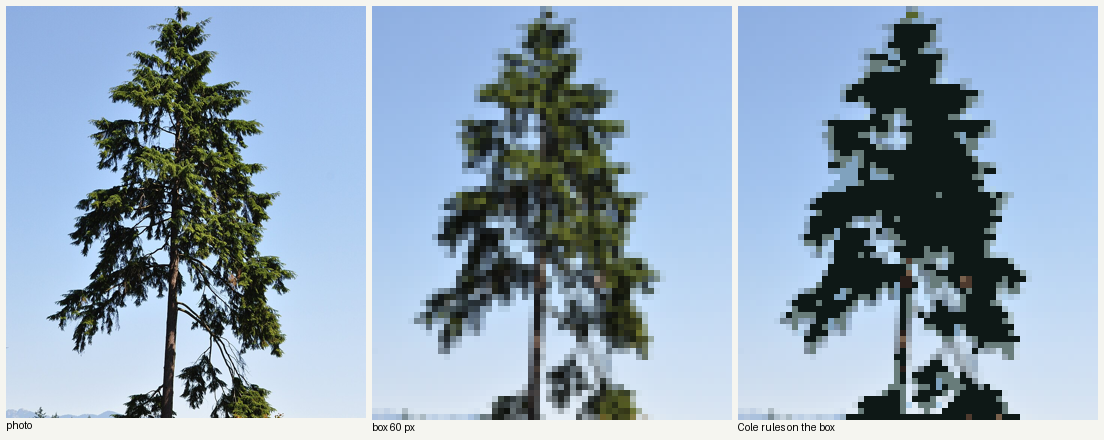 160. books/trees/work/hem_colepx_v1.png
Bash: cd ~/work/pixelart-studies/books/trees/src; python3 -c " import colepx as cp, numpy as np P='../refs/Tsuga_heterophylla_tree_habit/commons_Tsuga_heterophylla_Stanley_Park_Vancouver
cd ~/work/pixelart-studies/books/trees/src; python3 -c "
import colepx as cp, numpy as np
P='../refs/Tsuga_heterophylla_tree_habit/commons_Tsuga_heterophylla_Stanley_Park_Vancouver_jpg_c32773e6.jpg'
rgb=cp.downsample(P,60,crop=(0,0,960,1100))
mat,step=cp.run(rgb, declutter_passes=0)
F=mat==1
print(np.unique(step[F],return_counts=True))
L=cp.lum(rgb); print(np.percentile(L[F],[5,25,50,75,95]))
"; grep -n "4. rims" -A 22 colepx.py | head -30

# output:
(array([0, 3, 6], dtype=uint8), array([1032,    2,  193]))
[ 22.104  41.15   61.47   87.775 128.087]
115:    # 4. rims: foliage pixels bordering a hole below/beside it (not above), or open sky outside
116-    if rim:
117-        sky_now = mat == SKY
118-        nb = np.zeros_like(F)
119-        nb[:-1] |= sky_now[1:]              # hole/sky below
120-        nb[:, 1:] |= sky_now[:, :-1]
121-        nb[:, :-1] |= sky_now[:, 1:]
122-        up_open = np.zeros_like(F); up_open[1:] = sky_now[:-1]
123-        rimpx = F & nb & ~up_open & (step <= 2)
124-        # only where the photo pixel is mixed (lighter than the mass): the margin is diffused
125-        mixed = L > np.quantile(fl, 0.5) if fl.size else np.zeros_like(F)
126-        step[rimpx & mixed] = 6
127-    # 5. declutter: an isolated foliage step whose 4 neighbours agree takes theirs
128-    for _ in range(declutter_passes):
129-        s = step.copy()
130-        for y in range(1, H - 1):
131-            for x in range(1, W - 1):
132-                if mat[y, x] != FOL or step[y, x] == 6:
133-                    continue
134-                nbv = [step[y - 1, x], step[y + 1, x], step[y, x - 1], step[y, x + 1]]
135-                nm = [mat[y - 1, x], mat[y + 1, x], mat[y, x - 1], mat[y, x + 1]]
136-                if all(m == FOL for m in nm):
137-                    vals, cnt = np.unique(nbv, return_counts=True)
Bash: cd ~/work/pixelart-studies/books/trees/src; sed -n 70,114p colepx.py
cd ~/work/pixelart-studies/books/trees/src; sed -n 70,114p colepx.py

# output:
lab, n = ndi.label(inner_sky)
    sizes = ndi.sum(inner_sky, lab, range(1, n + 1))
    for k, sz in enumerate(sizes, 1):
        hk = lab == k
        if sz < keep_holes:
            mat[hk] = FOL                    # pinholes close up: the mass keeps its bulk
            step[hk] = 6 if rim else 2       # ... as a colourless rim pixel
            continue
        veiled = L[hk].mean() < skyL - 25
        step[hk] = 1 if veiled else 0
        if globes and sz >= 4 and not veiled:
            # the light hanging among the leaves: the brightest pixel(s) of the hole
            ys, xs = np.where(hk)
            j = np.argmax(L[ys, xs])
            step[ys[j], xs[j]] = 2
    F = mat == FOL
    # 2. value plan: two families that never mix (Cole pp. 114-115: the tree is built of one set
    # of tones; the sunlit parts take 'a new and lighter set, quite apart from the others').
    # Family split by brightness+warmth (Otsu on the tree's foliage luminance); each family
    # quantized on its own 3 steps: shadow 0-2, lit 3-5.
    fl = L[F & (step != 6)]
    if fl.size:
        hist, edges = np.histogram(fl, bins=64)
        cen = (edges[:-1] + edges[1:]) / 2
        best, t = -1, np.median(fl)
        for k in range(4, 60):
            w0, w1 = hist[:k].sum(), hist[k:].sum()
            if w0 == 0 or w1 == 0:
                continue
            m0 = (hist[:k] * cen[:k]).sum() / w0; m1 = (hist[k:] * cen[k:]).sum() / w1
            v = w0 * w1 * (m0 - m1) ** 2
            if v > best:
                best, t = v, cen[k]
        t += lit_bias
        r, g, b = rgb[..., 0], rgb[..., 1], rgb[..., 2]
        lit = F & (step != 6) & (L > t) & ((g >= b + 5) | ~sunset)
        sh = F & (step != 6) & ~lit
        if sh.any():
            q = np.quantile(L[sh], [0.4, 0.8])
            step[sh] = np.digitize(L[sh], q)
        if lit.any() and sunset:
            q = np.quantile(L[lit], [0.45, 0.85])
            step[lit] = 3 + np.digitize(L[lit], q)
        elif lit.any():
            step[lit] = 2
Bash: cd ~/work/pixelart-studies/books/trees/src; sed -n 115,130p colepx.py; grep -n "sun set" -A 20 colepx.py | head -25
cd ~/work/pixelart-studies/books/trees/src; sed -n 115,130p colepx.py; grep -n "sun set" -A 20 colepx.py | head -25

# output:
# 4. rims: foliage pixels bordering a hole below/beside it (not above), or open sky outside
    if rim:
        sky_now = mat == SKY
        nb = np.zeros_like(F)
        nb[:-1] |= sky_now[1:]              # hole/sky below
        nb[:, 1:] |= sky_now[:, :-1]
        nb[:, :-1] |= sky_now[:, 1:]
        up_open = np.zeros_like(F); up_open[1:] = sky_now[:-1]
        rimpx = F & nb & ~up_open & (step <= 2)
        # only where the photo pixel is mixed (lighter than the mass): the margin is diffused
        mixed = L > np.quantile(fl, 0.5) if fl.size else np.zeros_like(F)
        step[rimpx & mixed] = 6
    # 5. declutter: an isolated foliage step whose 4 neighbours agree takes theirs
    for _ in range(declutter_passes):
        s = step.copy()
        for y in range(1, H - 1):
21:# foliage steps: 0 deepest .. 3 sky-lit upper plane, 4-5 sun set, 6 colourless rim
22-# sky steps: 0 open sky, 1 veiled sky, 2 globe centre (lighter)
23-
24-
25-def lum(a):
26-    a = a.astype(float)
27-    return 0.3 * a[..., 0] + 0.59 * a[..., 1] + 0.11 * a[..., 2]
28-
29-
30-def downsample(path, w, crop=None):
31-    im = Image.open(path).convert('RGB')
32-    if crop:
33-        im = im.crop(crop)
34-    h = int(round(im.size[1] * w / im.size[0]))
35-    return np.array(im.resize((w, h), Image.BOX)).astype(int)
36-
37-
38-def classify(rgb, sky_rule=None):
39-    r, g, b = rgb[..., 0], rgb[..., 1], rgb[..., 2]
40-    L = lum(rgb)
41-    if sky_rule is None:
Bash: cd ~/work/pixelart-studies/books/trees/src; python3 -c " import colepx as cp, numpy as np P='../refs/Tsuga_heterophylla_tree_habit/commons_Tsuga_heterophylla_Stanley_Park_Vancouver
cd ~/work/pixelart-studies/books/trees/src; python3 -c "
import colepx as cp, numpy as np
P='../refs/Tsuga_heterophylla_tree_habit/commons_Tsuga_heterophylla_Stanley_Park_Vancouver_jpg_c32773e6.jpg'
rgb=cp.downsample(P,60,crop=(0,0,960,1100))
import inspect
src=inspect.getsource(cp.run)
print('lit_bias' in src, src.count('value plan'))
mat,step=cp.run(rgb, declutter_passes=0, rim=False)
print(np.unique(step[mat==1],return_counts=True))
"

# output:
True 1
(array([0, 2, 3], dtype=uint8), array([1190,   35,    2]))
Bash: cd ~/work/pixelart-studies/books/trees/src; python3 - <<'E' import colepx as cp, numpy as np src=open('colepx.py').read() src=src.replace(" if sh.any():\n"," print('d
cd ~/work/pixelart-studies/books/trees/src; python3 - <<'E'
import colepx as cp, numpy as np
src=open('colepx.py').read()
src=src.replace("        if sh.any():\n","        print('dbg', t, lit.sum(), sh.sum(), np.quantile(L[sh],[0.4,0.8]) if sh.any() else None)\n        if sh.any():\n")
open('/tmp/cpdbg.py','w').write(src)
import importlib.util,sys
spec=importlib.util.spec_from_file_location('cpd','/tmp/cpdbg.py'); m=importlib.util.module_from_spec(spec); spec.loader.exec_module(m)
P='../refs/Tsuga_heterophylla_tree_habit/commons_Tsuga_heterophylla_Stanley_Park_Vancouver_jpg_c32773e6.jpg'
rgb=m.downsample(P,60,crop=(0,0,960,1100))
mat,step=m.run(rgb, declutter_passes=0, rim=False)
E

# output:
dbg 79.6525 160 1067 [177.506 181.57 ]
Bash: cd ~/work/pixelart-studies/books/trees/src; python3 - <<'E' s=open('colepx.py').read() s=s.replace("lit = F & (step != 6) & (L > t) & ((g >= b + 5) | ~sunset)","warmth = (g >= b +
cd ~/work/pixelart-studies/books/trees/src; python3 - <<'E'
s=open('colepx.py').read()
s=s.replace("lit = F & (step != 6) & (L > t) & ((g >= b + 5) | ~sunset)","warmth = (g >= b + 5) if sunset else np.ones_like(F)\n        lit = F & (step != 6) & (L > t) & warmth")
open('colepx.py','w').write(s)
E
python3 t_colepx_hem.py

# output:
(Bash completed with no output)
Read: books/trees/work/hem_colepx_v1.png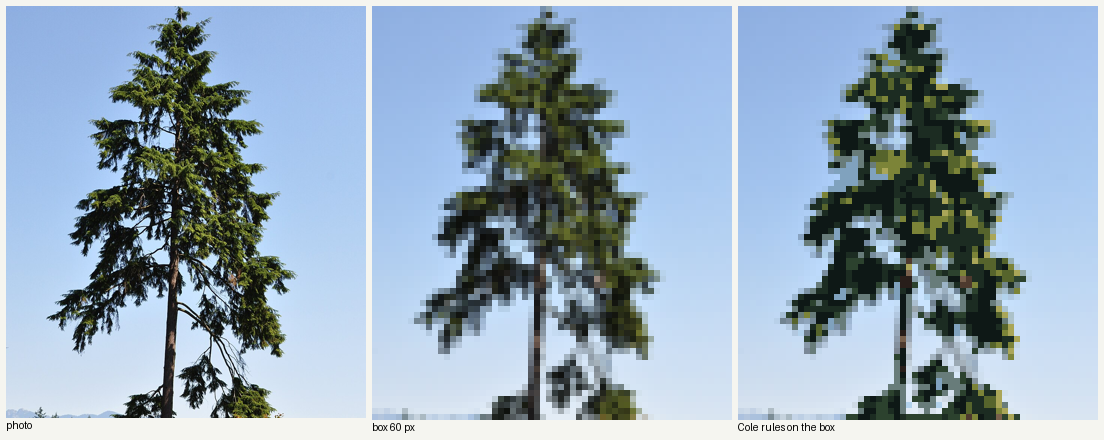 161. books/trees/work/hem_colepx_v1.png
Bash: cd ~/work/pixelart-studies/books/trees/src; python3 - <<'E' s=open('copy_halle.py').read() s=s.replace('''def leaves_below(c, pts, every=2): """Hallé's hanging leaf loops: a 2-
cd ~/work/pixelart-studies/books/trees/src; python3 - <<'E'
s=open('copy_halle.py').read()
s=s.replace('''def leaves_below(c, pts, every=2):
    """Hallé's hanging leaf loops: a 2-px drop under every other branch pixel."""
    for i, (x, y) in enumerate(pts):
        if i % every == 0:
            c.px(x, y + 1, LEAF); c.px(x, y + 2, LEAF)''','''def leaves_below(c, pts, every=2, seed=0):
    """Hallé's hanging leaf loops, as pixels: drops of 1-3 px under the branch, lengths varied and
    grouped (never a comb of equal ticks); longer toward the middle of the leafy part, where
    Hallé's loops are largest, and a few merged into 2-px wide clumps."""
    n = len(pts)
    i = 0
    k = seed
    while i < n:
        x, y = pts[i]
        mid = 1 - abs(2 * i / max(1, n - 1) - 1)          # 0 at ends, 1 in the middle
        ln = 1 + int(round(mid * 1.6 + ((k * 7) % 5) / 4))
        for d in range(1, ln + 1):
            c.px(x, y + d, LEAF)
        if (k * 3) % 4 == 0 and i + 1 < n:                # a merged pair
            x2, y2 = pts[i + 1]
            for d in range(1, max(1, ln - 1) + 1):
                c.px(x2, y2 + d, LEAF)
            i += 1
        i += 2 + ((k * 5) % 3 == 0)                        # uneven gaps
        k += 1''')
# Massart big: tiers rise, arc, and the old ones droop -- arcs with down steps
s=s.replace("""    # tier 3 (y0-27): a long low arch: up, level, and the tip sinks
    for d in (-1, 1):
        P = arc(c, X + (2 if d > 0 else -1), y0 - 27, d, [3, 5, 8, 9, 3, 2], [-1, -1, 0, 1, 1, 0])
        leaves_below(c, P[5:])
    # tier 4 (oldest, y0-13): longest, lowest arch, pendulous at the end
    for d in (-1, 1):
        P = arc(c, X + (2 if d > 0 else -1), y0 - 13, d, [4, 7, 10, 5, 2, 1], [-1, -1, 1, 1, 1, 0])
        leaves_below(c, P[5:])""","""    # tier 3 (y0-27): rises, crests, and the outer third sinks (pendulous with age, p. 191)
    for d, j in ((-1, 0), (1, 1)):
        P = arc(c, X + (2 if d > 0 else -1), y0 - 27, d, [2, 3, 5, 6, 4, 2, 2, 1], [-1, -1, -1, 0, 1, 1, 1, 1][:8])
        leaves_below(c, P[5:], seed=3 + j)
    # tier 4 (oldest, y0-13): longest; a low crest then a clear droop at the end
    for d, j in ((-1, 0), (1, 1)):
        P = arc(c, X + (2 if d > 0 else -1), y0 - 13, d, [2, 4, 6, 6, 3, 2, 1, 1, 1], [-1, -1, 0, 1, 1, 1, 1, 1, 0])
        leaves_below(c, P[5:], seed=7 + j)""")
s=s.replace("""    for yy in range(y0 - 57, y0 - 2, 4):
        c.px(X - 1, yy, LEAF); c.px(X + 2 if yy > y0 - 38 else X + 1, yy + 2, LEAF)""","""    # spiral leaves on the orthotropic trunk: only on the young top (older ones shed)
    for k, yy in enumerate(range(y0 - 57, y0 - 44, 3)):
        c.px(X - 1 if k % 2 else X + 1, yy, LEAF)""")
open('copy_halle.py','w').write(s)
E
python3 copy_halle.py

# output:
(Bash completed with no output)
Read: books/trees/copies/massart_v1.png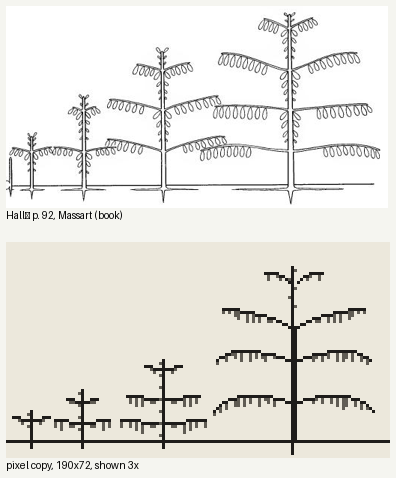 162. books/trees/copies/massart_v1.png
Bash: cd ~/work/pixelart-studies/books/trees/src; python3 - <<'E' s=open('copy_halle.py').read() s=s.replace(''' for (dy, sp) in zip(tiers, spans): L = path(c, x0 - 1, y0 - dy
cd ~/work/pixelart-studies/books/trees/src; python3 - <<'E'
s=open('copy_halle.py').read()
s=s.replace('''    for (dy, sp) in zip(tiers, spans):
        L = path(c, x0 - 1, y0 - dy, "l%dL1l%d" % (sp // 2, sp - sp // 2))
        R = path(c, x0 + 1, y0 - dy, "r%dR1r%d" % (sp // 2, sp - sp // 2))
        leaves_below(c, L[2:]); leaves_below(c, R[2:])''','''    for j, (dy, sp) in enumerate(zip(tiers, spans)):
        old = j == len(tiers) - 1 and len(tiers) > 1          # the lowest tier droops a little
        runs = [1, max(1, sp // 3), max(1, sp - sp // 3 - 1)] + ([1] if old else [])
        dys = [-1, -1, 0] + ([1] if old else [])
        for d in (-1, 1):
            P = arc(c, x0 + d, y0 - dy, d, runs, dys)
            leaves_below(c, P[1:], seed=j * 2 + (d > 0))''')
# Troll: sympodial trunk -- relay axes erect at their base; the trunk is a stack of offsets
s=s.replace('''    c.vrun(X, g - 49, 49, INK); c.vrun(X + 1, g - 30, 30, INK); c.vrun(X, g + 1, 3, INK)''','''    # the trunk is the erected bases of successive relay axes (Troll p. 242): a stack of
    # near-vertical pieces, each offset a pixel where the next relay took over (the elbow)
    c.vrun(X, g - 13, 13, INK); c.vrun(X + 1, g - 13, 13, INK)
    c.vrun(X + 1, g - 30, 17, INK); c.vrun(X + 2, g - 30, 12, INK)
    c.vrun(X, g - 49, 19, INK)
    c.px(X + 1, g - 30, INK); c.px(X, g - 31, INK)
    c.vrun(X, g + 1, 3, INK)''')
open('copy_halle.py','w').write(s)
E
python3 copy_halle.py

# output:
(Bash completed with no output)
Bash: cd ~/work/pixelart-studies/books/trees/src; python3 -c " from lib import sheet from PIL import Image sheet([Image.open('../copies/massart_v1.png'),Image.open('../copies/troll_v1.pn
cd ~/work/pixelart-studies/books/trees/src; python3 -c "
from lib import sheet
from PIL import Image
sheet([Image.open('../copies/massart_v1.png'),Image.open('../copies/troll_v1.png')],2).save('../work/halle_copies.png')"

# output:
(Bash completed with no output)
Read: books/trees/work/halle_copies.png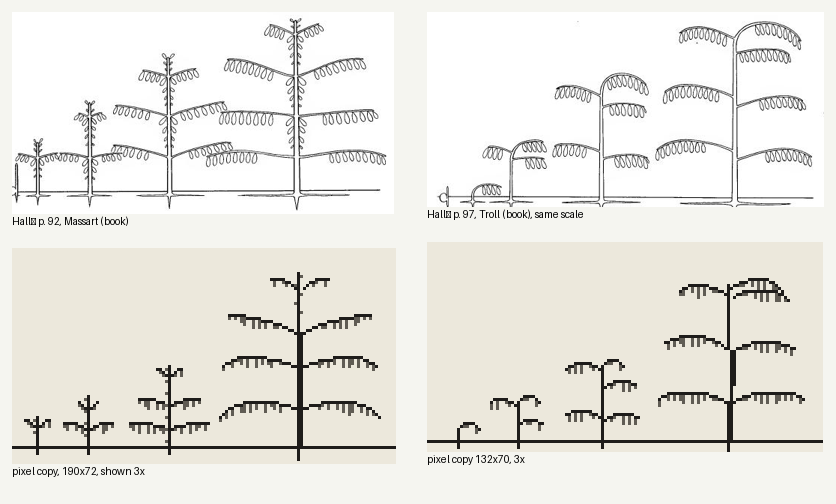 163. books/trees/work/halle_copies.png
Bash: cd ~/work/pixelart-studies/books/trees/src; python3 - <<'E' s=open('copy_halle.py').read() a=s.index(" specs = [\n (49"); b=s.index(" ]\n for h, d, runs, dys in spe
cd ~/work/pixelart-studies/books/trees/src; python3 - <<'E'
s=open('copy_halle.py').read()
a=s.index("    specs = [\n        (49"); b=s.index("    ]\n    for h, d, runs, dys in specs:")
s=s[:a]+'''    specs = [
        (49, -1, [1, 1, 1, 2, 3, 2, 1, 1, 1], [-1, -1, -1, -1, 0, 1, 1, 1, 1]),
        (47, 1, [1, 1, 1, 2, 3, 3, 2, 1, 1, 1], [-1, -1, -1, -1, 0, 0, 1, 1, 1, 1]),
        (31, -1, [1, 1, 1, 2, 3, 4, 2, 1, 1, 1], [-1, -1, -1, -1, 0, 0, 1, 1, 1, 1]),
        (29, 1, [1, 1, 2, 2, 4, 3, 2, 1, 1], [-1, -1, -1, -1, 0, 1, 1, 1, 1]),
        (13, -1, [1, 1, 2, 3, 5, 3, 2, 1, 1, 1], [-1, -1, -1, -1, 0, 0, 1, 1, 1, 1]),
        (13, 1, [1, 1, 2, 3, 5, 4, 2, 1, 1, 1], [-1, -1, -1, -1, 0, 0, 1, 1, 1, 1]),
'''+s[b:]
s=s.replace("P = arc(c, X, g - 50, 1, [1, 1, 2, 3, 4, 3, 2, 1, 1, 1], [-1, -1, -1, -1, 0, 1, 1, 1, 1, 1])","P = arc(c, X, g - 50, 1, [1, 1, 1, 2, 3, 3, 2, 1, 1, 1], [-1, -1, -1, -1, 0, 0, 1, 1, 1, 1])")
open('copy_halle.py','w').write(s)
E
python3 copy_halle.py; python3 -c "
from lib import sheet
from PIL import Image
sheet([Image.open('../copies/massart_v1.png'),Image.open('../copies/troll_v1.png')],2).save('../work/halle_copies.png')"

# output:
(Bash completed with no output)
Read: books/trees/work/halle_copies.png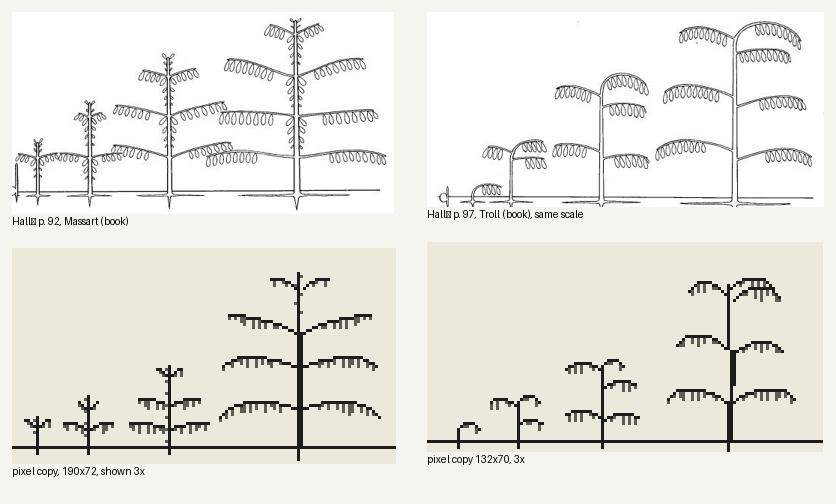 164. books/trees/work/halle_copies.png
Bash: cd ~/work/pixelart-studies/books/trees/src; cat > sheet_arch.py <<'E' """Sheet B: Washington species as Hallé growth programs, drawn as Hallé draws his key (a series of architectur
cd ~/work/pixelart-studies/books/trees/src; cat > sheet_arch.py <<'E'
"""Sheet B: Washington species as Hallé growth programs, drawn as Hallé draws his key (a series of
architectures on one soil line). Skeleton only; foliage as short hanging marks on plagiotropic
axes (Hallé's loops), none on orthotropic ones."""
from lib import *
from diagram import draw_tree
from PIL import Image, ImageDraw
import numpy as np
rows = [('douglas', 'Douglas-fir: Massart-like (rhythmic leader, whorled plagiotropic tiers) [mine]'),
        ('hemlock', 'western hemlock: Troll/Mangenot (nodding leader, arching boughs) - Halle p. 246, 329'),
        ('cedar', 'western redcedar: Massart-like, J-limbs, pendulous sprays [mine]'),
        ('spruce', 'Sitka spruce: Massart (Picea, Halle p. 193)')]
ages = [15, 40, 90, 250]
s = 2.2
cells = []
for name, lab in rows:
    trees = [grow(name, a, seed=3, open_grown=False) for a in ages]
    Wd = int(sum(max(12, (max(p[0] for ax in t.axes for p in ax.pts) - min(p[0] for ax in t.axes for p in ax.pts))) + 6 for t in trees) * s) + 40
    Hd = int(95 * s) + 40
    im = Image.new('L', (Wd, Hd), 255); d = ImageDraw.Draw(im)
    x = 20
    for t in trees:
        xs = [p[0] for ax in t.axes for p in ax.pts]
        w = max(12, max(xs) - min(xs))
        draw_tree(d, t, x + (-min(xs)) * s, Hd - 22, s)
        d.text((x, Hd - 16), f"{t.year} yr, {t.height():.0f} m", fill=0)
        x += (w + 6) * s
    d.line([(0, Hd - 22), (Wd, Hd - 22)], fill=0)
    d.text((6, 4), lab, fill=0)
    cells.append(im)
Wm = max(c.size[0] for c in cells)
S = Image.new('L', (Wm, sum(c.size[1] for c in cells)), 255)
y = 0
for c in cells:
    S.paste(c, (0, y)); y += c.size[1]
S.save('../work/arch_seq.png')
print(S.size)
E
python3 sheet_arch.py

# output:
(258, 996)
Bash: cd ~/work/pixelart-studies/books/trees/src; sed -i '' 's/^s = 2.2/s = 4.0/' sheet_arch.py; python3 sheet_arch.py
cd ~/work/pixelart-studies/books/trees/src; sed -i '' 's/^s = 2.2/s = 4.0/' sheet_arch.py; python3 sheet_arch.py

# output:
(438, 1680)
Read: books/trees/work/arch_seq.png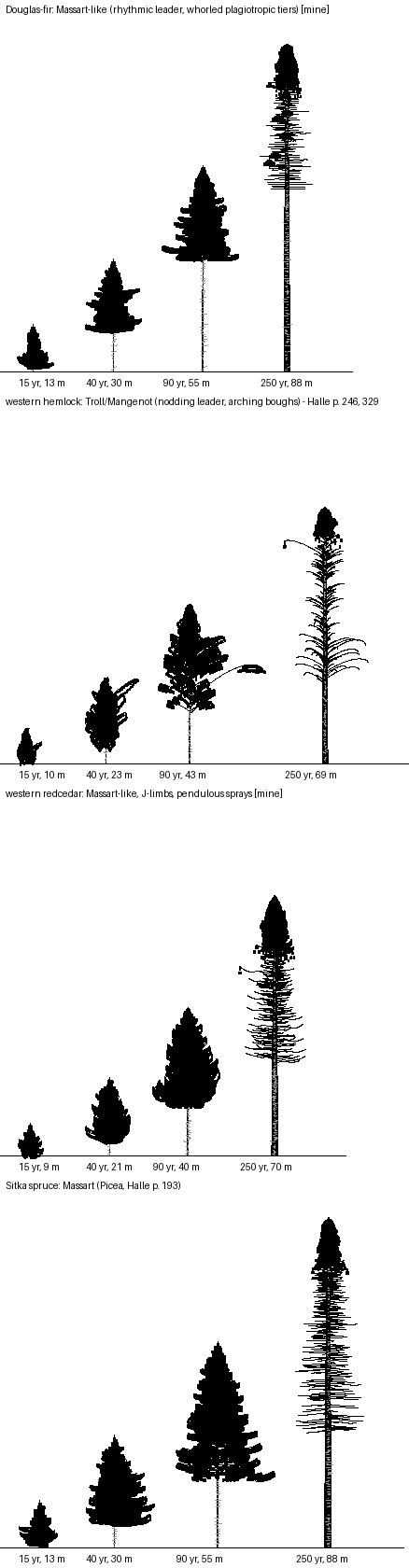 165. books/trees/work/arch_seq.png
Bash: cd ~/work/pixelart-studies/books/trees/src; grep -n "if sunset:" -A 8 shelf.py
cd ~/work/pixelart-studies/books/trees/src; grep -n "if sunset:" -A 8 shelf.py

# output:
182:    if sunset:
183-        tone[top_row & ~screened & sunward] = 5
184-        tone[top_row & ~screened & ~sunward] = 4
185-        # second row under a sun-lit top: the low sun tone on the sunward side only
186-        sec = np.zeros_like(F); sec[1:] = top_row[:-1] & ~screened[:-1]
187-        tone[sec & F & sunward & (tone == 2)] = 4
188-    # recesses: body pixels screened and far-side -> deepest
189-    tone[F & screened & (tone == 2) & ~sunward] = 1
190-    if far_step:
Bash: cd ~/work/pixelart-studies/books/trees/src; python3 - <<'E' s=open('shelf.py').read() s=s.replace(""" if sunset: tone[top_row & ~screened & sunward] = 5 tone[top
cd ~/work/pixelart-studies/books/trees/src; python3 - <<'E'
s=open('shelf.py').read()
s=s.replace("""    if sunset:
        tone[top_row & ~screened & sunward] = 5
        tone[top_row & ~screened & ~sunward] = 4
        # second row under a sun-lit top: the low sun tone on the sunward side only
        sec = np.zeros_like(F); sec[1:] = top_row[:-1] & ~screened[:-1]
        tone[sec & F & sunward & (tone == 2)] = 4""","""    if sunset:
        # sun only where the pixel above is open sky (true exposure), in broken runs of 2-4 px
        # (sprays catch the light in groups, never a continuous cap -- the critic's 'stamp')
        exposed = np.zeros_like(F); exposed[1:] = mat[:-1] == SKY
        grp = np.fromfunction(lambda y, x: (((x.astype(np.int64) // 3) * 2654435761 + y.astype(np.int64) * 40503) % 1000) / 1000.0, (H, W))
        runs = grp < 0.62
        lit_top = top_row & ~screened & exposed & runs
        tone[lit_top & sunward] = 5
        tone[lit_top & ~sunward] = 4
        # shaded-side and screened tops keep the grey-sky upper plane (3), so the tier reads
        # on both sides of the trunk (the conifer student's tier-top light) without glare
        sec = np.zeros_like(F); sec[1:] = lit_top[:-1]
        tone[sec & F & sunward & (tone == 2)] = 4""")
open('shelf.py','w').write(s)
m=open('species_models.py').read()
m=m.replace("'douglas': Species('douglas-fir', model='massart', height=70,","'douglas': Species('douglas-fir', model='massart', height=66,")
m=m.replace("Species('western hemlock', model='troll', height=55, h_rate=0.7, h_tau=110,","Species('western hemlock', model='troll', height=50, h_rate=0.7, h_tau=90,")
m=m.replace("Species('western redcedar', model='massart', height=55,","Species('western redcedar', model='massart', height=52,")
m=m.replace("'spruce': Species('sitka spruce', model='massart', height=65,","'spruce': Species('sitka spruce', model='massart', height=62,")
open('species_models.py','w').write(m)
E
grep -n "def leader_gu" -A 6 arch.py

# output:
122:    def leader_gu(self, y):
123-        sp = self.sp
124-        # height ~ H (1 - exp(-t/tau)) with initial rate h_rate; GU = derivative
125-        return max(0.02, sp.h_rate * np.exp(-y / sp.h_tau) if sp.h_rate * sp.h_tau >= sp.height
126-                   else sp.height / sp.h_tau * np.exp(-y / sp.h_tau))
127-
128-    def height(self):
Bash: cd ~/work/pixelart-studies/books/trees/src; python3 - <<'E' s=open('arch.py').read() s=s.replace(""" return max(0.02, sp.h_rate * np.exp(-y / sp.h_tau) if sp.h_rate * sp.h_t
cd ~/work/pixelart-studies/books/trees/src; python3 - <<'E'
s=open('arch.py').read()
s=s.replace("""        return max(0.02, sp.h_rate * np.exp(-y / sp.h_tau) if sp.h_rate * sp.h_tau >= sp.height
                   else sp.height / sp.h_tau * np.exp(-y / sp.h_tau))""","""        # height approaches sp.height: GU = H/tau * exp(-t/tau), slow in the first years
        return max(0.02, sp.height / sp.h_tau * np.exp(-y / sp.h_tau) * (1 - np.exp(-y / 5.0)))""")
open('arch.py','w').write(s)
m=open('species_models.py').read()
m=m.replace("height=66, h_rate=0.9, h_tau=110,","height=70, h_rate=0.9, h_tau=75,")
m=m.replace("height=50, h_rate=0.7, h_tau=90,","height=54, h_rate=0.7, h_tau=80,")
m=m.replace("height=52, h_rate=0.6, h_tau=140,","height=56, h_rate=0.6, h_tau=100,")
m=m.replace("height=62, h_rate=0.9, h_tau=110,","height=66, h_rate=0.9, h_tau=80,")
open('species_models.py','w').write(m)
E
python3 -c "
import numpy as np
for H,tau in [(70,75),(54,80),(56,100),(66,80)]:
    t=np.arange(1,401); g=H/tau*np.exp(-t/tau)*(1-np.exp(-t/5)); h=np.cumsum(g)
    print(H,tau,[round(h[a-1]) for a in (15,40,90,250,400)])"

# output:
70 75 [9, 25, 45, 63, 65]
54 80 [6, 18, 33, 48, 50]
56 100 [5, 16, 31, 49, 52]
66 80 [8, 22, 41, 59, 62]
Bash: cd ~/work/pixelart-studies/books/trees/src; sed -i '' 's/^VERSION = 7/VERSION = 8/' lib.py; nice -n 10 python3 t_hem.py && nice -n 10 python3 t_ages.py > /tmp/ages.log 2>&1
cd ~/work/pixelart-studies/books/trees/src; sed -i '' 's/^VERSION = 7/VERSION = 8/' lib.py; nice -n 10 python3 t_hem.py && nice -n 10 python3 t_ages.py > /tmp/ages.log 2>&1

# output:
Command running in background with ID: b0lcscsdu. Output is being written to: (tmp) You will be notified when it completes. To check interim output, use Read on that file path.
Session cwd remains ~/work/pixelart-studies/library; directory changes made by the backgrounded command do not apply to subsequent commands.
Read: elements/conifers/sheets/E2_iso_forest.png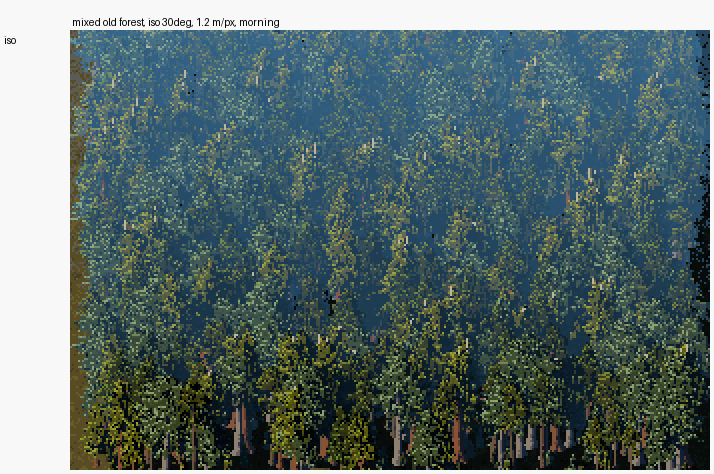 166. elements/conifers/sheets/E2_iso_forest.png
Bash: cd ~/work/pixelart-studies/elements/canopy; ls stages stages/* | head -20; ls ../treeline/stage5 | head
cd ~/work/pixelart-studies/elements/canopy; ls stages stages/* | head -20; ls ../treeline/stage5 | head

# output:
stages:
s0_data
s1_crown
s2_scene
s3_topdown

stages/s0_data:
artlish_1200.jpg
crowns_check.png
crowns_ench2_larch.png
crowns_ench2_subalpine.png
crowns_oly_spruce.png
crowns_oly_spruce_b.png
crowns_sj_df.png
crowns_sky_conifer_n.png
crowns_sky_mixed.png
ench2_crop_n.png
ench2_crop_se.png
ench2_naip_overview.jpg
ench_naip_overview.jpg
Bash: cd ~/work/pixelart-studies/elements/canopy/stages; ls -t s2_scene s3_topdown | head -20
cd ~/work/pixelart-studies/elements/canopy/stages; ls -t s2_scene s3_topdown | head -20

# output:
s3_topdown:
dbg.png
topdown_vs_naip.png

s2_scene:
scene_vs_artlish.png
Read: elements/canopy/stages/s2_scene/scene_vs_artlish.png 167. elements/canopy/stages/s2_scene/scene_vs_artlish.png
Bash: cat /tmp/ages.log; cat (tmp)
cat /tmp/ages.log; cat (tmp)

# output:
douglas 15 yr  9 m  (1s)
douglas 40 yr  25 m  (4s)
douglas 90 yr  45 m  (12s)
33.390397110051346
Read: books/trees/work/hem_v1.png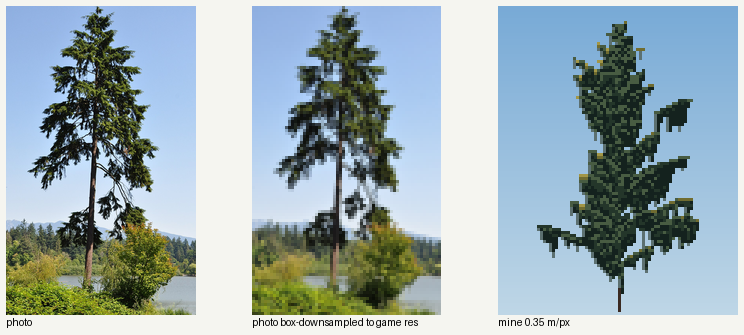 168. books/trees/work/hem_v1.png
Bash: cd ~/work/pixelart-studies/books/trees/src; grep -n "# --- tone the foliage ---" shelf.py; grep -n " step\[F\] = tone\[F\]" shelf.py
cd ~/work/pixelart-studies/books/trees/src; grep -n "# --- tone the foliage ---" shelf.py; grep -n "    step\[F\] = tone\[F\]" shelf.py

# output:
147:    # --- tone the foliage ---
209:    step[F] = tone[F]
Bash: cd ~/work/pixelart-studies/books/trees/src; python3 - <<'E' s=open('shelf.py').read() a=s.index(" # --- tone the foliage ---"); b=s.index(" step[F] = tone[F]") new=''' # -
cd ~/work/pixelart-studies/books/trees/src; python3 - <<'E'
s=open('shelf.py').read()
a=s.index("    # --- tone the foliage ---"); b=s.index("    step[F] = tone[F]")
new='''    # --- tone the foliage: a decided value plan (the conifer student's lesson; Cole p. 114) ---
    # openness = how much open sky a pixel sees above it and toward the sun (planes facing the
    # sky are lighter; recesses under other shelves dark). The lit family is a fixed share of
    # the foliage (lit_frac), taken from the most open pixels; the rest is the shadow family.
    F = mat == FOL
    sky = mat == SKY
    kx = -1 if sun_side < 0 else 1
    dirs = [(0, -1), (kx, -1), (kx, -2), (-kx, -2), (2 * kx, -1), (kx, 0)]
    wts = [1.0, 1.0, 0.8, 0.5, 0.6, 0.5]
    op = np.zeros((H, W))
    for (dx, dy), w in zip(dirs, wts):
        for r in (1, 2, 3, 5):
            sx, sy = dx * r, dy * r
            sh = np.zeros_like(sky)
            ys = slice(max(0, sy), H + min(0, sy)); yd = slice(max(0, -sy), H + min(0, -sy))
            xs = slice(max(0, sx), W + min(0, sx)); xd = slice(max(0, -sx), W + min(0, -sx))
            sh[yd, xd] = sky[ys, xs]
            op += w * sh / r ** 0.5
    xs_ = np.arange(W)[None, :].repeat(H, 0)
    sunward = (xs_ - tx) * sun_side > 0
    op = op + 0.35 * sunward - 0.6 * far + 0.25 * (1 - vpos)
    tone = np.zeros((H, W), np.uint8)
    if F.any():
        v = op[F]
        t_lit = np.quantile(v, 1 - lit_frac)
        lit = F & (op >= t_lit)
        shd = F & ~lit
        if shd.any():
            q = np.quantile(op[shd], [0.35, 0.75])
            tone[shd] = np.digitize(op[shd], q)            # 0,1,2
        if lit.any():
            q = np.quantile(op[lit], [0.5, 0.85])
            tone[lit] = 3 + np.digitize(op[lit], q)        # 3,4,5
        if not sunset:
            tone[lit] = 3
        # hanging curtains stay in the shadow family (Cole p. 70: the lowest hanging leaves
        # are darker), with a second dark green through them
        tone[F & curtain & (tone >= 3)] = 2
        hsh = np.fromfunction(lambda y, x: ((x.astype(np.int64) * 73856093) ^ (y.astype(np.int64) * 19349663)) % 1000 / 1000.0, (H, W))
        tone[F & curtain & (tone == 0) & (hsh < 0.3)] = 1
    if rim:
        open_ = sky
        nb = np.zeros_like(F)
        nb[:-1] |= open_[1:]
        nb[:, 1:] |= open_[:, :-1]
        nb[:, :-1] |= open_[:, 1:]
        upo = np.zeros_like(F); upo[1:] = open_[:-1]
        tone[F & nb & ~upo & (tone == 2)] = 6
'''
s=s[:a]+new+s[b:]
s=s.replace("shelf_scale=1.0, droop_px=None, rim=True, sunset=True, far_step=True):","shelf_scale=1.0, droop_px=None, rim=True, sunset=True, far_step=True, lit_frac=0.4):")
open('shelf.py','w').write(s)
E
python3 t_hem.py

# output:
33.390397110051346
Read: books/trees/work/hem_v1.png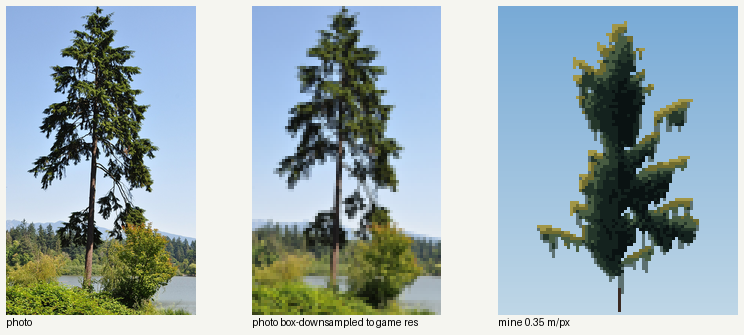 169. books/trees/work/hem_v1.png
Bash: cd ~/work/pixelart-studies/books/trees/src; python3 -c " from lib import * from diagram import draw_tree from PIL import Image, ImageDraw im=Image.new('L',(500,520),255); d=ImageDr
cd ~/work/pixelart-studies/books/trees/src; python3 -c "
from lib import *
from diagram import draw_tree
from PIL import Image, ImageDraw
im=Image.new('L',(500,520),255); d=ImageDraw.Draw(im)
t=grow('hemlock',90,seed=2,open_grown=False, shade_prune=0.15); draw_tree(d,t,250,510,13,leaves=False)
im.save('../work/skel_hem.png')
import numpy as np
b=[x for x in t.axes if x.order==1 and not x.dead]
print(len(b), np.mean([x.pts[-1][0]-x.pts[0][0] for x in b]))"

# output:
165 0.08359390836009058
Read: books/trees/work/skel_hem.png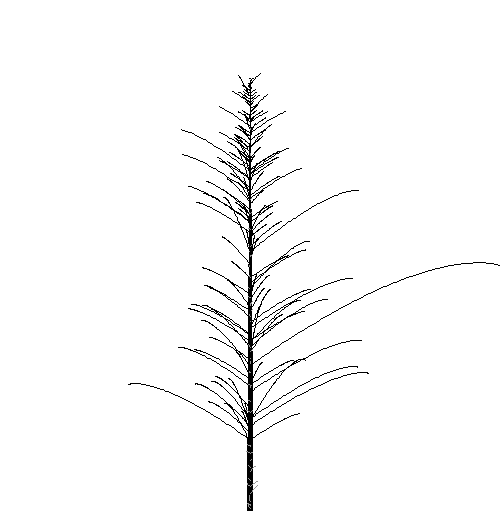 170. books/trees/work/skel_hem.png
Bash: cd ~/work/pixelart-studies/books/trees/src; python3 - <<'E' m=open('species_models.py').read() m=m.replace("tier=(2, 3), inter=1, angle=55, angle_top=45, lat_rate=0.36, lat_tau=30,
cd ~/work/pixelart-studies/books/trees/src; python3 - <<'E'
m=open('species_models.py').read()
m=m.replace("tier=(2, 3), inter=1, angle=55, angle_top=45, lat_rate=0.36, lat_tau=30, thin=0.10, vig_sd=0.6,","tier=(2, 3), inter=1, angle=68, angle_top=55, lat_rate=0.42, lat_tau=30, thin=0.10, vig_sd=0.3,")
m=m.replace("plagio=True, flatten=0.0, sag=0.035, flex_p=2.0, hang=2.2, pad_thick=0.3,","plagio=True, flatten=0.0, sag=0.06, flex_p=2.5, hang=2.2, pad_thick=0.3,")
open('species_models.py','w').write(m)
E
python3 -c "
from lib import *
from diagram import draw_tree
from PIL import Image, ImageDraw
im=Image.new('L',(500,520),255); d=ImageDraw.Draw(im)
t=grow('hemlock',90,seed=2,open_grown=False, shade_prune=0.15); draw_tree(d,t,250,510,13,leaves=False)
im.save('../work/skel_hem.png')"

# output:
(Bash completed with no output)
Read: books/trees/work/skel_hem.png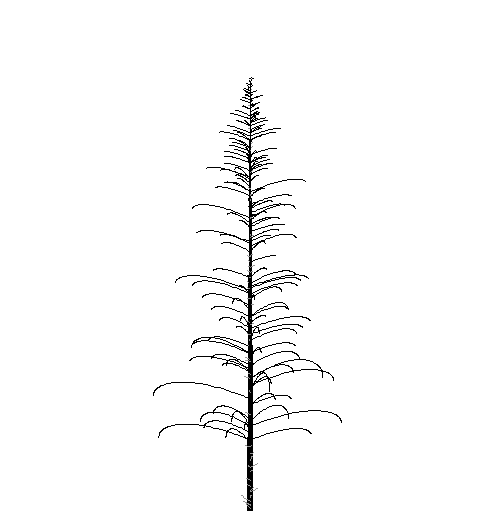 171. books/trees/work/skel_hem.png
Bash: cd ~/work/pixelart-studies/books/trees/src; python3 t_hem.py
cd ~/work/pixelart-studies/books/trees/src; python3 t_hem.py

# output:
33.390397110051346
Read: books/trees/work/hem_v1.png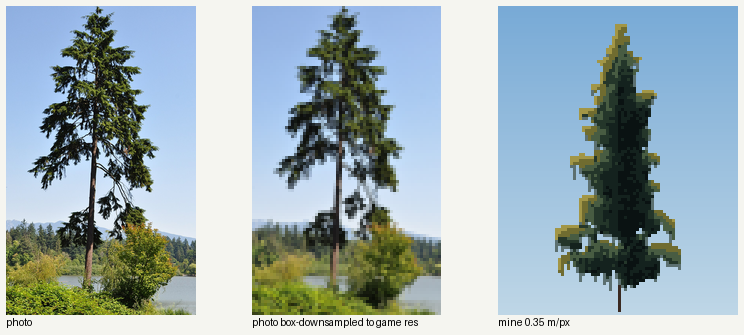 172. books/trees/work/hem_v1.png
Bash: cd ~/work/pixelart-studies/books/trees/src; python3 - <<'E' m=open('species_models.py').read() m=m.replace("tier=(2, 3), inter=1, angle=68, angle_top=55, lat_rate=0.42,","tier=(2,
cd ~/work/pixelart-studies/books/trees/src; python3 - <<'E'
m=open('species_models.py').read()
m=m.replace("tier=(2, 3), inter=1, angle=68, angle_top=55, lat_rate=0.42,","tier=(2, 3), inter=0, angle=68, angle_top=55, lat_rate=0.5,")
m=m.replace("spray_years=35, keep_m=5.0, reach=1.6, fan_droop=0.6, cluster=0.9),","spray_years=35, keep_m=3.0, reach=1.2, fan_droop=0.3, cluster=0.9),")
m=m.replace("hang=2.2, pad_thick=0.3,","hang=1.4, pad_thick=0.3,")
open('species_models.py','w').write(m)
s=open('shelf.py').read()
s=s.replace("op = op + 0.35 * sunward - 0.6 * far + 0.25 * (1 - vpos)","op = op + 0.9 * sunward - 0.6 * far + 0.25 * (1 - vpos)")
s=s.replace("far_step=True, lit_frac=0.4):","far_step=True, lit_frac=0.3):")
open('shelf.py','w').write(s)
E
python3 t_hem.py

# output:
33.390397110051346
Read: books/trees/work/hem_v1.png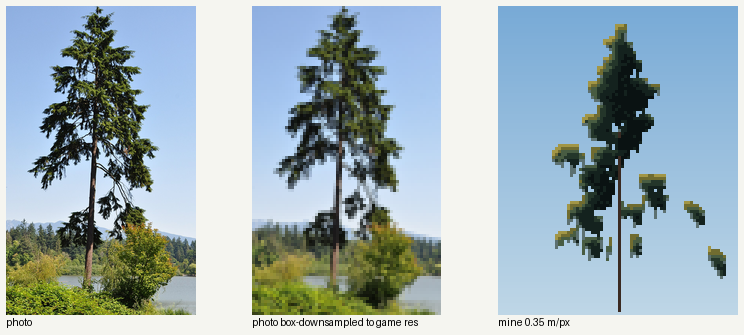 173. books/trees/work/hem_v1.png
Bash: cd ~/work/pixelart-studies/books/trees/src; python3 - <<'E' s=open('colepx.py').read() a=s.index(" # 3. sun set:"); b=s.index(" # 4. rims") s=s[:a]+''' # 3. the lit family
cd ~/work/pixelart-studies/books/trees/src; python3 - <<'E'
s=open('colepx.py').read()
a=s.index("    # 3. sun set:"); b=s.index("    # 4. rims")
s=s[:a]+'''    # 3. the lit family lives on upper planes in clusters (Cole p. 115: sun is 'an accident to be
    # added to the bulk'; it sits on the surfaces facing it). Keep a lit pixel only if it is on
    # an upper surface (above is sky or darker-than-it foliage is below... i.e. it tops a clump)
    # or belongs to a lit cluster of >= min_lit pixels; the rest fall back to the top shadow step.
    if sunset:
        litm = F & (step >= 3) & (step <= 5)
        lab2, n2 = ndi.label(litm)
        sz = ndi.sum(litm, lab2, range(1, n2 + 1))
        small = np.isin(lab2, np.where(sz < min_lit)[0] + 1) & litm
        upper = np.zeros_like(F); upper[1:] = (mat[:-1] == SKY) | ((step[:-1] < 3) & (mat[:-1] == FOL))
        step[small & ~upper] = 2
'''+s[b:]
s=s.replace("other_mask=None, lit_bias=0.0):","other_mask=None, lit_bias=0.0, min_lit=3):")
open('colepx.py','w').write(s)
t=open('t_colepx_hem.py').read()
t+='''
crop=lambda im: im.crop((10,20,50,60))
sheet([up(crop(box),10), up(crop(Image.fromarray(out)),10)],2,labels=['box 10x','cole 10x']).save('../work/hem_colepx_zoom.png')
'''
open('t_colepx_hem.py','w').write(t)
E
python3 t_colepx_hem.py

# output:
Traceback (most recent call last):
  File "<stdin>", line 2, in <module>
ValueError: substring not found
Bash: cd ~/work/pixelart-studies/books/trees/src; grep -n "# [0-9]\." colepx.py
cd ~/work/pixelart-studies/books/trees/src; grep -n "# [0-9]\." colepx.py # output: 68: # 1. mixed pixels at the crown: sky pixels inside the hull are holes; decide open / veiled 86: # 2. value plan: two families that never mix (Cole pp. 114-115: the tree is built of one set 116: # 4. rims: foliage pixels bordering a hole below/beside it (not above), or open sky outside 128: # 5. declutter: an isolated foliage step whose 4 neighbours agree takes theirs 142: # 6. wood: 3 steps by brightness
The old sun block was replaced; insert before rims.
Bash: cd ~/work/pixelart-studies/books/trees/src; python3 - <<'E' s=open('colepx.py').read() b=s.index(" # 4. rims") s=s[:b]+''' # 3. the lit family lives on upper planes in cluste
cd ~/work/pixelart-studies/books/trees/src; python3 - <<'E'
s=open('colepx.py').read()
b=s.index(" # 4. rims")
s=s[:b]+''' # 3. the lit family lives on upper planes in clusters (Cole p. 115: sun is 'an accident to be
# added to the bulk'). A lit pixel survives if it is in a lit cluster of >= min_lit pixels or
# tops a clump (sky or shadow above it); stray ones fall back to the top shadow step.
if sunset:
litm = F & (step >= 3) & (step <= 5)
lab2, n2 = ndi.label(litm)
if n2:
sz = ndi.sum(litm, lab2, range(1, n2 + 1))
small = np.isin(lab2, np.where(sz < min_lit)[0] + 1) & litm
upper = np.zeros_like(F); upper[1:] = (mat[:-1] == SKY) | ((step[:-1] < 3) & (mat[:-1] == FOL))
step[small & ~upper] = 2
'''+s[b:]
s=s.replace("other_mask=None, lit_bias=0.0):","other_mask=None, lit_bias=0.0, min_lit=3):")
open('colepx.py','w').write(s)
t=open('t_colepx_hem.py').read()
t+='''
crop=lambda im: im.crop((10,20,50,60))
sheet([up(crop(box),10), up(crop(Image.fromarray(out)),10)],2,labels=['box 10x','cole 10x']).save('../work/hem_colepx_zoom.png')
'''
open('t_colepx_hem.py','w').write(t)
E
python3 t_colepx_hem.py
# output:
(Bash completed with no output)Read: books/trees/work/hem_colepx_zoom.png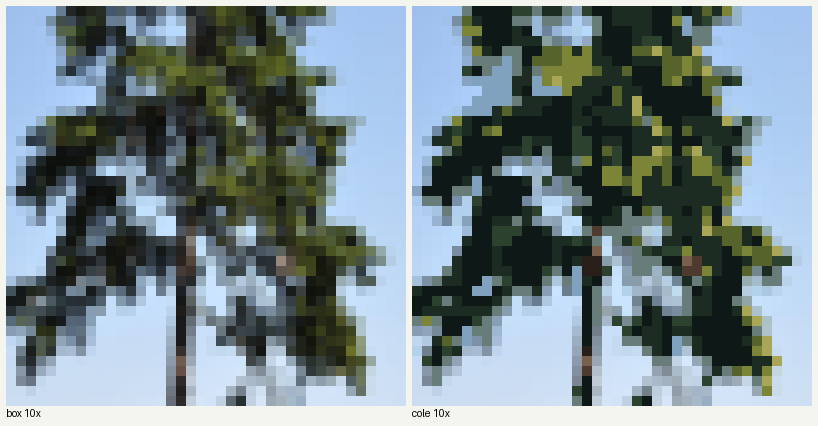 174. books/trees/work/hem_colepx_zoom.png
Read: books/trees/refs/Abies_lasiocarpa_subalpine_fir/_sheet.jpg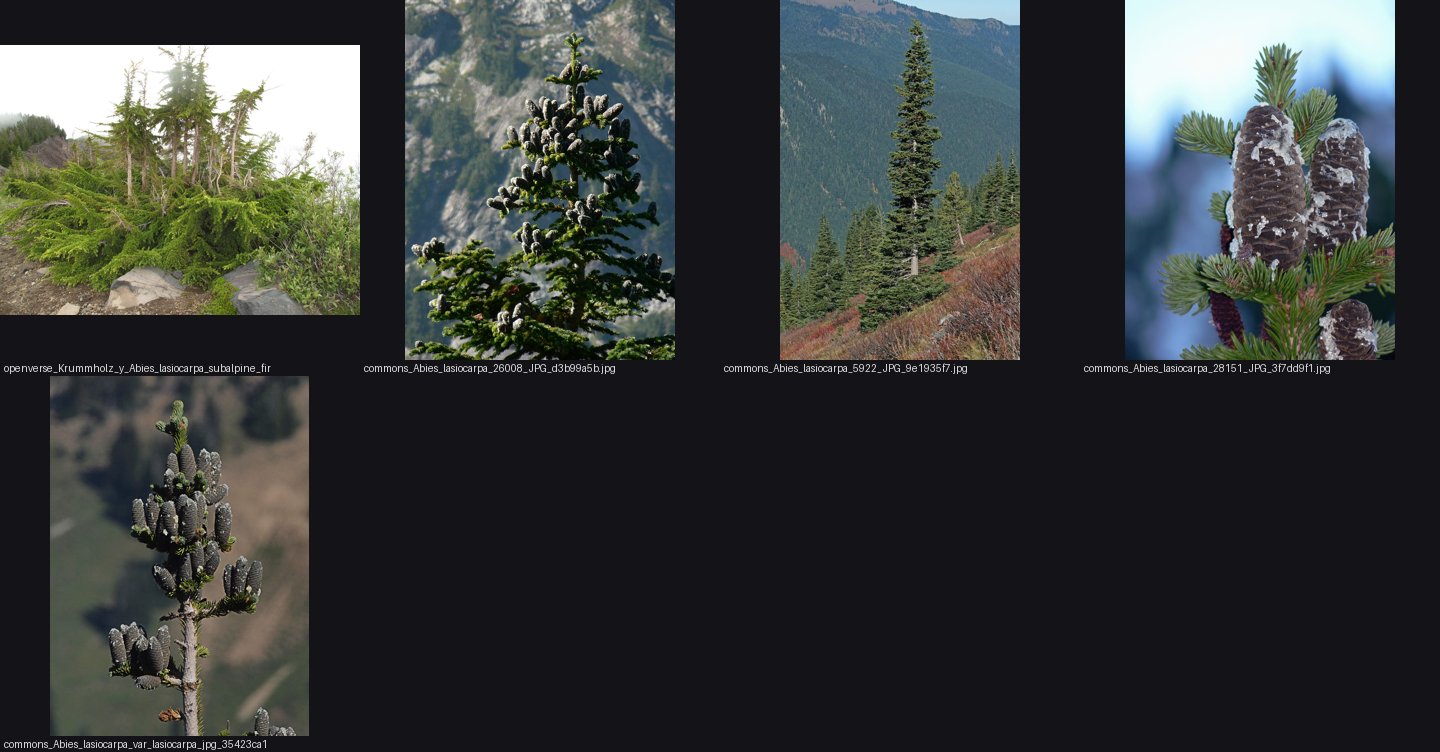 175. books/trees/refs/Abies_lasiocarpa_subalpine_fir/_sheet.jpg
Read: books/trees/refs/Acer_macrophyllum_tree/_sheet.jpg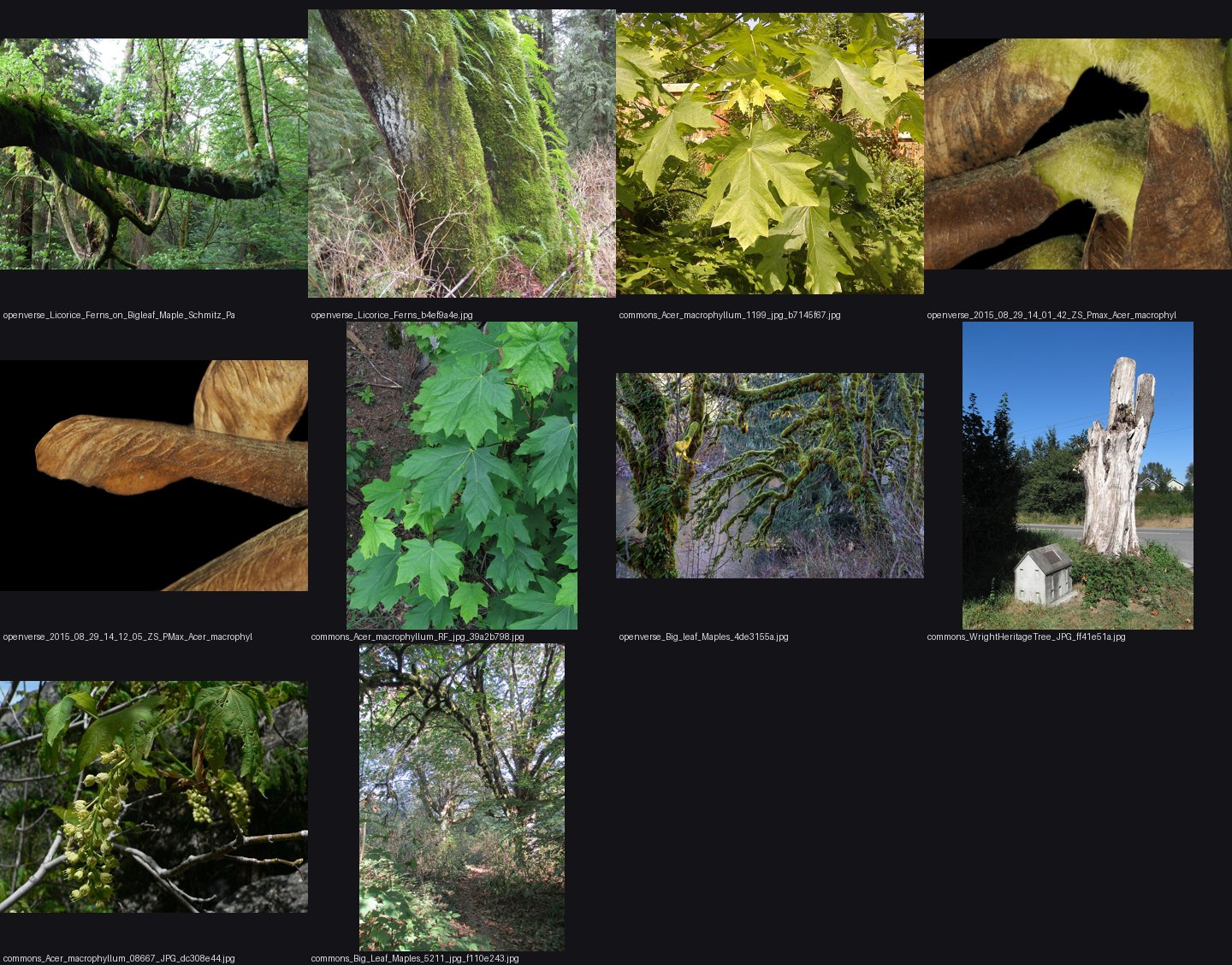 176. books/trees/refs/Acer_macrophyllum_tree/_sheet.jpg
Read: elements/conifers/refs/western_redcedar_candelabra_top/_sheet.jpg 177. elements/conifers/refs/western_redcedar_candelabra_top/_sheet.jpg
Read: books/trees/refs/Alnus_rubra_tree/_sheet.jpg 178. books/trees/refs/Alnus_rubra_tree/_sheet.jpg
Bash: cd ~/work/pixelart-studies/elements/broadleaf/refs; for d in */; do echo "$d: $(ls $d | head -8 | tr '\n' ' ')"; done 2>/dev/null | head; ls row_*.jpg
cd ~/work/pixelart-studies/elements/broadleaf/refs; for d in */; do echo "$d: $(ls $d | head -8 | tr '\n' ' ')"; done 2>/dev/null | head; ls row_*.jpg # output: bigleaf_maple_moss_tree/: _sheet.jpg commons_Acer_macrophyllum_1199_jpg_35c539b1.jpg commons_Acer_macrophyllum_2_jpg_87947968.jpg commons_Acer_macrophyllum_RF_jpg_fdf0a942.jpg commons_Acer_macrophyllum_in_Hoh_Valley2b_jpg_029edd44.jpg commons_Acer_macrophyllum_in_Hoh_ValleyB_jpg_3ee70256.jpg commons_Bigleaf_maple_Acer_macrophyllum_inflorescence_jp_16e887bb.jpg openverse_Acer_macrophyllum_Pursh_with_assorted_bryophyta_0f87446a.jpg bigleaf_maple_tree/: _sheet.jpg commons_Bigleaf_Maple_Bark_jpg_ff6d2a02.jpg commons_Bigleaf_Maple_Leaf_jpg_4d1bc1cb.jpg commons_WORLD_S_LARGEST_BIGLEAF_MAPLE_IN_ENGLISH_CAMP_NA_616e2d1e.jpg openverse_American_goldfinch_eyeing_me_from_bigleaf_maple__ed4ce8fa.jpg openverse_Hall_of_Mosses_1cf0baed.jpg openverse_Licorice_Ferns_on_Bigleaf_Maple_Schmitz_Park_32c861d9.jpg openverse_MacGillivray_s_warbler_in_shade_of_bigleaf_maple_fe493a49.jpg garry_oak_tree_meadow/: _sheet.jpg commons_A_freshly_cut_hay_field_with_a_lone_Oregon_oak_t_c8220b0c.jpg commons_Oak_tree_2875_jpg_b2fbceaa.jpg commons_Oregon_oak_grove_jpg_b6cfe3e0.jpg commons_Quercus_garryana_1_brewbooks_jpg_f1da547d.jpg openverse_A_sawn_Garry_Oak_tree_in_the_meadow_with_fungus__08928c99.jpg openverse_Garry_Oak_Meadow_5c9e0320.jpg openverse_The_Enchanted_Forest_series_3f67f90c.jpg madrone_bark/: _sheet.jpg commons_MADRONE_TREES_WITH_PEELING_BARK_NARA_545288_jpg_ca4d4ef8.jpg commons_MADRONE_TREES_WITH_PEELING_BARK_NARA_545288_tif_3c6e1c7e.jpg commons_Madrone_Bark_New_River_ACEC_15517480657_jpg_b31a9d02.jpg commons_Madrone_bark_at_Moonstone_Beach_52633124042_jpg_e30df3a2.jpg commons_Pacific_Madrone_Arbutus_menziesii_Branch_Fork_21_edd11387.jpg commons_Pacific_Madrone_Arbutus_menziesii_Peeling_tree_b_e9dfac75.jpg openverse_8b_Pacific_madrone_bark_before_peeling_4b6d6f27.jpg oregon_white_oak_tree/: _sheet.jpg commons_A_freshly_cut_hay_field_with_a_lone_Oregon_oak_t_c8220b0c.jpg commons_Oak_tree_2875_jpg_b2fbceaa.jpg commons_Oregon_white_oak_Forest_Grove_Oregon_jpg_cf1400b8.jpg commons_Oregon_white_oak_imported_from_iNaturalist_photo_3c9ad2cd.jpg commons_Quercus_garryana_1_brewbooks_jpg_f1da547d.jpg openverse_Aesculus_californica_3_8330686c.jpg openverse_Barred_Owl_in_Oregon_White_Oak_tree_263f3f67.jpg pacific_madrone_tree/: _sheet.jpg commons_Arbutus_menziesii_11_jpg_bfa0faa7.jpg commons_Arbutus_menziesii_3208s_JPG_0034b590.jpg commons_Arbutus_menziesii_5822_JPG_3d427efe.jpg commons_Arbutus_menziesii_8_jpg_24f7b9f1.jpg commons_M_20_Pacific_madrone_7535_jpg_86828422.jpg openverse_Anna_s_hummingbird_courtship_display_in_Pacific__32a83520.jpg openverse_Bewick_s_wren_in_Pacific_madrone_tree_e87919c8.jpg red_alder_grove_trunks/: _sheet.jpg commons_Alnus_rhombifolia_White_Alder_Redwood_Grove_2011_a7c0a767.jpg commons_Alnus_rubra_seeds_jpg_2c2cb175.jpg commons_Red_Alder_9549_jpg_3fd9c3e7.jpg commons_Red_Alder_9550_jpg_f20b0ac1.jpg openverse_Green_Man_Poem_Unknown_Author_7e3ad3c0.jpg openverse_Lily_Grove_In_Its_Eco_System_ab2a9689.jpg openverse_Red_Alder_Grove_a7dee8c8.jpg re
Read: elements/broadleaf/refs/oregon_white_oak_tree/_sheet.jpg 179. elements/broadleaf/refs/oregon_white_oak_tree/_sheet.jpg
Read: elements/broadleaf/refs/red_alder_tree/_sheet.jpg 180. elements/broadleaf/refs/red_alder_tree/_sheet.jpg
Read: elements/broadleaf/refs/pacific_madrone_tree/_sheet.jpg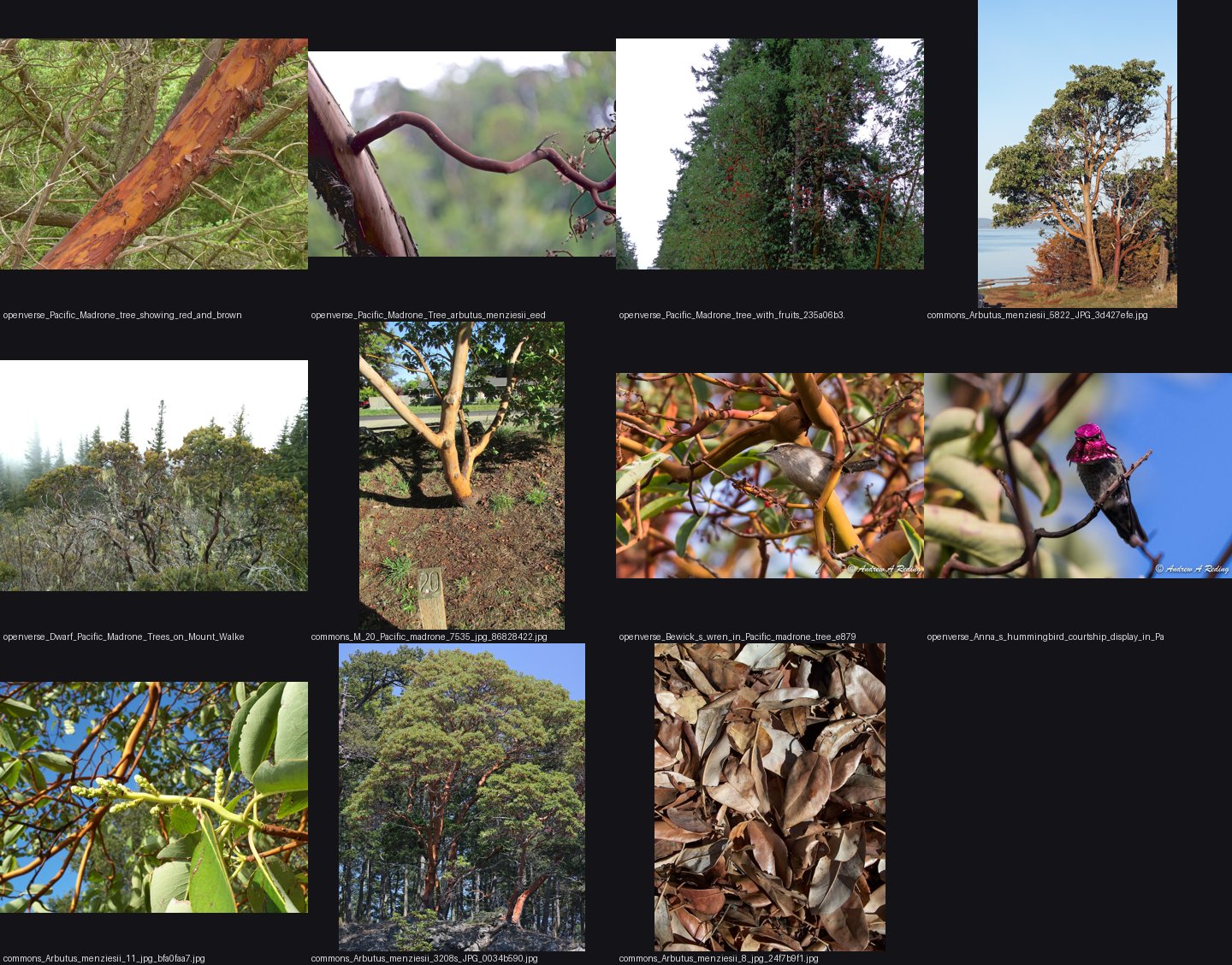 181. elements/broadleaf/refs/pacific_madrone_tree/_sheet.jpg
Bash: cd ~/work/pixelart-studies/elements; python3 -c " from PIL import Image import glob fs=['broadleaf/refs/oregon_white_oak_tree/commons_A_freshly_cut_hay_field_with_a_lone_Oregon_oak
cd ~/work/pixelart-studies/elements; python3 -c "
from PIL import Image
import glob
fs=['broadleaf/refs/oregon_white_oak_tree/commons_A_freshly_cut_hay_field_with_a_lone_Oregon_oak_t_c8220b0c.jpg',
'broadleaf/refs/red_alder_tree/commons_Alnus_rubra_in_winter_jpg_a12b2cac.jpg',
'broadleaf/refs/red_alder_tree/commons_Alder_tree_3381_jpg_71bd4a24.jpg',
'broadleaf/refs/pacific_madrone_tree/commons_Arbutus_menziesii_5822_JPG_3d427efe.jpg',
'conifers/refs/lone_Douglas_fir_tree/openverse_Big_Lonely_Doug_97f10fa9.jpg',
'conifers/refs/lone_Douglas_fir_tree/openverse_Edworthy_Park_Douglas_Fir_f1516998.jpg',
'../books/trees/refs/Picea_sitchensis_tree_habit/'+[f for f in __import__('os').listdir('../books/trees/refs/Picea_sitchensis_tree_habit') if 'Flattery' in f][0],
'broadleaf/refs/oregon_white_oak_tree/openverse_Oregon_White_Oak_Tree_7f4d5d14.jpg']
for i,f in enumerate(fs):
im=Image.open(f); print(i, im.size, f)
im.thumbnail((400,400)); im.save(f'/tmp/c{i}.jpg')
"
cd /tmp; python3 -c "
from PIL import Image, ImageDraw
ims=[Image.open(f'/tmp/c{i}.jpg') for i in range(8)]
S=Image.new('RGB',(1600,820),'white'); d=ImageDraw.Draw(S)
for i,im in enumerate(ims):
x=(i%4)*400; y=(i//4)*410; S.paste(im,(x,y)); d.text((x+4,y+4),str(i),fill='red')
S.save('/tmp/cands.jpg')"
# output:
0 (1280, 960) broadleaf/refs/oregon_white_oak_tree/commons_A_freshly_cut_hay_field_with_a_lone_Oregon_oak_t_c8220b0c.jpg
1 (1280, 960) broadleaf/refs/red_alder_tree/commons_Alnus_rubra_in_winter_jpg_a12b2cac.jpg
2 (1280, 2276) broadleaf/refs/red_alder_tree/commons_Alder_tree_3381_jpg_71bd4a24.jpg
3 (1280, 1978) broadleaf/refs/pacific_madrone_tree/commons_Arbutus_menziesii_5822_JPG_3d427efe.jpg
4 (678, 1024) conifers/refs/lone_Douglas_fir_tree/openverse_Big_Lonely_Doug_97f10fa9.jpg
5 (768, 1024) conifers/refs/lone_Douglas_fir_tree/openverse_Edworthy_Park_Douglas_Fir_f1516998.jpg
6 (960, 649) ../books/trees/refs/Picea_sitchensis_tree_habit/commons_Picea_sitchensis_Cape_Flattery_jpg_a79a8f65.jpg
7 (1024, 683) broadleaf/refs/oregon_white_oak_tree/openverse_Oregon_White_Oak_Tree_7f4d5d14.jpgRead: /tmp/cands.jpg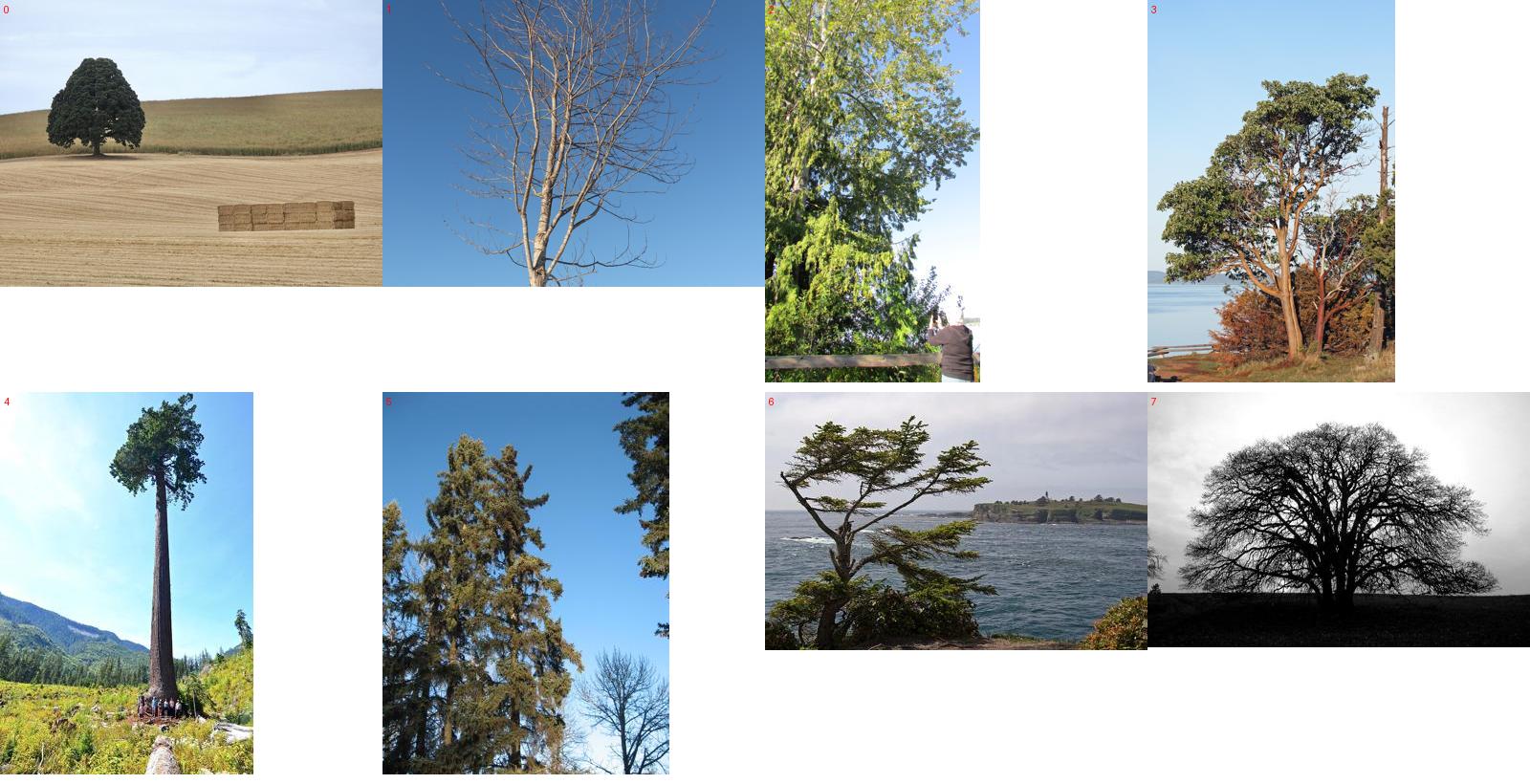 182. /tmp/cands.jpg
Bash: cd ~/work/pixelart-studies/books/trees/src; cat > sheet_photos.py <<'E' """Sheet: Cole's rules on real Washington trees. photo | box-downsampled to game res | Cole.""" from lib imp
cd ~/work/pixelart-studies/books/trees/src; cat > sheet_photos.py <<'E'
"""Sheet: Cole's rules on real Washington trees. photo | box-downsampled to game res | Cole."""
from lib import *
import colepx as cp
import numpy as np
from PIL import Image
E='~/work/pixelart-studies/elements/'
B='~/work/pixelart-studies/books/trees/refs/'
STUDIES = [
# name, path, crop, width px, ground row fraction (below = not processed), palette kind
('western hemlock', B+'Tsuga_heterophylla_tree_habit/commons_Tsuga_heterophylla_Stanley_Park_Vancouver_jpg_c32773e6.jpg', (0,0,960,1100), 60, 1.0, 'conifer'),
('Douglas-fir, old ("Big Lonely Doug")', E+'conifers/refs/lone_Douglas_fir_tree/openverse_Big_Lonely_Doug_97f10fa9.jpg', (230,0,630,900), 48, 1.0, 'conifer'),
('Sitka spruce, wind-trained (Cape Flattery)', B+'Picea_sitchensis_tree_habit/commons_Picea_sitchensis_Cape_Flattery_jpg_a79a8f65.jpg', (0,60,700,560), 90, 1.0, 'conifer'),
('Garry oak, open-grown, summer', E+'broadleaf/refs/oregon_white_oak_tree/commons_A_freshly_cut_hay_field_with_a_lone_Oregon_oak_t_c8220b0c.jpg', (100,140,580,540), 72, 0.93, 'broad'),
('Pacific madrone', E+'broadleaf/refs/pacific_madrone_tree/commons_Arbutus_menziesii_5822_JPG_3d427efe.jpg', (0,300,1280,1750), 80, 0.85, 'broad'),
]
def sky_rule_factory(gy):
def rule(rgb):
L = cp.lum(rgb); r,g,b = rgb[...,0],rgb[...,1],rgb[...,2]
H = L.shape[0]
sat = rgb.max(-1) - rgb.min(-1)
sky = (L > 135) & ((b > r + 10) | (sat < 28))
sky[int(H*gy):] = False
return sky
return rule
if __name__ == '__main__':
import sys
rows = []
for name, path, crop, w, gy, kind in STUDIES:
rgb = cp.downsample(path, w, crop)
H = rgb.shape[0]
other = np.zeros(rgb.shape[:2], bool); other[int(H*gy):] = True
mat, step = cp.run(rgb, sky_rule=sky_rule_factory(gy), other_mask=other)
out = cp.to_rgb(mat, step, cp.palette(kind), rgb=rgb)
k = max(2, 360 // H)
ph = Image.open(path).convert('RGB').crop(crop)
ph = ph.resize((int(ph.size[0]*H*k/ph.size[1]), H*k))
rows.append(sheet([ph, up(Image.fromarray(rgb.astype(np.uint8)), k), up(out, k)], 3,
labels=[name, f'box-downsampled, {w} px wide', 'Cole: value plan, sun set, holes, rims']))
Wm = max(r.size[0] for r in rows)
S = Image.new('RGB', (Wm, sum(r.size[1] for r in rows)), (245,245,240)); y=0
for r in rows: S.paste(r,(0,y)); y+=r.size[1]
S.save('../work/photos_v1.png'); print(S.size)
E
python3 sheet_photos.py
# output:
(1374, 1752)Read: books/trees/work/photos_v1.png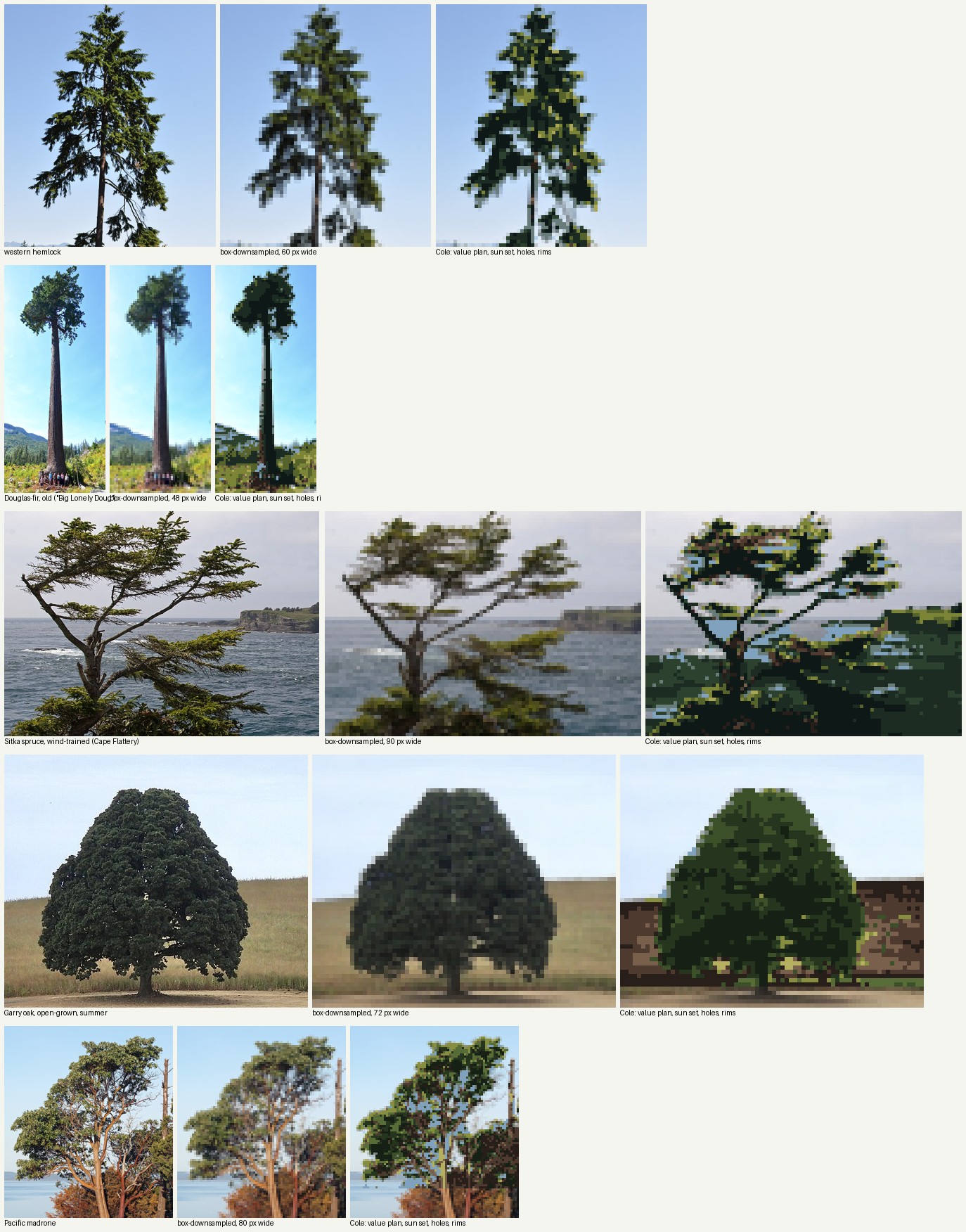 183. books/trees/work/photos_v1.png
Bash: cd ~/work/pixelart-studies/books/trees/src; python3 - <<'E' s=open('colepx.py').read() s=s.replace(" wood = ~sky & (r > g + 6) & (r > b + 10) & (L < 150)"," wood = ~sky & (r
cd ~/work/pixelart-studies/books/trees/src; python3 - <<'E'
s=open('colepx.py').read()
s=s.replace(" wood = ~sky & (r > g + 6) & (r > b + 10) & (L < 150)"," wood = ~sky & (r > g + 8) & (r > b + 14) & (L < 190)")
# dome modulation of the shadow family when photo is flat
s=s.replace("other_mask=None, lit_bias=0.0, min_lit=3):","other_mask=None, lit_bias=0.0, min_lit=3, dome=0.0, sun_dx=-1):")
s=s.replace(" fl = L[F & (step != 6)]\n if fl.size:\n hist,",""" if dome > 0:
# Cole fig. 95, the clipped yew: under a grey sky the tree is planes of a dome, lighter
# where the plane faces up (and toward the light). Mix a dome coordinate into L.
hullm = crown_hull(mat, close)
dist = ndi.distance_transform_edt(hullm)
sc = max(2.0, np.percentile(dist[hullm], 95))
hh = ndi.gaussian_filter(np.sqrt(np.clip(dist / sc, 0, 1)), sc * 0.3)
gy, gx = np.gradient(hh)
face = np.clip(-gy * sc * 1.5 - sun_dx * gx * sc * 0.8, -1, 1) + 0.6 * hh
Lf = L[F]
L = L.copy()
L[F] = Lf + dome * (np.std(Lf) + 10) * (face[F] - face[F].mean()) / (face[F].std() + 1e-6)
fl = L[F & (step != 6)]
if fl.size:
hist,""")
open('colepx.py','w').write(s)
p=open('sheet_photos.py').read()
p=p.replace("""STUDIES = [""","""from PIL import ImageDraw
def poly_mask(shape, pts):
H, W = shape
m = Image.new('L', (W, H), 0)
ImageDraw.Draw(m).polygon([(x * W, y * H) for x, y in pts], fill=1)
return np.array(m, bool)
STUDIES = [""")
p=p.replace("(0,0,960,1100), 60, 1.0, 'conifer'),","(0,0,960,1100), 60, None, 'conifer', 0.0),")
p=p.replace("(230,0,630,900), 48, 1.0, 'conifer'),","(230,0,630,900), 48, [(0.15,0.25),(0.3,0.02),(0.6,0.0),(0.85,0.12),(0.8,0.3),(0.58,0.35),(0.64,0.97),(0.36,0.97),(0.45,0.35),(0.2,0.32)], 'conifer', 0.5),")
p=p.replace("(0,60,700,560), 90, 1.0, 'conifer'),","(0,60,700,560), 90, [(0.0,1.0),(0.03,0.35),(0.15,0.12),(0.3,0.0),(0.55,0.03),(0.8,0.18),(0.72,0.45),(0.9,0.62),(0.85,0.85),(1.0,1.0)], 'conifer', 0.0),")
p=p.replace("(100,140,580,540), 72, 0.93, 'broad'),","(100,140,580,540), 72, [(0.12,0.85),(0.18,0.45),(0.33,0.13),(0.47,0.1),(0.62,0.13),(0.75,0.4),(0.82,0.8),(0.6,0.9),(0.52,0.97),(0.42,0.97),(0.25,0.9)], 'broad', 0.9),")
p=p.replace("(0,300,1280,1750), 80, 0.85, 'broad'),","(0,300,1280,1750), 80, [(0,0.55),(0.1,0.3),(0.35,0.08),(0.6,0.0),(0.85,0.15),(0.88,0.5),(0.75,1.0),(0.3,1.0),(0.25,0.8),(0.0,0.7)], 'broad', 0.3),")
p=p.replace(""" for name, path, crop, w, gy, kind in STUDIES:
rgb = cp.downsample(path, w, crop)
H = rgb.shape[0]
other = np.zeros(rgb.shape[:2], bool); other[int(H*gy):] = True
mat, step = cp.run(rgb, sky_rule=sky_rule_factory(gy), other_mask=other)""",""" for name, path, crop, w, poly, kind, dome in STUDIES:
rgb = cp.downsample(path, w, crop)
H = rgb.shape[0]
other = ~poly_mask(rgb.shape[:2], poly) if poly else np.zeros(rgb.shape[:2], bool)
mat, step = cp.run(rgb, sky_rule=sky_rule_factory(1.0), other_mask=other, dome=dome)""")
open('sheet_photos.py','w').write(p)
E
grep -n "OTHER\|other" colepx.py | head
# output:
2:vox-trees render or another student's scene.
4: plan(rgb) -> classes: sky / foliage / wood / other, from colour
20:SKY, FOL, WOOD, OTHER = 0, 1, 2, 3
58: sunset=True, declutter_passes=1, n_fol=4, other_mask=None, lit_bias=0.0, min_lit=3, dome=0.0, sun_dx=-1):
60: if other_mask is not None:
61: mat[other_mask] = OTHER
87: # of tones; the sunlit parts take 'a new and lighter set, quite apart from the others').
181: sky=[(150, 190, 228), (128, 162, 190), (178, 210, 236)], other=[(70, 90, 60)])Bash: cd ~/work/pixelart-studies/books/trees/src; sed -i '' 's/ tree = mat != SKY$/ tree = (mat == FOL) | (mat == WOOD)/' colepx.py; python3 sheet_photos.py
cd ~/work/pixelart-studies/books/trees/src; sed -i '' 's/ tree = mat != SKY$/ tree = (mat == FOL) | (mat == WOOD)/' colepx.py; python3 sheet_photos.py # output: (1374, 1752)
Read: books/trees/work/photos_v1.png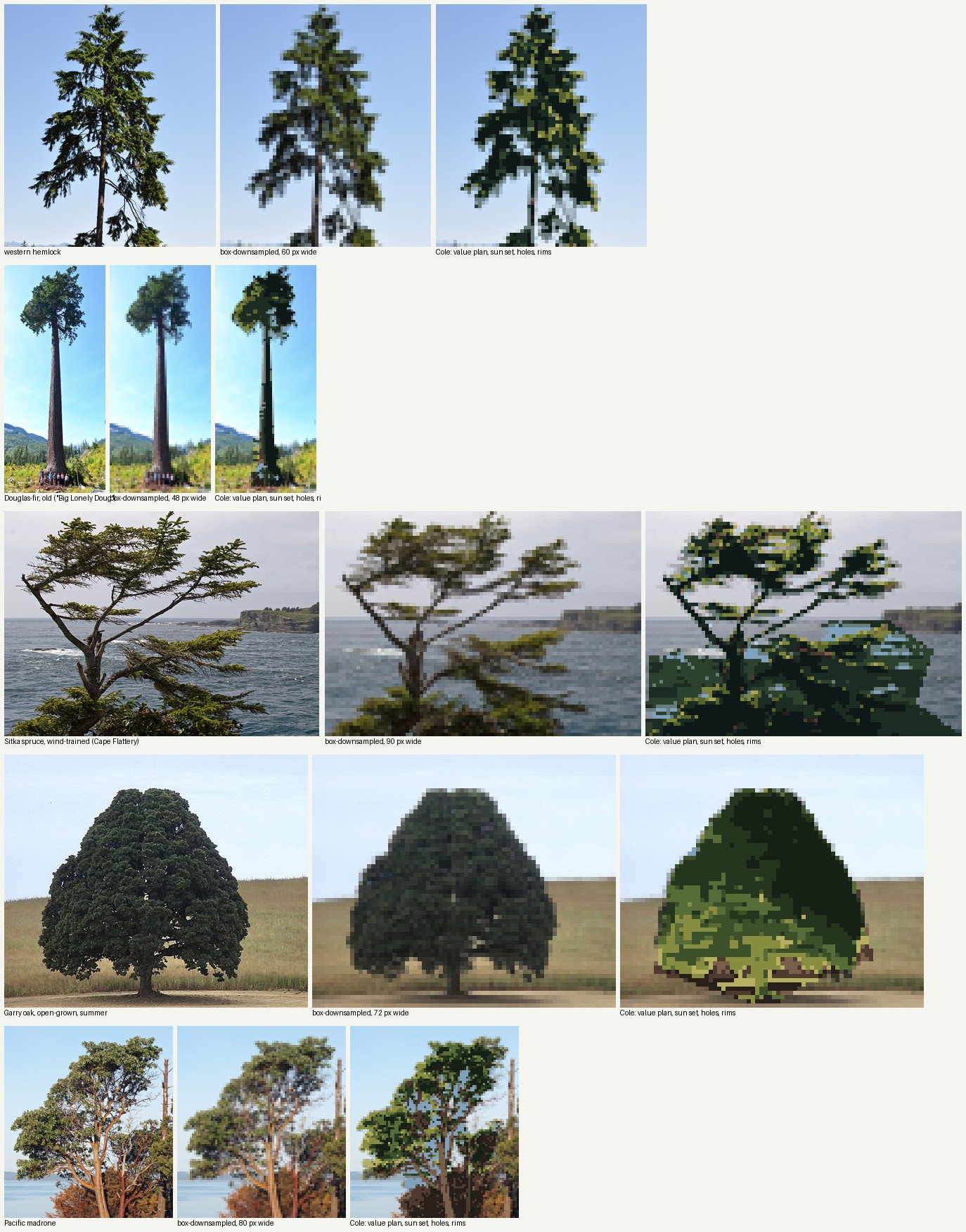 184. books/trees/work/photos_v1.png
Bash: cd ~/work/pixelart-studies/books/trees/src; python3 - <<'E' s=open('colepx.py').read() s=s.replace("face = np.clip(-gy * sc * 1.5 - sun_dx * gx * sc * 0.8, -1, 1) + 0.6 * hh","face
cd ~/work/pixelart-studies/books/trees/src; python3 - <<'E'
s=open('colepx.py').read()
s=s.replace("face = np.clip(-gy * sc * 1.5 - sun_dx * gx * sc * 0.8, -1, 1) + 0.6 * hh","face = np.clip(gy * sc * 1.5 + sun_dx * gx * sc * 0.8, -1, 1) + 0.6 * hh")
s=s.replace("dome=0.0, sun_dx=-1):","dome=0.0, sun_dx=-1, wood_mask=None, bg_hole=False):")
s=s.replace(""" if other_mask is not None:
mat[other_mask] = OTHER""",""" if bg_hole:
# inside the tree, pixels the colour of the background (bluer than green) are holes
r_, g_, b_ = rgb[..., 0], rgb[..., 1], rgb[..., 2]
mat[(mat == FOL) & (b_ > g_ + 3) & (L > 60)] = SKY
if wood_mask is not None:
mat[wood_mask & (mat != SKY)] = WOOD
if other_mask is not None:
mat[other_mask] = OTHER""")
open('colepx.py','w').write(s)
p=open('sheet_photos.py').read()
p=p.replace("[(0.15,0.25),(0.3,0.02),(0.6,0.0),(0.85,0.12),(0.8,0.3),(0.58,0.35),(0.64,0.97),(0.36,0.97),(0.45,0.35),(0.2,0.32)], 'conifer', 0.5),",
"[(0.15,0.25),(0.3,0.02),(0.6,0.0),(0.85,0.12),(0.8,0.3),(0.58,0.35),(0.64,0.97),(0.36,0.97),(0.45,0.35),(0.2,0.32)], 'conifer', 0.5, [(0.44,0.3),(0.56,0.3),(0.63,0.97),(0.37,0.97)]),")
p=p.replace("'conifer', 0.0),\n ('Sitka","'conifer', 0.0, None),\n ('Sitka")
p=p.replace("(0.85,0.85),(1.0,1.0)], 'conifer', 0.0),","(0.85,0.85),(1.0,1.0)], 'conifer', 0.0, None),")
p=p.replace("[(0.12,0.85),(0.18,0.45),(0.33,0.13),(0.47,0.1),(0.62,0.13),(0.75,0.4),(0.82,0.8),(0.6,0.9),(0.52,0.97),(0.42,0.97),(0.25,0.9)], 'broad', 0.9),",
"[(0.12,0.83),(0.18,0.45),(0.33,0.13),(0.47,0.1),(0.62,0.13),(0.75,0.4),(0.82,0.78),(0.6,0.86),(0.52,0.86),(0.51,0.96),(0.45,0.96),(0.44,0.86),(0.25,0.86)], 'broad', 0.9, [(0.44,0.84),(0.52,0.84),(0.52,0.97),(0.44,0.97)]),")
p=p.replace("(0.3,1.0),(0.25,0.8),(0.0,0.7)], 'broad', 0.3),","(0.3,1.0),(0.25,0.8),(0.0,0.7)], 'broad', 0.3, None),")
p=p.replace("for name, path, crop, w, poly, kind, dome in STUDIES:","for name, path, crop, w, poly, kind, dome, wpoly in STUDIES:")
p=p.replace("mat, step = cp.run(rgb, sky_rule=sky_rule_factory(1.0), other_mask=other, dome=dome)",
"wm = poly_mask(rgb.shape[:2], wpoly) if wpoly else None\n mat, step = cp.run(rgb, sky_rule=sky_rule_factory(1.0), other_mask=other, dome=dome, wood_mask=wm, bg_hole=True)")
open('sheet_photos.py','w').write(p)
E
python3 sheet_photos.py
# output:
Exit code 1
Traceback (most recent call last):
File "~/work/pixelart-studies/books/trees/src/sheet_photos.py", line 34, in <module>
for name, path, crop, w, poly, kind, dome, wpoly in STUDIES:
^^^^^^^^^^^^^^^^^^^^^^^^^^^^^^^^^^^^^^^^^^^^
ValueError: not enough values to unpack (expected 8, got 7)Bash: cd ~/work/pixelart-studies/books/trees/src; grep -n "'conifer', 0.0)" sheet_photos.py; sed -i '' "s/(0,0,960,1100), 60, None, 'conifer', 0.0),/(0,0,960,1100), 60, None, 'conifer',
cd ~/work/pixelart-studies/books/trees/src; grep -n "'conifer', 0.0)" sheet_photos.py; sed -i '' "s/(0,0,960,1100), 60, None, 'conifer', 0.0),/(0,0,960,1100), 60, None, 'conifer', 0.0, None),/" sheet_photos.py; python3 sheet_photos.py
# output:
16: ('western hemlock', B+'Tsuga_heterophylla_tree_habit/commons_Tsuga_heterophylla_Stanley_Park_Vancouver_jpg_c32773e6.jpg', (0,0,960,1100), 60, None, 'conifer', 0.0),
(1374, 1752)Read: books/trees/work/photos_v1.png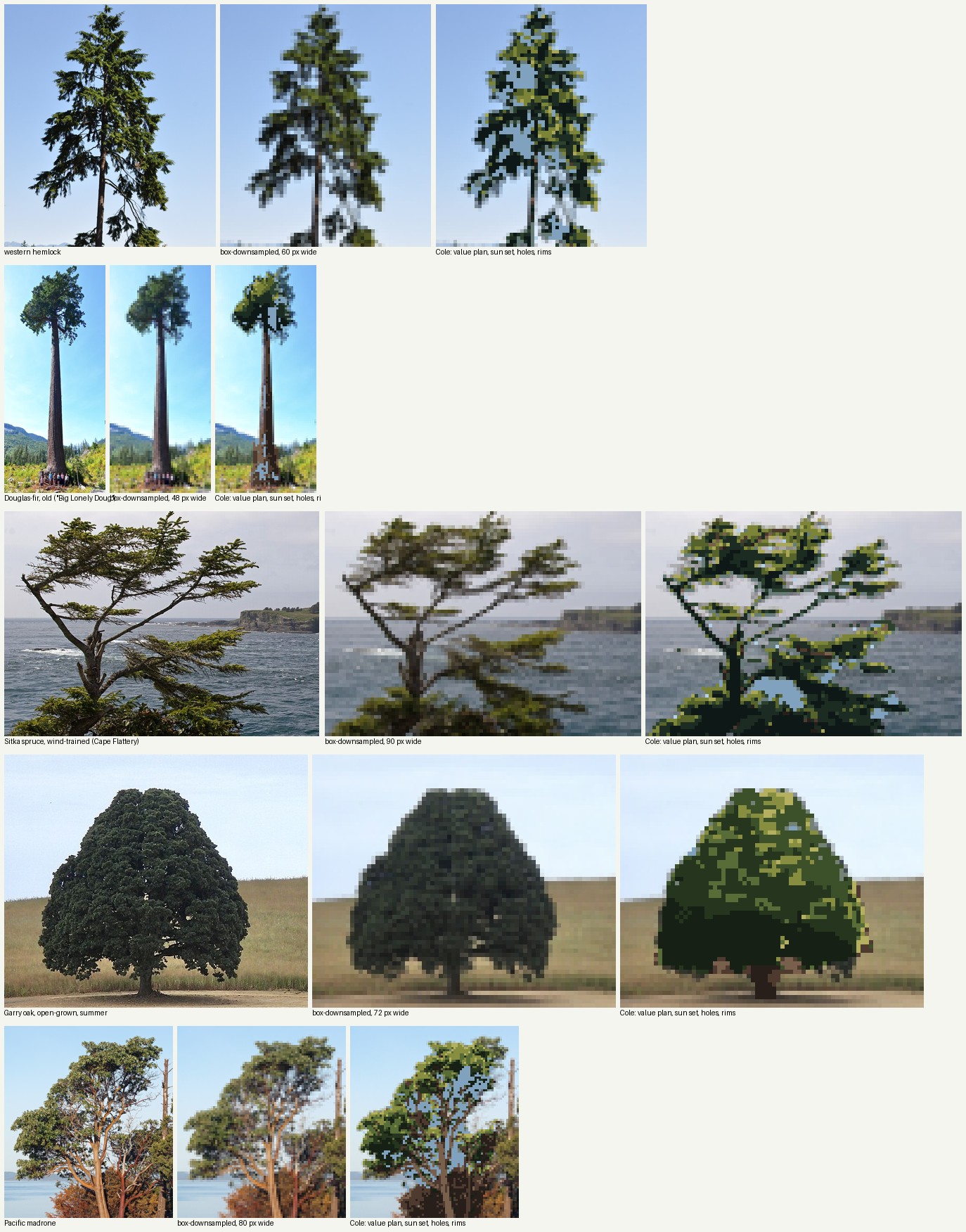 185. books/trees/work/photos_v1.png
Bash: cd ~/work/pixelart-studies/books/trees/src; python3 - <<'E' p=open('sheet_photos.py').read() p=p.replace("dome=dome, wood_mask=wm, bg_hole=True)","dome=dome, wood_mask=wm, bg_hole=
cd ~/work/pixelart-studies/books/trees/src; python3 - <<'E'
p=open('sheet_photos.py').read()
p=p.replace("dome=dome, wood_mask=wm, bg_hole=True)","dome=dome, wood_mask=wm, bg_hole=('Sitka' in name), min_lit=5)")
open('sheet_photos.py','w').write(p)
E
python3 sheet_photos.py
# output:
(1374, 1752)Read: books/trees/work/photos_v1.png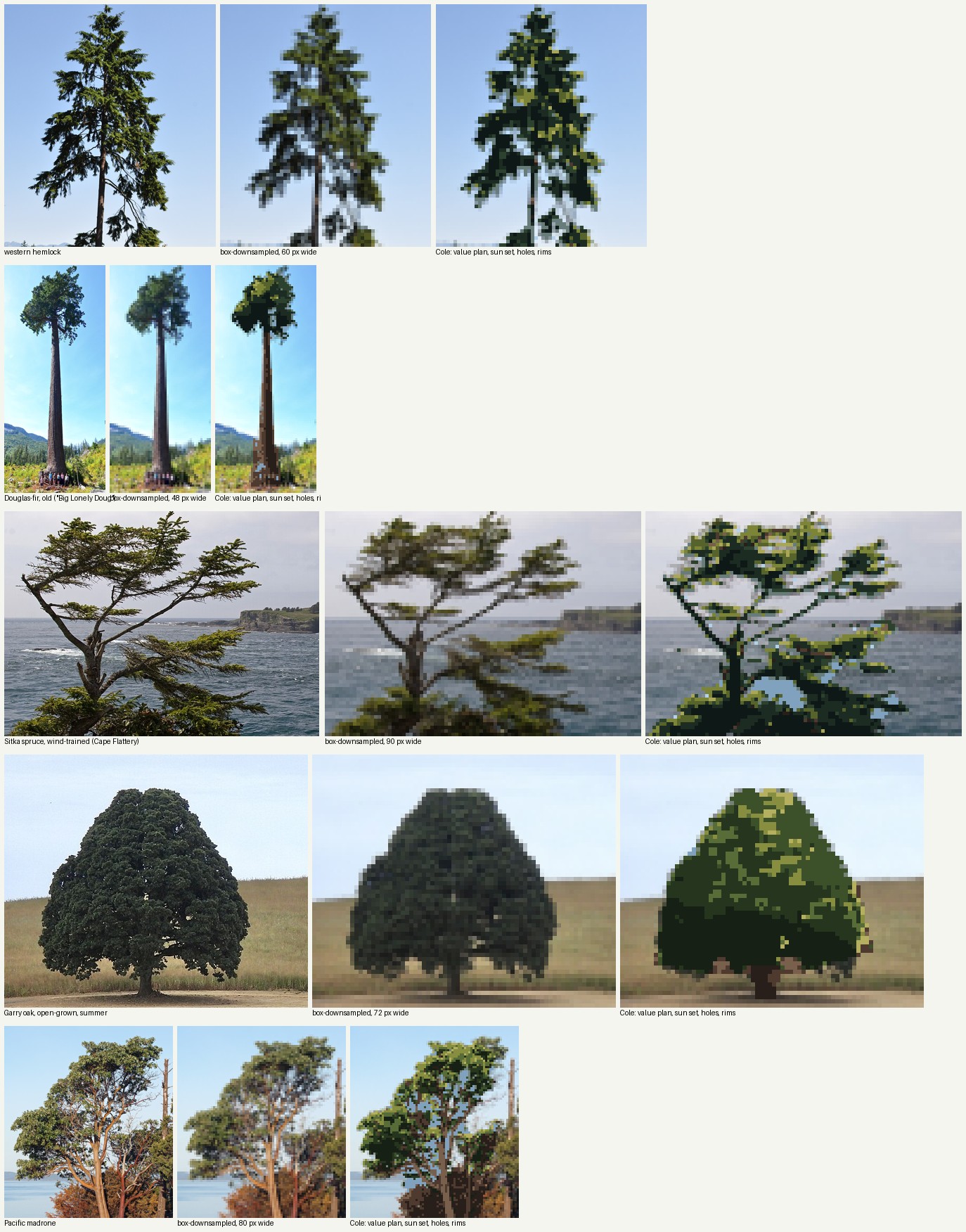 186. books/trees/work/photos_v1.png
Bash: cd ~/work/pixelart-studies/books/trees/src; cat > t_student.py <<'E' from lib import * import colepx as cp import numpy as np from PIL import Image A=np.array(Image.open('~/work/pi
cd ~/work/pixelart-studies/books/trees/src; cat > t_student.py <<'E'
from lib import *
import colepx as cp
import numpy as np
from PIL import Image
A=np.array(Image.open('~/work/pixelart-studies/elements/conifers/sheets/A_species_x_age.png').convert('RGB')).astype(int)
# cells: 4 cols x 4 rows; col x0 ~ 69 + c*297, width 293; row y0 ~ 30 + r*493, h 487 (1286x2046 image)
cells=[];labs=[]
for (r,c,name) in [(0,2,'douglas mature'),(1,2,'hemlock mature'),(2,3,'cedar old'),(3,2,'spruce mature')]:
x0=int(69+c*303.5); y0=int(30+r*503)
crop=A[y0:y0+480, x0:x0+290]
mat,step=cp.run(crop, min_lit=3)
out=cp.to_rgb(mat,step,cp.palette('conifer'),rgb=crop)
cells += [Image.fromarray(crop.astype(np.uint8)), Image.fromarray(out)]
labs += [name+': conifers student', 'after: Cole rules']
sheet(cells,4,labels=labs).save('../work/student_ab.png')
E
python3 t_student.py
# output:
(Bash completed with no output)Read: books/trees/work/student_ab.png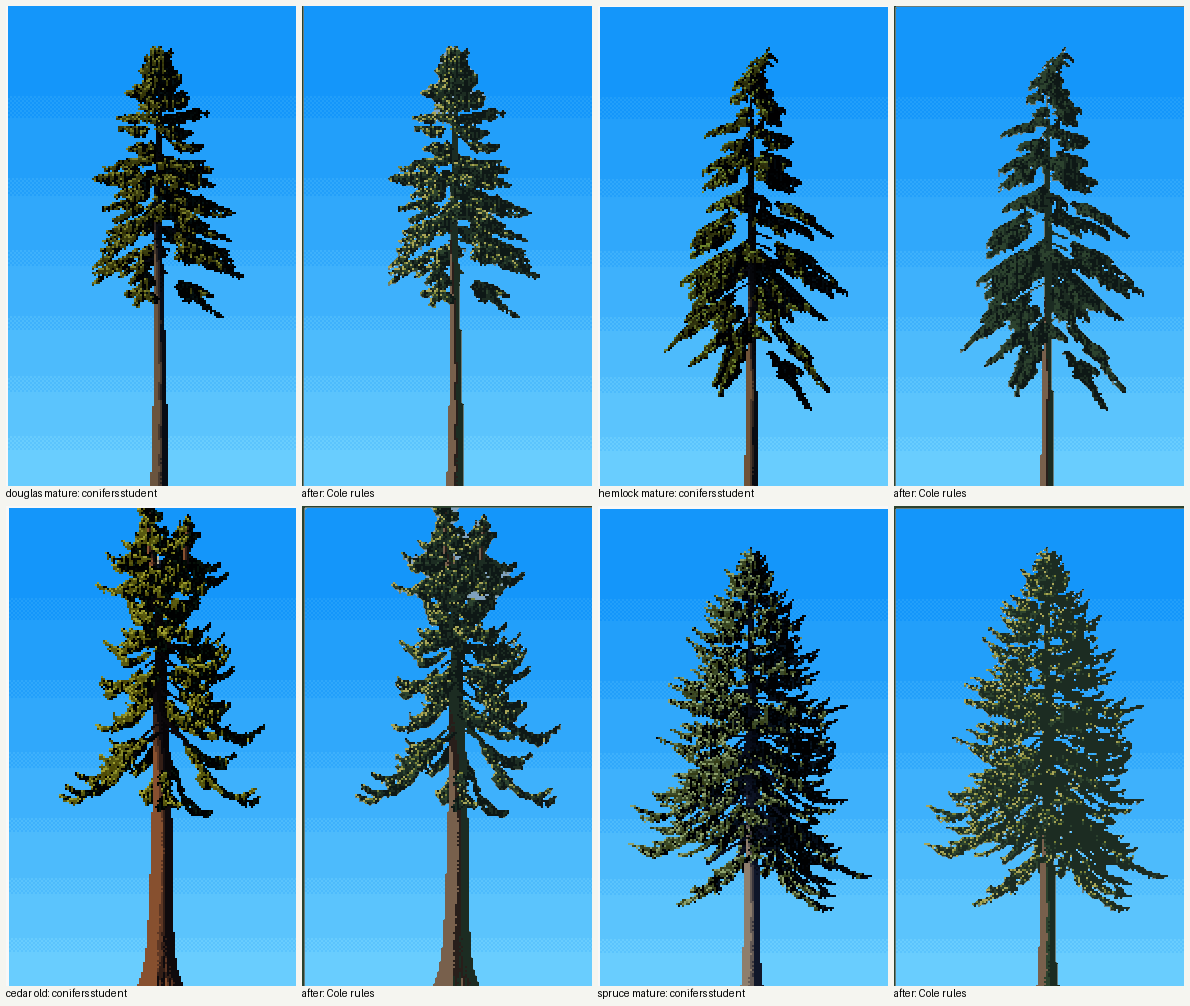 187. books/trees/work/student_ab.png
Bash: cd ~/work/pixelart-studies/books/trees/src; cat > study_far2.py <<'E' """Far silhouettes v2: Washington species at 1.2 m/px, one flat far tone (Cole p. 64), each typed by hand so t
cd ~/work/pixelart-studies/books/trees/src; cat > study_far2.py <<'E'
"""Far silhouettes v2: Washington species at 1.2 m/px, one flat far tone (Cole p. 64), each
typed by hand so the outline alone carries the species. Asymmetric on purpose (a tree is never
mirror-built), each with its diagnostic mark:
douglas old - long clean bole, crown in the top quarter, flattened broken top of a few
big limbs, gaps where limbs are lost (Cole p. 123, Halle reiteration)
douglas mat. - cone of ragged separate tiers with sky between them; crown ~half
hemlock - soft narrow cone, nodding leader bent to one side, drooping lower sprays
redcedar old - candelabra: several leaders + a dead spike; J-limbs droop then turn up
sitka spruce - broad, stiff near-level limbs, pendulous curtains, crown to low down
subalpine fir - a narrow dense spire to the ground (snow-shedding)
red alder - narrow oval on a leaning, sometimes forked pale trunk
bigleaf maple - a few big ascending limbs, broad uneven dome of separate masses
garry oak - low, broad, lumpy dome on a short crooked trunk; wider than tall
madrone - leaning, sinuous trunk(s), a lopsided crown of rounded clumps"""
from px import Canvas
from lib import sheet
T = {}
T['douglas-fir, old'] = """
.......##......
.....#.###.#...
...######.####.
..#.########...
.....#####.##..
.#######.####..
...###.###.....
.########.###..
...##.####.##..
......###......
.......##......
.......##......
......###......
......##.......
......##.......
......###......
......##.......
......###......
......###......
......###......
......###......
......###......
......###......
......###......
......####.....
......###......
......####.....
.....#####.....
.....######....
"""
T['douglas-fir, mature'] = """
.......#.......
.......#.......
......###......
.......#.......
.....####......
......###......
....######.....
.......##......
...#######.....
.....#####.#...
..########.....
....#######....
.##########....
....########...
..##########...
.......##.#....
.###########...
...##########..
.#############.
.......#.......
.......#.......
.......#.......
.......#.......
.......#.......
......###......
"""
T['western hemlock'] = """
...........#...
.........##....
........##.....
........#......
.......###.....
......####.....
.....#####.#...
......######...
....########...
.....#######...
...##########..
....#########..
..###########..
.############..
..############.
.#############.
#.############.
.#.##########.#
#..#.#######.#.
......#.#.#....
.......#.......
.......#.......
.......#.......
......###......
"""
T['western redcedar, old'] = """
....#...#.......
....#..###..#...
...###.###.##...
...###.####.#...
..###########...
...##########.#.
..############..
.##############.
..#############.
#..############.
.#.############.
#..##.######.#.#
.........#.......
.......###......
.......###......
.......###......
.......###......
......#####.....
.....#######....
"""
T['sitka spruce'] = """
........#.......
.......###......
......####......
.......###......
.....######.....
....#######.....
......#####.....
...##########...
....#########...
..############..
....##########..
.##############.
..#############.
################
.#.#.#######.#.#
...#.#.###.#.#..
........#.......
........#.......
.......###......
"""
T['subalpine fir'] = """
...#...
...#...
..###..
..###..
..###..
..####.
.####..
.#####.
..####.
.#####.
.######
######.
#######
"""
T['red alder'] = """
.....###......
...######.....
..#########...
..##########..
.###########..
..##########..
.###########..
..#########...
...#######....
.....#.##.....
.....#.#......
......##......
......#.......
.....##.......
.....#........
"""
T['bigleaf maple'] = """
.....####.#####...
...##########.###.
..#######.#######.
.################.
#################.
.###.###########..
..##.#########.##.
.....##..###......
......#.#.#.......
.......##.#.......
........##........
........##........
........###.......
"""
T['garry oak, open'] = """
......####.#####....
...####.########.#..
..###############...
.##################.
.###################
####.###########.##.
.##..#.#######..#...
.......###.#........
........###.........
.........##.........
........###.........
"""
T['pacific madrone'] = """
..........#####.....
....###..########...
..#######.#########.
.##########.#######.
..#########..#####..
.....##.#.....##....
......#..#...#......
.......#..#.#.......
........#.##........
.........##.........
.........#..........
........##..........
"""
def rows(s):
r = s.strip('\n').split('\n')
w = max(len(x) for x in r)
return [x.ljust(w, '.') for x in r]
FAR = [(172, 184, 192), (104, 118, 124)]
if __name__ == '__main__':
Hc = 34
cells, labs = [], []
for k, s in T.items():
r = rows(s)
c = Canvas(len(r[0]) + 4, Hc, 0)
c.stamp(r, 2, Hc - len(r) - 1, {'#': 1})
c.a[Hc - 1, :] = 1
cells.append(c.img(FAR, 5)); labs.append(k)
sheet(cells, 10, labels=labs, title="far silhouettes v2, hand-typed, 1.2 m/px, shown 5x (Cole p. 64: species by outline alone)").save('../work/far_v2.png')
# the same row at 1x/2x, as it would appear in a landscape strip
strip = Canvas(sum(len(rows(s)[0]) + 3 for s in T.values()) + 6, Hc, 0)
x = 3
for s in T.values():
r = rows(s); strip.stamp(r, x, Hc - len(r) - 1, {'#': 1}); x += len(r[0]) + 3
strip.a[Hc - 1, :] = 1
strip.img(FAR, 2).save('../work/far_v2_strip2x.png')
E
python3 study_far2.py
# output:
(Bash completed with no output)Read: books/trees/work/far_v2.png 188. books/trees/work/far_v2.png
Read: books/trees/work/ages_v1.png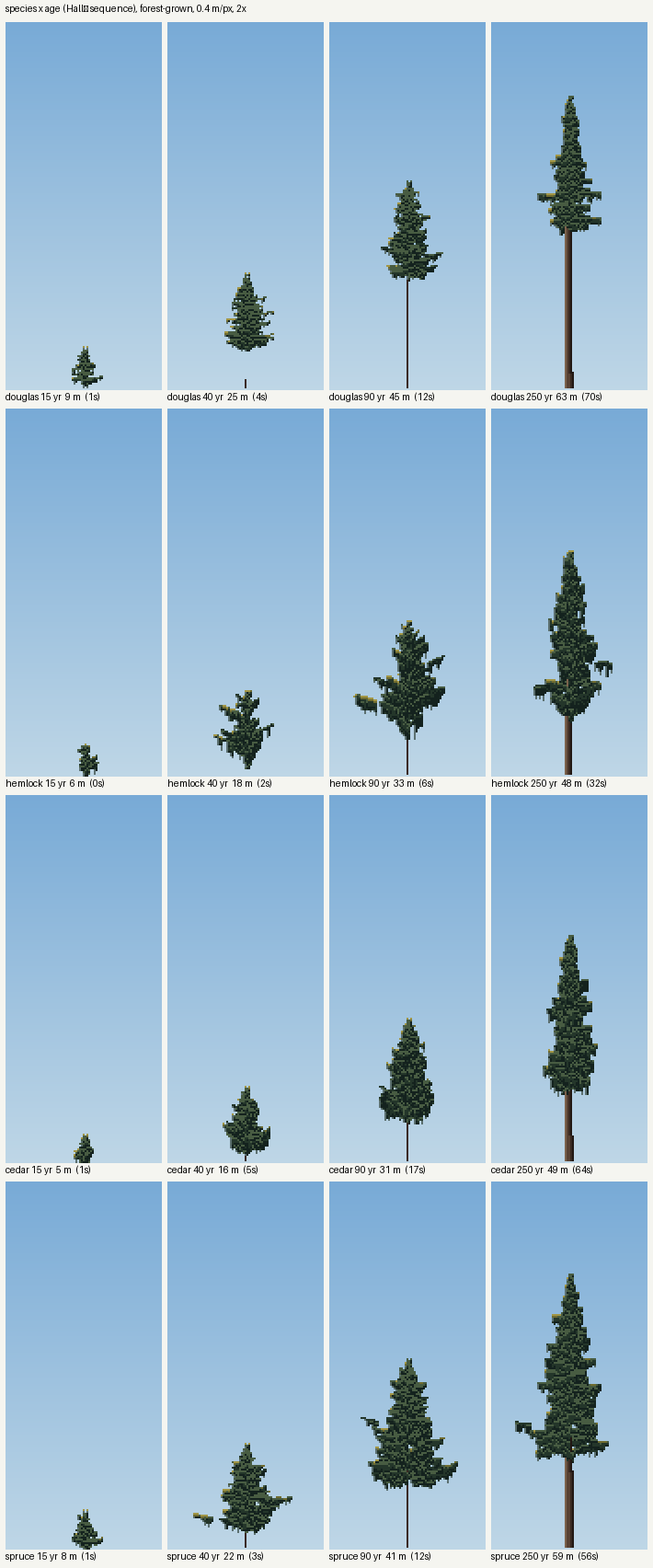 189. books/trees/work/ages_v1.png
Bash: cd ~/work/pixelart-studies/books/trees/src; sed -n 18,75p copy_fig40c.py
cd ~/work/pixelart-studies/books/trees/src; sed -n 18,75p copy_fig40c.py
# output:
..................r####r.......+r##r........
.................r+######r.,..r+#####r......
.................#+++####%#..r+++####%#.....
................r#++##%%%%%#r#+++#%%%%#r....
................##++#%%%%%r,r#++#%%%%%##....
...............r#+##%%%%%r,,r##%%%%%%%%#r...
..............r##+#%%%%%%%r,r#%%%%%%%%%##...
...........r+##+##%%%%%%%%%%%%%%r..r%%%##...
..........r+++##%%%%%%%%%%%%%r,..,r%%%%%#r..
.........r++#%%%%%%%%%%%%r,,r%%%%%%%%%%%#r..
.........#++##%%%%%%%%%%r,o,r%%%%%%%%%%%##Hh
........r+###%%%%%%%%%%%%rr%%%%%%%r.or%%%%Hh
.......r++#%%%#%%%%%%%%%%%%%%%%r..%%%%%%%%Hh
......r##%%%%#%%%%%%%%%%%%r..r%%%%%%%r,.r%%H
......#+#%%%%%#%%%%%%r.r%%r..r%%%%%%%r,,r%%H
......##%%%%%%%%%%%%r.oWw.rr.r%%%%%%%%%%%%%H
......##%%r.r%%%%%%r..Ww....Ww..r%%%%%%%%%HH
......r#%r.o.r%%%%r..Ww.....Ww...r%%%%%%%%HH
.......#%%r.r%Ww%r..Ww.....Ww.....r%%%%%%HHh
.......#%%%%%%%Wwr.Ww......Ww......r%%%%HHhh
......r#%%%r..r%Ww.Ww.....Ww........r%%HHhhh
.....r#%%%r.o.r%%WWw......Ww..Ww.....rHHhhhh
.....#%%%%%r.r%%%%Ww......Ww.Ww.....HHhhhhhh
.....##%%%%%%%%%%%Ww.....Ww.Ww.....HHhhhhhhh
.....r#%%r,r%%%%%%%Ww....WwWw.....HHhhhhhhhh
......#%%r,,r%%%%%%%Ww...WWw.....HHhhhhhhhhh
......r#%%rr%%%%%%%%%Ww..WWw....HHhhhhhhhhhh
.......r#%%%%%%%%%%%%%Ww.WWw...HHhhhhhhhhhhh
........r##%%%%%%%%%%%%WwWWw..HHhhhhhhhhhhhh
.........r#%%%%%#r..r##WWWw..HHhhhhhhhhhhhhh
..........r###r.......rWWWw.HHhhhhhhhhhhhhhh
......................WWWw.HHhhhhhhhhhhhhhhh
......................WWWwHHhhhhhhhhhhhhhhhh
......................WWWwHhhhhhhhhhhhhhhhhh
.......................WWWwhhhhhhhhhhhhhhhhh
.......................WWWwhhhhhhhhhhhhhhhhh
........................WWWwhhhhhhhhhhhhhhhh
........................WWWwhhhhhhhhhhhhhhhh
........................WWWwhhhhhhhhhhhhhhhh
.........................WWWwhhhhhhhhhhhhhhh
.........................WWWwhhhhhhhhhhhhhhh
.........................hWWWwhhhhhhhhhhhhhh
..........................hWWWwhhhhhhhhhhhhh
................HHHhhhhhhhhWWWwhhhhhhhhhhhhh
..............HHhhhhhhhhhhhWWWWwhhhhhhhhhhhh
.............Hhhhhhhhhhhhhh.WWWwhhhhhhhhhhhh
............Hhhhhhhhhhhhhhh.WWWWwhhhhhhhhhhh
...........Hhhhhhhhhhhhhhhhh.WWWWwhhhhhhhhhh
..........Hhhhhhhhhhhhhhhhhhh.WWWWwhhhhhhhhh
.........HHhhhhhhhhhhhhhhhhhhh.WWWWWwhhhhhhh
""".strip('\n').split('\n')
KEY = {'.': 0, ',': 1, 'o': 10, 'r': 2, '#': 3, '%': 4, '+': 5, 'W': 6, 'w': 7, 'h': 8, 'H': 9}
PAL = [(188, 198, 202), (156, 166, 170), (122, 130, 128), (52, 60, 56), (38, 46, 44),
(78, 88, 80), (182, 178, 164), (118, 112, 102), (92, 96, 92), (70, 76, 72),
(206, 214, 216)]
if __name__ == '__main__':
assert all(len(r) == 44 for r in ROWS), [len(r) for r in ROWS]
c = Canvas(44, len(ROWS))Bash: cd ~/work/pixelart-studies/books/trees/src; cat > copy_fig40d.py <<'E' """Cole fig. 40 v5: v4's rows, then the critic's points worked in by hand, placement by placement: - holes a
cd ~/work/pixelart-studies/books/trees/src; cat > copy_fig40d.py <<'E'
"""Cole fig. 40 v5: v4's rows, then the critic's points worked in by hand, placement by placement:
- holes as Cole lists them (p. 71): open holes of 2-15 px with the light in the middle ('o'),
veiled holes a step darker (','), a colourless rim ('r') on their lower and side margins
only (the top edge stays sharp where the upper foliage projects -- rule 5)
- local colour strongest in the middle of the big masses: '%' is the saturated green, the
outer '#' greyer (rule 4)
- the limbs carried up over the dark mass as pale lines (p. 78: 'against it the exquisite
lines of the larger boughs can be clearly traced')
- the hill edge broken into uneven steps instead of a ruled stair."""
import numpy as np
from PIL import Image
from px import Canvas
from lib import sheet
import copy_fig40c as v4
a = Canvas(44, 54); a.stamp(v4.ROWS, 0, 0, v4.KEY); A = a.a
SKY, VEIL, RIM, MASS, CORE, LIT, WOOD, WOODD, HILL, HILLD, CEN = 0, 1, 2, 3, 4, 5, 6, 7, 8, 9, 10
def hole(x, y, rows, veiled=False):
for j, row in enumerate(rows):
for i, ch in enumerate(row):
if ch == 'o': A[y + j, x + i] = VEIL if veiled else SKY
if ch == 'c': A[y + j, x + i] = VEIL if veiled else CEN
# rims: foliage pixels left/right/below a hole pixel, not above it
for j, row in enumerate(rows):
for i, ch in enumerate(row):
if ch in 'oc':
for dx, dy in ((-1, 0), (1, 0), (0, 1)):
X, Y = x + i + dx, y + j + dy
if A[Y, X] in (MASS, CORE, LIT):
A[Y, X] = RIM
hole(29, 12, [".oo..", "occoo", ".ooo."])
hole(34, 15, ["oo.", "ooo"])
hole(37, 18, [".o", "oo", "o."], veiled=True)
hole(9, 20, [".oo.", "occo", "ooo.", ".o.."])
hole(12, 25, ["oo", ".oo"])
hole(8, 28, ["o.", "oo"], veiled=True)
hole(20, 7, ["o"], veiled=True)
hole(16, 15, [".o", "oo"])
hole(35, 9, ["oo"], veiled=True)
hole(14, 31, ["oo", "o."])
# local colour: the big masses' middles saturated (CORE), their outer parts greyer (MASS)
from scipy import ndimage as ndi
fol = np.isin(A, [MASS, CORE])
d = ndi.distance_transform_edt(fol)
A[fol & (d >= 3)] = CORE
A[fol & (d < 3) & (A == CORE)] = MASS
# lit upper planes kept
for x, y, n in [(18, 4, 3), (31, 4, 4), (12, 11, 2), (9, 14, 2), (7, 18, 2)]:
for i in range(n):
if A[y, x + i] in (MASS, CORE): A[y, x + i] = LIT
# limbs over the mass: pale 1-px lines continuing the main limbs up into the crown
for pts in [[(21, 18), (20, 17), (19, 16), (19, 15), (18, 14), (18, 13), (17, 12)],
[(27, 18), (27, 17), (28, 16), (28, 15), (29, 14)],
[(31, 20), (32, 19), (33, 18), (33, 17)],
[(13, 24), (12, 23), (11, 22) if False else (13, 23)]]:
for (x, y) in pts:
if A[y, x] in (MASS, CORE, RIM): A[y, x] = WOOD
# hill edge: break the 45-degree stair into uneven steps (2,1,3,1,2 ...)
H, W = A.shape
for y in range(14, 38):
row = A[y]
xs = np.where(np.isin(row, [HILL, HILLD]))[0]
if len(xs):
x0 = xs[0]
if (y * 7) % 5 == 0 and x0 > 1: A[y, x0 - 1] = HILLD
if (y * 3) % 4 == 0: A[y, x0] = SKY if A[y, x0 - 1] == SKY else A[y, x0]
PAL = list(v4.PAL)
PAL[4] = (42, 66, 46) # core: the saturated local colour
PAL[3] = (58, 64, 60) # outer mass: greyer
PAL[1] = (160, 170, 174) # veiled sky
if __name__ == '__main__':
ref = Image.open('../copies/ref_fig40.png').convert('RGB').resize((44 * 5, 54 * 5))
sheet([ref, a.img(PAL, 5), a.img(PAL, 2)], 3, labels=['Cole fig. 40', 'hand copy v5, 5x', '2x']).save('../copies/fig40_v5.png')
E
python3 copy_fig40d.py
# output:
(Bash completed with no output)Read: books/trees/copies/fig40_v5.png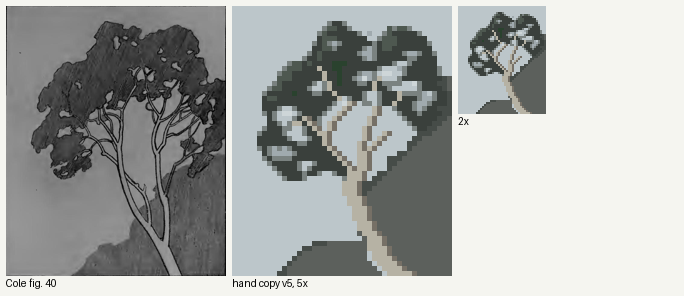 190. books/trees/copies/fig40_v5.png
Bash: cd ~/work/pixelart-studies/books/trees/src; cat > gridview.py <<'E' import sys, numpy as np from PIL import Image, ImageDraw def grid(im, k=10, every=5): im = im.convert('RGB')
cd ~/work/pixelart-studies/books/trees/src; cat > gridview.py <<'E'
import sys, numpy as np
from PIL import Image, ImageDraw
def grid(im, k=10, every=5):
im = im.convert('RGB'); W, H = im.size
big = im.resize((W * k, H * k), Image.NEAREST); d = ImageDraw.Draw(big)
for x in range(0, W, every):
d.line([(x * k, 0), (x * k, H * k)], fill=(255, 0, 0) if x % 10 == 0 else (255, 160, 160))
if x % 10 == 0: d.text((x * k + 2, 2), str(x), fill=(255, 0, 0))
for y in range(0, H, every):
d.line([(0, y * k), (W * k, y * k)], fill=(255, 0, 0) if y % 10 == 0 else (255, 160, 160))
if y % 10 == 0: d.text((2, y * k + 2), str(y), fill=(255, 0, 0))
return big
if __name__ == '__main__':
grid(Image.open(sys.argv[1]), int(sys.argv[3]) if len(sys.argv) > 3 else 10).save(sys.argv[2])
E
python3 - <<'E'
import colepx as cp, numpy as np
from PIL import Image
from gridview import grid
P='../refs/Tsuga_heterophylla_tree_habit/commons_Tsuga_heterophylla_Stanley_Park_Vancouver_jpg_c32773e6.jpg'
rgb=cp.downsample(P,60,crop=(0,0,960,1100))
mat,step=cp.run(rgb, min_lit=5)
np.save('../work/hem_mat.npy',mat); np.save('../work/hem_step.npy',step)
out=cp.to_rgb(mat,step,cp.palette('conifer'),rgb=rgb)
Image.fromarray(out).save('../work/hem_under.png')
grid(Image.fromarray(out),10).save('../work/hem_under_grid.png')
print(out.shape)
E
# output:
(69, 60, 3)Read: books/trees/work/hem_under_grid.png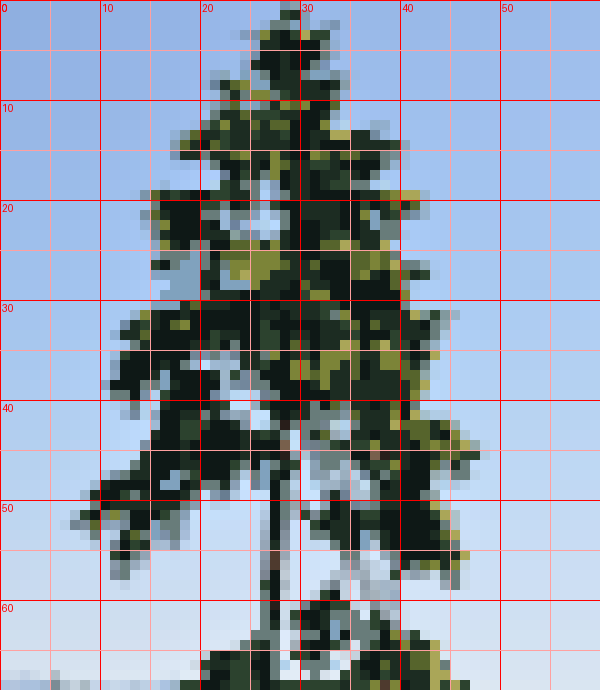 191. books/trees/work/hem_under_grid.png
Bash: cd ~/work/pixelart-studies/books/trees/src; python3 - <<'E' s=open('colepx.py').read() s=s.replace("dome=0.0, sun_dx=-1, wood_mask=None, bg_hole=False):","dome=0.0, sun_dx=-1, wood
cd ~/work/pixelart-studies/books/trees/src; python3 - <<'E'
s=open('colepx.py').read()
s=s.replace("dome=0.0, sun_dx=-1, wood_mask=None, bg_hole=False):","dome=0.0, sun_dx=-1, wood_mask=None, bg_hole=False, lit_tops=0):")
b=s.index(" # 4. rims")
s=s[:b]+''' # 3b. lit_tops: light rides the tops of the sprays (Cole p. 115 'tops and edges'; the
# conifer student's tier-top rule). A lit pixel keeps its light only within lit_tops px of
# a clump top (sky or the shadow family above); deeper ones drop to the top shadow step.
if lit_tops:
litm = F & (step >= 3) & (step <= 5)
top = np.zeros_like(F); top[1:] = ~((mat[:-1] == FOL) & (step[:-1] >= 3) & (step[:-1] <= 5))
top &= litm
keep = top.copy()
for k in range(1, lit_tops):
sh = np.zeros_like(F); sh[k:] = top[:-k]
keep |= sh & litm
step[litm & ~keep] = 2
'''+s[b:]
open('colepx.py','w').write(s)
E
cat > study_hemlock.py <<'E'
"""Hand study: western hemlock (Stanley Park photo), 60x69 px (~0.55 m/px).
Underpainting: the photo box-downsampled, with Cole's rules applied (colepx). Then painted over
by hand, each edit from the book or the naturalist:
- the nodding leader (naturalist: 'every hemlock's tip nods over like a bent fishing rod';
Halle p. 246, Tsuga's drooping leader): a 1-px clean run arching over to the right
- light only on spray tops (Cole p. 115), 1-2 px deep
- the trunk: 2 px with a lit left edge below the crown, 1 px inside it, lost behind the
sprays (Cole p. 49: the bole tied to the ground; p. 45 thin forms against light thin)
- drooping curtains at the lower boughs kept dark and strand-like (Cole p. 70)."""
import numpy as np
from PIL import Image
import colepx as cp
from lib import sheet, up
P = '../refs/Tsuga_heterophylla_tree_habit/commons_Tsuga_heterophylla_Stanley_Park_Vancouver_jpg_c32773e6.jpg'
rgb = cp.downsample(P, 60, crop=(0, 0, 960, 1100))
mat, step = cp.run(rgb, min_lit=4, lit_tops=2)
FOL, WOOD, SKY = cp.FOL, cp.WOOD, cp.SKY
def put(pts, m, s):
for x, y in pts:
mat[y, x] = m; step[y, x] = s
# leader: clear the top, then draw the arching nod
for y in range(0, 5):
for x in range(25, 34):
if mat[y, x] == FOL and y < 3: mat[y, x] = SKY; step[y, x] = 0
put([(28, 5), (28, 4), (28, 3), (29, 2), (30, 1), (31, 1), (32, 2)], FOL, 0)
put([(27, 5), (29, 5), (29, 4)], FOL, 1)
put([(29, 3)], FOL, 6)
# trunk below the crown: rows 44-68, x 27-28, lit left edge
for y in range(44, 69):
if y > 60 and mat[y, 26] == FOL and mat[y, 29] == FOL:
continue
if mat[y, 27] != FOL or y > 50:
mat[y, 27] = WOOD; step[y, 27] = 2
if mat[y, 28] != FOL or y > 50:
mat[y, 28] = WOOD; step[y, 28] = 0
if y > 58: mat[y, 26] = WOOD; step[y, 26] = 1 if mat[y, 26] != FOL else step[y, 26]
# inside the crown: the trunk seen through gaps as a 1-px dark wood line
for y in range(20, 44):
if mat[y, 28] == SKY: mat[y, 28] = WOOD; step[y, 28] = 0
out = cp.to_rgb(mat, step, cp.palette('conifer'), rgb=rgb)
Image.fromarray(out).save('../work/hem_study_1x.png')
ph = Image.open(P).crop((0, 0, 960, 1100)).resize((360, 412))
sheet([ph, up(Image.fromarray(rgb.astype(np.uint8)), 6), up(out, 6), up(out, 2)], 4,
labels=['photo', 'box 60 px', 'study: Cole + hand, 6x', '2x']).save('../work/hem_study.png')
E
python3 study_hemlock.py
# output:
(Bash completed with no output)Read: books/trees/work/hem_study.png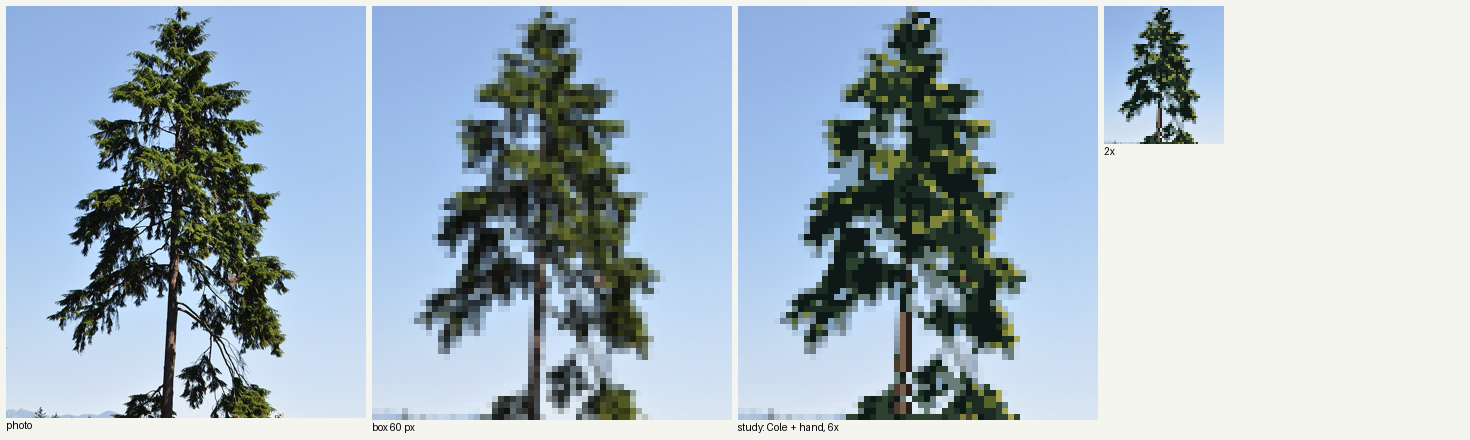 192. books/trees/work/hem_study.png
Write: books/trees/src/marks.py
"""Species marks: foliage painted as small hand-designed pixel glyphs laid top-down over an
underpainting (a mask + a lit/shadow plan), so the texture carries the species' line
(Cole ch. VI: 'one type of line is retained by each'; p. 66-67: 'the shadows between the foliage
may alone betray the species ... forming lines consistently in one direction').
Glyph legend: t = top edge (takes the light), b = body, d = dark gap/underside, . = leave.
Glyphs are placed top to bottom; each new glyph overlaps the hanging part of those above, so
the top edges (the tops of the sprays) stay visible -- the tier-top light.
Anti-stamp measures: several variants per species, mirrored on the sun side rule, 1-px jitter,
and placement by blue-noise (min distance) not a grid.
"""
import numpy as np
GLYPHS = {
# hemlock: pendulous lacy sprays -- a short top that arches down both sides, strands below
'hemlock': [
[".tt..",
"tbbt.",
"b.db.",
"b..b.",
"...b."],
["..ttt.",
".tbbbt",
"tb.d.b",
"b..d..",
"b....."],
[".ttt",
"tbdb",
"b.b.",
"..b."],
["tt..",
"bbt.",
"d.b.",
"..b."],
],
# douglas-fir: bottle-brush tufts on near-level limbs -- a flat-topped wedge, ragged below
'douglas': [
["..ttt..",
".tbbbbt",
"tbbdbb.",
".b.d.b."],
[".ttt.",
"tbbbt",
".bdb.",
"..b.."],
["ttt..",
"bbbtt",
".dbb.",
".b..."],
],
# sitka spruce: stiff level sprays with a pendulous curtain under them
'spruce': [
["tttt..",
"bbbbtt",
"b.b.b.",
"b.b..."],
[".tttt",
"tbbbb",
".b.b.",
".b.b."],
],
# redcedar: flat fans that droop then turn up at the tip (the J)
'cedar': [
["......t",
"tt...tb",
"bbtttb.",
".bbbb..",
"..b.b.."],
["t.....",
"bt..tt",
".bttb.",
"..bb..",
"..b..."],
],
# broadleaf clump (oak, maple, madrone): a rounded cell, lit cap, dark underside
'broad': [
[".tt.",
"tbbt",
"bbbb",
".dd."],
[".ttt.",
"tbbbt",
"bbbbb",
".ddd."],
["tt.",
"bbt",
"dbb",
".d."],
],
# garry oak: tufted, star-shaped projections (Cole p. 66, 158)
'oak': [
["..t..",
".tbt.",
"tbbbt",
".bdb.",
"..d.."],
[".t.t.",
"tbtbt",
"bbbbb",
".d.d."],
],
}
def place(mask, lit, glyphs, spacing=2.5, seed=0, sun_side=-1, fill_under=True,
steps=dict(top_lit=5, top_lit2=4, top_sh=3, body_lit=3, body_sh=1, dark=0, body_mid=2)):
"""mask: bool foliage area; lit: bool (lit family) plan. Returns step canvas (uint8, 255 =
not foliage) painted with glyphs."""
H, W = mask.shape
rng = np.random.default_rng(seed)
out = np.full((H, W), 255, np.uint8)
if fill_under:
# a dark base inside the mask so the gaps between marks read as recess, not sky
out[mask] = steps['dark']
# blue-noise candidate points inside the mask, top to bottom
ys, xs = np.where(mask)
order = np.lexsort((rng.random(len(ys)), ys))
taken = np.zeros((H, W), bool)
r = int(np.ceil(spacing))
pts = []
for i in order:
y, x = ys[i], xs[i]
y0, y1, x0, x1 = max(0, y - r), min(H, y + r + 1), max(0, x - r), min(W, x + r + 1)
if taken[y0:y1, x0:x1].any():
continue
yy, xx = np.ogrid[y0:y1, x0:x1]
taken[y0:y1, x0:x1] |= ((yy - y) ** 2 + (xx - x) ** 2) <= spacing ** 2
pts.append((y, x))
for (y, x) in pts:
g = glyphs[rng.integers(len(glyphs))]
if rng.random() < 0.5:
g = [row[::-1] for row in g]
gh, gw = len(g), len(g[0])
oy, ox = y - 1, x - gw // 2 + int(rng.integers(-1, 2))
L = lit[y, x]
for j, row in enumerate(g):
for i, ch in enumerate(row):
Y, X = oy + j, ox + i
if ch == '.' or not (0 <= Y < H and 0 <= X < W):
continue
if not mask[Y, X] and ch != 't':
continue
if not mask[Y, X] and ch == 't' and not mask[min(H - 1, Y + 1), X]:
continue
if ch == 't':
v = (steps['top_lit'] if (X - x) * sun_side >= 0 else steps['top_lit2']) if L else steps['top_sh']
elif ch == 'b':
v = steps['body_lit'] if L else steps['body_sh']
else:
v = steps['dark']
out[Y, X] = v
return out
Bash: cd ~/work/pixelart-studies/books/trees/src; cat > t_marks_hem.py <<'E' import numpy as np from PIL import Image import colepx as cp, marks from lib import sheet, up P='../refs/Tsug
cd ~/work/pixelart-studies/books/trees/src; cat > t_marks_hem.py <<'E'
import numpy as np
from PIL import Image
import colepx as cp, marks
from lib import sheet, up
P='../refs/Tsuga_heterophylla_tree_habit/commons_Tsuga_heterophylla_Stanley_Park_Vancouver_jpg_c32773e6.jpg'
rgb=cp.downsample(P,60,crop=(0,0,960,1100))
mat,step=cp.run(rgb, min_lit=4)
F=mat==cp.FOL
lit=F&(step>=3)&(step<=5)
from scipy import ndimage as ndi
litp=ndi.binary_dilation(lit)&F # the plan is regions, not pixels
cells=[up(Image.fromarray(rgb.astype(np.uint8)),6)]
for sp in (2.0,2.5,3.0):
s=marks.place(F, litp, marks.GLYPHS['hemlock'], spacing=sp, seed=1)
m2=mat.copy(); st=step.copy()
fm=s!=255
m2[fm]=cp.FOL; st[fm]=s[fm]
# rims kept where the underpainting had them at the outer margin
out=cp.to_rgb(m2,st,cp.palette('conifer'),rgb=rgb)
cells.append(up(out,6))
sheet(cells,4,labels=['box','marks sp 2.0','2.5','3.0']).save('../work/hem_marks.png')
E
python3 t_marks_hem.py
# output:
(Bash completed with no output)Read: books/trees/work/hem_marks.png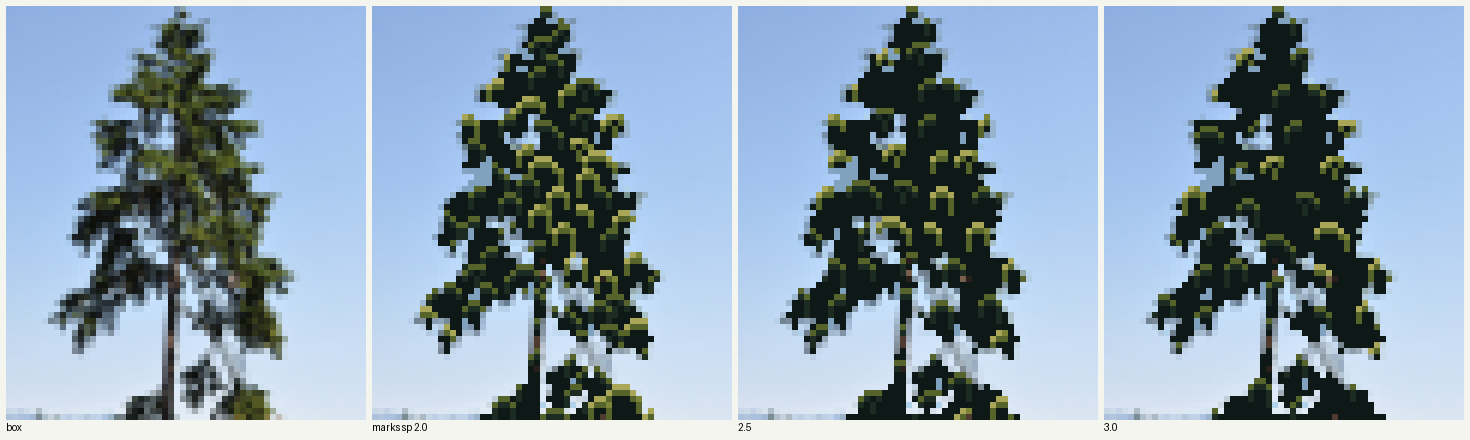 193. books/trees/work/hem_marks.png
Bash: cd ~/work/pixelart-studies/books/trees/src; python3 - <<'E' s=open('marks.py').read() s=s.replace("steps=dict(top_lit=5, top_lit2=4, top_sh=3, body_lit=3, body_sh=1, dark=0, body_m
cd ~/work/pixelart-studies/books/trees/src; python3 - <<'E'
s=open('marks.py').read()
s=s.replace("steps=dict(top_lit=5, top_lit2=4, top_sh=3, body_lit=3, body_sh=1, dark=0, body_mid=2)","steps=dict(top_lit=5, top_lit2=4, top_sh=2, body_lit=3, body_sh=1, dark=0, body_mid=2)")
s=s.replace(""" 'hemlock': [
[".tt..",
"tbbt.",
"b.db.",
"b..b.",
"...b."],
["..ttt.",
".tbbbt",
"tb.d.b",
"b..d..",
"b....."],
[".ttt",
"tbdb",
"b.b.",
"..b."],
["tt..",
"bbt.",
"d.b.",
"..b."],
],""",""" 'hemlock': [
[".tt...",
"tbbtt.",
"b.dbbt",
"b..d.b",
".....b"],
["..ttt.",
".tbbbt",
"tb.d.b",
"b..d..",
"b....."],
["ttt.",
"bbdt",
"b.bb",
"...b"],
[".tt",
"tbb",
"bdb",
"b.."],
["tttt..",
"bbbbt.",
".d.bbt",
"....b."],
],""")
open('marks.py','w').write(s)
c=open('colepx.py').read()
c=c.replace(""" fol = [(14, 24, 22), (28, 44, 34), (44, 66, 46), (86, 100, 44), (124, 132, 56), (170, 166, 88),
(104, 124, 122)]""",""" fol = [(12, 22, 22), (30, 46, 40), (62, 84, 78), (80, 94, 42), (122, 130, 54), (170, 164, 86),
(104, 124, 122)]""")
open('colepx.py','w').write(c)
t=open('t_marks_hem.py').read().replace("for sp in (2.0,2.5,3.0):","for sp in (2.2,2.6,3.0):")
t+="\nImage.fromarray(out).crop((12,15,52,55)).resize((320,320),Image.NEAREST).save('../work/hem_marks_zoom.png')\n"
open('t_marks_hem.py','w').write(t)
E
python3 t_marks_hem.py
# output:
(Bash completed with no output)Read: books/trees/work/hem_marks.png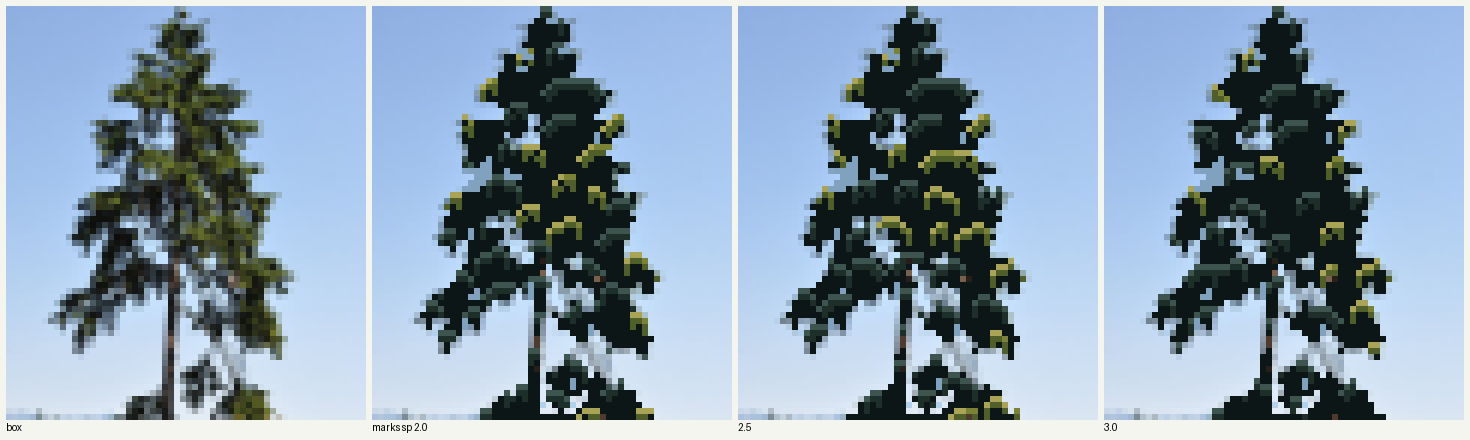 194. books/trees/work/hem_marks.png
Bash: cd ~/work/pixelart-studies/books/trees/src; python3 - <<'E' t=open('t_marks_hem.py').read() t=t.replace("lit=F&(step>=3)&(step<=5)","L=cp.lum(rgb); lit=F&(L>np.quantile(L[F],0.55))
cd ~/work/pixelart-studies/books/trees/src; python3 - <<'E'
t=open('t_marks_hem.py').read()
t=t.replace("lit=F&(step>=3)&(step<=5)","L=cp.lum(rgb); lit=F&(L>np.quantile(L[F],0.55))&(rgb[...,1]>rgb[...,2]+5)\nlit=ndi.binary_opening(lit|ndi.binary_closing(lit))")
t=t.replace("from scipy import ndimage as ndi\nlitp","litp")
t=t.replace("import colepx as cp, marks","import colepx as cp, marks\nfrom scipy import ndimage as ndi")
open('t_marks_hem.py','w').write(t)
E
python3 t_marks_hem.py
# output:
(Bash completed with no output)Read: books/trees/work/hem_marks.png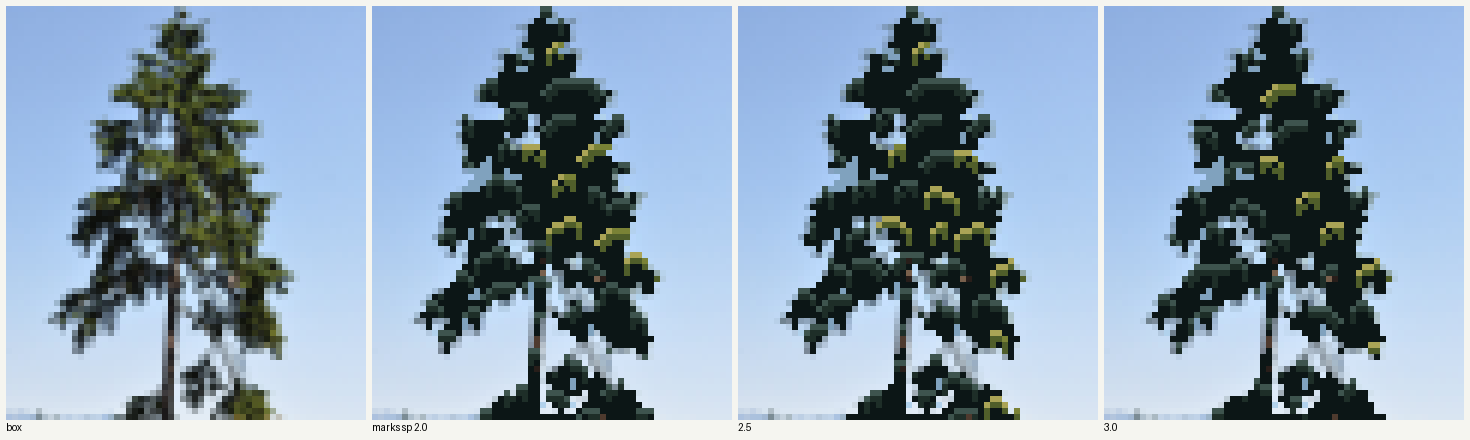 195. books/trees/work/hem_marks.png
Bash: cd ~/work/pixelart-studies/books/trees/src; sed -n 1,20p t_marks_hem.py; python3 -c " import colepx as cp, numpy as np P='../refs/Tsuga_heterophylla_tree_habit/commons_Tsuga_hetero
cd ~/work/pixelart-studies/books/trees/src; sed -n 1,20p t_marks_hem.py; python3 -c "
import colepx as cp, numpy as np
P='../refs/Tsuga_heterophylla_tree_habit/commons_Tsuga_heterophylla_Stanley_Park_Vancouver_jpg_c32773e6.jpg'
rgb=cp.downsample(P,60,crop=(0,0,960,1100)); mat,step=cp.run(rgb); F=mat==1; L=cp.lum(rgb)
q=np.quantile(L[F],0.55); print(q, F.sum(), (F&(L>q)).sum(), (F&(L>q)&(rgb[...,1]>rgb[...,2]+5)).sum())"
# output:
import numpy as np
from PIL import Image
import colepx as cp, marks
from scipy import ndimage as ndi
from lib import sheet, up
P='../refs/Tsuga_heterophylla_tree_habit/commons_Tsuga_heterophylla_Stanley_Park_Vancouver_jpg_c32773e6.jpg'
rgb=cp.downsample(P,60,crop=(0,0,960,1100))
mat,step=cp.run(rgb, min_lit=4)
F=mat==cp.FOL
L=cp.lum(rgb); lit=F&(L>np.quantile(L[F],0.55))&(rgb[...,1]>rgb[...,2]+5)
lit=ndi.binary_opening(lit|ndi.binary_closing(lit))
litp=ndi.binary_dilation(lit)&F # the plan is regions, not pixels
cells=[up(Image.fromarray(rgb.astype(np.uint8)),6)]
for sp in (2.2,2.6,3.0):
s=marks.place(F, litp, marks.GLYPHS['hemlock'], spacing=sp, seed=1)
m2=mat.copy(); st=step.copy()
fm=s!=255
m2[fm]=cp.FOL; st[fm]=s[fm]
# rims kept where the underpainting had them at the outer margin
out=cp.to_rgb(m2,st,cp.palette('conifer'),rgb=rgb)
66.0715 1234 555 257Bash: cd ~/work/pixelart-studies/books/trees/src; sed -i '' 's/lit=F&(L>np.quantile(L\[F\],0.55))&(rgb\[...,1\]>rgb\[...,2\]+5)/lit=F\&(L>np.quantile(L[F],0.4))\&(rgb[...,1]>rgb[...,2]+2
cd ~/work/pixelart-studies/books/trees/src; sed -i '' 's/lit=F&(L>np.quantile(L\[F\],0.55))&(rgb\[...,1\]>rgb\[...,2\]+5)/lit=F\&(L>np.quantile(L[F],0.4))\&(rgb[...,1]>rgb[...,2]+2)/; s/lit=ndi.binary_opening(lit|ndi.binary_closing(lit))/lit=ndi.binary_closing(lit)\&F/' t_marks_hem.py; python3 t_marks_hem.py # output: (Bash completed with no output)
Read: books/trees/work/hem_marks.png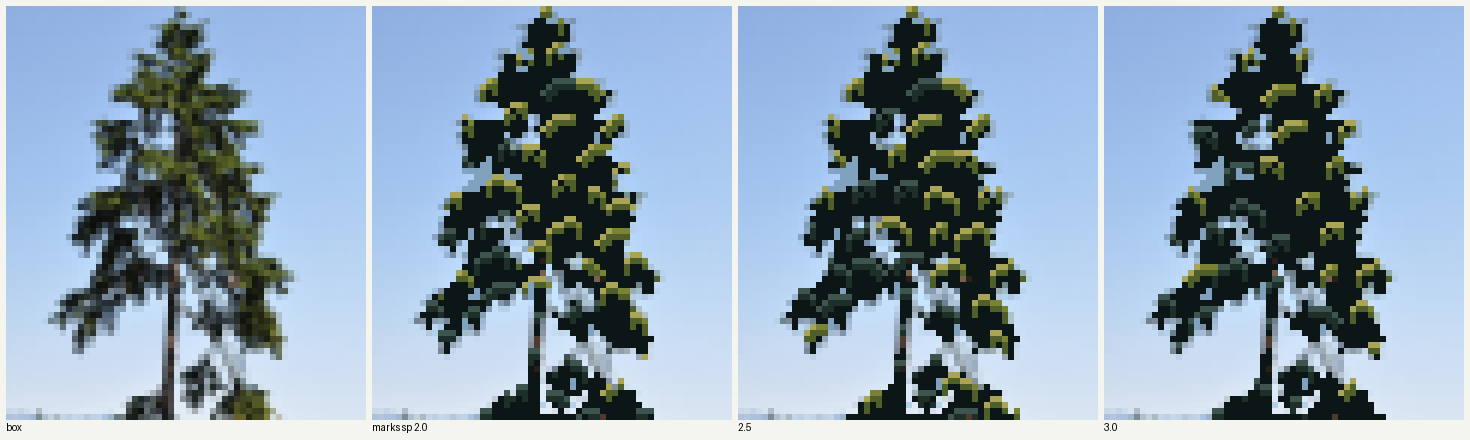 196. books/trees/work/hem_marks.png
Bash: cd ~/work/pixelart-studies/books/trees/src; python3 - <<'E' s=open('marks.py').read() s=s.replace(""" out[mask] = steps['dark']""",""" out[mask] = steps['dark']
cd ~/work/pixelart-studies/books/trees/src; python3 - <<'E'
s=open('marks.py').read()
s=s.replace(""" out[mask] = steps['dark']""",""" out[mask] = steps['dark']
out[mask & lit] = steps['body_sh'] # recesses in the lit part of the crown are less deep""")
open('marks.py','w').write(s)
c=open('colepx.py').read()
c=c.replace("fol = [(12, 22, 22), (30, 46, 40), (62, 84, 78),","fol = [(12, 22, 22), (34, 54, 44), (66, 88, 80),")
open('colepx.py','w').write(c)
E
python3 t_marks_hem.py
# output:
(Bash completed with no output)Read: books/trees/work/hem_marks_zoom.png 197. books/trees/work/hem_marks_zoom.png
Bash: cd ~/work/pixelart-studies/books/trees/src; cat >> marks.py <<'E' # ---- bough-arc marks: a spray drawn as a clean-run arc, drooping away from the trunk ---------- ARCS = { #
cd ~/work/pixelart-studies/books/trees/src; cat >> marks.py <<'E'
# ---- bough-arc marks: a spray drawn as a clean-run arc, drooping away from the trunk ----------
ARCS = {
# run lengths along the arc, vertical step after each run (+ = down), strand rule
'hemlock': dict(runs=[(2, 2, 1, 1), (1, 2, 2, 1), (3, 2, 1), (2, 1, 1, 1)], dys=(1, 1, 1, 1),
lead=(-1,), strands=(0.45, 1, 3), tufts=0.0),
'douglas': dict(runs=[(3, 3), (2, 3, 1), (4, 2), (3, 2, 1)], dys=(0, 0, 1),
lead=(-1, 0), strands=(0.25, 1, 2), tufts=0.35),
'spruce': dict(runs=[(4, 2), (3, 3), (5, 1), (2, 4)], dys=(0, 1), lead=(0,),
strands=(0.55, 2, 4), tufts=0.1),
'cedar': dict(runs=[(2, 2, 2), (2, 3, 1), (1, 2, 2, 1)], dys=(1, 0, -1, -1), lead=(0,),
strands=(0.5, 1, 3), tufts=0.0),
'fir': dict(runs=[(2, 1), (1, 2), (2, 2)], dys=(0, 1), lead=(0,), strands=(0.15, 1, 1), tufts=0.2),
}
def place_arcs(mask, lit, kind, trunk_x, spacing=2.6, seed=0, sun_side=-1,
steps=dict(top_lit=5, top_lit2=4, top_sh=2, body_lit=3, body_sh=1, dark=0)):
A = ARCS[kind]
H, W = mask.shape
rng = np.random.default_rng(seed)
out = np.full((H, W), 255, np.uint8)
out[mask] = steps['dark']
out[mask & lit] = steps['body_sh']
ys, xs = np.where(mask)
order = np.lexsort((rng.random(len(ys)), ys))
taken = np.zeros((H, W), bool)
r = int(np.ceil(spacing))
for i in order:
y, x = ys[i], xs[i]
y0, y1, x0, x1 = max(0, y - r), min(H, y + r + 1), max(0, x - r), min(W, x + r + 1)
if taken[y0:y1, x0:x1].any():
continue
yy, xx = np.ogrid[y0:y1, x0:x1]
taken[y0:y1, x0:x1] |= (((yy - y) * 1.6) ** 2 + (xx - x) ** 2) <= spacing ** 2
d = 1 if x >= trunk_x else -1 # droop away from the trunk
runs = A['runs'][rng.integers(len(A['runs']))]
L = lit[y, x]
px_, py_ = x - d * int(rng.integers(0, 2)), y + int(rng.choice(A['lead']))
pts = []
for k, n in enumerate(runs):
for _ in range(n):
pts.append((px_, py_)); px_ += d
py_ += A['dys'][min(k, len(A['dys']) - 1)]
for j, (X, Y) in enumerate(pts):
if not (0 <= X < W and 0 <= Y < H) or not mask[Y, X]:
continue
sunny = L and ((X - trunk_x) * sun_side >= -2)
out[Y, X] = (steps['top_lit'] if sunny else steps['top_lit2']) if L else steps['top_sh']
# body under the top edge
if Y + 1 < H and mask[Y + 1, X]:
out[Y + 1, X] = steps['body_lit'] if L else steps['body_sh']
# hanging strands (pendulous branchlets) at irregular intervals
p, lo, hi = A['strands']
if rng.random() < p and j > 0:
for s in range(2, 2 + int(rng.integers(lo, hi + 1))):
if Y + s < H and mask[Y + s, X]:
out[Y + s, X] = steps['body_lit'] if (L and s == 2) else steps['body_sh']
# tufts: a lit pixel standing up out of the top (bottle-brush)
if A['tufts'] and rng.random() < A['tufts'] and Y - 1 >= 0:
out[Y - 1, X] = out[Y, X]
# the gap under the body stays dark: the recess line that separates tiers
return out
E
python3 - <<'E'
t=open('~/work/pixelart-studies/books/trees/src/t_marks_hem.py').read()
t=t.replace(" s=marks.place(F, litp, marks.GLYPHS['hemlock'], spacing=sp, seed=1)"," s=marks.place_arcs(F, litp, 'hemlock', 28, spacing=sp, seed=1)")
open('~/work/pixelart-studies/books/trees/src/t_marks_hem.py','w').write(t)
E
cd ~/work/pixelart-studies/books/trees/src && python3 t_marks_hem.py
# output:
(Bash completed with no output)Read: books/trees/work/hem_marks.png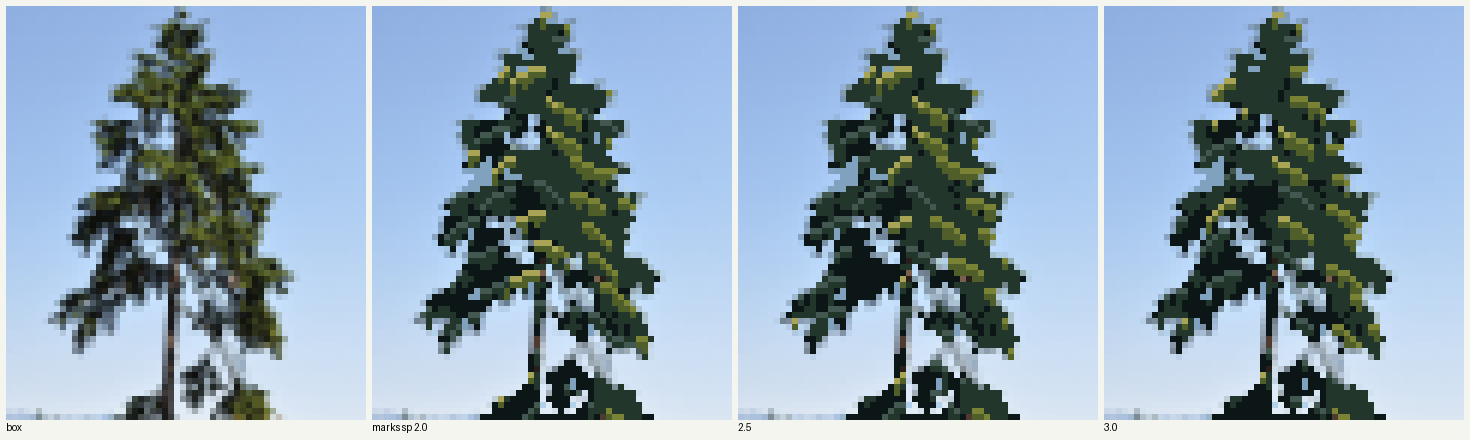 198. books/trees/work/hem_marks.png
Bash: cd ~/work/pixelart-studies/books/trees/src; python3 - <<'E' s=open('marks.py').read() s=s.replace("'hemlock': dict(runs=[(2, 2, 1, 1), (1, 2, 2, 1), (3, 2, 1), (2, 1, 1, 1)], dys=(
cd ~/work/pixelart-studies/books/trees/src; python3 - <<'E'
s=open('marks.py').read()
s=s.replace("'hemlock': dict(runs=[(2, 2, 1, 1), (1, 2, 2, 1), (3, 2, 1), (2, 1, 1, 1)], dys=(1, 1, 1, 1),\n lead=(-1,), strands=(0.45, 1, 3), tufts=0.0),",
"'hemlock': dict(runs=[(3, 2, 1, 1), (2, 3, 1), (4, 2, 1), (2, 2, 1, 1)], dys=(0, 1, 1, 1),\n lead=(-1, 0), strands=(0.5, 1, 3), tufts=0.0),")
open('marks.py','w').write(s)
t=open('t_marks_hem.py').read().replace("'hemlock', 28, spacing=sp, seed=1)","'hemlock', 28, spacing=sp, seed=1, sun_side=1)")
open('t_marks_hem.py','w').write(t)
E
python3 t_marks_hem.py
# output:
(Bash completed with no output)Read: books/trees/work/hem_marks.png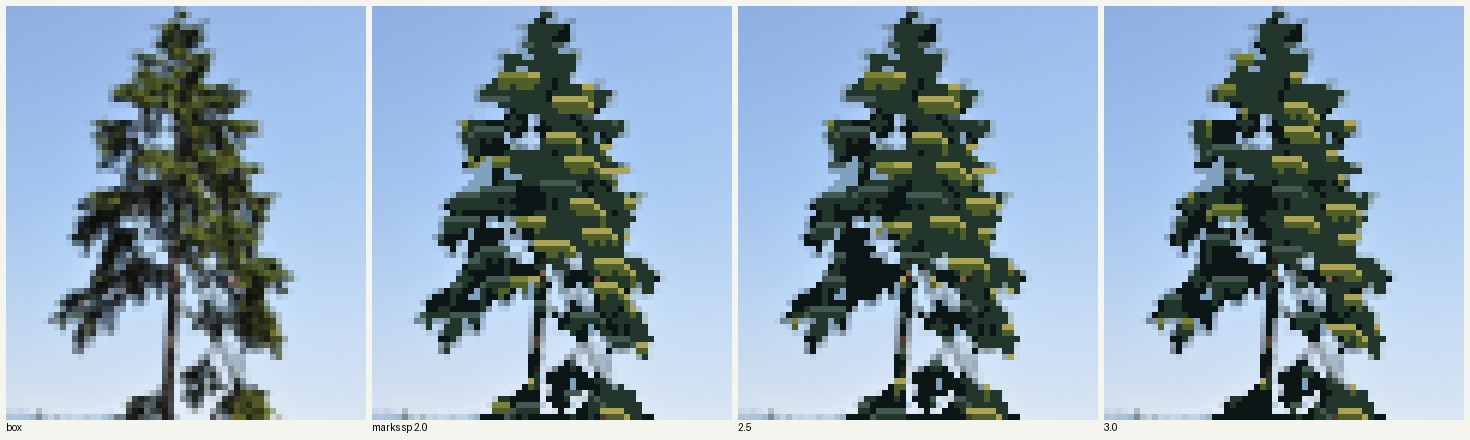 199. books/trees/work/hem_marks.png
Bash: cd ~/work/pixelart-studies/books/trees/src; python3 - <<'E' s=open('marks.py').read() s=s.replace(""" pts = [] for k, n in enumerate(runs): for _ in rang
cd ~/work/pixelart-studies/books/trees/src; python3 - <<'E'
s=open('marks.py').read()
s=s.replace(""" pts = []
for k, n in enumerate(runs):
for _ in range(n):
pts.append((px_, py_)); px_ += d
py_ += A['dys'][min(k, len(A['dys']) - 1)]
for j, (X, Y) in enumerate(pts):
if not (0 <= X < W and 0 <= Y < H) or not mask[Y, X]:
continue
sunny = L and ((X - trunk_x) * sun_side >= -2)
out[Y, X] = (steps['top_lit'] if sunny else steps['top_lit2']) if L else steps['top_sh']""",""" pts = []
droop = 0
for k, n in enumerate(runs):
for _ in range(n):
pts.append((px_, py_, droop)); px_ += d
dyk = A['dys'][min(k, len(A['dys']) - 1)]
py_ += dyk
droop += max(0, dyk)
for j, (X, Y, dr) in enumerate(pts):
if not (0 <= X < W and 0 <= Y < H) or not mask[Y, X]:
continue
sunny = L and ((X - trunk_x) * sun_side >= -2)
top = (steps['top_lit'] if sunny else steps['top_lit2']) if L else steps['top_sh']
# the light sits on the arching shoulder of the spray; the drooping end turns away
# from the sky and takes the body tone (Cole p. 70: hanging leaves darker)
if dr >= 2:
top = steps['body_lit'] if L else steps['body_sh']
elif dr == 1 and L:
top = steps['top_lit2']
out[Y, X] = top""")
s=s.replace("'hemlock': dict(runs=[(3, 2, 1, 1), (2, 3, 1), (4, 2, 1), (2, 2, 1, 1)], dys=(0, 1, 1, 1),","'hemlock': dict(runs=[(2, 2, 1, 1), (3, 1, 1, 1), (2, 1, 2, 1), (1, 2, 1, 1)], dys=(0, 1, 1, 1),")
open('marks.py','w').write(s)
E
python3 t_marks_hem.py
# output:
(Bash completed with no output)Read: books/trees/work/hem_marks.png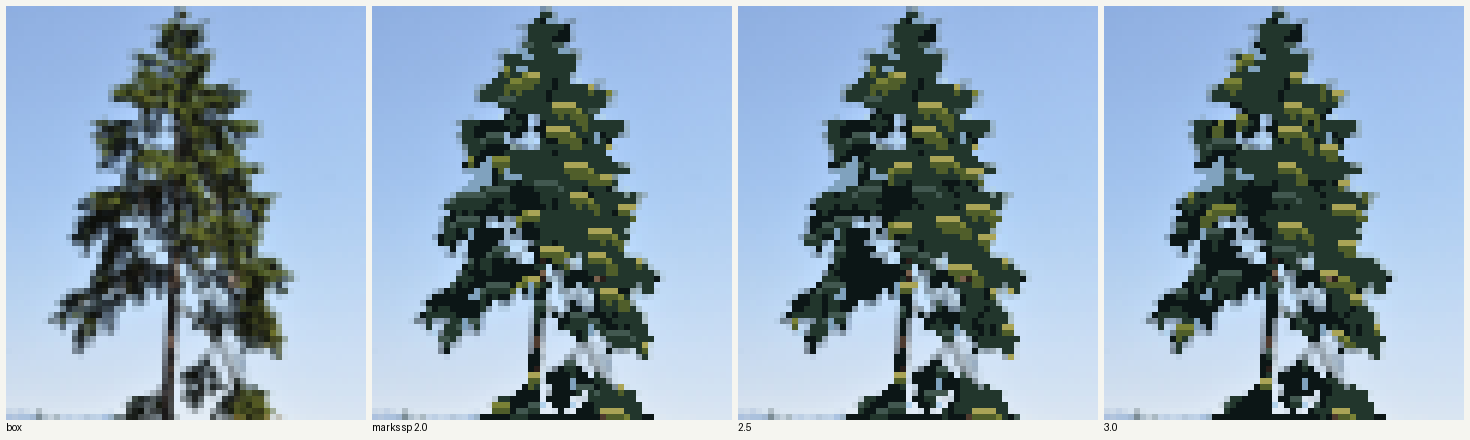 200. books/trees/work/hem_marks.png
Bash: cd ~/work/pixelart-studies/books/trees/src; python3 - <<'E' p=open('sheet_photos.py').read() p=p.replace("import colepx as cp","import colepx as cp, marks\nfrom scipy import ndimag
cd ~/work/pixelart-studies/books/trees/src; python3 - <<'E'
p=open('sheet_photos.py').read()
p=p.replace("import colepx as cp","import colepx as cp, marks\nfrom scipy import ndimage as ndi")
p=p.replace(""" out = cp.to_rgb(mat, step, cp.palette(kind), rgb=rgb)""",""" out = cp.to_rgb(mat, step, cp.palette(kind), rgb=rgb)
# marks pass: the species' line
F = mat == cp.FOL
L = cp.lum(rgb)
lit = F & (L > np.quantile(L[F], 0.4)) & (rgb[..., 1] > rgb[..., 2] + 2)
lit = ndi.binary_closing(lit) & F
mk = MARK.get(name.split(',')[0].split(' (')[0], None)
W_ = rgb.shape[1]
tx = int(np.median(np.where(mat == cp.WOOD)[1])) if (mat == cp.WOOD).any() else W_ // 2
sun = SUN.get(name, -1)
if mk in marks.ARCS:
s = marks.place_arcs(F, lit, mk, tx, spacing=2.5, seed=1, sun_side=sun)
else:
s = marks.place(F, lit, marks.GLYPHS[mk], spacing=2.2, seed=1, sun_side=sun)
m2, st = mat.copy(), step.copy(); fm = s != 255; st[fm] = s[fm]
out2 = cp.to_rgb(m2, st, cp.palette(kind), rgb=rgb)""")
p=p.replace("rows.append(sheet([ph, up(Image.fromarray(rgb.astype(np.uint8)), k), up(out, k)], 3,\n labels=[name, f'box-downsampled, {w} px wide', 'Cole: value plan, sun set, holes, rims']))",
"rows.append(sheet([ph, up(Image.fromarray(rgb.astype(np.uint8)), k), up(out, k), up(out2, k)], 4,\n labels=[name, f'box-downsampled, {w} px wide', 'Cole: value plan, sun set, holes, rims', 'plus the species line (marks)']))\n Image.fromarray(out2).save('../work/study_' + name.split(',')[0].split(' (')[0].replace(' ', '_') + '_1x.png')")
p=p.replace("if __name__ == '__main__':","""MARK = {'western hemlock': 'hemlock', 'Douglas-fir': 'douglas', 'Sitka spruce': 'spruce',
'Garry oak': 'oak', 'Pacific madrone': 'broad'}
SUN = {'western hemlock': 1}
if __name__ == '__main__':""")
open('sheet_photos.py','w').write(p)
E
python3 sheet_photos.py
# output:
(1830, 1752)Read: books/trees/work/photos_v1.png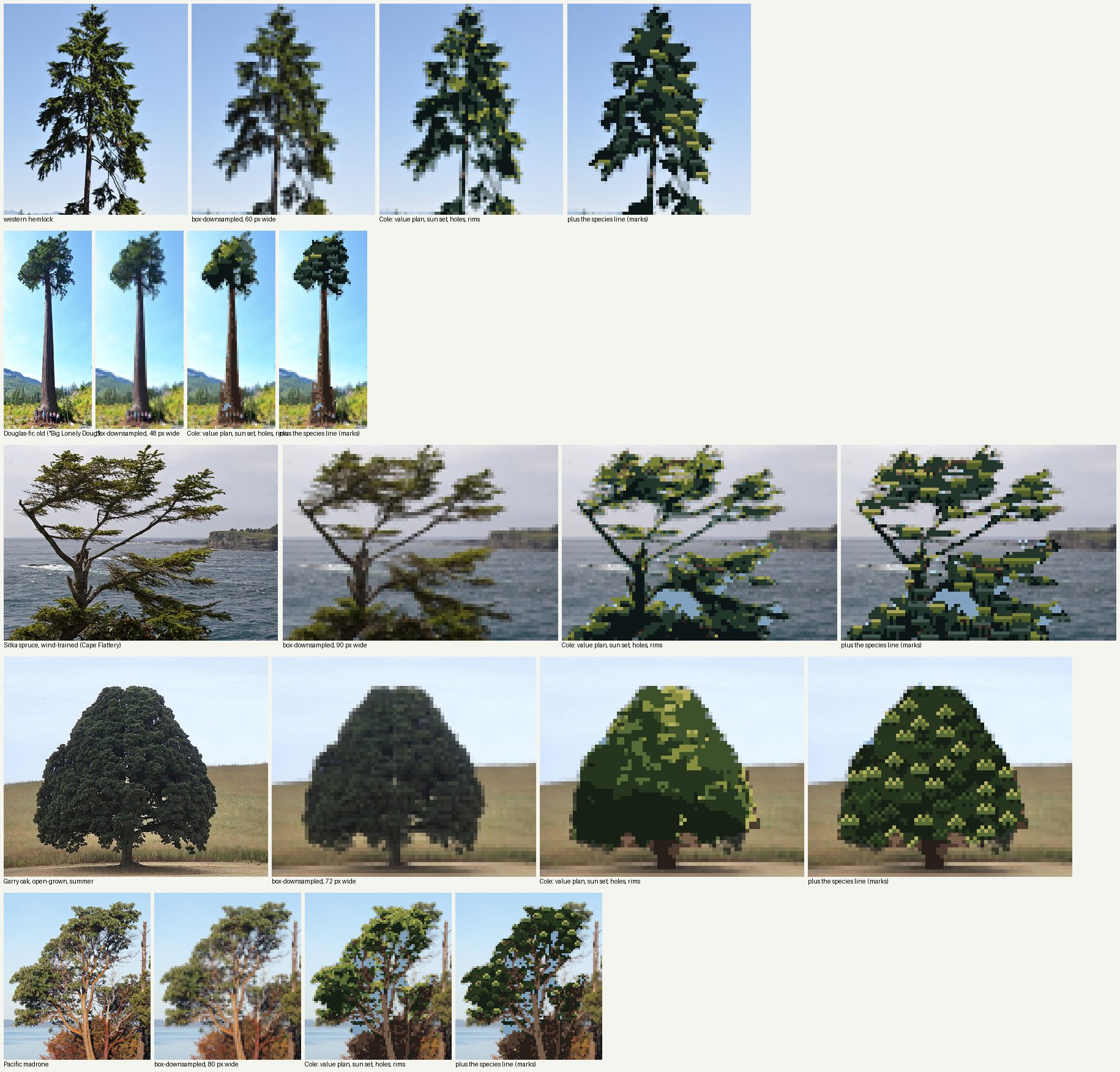 201. books/trees/work/photos_v1.png
Bash: cd ~/work/pixelart-studies/books/trees/src; cat >> marks.py <<'E' def clumps(mask, face, radius=3.5, seed=0, lit_frac=0.4, jag=0.35, steps=dict(lit_hi=5, lit=4, lit_bo
cd ~/work/pixelart-studies/books/trees/src; cat >> marks.py <<'E'
def clumps(mask, face, radius=3.5, seed=0, lit_frac=0.4, jag=0.35,
steps=dict(lit_hi=5, lit=4, lit_body=3, sky_top=2, body=1, dark=0)):
"""Broadleaf crown as clumps (Cole p. 66/158: the oak's 'tufted foliage with its star-shaped
projections'; fig. 95: each mass a small dome). Voronoi cells from blue-noise seeds; each
cell lit by its own planes (top row light, underside dark, lower boundary a dark recess),
and assigned to the lit or shadow family by the crown's dome facing at its centre."""
H, W = mask.shape
rng = np.random.default_rng(seed)
ys, xs = np.where(mask)
order = rng.permutation(len(ys))
seeds = []
taken = np.zeros((H, W), bool)
for i in order:
y, x = ys[i], xs[i]
r = radius * (0.7 + 0.6 * rng.random())
R = int(np.ceil(r))
y0, y1, x0, x1 = max(0, y - R), min(H, y + R + 1), max(0, x - R), min(W, x + R + 1)
if taken[y0:y1, x0:x1][((np.arange(y0, y1)[:, None] - y) ** 2 + (np.arange(x0, x1)[None, :] - x) ** 2) <= (0.8 * r) ** 2].any():
continue
yy, xx = np.ogrid[y0:y1, x0:x1]
taken[y0:y1, x0:x1] |= ((yy - y) ** 2 + (xx - x) ** 2) <= (0.8 * r) ** 2
seeds.append((y, x, r))
S = np.array(seeds, float)
yy, xx = np.mgrid[0:H, 0:W]
# cells: nearest seed, distance scaled by seed radius (bigger clumps win more ground), with a
# little noise so boundaries are ragged (sprays), not polygons
noise = rng.random((H, W)) * jag
best = np.full((H, W), 1e9); lab = np.full((H, W), -1)
for k, (y, x, r) in enumerate(S):
d = np.hypot(yy - y, (xx - x) * 0.9) / r + noise
m = d < best
best[m] = d[m]; lab[m] = k
lab[~mask] = -1
# family per clump from the dome facing at its centre
fc = np.array([face[int(y), int(x)] for y, x, r in S])
thr = np.quantile(fc, 1 - lit_frac) if len(fc) else 0
out = np.full((H, W), 255, np.uint8)
for k, (y, x, r) in enumerate(S):
m = lab == k
if not m.any():
continue
cy = yy[m]
top, bot = cy.min(), cy.max()
v = (yy - top) / max(1, bot - top)
L = fc[k] >= thr
hi = fc[k] >= np.quantile(fc, 1 - lit_frac * 0.4)
# interior planes
tone = np.where(v < 0.34, (steps['lit_hi'] if hi else steps['lit']) if L else steps['sky_top'],
np.where(v < 0.75, steps['lit_body'] if L else steps['body'], steps['body'] if L else steps['dark']))
out[m] = tone[m]
# recess: a pixel whose neighbour below belongs to another clump (the clump's lower edge
# tucked under the next) takes the dark
below = np.zeros_like(lab); below[:-1] = lab[1:]; below[-1] = -1
rec = mask & (lab != below) & (below >= 0)
out[rec & (out <= steps['body'])] = steps['dark']
out[rec & (out > steps['body']) & (out < steps['lit'])] = steps['body']
return out
E
python3 - <<'E'
p=open('~/work/pixelart-studies/books/trees/src/sheet_photos.py').read()
p=p.replace(""" else:
s = marks.place(F, lit, marks.GLYPHS[mk], spacing=2.2, seed=1, sun_side=sun)""",""" else:
# clumps with the dome facing (Cole fig. 95) as the plan
hull = cp.crown_hull(mat)
dist = ndi.distance_transform_edt(hull); sc = max(2.0, np.percentile(dist[hull], 95))
hh = ndi.gaussian_filter(np.sqrt(np.clip(dist / sc, 0, 1)), sc * 0.3)
gy, gx = np.gradient(hh)
face = gy * sc + 0.6 * sun * gx * sc * -1 + 0.5 * hh + 0.4 * (L - L[F].mean()) / (L[F].std() + 1e-6) * 0.3
s = marks.clumps(F, face, radius=3.0 if mk == 'oak' else 3.5, seed=1)""")
open('~/work/pixelart-studies/books/trees/src/sheet_photos.py','w').write(p)
E
cd ~/work/pixelart-studies/books/trees/src && python3 sheet_photos.py
# output:
(1830, 1752)Bash: cd ~/work/pixelart-studies/books/trees/work; python3 -c " from PIL import Image im=Image.open('photos_v1.png'); print(im.size); im.crop((0,1060,1830,1752)).save('/tmp/ph_bottom.png
cd ~/work/pixelart-studies/books/trees/work; python3 -c "
from PIL import Image
im=Image.open('photos_v1.png'); print(im.size); im.crop((0,1060,1830,1752)).save('/tmp/ph_bottom.png')"
# output:
(1830, 1752)Read: /tmp/ph_bottom.png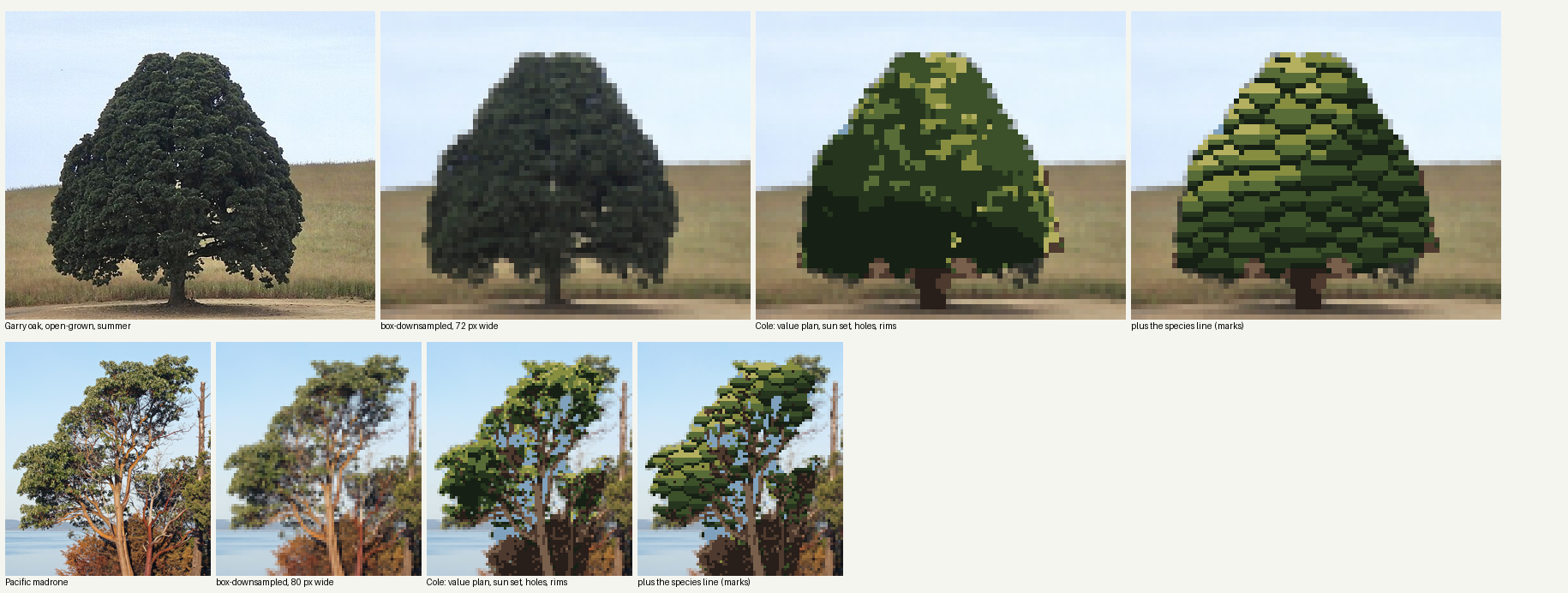 202. /tmp/ph_bottom.png
Bash: cd ~/work/pixelart-studies/books/trees/src; python3 - <<'E' s=open('marks.py').read() s=s.replace(""" tone = np.where(v < 0.34, (steps['lit_hi'] if hi else steps['lit']) if
cd ~/work/pixelart-studies/books/trees/src; python3 - <<'E'
s=open('marks.py').read()
s=s.replace(""" tone = np.where(v < 0.34, (steps['lit_hi'] if hi else steps['lit']) if L else steps['sky_top'],
np.where(v < 0.75, steps['lit_body'] if L else steps['body'], steps['body'] if L else steps['dark']))
out[m] = tone[m]""",""" # the cap is one row (two in big lit clumps); body; underside dark
cap = (yy <= top + (1 if (L and r > 3.5) else 0))
tone = np.where(cap, (steps['lit_hi'] if hi else steps['lit']) if L else steps['sky_top'],
np.where(v < 0.7, steps['lit_body'] if L else steps['body'], steps['body'] if L else steps['dark']))
out[m] = tone[m]""")
s=s.replace("def clumps(mask, face, radius=3.5, seed=0, lit_frac=0.4, jag=0.35,","def clumps(mask, face, radius=3.5, seed=0, lit_frac=0.25, jag=0.6,")
open('marks.py','w').write(s)
p=open('sheet_photos.py').read()
p=p.replace("s = marks.clumps(F, face, radius=3.0 if mk == 'oak' else 3.5, seed=1)","s = marks.clumps(F, face, radius=4.0 if mk == 'oak' else 3.5, seed=1)")
open('sheet_photos.py','w').write(p)
c=open('colepx.py').read()
c=c.replace(""" fol = [(22, 32, 20), (38, 54, 30), (60, 80, 42), (88, 108, 56), (136, 142, 64), (180, 176, 96),
(116, 130, 118)]""",""" fol = [(18, 28, 20), (34, 50, 32), (70, 90, 72), (78, 100, 46), (120, 132, 58), (168, 170, 90),
(116, 130, 118)]""")
open('colepx.py','w').write(c)
E
python3 sheet_photos.py; cd ../work; python3 -c "
from PIL import Image
im=Image.open('photos_v1.png'); im.crop((0,1060,1830,1752)).save('/tmp/ph_bottom.png')"
# output:
(1830, 1752)Read: /tmp/ph_bottom.png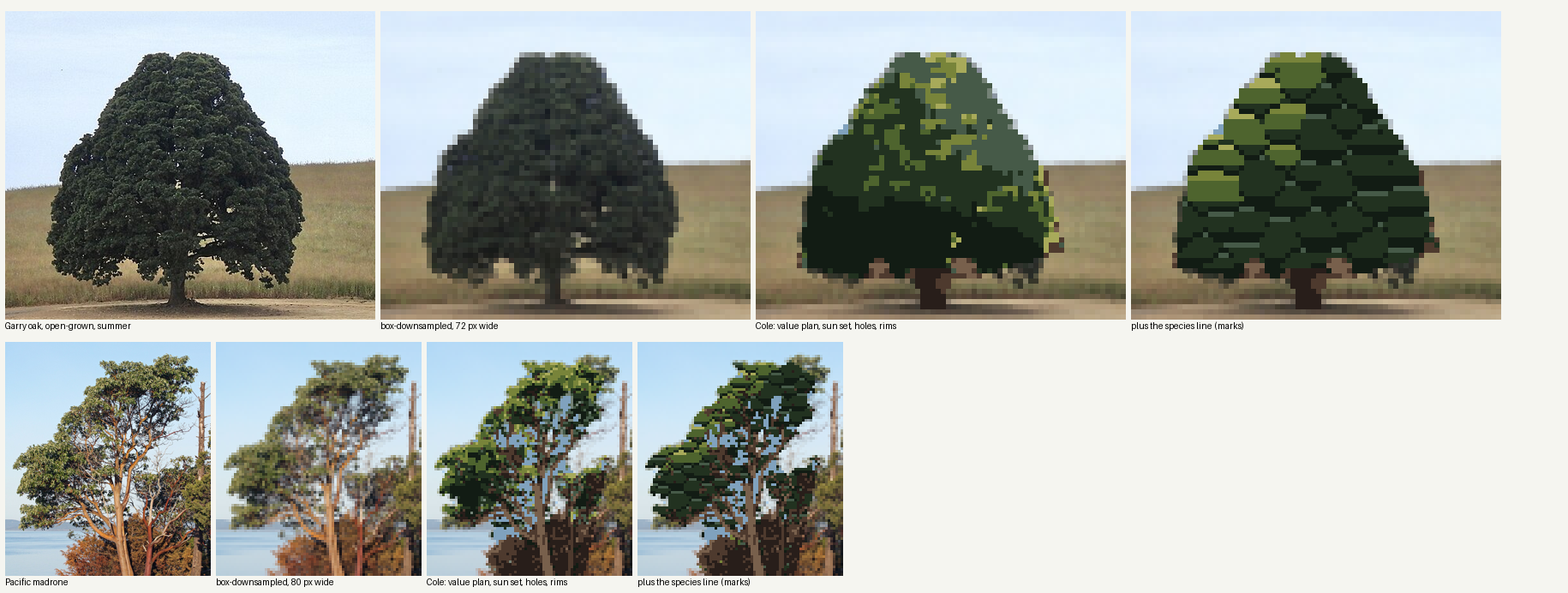 203. /tmp/ph_bottom.png
Agent: Cold critic read round 2Bash: cd ~/work/voxsim-wt/platform/crates/vox-flora/src; grep -n "enum Habit" -A 15 form.rs; grep -n "enum Profile" -A 10 form.rs; wc -l form.rs; ls ../../../packs/; ls ../../../packs/*/
cd ~/work/voxsim-wt/platform/crates/vox-flora/src; grep -n "enum Habit" -A 15 form.rs; grep -n "enum Profile" -A 10 form.rs; wc -l form.rs; ls ../../../packs/; ls ../../../packs/*/species | head -50
# output:
53:pub enum Habit {
54- /// Strong central leader, tiered/whorled side branches (spruce, young pine, birch, alder).
55- #[serde(alias = "excurrent")]
56- Excurrent,
57- /// Trunk forks into several main limbs; broad crown (oak, beech, walnut, apple).
58- #[serde(alias = "decurrent")]
59- Decurrent,
60- /// Decurrent with pendulous twig curtains (willow).
61- #[serde(alias = "weeping")]
62- Weeping,
63- /// Many stems from the base (hazel coppice).
64- #[serde(alias = "multistem")]
65- Multistem,
66- /// Low shrub of arching canes / twigs (blackberry, blueberry).
67- #[serde(alias = "mound")]
68- Mound,
512:pub enum Profile {
513- /// Branch length falls off toward the top (spruce, young pine).
514- Cone,
515- /// Widest a third of the way up (birch, alder, cherry).
516- Ovoid,
517- /// Old pine: crown only at the top, flat and spreading.
518- Umbrella,
519-}
520-
521-/// Species growth grammar parameters (tree architecture): the `[growth]`
522-/// section of a pack species file. Unset fields default per form (see
2446 form.rs
base
pnw
../../../packs/base/species:
alder.toml
apple.toml
barley.toml
beech.toml
birch.toml
blackberry.toml
blueberry.toml
bracket-fungus-colony.toml
cattail.toml
chanterelle-colony.toml
cherry.toml
clover-meadow.toml
fallen-log.toml
felled-trunk.toml
fern.toml
flax.toml
grass-meadow.toml
hazel.toml
juniper.toml
kelp.toml
leaf-litter-pile.toml
lichen.toml
log.toml
moss.toml
nettle.toml
oak.toml
pine.toml
reeds.toml
seagrass.toml
snag.toml
spruce.toml
stump.toml
walnut.toml
wheat.toml
wildflower-meadow.toml
willow.toml
../../../packs/pnw/species:
douglas-fir.tomlBash: cd ~/work/voxsim-wt/platform/crates/vox-flora/src; grep -n "fn grow\|fn build\|apical\|distichous\|outward\|weep\|fork_max\|gravi\b\|old_umbrella" form.rs | head -60
cd ~/work/voxsim-wt/platform/crates/vox-flora/src; grep -n "fn grow\|fn build\|apical\|distichous\|outward\|weep\|fork_max\|gravi\b\|old_umbrella" form.rs | head -60
# output:
46: /// Pendulous hanging twig (weeping curtains).
61: #[serde(alias = "weeping")]
531: pub fork_max: f32,
543: pub gravi: f32,
552: pub distichous: bool,
553: /// Children along the branch rather than forking at its end (apical control).
554: pub apical: bool,
557: pub weep: f32,
573: /// Children bend outward, away from the stem (plagiotropic spreading crowns).
574: pub outward: f32,
592: pub old_umbrella: bool,
604: fork_max: 0.55,
611: gravi: 0.0,
617: distichous: false,
618: apical: false,
620: weep: 0.0,
631: outward: 0.0,
643: old_umbrella: false,
676:/// whorls; Troll: beech/hazel distichous sprays; Leeuwenberg-like sympodial
679:/// drooping-tier Norway spruce, weeping white willow, coppice hazel).
984: let slots = if a.apical && nseg > 1 { nseg - 1 } else { nseg };
988: let weepy = a.weep * (order as f32 / self.max_order.max(1) as f32);
991: let mut bend = (a.gravi + self.droop) * (0.5 + t) - weepy * 0.12 * t;
1014: let phi = if a.distichous {
1023: let mut cdir = norm(dir * ca.cos() + side * ca.sin() + radial * a.outward);
1024: if cdir.z < -0.2 && a.weep < 0.3 && !a.sleeve {
1030: let taper = if a.apical { 1.0 - 0.55 * tt } else { 1.0 - 0.25 * tt };
1075: if a.weep >= 0.7 && order >= 1 && self.nodes.len() < NODE_CAP - 4 {
1077: let hang = (at.z * (0.55 + 0.35 * rng.u())).min(self.cr * 1.4 * a.weep).max(1.0);
1094: if a.weep > 0.0 {
1096: center.z -= rad * a.weep * 0.9;
1097: radii.z *= 1.0 + a.weep * 0.8;
1098: radii.x *= 1.0 - 0.25 * a.weep;
1126: let umbrella = a.old_umbrella && self.stage >= Stage::Old;
1301: Habit::Mound if a.gravi < -0.1 => cr * 1.5 * (0.7 + 0.5 * r.u()),
1303: Habit::Clump if a.gravi < -0.1 => (h * 1.3).max(1.0) * (0.75 + 0.35 * r.u()),
1318:pub fn build_tree(inp: &FormInput) -> TreeForm {
1372: let fork = (a.fork + (a.fork_max - a.fork) * fs.crown_rise.clamp(0.0, 1.0)) * fork_j;
2116:pub fn build_patch(inp: &PatchInput, prev_version: u32) -> PatchForm {
2389: Habit::Weeping => "weeping crown with curtains of hanging twigs",Bash: cd ~/work/voxsim-wt/platform/crates/vox-flora/src; sed -n 666,700p form.rs; grep -rn "nod\b\|leader_droop\|reiterat" form.rs | head
cd ~/work/voxsim-wt/platform/crates/vox-flora/src; sed -n 666,700p form.rs; grep -rn "nod\b\|leader_droop\|reiterat" form.rs | head
# output:
let mut t = match vox_pack::toml::Value::try_from(base) {
Ok(vox_pack::toml::Value::Table(t)) => t,
_ => unreachable!(),
};
vox_pack::merge(&mut t, g);
vox_pack::toml::Value::Table(t).try_into().unwrap_or_else(|e| panic!("{} [growth]: {e}", d.path))
}
/// Growth grammar for a species (its `[growth]` data). Sources for the base
/// pack's architectures: Hallé-Oldeman models (Rauh: pine/spruce/cherry
/// whorls; Troll: beech/hazel distichous sprays; Leeuwenberg-like sympodial
/// forking: oak, walnut, apple), crown forms from standard silvics
/// (open-grown vs forest-grown oak, flat-topped old Scots pine, narrow
/// drooping-tier Norway spruce, weeping white willow, coppice hazel).
pub fn arch_for(sp: &Species) -> Arch {
crate::species::arch_of_id(sp.id)
}
/// Does this form of plant carry a TreeForm (skeleton + foliage)?
pub fn has_tree_form(f: Form) -> bool {
matches!(f, Form::Broadleaf | Form::Conifer | Form::Bush | Form::Herb | Form::Reed)
}
/// Are this plant's voxels rasterized from its TreeForm? (Reeds keep the
/// terrain-following Shape generator.)
pub fn voxels_from_form(f: Form) -> bool {
matches!(f, Form::Broadleaf | Form::Conifer | Form::Bush | Form::Herb)
}
pub fn stage_of(sp: &Species, a: &Arch, h: f32, age_years: f32) -> Stage {
let m = h * vox_core::VOXEL_M;
let small = matches!(sp.form, Form::Bush | Form::Herb | Form::Reed);
if !small && m < 1.0 {
return Stage::Seedling;
}
form.rs:1197: // reiterated leader: a side branch turned upwardBash: cd ~/work/voxsim-wt/platform/crates/vox-flora/src; sed -n 1120,1215p form.rs
cd ~/work/voxsim-wt/platform/crates/vox-flora/src; sed -n 1120,1215p form.rs
# output:
}
fn excurrent(&mut self, fork: f32) {
let a = self.a;
let (h, cr) = (self.h, self.cr);
let mut r = R::new(self.seed, 1);
let umbrella = a.old_umbrella && self.stage >= Stage::Old;
let mature_pine = a.mature_blend && self.stage >= Stage::Mature;
let zc = (h * fork).clamp(0.0, (h - 1.5).max(0.0));
let leader_top = if umbrella { h * (0.78 + 0.08 * r.u()) } else { h };
let spacing = (h / if a.sleeve { 15.0 } else { 10.0 }).max(if a.whorled { 1.2 } else { 1.0 });
let max_lev = if a.sleeve { 15 } else if a.whorled { 9 } else { 12 };
let nlev = (((leader_top - zc) / spacing).round() as usize + 1).clamp(1, max_lev);
// Clear bole, with dead snags where conifers keep them.
let mut par = 0u16;
let mut off = v3(0.0, 0.0, 0.0);
let wander = 0.12 * self.sinu / a.sinuous.max(0.05) * 0.5;
if zc > 0.5 {
let nb = ((zc / 4.0).ceil() as usize).clamp(1, 4);
for i in 0..nb {
let z = zc * (i + 1) as f32 / nb as f32;
off = off + v3(r.s(), r.s(), 0.0) * wander;
par = self.push(v3(off.x, off.y, z), par, 0, 0);
if a.dead_skirt && self.stage >= Stage::Young && z > zc * 0.4 && self.fs.crown_rise > 0.15 {
// spruce keeps a skirt of dead lower branches
for j in 0..3u32 {
let az = r.u() * TAU;
let d = dir_from(az, 95.0);
let len = (cr * 0.35 * (0.5 + r.u())).max(0.6);
let p0 = self.nodes[par as usize].pos;
let mut rr = R::new(self.seed, 900 + i as u32 * 8 + j);
self.branch(par, p0, d, len, 2, &mut rr, flag::DEAD);
}
}
}
}
let mut levels: Vec<(u16, Vec3)> = Vec::new();
for k in 0..nlev {
let z = zc + (k as f32 + 0.35) * (leader_top - zc) / (nlev as f32 - 0.65).max(0.35);
let z = z.min(leader_top);
off = off + v3(r.s(), r.s(), 0.0) * wander;
let top = k + 1 == nlev;
let f = if top && self.fs.snapped { flag::BROKEN } else { 0 };
par = self.push(v3(off.x, off.y, z), par, 0, f);
levels.push((par, v3(off.x, off.y, z)));
}
let mut phase = r.u() * TAU;
for (k, &(node, pos)) in levels.iter().enumerate() {
let t = ((pos.z - zc) / (h - zc).max(1.0)).clamp(0.0, 1.0);
let top = k + 1 == levels.len();
if top && !umbrella && !self.fs.snapped {
continue;
}
let m = if a.whorled { r.ri(a.limbs.0, a.limbs.1) as usize } else { r.ri(a.limbs.0, a.limbs.1) as usize };
let az0 = if a.whorled { r.u() * TAU } else { 0.0 };
for j in 0..m {
let az = if a.whorled {
az0 + j as f32 * TAU / m as f32 + r.s() Bash: ls ~/work/naturalist/plants/; wc -l ~/work/naturalist/plants/02-trees.md; grep -n "^#" ~/work/naturalist/plants/02-trees.md | head -40
ls ~/work/naturalist/plants/; wc -l ~/work/naturalist/plants/02-trees.md; grep -n "^#" ~/work/naturalist/plants/02-trees.md | head -40
# output:
01-vegetation-zones.md
02-trees.md
03-understory.md
04-riparian.md
05-old-growth.md
06-disturbance-and-succession.md
07-meadows.md
08-coast-and-salish-sea-shores.md
09-the-dry-east.md
10-seasons.md
11-skokomish-tile-ground-truth.md
README.md
data
photos
tools
364 ~/work/naturalist/plants/02-trees.md
1:# The trees of Washington: how they grow, how they look, and what vox-flora needs
10:## 1. The headline for vox-flora
35:## 2. The west-side conifers
66:## 3. The broadleaf trees
89:## 4. How they die, fall and rot (the physics the sim already has, with WA numbers)
91:### Wind
114:### Root reinforcement (for geo)
129:### Decay: how long dead wood lasts
152:## 5. A Washington species table for vox-flora (proposal)
187:### Tradeoffs block
197:## 6. For the painters: each tree at every distance
205:### Douglas-fir: the tree of the landscape
227:### Western hemlock: the shade tree
239:### Western redcedar: the elder
252:### Sitka spruce: the coastal giant
262:### Pacific silver fir, mountain hemlock, subalpine fir: the snow trees
277:### Red alder: the white-barked healer
290:### Bigleaf maple: the mossy one
302:### Black cottonwood: the river tree
313:### Garry oak, madrone: the dry-site broadleaves
324:### Distance checklist (what survives at each scale)
334:## SourcesBash: sed -n 152,334p ~/work/naturalist/plants/02-trees.md
sed -n 152,334p ~/work/naturalist/plants/02-trees.md # output: ## 5. A Washington species table for vox-flora (proposal) Units as in `species.rs`: heights and crown radii in **voxels (0.5 m)**, lifespans in real years, `alt` should become absolute elevation in metres (see guide 01), `shade_tol` 0 to 1. Numbers are my translation of the tables above; where I've had to choose, I say so. | name | form, habit | max_h (vox) | max_cr (vox) | life (y) | mature (y) | shade_tol | moist | notes for traits | |---|---|---|---|---|---|---|---|---| | douglas_fir | Conifer, Excurrent then irregular flat top | 140 | 12 | 1000 | 25 | 0.35 | 0.45 | thick bark (fire resistant after ~50 y), self-prunes to a long clear bole, windfirm-ish, resin | | western_hemlock | Conifer, Excurrent, **drooping leader** | 120 | 10 | 500 | 30 | 0.95 | 0.65 | establishes on logs and stumps (nurse logs); thin bark; shallow roots; fine feathery sprays | | western_redcedar | Conifer, Excurrent with **buttressed flared base**, J-shaped limbs, multiple spike tops when old | 110 | 12 | 1200 | 30 | 0.9 | 0.8 | fibrous Bark harvest (cultural keystone), rot-resistant logs (decay x0.3), autumn inner-needle browning | | sitka_spruce | Conifer, Excurrent, open with long horizontal limbs | 140 | 14 | 700 | 30 | 0.6 | 0.8 | salt tolerant (coast), stilt roots from nurse logs, sharp needles (browse deterrent) | | pacific_silver_fir | Conifer, Excurrent narrow symmetric | 100 | 7 | 500 | 40 | 0.95 | 0.7 | snow zone; thin bark; resin blisters | | mountain_hemlock | Conifer, Excurrent drooping; krummholz near treeline | 60 | 6 | 800 | 50 | 0.8 | 0.7 | deep snow; snow-bent butts | | subalpine_fir | Conifer, **Column/spire** | 50 | 3 | 250 | 40 | 0.8 | 0.6 | layering at treeline makes clumps; the parkland spires | | red_alder (retune "alder") | Broadleaf, Excurrent, 30% multistem | 50 | 8 | 100 | 8 | 0.15 | 0.7 | fixes N; colonises bare mineral soil only; drops leaves green; white-lichened bark | | bigleaf_maple | Broadleaf, Decurrent, often multistem from sprouts | 60 | 14 | 300 | 15 | 0.5 | 0.65 | resprouts from stump; epiphyte load in wet valleys (~35 kg per mature tree, about 4x its foliage: adds mass and wind sail); yellow in October | | black_cottonwood | Broadleaf, Excurrent tall narrow-to-spreading | 90 | 12 | 180 | 8 | 0.1 | 0.9 | needs fresh wet gravel to establish from seed (guide 04); resprouts from buried branches; brittle limbs | | willow (keep) | Multistem shrub/tree | 24 | 6 | 50 | 4 | 0.2 | 0.95 | Sitka/Pacific willow, not weeping willow: **change habit from Weeping to Multistem** | | vine_maple | Multistem, arching; stems re-root | 16 | 5 | 100 | 6 | 0.8 | 0.6 | red-orange in autumn in the open; forms thickets on talus and avalanche tracks | | oak -> garry_oak | Broadleaf, Decurrent | 44 | 12 | 500 | 30 | 0.2 | 0.25 | prairies and balds only; fire-maintained; acorns (keep) | | madrone | Broadleaf evergreen, leaning sinuous | 40 | 8 | 250 | 15 | 0.3 | 0.2 | peeling red bark; red berries (keep "cherry"-like fruit); dry bluffs | | pine -> shore_pine
Bash: cd ~/work/voxsim-wt/platform/packs/base/species; cat oak.toml | sed -n '/\[growth\]/,/\[look\]/p'; sed -n '/\[growth\]/,/\[look\]/p' alder.toml
cd ~/work/voxsim-wt/platform/packs/base/species; cat oak.toml | sed -n '/\[growth\]/,/\[look\]/p'; sed -n '/\[growth\]/,/\[look\]/p' alder.toml # output: [growth] fork = 0.25 limbs = [3, 5] low_limbs = true angle = 58.0 gravi = -0.02 sinuous = 0.45 sub_angle = 50.0 sub_len = 0.62 cluster = 0.36 flat = 0.72 density = 0.85 gaps = 0.3 old_years = 110.0 buttress = true pipe = 2.6 outward = 0.35 girth = 1.15 resprouts = true bark = [85, 75, 62] bark_top = [95, 85, 70] leaf_spring = [160, 185, 80] leaf = [62, 100, 42] leaf_autumn = [150, 100, 45] flower = [190, 190, 110] fruit = [120, 95, 45] [look] [growth] habit = "excurrent" fork = 0.15 fork_max = 0.5 limbs = [1, 2] angle = 55.0 angle_top = 38.0 sinuous = 0.18 sub_len = 0.55 apical = true cluster = 0.44 flat = 0.8 density = 0.82 gaps = 0.02 side_clusters = true old_years = 60.0 pipe = 2.1 girth = 0.8 resprouts = true bark = [70, 65, 60] bark_top = [80, 75, 68] leaf_spring = [120, 170, 70] leaf = [50, 95, 45] leaf_autumn = [80, 100, 45] flower = [120, 80, 60] fruit = [80, 60, 45] multistem = 0.3 [look]
Now I'll write the pack proposals: [growth] values from Hallé + Cole, with new-field proposals.
Bash: mkdir -p ~/work/pixelart-studies/books/trees/packs_proposal/species; cd ~/work/pixelart-studies/books/trees/packs_proposal/species; cat > western-hemlock.toml <<'E' name = "wester
mkdir -p ~/work/pixelart-studies/books/trees/packs_proposal/species; cd ~/work/pixelart-studies/books/trees/packs_proposal/species;
cat > western-hemlock.toml <<'E'
name = "western hemlock"
# Tsuga heterophylla. Proposal from the Cole / Halle-Oldeman study (books/trees).
# Halle: Tsuga's drooping leader, erected later by compression wood -> Troll's model, or
# Mangenot's (pp. 246, 329); higher-order branches dorsiventral, almost compound-leaf sprays
# (p. 328). Extremely shade tolerant: the crown stays deep (inversion point low, p. 329).
# Cole: pendulous branchlets hang in curtains (p. 194 'succession of curved steps').
# Heights and ecology: naturalist plants/02-trees.md.
based_on = "douglas fir"
[sim]
max_h = 120.0 # 60 m
max_cr = 10.0
shade_tol = 0.95
moist = 0.65
lifespan_years = 500.0
mature_years = 30.0
wood_density = 650.0
rooting = 0.7 # shallow roots (nurse logs)
[growth]
habit = "excurrent"
model = "troll" # NEW (documentation): Halle model name
fork = 0.08 # open-grown crown base
fork_max = 0.35 # forest-grown: crown stays deep (shade tolerant)
limbs = [2, 4]
whorled = false # hemlock laterals are scattered, not in clean whorls
angle = 70.0
angle_top = 55.0
gravi = -0.10 # boughs arch and droop (plagiotropic, Troll)
tip_up = 0.0
sub = [2, 3]
sub_angle = 60.0
sub_len = 0.5
distichous = true # dorsiventral flat sprays (Halle p. 39: Tsuga anisophylly)
apical = true
weep = 0.45 # pendulous branchlet curtains
leader_nod = 60.0 # NEW: the current year's leader arcs over this many degrees
# (naturalist: 'nods like a bent fishing rod'; the 100 m mark)
flat = 0.45
density = 0.9
gaps = 0.08
sleeve = true
profile = "cone"
old_years = 200.0
pipe = 2.2
girth = 1.0
bark = [92, 70, 58]
bark_top = [104, 82, 66]
leaf = [37, 63, 44]
leaf_spring = [120, 170, 90]
leaf_autumn = [37, 63, 44]
E
cat > western-redcedar.toml <<'E'
name = "western redcedar"
# Thuja plicata. Not treated by Halle; my reading: Massart-like trunk (rhythmic, monopodial)
# carrying plagiotropic boughs that droop then turn up at the tip -- Cole's 'steel spring'
# (fig. 87) / crozier. Old trees reiterate: several leaders + dead spike tops (candelabra),
# i.e. Halle's arborescent reiteration in the crown (Fig. 74) of a conifer that normally
# conforms to its model (p. 327). Buttressed, fluted base.
based_on = "douglas fir"
[sim]
max_h = 110.0
max_cr = 12.0
shade_tol = 0.9
moist = 0.8
lifespan_years = 1200.0
mature_years = 30.0
wood_density = 380.0
[growth]
habit = "excurrent"
model = "massart"
fork = 0.06
fork_max = 0.4
limbs = [2, 4]
whorled = false
angle = 78.0
angle_top = 50.0
gravi = -0.14 # droop ...
tip_up = 0.45 # ... then the J
sub = [2, 3]
sub_angle = 65.0
sub_len = 0.5
distichous = true # flat lacy fans
apical = true
weep = 0.55 # hanging fans
flat = 0.4
density = 0.85
gaps = 0.1
sleeve = true
profile = "cone"
old_years = 300.0
buttress = true
pipe = 2.3
girth = 1.4
reiteration = { age = 300.0, leaders = [2, 5], spike_tops = 0.6 } # NEW: candelabra
bark = [122, 75, 53]
bark_top = [141, 134, 128] # weathers silver
leaf = [74, 106, 44]
leaf_spring = [123, 148, 68]
leaf_autumn = [150, 100, 50] # inner sprays rust in Sept-Oct
E
cat > sitka-spruce.toml <<'E'
name = "sitka spruce"
# Picea sitchensis. Halle: Picea is Massart's model (p. 193): orthotropic rhythmic trunk,
# tiers of plagiotropic branches that become pendulous with age. Cole: clustered (whorled)
# buds -> branches radiate like umbrella spokes; on a level bough underside twigs curve up,
# upper-side ones grow outward (p. 183). Open, long horizontal limbs with curtains.
# Headlands: wind-trained; Halle's krummholz note (p. 199) applies at the extreme.
based_on = "spruce"
[sim]
max_h = 140.0
max_cr = 14.0
shade_tol = 0.6
moist = 0.8
lifespan_years = 700.0
alt = [0.0, 0.3]
[growth]
habit = "excurrent"
model = "massart"
fork = 0.05
fork_max = 0.4
limbs = [4, 6]
whorled = true
angle = 92.0
angle_top = 65.0
gravi = -0.04
tip_up = 0.3
sub = [2, 3]
sub_angle = 60.0
sub_len = 0.45
distichous = true
apical = true
weep = 0.4 # curtains of hanging branchlets
flat = 0.5
density = 0.8
gaps = 0.12
sleeve = true
profile = "cone"
old_years = 250.0
buttress = true
old_umbrella = false
wind_train = 0.0 # NEW: 0..1 set by exposure (salt-pruned wedge streaming inland)
leaf = [61, 90, 74]
E
cat > subalpine-fir.toml <<'E'
name = "subalpine fir"
# Abies lasiocarpa. Halle: Abies is Massart's model with very precise plagiotropy (p. 193);
# at timberline the orthotropic shoots are lost and 'plagiotropy is fixed and the branches
# continue to spread horizontally close to the ground' -- krummholz (p. 198-199).
# Naturalist: the narrow parkland spire; layering clumps.
based_on = "spruce"
[sim]
max_h = 50.0
max_cr = 3.0
shade_tol = 0.8
alt = [0.7, 1.0]
lifespan_years = 250.0
[growth]
habit = "excurrent"
model = "massart"
fork = 0.0
fork_max = 0.15 # keeps branches to the ground: snow-shedding spire
limbs = [3, 5]
whorled = true
angle = 95.0
angle_top = 70.0
gravi = -0.08 # short boughs bent by snow
sub = [2, 2]
distichous = true
apical = true
flat = 0.5
density = 0.95
gaps = 0.03
sleeve = true
profile = "cone"
krummholz = { above_alt = 0.92, height = 0.15, spread = 2.5 } # NEW: plagiotropy fixed
layering = 0.5 # NEW: lower boughs root -> clump of satellites (naturalist)
leaf = [50, 74, 70]
E
cat > garry-oak.toml <<'E'
name = "garry oak"
# Quercus garryana. Halle lists Quercus under RAUH's model (p. 227: 'probably most species of
# Quercus'), not a sympodial model: monopodial rhythmic axes, all orthotropic, lateral
# flowering; and 'supple' -- the leader is replaced again and again, so 'red oak never has a
# straight trunk' (p. 226) and old oaks are irregular and broken. (The base pack's comment
# calls oak 'Leeuwenberg-like sympodial forking'; I think Rauh + frequent leader loss is the
# better reading.) Cole: shoots at near right angles, crowded, sturdy horizontal boughs, no
# underside branches, elbows; outline 'the shape of a mushroom' (p. 150), tufted
# star-shaped bunches (p. 158). Open-grown: Halle's free-standing tree (Fig. 75): hemispheric,
# short trunk, dorsiventral lower periphery.
based_on = "oak"
[sim]
max_h = 44.0
max_cr = 12.0
shade_tol = 0.2
moist = 0.25
lifespan_years = 500.0
[growth]
habit = "decurrent"
model = "rauh"
fork = 0.2
fork_max = 0.4
limbs = [3, 5]
low_limbs = true
angle = 68.0 # near right-angled shoots (Cole fig. 113)
gravi = 0.0
sinuous = 0.6 # elbows: repeated leader replacement
leader_replace = 0.12 # NEW: yearly chance the leader is replaced by a lateral (bayonet joint)
sub_angle = 72.0
sub_len = 0.55
cluster = 0.3 # tufted bunches, smaller than the base oak's
flat = 0.7
density = 0.9
gaps = 0.22 # detached bunches: sky between (Cole p. 158)
outward = 0.45 # free-standing periphery dorsiventral (Halle Fig. 75)
old_years = 150.0
pipe = 2.6
girth = 1.2
leaf = [48, 78, 40]
leaf_autumn = [120, 92, 52] # dull brown, some held
E
cat > pacific-madrone.toml <<'E'
name = "pacific madrone"
# Arbutus menziesii. Not in Halle; my reading: sympodial through terminal panicles
# (Scarrone/Leeuwenberg: each shoot ends in flowers, 2-3 laterals below take over), which
# gives the forked, sinuous, leaning architecture; crown of rounded evergreen clumps.
# Cole: forks from failed terminal buds (figs. 130-134).
based_on = "oak"
[sim]
max_h = 40.0
max_cr = 8.0
shade_tol = 0.3
moist = 0.2
lifespan_years = 250.0
[growth]
habit = "decurrent"
model = "scarrone"
fork = 0.15
limbs = [2, 3]
angle = 35.0
sinuous = 0.7
lean = 0.25 # NEW: trunks lean out toward light/water (bluffs)
sympodial = { from_age = 6.0, forks = [2, 3], angle = 28.0 } # NEW: terminal flowering forks
sub_angle = 35.0
sub_len = 0.7
cluster = 0.4
flat = 0.7
density = 0.85
gaps = 0.2
old_years = 120.0
pipe = 2.3
bark = [194, 116, 63]
bark_top = [185, 181, 106] # underbark
leaf = [58, 88, 44]
E
cat > bigleaf-maple.toml <<'E'
name = "bigleaf maple"
# Acer macrophyllum. Halle lists Acer under Rauh (p. 227). Cole: opposite decussate buds;
# a failed terminal (flowering) gives forks (figs. 130-131), so the crown is a few big
# ascending limbs; old: short much-forked twigs, lateral spread (p. 186).
based_on = "oak"
[sim]
max_h = 60.0
max_cr = 14.0
shade_tol = 0.5
moist = 0.65
lifespan_years = 300.0
[growth]
habit = "decurrent"
model = "rauh"
fork = 0.25
limbs = [2, 4]
angle = 38.0 # ascending limbs
sinuous = 0.3
opposite = true # NEW: decussate branching (Cole ch. XII: forks, tridents)
sub_angle = 42.0
sub_len = 0.6
cluster = 0.45
flat = 0.7
density = 0.8
gaps = 0.15
multistem = 0.35
resprouts = true
epiphytes = 0.8 # NEW: moss sheath load (naturalist: ~4x foliage mass)
leaf = [70, 110, 50]
leaf_autumn = [212, 178, 58]
E
cat > red-alder.toml <<'E'
name = "red alder"
# Alnus rubra. Cole: three-ranked buds -> 'boughs more evenly distributed without much
# interlacing or confusion ... rely more upon the difference of angle' (p. 181); adventitious
# shoots on the bole (Illus. 82). Halle: not assigned; Rauh-like (monopodial rhythmic,
# orthotropic laterals) is my reading. Stands: dense, straight thin pale trunks.
based_on = "alder"
[sim]
max_h = 50.0
max_cr = 8.0
shade_tol = 0.15
[growth]
habit = "excurrent"
model = "rauh"
fork = 0.25
fork_max = 0.6
limbs = [2, 3]
angle = 50.0
angle_top = 35.0
sinuous = 0.15
three_ranked = true # NEW (or phyllotaxis = 1/3): even, uninterlaced distribution
apical = true
gaps = 0.1
multistem = 0.3
epicormic = 0.2 # NEW: adventitious twigs on the bole
bark = [184, 182, 173]
leaf = [93, 138, 58]
E
ls; cd ..; echo ok
# output:
bigleaf-maple.toml
garry-oak.toml
pacific-madrone.toml
red-alder.toml
sitka-spruce.toml
subalpine-fir.toml
western-hemlock.toml
western-redcedar.toml
okBash: cd ~/work/pixelart-studies/books/trees/src; grep -n "def to_rgb" -A 20 colepx.py; grep -n "keep_holes\|veiled = " colepx.py | head
cd ~/work/pixelart-studies/books/trees/src; grep -n "def to_rgb" -A 20 colepx.py; grep -n "keep_holes\|veiled = " colepx.py | head # output: 202:def to_rgb(mat, step, pal, rgb=None): 203- H, W = mat.shape 204- out = np.zeros((H, W, 3), np.uint8) 205- if rgb is not None: 206- out[:] = np.clip(rgb, 0, 255) 207- for k, c in enumerate(pal['sky']): 208- m = (mat == SKY) & (step == k) 209- if rgb is not None and k == 0: 210- continue # keep the photo's own open sky gradient 211- out[m] = c 212- for k, c in enumerate(pal['fol']): 213- out[(mat == FOL) & (step == k)] = c 214- for k, c in enumerate(pal['wood']): 215- out[(mat == WOOD) & (step == k)] = c 216- return out 57:def run(rgb, sky_rule=None, close=2, sun_side=-1, keep_holes=2, rim=True, globes=True, 80: if sz < keep_holes: 84: veiled = L[hk].mean() < skyL - 25
Bash: cd ~/work/pixelart-studies/books/trees/src; python3 - <<'E' s=open('colepx.py').read() s=s.replace(""" for k, c in enumerate(pal['sky']): m = (mat == SKY) & (step == k)
cd ~/work/pixelart-studies/books/trees/src; python3 - <<'E'
s=open('colepx.py').read()
s=s.replace(""" for k, c in enumerate(pal['sky']):
m = (mat == SKY) & (step == k)
if rgb is not None and k == 0:
continue # keep the photo's own open sky gradient
out[m] = c""",""" for k, c in enumerate(pal['sky']):
m = (mat == SKY) & (step == k)
if rgb is not None:
# holes show what is really behind them (sky or sea): open = the photo's own
# background, veiled = a step darker, the globe centre a touch lighter (Cole p. 71)
f = {0: 1.0, 1: 0.8, 2: 1.08}[k]
out[m] = np.clip(np.asarray(rgb)[m] * f, 0, 255).astype(np.uint8)
continue
out[m] = c""")
s=s.replace(""" if wood_mask is not None:
mat[wood_mask & (mat != SKY)] = WOOD""",""" if wood_mask is not None:
mat[wood_mask] = WOOD # trunks are never holes""")
s=s.replace(""" t += lit_bias""",""" t = max(t, np.quantile(fl, 1 - lit_share)) + lit_bias""")
s=s.replace("wood_mask=None, bg_hole=False, lit_tops=0):","wood_mask=None, bg_hole=False, lit_tops=0, lit_share=0.35):")
s=s.replace(""" fol = [(12, 22, 22), (34, 54, 44), (66, 88, 80), (80, 94, 42), (122, 130, 54), (170, 164, 86),
(104, 124, 122)]""",""" fol = [(14, 24, 22), (30, 46, 36), (50, 70, 52), (84, 98, 46), (126, 134, 58), (168, 164, 88),
(104, 124, 122)]""")
open('colepx.py','w').write(s)
E
grep -n "lit_share" colepx.py | head
# output:
58: sunset=True, declutter_passes=1, n_fol=4, other_mask=None, lit_bias=0.0, min_lit=3, dome=0.0, sun_dx=-1, wood_mask=None, bg_hole=False, lit_tops=0, lit_share=0.35):
121: t = max(t, np.quantile(fl, 1 - lit_share)) + lit_biasBash: cd ~/work/pixelart-studies/books/trees/src; cat >> marks.py <<'E' # ---- shaped spray marks (after round-2 critique: arcs, light on the shoulder only) ---------- SHAPES = { '
cd ~/work/pixelart-studies/books/trees/src; cat >> marks.py <<'E'
# ---- shaped spray marks (after round-2 critique: arcs, light on the shoulder only) ----------
SHAPES = {
'hemlock': [[(0, 1), (1, 0), (2, 0), (3, 0), (4, 1), (5, 2)],
[(0, 0), (1, -1), (2, -1), (3, 0), (4, 1)],
[(0, 1), (1, 0), (2, 0), (3, 0), (4, 0), (5, 1), (6, 2), (6, 3)],
[(0, 0), (1, 0), (2, 1), (3, 2)],
[(0, 1), (1, 0), (2, 0), (3, 1), (4, 1), (5, 2), (5, 3)]],
'spruce': [[(0, 0), (1, 0), (2, 0), (3, -1), (4, -1)], # stiff, upswept dashes
[(0, 0), (1, 0), (2, -1), (3, -1)],
[(0, 1), (1, 0), (2, 0), (3, 0), (4, -1), (5, -1)]],
'douglas': [[(0, 0), (1, 0), (2, -1), (3, 0), (4, 0)], # brush tufts on level limbs
[(0, 0), (1, -1), (2, 0), (3, 0), (4, 1)],
[(0, 0), (1, 0), (2, 0), (3, -1)]],
'cedar': [[(0, 0), (1, 1), (2, 1), (3, 1), (4, 0), (5, -1)], # droop then the J
[(0, 0), (1, 1), (2, 2), (3, 2), (4, 1), (5, 0)]],
}
HANG = {'hemlock': (0.6, 1, 2), 'spruce': (0.5, 2, 3), 'douglas': (0.25, 1, 1), 'cedar': (0.55, 1, 3)}
def place_shapes(mask, lit, kind, trunk_x, spacing=2.6, seed=0, sun_side=-1,
steps=dict(top_lit=5, top_lit2=4, top_sh=2, body_lit=3, body_sh=1, dark=0)):
H, W = mask.shape
rng = np.random.default_rng(seed)
out = np.full((H, W), 255, np.uint8)
out[mask] = steps['dark']
out[mask & lit] = steps['body_sh']
ys, xs = np.where(mask)
order = np.lexsort((rng.random(len(ys)), ys))
taken = np.zeros((H, W), bool)
r = int(np.ceil(spacing))
for i in order:
y, x = ys[i], xs[i]
y0, y1, x0, x1 = max(0, y - r), min(H, y + r + 1), max(0, x - r), min(W, x + r + 1)
if taken[y0:y1, x0:x1].any():
continue
yy, xx = np.ogrid[y0:y1, x0:x1]
taken[y0:y1, x0:x1] |= (((yy - y) * 1.5) ** 2 + (xx - x) ** 2) <= spacing ** 2
d = 1 if x >= trunk_x else -1
sh = SHAPES[kind][rng.integers(len(SHAPES[kind]))]
L = lit[y, x]
ymin = min(p[1] for p in sh)
pts = [(x + d * px, y + py) for px, py in sh]
for j, ((X, Y), (px, py)) in enumerate(zip(pts, sh)):
if not (0 <= X < W and 0 <= Y < H) or not mask[Y, X]:
continue
if py == ymin: # the shoulder takes the light
sunny = (X - trunk_x) * sun_side >= -1
v = (steps['top_lit'] if sunny else steps['top_lit2']) if L else steps['top_sh']
else:
v = steps['body_lit'] if L else steps['body_sh']
out[Y, X] = v
p, lo, hi = HANG[kind]
for (X, Y) in pts[-1:] + ([pts[len(pts) // 2]] if rng.random() < p else []):
for s in range(1, 1 + int(rng.integers(lo, hi + 1))):
if 0 <= X < W and Y + s < H and mask[Y + s, X]:
out[Y + s, X] = steps['body_sh']
return out
E
python3 - <<'E'
p=open('~/work/pixelart-studies/books/trees/src/sheet_photos.py').read()
p=p.replace(""" if mk in marks.ARCS:
s = marks.place_arcs(F, lit, mk, tx, spacing=2.5, seed=1, sun_side=sun)""",""" if mk in marks.SHAPES:
s = marks.place_shapes(F, lit, mk, tx, spacing=2.4, seed=1, sun_side=sun)""")
p=p.replace("lit = F & (L > np.quantile(L[F], 0.4)) & (rgb[..., 1] > rgb[..., 2] + 2)","lit = (step >= 3) & (step <= 5) & F")
open('~/work/pixelart-studies/books/trees/src/sheet_photos.py','w').write(p)
E
cd ~/work/pixelart-studies/books/trees/src && python3 sheet_photos.py
# output:
(1830, 1752)Read: books/trees/work/photos_v1.png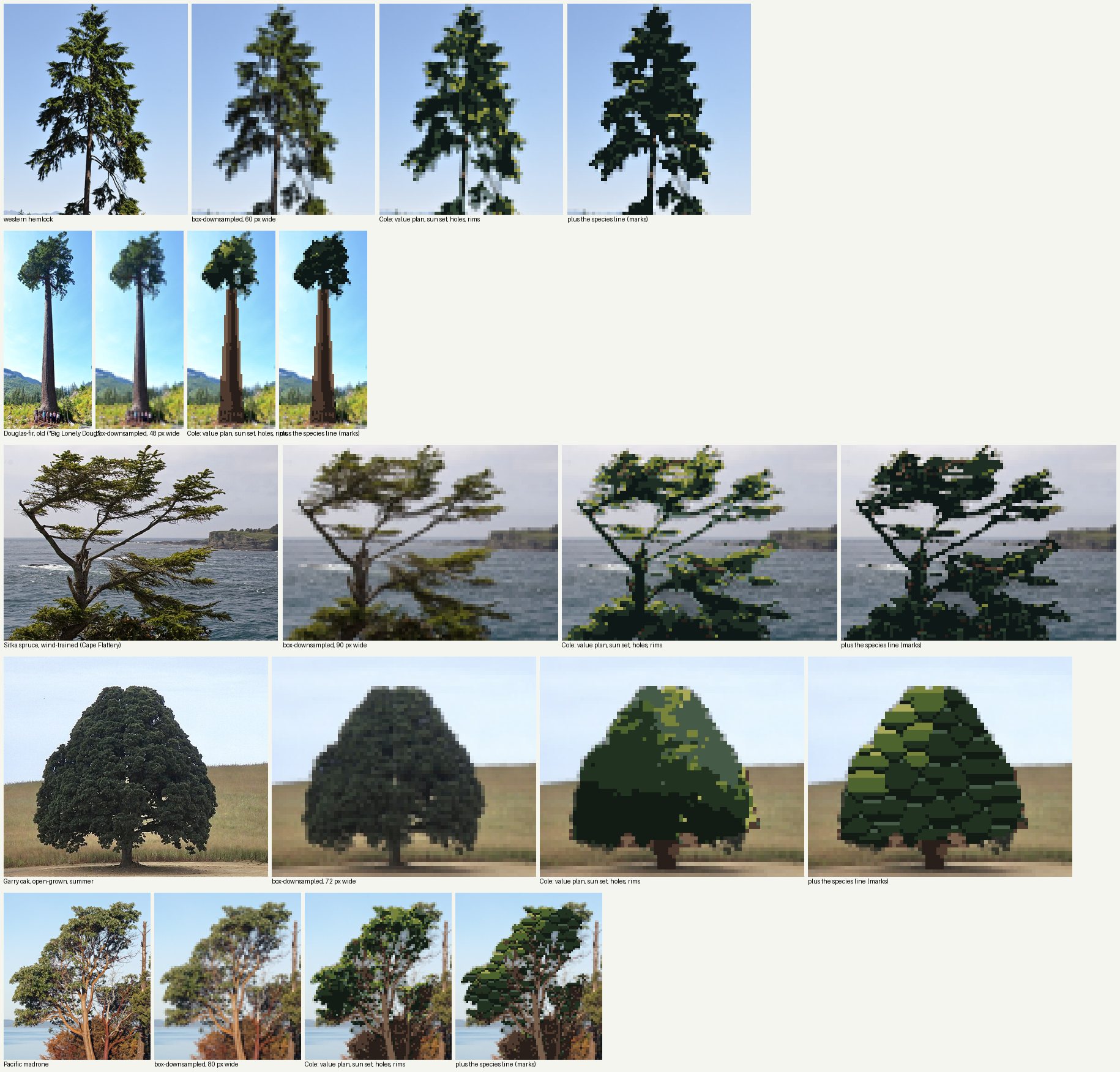 204. books/trees/work/photos_v1.png
Bash: cd ~/work/pixelart-studies/books/trees/src; python3 - <<'E' s=open('colepx.py').read() a=s.index(" # 6. wood: 3 steps by brightness") b=s.index(" return mat, step", a) s=s[:a
cd ~/work/pixelart-studies/books/trees/src; python3 - <<'E'
s=open('colepx.py').read()
a=s.index(" # 6. wood: 3 steps by brightness")
b=s.index(" return mat, step", a)
s=s[:a]+''' # 6. wood: a cylinder per row run (Cole p. 115: the smooth stem takes only its strip of
# light; the lit side toward the sun, a core, a dark far edge), blended with the photo value
Wm = mat == WOOD
if Wm.any():
wq = np.quantile(L[Wm], [0.4, 0.8])
byL = np.digitize(L, wq)
for y in range(H):
xs = np.where(Wm[y])[0]
if not len(xs):
continue
runs = np.split(xs, np.where(np.diff(xs) > 1)[0] + 1)
for r in runs:
n = len(r)
for k, x in enumerate(r):
f = (k + 0.5) / n
f = f if sun_dx < 0 else 1 - f # 0 = sun side
cyl = 2 if f < 0.34 else (1 if f < 0.75 else 0)
if n == 1:
cyl = 1
step[y, x] = min(2, max(0, int(round(0.7 * cyl + 0.3 * byL[y, x]))))
'''+s[b:]
s=s.replace(""" return dict(fol=fol, wood=[(40, 30, 26), (78, 58, 46), (120, 96, 76)],""",""" wood = {'madrone': [(96, 40, 22), (160, 78, 40), (204, 124, 70)],
'cedar': [(60, 34, 24), (112, 68, 46), (150, 110, 84)],
'douglas': [(44, 32, 28), (86, 62, 48), (128, 96, 72)]}.get(bark, [(40, 30, 26), (78, 58, 46), (120, 96, 76)])
return dict(fol=fol, wood=wood,""")
s=s.replace("def palette(kind='conifer'):","def palette(kind='conifer', bark=None):")
open('colepx.py','w').write(s)
p=open('sheet_photos.py').read()
p=p.replace("cp.palette(kind)","cp.palette(kind, BARK.get(name))")
p=p.replace("SUN = {'western hemlock': 1}","SUN = {'western hemlock': 1}\nBARK = {'Pacific madrone': 'madrone', 'Douglas-fir, old (\"Big Lonely Doug\")': 'douglas'}")
p=p.replace("dome=dome, wood_mask=wm,","dome=dome, wood_mask=wm, keep_holes=(4 if 'madrone' in name else 2),")
open('sheet_photos.py','w').write(p)
E
python3 sheet_photos.py
# output:
(1830, 1752)Bash: cd ~/work/pixelart-studies/books/trees/work; python3 -c " from PIL import Image im=Image.open('photos_v1.png'); a=im.crop((0,370,620,720)); b=im.crop((0,1450,990,1752)) S=Image.new
cd ~/work/pixelart-studies/books/trees/work; python3 -c "
from PIL import Image
im=Image.open('photos_v1.png'); a=im.crop((0,370,620,720)); b=im.crop((0,1450,990,1752))
S=Image.new('RGB',(990,660),'white'); S.paste(a,(0,0)); S.paste(b,(0,355)); S.save('/tmp/ph2.png')"
# output:
(Bash completed with no output)Read: /tmp/ph2.png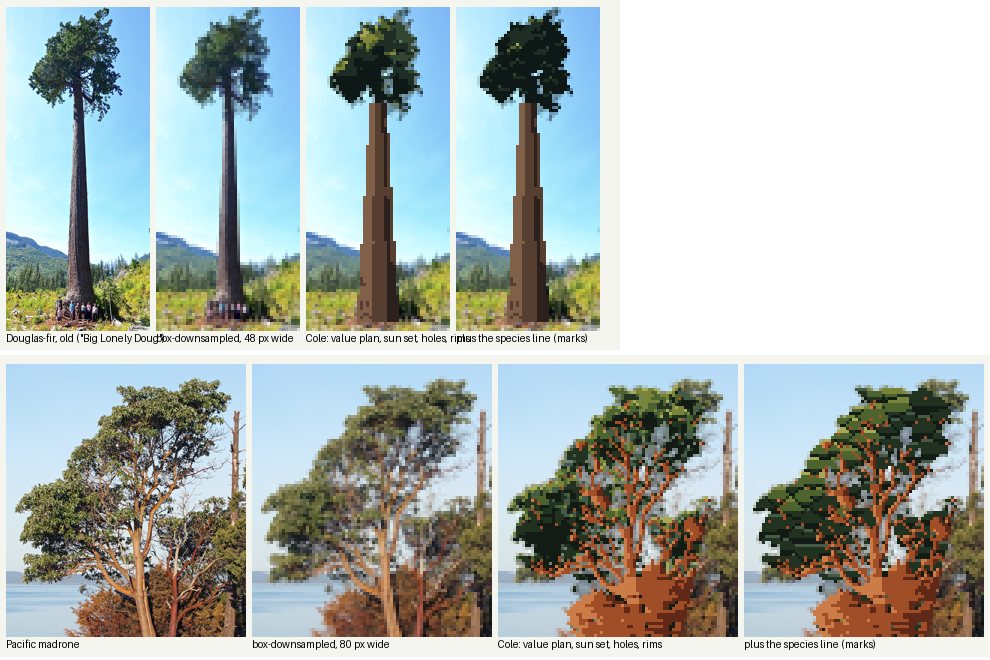 205. /tmp/ph2.png
Bash: cd ~/work/pixelart-studies/books/trees/src; python3 - <<'E' s=open('colepx.py').read() s=s.replace(""" if bg_hole:""",""" # stray wood-coloured pixels inside the crown are fo
cd ~/work/pixelart-studies/books/trees/src; python3 - <<'E'
s=open('colepx.py').read()
s=s.replace(""" if bg_hole:""",""" # stray wood-coloured pixels inside the crown are foliage (limbs are connected lines)
wl, wn = ndi.label(mat == WOOD)
if wn:
wsz = ndi.sum(mat == WOOD, wl, range(1, wn + 1))
mat[np.isin(wl, np.where(wsz < 3)[0] + 1)] = FOL
if bg_hole:""")
open('colepx.py','w').write(s)
p=open('sheet_photos.py').read()
p=p.replace("[(0,0.55),(0.1,0.3),(0.35,0.08),(0.6,0.0),(0.85,0.15),(0.88,0.5),(0.75,1.0),(0.3,1.0),(0.25,0.8),(0.0,0.7)]",
"[(0,0.55),(0.1,0.3),(0.35,0.08),(0.6,0.0),(0.85,0.15),(0.88,0.5),(0.62,0.62),(0.55,1.0),(0.42,1.0),(0.38,0.75),(0.25,0.72),(0.0,0.7)]")
open('sheet_photos.py','w').write(p)
E
python3 sheet_photos.py; cd ../work; python3 -c "
from PIL import Image
im=Image.open('photos_v1.png'); im.crop((0,1450,990,1752)).save('/tmp/ph2.png')"
# output:
(1830, 1752)Read: /tmp/ph2.png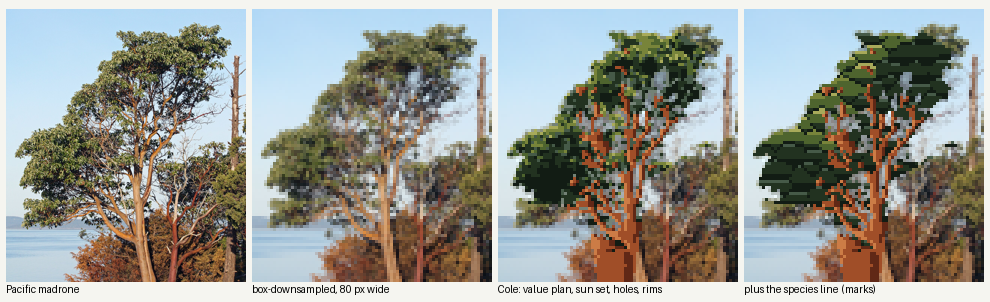 206. /tmp/ph2.png
Bash: cd ~/work/pixelart-studies/books/trees/src; python3 - <<'E' s=open('study_far2.py').read() def rep(name, new): global s a=s.index("T['%s'] = \"\"\""%name)+len("T['%s'] = \"
cd ~/work/pixelart-studies/books/trees/src; python3 - <<'E'
s=open('study_far2.py').read()
def rep(name, new):
global s
a=s.index("T['%s'] = \"\"\""%name)+len("T['%s'] = \"\"\""%name); b=s.index('"""',a)
s=s[:a]+new+s[b:]
rep('douglas-fir, mature', """
........#......
........#......
.......##......
........#......
......####.....
.......###.#...
.....##.###....
........##.....
....#######....
......####.##..
...####.####...
........###....
..###########..
....##.######..
.#####.#######.
........#.#....
..############.
.####.#########
.......#.......
.......#.......
.......#.......
.......##......
......###......
""")
rep('western hemlock', """
...........#...
..........#....
.........#.....
........##.....
.......###.....
......#.###....
.....#####.#...
......######...
....#.#######..
.....#######.#.
...##########..
..#.#########.#
..###########..
.#.##########.#
..############.
.#.###########.
#..###.######.#
..#.#.#.###.#..
.......#....#..
.......#.......
.......#.......
......###......
""")
rep('western redcedar, old', """
....#..#..#.....
....#.###.#.....
...######.##....
...#########....
..###########...
..############..
.##############.
..#############.
#.#############.
#..############.#
.#..###########.#
..#..#########.#.
.......#.#.......
.......###.......
.......###.......
.......###.......
.......###.......
.......###.......
......#####......
.....#######.....
""")
rep('sitka spruce', """
........#.......
.......###......
.......#.#......
......####......
....#.####.##...
......######....
..##.########.#.
.....#######....
.##########.###.
...#.#######..#.
###########.####
..#.#.#####.#.#.
.#...#.###.#..#.
........#.......
........#.......
........#.......
.......###......
""")
rep('garry oak, open', """
.......###...###.....
....#######.######...
..#################..
.###################.
####################.
.####################
.#.################.#
...###.#########.##..
.......#.###.#.......
........###..........
.........##..........
""")
rep('pacific madrone', """
............####....
......###..#######..
....######.########.
...#########.######.
....#######...####..
.......##.#....#....
........#..#..#.....
.........#..##......
..........#.#.......
...........#........
...........#........
..........##........
""")
s=s.replace("far_v2.png","far_v3.png").replace("far silhouettes v2","far silhouettes v3").replace("far_v2_strip2x","far_v3_strip2x")
open('study_far3.py','w').write(s)
E
python3 study_far3.py
# output:
(Bash completed with no output)Read: books/trees/work/far_v3.png 207. books/trees/work/far_v3.png
Bash: cd ~/work/pixelart-studies/books/trees/src; python3 - <<'E' s=open('study_far3.py').read() a=s.index("T['western redcedar, old'] = \"\"\"")+len("T['western redcedar, old'] = \"\"\"
cd ~/work/pixelart-studies/books/trees/src; python3 - <<'E'
s=open('study_far3.py').read()
a=s.index("T['western redcedar, old'] = \"\"\"")+len("T['western redcedar, old'] = \"\"\""); b=s.index('"""',a)
s=s[:a]+"""
.....#..#..#.....
.....#..#.##.....
....###.####.....
....#.#.###......
...#########.....
....#######.#....
...##########....
..#.#########....
...###########...
..#.##########.#.
..############...
.#.############..
..#############..
.#.#############.
#..##.##########.
.#.#############.
#...############.#
.#...#.#######.#.#
#.....#..###..#..#
........###......
........###......
........###......
........###......
.......#####.....
......#######....
.....#########...
"""+s[b:]
s=s.replace(" Hc = 34"," Hc = 34")
open('study_far3.py','w').write(s)
E
python3 study_far3.py
# output:
(Bash completed with no output)Read: books/trees/work/far_v3.png 208. books/trees/work/far_v3.png
Bash: mkdir -p ~/work/pixelart-studies/books/trees/scene; cd ~/work/pixelart-studies/books/trees/src; cat > sprites.py <<'E' """Hand-typed tree sprites for landscape scale (~1 m/px), sun
mkdir -p ~/work/pixelart-studies/books/trees/scene; cd ~/work/pixelart-studies/books/trees/src; cat > sprites.py <<'E'
"""Hand-typed tree sprites for landscape scale (~1 m/px), sun from the LEFT.
Legend: '#' mass (the one depth of tone of a massed tree, Cole p. 51), '+' lit plane (the
sun set, on the upper/left faces of tiers only), '-' sky-lit upper plane on the shade side,
'o' sky hole (colourless-rim handled at paint time), 'w' trunk lit, 'W' trunk shade."""
S = {}
S['douglas_old'] = """
.......++#.......
....+.++####.#...
..++#######.####.
..+.########.....
....+####.###.#..
.++#####.#####...
...+##.###.......
.+#######-.###...
...##.####.##....
......###........
.......#.........
.......w#........
.......wW........
.......wW........
.......wW........
......wwW........
......wwW........
......wwW........
......wwW........
......wwWW.......
......wwWW.......
.....wwwWW.......
.....wwwwWW......
"""
S['douglas_mat'] = """
........+.......
........+.......
.......+#.......
........#.......
......++##......
.......+##.#....
.....++#.##-....
........##......
....++####-#....
......+###.--...
...++##.####-...
........###.....
..++#########-..
....+#.######...
.+++##.#######-.
........#.#.....
..++##########..
.++##.########-.
.......w#.......
.......wW.......
.......wW.......
"""
S['douglas_mat2'] = """
.......+.......
......++.......
......+#.......
.....++##......
......+#.#.....
....++####-....
......+##......
...++#######...
....+##.###-...
..++########-..
.....+##.###...
.++##########-.
...+##.######..
++###########--
......w#.......
......wW.......
......wW.......
"""
S['hemlock'] = """
..........+..
.........+...
........+#...
.......+##...
......++##...
.....+####-..
......+####..
....++#####-.
.....+######.
...++#######-
....+##.####.
..++########-
.+.+########.
..++#.######-
.+++########.
+..+##.####-#
.+.#.#.#.##.-
......w#.....
......wW.....
"""
S['cedar_old'] = """
....+..+..+....
....+.++#.#....
...++#####.#...
...+######.....
..++#######-...
...+#######....
..++########-..
.+.+########...
..++#########-.
.+.++########..
+..++#########-
.+..+########.-
+....#.####.#..
.......wW......
.......wW......
......wwWW.....
.....wwwWWW....
"""
S['alder'] = """
....++##....
..++#####-..
.++#######-.
.+#########.
++#########-
.+########-.
..+######...
....#w#.....
.....wW.....
.....w......
....wW......
"""
S['alder2'] = """
...++#.....
.++####-...
.+######-..
++#######..
.+######-..
..+####....
....w#.....
....wW.....
.....w.....
.....wW....
"""
# distant forest: small hand glyphs for massed conifers (2-6 px wide)
S['far1'] = """
.+.
.#.
+##
+##
"""
S['far2'] = """
..+..
.+#..
.+##.
++##-
.+#..
+###-
"""
S['far3'] = """
.+..
+##.
+###
"""
def rows(s):
r = s.strip('\n').split('\n')
w = max(len(x) for x in r)
return [x.ljust(w, '.') for x in r]
E
python3 -c "import sprites; print({k:(len(sprites.rows(v)),len(sprites.rows(v)[0])) for k,v in sprites.S.items()})"
# output:
{'douglas_old': (23, 17), 'douglas_mat': (21, 16), 'douglas_mat2': (17, 15), 'hemlock': (19, 13), 'cedar_old': (17, 15), 'alder': (11, 12), 'alder2': (10, 11), 'far1': (4, 3), 'far2': (6, 5), 'far3': (3, 4)}Bash: cd ~/work/pixelart-studies/books/trees/src; cat > scene_hillside.py <<'E' """A west-side Washington hillside at landscape scale (~2 m/px), built on both books. Cole: p. 51 masse
cd ~/work/pixelart-studies/books/trees/src; cat > scene_hillside.py <<'E'
"""A west-side Washington hillside at landscape scale (~2 m/px), built on both books.
Cole: p. 51 massed trees: one depth of tone, from the dark end; severe outline, no gimped edge
p. 64 far trees recognised by outline only: the skyline of the far ridge is a row of
spire tips, flat in tone
p. 66 'woods fix all the contours of the hill'; plantations/stands step down behind it
p. 57 no even spacing: trees in clusters with irregular gaps
p. 69-71 the big trees against the sky: lit edges, sky holes with colourless rims
p. 115 the sun set is a separate lighter family, only on faces toward the sun
Halle: p. 360 imbrication on slopes: canopies overlap downhill like roof tiles; the downhill
edge of each tile is taller and lit from the side (river-bank effect)
p. 364 riverside: the canopy curves down to the water on asymmetric crowns (alders lean
over the creek)
"""
import numpy as np
from PIL import Image
from px import Canvas
from lib import sheet, up
import sprites as SP
W, H = 256, 144
rng = np.random.default_rng(4)
# depth bands: 0 near, 1 mid, 2 far ridge, 3 very far
# material classes on an index canvas: (depth, cls) -> colour
SKY = 0
# per-depth palettes: dark, mass, sky-lit, lit, lit-hi, trunk-lit, trunk-shade
PAL_D = {
0: [(10, 20, 20), (22, 36, 30), (58, 78, 74), (96, 104, 48), (150, 146, 72), (120, 92, 70), (58, 40, 32)],
1: [(26, 40, 42), (36, 52, 50), (70, 90, 90), (104, 112, 64), (140, 140, 86), (110, 96, 84), (60, 56, 56)],
2: [(64, 80, 92), (74, 90, 102), (96, 114, 124), (120, 130, 110), (140, 148, 128), (0, 0, 0), (0, 0, 0)],
3: [(112, 128, 144), (120, 136, 150), (132, 148, 160), (146, 156, 150), (156, 166, 160), (0, 0, 0), (0, 0, 0)],
}
SKYC = [(118, 160, 206), (134, 172, 212), (150, 184, 218), (168, 196, 222), (186, 206, 224), (200, 212, 222)]
GROUND = {0: [(46, 44, 30), (70, 66, 40), (104, 100, 58)], 1: [(50, 56, 44), (64, 70, 52), (88, 92, 64)]}
WATER = [(80, 104, 120), (120, 150, 170), (160, 186, 204)]
img = np.zeros((H, W, 3), np.uint8)
# sky: six bands, dithered seams only (the studio's sky rule)
bands = [0, 14, 28, 42, 56, 70, 144]
for k in range(6):
img[bands[k]:bands[k + 1]] = SKYC[k]
if k:
y = bands[k]
for x in range(W):
if (x + y) % 2 == 0: img[y - 1, x] = SKYC[k]
if (x + y) % 2 == 1: img[y, x] = SKYC[k - 1]
occ = np.full((H, W), -1) # depth occupying each pixel (for painter's order checks)
def ridge(y0, amp, seed, n=6):
r = np.random.default_rng(seed)
xs = np.linspace(0, W, n)
ys = y0 + r.uniform(-amp, amp, n)
return np.interp(np.arange(W), xs, ys)
def fill_below(prof, depth, cls=1):
for x in range(W):
top = int(prof[x])
img[top:, x] = PAL_D[depth][cls]
occ[top:, x] = depth
# very far ridge (depth 3): flat, a skyline of tiny spire tips (Cole: pattern against the sky)
p3 = ridge(62, 5, 1, 7)
fill_below(p3, 3)
for x in range(0, W, 1):
if rng.random() < 0.55:
h = int(rng.integers(1, 3))
for k in range(h): img[int(p3[x]) - 1 - k, x] = PAL_D[3][1]
# far ridge (depth 2): massed forest with a row of glyph tops on its crest; a lit left flank
p2 = ridge(74, 7, 2, 6)
fill_below(p2, 2)
x = 0
while x < W:
g = SP.rows(SP.S[rng.choice(['far1', 'far2', 'far3'])])
gy = int(p2[min(W - 1, x)]) - len(g) + 2
for j, row in enumerate(g):
for i, ch in enumerate(row):
X, Y = x + i, gy + j
if 0 <= X < W and 0 <= Y < H and ch != '.':
img[Y, X] = PAL_D[2][{'#': 1, '+': 3, '-': 2}[ch]]
x += len(g[0]) + int(rng.integers(0, 3)) # clustered: gaps of 0-2 px, never regular
# mid hillside (depth 1): slope from upper left to the creek at lower right, imbricated tiles
def slope_y(x):
return 70 + 0.28 * x
creek_x = 190
for x in range(W):
top = int(min(slope_y(x), 124))
img[top:, x] = GROUND[1][0]
tiles = [(0, 60), (60, 118), (118, 170)]
for (a, b) in tiles:
# each tile: crowns whose tops follow a line flatter than the slope; the downhill edge
# stands proud (imbrication, Halle p. 360)
xs = []
x = a + int(rng.integers(0, 3))
while x < b:
xs.append(x); x += int(rng.integers(4, 9))
for i, x in enumerate(xs):
edge = i == len(xs) - 1
name = rng.choice(['douglas_mat2', 'hemlock', 'far2']) if not edge else 'douglas_mat'
g = SP.rows(SP.S[name])
base = slope_y(x + len(g[0]) // 2) + (6 if not edge else 8)
tile_top = slope_y(a) + 0.12 * (x - a) - 4 # tile surface (flatter)
gy = int(min(base - len(g), tile_top + rng.integers(-2, 3)))
for j, row in enumerate(g):
for k, ch in enumerate(row):
X, Y = x + k, gy + j
if not (0 <= X < W and 0 <= Y < H) or ch == '.' or ch == 'o':
continue
cls = {'#': 1, '+': 3, '-': 2, 'w': 5, 'W': 6}[ch]
if edge and ch == '#' and k < len(row) // 2 and j < len(g) * 0.7 and (j + k) % 3 == 0:
cls = 3 # side light on the tile edge
img[Y, X] = PAL_D[1][cls]
# the shadow between tiles: a dark band where the next tile tucks under (Cole: shadows
# between the foliage betray the forest's structure)
for x in range(b - 2, b + 6):
if 0 <= x < W:
y = int(slope_y(x)) + 2
for k in range(3):
if y + k < H: img[y + k, x] = PAL_D[1][0]
# creek and riverside alders leaning over the water (Halle p. 364, Fig. 107D)
for x in range(creek_x, W):
y = int(118 + 0.08 * (x - creek_x))
img[y:y + 3, x] = WATER[1]
img[y + 3:, x] = GROUND[0][0]
for x in range(creek_x, W):
if (x * 5) % 7 < 2: img[int(118 + 0.08 * (x - creek_x)), x] = WATER[2]
for i, x in enumerate([176, 184, 190, 205, 214, 229, 236]):
g = SP.rows(SP.S['alder' if i % 2 else 'alder2'])
if x < creek_x + 6:
g = [r[::-1] for r in g] # lean toward the water
gy = int(min(slope_y(x), 118)) - len(g) + 3
for j, row in enumerate(g):
sh = (len(g) - j) // 5 * (1 if x < creek_x + 6 else -1) # the lean
for k, ch in enumerate(row):
X, Y = x + k + sh, gy + j
if 0 <= X < W and 0 <= Y < H and ch != '.':
img[Y, X] = PAL_D[1][{'#': 1, '+': 4, '-': 2, 'w': 5, 'W': 6}[ch]]
# near ridge at left with the big trees against the sky (depth 0)
def near_ground(x):
return 118 - 26 * np.exp(-((x - 30) / 55.0) ** 2)
for x in range(0, 120):
top = int(near_ground(x))
if top < H:
img[top:, x] = GROUND[0][0]
img[top, x] = GROUND[0][1]
for name, x in [('douglas_old', 8), ('cedar_old', 30), ('hemlock', 44), ('douglas_mat', 58), ('hemlock', 72)]:
g = SP.rows(SP.S[name])
scale = 2 if name == 'douglas_old' else 1
gg = [''.join(ch * scale for ch in r) for r in g for _ in range(scale)]
gy = int(near_ground(x + len(gg[0]) // 2)) - len(gg) + 1
for j, row in enumerate(gg):
for k, ch in enumerate(row):
X, Y = x + k, gy + j
if 0 <= X < W and 0 <= Y < H and ch != '.':
img[Y, X] = PAL_D[0][{'#': 1, '+': 3, '-': 2, 'w': 5, 'W': 6, 'o': 2}[ch]]
Image.fromarray(img).save('../scene/hillside_v1_1x.png')
up(Image.fromarray(img), 4).save('../scene/hillside_v1_4x.png')
E
python3 scene_hillside.py
# output:
(Bash completed with no output)Read: books/trees/scene/hillside_v1_4x.png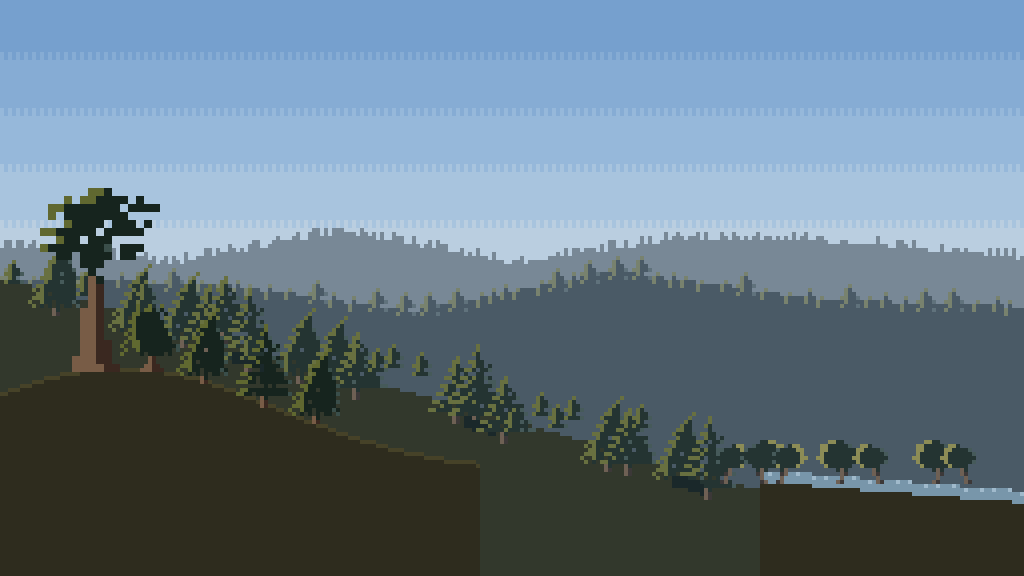 209. books/trees/scene/hillside_v1_4x.png
Bash: cd ~/work/pixelart-studies/books/trees/src; python3 - <<'E' s=open('scene_hillside.py').read() a=s.index("tiles = [(0, 60), (60, 118), (118, 170)]"); b=s.index("# creek and riversi
cd ~/work/pixelart-studies/books/trees/src; python3 - <<'E'
s=open('scene_hillside.py').read()
a=s.index("tiles = [(0, 60), (60, 118), (118, 170)]"); b=s.index("# creek and riverside alders")
s=s[:a]+'''tiles = [(0, 52), (46, 104), (98, 150), (144, 192)]
for ti, (a, b) in enumerate(tiles):
# the tile is a MASS (Cole p. 51): fill from the canopy surface down to the ground in the
# mass tone; its surface is flatter than the slope, so the downhill edge stands proud of
# the next tile (imbrication, Halle p. 360)
surf = lambda x: slope_y(a) - 6 + 0.1 * (x - a)
for x in range(a, min(b, W)):
t = int(surf(x) + (1 if (x * 7 + ti) % 5 == 0 else 0))
img[t:int(slope_y(x)) + 10, x] = PAL_D[1][1]
# crowns along the surface: tips break the mass's top; spacing clustered, never even
xs = []
x = a + int(rng.integers(0, 3))
while x < b - 4:
xs.append(x); x += int(rng.choice([3, 4, 4, 5, 7, 9]))
for i, x in enumerate(xs):
edge = i >= len(xs) - 2
name = 'douglas_mat' if edge else rng.choice(['douglas_mat2', 'hemlock', 'far2', 'douglas_mat2'])
g = SP.rows(SP.S[name])
gy = int(surf(x + len(g[0]) // 2) - len(g) * (0.55 if not edge else 0.75) + rng.integers(-1, 2))
for j, row in enumerate(g):
for k, ch in enumerate(row):
X, Y = x + k, gy + j
if not (0 <= X < W and 0 <= Y < H) or ch in '.o':
continue
if ch in 'wW':
continue # trunks hidden in the mass
cls = {'#': 1, '+': 3, '-': 2}[ch]
img[Y, X] = PAL_D[1][cls]
# the shadow where the next tile tucks under (Cole: the shadows between the foliage)
for x in range(b - 1, min(W, b + 7)):
y = int(slope_y(a) - 6 + 0.1 * (b - a)) + 6
for k in range(2):
if 0 <= y + k < H and (x + k) % 4 != 0: img[y + k, x] = PAL_D[1][0]
'''+s[b:]
s=s.replace("""for x in range(0, 120):
top = int(near_ground(x))
if top < H:""","""for x in range(0, W):
top = int(near_ground(x))
if top < H and near_ground(x) < 126:""")
s=s.replace("hillside_v1","hillside_v2")
open('scene_hillside.py','w').write(s)
E
python3 scene_hillside.py
# output:
(Bash completed with no output)Read: books/trees/scene/hillside_v2_4x.png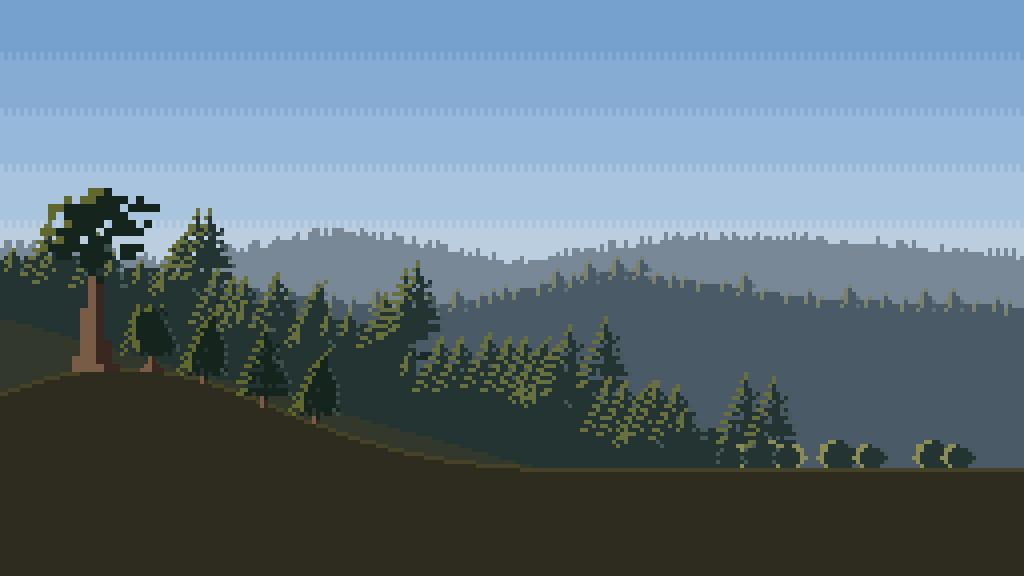 210. books/trees/scene/hillside_v2_4x.png
Bash: cd ~/work/pixelart-studies/books/trees/src; python3 - <<'E' s=open('scene_hillside.py').read() s=s.replace(" return 118 - 26 * np.exp(-((x - 30) / 55.0) ** 2)"," return 96 +
cd ~/work/pixelart-studies/books/trees/src; python3 - <<'E'
s=open('scene_hillside.py').read()
s=s.replace(" return 118 - 26 * np.exp(-((x - 30) / 55.0) ** 2)"," return 96 + ((x - 22) / 40.0) ** 2 * 14")
s=s.replace("if top < H and near_ground(x) < 126:","if top < H:")
s=s.replace("hillside_v2","hillside_v3")
open('scene_hillside.py','w').write(s)
E
python3 scene_hillside.py
# output:
(Bash completed with no output)Read: books/trees/scene/hillside_v3_4x.png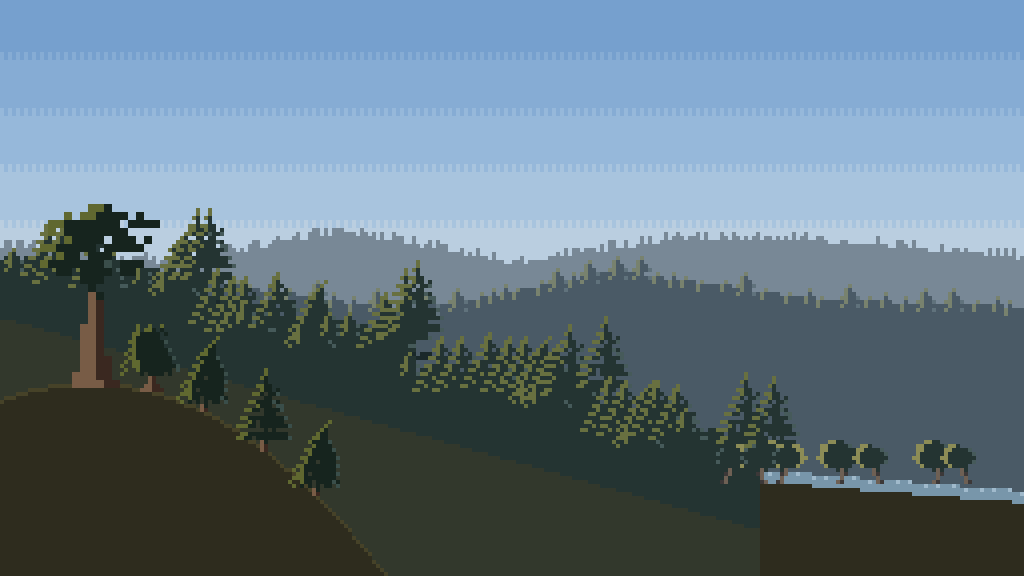 211. books/trees/scene/hillside_v3_4x.png
Bash: cd ~/work/pixelart-studies/books/trees/src; python3 - <<'E' s=open('scene_hillside.py').read() s=s.replace(" img[t:int(slope_y(x)) + 10, x] = PAL_D[1][1]"," img[t:, x
cd ~/work/pixelart-studies/books/trees/src; python3 - <<'E'
s=open('scene_hillside.py').read()
s=s.replace(" img[t:int(slope_y(x)) + 10, x] = PAL_D[1][1]"," img[t:, x] = PAL_D[1][1]")
s=s.replace("tiles = [(0, 52), (46, 104), (98, 150), (144, 192)]","tiles = [(0, 52), (46, 104), (98, 150), (144, 200)]")
# creek bank: natural edge, water surface from x=186 with a sloping bank
s=s.replace("""for x in range(creek_x, W):
y = int(118 + 0.08 * (x - creek_x))
img[y:y + 3, x] = WATER[1]
img[y + 3:, x] = GROUND[0][0]""","""for x in range(creek_x - 8, W):
y = int(118 + 0.08 * (x - creek_x))
if x < creek_x: # the bank slides under the water: 1-px steps
y += (creek_x - x) // 2
img[y:y + 3, x] = WATER[1]
img[y + 3:, x] = GROUND[0][0]
img[y + 3, x] = GROUND[0][1]""")
s=s.replace("""for name, x in [('douglas_old', 8), ('cedar_old', 30), ('hemlock', 44), ('douglas_mat', 58), ('hemlock', 72)]:
g = SP.rows(SP.S[name])
scale = 2 if name == 'douglas_old' else 1""","""for name, x in [('hemlock', 44), ('douglas_old', 2), ('cedar_old', 26)]:
g = SP.rows(SP.S[name])
scale = 2""")
s=s.replace("hillside_v3","hillside_v4")
open('scene_hillside.py','w').write(s)
E
python3 scene_hillside.py
# output:
(Bash completed with no output)Read: books/trees/scene/hillside_v4_4x.png 212. books/trees/scene/hillside_v4_4x.png
Bash: cd ~/work/pixelart-studies/books/trees/src; python3 - <<'E' s=open('scene_hillside.py').read() a=s.index("for name, x in [('hemlock', 44), ('douglas_old', 2), ('cedar_old', 26)]:")
cd ~/work/pixelart-studies/books/trees/src; python3 - <<'E'
s=open('scene_hillside.py').read()
a=s.index("for name, x in [('hemlock', 44), ('douglas_old', 2), ('cedar_old', 26)]:")
b=s.index("Image.fromarray(img).save")
s=s[:a]+'''# near trees: painted from the photo studies at ~1 m/px (twice the detail of the mid slope,
# because they are twice as near) -- Cole's rules via colepx, mapped onto the near palette
import colepx as cp
from sheet_photos import STUDIES, poly_mask, sky_rule_factory
def near_sprite(idx, width):
name, path, crop, w, poly, kind, dome, wpoly = STUDIES[idx]
rgb = cp.downsample(path, width, crop)
other = ~poly_mask(rgb.shape[:2], poly) if poly else np.zeros(rgb.shape[:2], bool)
wm = poly_mask(rgb.shape[:2], wpoly) if wpoly else None
mat, step = cp.run(rgb, sky_rule=sky_rule_factory(1.0), other_mask=other, wood_mask=wm, min_lit=3)
return mat, step
FMAP = {0: 0, 1: 1, 2: 1, 3: 3, 4: 3, 5: 4, 6: 2}
WMAP = {0: 6, 1: 6, 2: 5}
for idx, width, x in [(0, 26, 38), (1, 16, 4)]:
mat, step = near_sprite(idx, width)
h = mat.shape[0]
rows_ = np.where((mat == cp.FOL).any(1) | (mat == cp.WOOD).any(1))[0]
bottom = rows_.max()
gy = int(near_ground(x + width // 2)) - bottom
for j in range(h):
for k in range(width):
X, Y = x + k, gy + j
if not (0 <= X < W and 0 <= Y < H):
continue
if mat[j, k] == cp.FOL:
img[Y, X] = PAL_D[0][FMAP[int(step[j, k])]]
elif mat[j, k] == cp.WOOD:
img[Y, X] = PAL_D[0][WMAP[int(step[j, k])]]
'''+s[b:]
s=s.replace("hillside_v4","hillside_v5")
open('scene_hillside.py','w').write(s)
E
python3 scene_hillside.py
# output:
(Bash completed with no output)Read: books/trees/scene/hillside_v5_4x.png 213. books/trees/scene/hillside_v5_4x.png
Bash: cd ~/work/pixelart-studies/books/trees/src; python3 - <<'E' s=open('scene_hillside.py').read() s=s.replace(" 1: [(26, 40, 42), (36, 52, 50), (70, 90, 90), (104, 112, 64), (140,
cd ~/work/pixelart-studies/books/trees/src; python3 - <<'E'
s=open('scene_hillside.py').read()
s=s.replace(" 1: [(26, 40, 42), (36, 52, 50), (70, 90, 90), (104, 112, 64), (140, 140, 86), (110, 96, 84), (60, 56, 56)],",
" 1: [(38, 54, 60), (48, 66, 70), (78, 98, 102), (106, 116, 76), (138, 142, 94), (110, 96, 84), (60, 56, 56)],")
s=s.replace("for idx, width, x in [(0, 26, 38), (1, 16, 4)]:","for idx, width, x in [(0, 40, 30), (1, 24, 0)]:")
s=s.replace("hillside_v5","hillside_v6")
open('scene_hillside.py','w').write(s)
E
python3 scene_hillside.py
# output:
(Bash completed with no output)Read: books/trees/scene/hillside_v6_4x.png 214. books/trees/scene/hillside_v6_4x.png
Bash: cd ~/work/pixelart-studies/books/trees/src; python3 - <<'E' import numpy as np from PIL import Image import colepx as cp from lib import sheet, up A=np.array(Image.open('~/work/vox
cd ~/work/pixelart-studies/books/trees/src; python3 - <<'E'
import numpy as np
from PIL import Image
import colepx as cp
from lib import sheet, up
A=np.array(Image.open('~/work/voxsim/renders/studio-trees/sheet/individuals_spruce.png').convert('RGB')).astype(int)
print(A.shape)
# the background is olive ground (not sky): treat background colour as 'sky' via rule
bg=A[5,5]
def rule(rgb): return (np.abs(rgb-bg).sum(-1)<30)
out=[]
for (y0,x0) in [(0,0),(0,384),(0,512),(160,384)]:
c=A[y0:y0+160, x0:x0+128]
mat,step=cp.run(c, sky_rule=rule, min_lit=3)
o=cp.to_rgb(mat,step,cp.palette('conifer'),rgb=c)
out += [up(Image.fromarray(c.astype(np.uint8)),3), up(o,3)]
sheet(out,4,labels=['vox-trees spruce','Cole rules']*4).save('../work/voxtrees_ab.png')
E
# output:
(320, 768, 3)Read: books/trees/work/voxtrees_ab.png 215. books/trees/work/voxtrees_ab.png
Write: books/trees/src/hires.py
"""Render a grown tree (arch.py) as a fine 'photograph' (K x finer than game res), then treat it
exactly as the photo studies are treated: box-downsample to game resolution and apply Cole's
rules (colepx). One pipeline for photos and for generated trees, so a generated hemlock and a
photographed one end up in the same pixel language.
Fine render, per living bough node within keep_m of the tip:
- a spray: branchlet strokes fanning out from the node in the bough's plane (Cole figs.
108-110), seen side-on, drooping by the species' fan_droop; hanging strands for
pendulous species (sp.hang)
- its light: an upward-facing plane lit by the sky (Cole p. 114) plus the sun if the node is
not screened by foliage above it along the sun direction (opacity map by columns)
Wood: segments drawn as quads with a cylinder light.
"""
import numpy as np
from PIL import Image, ImageDraw
def _rgb(c):
return tuple(int(max(0, min(255, v))) for v in c)
def render(tree, mpp, W, H, K=4, yaw=0.0, sun_side=-1, sun_el=40, sky=((150, 190, 226), (196, 214, 230)),
leaf=(46, 70, 44), leaf_lit=(150, 150, 70), bark=(90, 66, 52), seed=0):
sp = tree.sp
rng = np.random.default_rng(seed)
fm = mpp / K
FW, FH = W * K, H * K
img = Image.new('RGB', (FW, FH))
arr = np.zeros((FH, FW, 3), np.uint8)
t = np.linspace(0, 1, FH)[:, None, None]
arr[:] = (np.array(sky[0]) * (1 - t) + np.array(sky[1]) * t).astype(np.uint8)
img = Image.fromarray(arr)
d = ImageDraw.Draw(img)
ox, oy = FW / 2, FH - 2 * K
c, s = np.cos(yaw), np.sin(yaw)
def P(p):
return ox + (p[0] * c - p[1] * s) / fm, oy - p[2] / fm, p[0] * s + p[1] * c
# --- collect spray nodes ---
nodes = []
for i, a in enumerate(tree.axes):
if a.dead or len(a.pts) < 2:
continue
pts = np.array(tree.nodded(i, a.pts), float)
ages = np.array(a.age_nodes[:len(pts)])
if a.order == 0 or a.reiterated:
for k in range(1, len(pts)):
if tree.year - ages[k] <= 2:
nodes.append((pts[k], pts[k] - pts[k - 1], 0.6, True, i))
continue
seg = np.linalg.norm(np.diff(pts, axis=0), axis=1)
from_tip = np.concatenate([np.cumsum(seg[::-1])[::-1], [0.0]])
keep = sp.keep_m * (1.6 if tree.open else 1.0)
for k in range(1, len(pts)):
if from_tip[k] <= keep:
u = 1 - from_tip[k] / keep
nodes.append((pts[k], pts[k] - pts[k - 1], u, False, i))
if not nodes:
return np.array(img)
P3 = np.array([n[0] for n in nodes])
# --- sun screening: bin nodes in columns along the sun; count foliage above each ---
sunv = np.array([-sun_side * np.cos(np.radians(sun_el)) if True else 0, 0.3, np.sin(np.radians(sun_el))])
sunv = sunv / np.linalg.norm(sunv)
a_ = np.cross(sunv, [0, 1.0, 0]); a_ /= np.linalg.norm(a_) + 1e-9
b_ = np.cross(sunv, a_)
cell = max(0.5, sp.reach * 0.8)
iu = np.floor(P3 @ a_ / cell).astype(int); iv = np.floor(P3 @ b_ / cell).astype(int)
tt = P3 @ sunv
key = iu * 100003 + iv
order = np.lexsort((-tt, key))
occl = np.zeros(len(P3))
run, prev = 0, None
for j in order:
if key[j] != prev:
run, prev = 0, key[j]
occl[j] = run
run += 1
sunlit = np.exp(-occl / 2.5)
# --- wood first (painted behind the foliage in front of it) ---
segs = sorted(tree.segments(), key=lambda q: P(q[0])[2])
for p0, p1, r, o, dead in segs:
x0, y0, _ = P(p0); x1, y1, _ = P(p1)
w = max(1, int(round(2 * r / fm)))
col = np.array(bark) * (0.75 if dead else 1.0)
d.line([(x0, y0), (x1, y1)], fill=_rgb(col * 0.7), width=w)
if w >= 3: # lit strip on the sun side (Cole p. 115)
off = -sun_side * w * 0.25
d.line([(x0 + off, y0), (x1 + off, y1)], fill=_rgb(col * 1.25), width=max(1, w // 3))
# --- sprays, back to front ---
depth = np.array([P(n[0])[2] for n in nodes])
for j in np.argsort(depth):
p, dv, u, is_lead, ax = nodes[j]
x, y, _ = P(p)
L = 0.45 + 0.55 * sunlit[j]
fside = (x - ox) * (-sun_side) < 0 # on the sun side of the crown
L *= 1.0 if fside else 0.8
base = np.array(leaf) * (0.55 + 0.35 * L)
lit = np.array(leaf_lit) * L
reach = sp.reach * (0.35 + 0.65 * min(1.0, u * 1.5)) / fm
if is_lead:
reach *= 0.4
dirx = np.sign(dv[0]) if abs(dv[0]) > 1e-6 else rng.choice([-1, 1])
# branchlets: 3-5 strokes fanning outward and drooping
nb = 3 if is_lead else int(rng.integers(3, 6))
for b in range(nb):
ang = np.radians(rng.uniform(-25, 40) + sp.fan_droop * 40) # below horizontal
ln = reach * rng.uniform(0.5, 1.0)
ex = x + dirx * np.cos(ang) * ln * rng.uniform(0.3, 1.0) * (1 if b % 2 else -0.6)
ey = y + np.sin(ang) * ln
wth = max(1, int(round(sp.pad_thick / fm * 0.5)))
d.line([(x, y), (ex, ey)], fill=_rgb(base), width=wth)
# the upper surface of the spray catches the light: a thinner lit line along its top
if sunlit[j] > 0.35 and rng.random() < 0.8:
d.line([(x, y - wth * 0.5), (ex, ey - wth * 0.5)], fill=_rgb(lit), width=max(1, wth // 2))
# pendulous strands
if sp.hang > 0 and not is_lead and rng.random() < 0.6:
hl = sp.hang / fm * rng.uniform(0.3, 1.0) * min(1.0, u + 0.3)
d.line([(ex, ey), (ex + rng.uniform(-1, 1) * K, ey + hl)], fill=_rgb(base * 0.8), width=max(1, wth // 2))
return np.array(img)
def to_game(fine, K):
H, W = fine.shape[0] // K, fine.shape[1] // K
im = Image.fromarray(fine[:H * K, :W * K])
return np.array(im.resize((W, H), Image.BOX)).astype(int)
Bash: cd ~/work/pixelart-studies/books/trees/src; cat > t_hires.py <<'E' from lib import * import hires, colepx as cp import numpy as np, time from PIL import Image cells=[];labs=[] for
cd ~/work/pixelart-studies/books/trees/src; cat > t_hires.py <<'E'
from lib import *
import hires, colepx as cp
import numpy as np, time
from PIL import Image
cells=[];labs=[]
for name,age,op in [('hemlock',90,True),('douglas',90,False),('spruce',90,True)]:
t0=time.time()
t=grow(name,age,seed=2,open_grown=op)
mpp=0.5; H=int((t.height()+3)/mpp); W=int(30/mpp); K=4
fine=hires.render(t,mpp,W,H,K=K)
rgb=hires.to_game(fine,K)
mat,step=cp.run(rgb,min_lit=3)
out=cp.to_rgb(mat,step,cp.palette('conifer'),rgb=rgb)
cells += [Image.fromarray(fine).resize((W*3,H*3)), up(Image.fromarray(rgb.astype(np.uint8)),3), up(out,3)]
labs += [f'{name} fine render', 'box to game res', f'Cole rules ({time.time()-t0:.0f}s)']
sheet(cells,3,labels=labs).save('../work/hires_v1.png')
E
python3 t_hires.py
# output:
(Bash completed with no output)Read: books/trees/work/hires_v1.png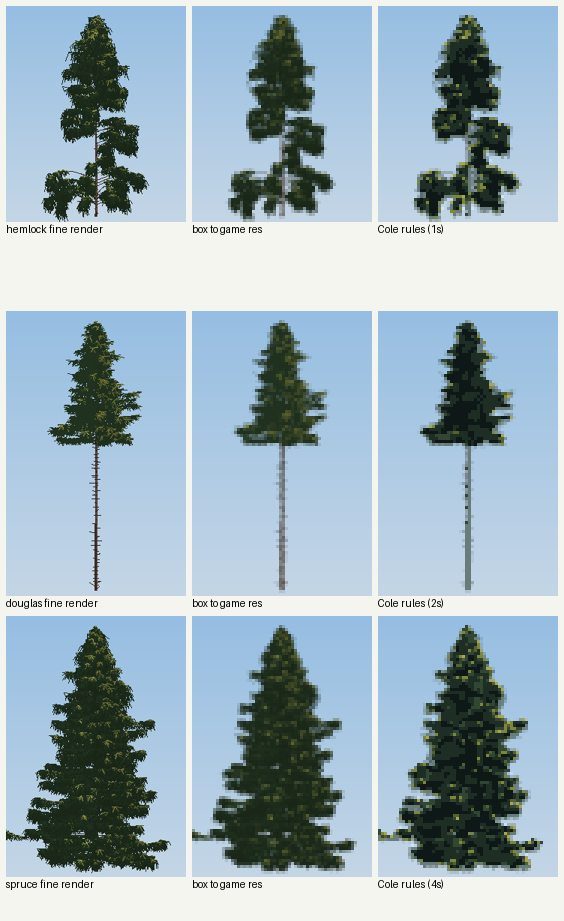 216. books/trees/work/hires_v1.png
Bash: cd ~/work/pixelart-studies/books/trees/src; python3 - <<'E' s=open('hires.py').read() s=s.replace(""" # --- wood first (painted behind the foliage in front of it) --- segs =
cd ~/work/pixelart-studies/books/trees/src; python3 - <<'E'
s=open('hires.py').read()
s=s.replace(""" # --- wood first (painted behind the foliage in front of it) ---
segs = sorted(tree.segments(), key=lambda q: P(q[0])[2])
for p0, p1, r, o, dead in segs:
x0, y0, _ = P(p0); x1, y1, _ = P(p1)
w = max(1, int(round(2 * r / fm)))""",""" # --- wood first (painted behind the foliage in front of it) ---
segs = sorted(tree.segments(), key=lambda q: P(q[0])[2])
wmask = Image.new('L', (FW, FH), 0); dw = ImageDraw.Draw(wmask)
for p0, p1, r, o, dead in segs:
x0, y0, _ = P(p0); x1, y1, _ = P(p1)
w = max(1, int(round(2 * r / fm)))
# the game-res trunk is at least one pixel where the real one is over ~1/3 px (a trunk
# against the sky is a line to the eye even when thinner than a pixel -- Cole p. 45)
dw.line([(x0, y0), (x1, y1)], fill=255, width=max(w, K if 2 * r / mpp > 0.3 else 1))""")
s=s.replace(""" return np.array(img)
def to_game""",""" fmask = Image.new('L', (FW, FH), 0)
render.last_wood = np.array(wmask)
return np.array(img)
def wood_game(K):
m = render.last_wood
H, W = m.shape[0] // K, m.shape[1] // K
g = np.array(Image.fromarray(m[:H * K, :W * K]).resize((W, H), Image.BOX))
return g > 110
def to_game""")
open('hires.py','w').write(s)
t=open('t_hires.py').read()
t=t.replace(" mat,step=cp.run(rgb,min_lit=3)"," wm=hires.wood_game(K)\n mat,step=cp.run(rgb,min_lit=3,wood_mask=wm,lit_share=0.4)")
open('t_hires.py','w').write(t)
E
python3 t_hires.py
# output:
(Bash completed with no output)Read: books/trees/work/hires_v1.png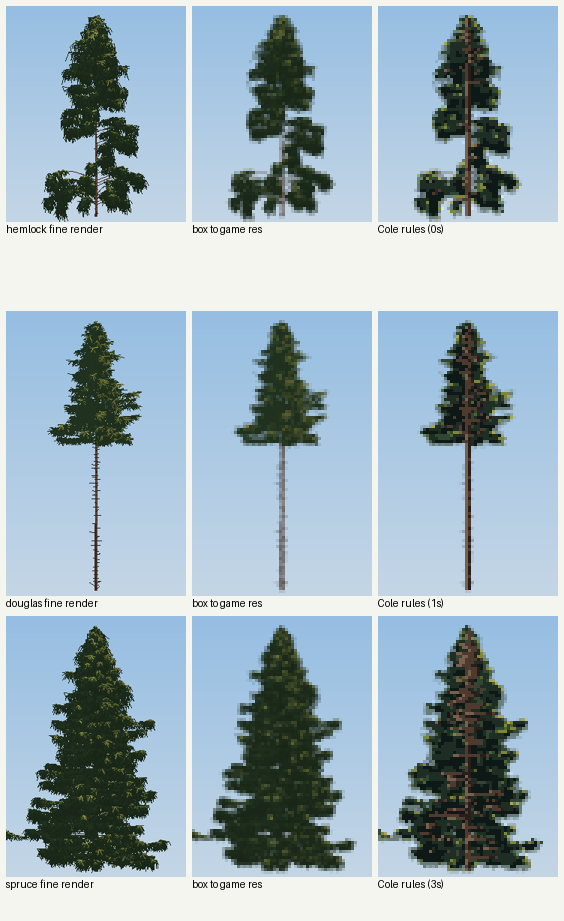 217. books/trees/work/hires_v1.png
Bash: cd ~/work/pixelart-studies/books/trees/src; python3 - <<'E' s=open('hires.py').read() s=s.replace(" fmask = Image.new('L', (FW, FH), 0)\n render.last_wood = np.array(wmask)",
cd ~/work/pixelart-studies/books/trees/src; python3 - <<'E'
s=open('hires.py').read()
s=s.replace(" fmask = Image.new('L', (FW, FH), 0)\n render.last_wood = np.array(wmask)"," render.last_wood = np.array(wmask) & ~np.array(fmask)")
s=s.replace(" # --- sprays, back to front ---"," fmask = Image.new('L', (FW, FH), 0); dfm = ImageDraw.Draw(fmask)\n # --- sprays, back to front ---")
s=s.replace(" d.line([(x, y), (ex, ey)], fill=_rgb(base), width=wth)"," d.line([(x, y), (ex, ey)], fill=_rgb(base), width=wth)\n dfm.line([(x, y), (ex, ey)], fill=255, width=wth)")
open('hires.py','w').write(s)
E
python3 t_hires.py
# output:
(Bash completed with no output)Read: books/trees/work/hires_v1.png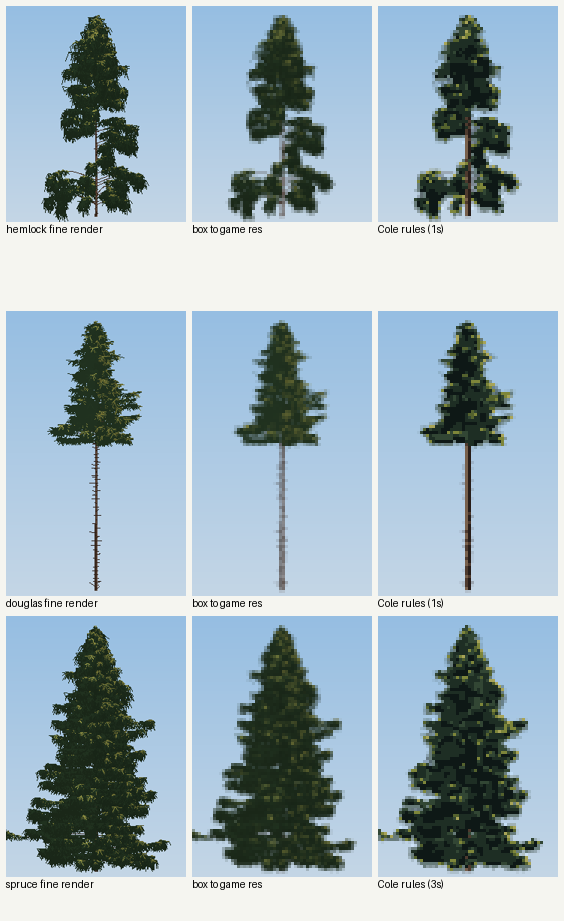 218. books/trees/work/hires_v1.png
Bash: cd ~/work/pixelart-studies/books/trees/src; cat > sheet_ages.py <<'E' """Sheet A: species x age, Hallé's sequence of architectures, painted by the one pipeline (fine render -> game
cd ~/work/pixelart-studies/books/trees/src; cat > sheet_ages.py <<'E'
"""Sheet A: species x age, Hallé's sequence of architectures, painted by the one pipeline
(fine render -> game res -> Cole's rules). Forest-grown, 0.5 m/px, sun from the left."""
from lib import *
import hires, colepx as cp
import numpy as np, sys
from PIL import Image, ImageDraw
names = ['douglas', 'hemlock', 'cedar', 'spruce']
ages = [15, 40, 90, 250]
mpp, K = 0.5, 4
Hc, Wc = int(72 / mpp), int(30 / mpp)
cells, labs = [], []
for n in names:
for a in ages:
t = grow(n, a, seed=3, open_grown=False)
fine = hires.render(t, mpp, Wc, Hc, K=K)
rgb = hires.to_game(fine, K)
mat, step = cp.run(rgb, min_lit=3, wood_mask=hires.wood_game(K), lit_share=0.4)
out = cp.to_rgb(mat, step, cp.palette('conifer', 'cedar' if n == 'cedar' else 'douglas'), rgb=rgb)
Image.fromarray(out).save(f'../sheets/tiles/{n}_{a}.png')
cells.append(up(out, 2)); labs.append(f'{t.sp.name} {a} yr, {t.height():.0f} m')
print(labs[-1], flush=True)
sheet(cells, len(ages), labels=labs, title='A. species x age (Halle sequence of architectures), forest-grown, 0.5 m/px, shown 2x').save('../sheets/A_species_x_age.png')
E
mkdir -p ../sheets/tiles; nice -n 10 python3 sheet_ages.py
# output:
douglas-fir 15 yr, 9 m
douglas-fir 40 yr, 25 m
douglas-fir 90 yr, 45 m
douglas-fir 250 yr, 63 m
western hemlock 15 yr, 6 m
western hemlock 40 yr, 18 m
western hemlock 90 yr, 33 m
western hemlock 250 yr, 48 m
western redcedar 15 yr, 5 m
western redcedar 40 yr, 16 m
western redcedar 90 yr, 31 m
western redcedar 250 yr, 49 m
sitka spruce 15 yr, 8 m
sitka spruce 40 yr, 22 m
sitka spruce 90 yr, 41 m
sitka spruce 250 yr, 59 mRead: books/trees/sheets/A_species_x_age.png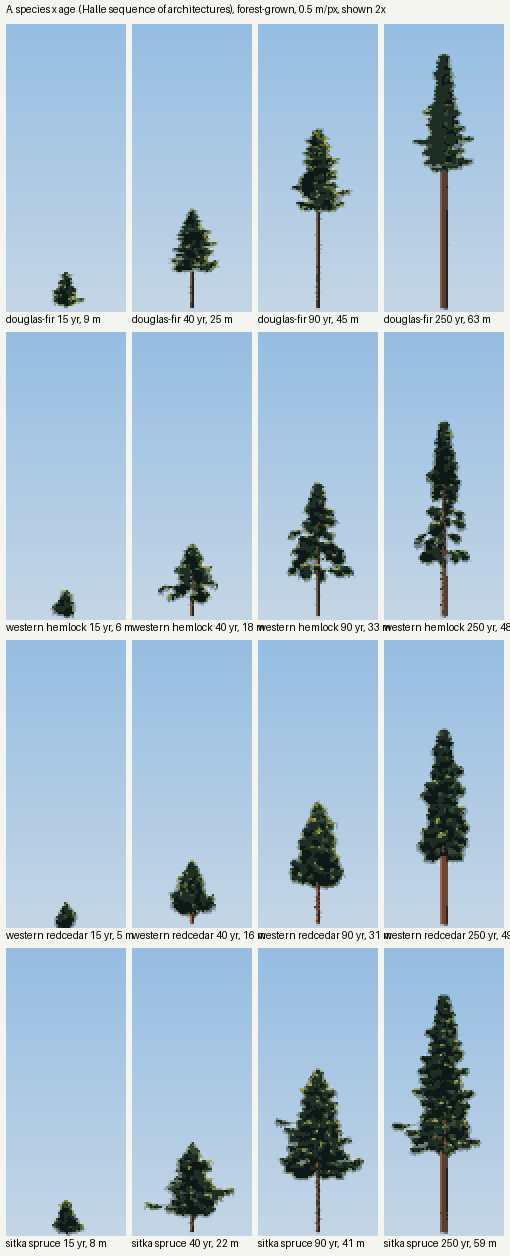 219. books/trees/sheets/A_species_x_age.png
Bash: cd ~/work/pixelart-studies/books/trees/src; python3 - <<'E' s=open('arch.py').read() a=s.index(" P = np.array(pts, float)\n ages = np.array(a.age_nodes[:len(P)])\n
cd ~/work/pixelart-studies/books/trees/src; python3 - <<'E'
s=open('arch.py').read()
a=s.index(" P = np.array(pts, float)\n ages = np.array(a.age_nodes[:len(P)])\n young")
b=s.index(" k0 = max(1, young[0] - 1)")
s=s[:a]+""" P = np.array(pts, float)
# the nod bends the top nod_m metres of the leader (a fishing rod: 2-4 m on a big tree)
seglen = np.linalg.norm(np.diff(P, axis=0), axis=1)
from_tip = np.concatenate([np.cumsum(seglen[::-1])[::-1], [0.0]])
young = np.where(from_tip <= sp.nod_m)[0]
if len(young) < 2:
return pts
"""+s[b:]
s=s.replace(" nod_years: int = 2\n"," nod_years: int = 2\n nod_m: float = 3.0\n")
open('arch.py','w').write(s)
E
python3 -c "
import sys; sys.path.insert(0,'.')
from lib import grow
t=grow('hemlock',90,seed=3)
import numpy as np
P=np.array(t.nodded(0,t.axes[0].pts)); print(P[-6:].round(1))"
# output:
[[ 0.7 0.5 32. ]
[ 0.9 0.6 32.1]
[ 1. 0.7 32.2]
[ 1.2 0.8 32.3]
[ 1.4 0.9 32.4]
[ 1.6 1.1 32.4]]Bash: cd ~/work/pixelart-studies/books/trees/src; sed -i '' 's/^ages = \[15, 40, 90, 250\]/ages = [15, 40, 100, 400]/; s/^Hc, Wc = int(72 \/ mpp), int(30 \/ mpp)/Hc, Wc = int(74 \/ mpp),
cd ~/work/pixelart-studies/books/trees/src; sed -i '' 's/^ages = \[15, 40, 90, 250\]/ages = [15, 40, 100, 400]/; s/^Hc, Wc = int(72 \/ mpp), int(30 \/ mpp)/Hc, Wc = int(74 \/ mpp), int(32 \/ mpp)/' sheet_ages.py; nice -n 10 python3 sheet_ages.py > /tmp/sa.log 2>&1 # output: Command running in background with ID: bqtxplxbw. Output is being written to: (tmp) You will be notified when it completes. To check interim output, use Read on that file path. Session cwd remains ~/work/pixelart-studies/library; directory changes made by the backgrounded command do not apply to subsequent commands.
Bash: cd ~/work/pixelart-studies/books/trees/src; grep -n "def troll_big" -A 16 copy_halle.py | head -30
cd ~/work/pixelart-studies/books/trees/src; grep -n "def troll_big" -A 16 copy_halle.py | head -30 # output: 114:def troll_big(c, X, g): 115- """Largest stage of Troll's key figure (p. 97, monopodial trunk). Every axis is plagiotropic: 116- it arches up out of the trunk, crests, and falls; leaves hang only from the arch. The trunk is 117- the erected base of the relay axes; the current leader is itself an arch (top).""" 118- # the trunk is the erected bases of successive relay axes (Troll p. 242): a stack of 119- # near-vertical pieces, each offset a pixel where the next relay took over (the elbow) 120- c.vrun(X, g - 13, 13, INK); c.vrun(X + 1, g - 13, 13, INK) 121- c.vrun(X + 1, g - 30, 17, INK); c.vrun(X + 2, g - 30, 12, INK) 122- c.vrun(X, g - 49, 19, INK) 123- c.px(X + 1, g - 30, INK); c.px(X, g - 31, INK) 124- c.vrun(X, g + 1, 3, INK) 125- # the leader arch: up, then over to the right (nodding tip) 126- P = arc(c, X, g - 50, 1, [1, 1, 1, 2, 3, 3, 2, 1, 1, 1], [-1, -1, -1, -1, 0, 0, 1, 1, 1, 1]) 127- for x, y in P[1:2]: pass 128- c.vrun(X, g - 52, 3, INK) 129- leaves_below(c, P[4:]) 130- # arches: (height above ground, side, runs, dys) -- chosen off the guide
Bash: cd ~/work/pixelart-studies/books/trees/src; python3 - <<'E' s=open('copy_halle.py').read() a=s.index("def troll_big(c, X, g):"); b=s.index("def troll_small(") s=s[:a]+'''def troll_
cd ~/work/pixelart-studies/books/trees/src; python3 - <<'E'
s=open('copy_halle.py').read()
a=s.index("def troll_big(c, X, g):"); b=s.index("def troll_small(")
s=s[:a]+'''def troll_big(c, X, g):
"""Largest stage of Troll's key figure (p. 97). Every axis is plagiotropic: it rises, arches
over and falls. Height is gained by superposition: each relay axis springs from the upper
side of the previous axis's arch, near its shoulder, and its own base is later erected
into trunk (p. 242). So the trunk is a stack of erected bases, stepping sideways at each
relay -- a sympodium -- and the arches hang off alternate sides, one per relay."""
relays = [ # (x at base, height of base, erected length, arch side, arch runs, dys)
(X, 0, 14, -1, [1, 2, 3, 5, 4, 2, 1, 1], [-1, -1, -1, 0, 1, 1, 1, 1]),
(X + 1, 14, 16, 1, [1, 2, 3, 5, 5, 3, 1, 1], [-1, -1, -1, 0, 1, 1, 1, 1]),
(X, 30, 15, -1, [1, 2, 3, 4, 3, 2, 1], [-1, -1, -1, 0, 1, 1, 1]),
(X + 1, 45, 7, 1, [1, 1, 2, 3, 3, 2, 1, 1], [-1, -1, -1, 0, 0, 1, 1, 1]),
]
for i, (x0, h0, ln, side, runs, dys) in enumerate(relays):
w = 2 if i < 2 else 1
for k in range(w):
c.vrun(x0 + k, g - h0 - ln, ln + (1 if i else 0), INK)
# the relay's own arch continues from the top of its erected base
P = arc(c, x0 + (w - 1 if side > 0 else 0) + side, g - h0 - ln, side, runs, dys)
leaves_below(c, P[3:], seed=11 + i)
# the previous relay's arch left behind at this level: a shorter arch off the other side
if i < len(relays) - 1:
Q = arc(c, x0 - side, g - h0 - ln + 3, -side, [1, 2, 3, 3, 2, 1], [-1, -1, 0, 1, 1, 1])
leaves_below(c, Q[2:], seed=21 + i)
c.vrun(X, g + 1, 3, INK)
'''+s[b:]
open('copy_halle.py','w').write(s)
E
python3 copy_halle.py; python3 -c "
from lib import sheet
from PIL import Image
sheet([Image.open('../copies/massart_v1.png'),Image.open('../copies/troll_v1.png')],2).save('../work/halle_copies.png')"
# output:
(Bash completed with no output)Read: books/trees/work/halle_copies.png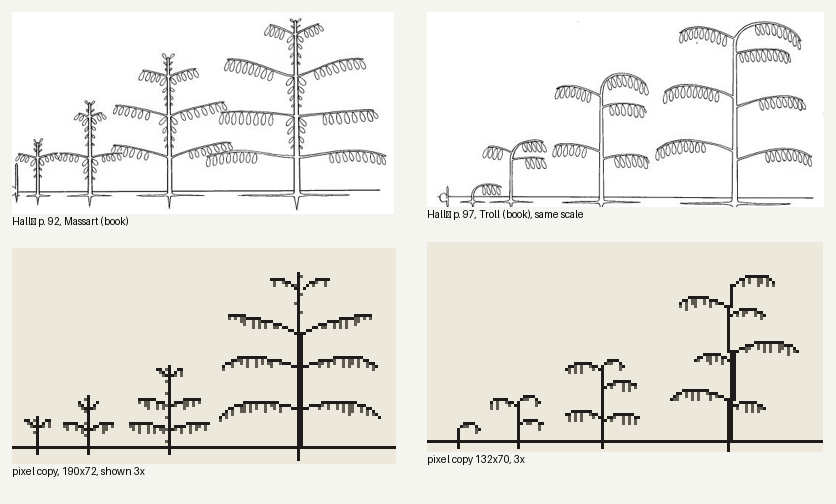 220. books/trees/work/halle_copies.png
Bash: cat /tmp/sa.log
cat /tmp/sa.log # output: douglas-fir 15 yr, 9 m douglas-fir 40 yr, 25 m douglas-fir 100 yr, 47 m
Bash: cd ~/work/pixelart-studies/books/trees/src; cat > sheet_hours.py <<'E' """Sheet C: palette as light (the studio rule). One index canvas per tree (material, step) from the Cole pipe
cd ~/work/pixelart-studies/books/trees/src; cat > sheet_hours.py <<'E'
"""Sheet C: palette as light (the studio rule). One index canvas per tree (material, step)
from the Cole pipeline, relit by palette swap only. Cole p. 52: 'Visit it in the early morning
before the mists rise, it is just a flat silhouette of one depth of tone ... an hour later the
low sun lights up the trunks and the sprays ... At midday the details are less conspicuous ...
Seen in the evening against the light, it has still greater unity.'
In palette terms: fog = foliage steps collapse to one tone; morning = full sun set; noon =
sun set narrowed to its top step; contre-jour dusk = the lit family goes dark-warm and only
the rim (step 6) glows."""
import numpy as np
from PIL import Image
import colepx as cp
from lib import sheet, up
HOURS = {
'early mist (flat silhouette)': dict(sky=[(176, 186, 190), (196, 202, 202)],
fol=[(84, 96, 98)] * 3 + [(92, 104, 104)] * 3 + [(110, 122, 122)], wood=[(84, 90, 92)] * 3),
'morning sun': dict(sky=[(124, 166, 212), (184, 208, 228)],
fol=[(14, 24, 22), (30, 46, 36), (50, 70, 52), (84, 98, 46), (126, 134, 58), (168, 164, 88), (104, 124, 122)],
wood=[(44, 32, 28), (86, 62, 48), (128, 96, 72)]),
'overcast noon': dict(sky=[(168, 176, 182), (190, 196, 198)],
fol=[(16, 26, 26), (26, 40, 36), (38, 54, 46), (50, 68, 54), (60, 78, 60), (70, 88, 66), (96, 110, 108)],
wood=[(46, 42, 40), (70, 62, 56), (92, 84, 76)]),
'golden hour': dict(sky=[(150, 160, 190), (236, 196, 140)],
fol=[(20, 20, 30), (40, 36, 44), (62, 54, 56), (132, 88, 40), (186, 128, 52), (232, 176, 86), (150, 120, 110)],
wood=[(56, 30, 26), (120, 64, 40), (190, 112, 60)]),
'against the evening light': dict(sky=[(222, 170, 120), (250, 214, 150)],
fol=[(22, 18, 24), (28, 22, 28), (34, 28, 32), (40, 32, 34), (48, 38, 38), (60, 46, 42), (200, 150, 100)],
wood=[(30, 22, 22), (36, 26, 24), (44, 32, 28)]),
}
def paint(mat, step, pal):
H, W = mat.shape
t = np.linspace(0, 1, H)[:, None, None]
out = (np.array(pal['sky'][0]) * (1 - t) + np.array(pal['sky'][1]) * t).repeat(W, 1).astype(np.uint8)
veil = (mat == cp.SKY) & (step == 1)
out[veil] = (out[veil] * 0.85).astype(np.uint8)
for k, c in enumerate(pal['fol']):
out[(mat == cp.FOL) & (step == k)] = c
for k, c in enumerate(pal['wood']):
out[(mat == cp.WOOD) & (step == k)] = c
return out
if __name__ == '__main__':
P = '../refs/Tsuga_heterophylla_tree_habit/commons_Tsuga_heterophylla_Stanley_Park_Vancouver_jpg_c32773e6.jpg'
rgb = cp.downsample(P, 60, crop=(0, 0, 960, 1100))
mat, step = cp.run(rgb, min_lit=4)
cells, labs = [], []
for k, pal in HOURS.items():
cells.append(up(paint(mat, step, pal), 4)); labs.append(k)
sheet(cells, 5, labels=labs, title='C. one index canvas (western hemlock study), five palettes = five hours (Cole p. 52)').save('../sheets/C_hemlock_x_hour.png')
E
python3 sheet_hours.py
# output:
(Bash completed with no output)Read: books/trees/sheets/C_hemlock_x_hour.png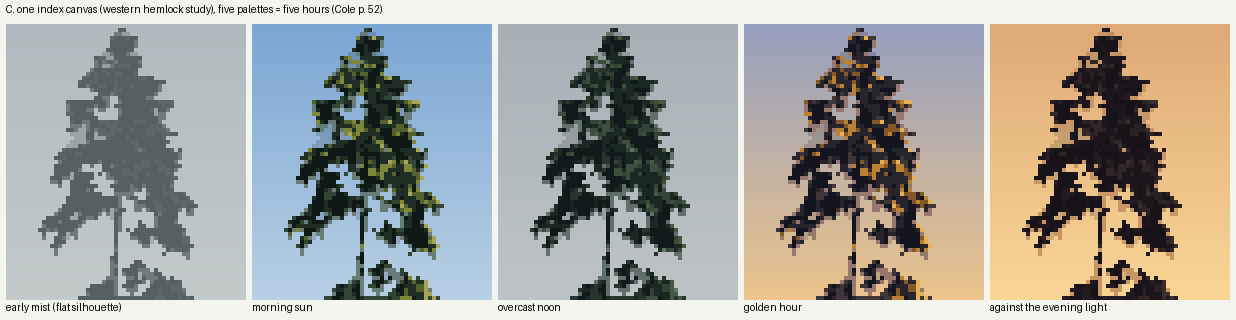 221. books/trees/sheets/C_hemlock_x_hour.png
Bash: cat /tmp/sa.log | tail -3
cat /tmp/sa.log | tail -3 # output: western redcedar 15 yr, 5 m western redcedar 40 yr, 16 m western redcedar 100 yr, 33 m
Bash: cd ~/work/pixelart-studies/books/trees; cat >> LESSONS.md <<'E' ### 2e. What the copies add up to A first cold critic (round 1) was blunt and right: tick-combs under every Hallé
cd ~/work/pixelart-studies/books/trees; cat >> LESSONS.md <<'E' ### 2e. What the copies add up to A first cold critic (round 1) was blunt and right: tick-combs under every Hallé branch, flat "salt chip" holes in fig. 40, a yellow one-pixel cap on every conifer tier (a stamp), mirror- symmetric far silhouettes. The fixes I made and kept: - Hallé's leaves became grouped drops of 1–3 px with uneven gaps (`leaves_below`); Massart's tiers rise, crest and droop by run lengths; Troll's trunk is now a stack of offset erected relay bases with one arch per relay (the model's whole point: height by superposition). - fig. 40 v5 (`copies/fig40_v5.png`): holes of 2–15 px with a lighter centre, veiled holes a step darker, rims only on lower/side margins, the core colour saturated in the middle of the big masses, limbs carried up over the mass. It reads at 2×. At 5× the holes are still too evenly sized and the limbs too pale (they out-value the sky) — noted, not fixed. ## 3. Drawing Washington trees the way the books teach ### 3a. The pipeline that worked: photo → game resolution → Cole's rules (`src/colepx.py`) The studio's own method (the steppe student's "box-downsample the photo to game res and paint from that") gives the truthful mass and silhouette. Cole's rules then turn that soft downsample into pixel art, class by class: 1. **Two value families that never mix** (p. 114–115): the tree's foliage is split once (Otsu, capped at a lit share of ~35%) into a shadow family (3 steps from the dark end of one ramp, fig. 9) and a sun family (3 steps), each quantized on its own. 2. **Sun only where it belongs**: lit pixels survive only in clusters of ≥3–5 px or on a clump's upper surface (sky or shadow above). This is what stopped "all sparkle and no tree". 3. **Holes** (p. 71): sky inside the crown is a hole; pinholes close into a colourless rim pixel (the mass keeps its bulk); holes show what is really behind them (sky *or sea*), veiled ones a step darker, the brightest pixel of an open hole a touch lighter (the globe). 4. **Rims**: foliage pixels on the lower/side margin of a hole or of the outline, where the photo pixel is mixed, take one grey "colourless" step. 5. **Declutter**: an isolated step whose neighbours agree takes theirs — clusters, not static. 6. **Wood**: a three-class cylinder across each row run (lit side toward the sun, core, dark edge), species bark ramps (madrone's orange had been flattened to taupe: a palette per bark). Results (`work/photos_v1.png`, `work/hem_study.png`): hemlock, old Douglas-fir, wind-trained Sitka spruce read well — dark masses with the sun on upper edges, holes with the sea behind them, the hemlock's lacy see-through crown. The Garry oak and madrone were weaker: the oak photo is flat in value, so the rules produced camouflage mottling; Cole's own answer (the clipped-yew dome, fig. 95) added as a `dome` term modelled it but also put a cold plane on the wrong side until I fixed the sign. ### 3b. Species marks: a dead end for conifers, a partial win for broadleaves I tried painting the foliage as species glyphs (`src/marks.py`): hemlock arches, spruce dashes, cedar J-fans, oak tufts, broadleaf clumps, placed by blue noise top to bottom so each top edge stays visible. The critic's round-2 verdict, which I agree with after looking at 8×: for the conifers the marks **tiled into horizontal bricks** and destroyed the coherent lit planes the value plan had made (column 3 beat column 4 for hemlock, Douglas-fir, spruce and madrone). For the Garry oak, Voronoi **clumps** lit as small domes (cap / body / dark underside, a dark recess where one clump tucks under the next) were the better direction — they show Cole's "tufted foliage" and the dome at once — but at one size on a near-grid they read as a turtle shell. What I learned: at 0.3–0.6 m/px a conifer spray is *smaller than a mark*; the species line has to come from the arrangement of masses and holes (the photo's own structure, or the growth model's), not from a stamped glyph. Marks may carry at close scale (<0.1 m/px); I did not get there. ### 3c. Far silhouettes (`work/far_v3.png`, `src/study_far3.py`) Cole p. 64 at 1.2 m/px, typed by hand. After two critiques: old Douglas-fir (clean bole, crown in the top quarter, broken flat top), subalpine fir (spire), hemlock (nodding leader, ragged drooping skirt) and redcedar (candelabra tops, flared base, drooping J-sides) now separate by outline alone; Garry oak is a lumpy dome wider than tall; madrone leans. Mature Douglas-fir and Sitka spruce are still too alike at 15–20 px tall — the spruce's open stiff edge with gaps is the difference and needs more width than I gave it. ### 3d. A leafless Garry oak (`work/oak_winter_v1..v3.png`) Cole p. 78 made literal: haze border, veil, traced boughs. The concept reads; the critic was right that the veil became a uniform scanline texture and the boughs lack taper. Oak limbs are elbowed (zigzag of short straight pieces, Cole ch. VI) — that part carried. ## 4. Encoding the models ### 4a. Hallé's models as growth programs (`src/arch.py`, `src/species_models.py`) Each species is a growth program: rhythmic leader, tiers, plagiotropic (Massart) or orthotropic (Rauh) laterals, sympodial forks from terminal flowering (Scarrone), Troll's nodding leader, lateral growth units shrinking with age (Cole p. 151: the cone), bough vigour spread (some boughs lead, weak ones die: Cole p. 155), self-pruning below the crown base (the inversion point rises, Hallé p. 325), leader loss and substitution (bayonet joints), and reiteration after an age (candelabra cedar, old Douglas-fir's rebuilt top). Radii by a pipe rule with exponent 2.4 (Cole fig. 160). `work/arch_seq.png` draws the architectures as Hallé draws his key: a series in time on one soil line. Mistake worth recording: my first bough-bending model divided the droop by tree height, so every bough on a 50 m tree was dead straight; curvature must accumulate from base to tip (slope = ∫ curvature), strongest in the thin outer bough. ### 4b. One pipeline for photos and generated trees (`src/hires.py`) My first two painters for generated trees (`cole.py`: dome shading; `shelf.py`: per-bough shelves) both failed — a vertical terminator, a stack of lit bricks. The fix was to stop inventing a separate painter: render the grown tree as a fine "photograph" 4× finer than game resolution (sprays as fanned branchlet strokes, sky-lit tops, a sun opacity map by columns), box-downsample it exactly like a photo, and run the same Cole rules. A trunk thinner than a pixel still gets one pixel of wood where it is visible (Cole p. 45). `work/hires_v1.png` and `sheets/A_species_x_age.png` are the result: generated trees in the same pixel language as the photo studies. ### 4c. For vox-trees and the packs (`packs_proposal/species/*.toml`) vox-flora's `[growth]` is already "Hallé-Oldeman style". The proposal files give the eight Washington species their `[growth]` numbers from the two books and the naturalist, and name the few fields the books need that the grammar lacks (`leader_nod`, `reiteration`, `krummholz`, `layering`, `leader_replace`, `sympodial`, `lean`, `opposite`, `three_ranked`, `epicormic`, `wind_train`, `epiphytes`, and `model` as documentation). One correction to the base pack: its comment calls oak "Leeuwenberg-like sympodial"; Hallé lists *Quercus* under Rauh (p. 227), with its sinuous trunk coming from repeated leader replacement, not terminal flowering. E cat /tmp/sa.log | tail -2 # output: western redcedar 40 yr, 16 m western redcedar 100 yr, 33 m
Bash: until grep -q "sitka spruce 400" /tmp/sa.log; do sleep 10; done; tail -3 /tmp/sa.log
until grep -q "sitka spruce 400" /tmp/sa.log; do sleep 10; done; tail -3 /tmp/sa.log # output: sitka spruce 40 yr, 22 m sitka spruce 100 yr, 43 m sitka spruce 400 yr, 63 m
Read: books/trees/sheets/A_species_x_age.png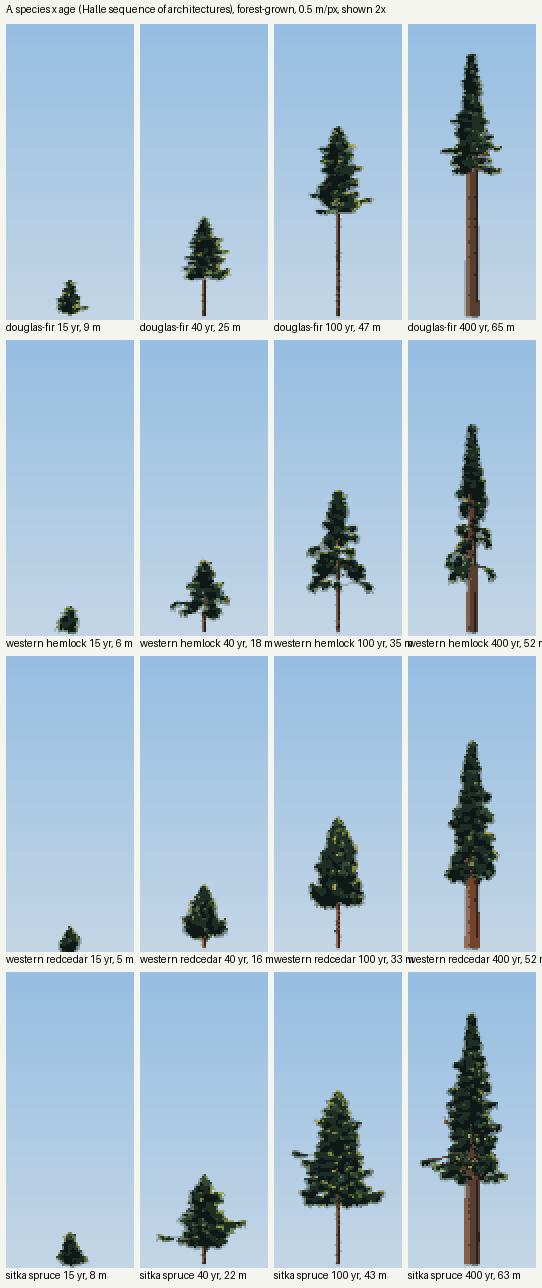 222. books/trees/sheets/A_species_x_age.png
Bash: cd ~/work/pixelart-studies/books/trees/src; python3 -c " from lib import grow for n in ['douglas','cedar']: t=grow(n,400,seed=3) print(n, t.nreiter, sum(1 for a in t.axes i
cd ~/work/pixelart-studies/books/trees/src; python3 -c "
from lib import grow
for n in ['douglas','cedar']:
t=grow(n,400,seed=3)
print(n, t.nreiter, sum(1 for a in t.axes if a.reiterated), sum(1 for a in t.axes if a.order==0 and a.apex), round(t.height(),1))"
# output:
douglas 20 20 0 65.4
cedar 21 21 0 52.0Bash: cd ~/work/pixelart-studies/books/trees/src; python3 - <<'E' s=open('arch.py').read() s=s.replace(" L = lead * (1.0 if a.order == 0 else 0.8)"," L = le
cd ~/work/pixelart-studies/books/trees/src; python3 - <<'E'
s=open('arch.py').read()
s=s.replace(" L = lead * (1.0 if a.order == 0 else 0.8)"," L = lead if a.order == 0 else max(lead * 0.8, sp.reiter_gu * np.exp(-(y - a.reit_y) / 40.0))")
s=s.replace(" rest: object = None "," reit_y: int = 0\n rest: object = None ",1)
s=s.replace("a.reiterated, a.kind, a.apex, a.lat_age = True, 'ortho', True, 0","a.reiterated, a.kind, a.apex, a.lat_age, a.reit_y = True, 'ortho', True, 0, y")
s=s.replace(" reiter_max: int = 12\n"," reiter_max: int = 12\n reiter_gu: float = 0.25 # yearly growth of a fresh reiterated leader (m)\n")
open('arch.py','w').write(s)
h=open('hires.py').read()
h=h.replace(" if a.order == 0 or a.reiterated:\n for k in range(1, len(pts)):"," if a.order == 0:\n for k in range(1, len(pts)):")
open('hires.py','w').write(h)
m=open('species_models.py').read()
m=m.replace("reiter_age=220, reiter_rate=0.02, reiter_max=8,\n top_break=0.004,","reiter_age=200, reiter_rate=0.02, reiter_max=8,\n top_break=0.012,")
open('species_models.py','w').write(m)
E
grep -n "reiter_age" species_models.py; sed -i '' 's/^VERSION = 8/VERSION = 9/' lib.py
cat > t_old.py <<'E'
from lib import *
import hires, colepx as cp
import numpy as np
from PIL import Image
cells=[];labs=[]
for n in ['douglas','cedar']:
for seed in (3,4):
t=grow(n,400,seed=seed)
mpp,K=0.5,4; Hc,Wc=int(74/mpp),int(32/mpp)
fine=hires.render(t,mpp,Wc,Hc,K=K); rgb=hires.to_game(fine,K)
mat,step=cp.run(rgb,min_lit=3,wood_mask=hires.wood_game(K),lit_share=0.4)
out=cp.to_rgb(mat,step,cp.palette('conifer','cedar' if n=='cedar' else 'douglas'),rgb=rgb)
cells.append(up(out,2)); labs.append(f'{n} 400 seed {seed} reit {t.nreiter}')
sheet(cells,4,labels=labs).save('../work/old_v1.png')
E
nice python3 t_old.py
# output:
Exit code 1
25: cluster=1.1, reach=1.4, reiter_age=200, reiter_rate=0.02, reiter_max=8,
36: reiter_age=250, reiter_rate=0.04, reiter_max=14, top_break=0.006, flare=1.6),
41: reiter_age=300, reiter_rate=0.01),
Traceback (most recent call last):
File "~/work/pixelart-studies/books/trees/src/t_old.py", line 8, in <module>
t=grow(n,400,seed=seed)
^^^^^^^^^^^^^^^^^^^^^
File "~/work/pixelart-studies/books/trees/src/lib.py", line 37, in grow
t.grow(age - have)
File "~/work/pixelart-studies/books/trees/src/arch.py", line 137, in grow
self._year()
File "~/work/pixelart-studies/books/trees/src/arch.py", line 220, in _year
self._opportunistic()
File "~/work/pixelart-studies/books/trees/src/arch.py", line 312, in _opportunistic
if a.parent == self.axes.index(t) and a.at >= cut:
^^^^^^^^^^^^^^^^^^
File "<string>", line 4, in __eq__
ValueError: The truth value of an array with more than one element is ambiguous. Use a.any() or a.all()Bash: cd ~/work/pixelart-studies/books/trees/src; python3 - <<'E' s=open('arch.py').read() s=s.replace(""" tops = [a for a in self.axes if (a.order == 0 or a.reiterated) and a
cd ~/work/pixelart-studies/books/trees/src; python3 - <<'E'
s=open('arch.py').read()
s=s.replace(""" tops = [a for a in self.axes if (a.order == 0 or a.reiterated) and a.apex]
if tops:
t = max(tops, key=lambda a: a.pts[-1][2])""",""" tops = [i for i, a in enumerate(self.axes) if (a.order == 0 or a.reiterated) and a.apex]
if tops:
ti = max(tops, key=lambda i: self.axes[i].pts[-1][2])
t = self.axes[ti]""")
s=s.replace("if a.parent == self.axes.index(t) and a.at >= cut:","if a.parent == ti and a.at >= cut:")
open('arch.py','w').write(s)
E
nice python3 t_old.py
# output:
(Bash completed with no output)Read: books/trees/work/old_v1.png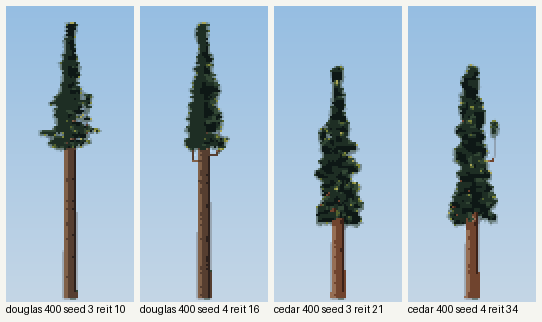 223. books/trees/work/old_v1.png
Bash: cd ~/work/pixelart-studies/books/trees/src; python3 - <<'E' s=open('arch.py').read() s=s.replace(""" cut = max(2, len(t.pts) - rng.integers(3, 12)) t
cd ~/work/pixelart-studies/books/trees/src; python3 - <<'E'
s=open('arch.py').read()
s=s.replace(""" cut = max(2, len(t.pts) - rng.integers(3, 12))
t.pts, t.apex = t.pts[:cut], False""",""" cut = max(2, len(t.pts) - rng.integers(3, 12))
t.apex = False
t.dead_from = cut # the broken top stays as a dead spike (cedar)""")
s=s.replace(" reit_y: int = 0\n"," reit_y: int = 0\n dead_from: int = 10 ** 9\n",1)
s=s.replace(""" self.dir[i] = _norm(self.dir[i] * 0.3 + UP)
self.nreiter += 1""",""" hz = self.dir[i] * np.array([1, 1, 0])
self.dir[i] = _norm(sp.reiter_spread * _norm(hz) + UP)
self.nreiter += 1""")
s=s.replace(" reiter_gu: float = 0.25 "," reiter_spread: float = 0.6 # reiterated leaders lean outward (flat, wide old crowns)\n reiter_gu: float = 0.25 ")
s=s.replace(""" for k in range(len(pts) - 1):
segs.append((pts[k], pts[k + 1], 0.5 * (rr[k] + rr[k + 1]), a.order, a.dead))""",""" for k in range(len(pts) - 1):
segs.append((pts[k], pts[k + 1], 0.5 * (rr[k] + rr[k + 1]), a.order, a.dead or k >= a.dead_from))""")
open('arch.py','w').write(s)
h=open('hires.py').read()
h=h.replace(""" for k in range(1, len(pts)):
if from_tip[k] <= keep:""",""" for k in range(1, len(pts)):
if k >= a.dead_from:
continue
if from_tip[k] <= keep:""")
h=h.replace(""" if a.order == 0:
for k in range(1, len(pts)):
if tree.year - ages[k] <= 2:""",""" if a.order == 0:
for k in range(1, len(pts)):
if tree.year - ages[k] <= 2 and k < a.dead_from:""")
h=h.replace(" col = np.array(bark) * (0.75 if dead else 1.0)"," col = np.array((150, 146, 140)) if dead else np.array(bark) # dead wood weathers silver")
open('hires.py','w').write(h)
m=open('species_models.py').read()
m=m.replace("reiter_age=250, reiter_rate=0.04, reiter_max=14, top_break=0.006, flare=1.6),","reiter_age=220, reiter_rate=0.04, reiter_max=14, top_break=0.01, reiter_spread=0.25, flare=1.6),")
m=m.replace("reiter_age=200, reiter_rate=0.02, reiter_max=8,","reiter_age=200, reiter_rate=0.02, reiter_max=8, reiter_spread=0.9,")
open('species_models.py','w').write(m)
E
sed -i '' 's/^VERSION = 9/VERSION = 10/' lib.py; nice python3 t_old.py
# output:
(Bash completed with no output)Read: books/trees/work/old_v1.png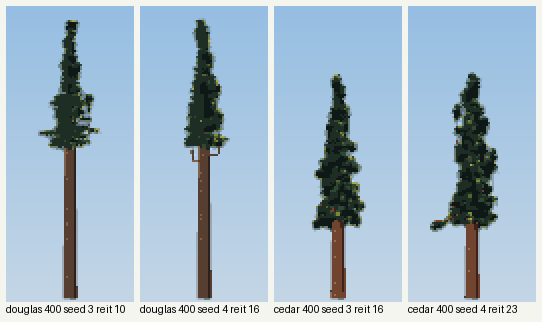 224. books/trees/work/old_v1.png
Bash: cd ~/work/pixelart-studies/books/trees/src; python3 - <<'E' s=open('arch.py').read() s=s.replace(""" cut = max(2, len(t.pts) - rng.integers(3, 12))""","""
cd ~/work/pixelart-studies/books/trees/src; python3 - <<'E'
s=open('arch.py').read()
s=s.replace(""" cut = max(2, len(t.pts) - rng.integers(3, 12))""",""" P_ = np.array(t.pts); sl = np.linalg.norm(np.diff(P_, axis=0), axis=1)
ft = np.concatenate([np.cumsum(sl[::-1])[::-1], [0.0]])
brk = rng.uniform(*sp.break_m) # storms take the top 4-12 m
cut = int(max(2, np.searchsorted(-ft, -brk)))""")
s=s.replace(" reiter_gu: float = 0.25 "," break_m: tuple = (4.0, 12.0)\n reiter_gu: float = 0.25 ")
s=s.replace(""" for a in self.axes:
if a.parent == ti and a.at >= cut:
a.dead, a.alive, a.pts = True, False, a.pts[:1]""",""" for a in self.axes:
if a.parent == ti and a.at >= cut:
if sp.spike: # cedar: the dead top keeps a few stubs
a.dead, a.alive, a.pts = True, False, a.pts[:2]
else:
a.dead, a.alive, a.pts = True, False, a.pts[:1]
if not sp.spike:
t.pts = t.pts[:cut]""")
s=s.replace(" break_m: tuple = (4.0, 12.0)\n"," break_m: tuple = (4.0, 12.0)\n spike: bool = False # broken tops stay as dead silver spikes (redcedar)\n")
open('arch.py','w').write(s)
m=open('species_models.py').read()
m=m.replace("reiter_spread=0.25, flare=1.6),","reiter_spread=0.25, spike=True, flare=1.6),")
open('species_models.py','w').write(m)
E
sed -i '' 's/^VERSION = 10/VERSION = 11/' lib.py; nice python3 t_old.py
# output:
(Bash completed with no output)Read: books/trees/work/old_v1.png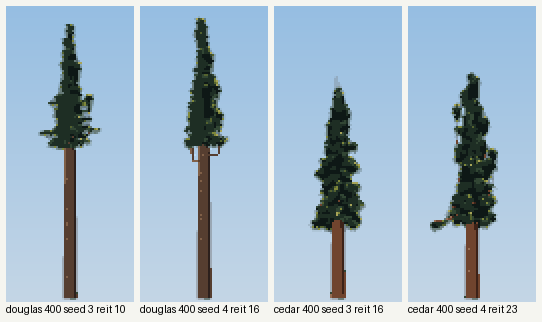 225. books/trees/work/old_v1.png
Bash: cd ~/work/pixelart-studies/books/trees/src; python3 -c " from lib import grow import numpy as np t=grow('douglas',400,seed=3) for i,a in enumerate(t.axes): if a.order==0 or a.r
cd ~/work/pixelart-studies/books/trees/src; python3 -c "
from lib import grow
import numpy as np
t=grow('douglas',400,seed=3)
for i,a in enumerate(t.axes):
if a.order==0 or a.reiterated:
P=np.array(a.pts); print(i,a.order,a.reiterated,a.apex,a.reit_y,len(P),P[0].round(1),P[-1].round(1))
" | head -30
# output:
0 0 False True 0 567 [0. 0. 0.] [ 0. 0. 66.4]
184 1 True True 201 257 [ 0. 0. 40.] [ 4.7 -0. 50.8]
274 1 True True 201 248 [ 0. 0. 47.3] [ 1.1 2.9 58. ]
287 1 True True 201 240 [ 0. 0. 48.] [ 1.7 1.3 58.7]
407 1 True True 201 223 [ 0. 0. 54.3] [-0.8 -0.8 64.9]
497 1 True True 201 223 [ 0. 0. 57.4] [-0.1 -1.1 68. ]
506 1 True True 201 226 [ 0. 0. 57.7] [ 0. 1.2 68.3]
537 1 True False 201 2 [ 0. 0. 58.5] [ 0. 0. 58.5]
547 1 True False 201 24 [ 0. 0. 58.8] [ 0.7 -0.1 59. ]
565 1 True False 201 2 [ 0. 0. 59.2] [ 0. -0. 59.2]
571 1 True False 201 2 [ 0. 0. 59.3] [ 0. -0. 59.3]Bash: cd ~/work/pixelart-studies/books/trees/src; python3 - <<'E' s=open('arch.py').read() s=s.replace("d = _norm(d + (0.35 if (a.order == 0 or a.reiterated) else sp.ortho_k) * UP","d =
cd ~/work/pixelart-studies/books/trees/src; python3 - <<'E'
s=open('arch.py').read()
s=s.replace("d = _norm(d + (0.35 if (a.order == 0 or a.reiterated) else sp.ortho_k) * UP","d = _norm(d + (0.35 if a.order == 0 else (0.04 if a.reiterated else sp.ortho_k)) * UP")
s=s.replace(" ti = max(tops, key=lambda i: self.axes[i].pts[-1][2])"," ti = 0 if self.axes[0].apex else max(tops, key=lambda i: self.axes[i].pts[-1][2])")
open('arch.py','w').write(s)
m=open('species_models.py').read()
m=m.replace("reiter_age=200, reiter_rate=0.02, reiter_max=8, reiter_spread=0.9,","reiter_age=200, reiter_rate=0.004, reiter_max=8, reiter_spread=0.9,")
m=m.replace("reiter_age=220, reiter_rate=0.04, reiter_max=14,","reiter_age=220, reiter_rate=0.006, reiter_max=10,")
open('species_models.py','w').write(m)
E
sed -i '' 's/^VERSION = 11/VERSION = 12/' lib.py; nice python3 t_old.py
# output:
(Bash completed with no output)Read: books/trees/work/old_v1.png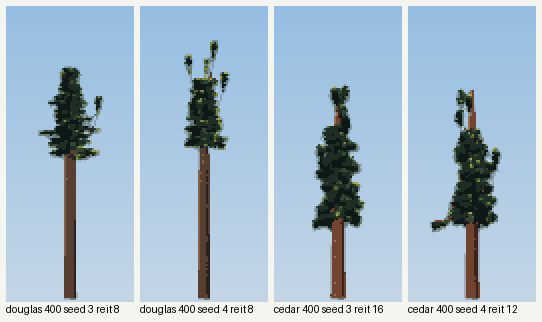 226. books/trees/work/old_v1.png
Bash: cd ~/work/pixelart-studies/books/trees/src; nice -n 10 python3 sheet_ages.py > /tmp/sa.log 2>&1
cd ~/work/pixelart-studies/books/trees/src; nice -n 10 python3 sheet_ages.py > /tmp/sa.log 2>&1 # output: Command running in background with ID: btezxzh9h. Output is being written to: (tmp) You will be notified when it completes. To check interim output, use Read on that file path. Session cwd remains ~/work/pixelart-studies/library; directory changes made by the backgrounded command do not apply to subsequent commands.
Bash: cd ~/work/pixelart-studies/books/trees; cat >> LESSONS.md <<'E' ### 4d. Old age by the programs, not by scaling (`work/old_v1.png`) The first 250- and 400-year trees were young s
cd ~/work/pixelart-studies/books/trees; cat >> LESSONS.md <<'E'
### 4d. Old age by the programs, not by scaling (`work/old_v1.png`)
The first 250- and 400-year trees were young spires scaled up — the thing Cole warns against
(p. 123: the old tree is "a totally different form"). Three bugs, each a misreading of Hallé:
reiterated leaders got the *leader's* growth unit, which is ~0 at 400 years, so they never grew;
they were drawn with leader foliage (only this year's tuft), so they were invisible; and they
grew straight up (the leader's strong orthotropy), so they made a pillar of spires. Fixed:
a reiterated complex grows from its own vigour (0.25 m/yr decaying over ~40 years), keeps its
outward lean (Hallé Fig. 74: the reiterated complexes are the big limbs), and carries bough
foliage; storms take the top 4–12 m (Van Pelt/naturalist: "tops snap … replaced by one or more
upturned limbs"); cedar keeps its broken top as a dead spike. Now the 400-year Douglas-fir has
a flattened, broken crown of a few upturned limbs in the top quarter of a clean bole, and the
cedar puts up several leaders. Open problem: the Cole pipeline's wood palette recolours the
cedar's dead spike from silver back to bark red.
## 5. The rules, for other students and the voxsim lanes
From the two books, as carried into pixels here. Each has its page and the file that does it.
**Structure (Hallé, Cole Part II) — decide before drawing:**
1. Name the tree's model: Massart (tiers of horizontal boughs: firs, spruces, Douglas-fir),
Rauh (all axes upright, supple, sinuous: oaks, maples, pines), Troll (every axis arches:
hemlock's nodding leader, elms, beeches), Scarrone/Leeuwenberg (forks from flowering tips:
madrone). `src/species_models.py`, MODEL.md B2.
2. Age is a different program, not a bigger tree: young = the model (cone, regular gaps
between bough tips, Cole p. 153); mature = self-pruned bole, crown ½ (forest) or more (open)
of height (Hallé p. 327); old = reiterated limbs, broken or flat top, crown in the top
quarter; the old crown is "the closeness of multiplied forms" (Cole p. 124).
3. Situation shapes the program: forest-grown = narrow and high; free-standing = low, wide,
dorsiventral periphery (Hallé Fig. 75); on slopes canopies overlap downhill like roof tiles,
the downhill edge lit from the side (Hallé p. 360); by water the canopy curves down on
leaning crowns (p. 364); on headlands, wind-trained wedges.
4. Every bough is a twig grown old: one type of line per species (angle, curve or elbow), used
everywhere from limb to twig (Cole p. 99). Oak = elbows of short straight pieces; hemlock and
cedar = droop-then-rise springs; Douglas-fir = near-level tiers, tips up.
**Painting (Cole Part I) — the pixel operations (`src/colepx.py`):**
5. A massed tree is one depth of tone from the dark end of one ramp; the sun is a separate
lighter family of 2–3 steps added only to faces toward it, in clusters, never as scattered
pixels or a continuous cap (pp. 51, 114–115).
6. Holes: open ones show the real background (sky or sea); holes veiled by twigs a step darker;
pinholes close; each hole's lower and side margins get one colourless rim pixel; the top edge
stays sharp where foliage projects over it (p. 71).
7. Outlines are straight pieces of varying length carried across breaks, never scallops or a
dentated edge with a hard line (pp. 82–94). In pixels: clean runs whose lengths change the
character of the curve.
8. Far trees: outline only, one flat tone; each species keeps its one diagnostic mark at 15–30
px (hemlock's nod, old Douglas-fir's broken top on a clean bole, cedar's spike tops and J
sides, subalpine fir's spire, oak's lumpy dome wider than tall, madrone's lean) (p. 64).
9. Thin forms against bright light thin further: twigs vanish into a haze just darker than the
sky; a trunk thinner than a pixel is still one pixel where it is visible (pp. 45, 78).
10. Palette as light: the index canvas (material, step) relights by palette — mist collapses the
steps to one flat tone, overcast narrows the sun family, contre-jour darkens it and lets the
rim glow (Cole p. 52; `sheets/C_hemlock_x_hour.png`).
**Process:** box-downsample a photo (or a fine render of a grown tree, `src/hires.py`) to game
resolution and apply 5–9; that single pipeline served photos, generated trees, the conifers
student's sprites and vox-trees renders (`work/student_ab.png`, `work/voxtrees_ab.png`).
## 6. What did not carry, plainly
- **Species glyphs for conifer foliage** at 0.3–0.6 m/px: bricks. The spray is smaller than
the mark (3b).
- **Cole's colour teaching** (each colour "has its own grey", p. 117) — only as far as the rim
step and the hour palettes. The subtle greys of winter twigs against sky are beyond this
palette size.
- **Cole's composition chapters** (II–III, V's chief lines chosen by the hour): these are the
director's job, not the tree painter's. The hillside scene (`scene/hillside_v6_4x.png`)
used them (no even spacing, masses fixing the hill contours, imbricated tiles, big trees cut
against the sky) but is a sketch, not a finished scene: the mid-slope conifers are still one
repeated glyph family and the near trees do not yet sit in the ground.
- **Hallé's tropical models** (Holttum, Corner, Aubréville, Roux, Cook …): no Washington tree
needs them.
- **Leaf, flower and fruit chapters** (Cole XVI–XX): below any game scale except the closest;
only the seasonal consequences carry (catkins greying alder in February, cedar's rusting
inner sprays in autumn, maple yellow — naturalist 02-trees).
- **Honest standing**: none of this is at Ferrari's bar at 8×. The photo studies of the
hemlock, old Douglas-fir and Sitka spruce are the best work; the generated trees are in the
same language but thinner in character; the broadleaves are weakest.
E
echo done
# output:
doneNow a README for the folder, and copy sheets.
Bash: cd ~/work/pixelart-studies/books/trees; cp work/photos_v1.png sheets/B_photos_x_cole.png; cp work/far_v3.png sheets/D_far_silhouettes.png; cp work/halle_copies.png sheets/E_halle_c
cd ~/work/pixelart-studies/books/trees; cp work/photos_v1.png sheets/B_photos_x_cole.png; cp work/far_v3.png sheets/D_far_silhouettes.png; cp work/halle_copies.png sheets/E_halle_copies.png; cp copies/fig40_v5.png sheets/F_cole_fig40_copy.png; cp work/student_ab.png sheets/G_conifers_student_before_after.png; cp work/voxtrees_ab.png sheets/H_voxtrees_before_after.png; cp work/arch_seq.png sheets/I_architecture_sequences.png; cp scene/hillside_v6_4x.png sheets/J_hillside_scene_4x.png; cp work/old_v1.png sheets/K_old_age.png; cp work/oak_winter_v3.png sheets/L_garry_oak_winter.png cat > README.md <<'E' # books/trees — Cole (1915) and Hallé–Oldeman–Tomlinson (1978) in pixels - **MODEL.md** — the two books' model in their own terms, with page references. - **LESSONS.md** — master copies, studies, tests, dead ends, and §5 *the rules* to apply. - **packs_proposal/species/** — `[growth]` for eight Washington species from the books, with the new fields the books need (for vox-flora / the content packs; proposals, not merged). - **sheets/** — labelled results (A species × age; B photos × Cole's rules; C one tree × five hours; D far silhouettes; E–F master copies; G–H before/after on the conifers student's trees and vox-trees; I architecture sequences; J hillside scene; K old age; L winter oak). Code (`src/`, numpy + PIL + scipy + cv2, run from `src/`): | file | what it is | |---|---| | `colepx.py` | **Cole's rules as pixel operations** on any RGB image at game resolution: `run(rgb, ...) -> (mat, step)`, `palette()`, `to_rgb()`. Parameters: `lit_share`, `min_lit`, `keep_holes`, `rim`, `globes`, `dome`, `sun_dx`, `wood_mask`, `other_mask`. | | `arch.py`, `species_models.py` | **Hallé's models as growth programs** (`Species` parameters, `Tree(sp).grow(years)`), species table with page-referenced choices. | | `hires.py` | fine render of a grown tree → `to_game()` → `colepx.run`: generated trees in the photo pipeline. | | `lib.py` | cached growth (`grow(name, age, seed, open_grown)`), sheets, zoom. | | `sheet_photos.py`, `sheet_ages.py`, `sheet_hours.py` | the sheets. | | `copy_halle.py`, `copy_fig40*.py`, `copy_fig65.py`, `copy_holly*.py` | master copies (hand-placed pixels). | | `study_far3.py`, `study_oak_winter.py`, `study_hemlock.py`, `sprites.py`, `scene_hillside.py` | hand studies. | | `marks.py`, `shelf.py`, `cole.py`, `diagram.py` | dead ends kept for the record (LESSONS 1, 3b, 4b). | Quick use on any tree image:E du -sh ~/work/pixelart-studies/books/trees; du -sh ~/work/pixelart-studies/books/trees/* | sort -h | tail -5 # output: 301M ~/work/pixelart-studies/books/trees 2.2M ~/work/pixelart-studies/books/trees/sheets 5.3M ~/work/pixelart-studies/books/trees/work 31M ~/work/pixelart-studies/books/trees/refs 119M ~/work/pixelart-studies/books/trees/pages 138M ~/work/pixelart-studies/books/trees/tmpimport colepx as cp rgb = cp.downsample('photo.jpg', 60) # game resolution mat, step = cp.run(rgb, lit_share=0.35, min_lit=4) # Cole's value plan, sun family, holes, rims out = cp.to_rgb(mat, step, cp.palette('conifer'), rgb=rgb)
Under 1 GB. Wait for sheet A.
Bash: until grep -q "sitka spruce 400" /tmp/sa.log; do sleep 10; done; tail -2 /tmp/sa.log
until grep -q "sitka spruce 400" /tmp/sa.log; do sleep 10; done; tail -2 /tmp/sa.log # output: sitka spruce 100 yr, 43 m sitka spruce 400 yr, 69 m
Read: books/trees/sheets/A_species_x_age.png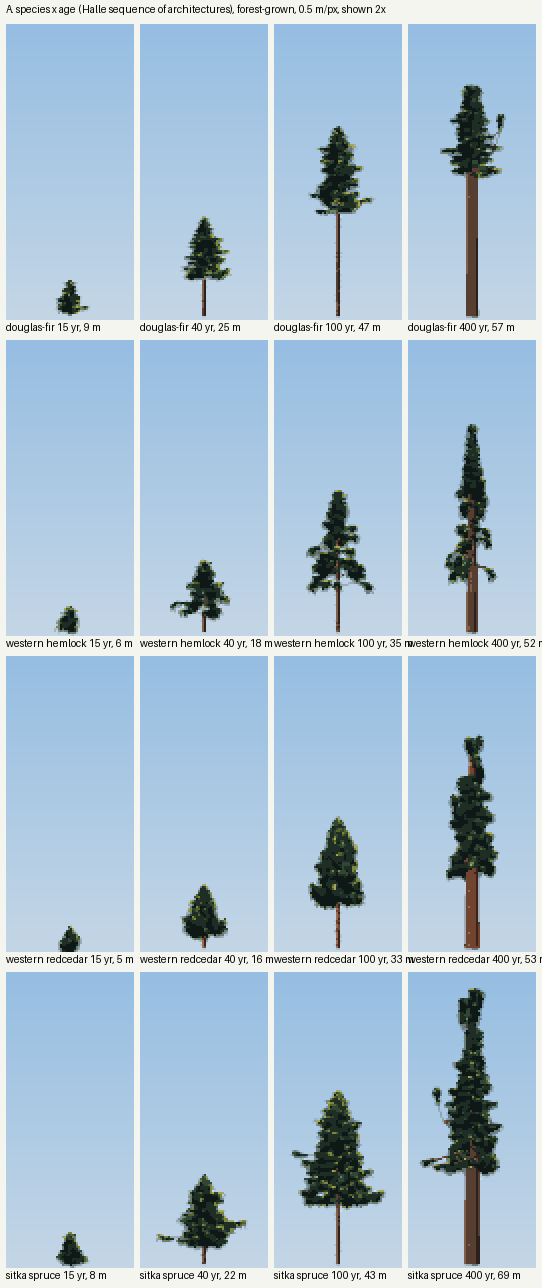 227. books/trees/sheets/A_species_x_age.png
SubagentHandback: The book study is finished and my report has gone to the coordinator. None of the work is at Ferrari's standard at 8× zoom. The best results are the studies made from photos of hemlock, old Douglas-fir and Sitka spruce, and the broadleaf trees are the weakest.
Everything is in ~/work/pixelart-studies/books/trees/. The folder is about 300 MB, inside the 1 GB budget.
MODEL.md: both books' models in their own terms, with page references. Cole's branching chapters turned out to be a rough version of Hallé–Oldeman's growth models, so the two books describe one model.- Master copies: pixel copies of Hallé's Massart and Troll diagrams and Cole's fig. 40, fig. 65 and holly drawing, each compared against the book.
- The main method,
src/colepx.py: it applies Cole's rules to any image first shrunk to game resolution. The rules cover separate shadow and sun tones, sunlit pixels kept to clusters on upper faces, holes that show what is really behind them, and grey rims on hole edges. It worked on photos, on generated trees, on the conifers student's trees and on vox-trees renders. - Growth models: Hallé's models are written as tree-growing code. Grown trees go through the same pixel pipeline, giving sheet A (four species from 15 to 400 years old). The 400-year trees come from the growth code, not from scaling up young ones: old Douglas-fir gets a broken flat top on a clean trunk, and old cedar puts up several leaders.
- Content-pack proposals: growth settings for eight Washington species, with the few new fields the books call for. They are proposals and are not merged. One correction for the base pack: it calls oak "Leeuwenberg-like sympodial", but Hallé–Oldeman list Quercus under Rauh's model (p. 227).
LESSONS.md: the honest story, ten rules other students and the voxsim lanes can apply (§5), and what did not carry (§6).
What failed:
- I first built a renderer before doing any master copies, and got the generic blobs the coordinator warned about. I stopped and did the copies first.
- Hand-drawn foliage marks for conifers tiled into rows of bricks at 0.3–0.6 m per pixel, because a real spray is smaller than one mark. For Garry oak, rounded clumps worked better.
- The hillside scene is still only a sketch.
Still open:
- The cedar's dead top comes out bark-red instead of silver.
- Mature Douglas-fir and Sitka spruce look too alike as far silhouettes.
- The holes in the fig. 40 copy are too evenly sized.
Two independent critics reviewed the work partway through. Their points are recorded in LESSONS.md, and I fixed most of them.
Files to open first:
~/work/pixelart-studies/books/trees/sheets/B_photos_x_cole.png~/work/pixelart-studies/books/trees/sheets/A_species_x_age.png~/work/pixelart-studies/books/trees/sheets/C_hemlock_x_hour.png(one tree relit to five times of day by palette alone)~/work/pixelart-studies/books/trees/LESSONS.md